Tag: rising prices

  • Car financing in Pakistan drops 20% in July amid rising prices and interest rates

    Car financing in Pakistan drops 20% in July amid rising prices and interest rates

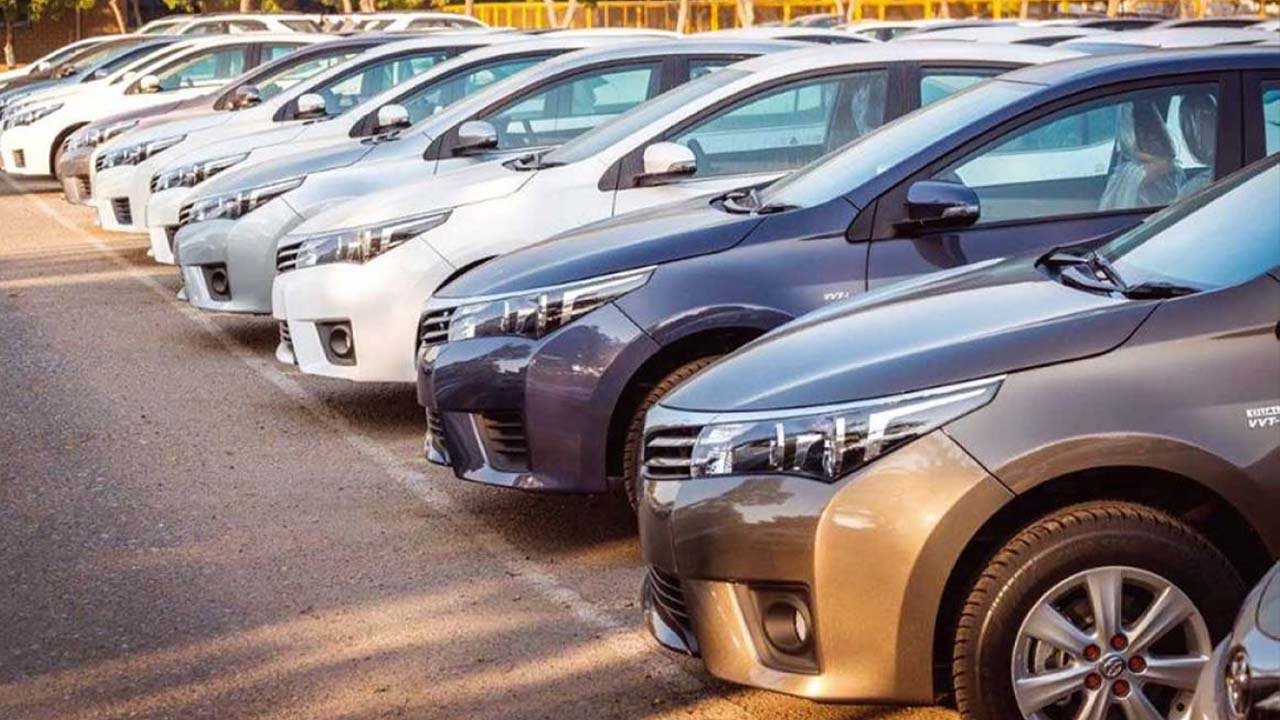
    Car financing in Pakistan witnessed a significant decline in July 2024, as soaring vehicle prices and elevated interest rates continued to dampen consumer demand.

    According to the latest data from the State Bank of Pakistan (SBP), car financing fell by 20.06 per cent year-on-year, dropping from Rs285.19 billion in July 2023 to Rs228 billion in July 2024.

    This sharp decrease is largely attributed to a combination of rising interest rates, inflated car prices, stricter loan regulations, and increased taxes on automobile imports and parts.

    Month-on-month, the decline in car financing was relatively modest, with a 1.09 per cent reduction from Rs230.5 billion in June 2024.

    The SBP data also highlighted a decline in consumer financing for house construction, which totalled Rs202.8 billion at the end of July 2024. This marks a 3.94 per cent decrease compared to the same period last year.

    On a monthly basis, house construction financing saw a slight dip of 0.39 per cent, down from Rs203.58 billion in June 2024.

    In contrast, personal financing reached Rs238.95 billion in July 2024. While this represents a year-on-year decrease of 4.51 per cent, it showed a slight uptick of 0.14 per cent from the previous month.

    The impact of rising costs is evident in the automobile market, where even the most affordable vehicles are now out of reach for many consumers.

     For instance, the Suzuki Alto, one of the highest-selling and traditionally considered among the cheapest cars from a reputable brand in Pakistan, now costs over Rs3 million for the top variant, the Suzuki Alto VXL AGS, while the base variant, the Suzuki Alto VX, is priced at Rs2.3 million.
  • Pakistan to import 100,000 tonnes of sugar from Brazil due to high prices, shortage

    Pakistan to import 100,000 tonnes of sugar from Brazil due to high prices, shortage

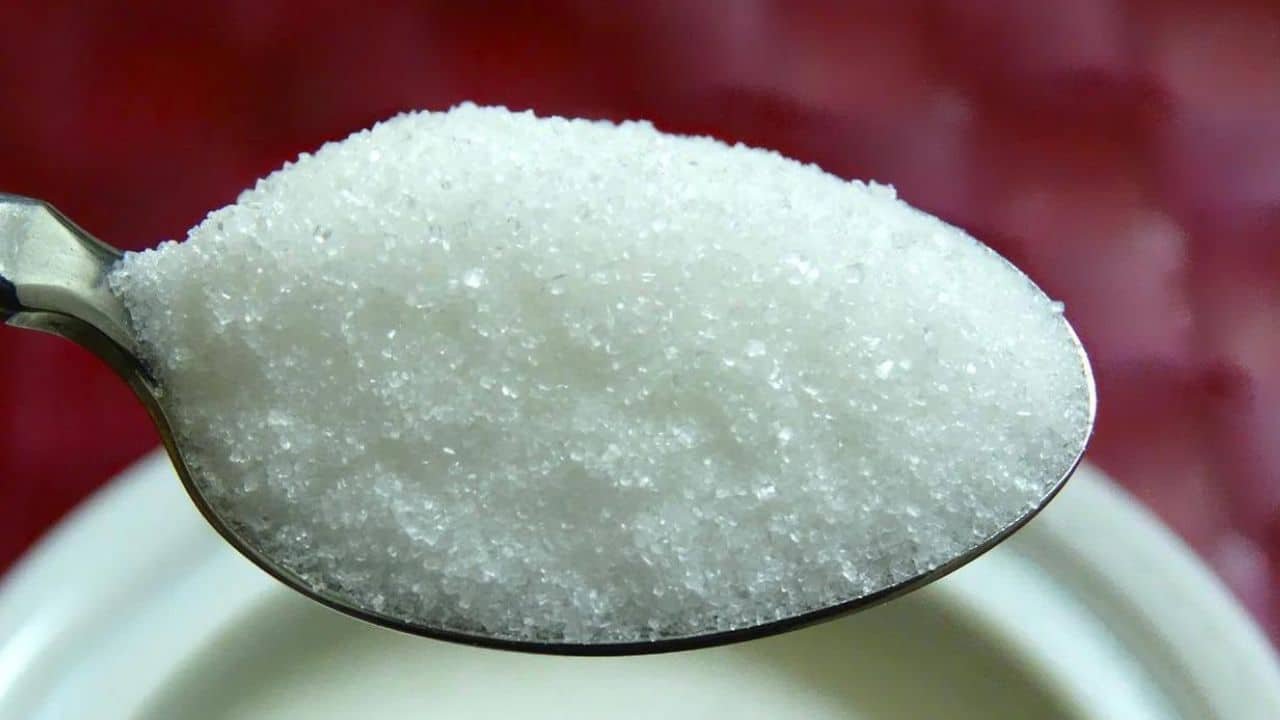
    With the price of sugar skyrocketing in the market, aided by the exploitative practices of the sugar mill cartel, and the commodity facing scarcity, a decision has been reached to import 100,000 metric tonnes of sugar from Brazil.

    The Trading Corporation of Pakistan has formally communicated its intention to procure sugar from the South American nation. This comes as a reversal of trends, considering that sugar had been exported back in June; however, preparations are now underway for its import in September.

    Nevertheless, there are concerns that the price of sugar might surge further in the market following its import. It is anticipated that sugar could reach a staggering Rs200 per kilogramme.

    Insider sources have disclosed that the country is grappling with a significant shortage of sugar after its previous export. In November 2022, sugar was priced at Rs91, but following its export, the price catapulted to Rs180. The impending import of 100,000 metric tonnes is feared to exacerbate the price increase.

    Speaking on the issue, Food Secretary Zaman Wattoo revealed that the recent surge in sugar prices has collectively burdened the masses with an additional cost of Rs47 billion.

    Meanwhile, the price of sugar persistently climbs, now touching the Rs170 per kilogramme mark in the retail sector. Over a span of just four days, the price has gradually escalated by Rs10 per kilogramme.

    At the wholesale level, sugar is valued at Rs16,400 per 100 kilogrammes. Different sugar mills are offering rates ranging from Rs15,800 to Rs16,600 per 100 kilogrammes.

    According to Samaa, despite the ongoing dynamics, there is still no officially defined market rate for sugar, leaving room for potential further spikes in pricing. Furthermore, considering the current market conditions, the export of sugar has been placed under a temporary prohibition.

  • Weekly inflation increases to 27.5%, impacting household expenses

    Weekly inflation increases to 27.5%, impacting household expenses

    According to official data from the Pakistan Bureau of Statistics (PBS), the Sensitive Price Indicator (SPI) shows that inflation for the week ending on August 17 increased by 27.57 per cent compared to the same period last year. In simpler terms, things are getting more expensive.

    Looking at shorter periods, within a week, inflation went up by 0.78 per cent. This means prices are rising quickly and there’s no sign of them slowing down, which is worrying for both economists and consumers.

    Comparing some numbers, the overall price index was 275.57 on August 17, up from 273.43 on August 10 this year, and a significant increase from 216.02 on August 18 last year.

    Out of the things people buy, 32 items got pricier, 7 got cheaper, and 12 stayed the same. Among the things that became more expensive this week compared to a year ago were things like chillies powder (up 7.58 per cent), rice irri-6/9 (up 7.48 per cent), garlic (up 5.06 per cent), sugar (up 4.02 per cent), gur (up 3.23 per cent), and chicken (up 2.83 per cent). non-food items like diesel (up 7.29 per cent) and petrol (up 6.40 per cent) also got more expensive.

    On the flip side, the price of some things dropped. Tomatoes got 13.60 per cent cheaper, cooking oil (5 liters) became 1.65 per cent cheaper, and there were smaller drops in prices for things like vegetable ghee and wheat flour.

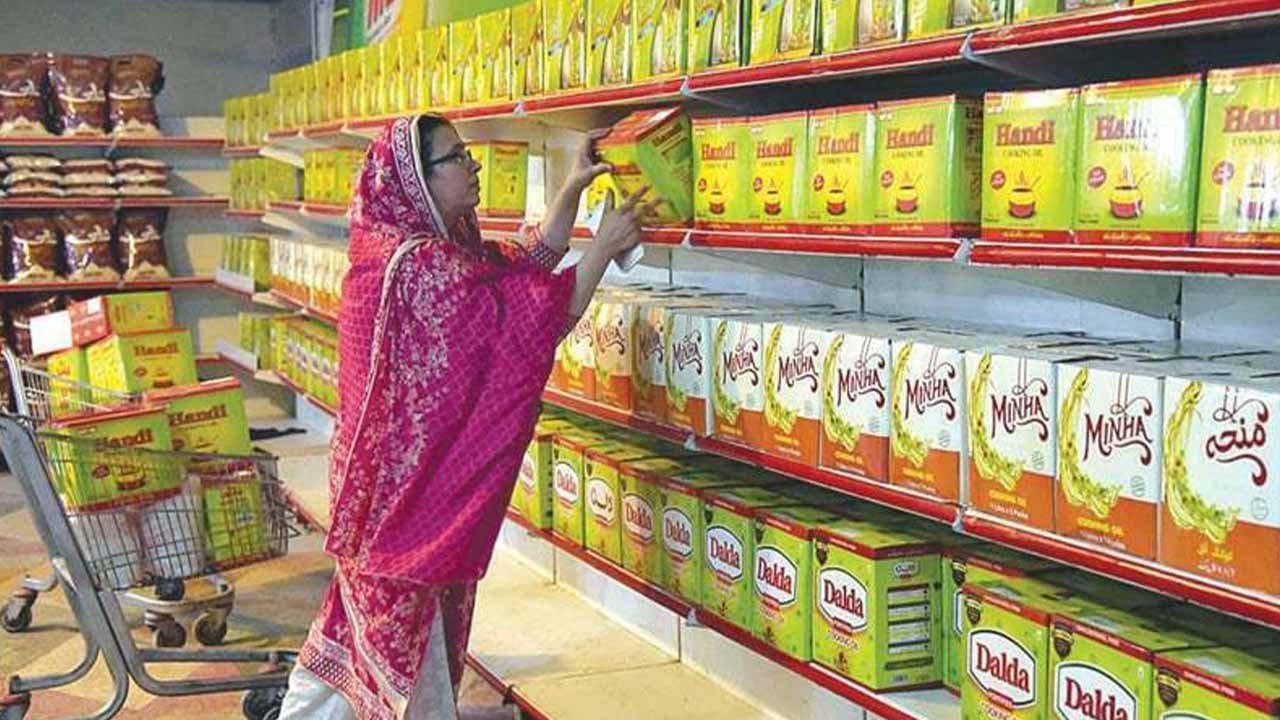
  • Rising inflation forces over 80% of Pakistanis to reduce monthly expenses

    Rising inflation forces over 80% of Pakistanis to reduce monthly expenses

    A recent survey conducted by PulseConsultant in the month of May has shed light on the significant increase in downtrading among urban Pakistanis, attributed to the high inflation rate. The study surveyed more than 1,360 respondents across the top 12 cities of Pakistan.

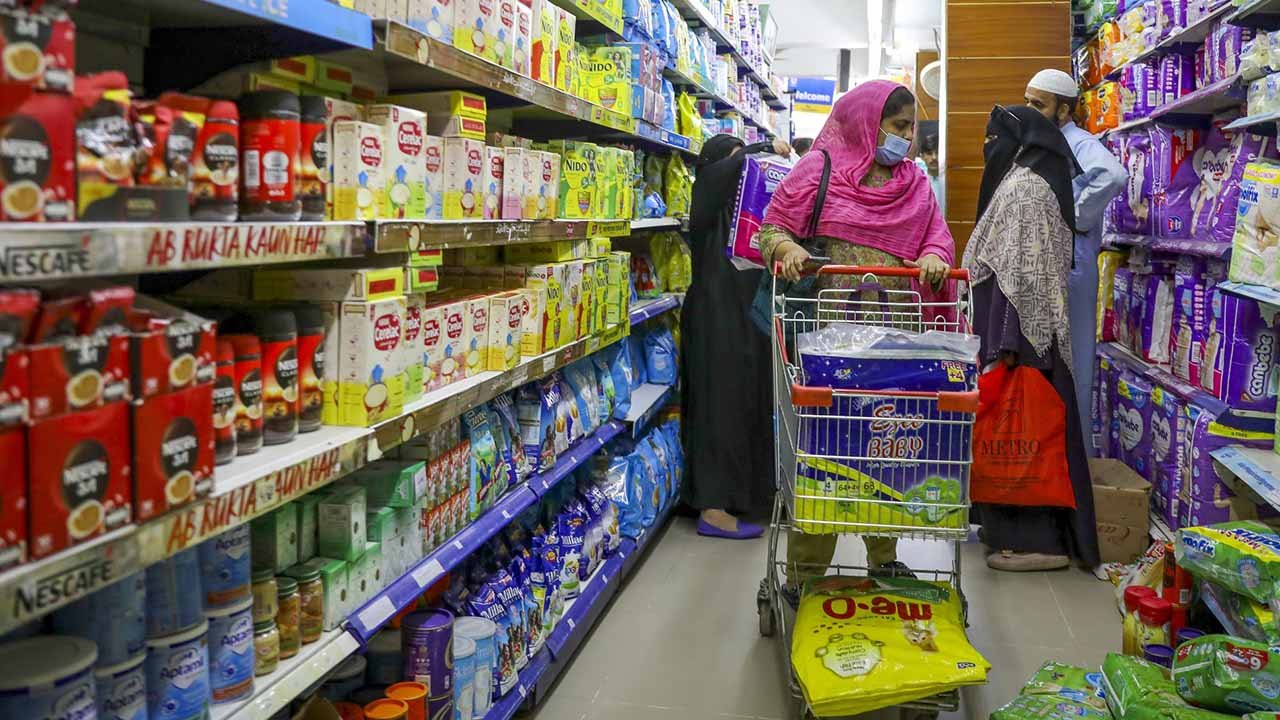
    The findings of the study reveal a notable shift in consumer behavior and attitude towards purchasing and consumption patterns in light of the current inflation wave. As prices continue to soar, many respondents have altered their buying preferences to cope with the economic challenges.

    According to the study, 55 per cent of respondents reported that they have switched from expensive brands to more affordable ones. This percentage represents a considerable increase from the previous month of April, where the trend stood at 45 per cent. This shift highlights the growing financial strain faced by consumers, prompting them to seek cost-effective alternatives.

    Moreover, the data indicates a decline in the phenomenon of purchasing the same brands but reducing the quantity. In April, 46 per cent of respondents claimed to be adopting this strategy, whereas in May, the number dropped significantly to 38 per cent, showing an 8 per cent decrease. This suggests that consumers are finding it increasingly difficult to maintain their previous consumption habits.

    In terms of monthly home purchases, the study reveals that 81 per cent of respondents reported a reduction in May, marking a 3 per cent increase compared to April when the figure was 78 per cent. This indicates that consumers are actively curtailing their household expenses in response to the inflationary pressures.

    To gain a deeper understanding of consumer behavior and attitudes towards the current inflation wave, PulseConsultant invites individuals to join their syndicated research initiative. The study aims to gauge the impact of inflation on purchasing and consumption behaviors across 40+ categories, focusing on five parameters: consumption increase/decrease, brand switching, quantity reduction while retaining the brand, changing the stock keeping unit (SKU) while retaining the brand, and category consumption drop.

    The research methodology involves face-to-face interviews with a sample size of 1,704 individuals across the top 17 cities in Pakistan. The gender distribution comprises 30 per cent males and 70 per cent females, while the age group considered is 22-55 years. The socioeconomic classes targeted range from SEC A-D. The research is scheduled to take place over a period of four weeks.

    As inflation continues to affect the purchasing power of consumers in urban Pakistan, the study by PulseConsultant aims to shed light on the evolving trends and behaviors within the market. The findings will help businesses and policymakers make informed decisions to navigate the challenging economic landscape and cater to the changing needs of consumers.

  • Atlas Honda increases bike prices, Honda CG125 now priced at Rs222,900

    Atlas Honda increases bike prices, Honda CG125 now priced at Rs222,900

    Atlas Honda, the leading manufacturer in Pakistan’s two-wheeler industry, has recently announced a revision in the prices of its motorcycles. Effective immediately, the prices have increased up to Rs15,000, depending on the variant.

    As a result, the popular Honda CD70 motorcycle now carries a price tag of Rs149,900, while the base variant of the Honda CG125 is priced at Rs222,900.

    Here are the new prices of all Honda bikes:

    Bike Retail price  (Excluding sales tax) Sales tax — 18 per cent Retail price  (Including sales tax)
    CD70 Rs127,033.90 Rs22,866.10 Rs149,900
    CD70 DREAM Rs136,355.93 Rs24,544.07 Rs160,900
    PRIDOR Rs167,711.86 Rs30,188.14 Rs197,900
    CG125 Rs188,898.31 Rs34,001.69 Rs222,900
    CG125S Rs225,338.98 Rs40,561.02 Rs265,900
    CB125F Rs310,084.75 Rs55,815.25 Rs365,900
    CB150F Rs388,898.31 Rs70,001.69 Rs458,900
    CB150F Rs392,288.14 Rs70,611.86 Rs462,900

    Unfortunately, due to the recurrent price hikes from various bike manufacturers, two-wheelers are gradually becoming a luxury item, with no bike being sold below Rs100,000, even those from Chinese brands.

    Furthermore, the company has also extended the closure of its production plant for 15 days. In a similar move, Yamaha Motor Pakistan has also announced an increase in the prices of its five models, citing the rising cost of production as the primary reason.