Tag: risk

  • SBP calls for action against unauthorised mobile apps providing online banking services

    SBP calls for action against unauthorised mobile apps providing online banking services

    The State Bank of Pakistan (SBP) has raised concerns about commercial banks jeopardising depositors’ funds by allowing unauthorised mobile phone applications to offer online banking services to clients.

    The central bank issued a notification to regulated entities (REs) that provide digital banking services, warning about the use of unlicensed digital lending mobile applications and platforms.

    These applications integrate with customers’ bank accounts for loan disbursement, creditworthiness checks, and collections, posing consumer protection risks and potential harm to banks’ reputation.

    Regulated entities encompass commercial banks, microfinance banks (MFBs), payment system operators, payment service providers, and electronic money institutions (EMIs).

    The central bank explicitly stated that REs should not provide services such as deposits, lending products, mobile application integration with third parties, payment gateway services, credit scoring and creditworthiness checks, wallet services, and/or API integration services to unlicensed digital lending platforms, whether directly or indirectly.

    IT expert Noman Ahmad, speaking to The Express Tribune, emphasised the need for the central bank to disclose the names of financial institutions offering services through unlicensed applications. By doing so, depositors would have the opportunity to withdraw and safeguard their deposits before any unexpected events occur. He expressed surprise that unauthorised mobile platforms were offering banking services despite the SBP’s status as a responsible regulator.

    Banks in Pakistan manage deposits totaling approximately Rs23 trillion and serve 67.52 million depositors in a population of 227 million. The country has 103 million branchless banking accounts, while EMIs oversee 1.60 million accounts (e-wallets).

    The SBP’s notification advises REs to verify the licensing status and authorisation of digital lending platforms and mobile applications from relevant regulatory bodies, including the Securities and Exchange Commission of Pakistan and the central bank itself. This verification should be conducted as part of the know-your-client and customer due diligence processes.

    Furthermore, REs are urged to implement reasonable measures during customer onboarding and transaction monitoring to prevent unauthorised financial service providers from utilising their banking channels and platforms, either directly or indirectly.
  • Pakistan’s default risk hits a 13-year-high, reflecting foreign investors’ lack of faith

    Pakistan’s default risk hits a 13-year-high, reflecting foreign investors’ lack of faith

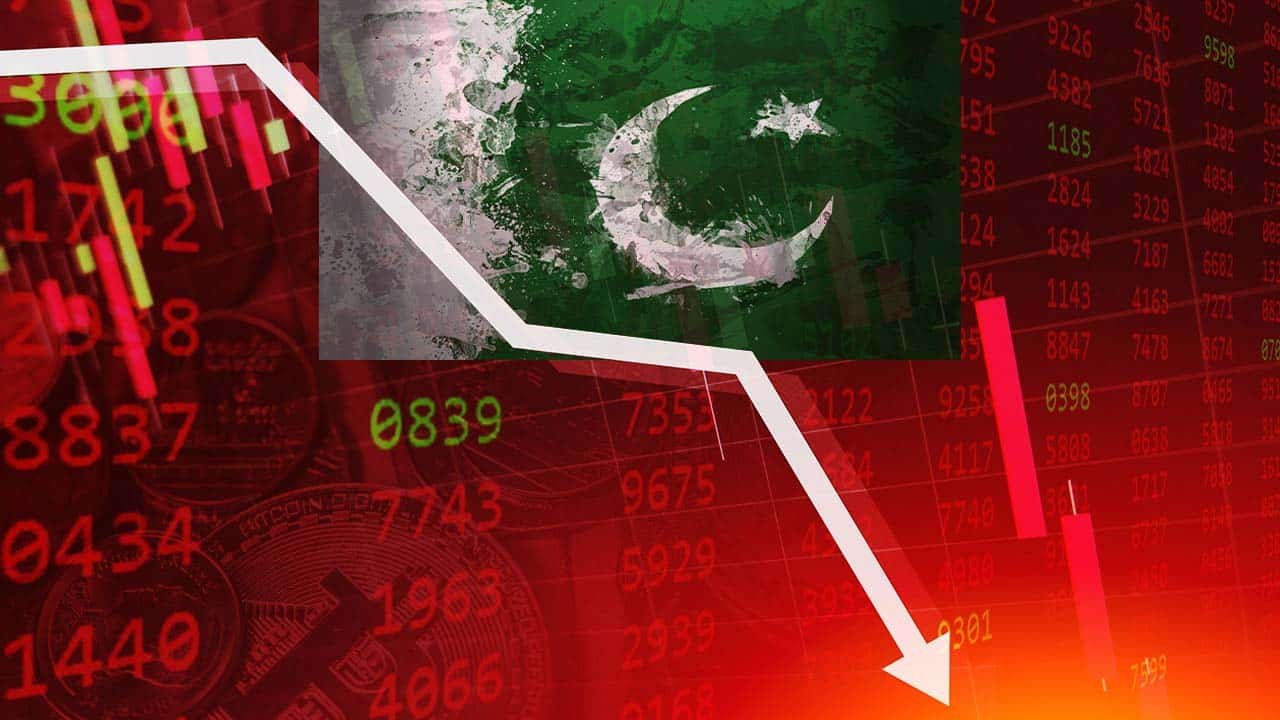
    The risk of default for Pakistan, as determined by the 5-year credit default swap (CDS), increased on Tuesday by 3.07 percentage points in a single day to reach a 13-year high of 52.8 per cent, indicating that foreign investors no longer have confidence in the nation.

    Before the Covid-19 outbreak in Pakistan in February 2020, the CDS was between 5 per cent and 6 per cent.

    According to Express Tribune, owing to uncertainties surrounding the renewal of the International Monetary Fund (IMF) loan programme, it peaked at over 30 per cent in the middle of this year.

    Later, as the major lender resumed its $6.5 billion programme in late August 2022 and subsequently released a $1.2 billion tranche, the CDS experienced a small recovery.

    Today, meanwhile, it is rapidly rising once more, indicating that international investors now believe Pakistan will not be able to pay back its maturing debt.

    On December 5, 2022, the country is required to repay $1 billion to overseas investors against the maturity of the 5-year Sukuk.

    The 5-year Third Pakistan International Sukuk’s yield (rate of return) is quite high, hovering at 145 per cent. Before the Covid-19 epidemic, it was around 10 per cent.

    In addition, the yield on bonds due in 2024 and 2025 is currently high at 90 per cent and 57.5 per cent, respectively, up from a low of 10 per cent in the past.

    The country’s foreign exchange reserves have decreased by about $9 billion over the past 10 months, which has caused alarm among the foreign investors.

    They are currently only covering about 1.10 months’ worth of imports at $7.6 billion, down from $20 billion (three months’ worth of imports) in August 2021.

    Ishaq Dar, the finance minister, and Miftah Ismail, his predecessor, have taken every precaution to avoid the likely default.

    They have repeatedly reassured the foreign investors that when the time came, the nation would easily repay the maturing $1 billion in December as well as fulfil other international payment obligations.

    Foreign investors are receiving warnings from the situation that the nation may default.

    However, the leadership of the nation has fully secured the $36–40 billion needed from international lenders for the current fiscal year 2023 to pay off the nation’s approximately $21 billion in foreign debt, finance approximately $10–12 billion current account deficit, and increase its foreign exchange reserves to approximately $16 billion by June 30.

    According to experts, the country’s foreign exchange reserves will increase and confidence among foreign investors will be restored with the arrival of $1.5 billion from the Asian Development Bank (ADB) in a few days and another $500 million from the Asian Infrastructure Investment Bank (AIIB) in the current month.

    They continued by saying that the inflows should also aid in lowering bond and CDS yields.

    Experts said that Saudi Arabia was the destination of Prime Minister Shehbaz Sharif’s official visit. The host nation has declared that it is resuming its investment ambitions, which include establishing an oil refinery in Pakistan for an investment of $10 billion.

    The Kingdom’s investment choice coming to fruition will also aid in regaining the trust of foreign investors in Pakistan.

    When PM Shehbaz travels to the second-largest economy in the world in November, the nation is also anticipated to get a rollover loan from China worth $6.3 billion, they claimed.

  • PKR continues losing streak against US dollar, sheds Rs1.48

    PKR continues losing streak against US dollar, sheds Rs1.48

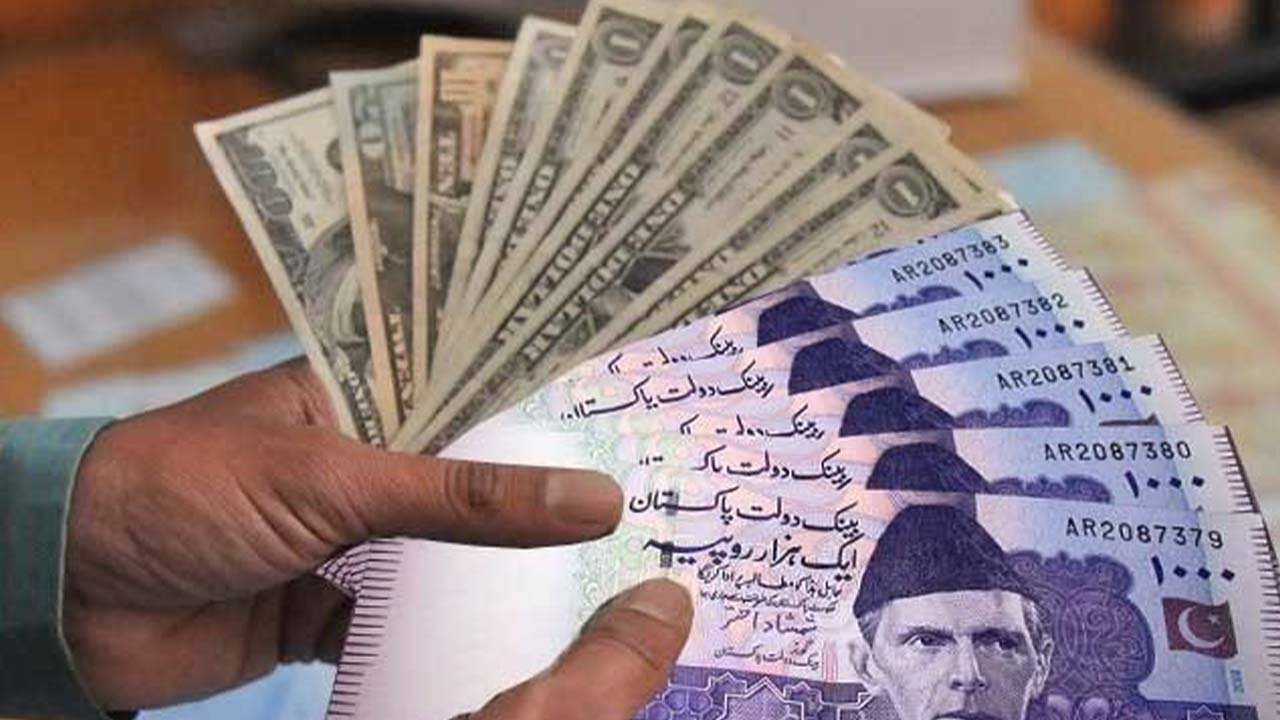
    The Pakistani currency plummeted further against the US Dollar (USD) on April 20, with losses reported on the interbank exchange. At the completion of today’s session, the Pakistani rupee (PKR) lost Rs1.48 versus the US dollar.

    It declined by 0.80 per cent versus the greenback, closing at Rs185.92, after shedding Rs1.90 in the interbank market on Tuesday, April 19th, and concluding at Rs184.44. During today’s open market session, the Indian rupee (INR) fell to an intraday low of Rs185.95 over the US dollar.

    The local currency weakened against the dollar as businesses remained under pressure amid the ongoing dialogue between Pakistan and the International Monetary Fund (IMF). The Pakistani government is likely to undertake certain difficult and problematic steps in order to revive the local economy.

    Read more: PKR declines against US Dollar after winning for a week

    Oil prices rallied following steep losses the previous day as concerns about tighter supply from Russia and Libya arose, although industry data showed a decline in US crude inventories in the previous week.

  • Almost 25,000 cases of lumpy skin disease diagnosed in cattle in Sindh, humans not at risk

    Almost 25,000 cases of lumpy skin disease diagnosed in cattle in Sindh, humans not at risk

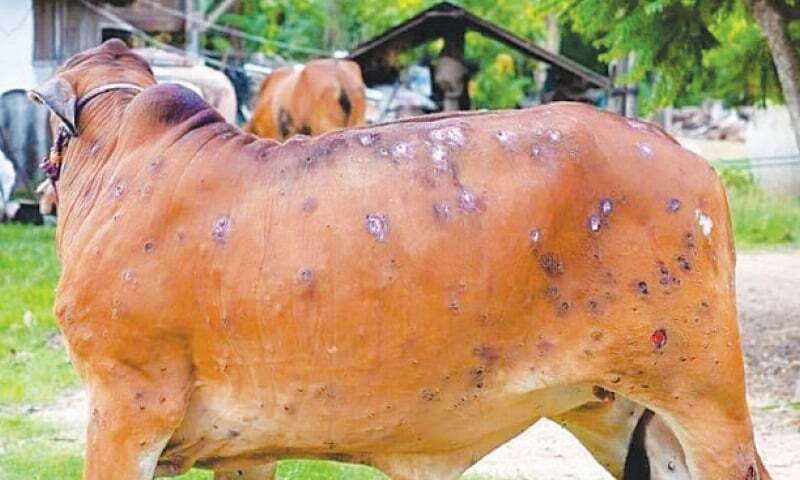
    At least 750 cases of lumpy skin disease have been reported in various parts of Sindh in 24 hours, Sindh Livestock Secretary Tameezuddin Khero has said.

    The number of infected cattle in the province has risen to 24,948, of which 8,491 are recovered and 16,295 are under-recovery, whereas 162 deaths have been reported.

    Talking about the possibility of transmission of disease to humans, Tameezuddin said, “Humans are not at risk as meat and milk were safe for consumption.

    “It is transmitted by blood-sucking insects such as certain species of flies and mosquitoes, or ticks.”

    As per the provincial task force, as many as 156 animals have died due to the infectious disease of lumpy skin.

    Most cases are reported from, Karachi, Thatta, Sujawal, Badin, Hyderabad, Tando Mohammad Khan, Tharparkar, Umerkot, Mirpurkhas, Sanghar, Tando Allahyar, Matiari, Shaheed Benazirabad, Naushahro Feroze, Ghotki, Khairpur, Shikarpur, Jacobabad, Kashmore, Qamber Shahdadkot, Larkana, Dadu, Jamshoro, Thana Bula Khan, Kachho and Johi.

    The disease had its origin in Africa. The livestock department has advised cattle owners to keep sick animals isolated from healthy ones and to use an anti-mosquito spray on a regular basis to prevent skin disease.