Tag: RSF

  • Genocide in Sudan: What is happening?

    Genocide in Sudan: What is happening?

    Khartoum, the capital of Sudan, has been home to 6,000,000 people. This year, on April 15, a confrontation ensued between the Sudanese Armed Forces (SAF) and the Rapid Support Forces (RSF) paramilitary group.

    The rise in hostilities in April 2023 stemmed from weeks of strain between the RSF and the SAF over “security force reform during negotiations for a new transitional government”. The RSF and SAF had jointly upended Sudan’s transitional government in October 2021.

    In the course of a few short days that very month, more than 4,000 people were wounded and 500 people were killed.

    In addition to the casualties, 40 out of 59 hospitals have been bombed and are now out of service.

    Resultantly, there is an extreme dearth of water, food, and fuel since the fighting has continued to escalate as powerful weapons, airstrikes and artillery have been used. The civilians, on the other hand, are ensnared in the crossfire.

    Since April, Action on Armed Violence has noted 102 incidents of explosive violence in Sudan and 1,830 civilian casualties, making 2023 Sudan’s deadliest year since 2010.

    However, the United Nations humanitarian chief revealed in October that since April, the paramilitary group has killed up to 9,000 people and created “one of the worst humanitarian nightmares in recent history”. Similarly, in November, Armed Conflict Location & Event Data Project recorded over 2,800 political violence incidents and more than 10,400 fatalities.

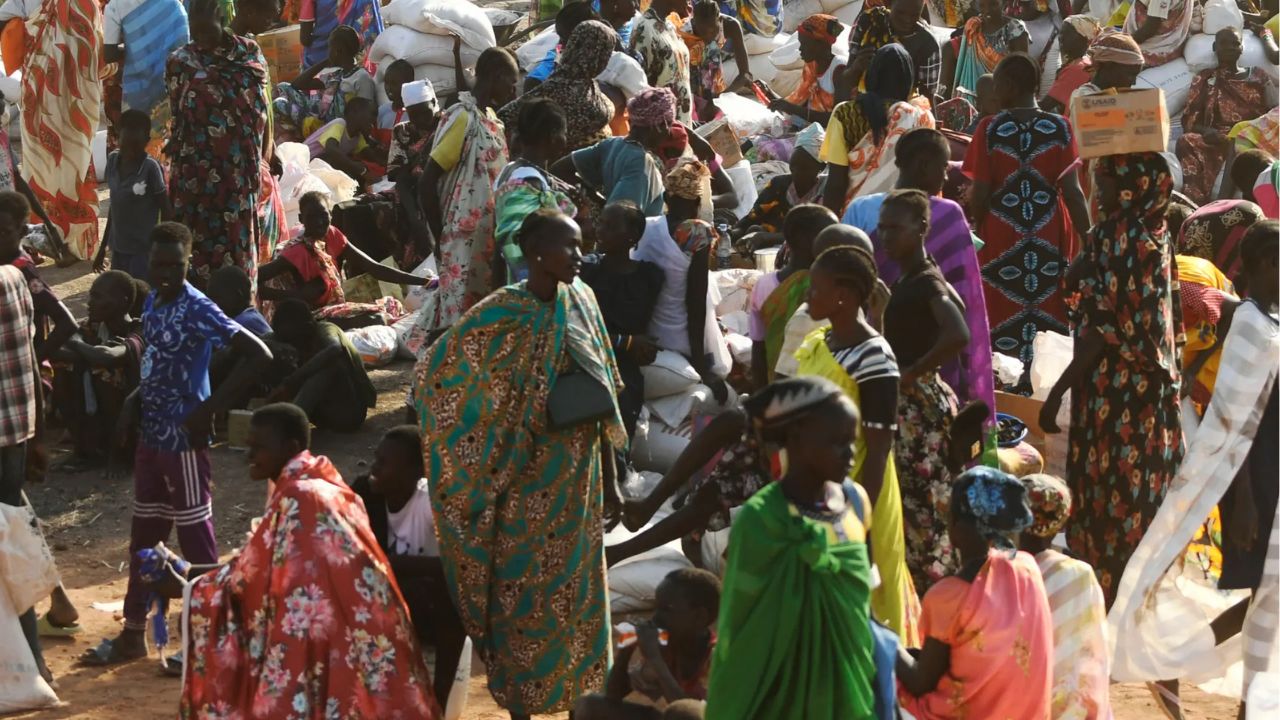
    Additionally, over 300,000 refugees have reportedly fled Sudan’s war seeking safety and refuge in Chad where already 580,000 displaced people reside.

    The situation in Sudan is now exacerbating with serious concerns for women and children being abducted, chained, and held in “inhuman, degrading slave-like conditions” in areas controlled by the Rapid Support Forces (RSF) in Darfur.

    Brief background

    The Darfur war goes back to its origins of alienation of non-Arab tribes by Khartoum’s policies, paving a path for grievances. The trouble spiralled on February 26, 2003, when a newly-founded group known as the Darfur Liberation Front (DLF) — later called the Sudan Liberation Movement/Army (SLM/A) — claimed an attack on Golo, the headquarters of Jebel Marra District.

    Along with the Justice and Equality Movement (JEM), the group then instigated a revolt to protest the Sudanese government’s discrimination against its non-Arab population, and sought bipartisanship within the Arab-ruled Sudanese state.

    The-then President, Omar al-Bashir, countered the situation by backing and arming Arab militias known as Janjaweed to fight the insurgency in Darfur.

    Named the Popular Defence Forces, they operated in alliance with Sudanese government forces to exterminate the African Fur, Masalit, and Zaghawa ethnic groups which produced the rebels.

    And even though a ceasefire was called in 2004 and African Union (AU) troops deployed, the UN revealed that the conflict and the leading humanitarian crisis (callous attacks, disease, and hunger) had killed 300,000 people by 2007 and displaced 2.5 million.

    Mediation attempts in Abuja (2006), Tripoli (2007) and Doha (2009) were unsuccessful in resolving the friction between Khartoum and the rebel forces in Darfur.

    The United Nations Security Council had permitted a joint UN-AU peacekeeping mission in July 2007 but after its exit in 2019, the local armed groups took up from where they left.

    Children of Sudan

    Currently, 19,000,000 (19 million) children are out of school in Sudan while 10,400 schools have been shut down.

    They are vulnerable to the present and long term perils such as displacement, sexual violence, war recruitment, and death.

    Moreover, without resources, illnesses such as cholera are also at an all time high.

  • More than 30 Pakistanis living in Sudan safely reach Jeddah

    More than 30 Pakistanis living in Sudan safely reach Jeddah

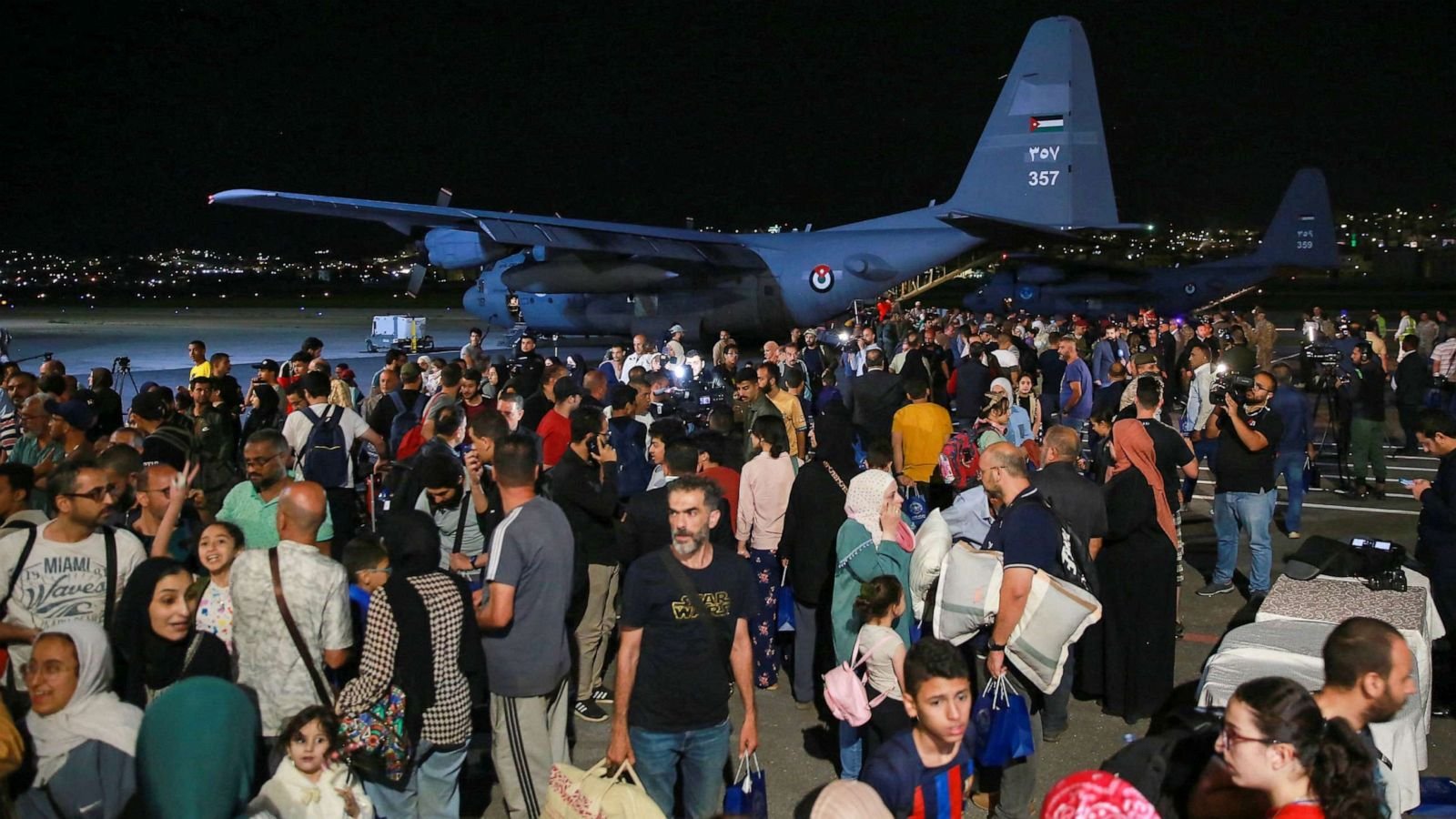
    Amid the intensifying conflict in Sudan, the Pakistani Ministry of Foreign Affairs has said that a ship carrying 37 citizens has arrived in Jeddah from Port Sudan.

    On Tuesday, Foreign Minister Bilawal Bhutto Zardari confirmed that the Pakistani diplomatic mission in Sudan had evacuated 700 countrymen to safety, and the status of the remaining nearly 1,500 Pakistanis currently in the African country was being closely monitored.

    Sudan has a long history of civil wars. However, the latest escalation in fighting came on April 15, which has turned residential areas into battlefields.

    Air strikes and artillery have killed at least 512 people and wounded nearly 4,200.

    The violence between the military and the well-armed Rapid Support Forces (RSF) paramilitary group has triggered a humanitarian crisis.

    Tensions began when members of the RSF were redeployed around the country in a move that the army saw as a threat.

  • Shehryar Afridi calling Pakistani community in Europe to physically attack a journalist is unacceptable, says RSF

    Shehryar Afridi calling Pakistani community in Europe to physically attack a journalist is unacceptable, says RSF

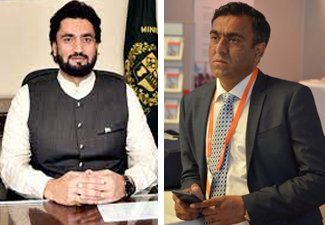
    Reporters Without Borders also known as Reporters Sans Frontiers (RSF) took to Twitter to condemn the attack on Younas Khan, a journalist who questioned the chairperson of the Parliamentary Special Committee on Kashmir Shehryar Khan Afridi in France during an event.

    RSF’s condemnation comes in relevance to Afridi’s leaked audio, where he was not happy with the organisers of the event during which Younas Khan questioned him whether he had any interactions with parliamentarians or Tink Tank when he was touring France.

    RSF tweeted, “Pakistan: #RSF strongly supports Paris-based Pakistani journalist @younaskhan1977, who is now the target of death threats after he was thrashed and insulted by a famous Pakistani politician, @ShehryarAfridi1, recently visiting #France.”

    “@younaskhan1977’s only wrongdoing was to ask a question that displeased @ShehryarAfridi1. In a leaked audio clip, the politician can be heard calling members of the Pakistani community in Europe to physically attack the journalist. These threats are unacceptable,” added RSF.

    Afridi’s leaked audio revealed that he was unhappy and could be heard talking to the organisers that he came to the event at their request. “If I did not answer the questions there, people would have said that I was scared and ran away,” said Afridi.

    “When the journalist was asking me questions, why did you [organisers] stay silent, why didn’t you ask him why this news was published?” Afridi questioned using explicit language.

    Shehryar Afridi told the organisers of the ceremony that they did not miss the chance to demean him, adding, “As far as I am concerned, it would have been good, but it is a matter of Pakistan’s honour.”

    “If you do not ask this journalist about the news, I will not spare you,” warned Afridi.

  • Reporters Without Borders calls PM Khan a predator, Marriyum Aurangzeb agrees

    Reporters Without Borders calls PM Khan a predator, Marriyum Aurangzeb agrees

    Pakistan Muslim League-Nawaz (PML-N) information secretary Marriyum Aurangzeb has claimed that the latest report of the Reporters Without Borders also known as Reporters Sans Frontiers (RSF), is a charge-sheet against the Pakistan Tehreek-e-Insaf (PTI) government, reports Dawn.

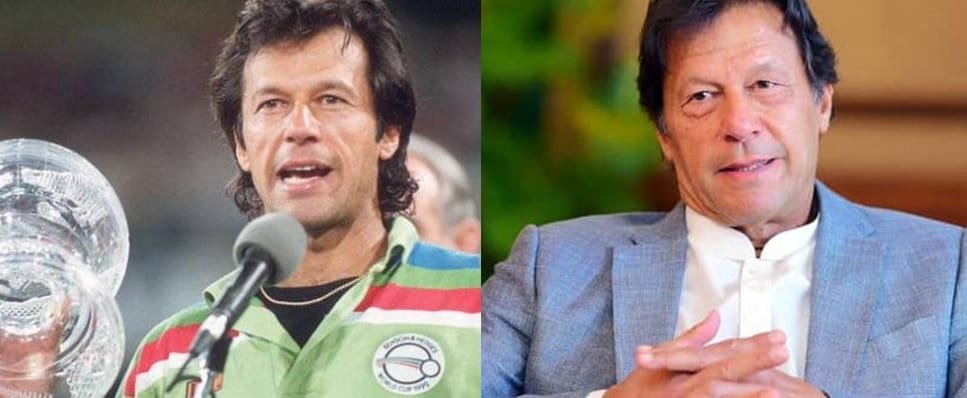
    Reporters Without Borders categorically calls Prime Minister Imran Khan a ‘predator since taking oath’. The report has been published under the caption “RSF’s 2021: Press freedom predators gallery – old tyrants, two women and a European.”

    In a statement on Monday, Marriyum Aurangzeb said Imran Khan’s alleged “authoritarian attitude” and character was destroying Pakistan’s image abroad.

    “The report says that the PTI government is worse than military dictatorships in Pakistan when it comes to press freedom. The Human Rights Watch, Pakistan Press Freedom Report, and Freedom Network Report had already declared the Imran government as the worst media gagging administration in the history of the country,” said Aurangzeb.

    Aurangzeb said the latest report of the Reporters Without Borders had exposed the “predatory behaviour” of the government. She said the actions by the PTI government had not only reflected negatively on Pakistan’s journalism but also adversely affected the country’s position when it came to Financial Action Task Force and the GSP Plus status by the European Union.

    “It mentions that journalists are harassed, abducted, and assaulted for crossing the red lines defined by the state. The report also pointed out that freedom of expression on social media is also being curbed through new dark and draconian laws,” she said while quoting from the report.

    Meanwhile, Focal Person to the Prime Minister on Digital Media Dr Arslan Khalid took to Twitter and called the RSF report a “typical propaganda”.

    Arslan further added that it was comical that the RSF was talking about free speech and yet calling people trolls who “dare to disagree with journalists”.

    Reporters Without Borders has published a gallery of grim portraits on its official website. It includes 37 heads of state or government who crack down massively on press freedom. Some of these “predators of press freedom” have been operating for more than two decades while others have just joined the blacklist, which for the first time includes two women and a European predator.

    19 of these predators rule countries that are coloured red on the RSF’s press freedom map, meaning their situation is classified as “bad” for journalism, and 16 rule countries coloured black, meaning the situation is “very bad.” The average age of the predators is 66. More than a third (13) of these tyrants come from the Asia-Pacific region, says the report.

    Besides Prime Minister Imran Khan, the RSF list includes Indian Prime Minister Narendra Modi, Saudi Arabian Crown Prince Mohammed bin Salman, Turkish President Recep Tayyip Erdogan, Chinese President Xi Jingping, Brazilian President Jair Bolsonaro, Hungarian Prime Minister Viktor Orbán, Bangladesh Prime Minister Sheikh Hasina, Syria’s President Bashar al-Assad, Russian President Vladimir Putin, Tajik President Emamoli Rakhmon, Sri Lanka’s President Gotabaya Rajapaksa, King of Bahrain Hamed bin Isa Al Khalifa and Supreme Leader of North Korea Kim Jong-un.