Tag: rupee devaluation

  • Govt increases defence budget by 16% to Rs1.8 trillion

    Govt increases defence budget by 16% to Rs1.8 trillion

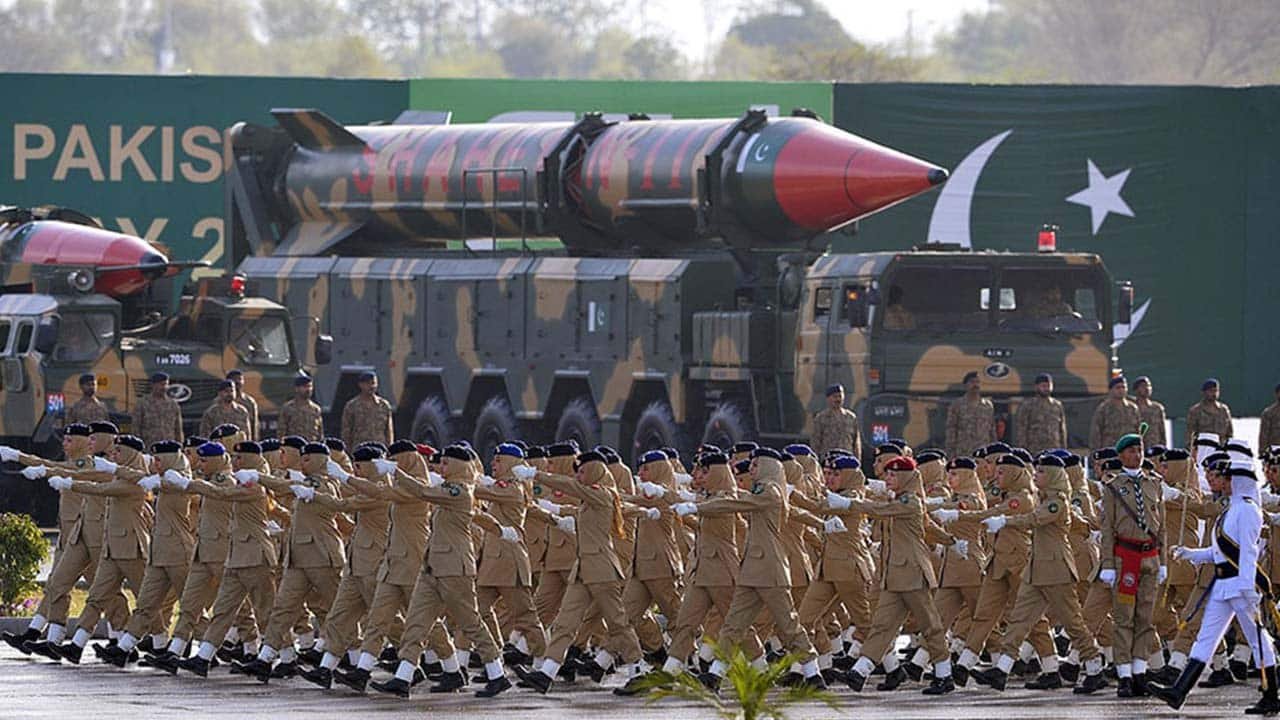
    In response to the prevailing internal and external security challenges faced by Pakistan, the federal government has put forward a proposal for a substantial 16 per cent rise in the defence budget. According to the budget document, the allocation for defence in the fiscal year 2023-24 is projected to be Rs1,804 billion, signifying an increase from the revised defence spending of Rs1,591 billion assigned for the outgoing fiscal year.

    Experts opine that the justification for a 15.7 per cent surge in the defence budget stems from the record inflation and devaluation of the rupee against the dollar witnessed over the past year. A detailed examination of the budget reveals that the figure of Rs1,804 billion excludes Rs563 billion designated for retired military personnel pensions, Rs280 billion for the armed forces development program and other crucial expenses, and Rs58 billion for UN peacekeeping missions.

    According to the 2023-24 budget document, out of the total defence allocation, Rs705 billion has been set aside for employee-related expenses, Rs442 billion for operational costs, Rs461 billion for local purchases and import of arms and ammunition, and Rs195 billion for civil works. Interestingly, all three branches of the military—the army, navy, and air force—have received equal budget increments, albeit with the army receiving the largest share due to its size and role.

    Pakistan’s defence spending currently accounts for 1.7 per cent of its GDP, representing a decline compared to the previous year. In the 2022-23 fiscal year, defence spending constituted around 2 per cent of the country’s GDP, which expanded due to the reevaluation of the economy.

    When comparing the average spending per soldier, Pakistan allocates $13,400, while India dedicates $42,000, Saudi Arabia $371,000, Iran $23,000, and the United States allots a substantial $392,000 annually. It is important to note, however, that the disparity lies in the significant disparity in the sizes of their respective economies compared to Pakistan’s.

    Defence expenditure has consistently been a topic of discussion, with some advocating for greater transparency and open debate regarding the military budget. In recent years, the government has provided more detailed information about the defence budget. Nevertheless, there has been no open parliamentary debate on the subject. Observers argue that the increase in the defence budget is warranted, considering the imminent external and internal security challenges faced by the country.

    Despite the withdrawal of US troops from neighbouring Afghanistan, Pakistan continues to deploy a substantial number of troops along its western border and erstwhile tribal areas to combat the threat of terrorism. Similarly, tensions persist between Pakistan and India, although the restoration of a ceasefire has provided some respite.
  • Pak Suzuki follows Atlas Honda’s lead, raises motorcycle prices amid economic crisis

    Pak Suzuki follows Atlas Honda’s lead, raises motorcycle prices amid economic crisis

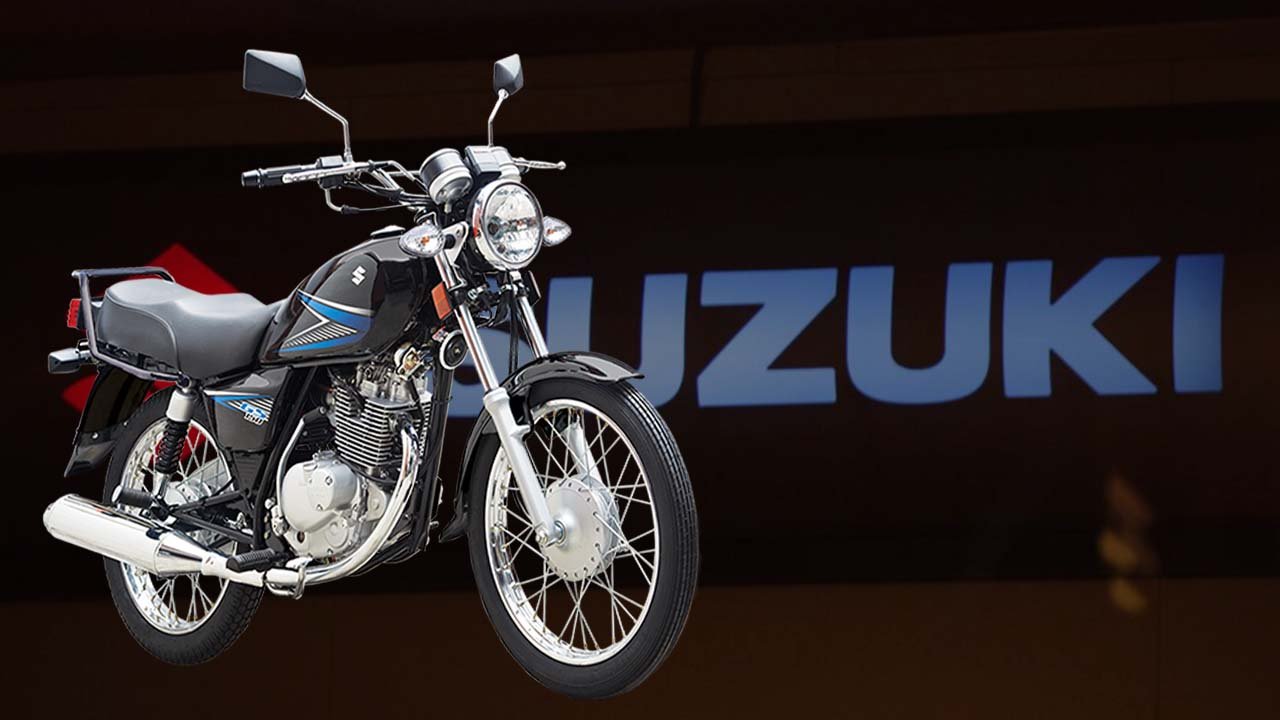
    In the midst of Pakistan’s economic crisis, the country’s automobile industry is struggling to stay afloat. One of the major players in the two-wheeler market, Pak Suzuki Motors, has recently increased the prices of its motorcycles due to the continuous devaluation of the rupee.

    This comes as no surprise since Pakistan’s auto industry heavily depends on imports and has been facing obstacles due to restrictions on the opening of letters of credit (LCs) after the rupee’s depreciation.

    According to a notification sent by the company to its dealers, the new rates will apply from May 9 and remain unchanged until further notice. The retail prices include the ex-factory product price and freight charges incurred on motorcycles that are delivered to dealerships.

    The notification mentioned that the rate of GD110s has increased to Rs335,000, GS150 to Rs364,000, GSX125 to Rs488,000, GR150 to Rs521,000, and GW250JP to Rs1.04 million.

    It’s worth noting that this isn’t the first time the automobile industry has seen such a price hike. Atlas Honda, Pakistan’s biggest player in the two-wheeler segment in terms of market share, recently increased its motorcycle prices for the fourth time this year, making them more expensive by Rs5,000-15,000.

    As the industry continues to face hindrances, it remains to be seen how it will adapt to the current economic conditions.

    Here are the new prices for all Suzuki motorcycles:

    Motorcycle Price (in PKR)
    GD110s Rs335,000
    GS150 Rs364,000
    GSX125 Rs488,000
    GR150 Rs521,000
    GW250JP Rs1,040,000
  • Rising petrol prices and rupee devaluation push inflation to 47.23% in Pakistan ahead of Eid

    Rising petrol prices and rupee devaluation push inflation to 47.23% in Pakistan ahead of Eid

    According to data released by the Pakistan Bureau of Statistics (PBS), a steep increase in the prices of essential food items such as chicken and petrol has pushed weekly inflation to 47.23 per cent year-on-year for the week ending on April 19. Inflation has risen 0.51 per cent week-on-week, compared to a 0.60 per cent decrease in the previous week.

    The rising inflation has been attributed to the increase in sensitive price indicators such as LPG, potatoes, petrol, tea, gur, matchbox, bread, chicken, bananas, broken basmati rice, and rice irri-6/9. However, a major decrease was observed in the prices of tomatoes, onions, garlic, sugar, wheat flour, mustard oil, cigarettes, and pulse gram.

    For the week under review, the SPI (Sensitive Price Index) was recorded at 251.83 points, against 250.56 points registered last week and 171.05 points recorded during the week ended April 21, 2022. Fahad Rauf, head of research at Ismail Iqbal Securities, said that SPI experienced an increase mainly driven by a 4 per cent and 2 per cent increase in the prices of petrol and chicken, respectively.

    During the week, the government raised petrol prices by Rs10 per litre, bringing the new price to Rs282 per litre, due to the impact of rising international oil prices and rupee devaluation. Chicken prices have also risen mainly due to increased seasonal demand in Ramadan and the arrival of Eid.

    Prices of commodities have risen significantly over the last year on account of devaluation as well as the massive floods that devastated food crops across most of the fertile plains of the country. Different weights are assigned to various commodities in the SPI basket, and prices of commodities have risen on a year-on-year basis. The PBS compiles the SPI by collecting prices of 51 essential items from 50 markets in 17 cities of the country.

    During the week under review, out of 51 items, prices of 29 (56.86 per cent) items increased, eight (15.69 per cent) items decreased, and prices of 14 (27.45 per cent) items remained unchanged. The PBS data attributed the year-on-year rise in SPI to the jump in the prices of goods such as cigarettes, wheat flour, gas charges for Q1, tea, diesel, potatoes, bananas, eggs, petrol, broken basmati rice, rice irri-6/9, pulse moong, and plain bread. However, a decrease was observed in the prices of tomatoes and chilli powder.

  • Gold prices in Pakistan hit historic high of Rs143,600 per tola

    Gold prices in Pakistan hit historic high of Rs143,600 per tola

    Gold prices in Pakistan continued to rise as the Pakistani currency fell deeper versus the US dollar, pushing the precious metal to a high of Rs143,600 per tola.

    The price of gold per tola increased by Rs1,950 per tola, as per the All Sindh Sarafa Jewellers Association (ASSJA). Moreover, the price per 10 gramme jumped by Rs1,672 to Rs123,114.

    Following yesterday’s gain of Rs1,950 per tola, the gold price has risen by Rs5,250 in the last four days (Friday-Tuesday).

    During the current economic crisis, gold has resurfaced as a secure investment, and consumers have been eagerly buying gold to preserve their savings against inflation.

    The rupee’s collapse, which reached an all-time low of Rs201.41 versus the US dollar in the interbank market, compelled the gold trading body to drastically raise the bullion price.

    The price of yellow metal fell by $4 per ounce on the international market to settle at $1,858. When compared to the Dubai market, gold prices in Pakistan are roughly Rs1,500 lower.

  • Suzuki increases bike prices for the fourth time in 2020

    Suzuki increases bike prices for the fourth time in 2020

    Pak Suzuki Motor Company Limited (PSMC) has increased the prices of its bike for the 4th time this year.

    The first price increased in January and the second came in July. The third one happened a few months ago and the recent one happened to be the fourth.

    The automakers said that depreciating local currency and the COVID-19 has impacted the sales of bikes. The cause of the recent price increase is to meet the operational expenses of the company.

    Though business has started getting normal in recent months after the ease of lockdown, and the rupee has also shown strength against the dollar, prices continue to increase.

    It is pertinent to mention here that PSMC has recorded a quarterly loss in the 3rd quarter of 2020, marking it to be their 8th consecutive quarterly loss.

    It bears mentioning that PSMC has recorded a quarterly loss in the 3rd quarter of 2020, marking it to be their 8th consecutive quarterly loss.

    In the bike segment, Atlas Honda remains the undisputed king in terms of sales figures, whereas Yamaha is also faring well, although official sales figures are not yet known. PSMC, with its limited product lineup and sky-high prices, continues to struggle to establish itself as a strong competitor for Honda and Yamaha.