Tag: Russia

  • Pakistan pushed into darkness due to Europe’s decision to cut off Russian fuel

    Pakistan pushed into darkness due to Europe’s decision to cut off Russian fuel

    The European attempt to abandon Russian oil is intended to punish Moscow for its invasion of Ukraine. It’s also wreaking havoc thousands of miles away, throwing Pakistan into darkness, destabilising one regime, and jeopardising the country’s new leadership’s stability.

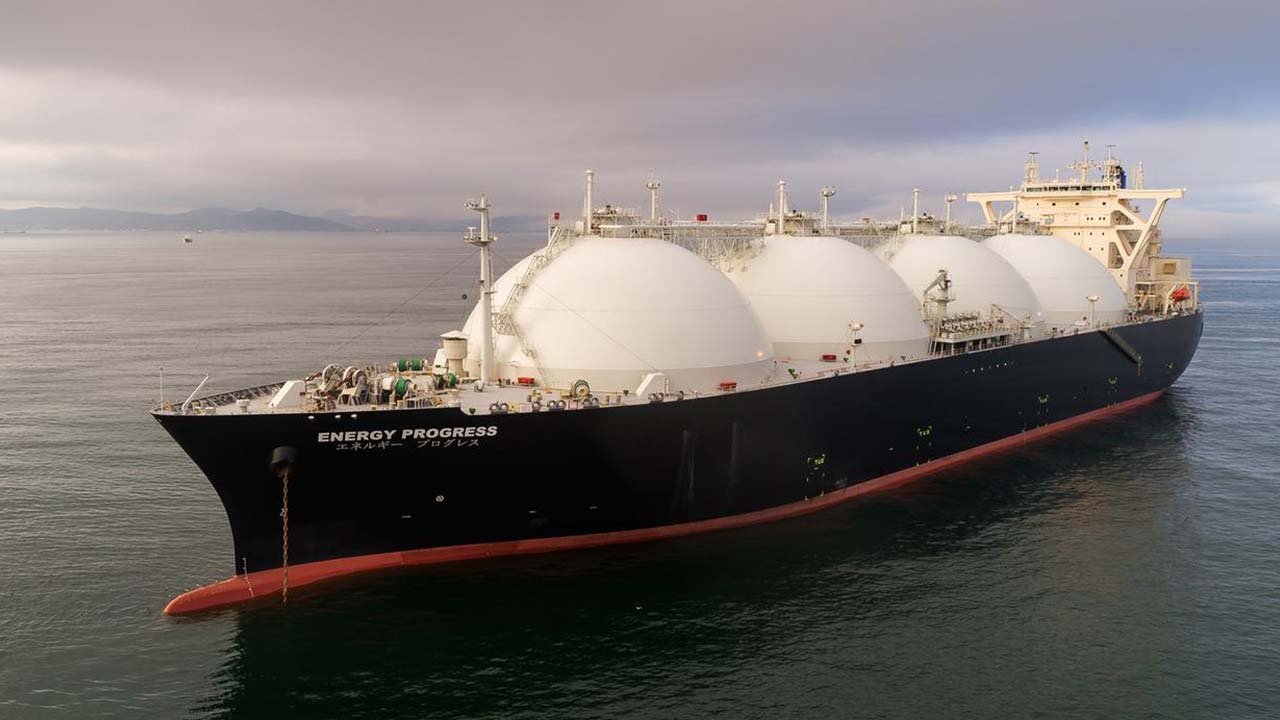
    According to Bloomberg, Pakistan invested heavily in liquefied natural gas and inked long-term contracts with Italian and Qatari suppliers. Some of those suppliers have now defaulted, although continuing to sell into the more lucrative European market, putting Pakistan in the very situation it hoped to avoid.

    The country took particular precautions a decade ago to protect itself from the sorts of price increases that are currently shaking the market.

    Last month, the government spent about $100 million on a single LNG shipment from the spot market to avert outages during the Eid holiday, a record for the cash-strapped country.

    The country’s LNG costs could reach $5 billion in the fiscal year ending in July, more than double what they were a year ago. Even still, the government is powerless to protect its citizens: the IMF is in talks to bail out the country on the condition that it reduces fuel and energy subsidies.

    Outages lasting more than 12 hours

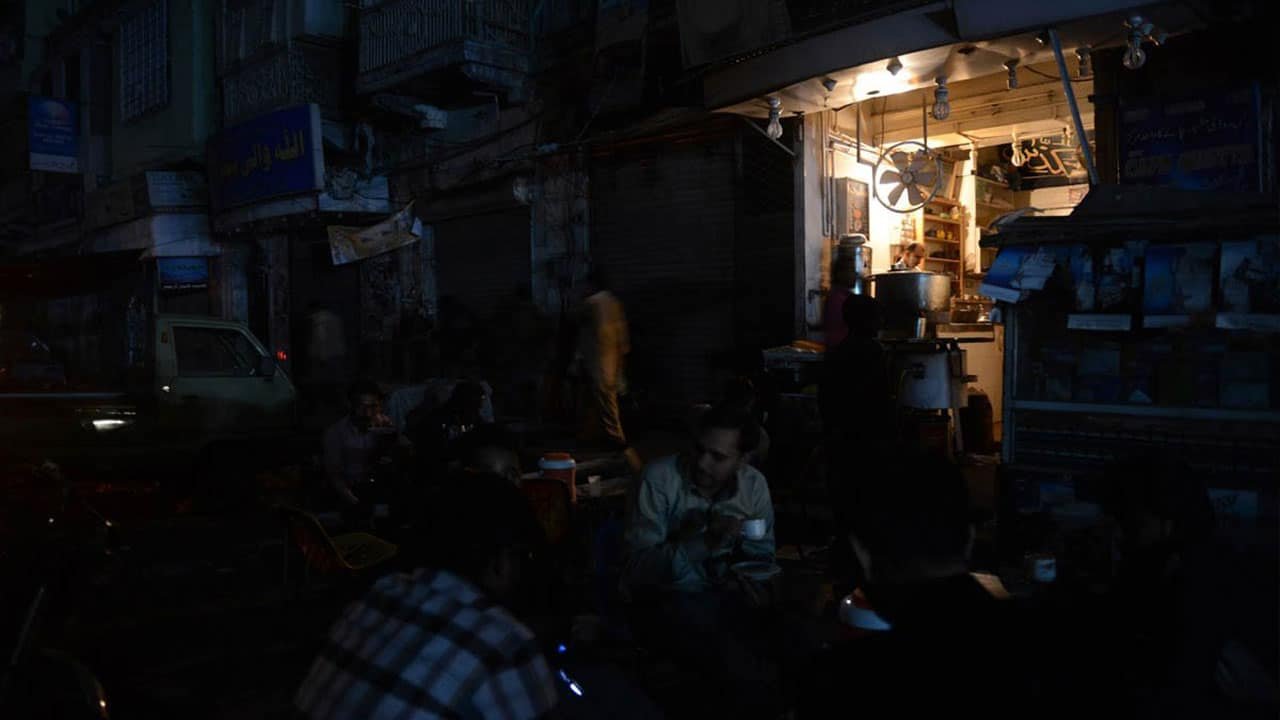
    Parts of Pakistan are currently suffering scheduled blackouts lasting more than 12 hours, reducing the ability of air conditioning to provide respite during the current heat wave. The former prime minister continues to gather enormous audiences to demonstrations and marches, exacerbating voters’ discontent with 13.8 per cent inflation. The hosts of prime-time talk shows frequently discuss how Pakistan will obtain the petroleum it requires and how much it would have to spend.

    The administration introduced a fresh set of energy-saving measures last week. Civil servants were relieved of their normal Saturday shifts, and the security budget was slashed by half.

    Prime Minister (PM) Shehbaz Sharif remarked in an April tweet before of the Eid holiday, “I am acutely aware of the sufferings people are facing”. That same week, he ordered his government to resume purchasing costly overseas natural gas shipments.

    He also warned earlier this month that they don’t have the money to keep importing gas from other countries.

    Rerouted supply to power plants

    There will be more than just outages as a result of the supply shortage. The government has rerouted existing natural gas supply to power plants, causing fertiliser manufacturers to be shortchanged. This approach could jeopardise the next harvest, resulting in even higher food prices the following year. Backup generators are being used by cellphone towers to keep service going during the blackouts, but they, too, are running out of fuel.

    There’s not much hope in the future. LNG prices have risen by over 1,000 per cent in the previous two years, first due to post-pandemic demand and subsequently due to Russia’s invasion of Ukraine. Russia is Europe’s largest natural gas supplier, and the possibility of supply disruptions pushed spot rates to an all-time high in March.

    Increasing LNG demand in Europe

    Meanwhile, Europe is increasing its need for LNG. Europe’s LNG imports have increased by 50 per cent so far this year compared to the same period last year, and show no signs of slowing down. As they cut ties with President Vladimir Putin’s regime over the crisis in Ukraine, European Union policymakers created a plan to considerably increase LNG deliveries as an alternative to Russian gas.

    Floating import terminals are being built at a breakneck pace in countries like Germany and the Netherlands, with the first ones set to open in the next six months.

    “Europe is draining LNG from the rest of the globe,” according to Steve Hill, executive vice president of Shell Plc, the world’s largest LNG trader. “However, this means that less LNG will be sent to developing markets”.

    Pakistan was formerly thought to be the LNG industry’s bright future. Demand for the fuel had peaked in developed markets by the mid-2010s. However, technological developments had reduced the costs and time it took to build import terminals, and new gas sources had reduced the cost of the fuel itself.

    Poor nations could finally contemplate the gasoline at the new, lower prices. Suppliers flocked to these new markets, and when Pakistan published a request for long-term LNG supply, over a dozen businesses competed for the contract.

    Pakistan chose Italy’s Gunvor Group Ltd to sell LNG to the country for the next decade in 2017. The terms were favourable at the time, and the prices were lower than those of a comparable arrangement struck with Qatar the previous year.

    Delay in supplies

    However, due to the rise in European gas prices, the two suppliers have postponed more than a dozen shipments slated for delivery between October 2021 and June 2022.

    According to Bruce Robertson, an expert at the Institute for Energy Economics and Financial Analysis, such defaults are nearly unheard of in the LNG market. Bloomberg spoke with traders and industry insiders who couldn’t recall the last time so many cargoes were rejected without being linked to a big outage at an export terminal.

    Eni and Gunvor stated they had to cancel because they were experiencing their own supply problems and didn’t have enough LNG to export to Pakistan. When exporters confront such difficulties, they typically replace deliveries by purchasing a consignment on the spot market, but Eni and Gunvor have not done so.

    Vendors are generally averse to cancelling orders. It harms the company connection and is often extremely costly. In established markets, fines for “failure to deliver” might be as high as 100 per cent.

    “It’s quite rare for LNG suppliers to renege on long-term contracts beyond force majeure occurrences,” says Valery Chow, an analyst at Wood Mackenzie Ltd.

    Pakistan’s contracts stipulated a lower cancellation penalty of 30 per cent, most probably in exchange for cheaper overall costs. The European spot market prices are currently high enough to more than compensate for the penalties.

    Pakistan’s $12 million LNG supply contract

    As per sources, an LNG supply to Pakistan for delivery in May under a long-term contract would cost $12 per million British thermal units. In comparison, spot cargoes to Europe for May delivery were trading for more than $30. Eni and Gunvor have kept their promises to customers in the region.

    As a result, Pakistan is back to square one, in a weaker negotiation position than before. After a dispute with Pakistan’s army over a variety of problems, including his management of energy supply and the greater economy, Prime Minister Imran Khan was deposed in April.

    Shehbaz Sharif, the new prime minister, has directed the state-owned importer to obtain the petroleum at any cost in order to end the debilitating blackouts. It’s also attempting to reach new long-term LNG purchase agreements, albeit the conditions will almost probably be harsher than six years ago.

    High risk of default

    The cost is having its own cascading repercussions. The government is now “at high risk of default,” according to a paper published last month by the Institute for Energy Economics and Financial Analysis. Moody’s Investors Service reduced Pakistan’s outlook from stable to negative, citing financial worries including a potential IMF bailout delay.

    Pakistan’s dependency on LNG, as well as its suppliers’ tendency to default, has exacerbated the country’s energy dilemma. Pakistan isn’t alone in this regard. Emerging economies all around the world are trying to meet their residents’ requirements while staying within their budget restrictions.

    It has also prompted them to purchase electricity from Russia, reducing the impact of Europe’s attempts to isolate them.

    Pakistan seeks LNG supply contract with Russian companies

    According to reports, Pakistan is also looking at long-term LNG supply agreements with Russian companies. India has already increased its purchases from Russia, and this trend is likely to continue. The government has directed power plants to purchase fuel from overseas in response to the scorching summer heat.

    Other cash-strapped importers, such as Bangladesh and Myanmar, are likely to suffer as a result of Pakistan’s problems. Bangladesh’s state-owned utility recently purchased the country’s most expensive LNG shipments on the spot market to keep the grids functioning and industry stocked, while Myanmar has stopped importing LNG for the past year owing to price increases.

    Other nations, such as India and Ghana, may be prompted to reconsider long-held plans to increase their reliance on super-chilled fuel as a result of Europe’s major change. Instead, governments would increase their reliance on polluting coal or oil, thwarting efforts to meet ambitious emission reduction objectives this decade.

  • Pakistani rupee falls to a new all-time low of Rs205 against the US dollar

    Pakistani rupee falls to a new all-time low of Rs205 against the US dollar

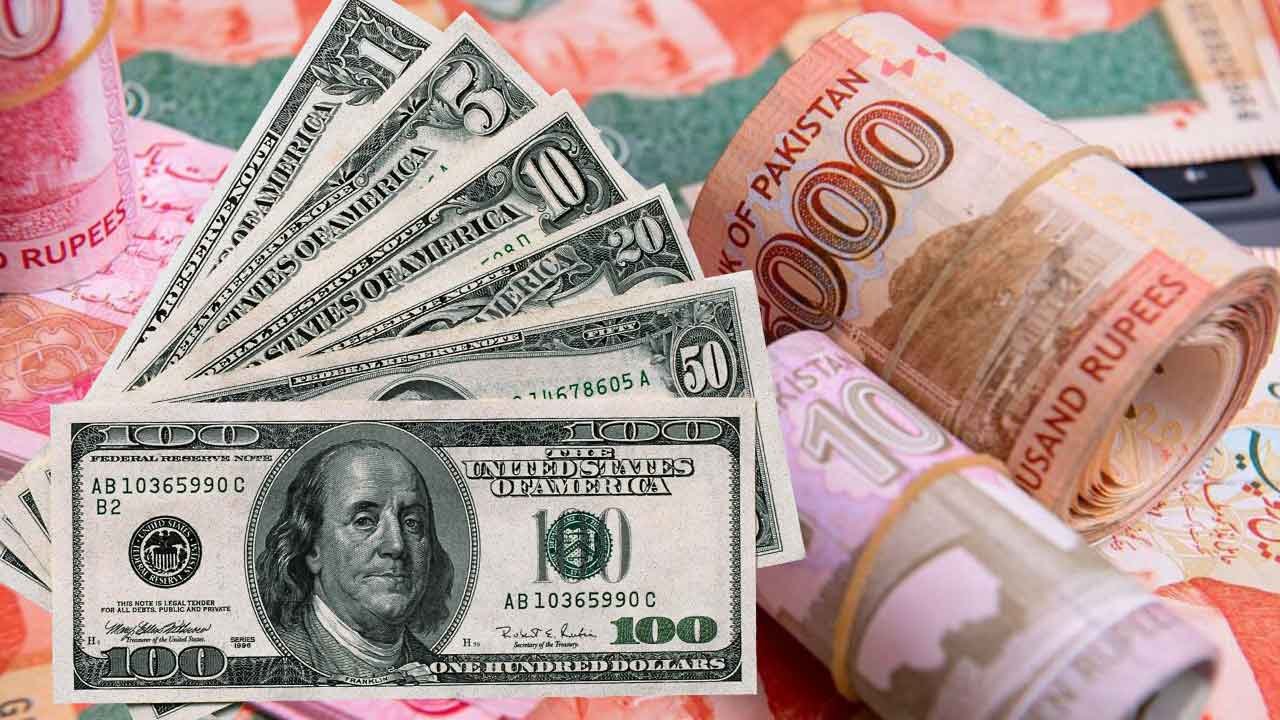
    In the interbank market today, the Pakistani Rupee (PKR) plummeted below its previous record low versus the US Dollar (USD).

    The local currency lost Rs1.30 in the interbank market today, depreciating by 0.63 per cent against the US dollar and closing at Rs205.16. During today’s open market session, the local currency reached an intraday high of Rs203.75 versus the US dollar.

    The PKR was trading between Rs206 to Rs208 against the US dollar in the evening. The rupee’s devaluation was in line with market expectations, with traders expecting the local currency to fall even lower if Pakistan fails to persuade the International Monetary Fund (IMF) on its fiscal year 2022-23 budget.

    The Financial Action Task Force (FATF) meeting in Berlin, which starts today, is another reason that is likely to have influenced the FX market. On the 15th and 16th of June, issues concerning Pakistan will be discussed.

    In today’s interbank market, the PKR reversed gains versus the majority of major currencies. It fell 22 paisas against the Canadian dollar (CAD), 34 paisas against the Saudi riyal (SAR), 35 paisas against the UAE dirham (AED), 62 paisas against the British pound sterling (GBP), and Rs1.25 versus the Euro (EUR).

  • McDonald’s re-opens in Russia with a different name

    McDonald’s re-opens in Russia with a different name

    McDonald’s restaurants in Russia have reopened under a new identity. The name of the restaurant is now Vkusno & tochka (“Tasty and that’s it”). The first 15 locations of the new Russian fast-food business that bought out McDonald’s opened in Moscow on Sunday.

    “Our goal is that our guests do not notice a difference either in quality or ambience,” said Oleg Paroev, chief executive of Vkusno & tochka.

    “We had to remove some products from the menu because they refer directly to McDonald’s, such as the McFlurry and Big Mac,” Paroyev said.

    Prices have risen “slightly” due to the inflation that has hit Russia hard after Western countries imposed sanctions, but they remain “reasonable”, he added.

    The menu items are similar to what McDonald’s sells – including chicken nuggets, fish burgers, and fruit pies, but with different packaging.

    McDonald’s in May announced that after more than 30 years of operations in the country, it will exit the Russian market. The decision was taken due to the humanitarian crisis caused by the war in Ukraine.

  • ‘No MoU on wheat and oil with Khan’s govt’: Russian ambassador to Pak

    ‘No MoU on wheat and oil with Khan’s govt’: Russian ambassador to Pak

    Danila Ganich, Russia’s ambassador to Pakistan, has said that in his opinion the Russian visit could have been “one of the factors” for the removal of former Prime Minister (PM) Imran Khan from power but added that it was a sheer coincidence that Khan happened to be in Russia the day the Ukraine war broke out.

    “I think that was one of the factors but I also know that it was a sheer coincidence that he happened to be in Moscow on that very day,” said Ganich when asked if Khan’s government was removed from power because of his visit to Russia in an interview with Aaj News‘ senior anchorperson Shaukat Piracha.

    “The proof of that is just the fact that he was in Moscow on that very day, had he known that the operation would start on that very day, definitely he would have tried to refrain from being there on that very day. So that was a coincidence.”

    “As an ambassador of a foreign country I prefer not to interfere in your internal affairs.”

    “I do know that Pakistani [authorities] concluded that there was no conspiracy. So here I would like to say period. I cannot take sides here, especially when your judge concluded that there was no conspiracy,” said Ganich.

    Ganich said that Russia and Pakistan did not conclude any memorandum of understanding (MoU) on Khan’s claims that Russia had agreed to sell both wheat and oil at a 20 per cent and 30 per cent discount to Pakistan due to the efforts of his government.

    “I can confirm that we did not conclude any MoU,” the ambassador revealed. “As for what kind of discounts could have been offered [on oil and wheat], I cannot comment on this, as these are confidential negotiations.”

    Earlier, Russian Counsel General in Karachi, Andrey Fedorov said that a proposal was discussed between the two parties, while categorically denying that any letter was written by the Pakistan Tehreek-e-Insaf (PTI) government to Russia, reported Samaa News.

    Finance Minister Miftah Ismail in an interview with CNN’s Becky Anderson refuted Khan’s claims that Russia has not offered a 30 per cent discount on oil or wheat.

    Miftah further said that even though a letter was written by former minister Hammad Azhar, Russia did not respond to the letter.

    Former premier Khan recently said that during his time in power, the PTI government had signed an agreement with Russia to buy cheap oil and wheat. Adding that his government remained in power Pakistan would not have to face the petrol bomb.

  • Miftah Ismail says no response by Russia for buying oil at discounted rates

    Miftah Ismail says no response by Russia for buying oil at discounted rates

    Finance Minister Miftah Ismail on Tuesday in an interview with CNN’s Becky Anderson said that he does not know where former premier Imran Khan gets his numbers from, refuting Khan’s claims that Russia has not offered a 30 per cent discount on oil or wheat.

    “Let’s be clear. I don’t know where Khan gets these numbers from,” said Miftah.

    “Khan just makes it up as he goes along. He is the guy who was saying we (PDM) were brought in through an American conspiracy. And now he has come up with this new thing. If Russia was selling him cheap wheat and oil, then why didn’t he buy it? He did not,” said Miftah.

    Difficult for me to imagine buying Russian oil

    Miftah said that Western sanctions have made importing oil from Moscow impossible despite the Pakistani government’s request to buy wheat from Russia and Ukraine.

    “Russia has not offered us any oil either. It is difficult for me to imagine buying Russian oil,” said the finance minister.

     Raising oil prices was ‘a trap for us

    Talking about talks with the International Monetary Fund (IMF), Miftah said, “We have had talks with the IMF in Doha recently. We are talking to the IMF and particularly the IMF is looking at the budget that I am going to present in early June and after that, I am hoping that we will reach an agreement with the Fund.”

    He said the IMF was looking for Pakistan to reverse the subsidies on oil, petrol and diesel in particular “that the previous government had given”.

    Miftah added that the IMF also wanted Islamabad to reverse electric tariff subsidies that the previous government had done.

    “Then it is looking at the budget that I will present. So, I am pretty confident that we should be able to get an agreement with the Fund but there would be some austerity in the budget, some measures to increase taxation in the next budget.”

    The minister said that raising oil prices by the previous government was “a trap for us”.

    “Imran Khan in the last days of his government did a few things to violate all these agreements with the IMF, including giving these unsustainably high subsidies. And he knew we could not sustain this.”

    “And when we came to power, he is now going city to city, trying to rally the people with his theories about conspiracies and all that for putting a lot of political pressure on us.”

    The new government, he said, was finding it difficult to raise the prices right away, but it took a very important step last week.

    Moscow had not even responded to the previous government’s letter

    Ismail said that Moscow had not even responded to the previous government’s letter seeking to buy oil at a discounted price from Russia.

    “The two sides had talked about it, but since Russia is under sanctions, and they have not yet responded to the request sent by the Pakistan Tehreek-e-Insaf (PTI) government, there was no movement on this front.”

    However, he said Islamabad had approached both Ukraine and Russia, “whichever country is willing to sell us wheat we would be happy to buy it”.

    Hammad’s claims

    Former Energy Minister Hammad Azhar said, “Miftah sahib is claiming on national tv that no letter or proof exists of Russian oil talks. And who he should speak to. Russia was enthusiastic on selling discounted oil to us and he should have spoken to Energy Minister of Russia.”

    Miftah’s response:

    Miftah responded to Hammad Azhar’s tweet: “Bhai please listen to my interview again. I did say your govt wrote a letter. But I said no response ever came.”

    He added, “I didn’t say that you waited more than a month after IK’s visit to write the letter & then too when you knew you’d lose the VNC & that it was only done for politics.”

  • ‘How the hell was I supposed to know?’, Khan defends Russia visit

    ‘How the hell was I supposed to know?’, Khan defends Russia visit

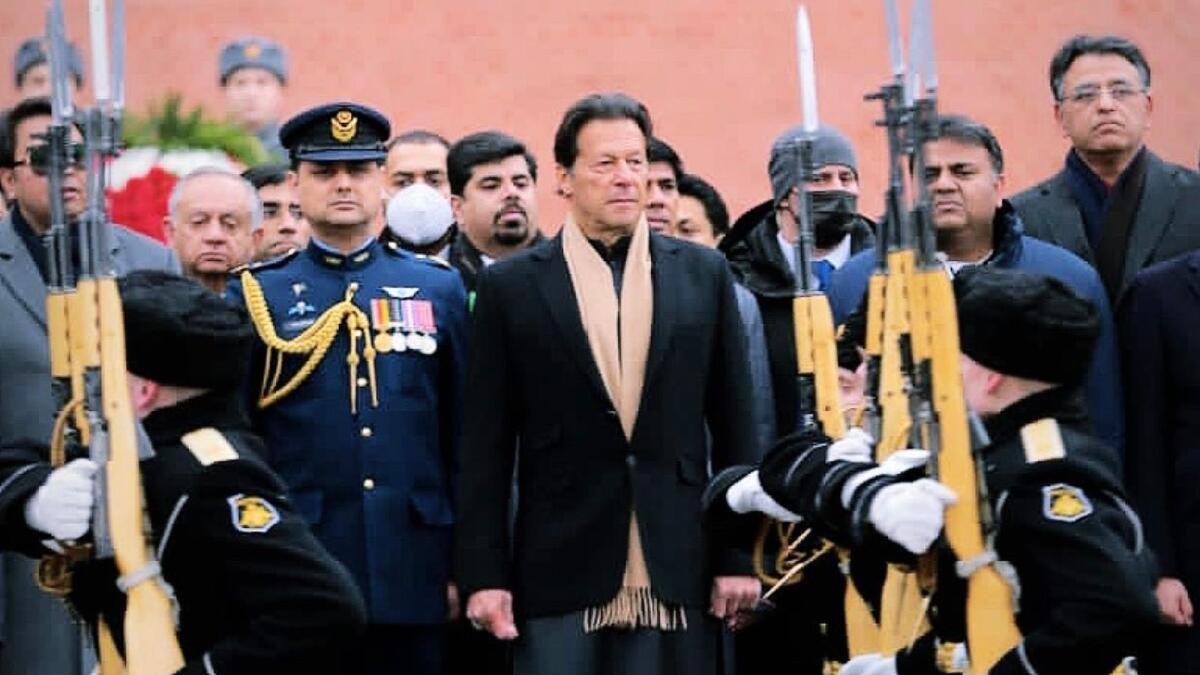
    In an interview with Journalist Mark Austin on Sky News, former Prime Minister (PM) Imran Khan defended his visit to Russia and said that he didn’t know that Russia was going to invade Ukraine when he landed in Moscow. Khan visited Moscow on February 23, a trip that landed him directly into a hotbed of criticism in the international community.

    Khan during the interview said, “How the hell was I supposed to know, the day I landed in Moscow, Putin is going to attack Ukraine? My statement in Moscow was that I have never believed in military solutions so I never endorsed that [Russian invasion of Ukraine]. Ours was a bilateral meeting, it was planned long before. How could you have punished me like that?”

    “I am against all military operations. I was against Iraq War, the Americans going to Afghanistan consistently and I am against military solutions in Ukraine”, he replied when asked about Russia’s aggressive acts in Ukraine.

    Khan once again reiterated that he was removed by the United States (US) and he has a cipher to prove it. The former premier, talking about what was written in the cipher, said, “Unless you remove PM through no-confidence motion there will be consequences for Pakistan, and if you remove him all will be forgiven.”

    I was not elected to correct all the wrongs in the world’: Khan

    During the interview, Khan was asked why he was on friendly terms with countries like China and Russia when they had committed alleged human rights violations. Khan replied and said, “I was elected by 220 million. My first priority was that there are 50 million people in Pakistan below the poverty line, I was not elected to correct all the wrongs that are going on in the world.”

    “My responsibility was to my country and so all my relationships, whether it was with China, with the US, with Russia, were for the benefits of our own people,” he added.

    He, further pointed out that there are atrocities going on in Kashmir, and 100,000 people in Kashmir have died. “Has anyone condemned India for that? No, because India is an ally, allow us to be neutral too so we can look after our people.”

    I am not a spokesperson for Taliban’: Khan

    Answering a question about the concerning situation of women in Taliban-led Afghanistan, Pakistan Tehreek-e-Insaf (PTI) Chairman said Pakistan has never supported the Taliban. He stated: “I am not responsible or a spokesman for the Taliban, if there was any other solution after 20 years of war, you should have found some solution.”

    Twitterati praised Khan for his interview.

  • Govt considering gas import contract with countries including Russia

    Govt considering gas import contract with countries including Russia

    Pakistan is in talks with multiple countries, including Russia, to sign a liquefied natural gas (LNG) import agreement in order to alleviate the country’s ongoing energy supply crisis.

    According to Bloomberg, the Ministry of Energy will go for the ‘most favourable deal’ and is considering government-to-government contracts for importing the gas.

    This action came as Pakistan battles blackouts caused by a fuel crisis caused by long-term suppliers’ failure to deliver shipments. To keep the lights on, the government previously resorted to purchasing LNG on the spot market, incurring debt that endangers worsening inflation on a massive scale.

    The government of Prime Minister (PM) Shehbaz Sharif, which took office on April 11, hopes to capture a new long-term LNG contract to help reduce fuel costs. Long agreements are remarkably affordable than existing spot pricing, while market participants also anticipate that this will provide some relaxation to the government.

  • Petroleum Division refutes Imran Khan’s assertion about Russia’s low-cost fuel offer

    Petroleum Division refutes Imran Khan’s assertion about Russia’s low-cost fuel offer

    There is no formal evidence in the petroleum division of Russia’s offer of inexpensive LNG, crude oil, and POL products, as former Prime Minister Imran Khan has often claimed.

    Syed Zakria Ali Shah, Joint Secretary of Development and a spokesman for the Petroleum Division, stated this to a reporter.

    According to sources in the petroleum sector, trading of crude oil, POL products, and LNG was not even on the table when Khan discussed the purchase of LNG. There was no mention in the meeting minutes of any Russian offer of providing LNG and gasoline at a 30 per cent lower rate.

    According to the spokesman, the government wrote letters to Russia on March 30 through the Ministry of Foreign Affairs in reference to the February 2022 visit of a Pakistan delegation, expressing Pakistan’s desire to enter long-term agreements on the import of crude, POL products, and LNG at discounted rates.

    The Petroleum Division also wrote to the Foreign Ministry, asking if Russia had provided any lower tariffs on LNG and fuel items. He also stated that it had given two reminders to this effect in the first week of April 2022, but the ministry stated that it had not received any letter from Russia for conversation in this respect.

    The Former energy minister, Hammad Azhar attracted the attention of his Russian peer, in a letter dated March 30, 2022, to an Inter-Governmental Agreement (IGA) on LNG cooperation that had been in force between the two friendly nations since 2017. The Russian minister was informed that Pakistan was willing to strengthen its partnership by expediting negotiations between the two selected nominees so that a long-term agreement for LNG delivery on a G2G basis could be reached as soon as possible.

    Then-energy-minister recommended two to three Russian LNG cargoes each month, each holding 140,000 cubic metres of LNG.

    There was no mention of any Russian offer in that letter, only a request for negotiation on a long-term contract for the import of gasoline and LNG at a reduced rate.

    According to officials at the energy ministry, India has been purchasing crude oil from Russia for decades and has continued to do so despite EU and US sanctions imposed as a result of its conflict with Ukraine. They claimed that India’s foreign policy was largely independent due to its strong economic power and enticing market for large economies.

    They further claimed that India had obtained a special dispensation from the US from its sanctions against Iran and had been buying crude oil and POL products from Iran despite US and UN sanctions for a long time. They claimed that India was the US’s strategic partner in the area against China.

    “India always pitches its argument before the US saying if it does not import fuel from Iran, its economy will hurt and it will never be on a par with China. As far as Pakistan is concerned, it is not possible to import crude oil, POL products, and LNG at discounted rates even in the wake of EU and US sanctions on Russia, as the country’s economic muscle is very weak and the country is always dependent on the IMF programme”. The officials said that Pakistan had also failed to complete the IP gas line project just because of US and UN sanctions on Iran.

    Via: The News

  • Donald Lu should be sacked over his ‘sheer arrogance and bad manners’: Khan

    Donald Lu should be sacked over his ‘sheer arrogance and bad manners’: Khan

    Pakistan Tehreek-e-Insaf (PTI) Chairman Imran Khan on Monday called for the sacking of United States (US) Assistant Secretary of State for Central and South Asia Donald Lu for “sheer arrogance and bad manners”.

    In an interview with CNN, Khan said the US diplomat told Pakistan’s ambassador that unless “you get Imran Khan removed in a vote of no-confidence — which was not tabled but he seemed to know about it — Pakistan will suffer consequences”.

    “And then goes on to say, of course, if you get rid of him through the vote of no-confidence, all will be forgiven — such arrogance […] by the way Becky, this guy should be sacked for bad manners and sheer arrogance,” Khan told CNN’s Becky Anderson.

    Anchorperson Becky Anderson asked Khan if he had gotten in touch with the US president or state secretary regarding the matter. Khan did not answer, instead of saying that the National Security Council (NSC) meeting had decided to issue a demarche and a protest was registered to the US in Pakistan and Washington.

    Anderson said the US had “rubbished” the notion that it was involved in a regime change in Pakistan and asked Khan if he genuinely believed his claim of there being a foreign conspiracy to topple his government.

    “What were they meeting [US officials] for? They were the first ones to jump ship and they were the ones who then offered million dollars each to buy my other MNAs who jumped ship later on. Why would the US embassy be interested in our party backbenchers?” said Khan.

    Anderson questioned Khan’s visit to Russia, adding that “the optics didn’t and don’t look good, do they?” To which Khan responded, “They didn’t but let me explain to you. This visit was planned a long time back and all stakeholders in Pakistan were onboard. The military wanted Russian hardware, we wanted oil, there was a gas pipeline which was being negotiated for the past six years before my government came in … how would I have known that the day I land in Moscow, President [Vladimir] Putin would decide to go into Ukraine?”

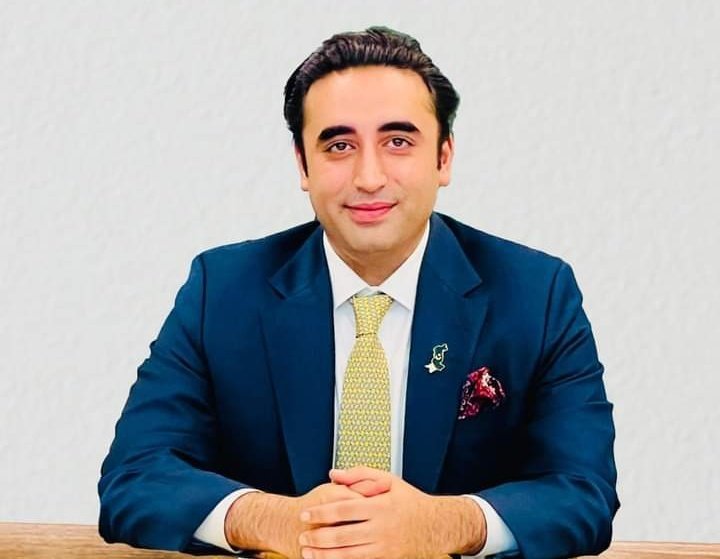
  • Bilawal Bhutto defends ex-PM Imran Khan’s visit to Russia

    Bilawal Bhutto defends ex-PM Imran Khan’s visit to Russia

    Foreign Minister (FM) Bilawal Bhutto-Zardari on Thursday strongly defended Imran Khan’s Moscow visit, saying there was no way for the former prime minister to know that Russia would invade Ukraine on the day he landed in the Russian capital.

    “As far the former prime minister’s trip to Russia, I would absolutely defend the former prime minister of Pakistan. He conducted that trip as part of his foreign policy and without knowing that — no one is psychic, no one has a sixth sense — there’s no way we could have possibly known that that would be the time [when] the current conflict will start,” Bilawal said.

    https://twitter.com/MediaCellPPP/status/1527401668916256770?s=20&t=KZ4uVQyjDUUPrLQdo_hRgA

    “And I believe it is very unfair to punish Pakistan for such an innocent action.”

    Pakistan, he said, was absolutely clear that it has to stand by the principles of the United Nations, including that of non-use of force, on this issue.

    “We are not part of any conflict. We do not wish to be part of any conflict. In fact, we would continue to emphasise the importance of peace,” he said.

    “We would continue to emphasise the importance of dialogue and diplomacy to resolve this conflict as soon as possible. And we will certainly not take any side or take the side of any aggressor within this context.”

    Twitterati praised FM Bilawal Bhutto for the way he defended not only the formal premier but Pakistan as well. Netizens did not spare this chance to compare Bilawal with Khan.