Tag: saba hamid

  • Saba Hamid says she is not a controlling mother-in-law unlike her Noor Jahan character

    Saba Hamid says she is not a controlling mother-in-law unlike her Noor Jahan character

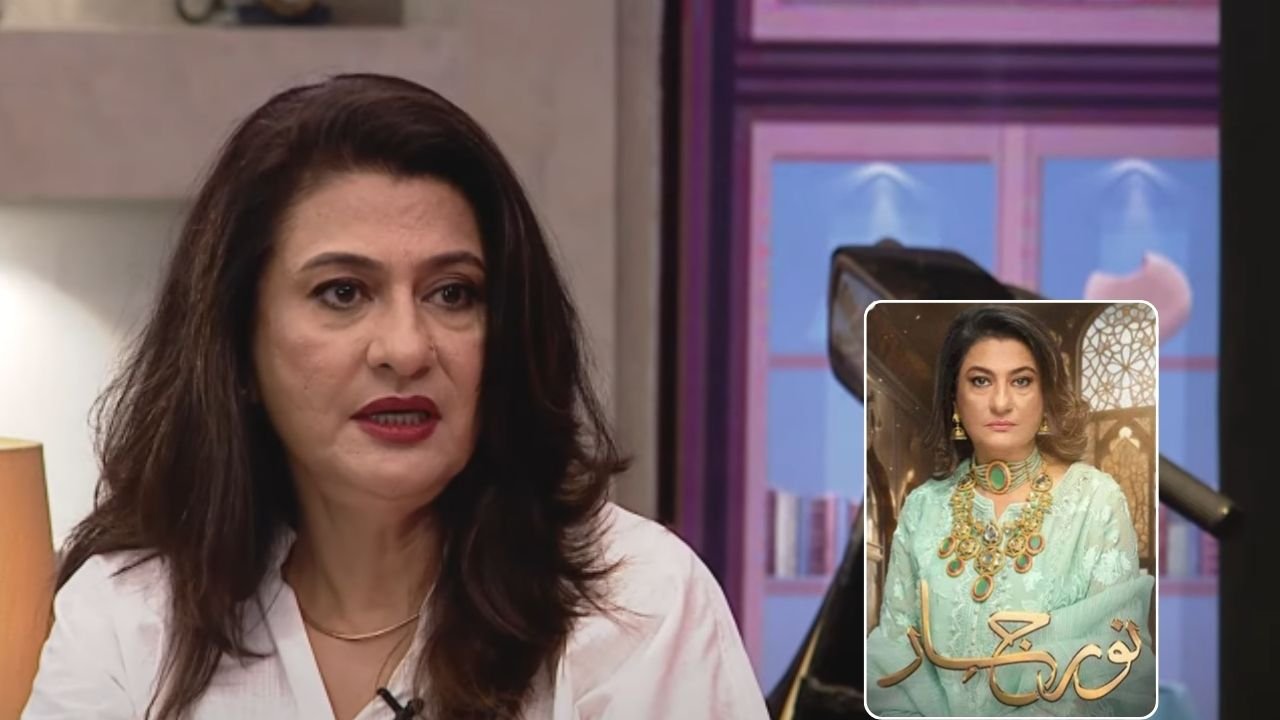
    Veteran actress Saba Hamid has stunned fans with her performance as Noor Jahan in the hit drama serial of the same name.

    In the serial Noor Jahan , Saba Hamid played the character of Noor Jahan.

    During an appearance on After Hours, host Ushna Shah asked, “The character of Noor Jahan is such that you start to dislike her a bit because she is an extremely controlling mother-in-law, and she is completely opposite to you, introverted, someone who minds her own business. So, tell me, what was it like playing a woman like that?”

    Saba Hamid replied, “Mostly, if a mother-in-law has a significant role, she is portrayed as controlling and powerful. Generally, we have reached this age by playing such roles, so it wasn’t something new. But there was a good balance in Noor Jahan’s character. It was very gray, I didn’t see her as a completely black (evil) person. I felt that she believed in what she was saying, she wasn’t plotting or being deceitful. She truly believed that sons should be prioritized, which was a wrong idea, but the character was portrayed as wrong, not right, because people do think this way. We can’t close our eyes to it.”

    The Noor Jahan actress also highlighted how important it was to play a role that made people think about society.
    “To point that out, you sometimes have to touch the wound in order to heal it. I know many people were upset about that monologue where it was said that when a daughter is born, the father’s head lowers in shame. But this is how society thinks, and it was highlighted and countered well. There was a strong contrast because another drama of mine, which was filmed around the same time, also had a mother-in-law, but she was completely different calm and gentle. And I played both characters back-to-back, which overlapped a bit. I think it was fantastic how I managed to pull it off, and I believe I did well with both roles.”
    Talking about her working relationship with Musadiq Malik,
    Hamid said, “I am genuinely saying that I have worked with many directors, even with those who are very skilled. He is young and new, and Noor Jahan was only his second serial. The first one was Habs, and with Noor Jahan, he outdid everything he had done before. So, full marks to both (Zanjabeel Asim Shah) of them for making Noor Jahan what it is. “It was an interesting experience because he had assisted me before, and now he was directing me. When he assisted me, we had already formed a team where no one was the boss or subordinate. We always worked collaboratively, and even when I was directing, I valued his input. Similarly, when he was directing, he valued my opinions as well.”
  • Saba Hamid’s recollection of her feminist parents is what every Pakistani parent needs to hear

    Saba Hamid’s recollection of her feminist parents is what every Pakistani parent needs to hear

    Responsible parenting everyone needs to take some good notes from!

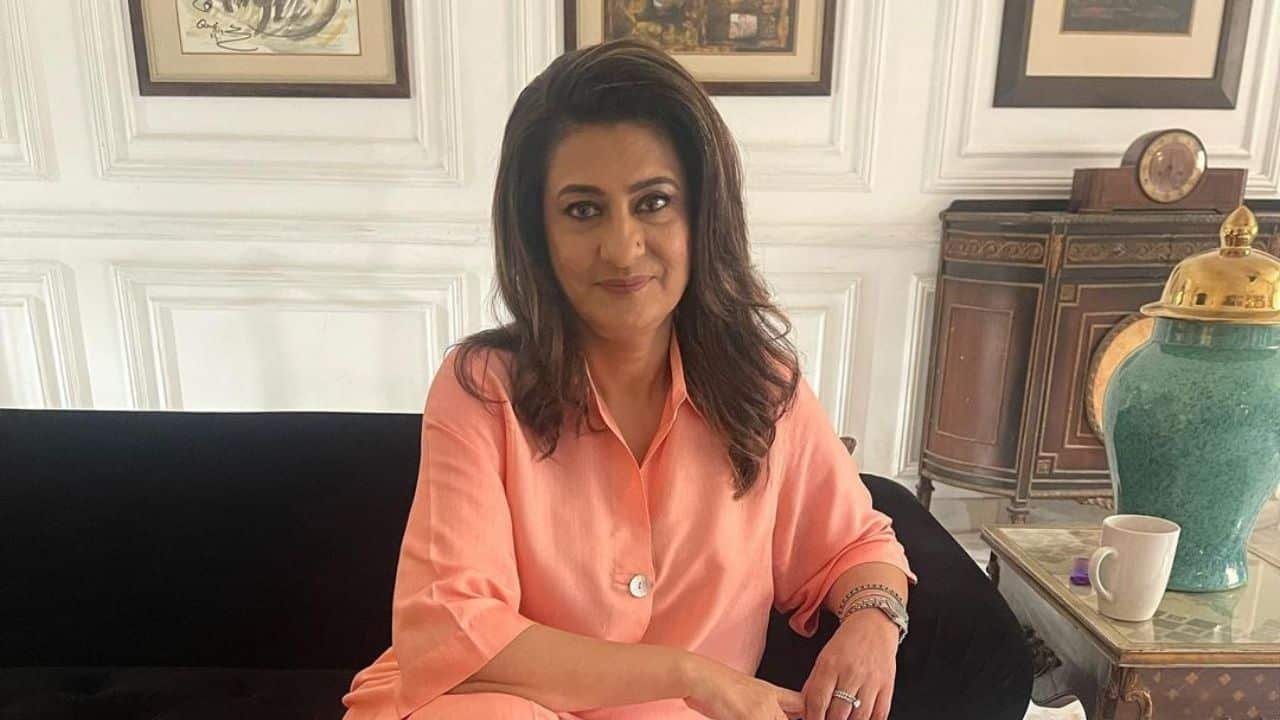
    Veteran actress Saba Hamid was a guest on Maliha Rehman’s Youtube channel where she opened up about her childhood, especially the impact her late father, journalist Hameed Akhtar, had on her.

    “My father was a feminist,” described the actress, adding that “He was a big believer in equal rights till his last breath from day one.”

    Speaking about her family, the ‘Jaisay Apki Marzi’ actress said she was one of four daughters and obe son but her parents never made them feel like there was inequality between them on the basis of gender. Hamid elaborated how chores around the house that are generally male-oriented like calling the plumber, or driving, were taught to all the siblings. Her parents also didn’t put any restrictions on their daughters while allowing their son to stay out late. “I was scolded just as much as he was if he stayed out late.”

    These teachings, Saba observed, made her assume that the world would treat men and women equally the way her father had. But soon grew to realise that it was the opposite.

    The ‘Laal Ishq’ actress further opened up about how liberated her mother was, not seeking permission from their father to go anywhere because he gave her liberation. She spoke about her mother announcing to their father that she was visiting her sister in Islamabad for a day, and his reaction being simply “okay”.

    “We grew up thinking this is how it is, this is the way the world is. It was quite later I realised you had to seek permission from a partner to go somewhere.”

    We are completely moved by Saba’s account of her father and his gentle parenting that made her into the fierce woman she is today- and also helped her raise two phenomenally powerful individuals like Meesha and Faris Shafi. We hope more parents, especially fathers to newborn daughters, watch this clip and take a lesson in how giving girls independence can help them later in life.

  • Working women, pay heed to this excellent advice from Bushra Ansari

    Working women, pay heed to this excellent advice from Bushra Ansari

    Bushra Ansari keeps aging with grace and confidence, giving us more reasons to love her. Her stellar comedy skills, her decades long career, and her blunt advice to empower women keeps proving she’s the GOAT. Recently, during an appearance at ‘The Talk Talk Show’, the actress spoke in depth about two prevailing topics that more working women should take her advise on: remembering that its okay to want to work after marriage, and that the right to divorce was granted to them by Islam.

    On the show she discussed the basics of establishing a flourishing career while also remaining a full-time mom. The ‘Tere Bin’ actress said that aside from performing on screen, she kept working as a full time mother and a housewife who cooked food and dropped her kids to school. Her advice to stay-at-home mothers, especially women working in the showbiz industry, was to keep multi-tasking in different roles.

    “Allah has given us a lot of abilities so we should keep searching for them. This is the advice I also give to girls working in showbiz to keep working after marriage, whether or not they start a family.”

    Bushra elaborated that women shouldn’t stop after getting married or after having a child, giving examples of several actors who have done the same. “I worked on my career and raised my children along with this. Along side with Rubina Ashraf, Samina Ahmed, Saba Hamid. We continued to work, while also taking care of our children.”

    The ‘Dolly Ki Aegi Barat’ spoke about her divorce from her husband of 36 years, reflecting on her Nikah, when her father made sure to include the ‘right to divorce’ clause. The actress elaborated that in contradiction to what society thinks, the Quran has given women a lot of rights in Islam.

    “The right to divorce is written in the Nikkah, which is cut out. When someone is getting married, they can chose to have the right to divorce. This is initiated when a discussion is held with the boy’s family, because they can give you this right. It’s not that a woman can just hand over a divorce, but its a granted right given by her husband and in-laws. So this is something I feel even the boy’s side of the family should understand.”

    Ansari said using the right to divorce was not an easy task because ending a marriage can be painful “I had the right to divorce from the first day, but I spent 36 years in my marriage. I would have used it in a snap but no one wants to separate this way. But when the time came, I used this right.”

  • Faisal Qureshi, Adnan Siddiqui, Nadeem Baig team up for a skit on coronavirus awareness

    Faisal Qureshi, Adnan Siddiqui, Nadeem Baig team up for a skit on coronavirus awareness

    After releasing a short film – featuring major celebrities – on coronavirus awareness, Faisal Qureshi is back with a new mini-drama on the same topic. Titled Dastak Na Do, the drama has been directed by Nadeem Baig and features Adnan Siddiqui, Saba Hameed, Sami Khan, Arjumand Rahim and Emaan Khan.

    Speaking exclusively to The Current over the phone, producer Faisal Qureshi shared that the three-episode drama series aims to use light comedy and realistic situations to create awareness on the pandemic. He said that through the drama they hope to use entertainment to educate the masses on the topic.

    Sharing details, Qureshi said that he had conceived the idea before the lockdown and had discussed it with director Nadeem Baig.

    “Much of the pre-production work had been completed before the lockdown,” Qureshi said, adding that the rest of the work on it was done over the phone and internet, except the shoot that took place under strict precautionary measures.

    Qureshi said that the production team went through great lengths to ensure everyone’s safety.

    “Our team followed all the SOPs very strictly. Everyone’s temperature was checked and they were sanitised when they entered and exited the set,” said Qureshi. He said that the team and people working on the set were given proper protective gear and that the sets were also disinfected.

    A BTS video, which has been shared, also shows that precautions were in place.

    The first episode of the drama has been released. It shows Adnan and Arjumand as a couple with two children. While they are trying to protect themselves from COVID-19 by following the advice of the government and health experts, their Khala (Saba Hameed) unexpectedly shows up and dismisses the virus and the government’s warnings. The episode is well-written and boasts of great production value.

    Apart from being shared on social media, Dastak na Do, which has been produced by Qureshi’s Game Over Productions, will also be aired on various TV channels.

    Watch it online here:

    https://www.youtube.com/watch?v=uUMy71e1xGc
  • We take it back; ‘Ghalti’ is ARY’s best running drama

    When ARY’s drama Ghalti’ started, it seemed like a huge mistake. Typical saas bahu, beychari bahu and crazy saas. Husband is a complete disaster, giving talaaq after talaaq, which is so typical of Pakistani dramas.

    But after this week’s episode, we are happy to issue an apology and say, WOW, what happened? It’s turning out to be one of the best running dramas on ARY.

    Hina Mani delivers a stellar performance

    That being said, it’s not like it has much competition. The drama ‘Jhooti ‘ is probably Iqra Aziz’s biggest mistake and the high that Ayeza Khan got from ‘Meray Paas Tum Ho’ crashes in ‘Thora Sa Haq’.

    In this week’s episode, three massive twists made ‘Ghalti’ a fantastic watch. Zaira (Hira Mani) is married to her cousin Saad (Affan Waheed) and Saad’s mother Zaitoon (Saba Hamid) has it out for them. She tries her best to destroy their marriage and finally succeeds.

    The best part about this latest episode was Zaira. Hira Mani delivers a stellar performance, one in which you shockingly and immediately feel her pain. She acts perfectly. So perfect that you immediately are drawn to her. There is no overacting when her husband delivers the final blow and when she tells her mother. This is so realistic that you can imagine it happening in real life. And that is where the drama takes a turn.

    You can only be team Zaira then.

    At such important moments in this episode Hira Mani hits constant sixers.

    You feel her pain and she so elegantly takes on what what Zaitoon has handed her and the drama no longer becomes about divorce but actually becomes about a woman’s strength.

    Zaitoon is also not to be messed with and Saba Hamid does her total justice. She is perfect in her narcissism and her selfishness and Saba’s every expression reflects what Zaitoon is.

    Saba Hamid is full of expression and elegance, making a stellar villain

    The voice of reason is Shanzay (Mehr Bano). She is a strong, independent, working woman married to Saad’s brother. When her character was first introduced, you wondered: Ugh, here is another drama demonising the working woman. But wait. It didn’t.

    What’s going on? How is this drama getting so good?

    Shanzay tells off Zaitoon, Saad, the sisters, so well that you feel like clapping and feeling like wow, how is this possible that her husband is taking HER side? This isn’t typical at all. And it’s done so normally, matter of factly, simply. No dramatic angles, dialogues, music.

    Mehr Bano delivers a performance that rivals that of Saba Hamid

    The teaser for the next episode promises to be even better, filled with confrontation and dare we hope, a not dragged out end. We have our theories on what might happen but it isnt the time to speculate just yet. It’s almost the beginning of the week and we are already waiting for the next episode.

    So we take it back and apologise because this is one drama we wait for every Thursday and hope you guys have the time to catch up. This is the one to wait drama to look forward to during the lockdown.

  • Five episodes in, ‘Ghalti’ is a big mistake

    Five episodes in, ‘Ghalti’ is a big mistake

    Ghalti will make you cringe and even feel a little angry. Typical, typical, typical Pakistani drama re-enforcing the stereotypes we are trying to change in our society push through in the first five episodes of ARY Digital’s Ghalti.

    The drama is full of the more than typical saas-bahu drama, the word talaaq thrown in for good affect and the jealous nunday, Ghalti left nothing behind. All that’s left now is someone planning kaala jadu and all the ills of our society will be complete. What’s more shocking is that someone as brilliant an actress as Saba Hamid is acting and directing this incredibly regressive drama. Even if the moral of the story is for the good, the fact that the drama indulges in such barbaric stereotypes is disturbing in itself.

    Brilliantly regressive acting by the incredibly progressive Saba Hamid

    The story revolves around Zaira (Hira Mani), a happy, single daughter belonging to a wealthy family and nikkahed to her cousin Saad (Affan Waheed). Saad’s family, including his widowed mother Zaitoon (Saba Hamid) and sisters live in a house provided by Zaira’s father. Zaira’s father faces some financial issues and asks Zaitoon to vacate the house that belongs to him so he can pay off his debts. Zaitoon is enraged that she now has to return to her small little house (which is not in Defence) and plots revenge. Revenge plotting includes trying to break off Zaira’s marriage to her son, accepting the marriage and hoping that once Zaira is ruksatied her father will give them another house and when that doesn’t happen, plotting and scheming to make Zaira’s life miserable.

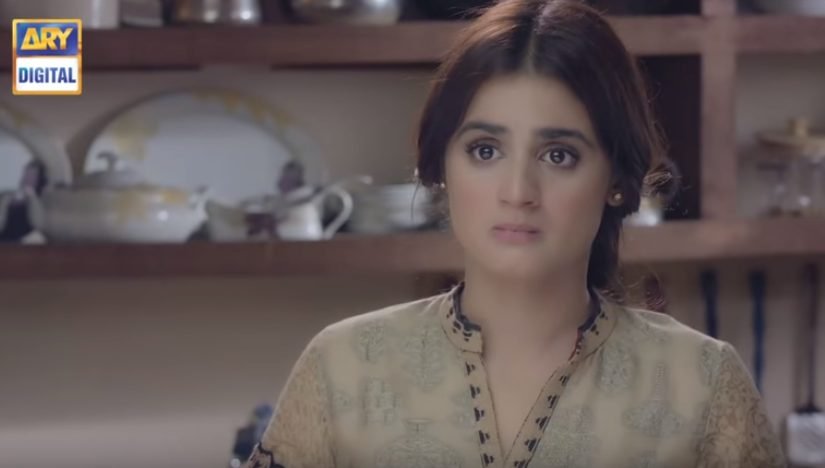
    This is how Hira Mani looks in almost every scene of the drama

    Only someone who has as blank an expression as Hira Mani could play the helpless, sad, little Zaira. So helpless that the viewer doesn’t get angry at Zaitoon for treating her daughter-in-law like trash, but more at this Zaira; an educated girl who should be able to stand up for herself but oh ho, her love for her incredibly mediocre husband Saad drives her to cook, clean, be treated like trash by her in laws because she must live with what’s been handed to her and suffer because she loves her husband.

    Cleaning when her cool mother walks in to find her daughter suffering and blubbering

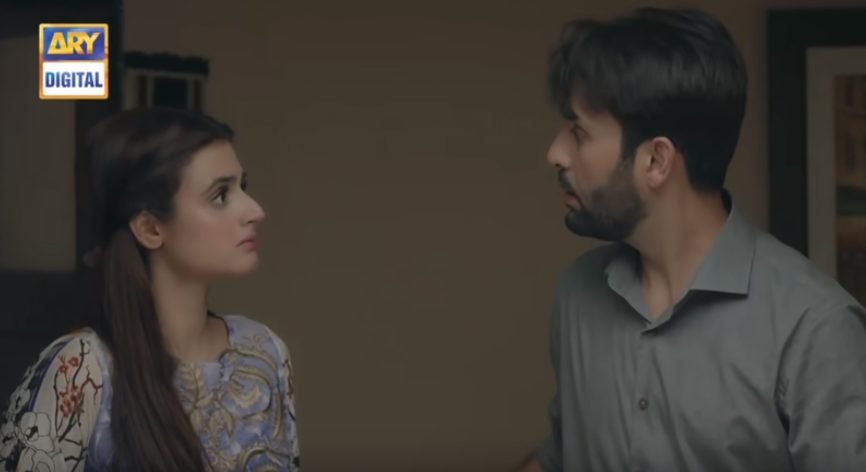
    Woh bhi choro, Saad’s big ghalti is that he divorces Zaira once in a fit of anger and it’s like the worst thing that could happen, right? Wrong. Zaira is perfectly fine with Saad once he gets her imported flowers and they get on with their happy lives.

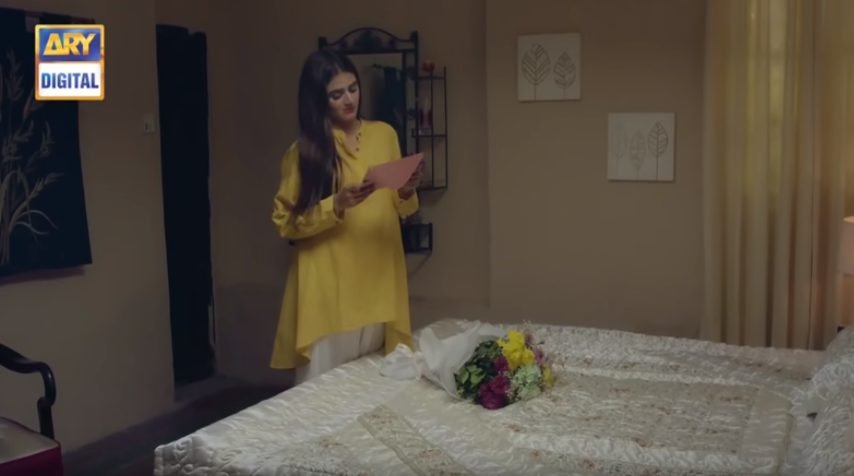
    Listen up ladies, if you get divorced, Ghalti says these flowers and a card should make it all okay

    People need to be educated that this concept of uttering talaaq once and the process that has to be followed by law is completely different than what is shown in our dramas. Talaaq at three different times, with proper methods to reconcile, are done to protect the woman and the couple and the way they are thrown around in our dramas, especially this one, is irresponsible and criminal.

    Hira Mani looking the same at the moment she is divorced

    What’s worse is the way the word talaaq is treated like a joke and reason to gossip. The defence of this drama would be that aisa tou hota hai and women can relate to their lives being as terrible as Zaira’s but really? Is that what we want people to watch and feel? That this happens to everyone, so it’s perfectly fine if it’s happening to them? Why do we constantly push this terrible narrative of saas bahu dramas to gain ratings?

    Because it gets ratings. The five episodes on YouTube have more than a million views each so we can keep expecting that such dramas will be created and actors like Hira Mani and Affan Waheed and director Saba Hamid will keep doing such roles.