Tag: Saudi Arabia

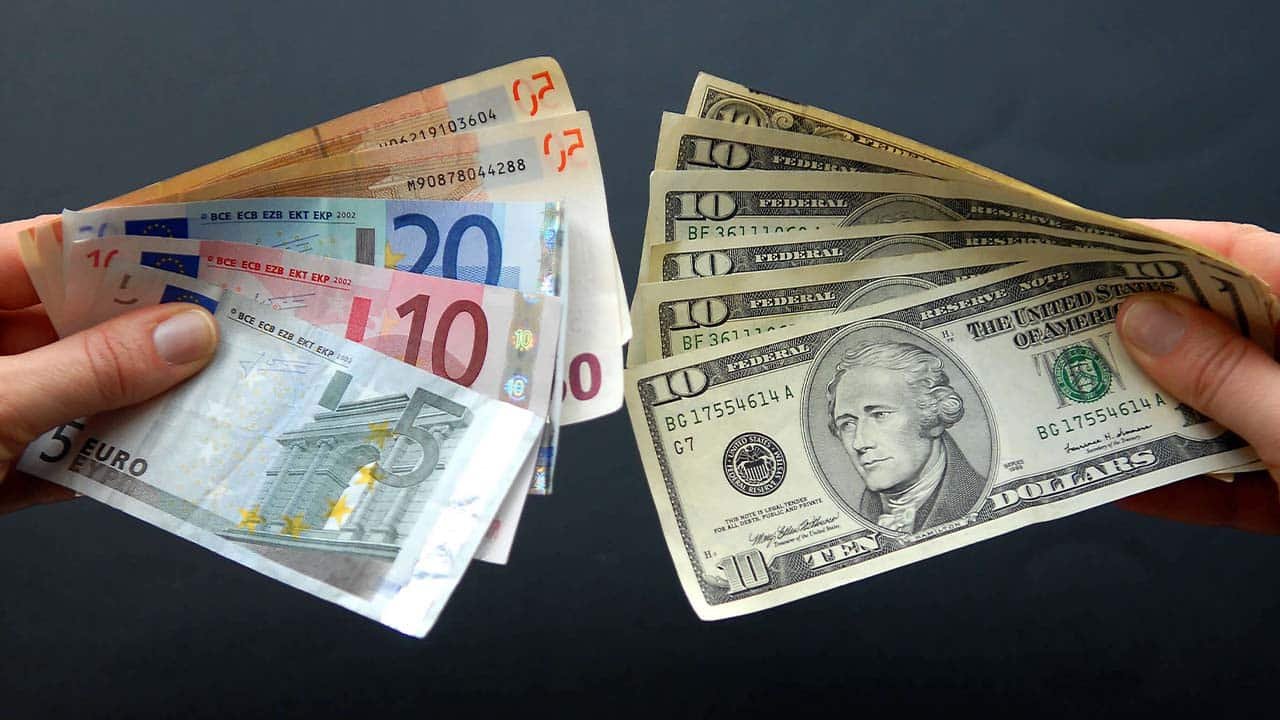
  • Overseas remittances to Pakistan soar to $2.4 billion

    Overseas remittances to Pakistan soar to $2.4 billion

    The State Bank of Pakistan (SBP) revealed that the inflow of overseas workers’ remittances reached $2.4 billion in December 2023, marking a notable 5.4 per cent increase from the previous month’s $2.25 billion, according to data released on Wednesday.

    On a yearly basis, December’s remittances exhibited a robust growth of 13.4 per cent, totaling $2.1 billion compared to the same period in the previous year.

    These remittances continue to play a pivotal role in sustaining Pakistan’s external account, fostering economic activity, and supporting the disposable incomes of remittance-dependent households.

    Despite the December upswing, the cumulative workers’ remittances for July-December FY24 recorded a decline of 6.8 per cent Year-on-Year (YoY), amounting to $13.43 billion.

    This decrease amounted to $982.8 million compared to the $14.42 billion reported in the corresponding period of FY23.

    Saudi Arabia

    Overseas Pakistanis in Saudi Arabia led the remittance surge in December, contributing $577.6 million. This figure marked a 6 per cent increase from the previous month and over 9 per cent higher than the same month in the previous year.

    United Arab Emirates (UAE)

    Remittances from the UAE witnessed a marginal monthly increase of nearly 2 per cent, rising from $411.8 million in November to $419.2 million in December. Year-on-year, these remittances surged by almost 27 per cent.

    United Kingdom (UK)

    December saw an uptick in remittances from the United Kingdom, totaling $368 million—a 7.5 per cent increase compared to November 2023.

    European Union (EU)

    Remittances from the European Union demonstrated substantial growth, rising by 19 per cent YoY and 6 per cent on a monthly basis, reaching $284.9 million in December 2023.

    United States (US)

    Overseas Pakistanis in the United States sent $263.9 million in December 2023, reflecting an 8.5 per cent YoY increase.

    This breakdown underscores the significance of remittances from various regions, contributing to Pakistan’s economic resilience amid global challenges. 

    The upward trajectory in December bodes well for the nation’s economic prospects as it navigates through the fiscal year.
  • Indian Minister Smriti Irani visits Madina

    Indian Minister Smriti Irani visits Madina

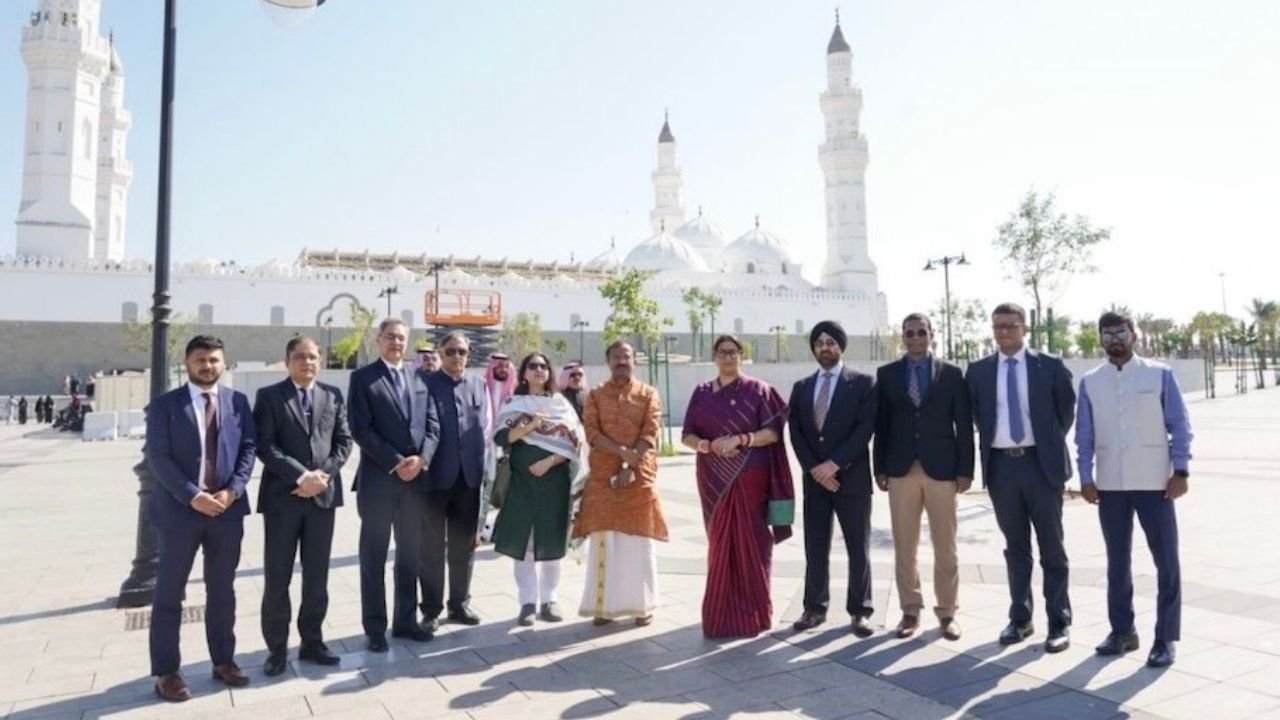
    Indian Union Minister for Minority Affairs Smriti Irani, accompanied by Minister of State for External Affairs V Muraleedharan, visited Madinah city on Monday.

    Irani, who also holds the portfolio of Minister of Women and Child Development, along with the delegation, met up with Indian volunteers catering to Indian Hajj pilgrims and also spoke to Indian Umrah pilgrims.

    “Undertook a historic journey to Madinah today, one of Islam’s holiest cities included a visit to the periphery of the revered Prophet’s Mosque, Al Masjid Al Nabwi, the mountain of Uhud, and periphery of the Quba Mosque – the first Mosque of Islam,” she posted on X (formerly Twitter).

    “The significance of the visit to these sites courtesy Saudi officials, intertwined with early Islamic history, underscores the depth of our cultural and spiritual engagement,” she added.

    According to an official statement, the aim of the visit was to get a first hand look into the arrangements essential to ensure an easy Hajj in 2024 for Indian pilgrims.

    “The Government of India is deeply committed to assist in providing facilities and services to Indian Muslims who undertake the Hajj pilgrimage, thereby providing them with a comfortable and fulfilling experience,” it further stated.

  • Germany Ready To Sell Eurofighter Jets To Saudi Arabia

    Germany Ready To Sell Eurofighter Jets To Saudi Arabia

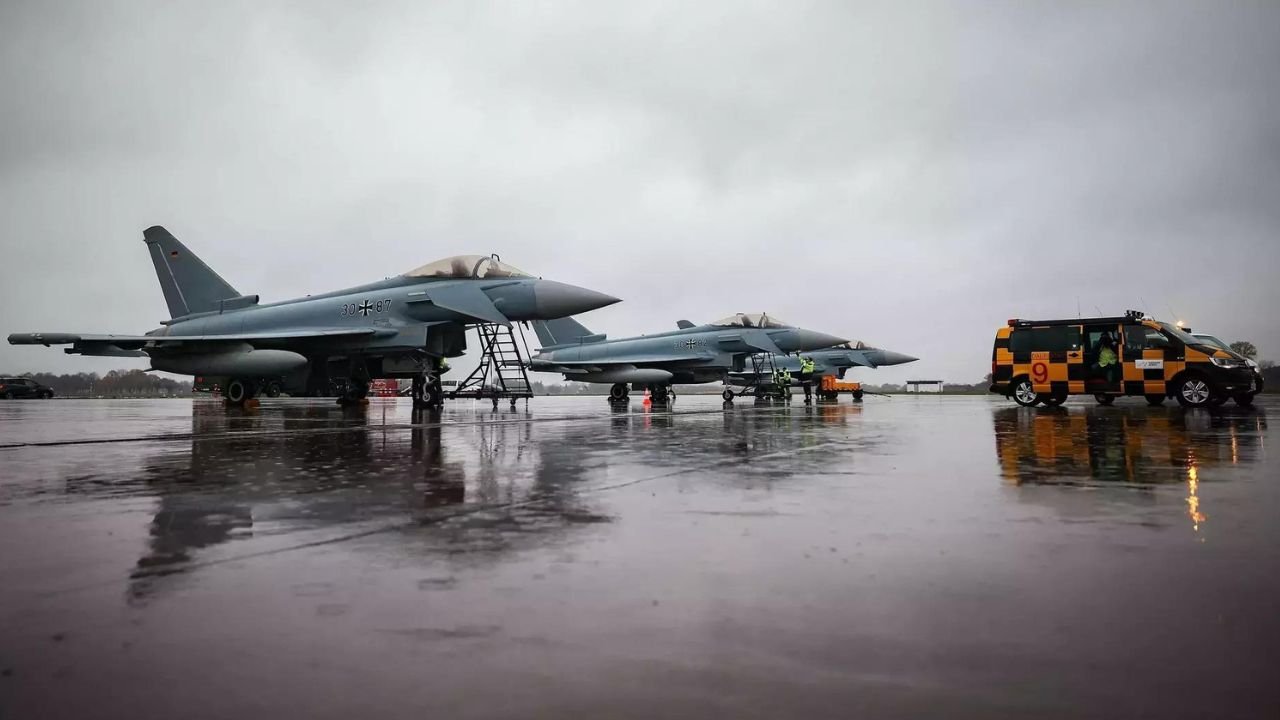
    Chancellor Olaf Scholz’s government on Monday defended plans to lift Germany’s longstanding veto on sales of Eurofighter jets to Saudi Arabia, saying Riyadh has adopted a “constructive approach” in the Israel-Hamas war.

    Germany, Britain, Italy and Spain jointly build the jet and each can veto deals.

    Berlin has blocked one deal, sought by London, since 2018.

    But German Foreign Minister Annalena Baerbock, on a visit to Israel on Sunday, signalled that Berlin was ready to lift its blockade.

    “We do not see ourselves, as the German federal government, opposing British considerations on other Eurofighter (sales),” Baerbock told journalists, as she underlined the Saudi role in the Middle East security crisis since the eruption of the Israel-Hamas war on October 7.

    Scholz “shares this assessment,” his spokesman Steffen Hebestreit said on Monday at a press conference, noting that “it is an open secret that Saudi Arabia’s airforce has used Eurofighters to shoot down rockets launched by the Huthis on the way to Israel”.

    Germany has blocked arms sales to Riyadh since the 2018 murder of dissident journalist Jamal Khashoggi in the Saudi consulate in Istanbul.

    That includes blocking a deal for 48 Eurofighter jets signed by Saudi Crown Prince Mohammed bin Salman in London.

    Baerbock noted that Saudi Arabia and Israel had “not renounced their policy of normalisation” since the war broke out.

    “The fact that Saudi Arabia is now intercepting missiles fired by the Huthis at Israel underlines this, and we are grateful for that,” she added.

    “The fact that the Saudi air force also uses Eurofighters in this context is an open secret,” the minister continued.

    “Saudi Arabia is a key contributor to Israel’s security, even these days, and is helping to stem the risk of a regional conflagration.”

    Germany’s previous position against deliveries to the kingdom had put itself at odds with key partners, with Airbus chief Guillaume Faury saying in November that it was “damaging to Germany’s reputation as an exporting nation”.

    “This raises the question of confidence and the credibility of Germany as a country participating in international programmes,” he added.

    Berlin’s U-turn, however, risks opening up a new political row domestically, with Baerbock’s Greens already uneasy about the move.

    Co-chair of the Greens, Ricarda Lang, on Monday insisted that “with a view on the human rights situation, including Saudi Arabia’s domestic constitution, I think as before that it is wrong to deliver Eurofighters” to the kingdom.

  • Saudi Arabia says ‘absolutely not’ to oil phaseout at COP28

    Saudi Arabia says ‘absolutely not’ to oil phaseout at COP28

    AFP – DUBAI: Saudi Arabia’s energy minister has slammed the door shut on agreeing to phase out fossil fuels at the UN’s COP28 climate talks, setting the stage for difficult negotiations in Dubai.

    A tentative “phasedown/out” was included in a first draft of an agreement on climate action that delegates are haggling over during talks that are scheduled to finish on Dec 12.

    But Energy Minister Prince Abdulaziz bin Salman, a half-brother of de facto ruler Crown Prince Mohammed bin Salman, told Bloomberg that Saudi Arabia, the world’s biggest oil exporter, would not agree.

    “Absolutely not,” he said in an interview in Riyadh.

    “And I assure you not a single person – I’m talking about governments – believes in that.”

    About 200 countries must come to a consensus decision at the meeting in Dubai, held at the end of the hottest year on record.

    In an interview with AFP last week, United Nations Secretary-General Antonio Guterres called for a total phaseout of fossil fuels, warning “complete disaster” awaits mankind on its current trajectory.

    But Prince Abdulaziz said: “I would like to put that challenge for all of those who… comes out publicly saying we have to (phase out), I’ll give you their name and number, call them and ask them how they are gonna do that.

    “If they believe that this is the highest moral ground issue, fantastic. Let them do that themselves. And we will see how much they can deliver.”

    ‘Small change’

    Separately, the Saudi royal also derided Western donations to a new climate loss and damage fund as “small change” and trumpeted Riyadh’s pledges to developing countries.

    The fund for vulnerable nations – a major win at the start of COP28 – has attracted about US$655 million (S$876.22 million) so far from donors including the European Union and the United States, a sum criticised as insufficient by campaigners.

    “Unlike the small change offered for loss and damage from our partners in developed countries, the Kingdom through its South-South cooperation announced in the Saudi Africa Summit in Riyadh last month the allocation of up to US$50 billion,” he said in a video message to Monday’s Saudi Green Initiative forum, held on the sidelines of COP28.

    “This will help build resilient infrastructure and strengthen climate resilience and adaptation in the African continent directly through Saudi stakeholders,” added the prince, without giving further details.

    Such private funds have been criticised by campaigners for lacking transparency and because the pledges are non-binding and include loans and investments.

    Saudi Arabia has revamped its energy sources, invested in renewables and improved energy-efficiency as it tries to decarbonise its economy by 2030, Prince Abdulaziz added.

    But that target does not include emissions from the 8.9 million barrels of oil a day exported by Saudi Arabia.

    Africa and its energy mix is an area of focus for both Saudi and the UAE, which in September pledged US$4.5 billion for clean-energy investments in the continent.

    “You cannot go to undeveloped countries or developing countries and ask them to do the same measures of the transition,” Yasir Al-Rumayyan, chairman of Saudi state oil giant Aramco, told the forum.

    “Especially people who don’t have access to the energy.”

    He said he heard an African minister say “in order for us to have growth, we have to carbonise first then to decarbonise.”

  • Pakistan and Saudi Arabia reach consensus on long-awaited GCC free trade agreement

    Pakistan and Saudi Arabia reach consensus on long-awaited GCC free trade agreement

    Pakistan’s Commerce and Industries Minister, Dr Gohar Ejaz, led an official delegation to Saudi Arabia. The delegation included secretaries from the Ministry of Commerce, the Board of Investment (BOI), and officials from the Attorney General’s Office. 

    They engaged in discussions with the GCC Chief Negotiator to finalise the investment-related aspects of the Gulf Cooperation Council (GCC) Free Trade Agreement (FTA). Technical teams delved into details such as investment protection and facilitation. 

    Dr Ejaz expressed optimism about strengthening economic ties and highlighted the significance of the investment chapter. 

    The GCC FTA is anticipated to enhance trade, investment, and job opportunities between Pakistan and the GCC. 

    Both parties are considering a joint business forum to further promote economic collaboration, and Dr Ejaz expressed gratitude for the warm hospitality extended by the GCC.

  • Pakistan’s forex reserves rebound: SBP gains $77 million in a week 

    Pakistan’s forex reserves rebound: SBP gains $77 million in a week 

    According to data released on Thursday, the State Bank of Pakistan (SBP) witnessed a weekly increase of $77 million in its foreign exchange reserves, reaching $7.26 billion as of November 24.  

    The total liquid foreign reserves for the country amounted to $12.39 billion, with commercial banks holding net foreign reserves at $5.13 billion. 

    During the week ending on November 24, 2023, SBP’s reserves increased by $77 million, reaching $7,257.0 million. Contrastingly, the previous week saw a decrease of $217 million in Pakistan’s central bank reserves. 

    In July of this year, the central bank’s reserves received a boost as Pakistan obtained the initial tranche of approximately $1.2 billion from the International Monetary Fund (IMF) following the approval of a new $3-billion Stand-By Arrangement (SBA).  

    This boost was complemented by inflows from Saudi Arabia and the UAE. 

    However, the SBP reserves faced pressure due to debt repayments, a surge in import payments after the easing of restrictions, and a lack of fresh inflows. 

    In a significant development, the IMF announced last week that its staff and Pakistani authorities had reached an agreement on the first review of the SBA.  

    The staff-level agreement is pending approval by the IMF Executive Board. 

    The IMF team reached a staff-level agreement (SLA) with the Pakistani authorities on the first review of their stabilization program supported by the IMF’s $3 billion (SDR2,250 million) SBA.  

    Upon approval, approximately $700 million (SDR 528 million) will become available, bringing total disbursements under the program to almost $1.9 billion. 

    Following the SLA with the IMF, Caretaker Finance Minister Dr Shamshad Akhtar expressed confidence that external financing would not be an issue, anticipating inflows in December 2023 to contribute to an increase in foreign exchange reserves. 

  • Saudi Arabia lifts age limit, restores pre-COVID Hajj quota for Pakistani pilgrims 

    Saudi Arabia has granted approval to Pakistan’s request, ensuring equal quotas for all private Hajj tour operators during the upcoming pilgrimage scheduled to take place between June 26 and July 1, 2024.

    Saudi Arabia has reinstated Pakistan’s pre-coronavirus Hajj quota, allowing 179,210 pilgrims, and has lifted the previous age limit of 65 years for pilgrimage.

    Anticipating the participation of approximately 90,000 Pakistani pilgrims under the government scheme, an equal number will opt for private tour operators to fulfil this religious obligation.

    The revised scheme for private Hajj operators entails the formation of 180 groups, each comprising 500 people.

    Each private Hajj operator is now permitted to facilitate 100 pilgrims, resulting in diverse groups of pilgrims utilising services from five different operators.

    In a separate announcement, applications for Hajj 2024 under the government scheme are open from November 27 to December 12, 2023. Notably, there are no age restrictions for Hujjaj (pilgrims), and all applicants must possess a valid CNIC and a Machine-Readable Passport valid until December 16, 2024. Additionally, possessing a mandatory bank account is a prerequisite for all applicants.

    Pakistan is currently in talks with airlines to lower airfares for Hajj flights. Simultaneously, negotiations are ongoing with a mobile company to digitize Hajj 2024 through a dedicated cellphone app, showcasing efforts to enhance accessibility and streamline the pilgrimage experience.

  • ‘Crashing Eid’ is the hilarious Arabic Netflix comedy that is the talk of the town

    ‘Crashing Eid’ is the hilarious Arabic Netflix comedy that is the talk of the town

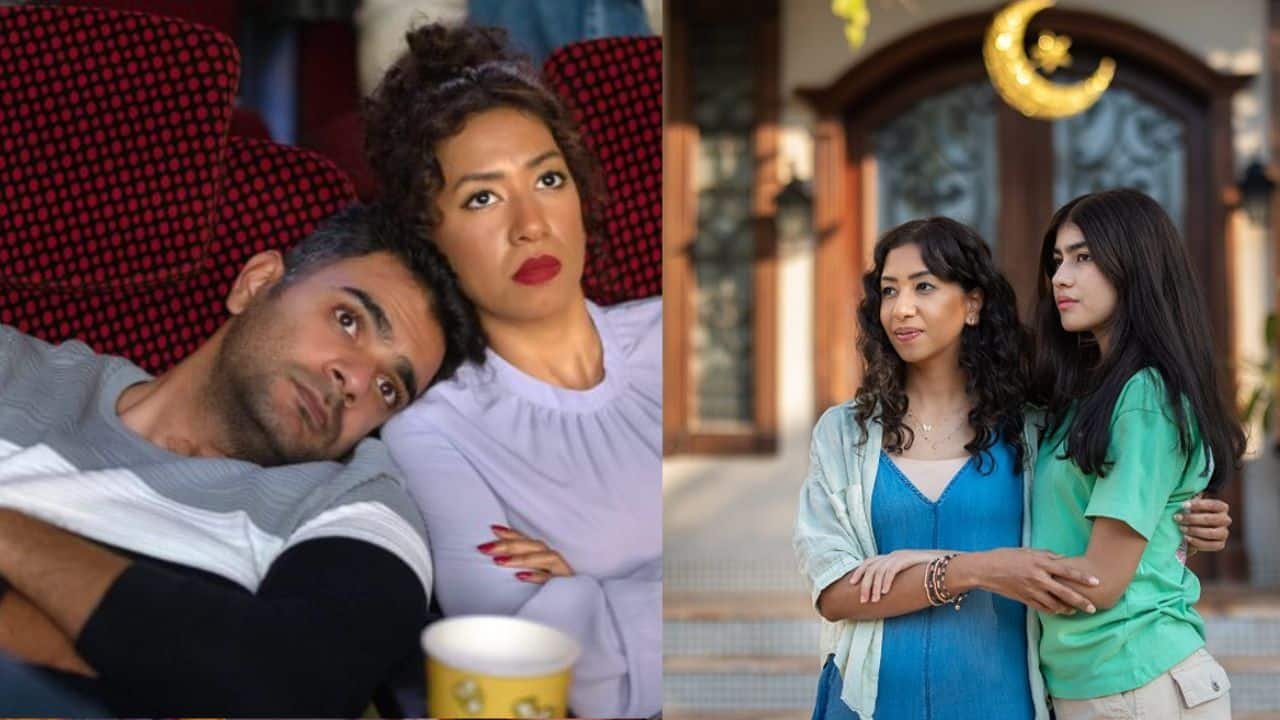
    ‘Crashing Eid’ is currently dominating Netflix Pakistan and seriously, this is the comedy series we have all been waiting for. Created by Saudi filmmaker Nora Aboushousha, the family drama tackles Saudi norms with comedy and ends with the enduring message that love conquers all.

    The drama follows the hilarious and fiercely independent Razzan, a single mother who lives in Britain with her daughter Lamar. She proposes to her British-Pakistani boyfriend Sameer, under the assumption her family back home in Saudi Arabia would approve of their marriage. However, sheer hilarity breaks out when her parents refuse to recognise their engagement, and the couple tackle racial divisions, prejudice and cultural norms to get married.

    Since this series hit Netflix, it is already getting rave reviews from Pakistani users, who praised the series for not holding back on tackling the racism Pakistanis face in Arabic countries.

    “The comedy series “Crashing Eid” is a good window into Arabs’ racist tendencies, bigotry, and toxic masculinity. As someone who visited a Gulf country earlier in the year, this comedy series portrays only but the tip of the iceberg,” one user wrote.

    Speaking to Arab News, Aboushousha spoke about how she came up with the concept of the series.

    “We started off with a concept of someone who is different from their family, and that grew into this story of a single mother who returns from abroad. We started wondering, what will inspire the clash with the rest of the family? And immediately we realized, ‘oh, she should come back ready to be married to someone from outside the culture!’ Everything fell into place from there.”

  • Three Arab countries refuse to cut off economic ties with Israel

    Three Arab countries refuse to cut off economic ties with Israel

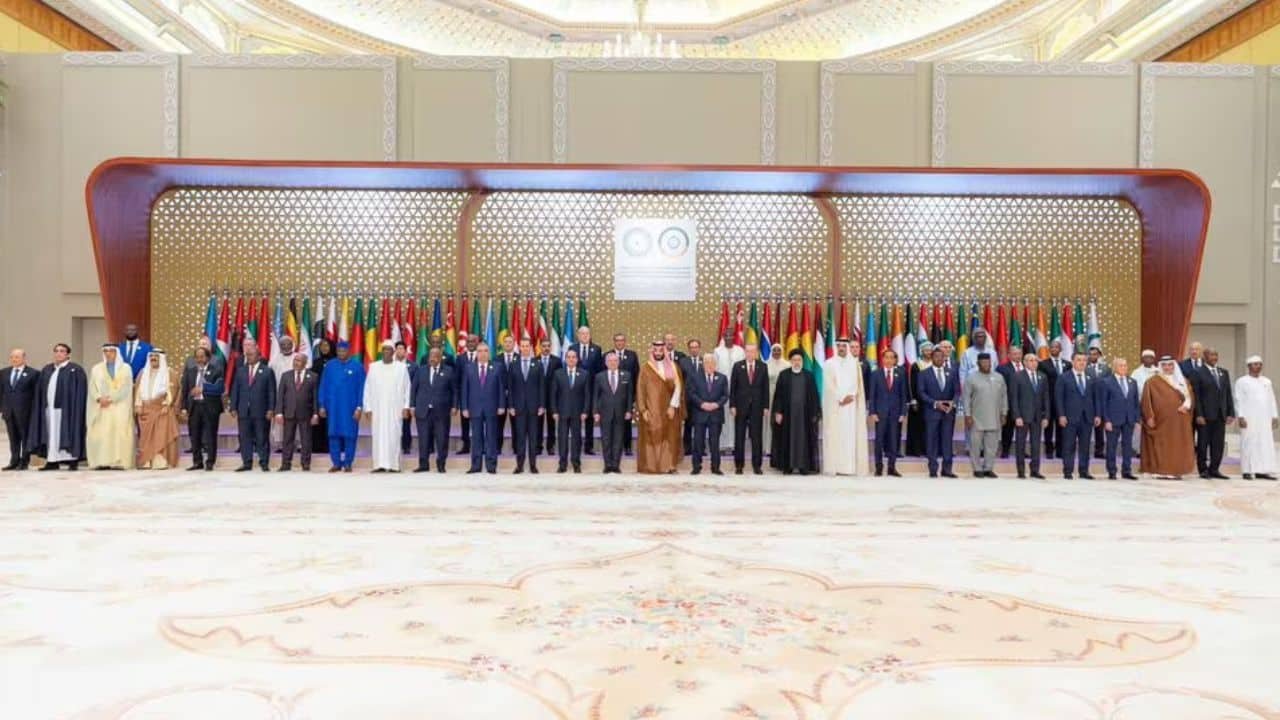
    Saudi Arabia hosted an Arab-Islamic summit on Saturday, calling to end Israeli attacks on Gaza and rejecting the justification of Israel’s actions against Palestinians as self-defence.

    The summit also asserted that Israel end the siege of Gaza and allow humanitarian aid into the enclave, ceasing arms exports to Israel.

    It further insisted that the United Nations Security Council adopt “a decisive and binding resolution” to halt Israel’s “aggression” and demanded that the International Criminal Court probe “war crimes and crimes against humanity that Israel is committing” in the Palestinian territories.

    Crown Prince Mohammed bin Salman stated that Saudi Arabia “confirms that it holds the occupation (Israeli) authorities responsible for the crimes committed against the Palestinian people.”

    “We are certain that the only way to guarantee security, peace and stability in the region is to end the occupation, siege and the settlements,” he added.

    A number of countries, including Algeria and Lebanon, suggested that the attacks on Gaza be responded by disruption of oil supply to Israel and its allies in addition to cutting off economic and diplomatic ties that some Arab League nations have with Israel.

    However, at least three countries rejected the proposal, according to the diplomats who spoke on condition of anonymity, reports Dawn.

    These countries included the United Arab Emirates and Bahrain, both of whom normalised ties with Israel in 2020.

    Syrian President Bashar al-Assad remarked that without any stern measures against Israel, the summit would not be effective.

    “If we do not have real tools for pressure, then any step we take or speech we give will have no meaning,” said Assad, who rejoined the Arab fold this year after a long conflict over civil war in his country.

  • Saudi Arabia will not use oil as a weapon to achieve ceasefire in Gaza

    Saudi Arabia will not use oil as a weapon to achieve ceasefire in Gaza

    Right before the October 7 attacks by Hamas on Israel followed by Israel’s declaration of war against the Palestinians resulting in a death toll of 10,5000+, Saudi Arabia and Israel were steering towards the establishment of ties despite their conflict of views over the Palestine issue.

    Saudi Crown Prince Mohammad bin Salman (MbS) reportedly asked the US for “security guarantees and access to civilian nuclear technology and advanced weapons in exchange for a deal.”

    Moreover, Saudi diplomats asserted that Israel must concur with the establishment of a Palestinian state as defined in the 2002 Saudi Peace Initiative. And while this particular demand was rejected by Israeli Prime Minister Benjamin Netanyahu and Jewish ministers in his government, a deal was almost at hand between the two countries.

    However, after October 7, people in support of Palestine across the world, particularly the Muslim world, have demanded from Saudi Arabia to take a stand against the atrocities committed by Israel on Palestinian soil — to use their power to put an end to the attacks.

    However, their concerns seem to have fallen on deaf ears.

    The Saudi Minister of Investment, Khalid bin Abdulaziz al-Falih, has remarked that the Kingdom is still willing to consider normalising relations with Israel, depending on a peaceful solution to the Palestinian issue.

    During a discussion session at the Bloomberg New Economy Forum held in Singapore, Falih responded to a question in regard to normalisation of ties between the two countries: “This matter was on the table, and it is still on the table, and it is clear that the recent withdrawal (from the talks) explains why Saudi Arabia is so determined to make a solution to the Palestinian conflict part of broader normalisation in [West Asia].”

    When asked if Saudi Arabia would use economic devices like oil to push for a ceasefire in the Gaza Strip, he reportedly laughed and replied: “This is not on the table today. Saudi Arabia is trying to achieve peace through talks that seek peace.”

    Falih also offered details of the three summits that Saudi Arabia is expected to host in the coming days which will be attended by Arab, African and Islamic countries, an effort to promote a “peaceful solution to the Israeli-Palestinian conflict”.

    In 1973, Saudi Arabia imposed an oil embargo on the United States and other countries for their support of Israel in the Yom Kippur War against Egypt and Syria.