Tag: SBP

  • IMF to send Letter of Intent soon to release $1.17 billion tranche

    IMF to send Letter of Intent soon to release $1.17 billion tranche

    The International Monetary Fund’s (IMF) agreement with Pakistan to release two tranches totaling $1.17 billion as part of a loan facility that was stalled is nearing completion, as the Letter of Intent (LoI) from the fund may arrive in a few days.

    Pakistan is likely to receive the LoI, which the governor of the State Bank of Pakistan (SBP) and the Finance Minister, Miftah Ismail, will jointly sign, according to The News.

    The IMF mission leader had to rush to Australia for a personal engagement, according to senior officials at the Finance Ministry, thus the Fund was likely to submit the LoI “anytime soon.”

    The IMF board would also discuss adding $1 billion to a $6 billion programme agreed upon in 2019 at its meeting scheduled for August 24.

    The government may impose higher taxes on cigarettes, tobacco leaves, fertiliser, and other items in order to appease the IMF.

    Additional taxes are being considered for a variety of sectors. Through a Presidential Ordinance, tax rates on cigarettes and the processing of tobacco leaf might be increased.

  • Pakistan to overcome $4 billion external financing gap soon: SBP

    Pakistan to overcome $4 billion external financing gap soon: SBP

    In the midst of intense pressure on foreign currency reserves, Pakistan will soon close its $4 billion shortfall in external finance with the assistance of friendly nations under IMF conditions, according to Acting Governor of the State Bank of Pakistan (SBP) Dr Murtaza Syed.

    He also acknowledged that inflation will continue to be higher for the ensuing 11 to 12 months, which is why the central bank was aiming for an average inflation target of 18 to 20 per cent for the current fiscal year 2022–2023

    According to The News, acting SBP Governor Dr. Murtaza Syed stated that Pakistan has already met its gross external financing requirements of $34 to $35 billion.

    However, Islamabad is also attempting to secure confirmation of $4 billion in inflows from friendly nations like Saudi Arabia, the UAE, and Qatar. According to him, these extra dollar inflows will be used to boost foreign currency reserves and build a safety net in case of a crisis-like circumstance.

    He resisted providing a specific timeline but assured that the $4 billion finance deficit will be closed quickly. He argued that urgent attempts were being made by the government and IMF high-ups to secure confirmation from their respective nations.

    Denying that the scenario was similar to Sri Lanka, he praised Bangladesh and claimed that nation performed properly, chose to return to the IMF, and also increased utility costs while maintaining enough levels of foreign exchange reserves.

    Speaking of increasing inflation, he believed that supply interruptions abroad had set the way for a global super cycle of commodities, leaving Pakistan with no choice but to concentrate on agriculture productivity in order to secure food security.

    According to Murtaza Syed, people would have to deal with this challenging moment because there is no immediate magic wand to manage increased inflation. He said that while it is a challenging time, there is no alternative way to prevent the country from entering a more challenging situation if nothing was done.

    According to the official, the SBP has loosened the cash margin requirements for opening L/Cs for imports and offers incentives to individuals who do so. According to him, the IMF opposed trade restrictions and took action to prevent the depletion of foreign exchange reserves.

    The current pressure on foreign reserves is now anticipated to end within the next two months. He also promoted energy saving as a way to ease the burden of high import costs.

    The senior official believed that as long as the economy’s structural issues persisted, Pakistan will continue to see boom and bust cycles. He gave a recent example in which the nation’s GDP increased by 6 per cent, indicating that the overheating of the economy led to imbalances known as the budget deficit and current account deficit. Although a recession is not imminent, he continued, the economy must be managed carefully.

  • Rupee gets stronger by Rs2.11 to close at Rs224.04 against US dollar

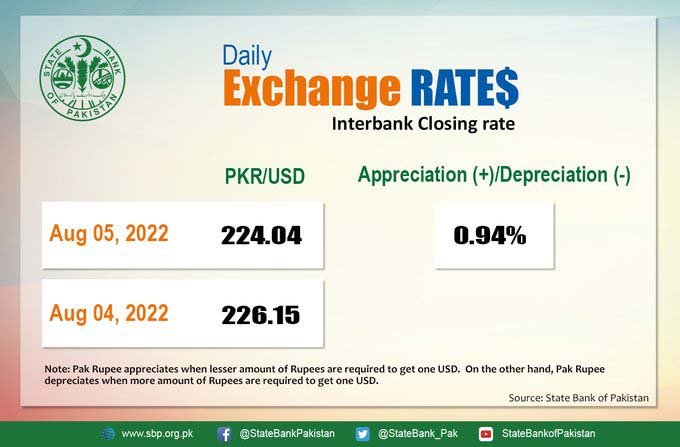
    Rupee gets stronger by Rs2.11 to close at Rs224.04 against US dollar

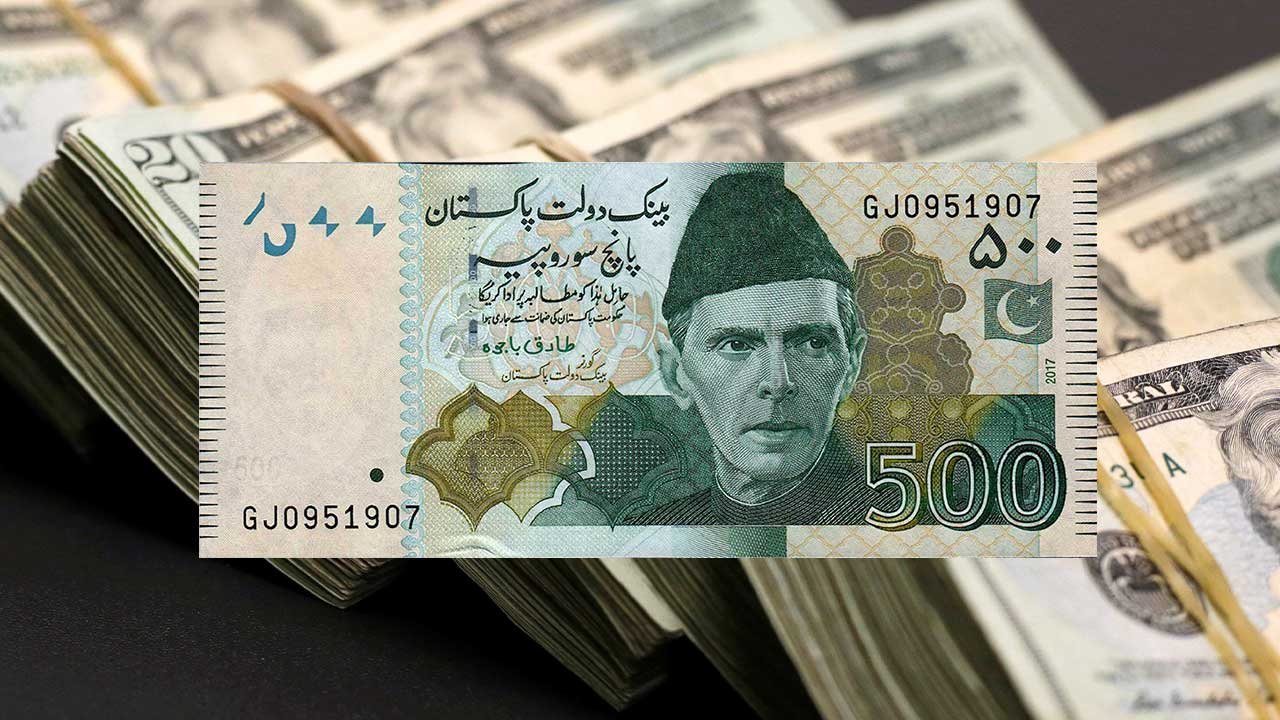
    During intraday trade on Friday in the interbank market, the Pakistani rupee (PKR) climbed by Rs2.11 against the US dollar for the sixth session in a row.

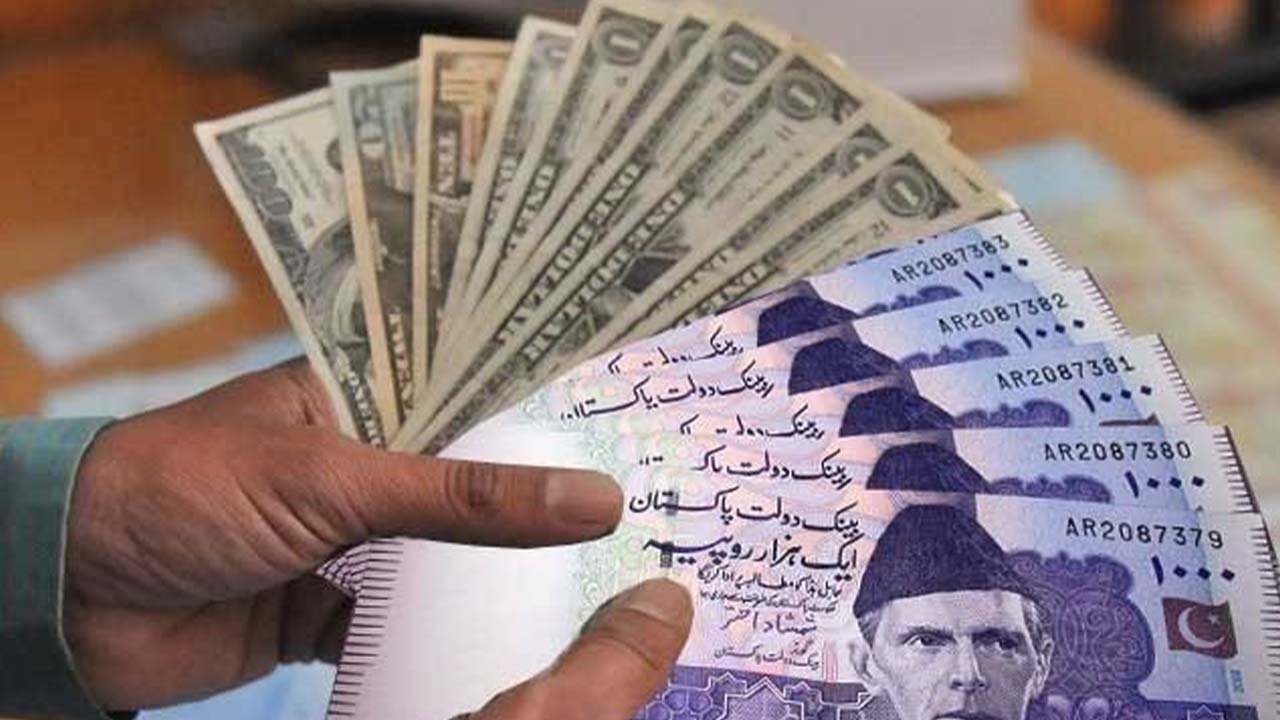
    In the course of the day’s trading, the local currency gained Rs2.11 or 0.94 per cent versus the dollar and closed at Rs224.04, down from Thursday’s closing of Rs226.15.

    Dollar to PKR rate – Friday 8 August 2022

    At yesterday’s closing, the rupee marginally increased by Rs2.65 or 1.17 per cent.

    Following the government’s austerity measures, which caused a sharp rise in inflation but also prevented the nation’s economy from collapsing, the rupee has been on the upswing.

    On Wednesday, PKR increased by Rs9.58 against the US dollar, the local currency saw a significant gain. The biggest one-day rise since 1999, it grew by 4 per cent.

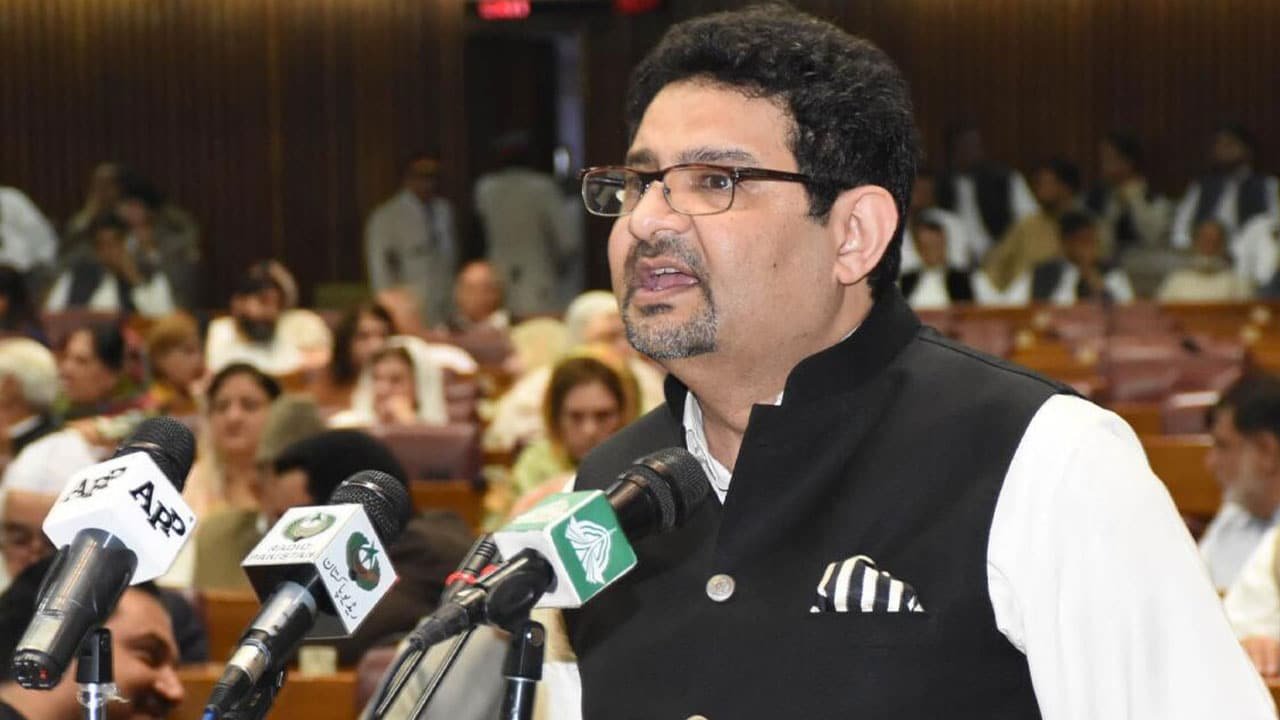
    In his speech at an event at the Pakistan Stock Exchange (PSX), Finance Minister Miftah Ismail said that if the nation can manage imports, exports may be increased through a number of strategies.

    After the coalition partners made unpopular decisions, Miftah stated Pakistan was “on the right track” and that the pressure on the rupee will continue to lessen in the days ahead as it strengthened against the dollar.

  • State Bank of Pakistan fines major banks for violating regulations

    State Bank of Pakistan fines major banks for violating regulations

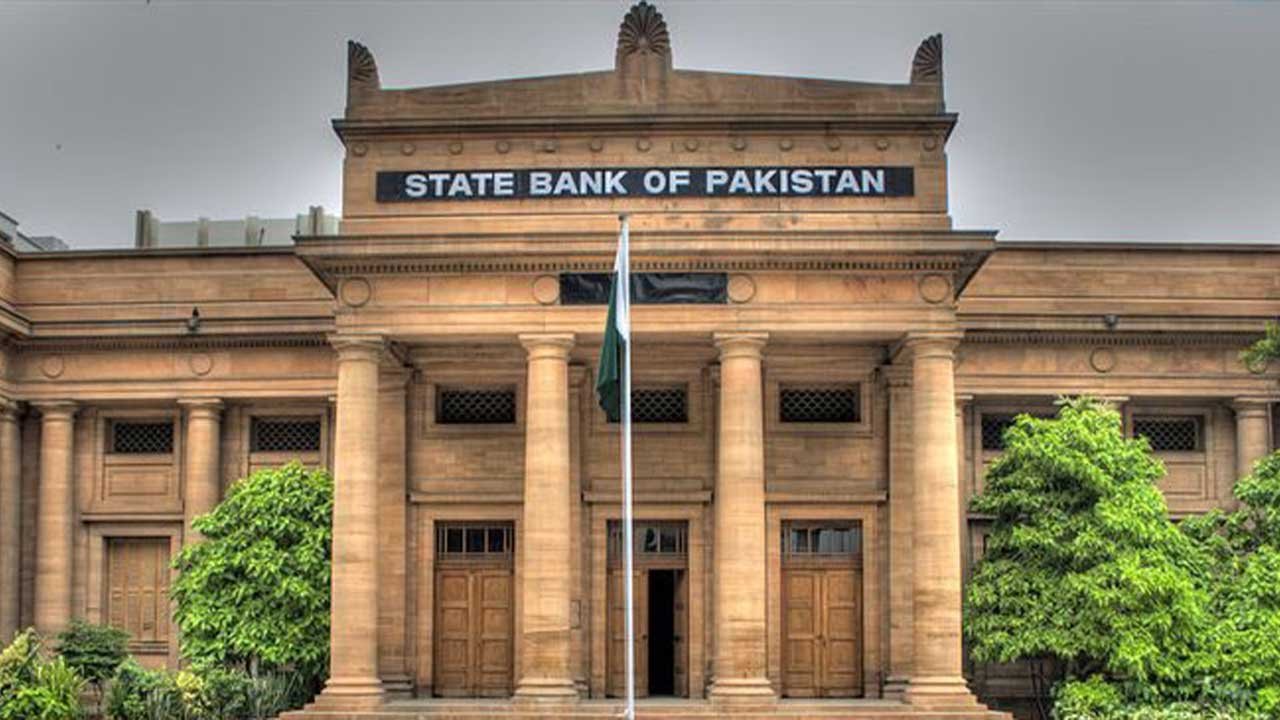
    Banks operating in Pakistan have been slapped with hefty fines from the State Bank of Pakistan (SBP) totaling Rs131.4 million as a result of enforcement action against infractions of its established policies.

    According to the specifics, SBP fined JS Bank Limited Rs85.148 million, the highest sanction of the three banks, for breaking regulator guidelines regarding CDD/KYC, Asset Quality, FX, and General Banking Operations. Additionally, the central bank has recommended JS Bank Limited to improve its processes and controls in the areas that have been highlighted.

    In addition, Habib Bank Limited was fined Rs29.035 million for disobeying regulatory directives regarding CDD/KYC. The bank has been urged to tighten its controls and procedures in the highlighted areas in addition to the punitive action.

    Last but not least, the Bank of Punjab was additionally penalised Rs17.243 million for breaking regulatory guidelines relating to Asset Quality & CDD/KYC. Along with taking legal action, the bank has been urged to tighten its procedures and controls in the highlighted areas.

    The SBP has previously imposed fines totaling more than Rs100 million on four banks for regulatory violations.

    Read more: Rupee gains ground against dollar for second day, closes at Rs238

    Earlier, due to a breach of asset quality regulations, the National Bank of Pakistan (NBP) was fined Rs19.26 million. Additionally, U Microfinance Bank Limited which is owned by Ufone was fined Rs10.26 million and given the go-ahead to launch an internal investigation into any violations of regulatory directives as well as to discipline any indiscreet employees.

    According to SBP, these actions are based on shortcomings in the observance of regulatory directives and do not reflect poorly on the businesses’ financial soundness.

  • Rupee gains ground against dollar for second day, closes at Rs238

    Rupee gains ground against dollar for second day, closes at Rs238

    Following days of increases in the interbank and open markets, the US dollar fell against the Pakistani rupee on Tuesday as a result of assurances from the government and State Bank of Pakistan (SBP) that the nation will have enough money for FY2022-23 after receiving IMF tranches.

    For the third straight session, the Pakistani rupee appreciated versus the US dollar in the interbank market on Tuesday. This occurred as a result of the market’s stability following the government’s assurance that it would successfully tackle the challenging economic situation.

    After the rupee dropped for 10 straight sessions in the final days of July and depreciated by about 5 per cent just last week, the dollar began to lose strength on Friday.

    Tuesday’s interbank trading ended with the rupee up a pitiful Rs0.46 or 0.19 per cent, reaching Rs238.38, from 238.84 in the previous trading session. In the meantime, the open market exchange rate remained constant at Rs241.

    Forex dealers report that the US dollar lost Rs0.94 in interbank trading and is now trading at Rs237.90. The banks are offering to sell dollars for Rs238.50.

    The US dollar dropped to Rs239 in the open market after crossing the Rs250 threshold.

  • Pakistani rupee crashes to another record low of Rs236.02 against US dollar

    Pakistani rupee crashes to another record low of Rs236.02 against US dollar

    During intraday trade today, the Pakistani Rupee (PKR) plunged to a new low versus the US Dollar (USD). It lost Rs3.09 in the interbank market today and depreciated by 1.31 per cent against the USD, closing at Rs236.02.

    During today’s open market session, the local currency was quoted at an intraday low of Rs238.5 against the US dollar. The dollar has increased by Rs52.07 against the PKR since the change of government.

    It is important to note that the Pakistani rupee has been among the worst-performing currencies in the world, falling more than 30 per cent since the beginning of 2022.

    However, the dollar has declined globally as well, reaching a 20-year high against other currencies in part due to anticipation that the Federal Reserve will raise interest rates more quickly than the majority of central banks.

    In addition, dealers told The News that the local currency was under pressure due to the ongoing political unrest and a lack of dollar liquidity.

  • SBP raises policy rate to 14-year-high of 15 per cent

    SBP raises policy rate to 14-year-high of 15 per cent

    In an attempt to calm the economy, control inflation, and support the beleaguered rupee, the State Bank of Pakistan’s Monetary Policy Committee (MPC) decided to raise the policy rate by 125 basis points (bps) to 15 per cent on Thursday.

    The previous policy rate at the same level was in 2008, so the current policy rate is at a level that is 14 years higher. The committee also disclosed that, in order to improve the transmission of monetary policy, interest rates on EFS and LTFF loans are now tied to the policy rate.

    Following the MPC meeting on Thursday, SBP Acting Governor Dr Murtaza Syed gave a virtual press conference where he announced the monetary policy decision. He told the media that the rate of inflation has been rising at its highest rate since 1970.

    “Globally, inflation is at multi-decade highs in most countries, and central banks are acting aggressively, putting pressure on most emerging market currencies to depreciate,” he continued.

    He praised recent government decisions, such as ending petroleum subsidies, and claimed that these actions had made it possible to finish the IMF loan programme. Pakistan’s external financing requirements for FY23 will be met thanks to significant additional funding from external sources, which will be stimulated by the anticipated conclusion of the ongoing IMF review.

    Then, during the course of FY23, rupee pressures should ease and the SBP’s FX reserves should gradually resume their prior upward trajectory.

    According to him, monetary tightening and fiscal consolidation will cause GDP growth to moderate to 3–4 per cent in FY23, helping to close the positive output gap and lessen demand-side pressures on inflation.

    The acting governor SBP stated that, according to the MPC’s baseline outlook, headline inflation is likely to remain high in FY23, hovering around 19–20 per cent, before dropping sharply to the target range of 5–7 per cent by the end of FY24, driven by stringent policies, a normalisation of global commodity prices, and advantageous base effects.

  • Pakistani rupee remains volatile as US dollar surpasses Rs211

    Pakistani rupee remains volatile as US dollar surpasses Rs211

    On Monday, the Pakistani rupee dropped sharply to a record low of over Rs211 against the US dollar in the interbank market, indicating that the currency remains highly volatile.

    The rupee’s latest devaluation against the US dollar is the result of panic buying by traders in response to reports that some financial institutions were out of foreign currency.

    According to the State Bank of Pakistan (SBP), the US dollar was available at Rs211.21 at 11:03 AM and had closed at Rs208.75 on Friday.

    It is worth noting that the Pakistani rupee has fallen for the seventh working day in a row, losing nearly Rs6, or more than 3 per cent, to date.

    Experts predict that the Pakistan rupee will continue to fall against the US dollar and other major currencies owing to concerns regarding the IMF’s $6 billion program’s restoration, the country’s expanding current account deficit, and dwindling foreign exchange reserves.

    The PKR which lost 32.5 per cent of its value in the current financial year 2021-22 is forecasted to remain under stress as the dollar is in high demand in the market due to economic crises.

    SBP appears helpless to stem the rupee’s speculative fall, as demand for the US dollar continues to rise due to quarter-end payment strain.

    Monetary specialists attribute the depreciation of the local currency to a widening trade deficit, political instability, and a drop in foreign direct investment. The currency expert believes that the positive news from the Financial Action Task Force (FATF) will help attract foreign investment, increasing the availability of the dollar.

    Traders expect the rupee to settle in a range of 195-200 per dollar until the end of the current fiscal year 2021-22 if the IMF deal is finalised.

    According to data compiled by Ismail Iqbal Securities, Pakistan’s currency has depreciated by 14.57 per cent against the dollar this year, making it one of the worst performers in the world.

    The worst-performing currency was the Sri Lankan rupee, which fell 43.9 per cent, followed by the Laotian Kip, which fell 24 per cent, the Turkish Lira, which fell 23.18 per cent, and the Ghana Cedi, which fell 22.33 per cent, according to the data.

  • Govt unveils Rs9.5 trillion budget 2022-23, focused on sustainable growth

    Govt unveils Rs9.5 trillion budget 2022-23, focused on sustainable growth

    The federal budget for 2022-23 has been revealed with a total outlay of Rs9,502 billion. It includes measures for sustainable economic growth, industrial and agricultural development, and aid for the poor ones.

    Finance Minister, Miftah Ismail began his address by claiming that the PTI administration had left Pakistan’s economy in shambles and harmed investor confidence by often switching finance ministers and monetary policies.

    He slammed former Prime Minister Imran Khan, claiming that he never cared about the poor, claiming that “keeping an eye on potato and tomato prices is not a PM’s duty”.

    He claims that the governing party took control of the country despite the fact that it will have to make difficult decisions to save the economy, which will affect their individual parties’ appeal, but they chose to put the country’s interests ahead of their own.

    Relief for working class and the poor

    He claimed that the budget is geared at providing greater relief to the working class and the poor, as opposed to the wealthy, because the working class prefers to buy local products over foreign ones, boosting the economy.

    Budget 2022-23, according to Miftah Ismail, will concentrate on offering facilities to farmers planting crops that supply cooking oil, such as corn and sunflower, so that the country does not need to import palm oil, which is at an all-time high in the worldwide market.

    Slashing furniture, stationary expenses in govt offices

    Considering the current economic downturn, the administration has decided to restrict operational expenditures to the absolute minimum, and that new furniture and stationary for government offices will be completely prohibited. Other than obligatory diplomatic visits, all government-sponsored foreign trips will be prohibited.

    Education

    The government has set aside Rs65 billion for the Higher Education Commission (HEC) in the current budget. In addition, the HEC has been granted Rs44 billion for development programmes, which is 67 per cent more than the previous year.

    Miftah Ismail said that this is a demonstration of our commitment to the youth. We are encouraging provinces to completely fulfill their obligations in terms of higher education promotion in the coming years, he said. The HEC budget includes 5,000 scholarships for Balochistan and tribal district students. He added that a unique scholarship programme has been introduced for Balochistan’s coastal communities.

    The Finance Minister said that 100,000 laptops would be provided to students around the country on affordable instalments. Funds have also been set aside for the purchase of cutting-edge equipment to improve engineering and technology education.

    15 per cent Increase in govt employees’ salaries

    In Budget 2022-23, Miftah Ismail announced a 15 per cent increase in government employee salaries, as well as the merger of adhoc allowances.

    He said that the tax on savings certificates, pensioners’ benefit accounts, and martyrs’ family assistance accounts had been reduced from 10 per cent to 5 per cent.

    Small merchants will be subject to a new fixed income and sales tax regime, according to the Minister. Electricity bills would be used to collect taxes ranging from Rs3,000 to Rs10,000 under this method. This will be a final agreement, and FBR will have no right to inquire about the tax.

    According to Miftah Ismail, a proposal has been made to increase initial depreciation rates for industries and other businesses from 50 per cent to 100 per cent in the first year.

    Furthermore, he stated that any tariffs imposed on industrial units during the import of raw materials will be considered adjustable in order to protect the business community’s working capital.

    New industrial policy

    He stated that an industrial policy is being implemented in partnership with the Asian Development Bank in order to boost the country’s industrial base. He stated that the Prime Minister has directed that all exporter claims be resolved as soon as possible.

    A sum of Rs40.5 billion is due to them right now, and we will pay it as soon as possible. Regardless of financial challenges, sales tax refunds are issued swiftly. Industrial feeders have been spared from load-shedding, according to him, in order to ensure that the industrial sector has uninterrupted power supply.

    A new strategy for promoting investment in the country is being developed which aims to provide an enabling atmosphere for investors by eliminating the lengthy procedure. The government will overhaul the dispute settlement structure to make it easier for domestic and foreign investors.

    Boosting agriculture sector

    Talking about the agriculture sector, Finance Minister stated that Rs21 billion had been set aside to boost agriculture and livestock productivity. He stated that the Ministry of Food Security, in consultation with the Planning Commission and the provinces, has developed a three-year growth strategy. This plan aims to increase agri-production, increase farmer prosperity, and promote smart agriculture and self-sufficiency.

    National Youth Commission

    The Finance Minister also announced the development of a National Youth Commission to help youth realise their full potential. Various plans for the youth, he noted, have been offered. He stated that a coordinated strategy is being implemented to strengthen the role of educated youth in the growth of the country. According to him, the youth employment initiative will create over two million job chances.

    He added that a scheme to foster youth entrepreneurship will be launched, under which interest-free loans of up to Rs500,000 and loans of up to Rs25 million will be made available on easy payments. He stated that in this lending arrangement, a 25 per cent quota has been been aside for women. He stated that women will be given precedence in hi-tech training in order to achieve economic empowerment. Youth development centres would be set up over the country, he said.

    A green youth movement would be launched to involve young people in environmental initiatives. Funds will be set aside to distribute laptops on a merit-based and instalment basis, as well as the construction of 250 mini-sports stadiums across the country. Miftah Ismail stated that an innovation league would be established in order to improve the youth’s potential. He said that a talent quest and sports drive programme will be developed for youngsters between the ages of eleven and twenty-five.

    Reduction in govt spending

    According to the Finance Minister, the current government’s top focus is austerity. This budget includes a reduction in government spending, and we are taking meaningful moves in that direction. He stated that automobile purchases will be completely prohibited. Apart from development initiatives, procurement of furniture and other products would be prohibited. Cabinet members and government officials will have their gasoline quotas lowered by 40 per cent. There will also be a ban on international tours paid for by the government, with the exception of the most important ones.

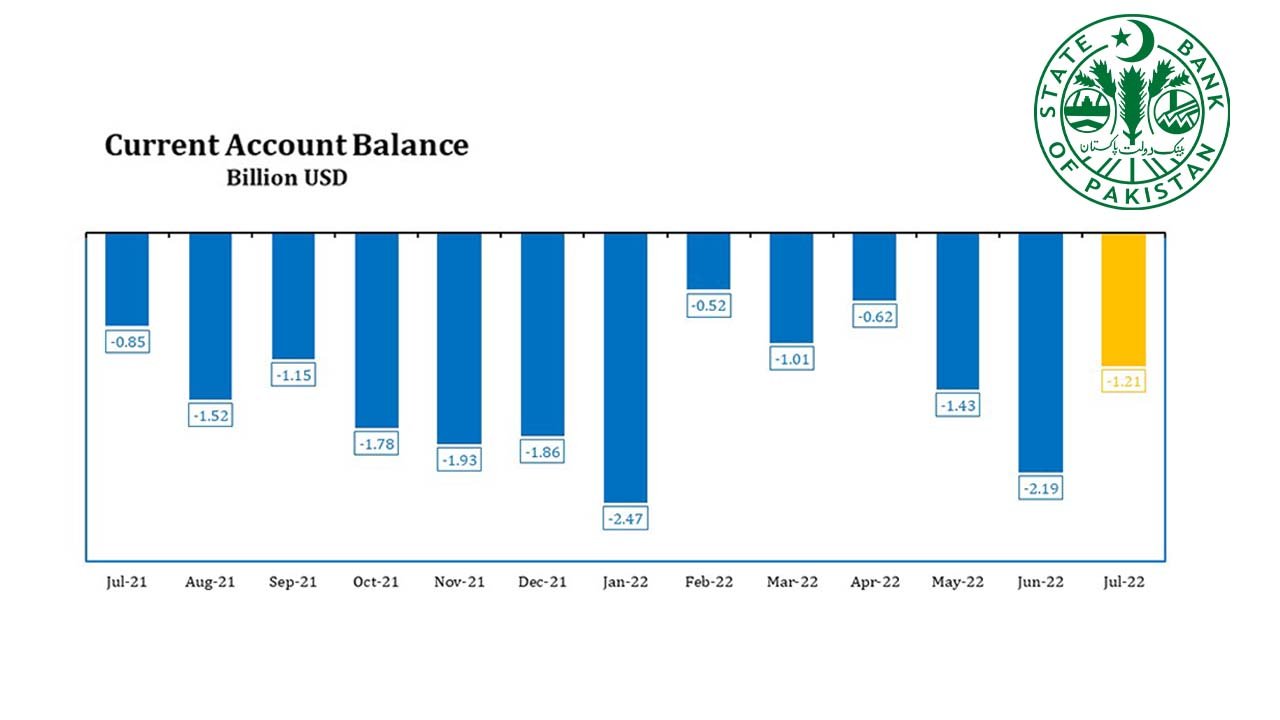
    A medium-term macroeconomic framework has been established to put the economy on a road of development, according to the Finance Minister. He emphasised his belief that by implementing this framework, we will be able to steer the economy in the right way. Our biggest problem, he remarked, is to expand without a current account deficit. As a result, a minimum of 5 per cent will be obtained without disrupting the balance.

    Improved fiscal and monetary policy

    He said that the GDP will increase from Rs67 trillion to Rs78.3 trillion in the coming fiscal year and the government is attempting to lower inflation through improved fiscal and monetary policy. During the next fiscal year, inflation will be decreased by 11.5 per cent.

    He predicted that the tax-to-GDP ratio will rise to 9.2 per cent in the coming fiscal year, up from 8.6 per cent now. He noted that in 2017-18, we had kept this ratio at 11.1 per cent. He stated that the overall deficit, which is currently at 8.6 per cent, will be steadily reduced. In the coming fiscal year, this will be reduced to 4.9 per cent. Similarly, the overall primary balance, which presently stands at -2.4 per cent of GDP, will be reduced to 0.19 per cent.

    Import and export

    Imports, which are estimated to be $76 billion this fiscal year, would be lowered to $70 billion the following fiscal year, according to the Finance Minister. Exports are currently $31.3 billion, but will increase to $35 billion in the coming fiscal year. The current account deficit will be decreased from -4.1 per cent of GDP to -2.2 per cent of GDP.

    Remittances, which are predicted to continue at $31.1 billion this fiscal year, are expected to grow to $33.2 billion next fiscal year.

    Key allocations in Budget 2022-23

    Rs1,523 billion allocated for defence

    Rs800 billion allocated for Public Sector Development Program (PSDP)

    Rs699 billion allocated for targeted subsidy

    Rs364 billion allocated for Benazir Income Support Program (BISP)

    Rs64 billion allocated for Higher Education Program

    Rs25.99 billion allocated for Atomic Energy Commission

    Rs24 billion allocated for Health

    Rs21 billion allocated for Benazir Nashunuma Program

    Rs11 billion allocated for Agriculture

    Rs10.12 allocated billion for food security 

    Rs9.60 billion allocated for Climate Change

    Rs530 billion allocated for pension funds

    Rs3.46 billion allocated for Maritime Affairs

    Key announcements

    The GDP growth target has been set at 5 per cent.

    Remittances are expected to total $33.2 billion.

    Inflation will be held at 11.5 per cent.

    FBR has set a revenue target of Rs7,004 billion.

    Non-tax revenue objective is set at $2 billion.

    The goal set for imports is $70 billion.

    The target for exports is $35 billion.

    Government employees will have a 15 per cent raise in pay.

    Under a new employment scheme, youngsters will be eligible for interest-free loans up to Rs500,000.

    Distributors and manufacturers will no longer be subject to an 8 per cent withholding tax.

    On national saving systems, the profit rate dropped from 10 per cent to 5 per cent.

    Cinema owners and film makers are exempt from income tax.

    On cars with engines larger than 1600cc, the advance tax will be raised.

    Pharmaceutical materials are exempted from any customs duties.

    This is a developing story..