Tag: SBP

  • IMF programme will only revive if Govt hikes fuel, electricity prices

    IMF programme will only revive if Govt hikes fuel, electricity prices

    The International Monetary Fund (IMF) has stated unequivocally that the loan programme under the Extended Fund Facility (EFF) will not be revived unless oil and electricity prices are increased. The Pakistani delegation, on the other hand, has asked for more time to withdraw the subsidy.

    The delegation would meet with Prime Minister (PM) Shehbaz Sharif to discuss it. Both parties have agreed to continue discussions. Apart from the withdrawal of the subsidy, officials claim that all other issues have been resolved.

    Pakistan was unable to persuade the IMF despite a week of discussions in Doha, Qatar, from May 18 to May 25.

    IMF postponed the rollback of Pakistan’s stalled $6 billion External Financing Facility (EFF) programme late Wednesday as the government hoped that the revival would bring stability to the financial markets, the rapid weakening of the local currency with depleting foreign exchange reserves.

    In a statement, the Fund underlined the elimination of petroleum and energy subsidies, among other conditions, as a prerequisite for the program’s restoration. Following the conclusion of the talks, Nathan Porter, the IMF Mission Chief for Pakistan, stated that the Fund held meaningful talks with Pakistani representatives.

    “The Mission has engaged in highly constructive discussions with Pakistani authorities in order to reach an agreement on policies and reforms that will lead to the completion of the awaiting seventh evaluation of the authorities’ reform programme, which is backed by an IMF Extended Fund Facility arrangement”.

    As per Porter, significant progress was made during the mission, including the need to continue addressing massive inflation and rising fiscal and current account shortfalls, whereas ensuring sufficient protection for the weakest.

    The Fund also lauded the State Bank of Pakistan’s (SBP) decision to raise the policy rate from 12.25 per cent to 13.75 per cent in order to combat rising inflation. However, the mission chief noted that there were fiscal deviations from the policies agreed upon in the previous review, reflecting in part the fuel and power subsidies announced by the authorities in February.

    The PTI-led government initially concurred to increasing the prices of energy and petroleum products, but Imran Khan announced a subsidy on both commodities later in March, and the present government is proceeding with the same arrangement.

    As per Porter, the IMF team highlighted the importance of tangible policy actions, including the removal of fuel and energy subsidies and the FY2023 budget, to achieve programme objectives. He went on to say that the IMF team is looking forward to proceeding with its discussion and close engagement with the Pakistani government on policies to ensure price stability for the benefit of all Pakistanis.

  • SBP shortens car loan tenure to deflate import bill

    SBP shortens car loan tenure to deflate import bill

    The State Bank of Pakistan (SBP) decreased the consumer lending duration for vehicles on May 24, bringing it to a maximum of three years for cars with engine displacements greater than 1,000cc and five years for those with engine displacements less than 1,000cc.

    “The maximum tenure of auto finance facility is reduced from five (5) years to three (3) years for vehicles above 1,000 cc engine displacement and from seven (7) years to five (5) years for vehicles up to 1,000 cc engine displacement,” read the circular.

    The SBP decided to change the Prudential Regulations for Consumer Financing (PRCF) in its circular Letter No. 19 of 2022:

    Other amendments issued previously, via BPRD Circular Letter No. 29 dated September 23, 2021, will now be applicable on financing for all locally assembled/manufactured vehicles, including financing for vehicles with up to 1,000 cc engine capacity and locally assembled/manufactured electric vehicles, according to the central bank.

    “However, the regulatory treatment of Roshan Apni Car product communicated earlier to RDA participant banks will continue to remain effective,” read the circular.

    “The maximum tenure of auto finance facility is reduced from five (5) years to three (3) years for vehicles above 1,000 cc engine displacement and from seven (7) years to five (5) years for vehicles up to 1,000 cc engine displacement,” read the letter.

    Other amendments issued previously, via BPRD Circular Letter No. 29 dated September 23, 2021, will now be applicable on financing for all locally assembled/manufactured vehicles, including financing for vehicles with up to 1,000 cc engine capacity and locally assembled/manufactured electric vehicles, according to the central bank.

    “However, the regulatory treatment of Roshan Apni Car product communicated earlier to RDA participant banks will continue to remain effective,” read the circular.

  • PM rules out the removal of fuel, energy subsidies ahead of talks with IMF: Miftah Ismail

    PM rules out the removal of fuel, energy subsidies ahead of talks with IMF: Miftah Ismail

    Finance Minister Miftah Ismail has once again said the government doesn’t plan to increase the prices of petroleum products. Talking to the media at the Karachi airport, he said that Prime Minister (PM) Shehbaz Sharif and Pakistan Muslim League-Nawaz (PML-N) supremo Nawaz Sharif had ruled out the possibility of ending the subsidies.

    “It will not happen. I have refused. Shehbaz Sharif sahib has refused. Nawaz Sharif sahib has refused,” said Ismail. “I am assuring you that I will not agree to [the terms] that Shaukat Tarin agreed to.”

    He said that according to the deal finalised by former finance minister Shaukat Tarin, Pakistan would have to raise the price of diesel by over Rs150 and petrol by Rs100.

    Miftah said that Imran Khan took a loan of Rs20,000 billion, which is 80% of the entire amount of loans taken in 71 years of Pakistan’s history.

    He further stated that former planning and development minister Asad Umar caused Pakistan a loss of 9.1%, which was a record loss in 52 years.

    “Pakistan exported wheat when we [PML-N] left the government but today the country is importing wheat,” Miftah said.

    A team comprising State Bank of Pakistan and Federal Board of Revenue officials, as well as Minister of State for Finance and Revenue Dr Aisha Ghous Pasha and the finance secretary, are already in Doha to negotiate with the IMF.

    The talks began on May 18. At the time, Ismail had told the IMF that the government understood the current economic crisis and agreed that it would have to take “tough decisions” while mitigating the effects of inflation on middle to low-income groups.

  • Pakistani rupee reaches a new all-time low of Rs190 against the US dollar

    Pakistani rupee reaches a new all-time low of Rs190 against the US dollar

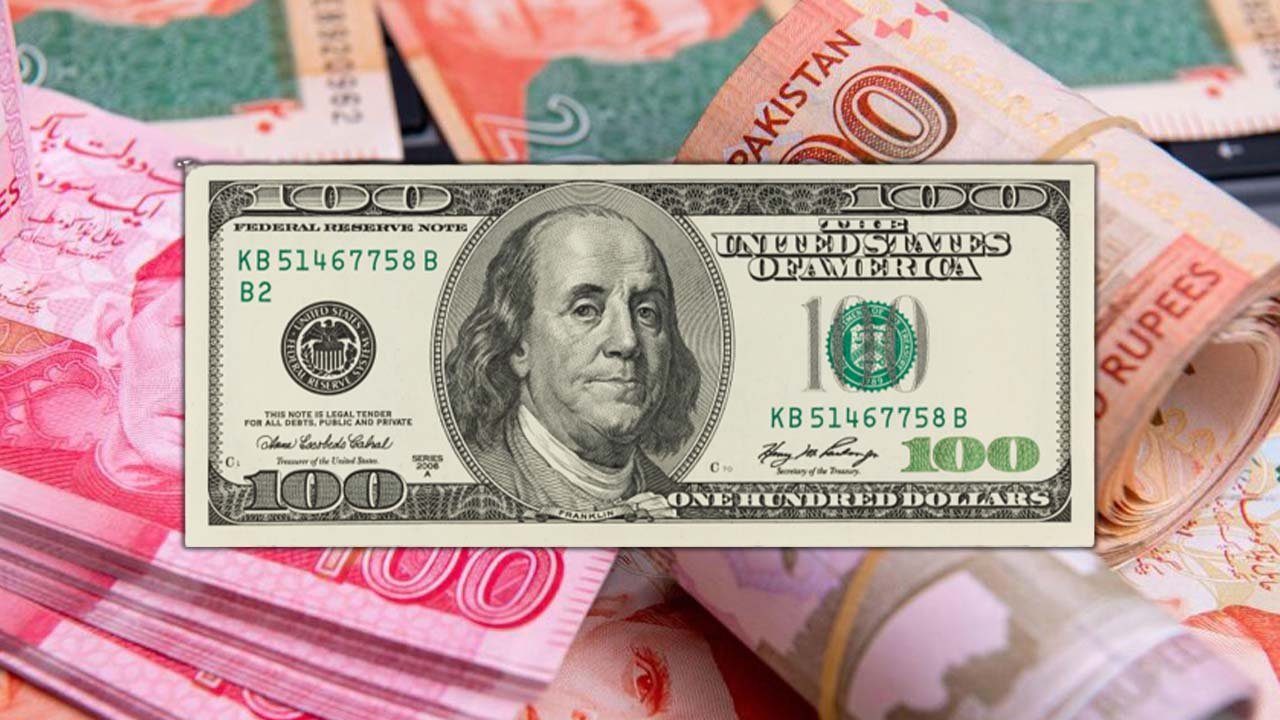
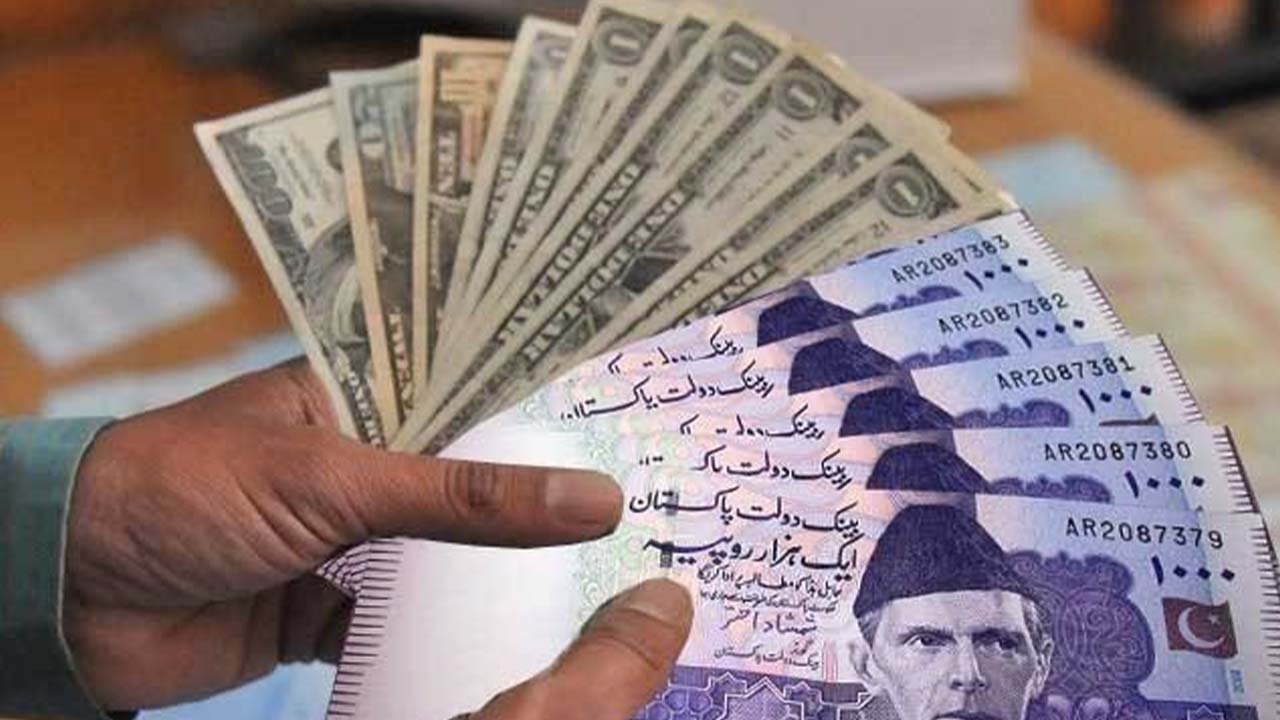
    In the interbank market on May 11, the US dollar soared to an all-time high against the Pakistani rupee (PKR), reaching Rs190.10.

    In the morning. the local currency was trading at Rs189.89 to Rs190.04, with deals reported at Rs190.

    The dollar gained Rs1.44, surpassing the prior day’s finish of Rs188.66. The greenback touched an all-time high on May 11, when it surpassed the Rs189 level.

    It had gone down in the immediate aftermath of the April 11 change of government, but the adjustment soon ran out of steam, and the greenback is now flying again, hitting a new all-time high.

    Read more: CNG prices pushed to Rs140 per kg for sales tax collection

    Experts say the rupee is under pressure because of increased oil import bills and speculation about the Saudi package. Foreign reserves were also under strain due to delays in talks with the International Monetary Fund.

  • Pakistani Rupee crashes to a record low against US dollar 

    After a fourth consecutive session of losses on May 10, Pakistan’s currency hit an all-time low in the interbank market due to a lack of clarity on foreign cash inflow and a stronger US dollar.

    The rupee ended the day at Rs188.66, down Rs1.13, or 0.60 per cent, according to the State Bank of Pakistan (SBP). After a 0.48 per cent decline on Monday, the rupee finished at Rs187.53. Prior to Tuesday, the PKR’s lowest closing was Rs188.18 on April 7, 2022.

    Oil prices, a key indicator of currency parity, dipped in tumultuous trade on Tuesday as the market weighed the impact of expected European Union penalties on Russian oil against demand concerns stemming from China’s coronavirus lockdowns, a strong dollar, and rising recession threats.

    Read more: Pakistani rupee nearing an all-time low

    Despite the decline, the price of oil remains far above $100 per barrel, a high level for oil-importing nations like Pakistan, which is already grappling with a growing current account deficit and dwindling foreign exchange reserves.

  • Pakistan’s foreign exchange reserves dropped by $115 million

    Pakistan’s foreign exchange reserves dropped by $115 million

    Pakistan’s liquid foreign reserves were depleted by $115 million in the week ending April 30, 2022, a 0.7 per cent drop from the previous week.

    According to the SBP weekly report unveiled on Friday, Pakistan’s total liquid foreign exchange reserves declined by $115 million (-0.7 per cent) to $16.553 billion on April 30, 2022, from $16.668 billion the previous week.

    Due to external debt payments, the SBP reserves fell by $59 million to $10.499 billion (-0.6 per cent) from $10.558 billion a week earlier.

    Read more: Dr Murtaza Syed assumes charge as the new Governor State Bank of Pakistan

    Furthermore, commercial banks’ net foreign reserves stood at $6.05 billion, down $56 million (-0.9 per cent) on a weekly basis.

  • Pakistan’s foreign currency reserves down by $328 million

    Pakistan’s foreign currency reserves down by $328 million

    State Bank of Pakistan (SBP) on April 28, revealed that the central bank’s foreign exchange reserves fell by 3 per cent on a weekly basis.

    The central bank’s foreign currency reserves were $10,558.2 million on April 23, a $328 million decrease from the previous day’s total of $10,885.7 million. according to the SBP, this decline was caused by external debt and other payments.

    Pakistan’s total liquid foreign currency reserves, comprising net reserves held by banks other than the SBP, were $16,668.2 million. Banks held a total of $6,110 million in net reserves.

    SBP’s foreign exchange reserves reached an all-time high of $20.15 billion in the week ending August 27, 2021, after Pakistan received a general allocation of Special Drawing Rights (SDRs) worth $2,751.8 million from the IMF on August 24.

    Pakistan bought $2.5 billion using Eurobonds on March 30, 2021, by offering attractive interest rates to lenders in order to enhance foreign exchange reserves.

    Read more: All banks to remain open this Saturday

    On July 9, 2019, it received the first loan amount of $991.4 million from the IMF, which helped to boost reserves. The IMF released the second loan tranche of approximately $454 million in late December 2019.

  • Pakistan’s forex reserves inch up to $17.05 billion

    Pakistan’s forex reserves inch up to $17.05 billion

    The State Bank of Pakistan’s (SBP) foreign reserves saw inflows of $36 million in the week ending April 16, 2022, representing a 0.3 per cent increase week over week.

    According to the SBP weekly update posted on Thursday, the country’s total liquid foreign exchange reserves increased by $16.9 million (+0.1 per cent) to $17.045 billion on April 16, 2022, up from $17.028 billion the previous week. SBP reserves rose by $36.1 million to $10.88 billion (+0.3 per cent), up from $10.85 billion the week before.

    Likewise, commercial banks’ net foreign reserves stood at $6.1 billion, down $19.3 million (-0.3 per cent) on a weekly basis.

    Read more: Pakistani rupee plunges by Rs1.05 against the US dollar

    In the interbank market on Thursday, however, the Pakistani Rupee (PKR) resumed its downward trend versus the US Dollar (USD). It fell by Rs1.04 to the dollar, Rs1.15 to the Australian Dollar (AUD), Rs2.04 to the Canadian Dollar (CAD), Rs2.42 to the Pound Sterling (GBP), and Rs2.96 to the Euro (EUR).

  • New bank timings announced by SBP, Saturday will now be observed as a working day

    New bank timings announced by SBP, Saturday will now be observed as a working day

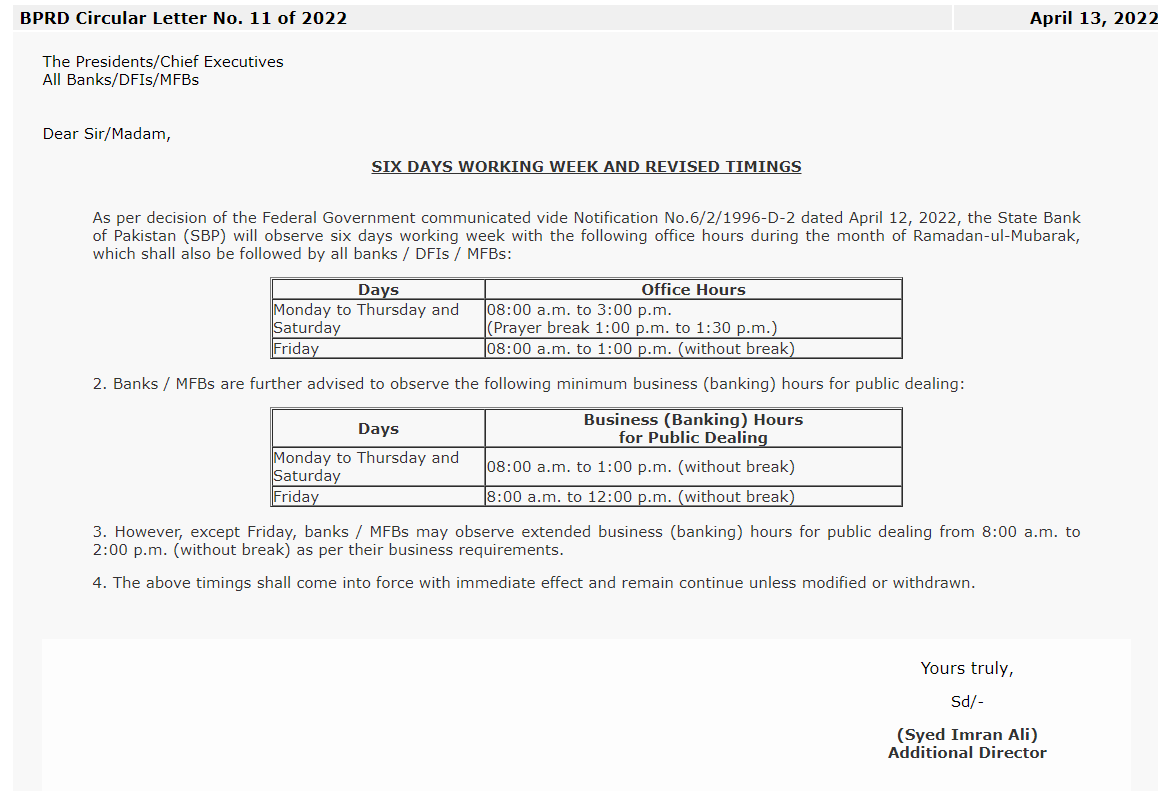
    Pursuant to the federal government’s directive issued on April 13, the State Bank of Pakistan (SBP) would observe a six-day work week with amended timings.

    During Ramzan, working hours for the central bank, development finance institutions (DFIs), microfinance banks (MFBs), and all commercial banks, are as follows:

    Monday to Thursday and Saturday from 8:00 am to 3:00 pm with a prayer break from 1:00 pm to 1:30 pm.

    Fridays: from 8:00 am to 1:00 pm without a break, according to a notification from SBP.

    Public dealing hours

    Banks and MFBs have been advised to adhere to the following public dealing business hours:

    Monday through Thursday and Saturday from 8:00 am to 1:00 pm (no break).

    Fridays from 8:00 am to 12:00 pm (no break).

    Banks and MFBs may observe longer business (banking) hours for public dealing from 8:00 am to 2:00 pm (without break) on weekdays excluding Fridays, depending on their business needs.

    The abovementioned schedule will take effect immediately and will not be changed or withdrawn unless it is amended or canceled.

  • US Dollar continues to slide, reaches Rs183

    US Dollar continues to slide, reaches Rs183

    The US Dollar fell by Rs1.43 shortly after the interbank market opened, and is now being traded at Rs183.25.

    Following days of depreciation, the Pakistani rupee (PKR) rebounded against the US dollar in the interbank market on April 11, signaling that the currency value is stabilizing.

    On Friday, the Pakistan Stock Exchange (PSX) index KSE-100 reversed course and experienced an uptrend, adding 657.75 points, or 1.50 per cent, to close at 44,444.58 points, up from 43,786.83 points the previous working day.

    The KSE-100 index began on Monday morning to strong investor optimism, following a historic weekend in which Imran Khan became the first prime minister in Pakistan’s history to be removed by a vote of no confidence, putting an end to the country’s ongoing political crisis.

    According to foreign currency dealers, the greenback is now selling at Rs183.20, after weakening Rs1.83 versus the PKR in early trade.