Tag: SBP

  • Pakistan decides to make cryptocurrency illegal

    Pakistan decides to make cryptocurrency illegal

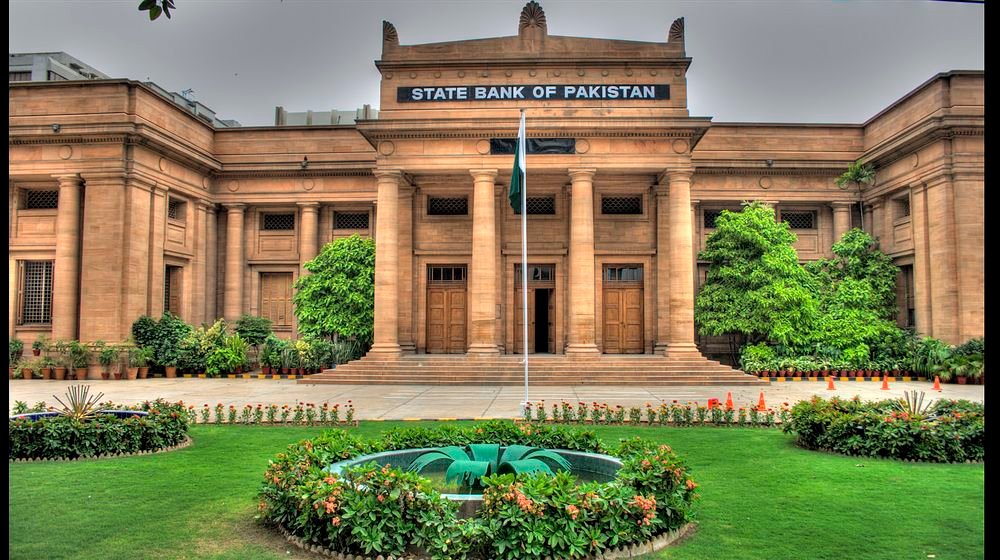
    The State Bank of Pakistan (SBP) and the federal government have come together to make a decision to ban the usage of all types of cryptocurrencies.

    The 38-page report has been submitted by the SBP Deputy Governor Seema Kamil to the Sindh High Court to declare it illegal.

    On October 20, 2021, the provincial high court directed the government to form a committee presided by the federal secretary of finance to determine cryptocurrency’s legal status and submit a detailed report.

    The submitted report has stated that digital currency is based on virtual business that could be used for terrorism financing and money laundering.

    It also listed eleven countries that banned digital currency including Saudi Arabia and China and urged the court to impose high penalties over unauthorised usage as these countries have implemented.

    The court ordered that the report should be submitted to the finance and law ministries for a final decision on its legal status. They will decide if a ban would be within constitutional jurisdiction.

    The hearing was heard by the two-bench judge headed by Justice Karim Khan Agha. The next hearing will be held on April 12 this year.

    Meanwhile, a TV host and crypto entrepreneur, Waqar Zaka pleaded to make digital currency legal. In his view, it would benefit the economy of the country.

    It was reported previously that Pakistanis have lost almost 18 crores in a cryptocurrency-related scam. Almost 55,000 people have become victims of the scam. In total, 11 mobile applications have been identified as part of the fraud.

    As per FIA Cyber Crime Reporting Sindh chief Imran Riaz, the applications that are involved include, MCX, HFC, HTFOX, FXCOPY, OKIMINI, BB001, AVG86C, BX66, UG, TASKTOK, 91fp.

  • ‘Stationery, makeup, mobiles’, mega price hikes set through mini-budget

    Through the mini-budget, the government plans to roll back tax exemptions worth Rs350 billion which will result in several items getting expensive, reports Samaa.

    The budget and the State Bank of Pakistan (SBP) Autonomy Bill are set to be tabled on Thursday in Parliament. According to officials, these changes are being done at the demands of the International Monetary Fund (IMF).

    Mobile phones, stationery items, packaged foods and makeup items are likely to get expensive as tax exemptions would be withdrawn after almost two months of its implementation.

    The tax on the import of luxury items will also be raised. However, prices of several items are likely to remain unchanged i.e. food items and medicine. A temporary or permanent ban or hiking sales tax from 12.5 percent to 17 percent on imported vehicles is also proposed.

    The tax collections target for the coming year is also being raised to Rs6100 billion from Rs5829 billion.

    Earlier, it was reported that government might pass the budget through a presidential ordinance. But IMF rejected this government’s proposal and insisted on legislation through the Parliament. 

    The exemptions need to be reverted before the IMF’s executive board meeting on January 12.

  • ‘Aag laga de gaye’: PML-N Rana Sanaullah warns government

    Pakistan Muslim League-Nawaz’s (PML-N) Punjab President Rana Sanaullah said if the government tries to hold the upcoming elections using Electronic Voting Machines (EVMs) he will burn them.

    In a press conference on Friday, Sanaullah while talking about foreign loans stated, “Pakistan has gone bankrupt. The entire economy including the State Bank of Pakistan (SBP) has been handed over to International Monetary Fund (IMF).”

    He said, “Electronic machine par intekhaab hua toh machino ko polling station se nikal kar aag laga de gaye” (We will try every strategy against EVMs. If the election is held through this [EVMs], we will take out the machines from polling stations and set them on fire.)

    Talking about PML-N Vice President Maryam Nawaz’s leaked audio, he claimed that the government is exaggerating about the relevance of the audio.

    Prior to this, Rana talked about EVMs in a show and said if the government tries to force the elections through EVMs, the party would be left with no option but to follow the TLP way of protesting.

  • Rs 827.2 billion drawn from ATMs during Ramazan, Eid

    Rs 827.2 billion drawn from ATMs during Ramazan, Eid

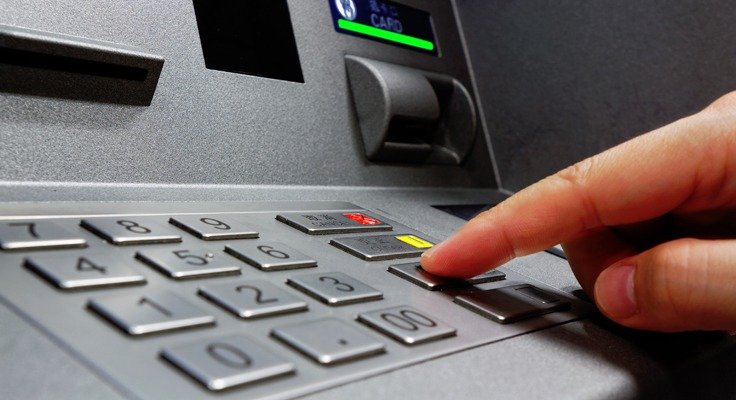
    Around Rs 827.2 billion were reportedly drawn from Automated Teller Machines (ATMs) during Ramazan and Eid holidays, through approximately 63.2 million transactions.

    Only on Eid, Rs137.8 billion were withdrawn through 11.6 million ATM transactions. The State Bank of Pakistan (SBP) collaborated with commercial banks to make ATM services available for people on holidays and other festivals.

    SBP formed a special team through which they monitored ATMs during Ramazan and Eid as there is a high demand for cash during these festivals.

    Besides, the banks also managed to sustain an average uptime of 96.5 percent which further improved to 98 percent during Eid-ul-Fitr holidays earlier this month. The special team performed nationwide operations on all banks through both on-site and off-site inspections and monitoring.

    During these holidays, only 500 complaints were received from the public and were immediately resolved. SBP praised the efforts of the banks to maintain the availability of services during these festivals.

    “SBP firmly resolves to keep facilitating the public and carrying out similar exercises in future as well to facilitate the general public at large,” read a statement from the bank.

  • Forex reserves fall to $20.679bn

    Forex reserves fall to $20.679bn

    The Foreign Exchange reserves of Pakistan fell by $157 million or 0.75 per cent to clock in at $20.679 billion, said the central bank on Thursday.

    The total liquid foreign reserves held by the country stood at $20.836 billion in the previous week.

    The reserves held by the State Bank of Pakistan (SBP) decreased by $146 million to $13.527 billion due to external debt repayments. The reserves of commercial banks also reduced to $7.152 billion from $7.163 billion last week.

    Earlier, Pakistan received inflows amounting to $2.5 billion on Thursday evening as proceeds of recently launched Eurobonds.

    The central bank has confirmed on its Twitter account that SBP has received the government’s proceeds of $2.5 billion against Eurobond issuance, resulting in $16 billion surges in foreign exchange reserves. 

    After a gap of almost three years, Pakistan has entered the international capital market for Eurobonds trading. A multi-tranche transaction of 5-,10-, and 30- year Eurobonds was performed to build up the foreign exchange reserves. 

    During the past two years, Pakistan got almost $3 billion in foreign inflows and out of these, $2.5 billion from Eurobonds arrival on Thursday evening.

    Besides, in the last week of March, International Monetary Fund (IMF) gave around $500 million to Pakistan as a loan under Extended Fund Facility (EFF) for support. 

    As of April 2, 2021, SBP’s liquid foreign exchange reserves were $20.679 billion. With the addition of Eurobond proceeds, these foreign exchange reserves would likely cross the $23 billion mark.

  • Govt to pay pensions, salaries via Raast instant payment system

    Govt to pay pensions, salaries via Raast instant payment system

    The State Bank of Pakistan (SBP) and Controller General of Accounts Pakistan (CGAP) have decided to digitise the payment system for salaries/payments of government employees.

    The payments will be made through Raast.

    Raast is an initiative taken by Prime Minister (PM) Imran Khan to promote easy tax collection and move the country towards a cashless economy.

    According to a press release, SBP and CGAP have signed a memorandum of understanding (MoU) to use Raast for payments. The payroll and pension-roll data will be shared from the CGA system to SBP’s Raast through a highly secure interface, and payments to the beneficiaries’ accounts will be made instantly after validating the beneficiaries’ detail.

    To ensure that payments are only credited in the intended beneficiary’s account, the digital payment system will verify the beneficiaries’ details with their banks in real-time before crediting the payment in the beneficiary’s account.

    The central bank further added that they are working to make payments of social security nets like Ehaas Programme, Benazir Income Support Programme (BISP), and other government programmes through Raast.

    Raast is Pakistan’s first digital payment system that will ensure payments instantaneously for individuals, businesses and the government.

    The system can also make payments to multiple beneficiaries at a time to cater to high volume government payments like salaries, pension and social security payments.

  • PM directs banks to ease loan procedure for people under Naya Pakistan Housing Scheme

    PM directs banks to ease loan procedure for people under Naya Pakistan Housing Scheme

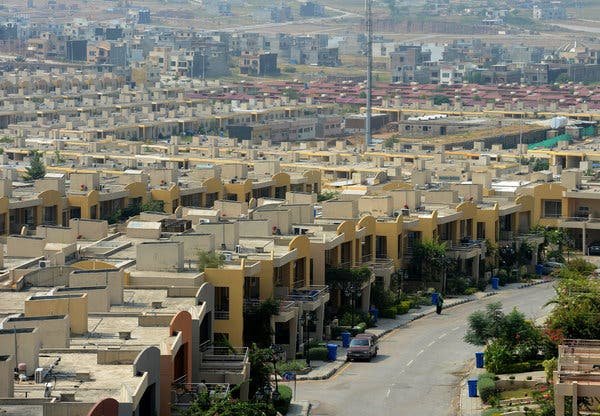
    Prime Minister (PM) Imran Khan virtually directed the National Bank of Pakistan (NBP) to simplify loan procedures so that the masses can get loans to own a house under Naya Pakistan Housing Programme.

    PM Imran’s telethon was attended by Senator Shibli Faraz, chairman of Naya Pakistan Housing and Development Authority, Lt. General (r) Anwar Ali Hyder, Governor of State Bank of Pakistan (SBP) Raza Baqir, NBP President Arif Usmani, and SBP Executive Director Samar Hasnain.

    PM also said that NBP should direct its staffers to facilitate the loan applicants now as bankers have never been helpful towards cashless people in Pakistan.

    He further added that the European countries have facilitated their people to own a home. However, it will be a new practice for our country.

    “Once people start building homes, there will a boom in the construction industry which will bring about a revolutionary change in Pakistan. The construction of homes, besides revenue generation, will lead to job creation,” he said.

    The PM further added that the rent that the buyers would pay will be considered as instalments of the total cost of the flat as per the new model of this mortgage system, and the markup rates have been reduced to a maximum of five per cent.

    So far, 3,000 labourers have registered while 1,500 got housing based on open balloting. The project aims at providing accommodation to people with an annual income of less than Rs500,000.

  • PM says no money for development due to ‘lowest tax collection rate’

    PM says no money for development due to ‘lowest tax collection rate’

    Prime Minister Imran Khan has said that Pakistan cannot spend money on its infrastructure development, such as hospitals and schools, because it has the “lowest tax collection rate” in the world.

    The PM was addressing the inaugural ceremony of the State Bank of Pakistan’s digital payment project, Raast, in Islamabad when he made these remarks.

    The PM said the cash economy has badly affected tax collection, which is directly proportional to the lower tax rate. “Out of 220 million people, only two million people are filers,” said the PM, adding that only 30,000 people account for 70 per cent of the total tax collection.

    However, the digital payment programme would help Pakistan transition from cash economy to a digital economy, said the PM.

    The PM said: “Our biggest problem is the informal economy that’s so big that we could not collect taxes to develop Pakistan.”

    “This is an obstacle in tapping our true potential is because we can’t build our infrastructure, we can’t educate children, we can’t improve hospitals, the fastest growing country in the region 50 years ago can’t move forward because it does not have that much money for the development of the country,” he added.

    As per the PM, the news SBP initiative will allow the government expand the scope of the development to the lower classes.

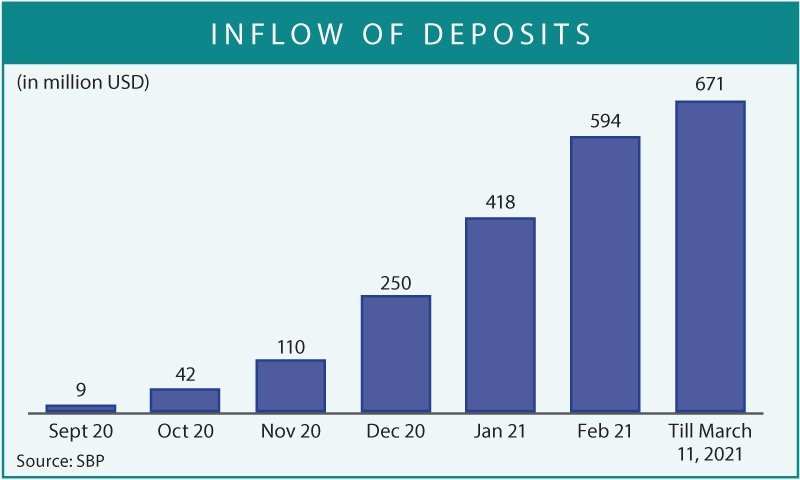
    He also congratulated the SBP for efficient dealings with the overseas Pakistanis that led to capital growth at an unprecedented rate.

    “Our Pakistanis abroad sent money in an official manner due to which the current account deficit, which had been going on for years went into surplus for five months and the people did not care how much benefit was gained from it,” he added.

  • ‘Good news for market’: IMF programme to restart soon, says SBP chief

    Pakistan is in talks with the International Monetary Fund (IMF) to put the fiscal support programme back on track, State Bank of Pakistan Governor Dr Reza Baqir said on Monday.

    Baqir said he was optimistic about the economic outlook despite the fallout from the coronavirus pandemic and the central bank was eyeing 1.5pc to 2.5pc GDP growth in the current fiscal year.

    With dwindling foreign exchange reserves and a struggling economy, Pakistan entered a three-year $6 billion IMF bailout programme in 2019, but is yet to have its second review approved, which has been pending since early last year.

    “We hope to have good news for the market and the world that we are putting the programme back on track,” Baqir said in an interview on Monday at the Reuters Next conference.

    Last year, staff from the IMF and Pakistani authorities reached an agreement to pave the way for a disbursement of $450 million in IMF funds pending approval from the global lender’s executive board, which is yet to take place.

    Baqir said there was no disagreement on the end goal between the two sides, and that Pakistan needs to increase its low tax-to-GDP ratio.

    Pakistan and the IMF have been working to implement IMF-supported economic reforms, in particular tax collection, aimed at stabilising the economy and shoring up a yawning fiscal deficit.

    Though the bailout programme is still pending, Pakistan received $1.4 billion in emergency financing from the IMF to allow it to fund targeted and temporary spending increases aimed at containing the pandemic and mitigating its economic impact.

    Authorities are counting on the IMF bailout package to bolster Pakistan’s fiscal position and increase global confidence in its economy.

    “Pakistani authorities and the IMF team remain closely engaged, discussions are going on, both teams are working very hard and non-stop to bring the programme review to positive conclusion,” IMF’s Resident Representative to Pakistan, Teresa Dabn Sanchez, told Reuters.

    Baqir also said he is more optimistic about the outlook even as Pakistan battles a second wave of the coronavirus outbreak.

    “We are prepared for the challenges that may come about. We are already in the middle of Covid without any vaccine and once the vaccine comes, it will only makes this better,” he said.

    Baqir added that an economic recovery is underway and the bank’s job is to support the rebound until a vaccine is available.

    1.5 to 2.5% GDP GROWTH:

    Pakistan is aiming to achieve 1.5pc to 2.5pc GDP growth in the current fiscal year, Baqir said. “I think the next two or three years should bring some good news on the economic front.”

    Pakistan’s economy contracted 0.4% in the last fiscal year ended June 30, 2020, as the pandemic hit. Baqir added that an economic recovery was under way and the bank’s job was to support the rebound until a vaccine was available.

    “I think the next two or three years should bring some good news on the economic front,” he said.

    Baqir said Pakistan’s growth in its foreign exchange reserves from $7 billion to $13 billion in recent months was not due to borrowing.

    He said Pakistan needed “a rollover of the support” of friendly countries that had parked money in the bank to shore up reserves, but did not need new loans.

    Among those countries is Saudi Arabia, which recently asked Pakistan to repay $2 billion of its loan. Islamabad returned $1 billion to Riyadh in December last year and was to pay another $1 billion this month.