Tag: SBP

  • SBP reports second consecutive weekly decline in forex reserves

    SBP reports second consecutive weekly decline in forex reserves

    During the week ending on November 17, 2023, the State Bank of Pakistan (SBP) experienced a decline of $217 million in its foreign exchange reserves, settling at $7,180.0 million, as revealed by data released on Thursday.

    The total liquid foreign reserves for the country amounted to $12.3 billion, with commercial banks holding net foreign reserves of $5.1 billion.

    The central bank attributed this reduction in reserves to debt repayments. In a statement, the SBP explained, “During the week ended on November 17, 2023, the SBP’s reserves decreased by US$ 217 million to US$ 7,180.0 million due to debt repayments.”

    This marks the second consecutive week of a decline in the dollar stockpile, following a $115 million decrease in the previous week.

    It’s noteworthy that in July of this year, the central bank’s reserves received a significant boost as Pakistan received the initial tranche of approximately $1.2 billion from the International Monetary Fund (IMF).

    This followed the approval of a new $3 billion stand-by arrangement (SBA). Additional inflows were received from Saudi Arabia and the UAE.

    However, the SBP’s reserves have been facing pressures due to ongoing debt repayments, increased import payments following the relaxation of restrictions, and a lack of fresh inflows.

    In a positive development, the IMF announced last week that its staff and Pakistani authorities had reached an agreement on the first review of the SBA.
    The staff-level agreement is pending approval by the IMF Executive Board.

    The IMF stated, “The IMF team has reached a staff-level agreement (SLA) with the Pakistani authorities on the first review of their stabilisation programme supported by the IMF’s US$3 billion (SDR2,250 million) SBA.”

    Upon approval, approximately US$700 million (SDR 528 million) will become available, bringing the total disbursements under the programme to nearly US$1.9 billion.

    Caretaker Finance Minister Dr Shamshad Akhtar, speaking to the media after the SLA with the IMF, expressed confidence that external financing would not be an issue, anticipating increased inflows in December 2023, which would contribute to boosting the foreign exchange reserves.
  • State Bank of Pakistan maintains 22% policy rate in line with market consensus

    State Bank of Pakistan maintains 22% policy rate in line with market consensus

    Following the consensus in the broader market, the Monetary Policy Committee (MPC) of the State Bank of Pakistan (SBP) announced on Monday that it would maintain the key policy rate at 22 per cent, as stated in their press release.

    The Committee recognised that headline inflation, as expected, increased in September 2023 but anticipates a decline in October, followed by a sustained decrease, particularly in the latter half of the fiscal year.

    While the MPC acknowledged potential risks to the FY24 inflation outlook and the current account due to recent global oil price volatility and forthcoming gas tariff increases in November 2023, they also identified mitigating factors.

    These factors include targeted fiscal consolidation in the first quarter, enhanced availability of crucial commodities in the market, and the alignment of interbank and open market exchange rates.

    The MPC emphasised that the real policy rate, looking forward over a 12-month horizon, remains significantly positive.

    This is deemed appropriate to achieve the medium-term inflation target of 5-7 per cent by the end of FY25, contingent upon the sustained fiscal consolidation and timely realisation of planned external inflows, as articulated in the MPC statement.

  • State Bank of Pakistan set to announce policy rate decision today

    State Bank of Pakistan set to announce policy rate decision today

    The State Bank of Pakistan (SBP) will soon unveil its latest monetary policy for the upcoming two months.

    In an official statement, the central bank declared that the Monetary Policy Committee (MPC) of SBP will convene on Monday, October 30, 2023, to determine the monetary policy. SBP will then issue the Monetary Policy Statement via a press release on the same day.

    Currently, the State Bank’s policy rate stands at 22 per cent. Since October 2021, the central bank has increased its policy rate by a cumulative 1,500 basis points in an effort to combat rising inflation and bolster the external balance. This rate has remained unchanged since July 2023.

    The forthcoming policy rate announcement is poised to exert a substantial influence on Pakistan’s industries and inflation rate.

    In the most recent meeting held in July, the State Bank of Pakistan (SBP) resolved to maintain the interest rate at 22 per cent.

    The Monetary Policy Committee of the central bank meticulously assessed economic data and the prevailing inflation situation before opting to retain the interest rate. It’s worth noting that substantial progress has been achieved in the current account, thanks to government initiatives.

    This decision comes against the backdrop of Pakistan contending with a high inflation rate, currently pegged at 29.65 per cent.

  • State Bank of Pakistan’s forex reserves dip by $220 million in weekly report 

    State Bank of Pakistan’s forex reserves dip by $220 million in weekly report 

    The State Bank of Pakistan (SBP) witnessed a notable decline in its foreign exchange reserves, with a weekly reduction of $220 million, bringing the total to $7.5 billion as of October 20th, according to the data released on Thursday. 

    The overall liquid foreign reserves of the country now stand at $12.6 billion, while the commercial banks hold net foreign reserves of $5.1 billion.  

    The decrease in SBP’s reserves was attributed to debt repayments during the week that ended on October 20, 2023, leading to a decrease of $220 million and bringing the total to $7,494.2 million. 

    Last week saw a modest increase of $67 million in Pakistan’s central bank reserves. Notably, Pakistan’s central bank received a significant boost to its reserves in July of this year.  

    This boost was a result of the initial installment of approximately $1.2 billion from the International Monetary Fund (IMF), following the approval of a new $3-billion stand-by arrangement by the IMF. Additionally, Pakistan received inflows from Saudi Arabia and the UAE. 

    Nevertheless, the central bank’s reserves have come under pressure due to a combination of factors, including ongoing debt repayments, increased import payments after the easing of restrictions, and a lack of substantial new inflows. 

  • Pakistan’s forex reserves surge by $67 million to reach $7.7 billion

    Pakistan’s forex reserves surge by $67 million to reach $7.7 billion

    The State Bank of Pakistan (SBP) reported a notable weekly surge in foreign exchange reserves, with an increase of $67 million, reaching $7.7 billion as of October 13, as per the latest data release on Thursday.

    In total, the nation’s readily available foreign reserves amounted to $12.9 billion, with commercial banks holding $5.2 billion in net foreign reserves. The central bank did not provide a specific explanation for this increase.

    During the week concluding on October 13, 2023, the SBP’s reserves climbed by $67 million, reaching a total of $7,714.0 million, according to the SBP’s statement. This follows a previous week’s increase of $31 million.

    Notably, in July of this year, the central bank’s reserves received a significant boost when Pakistan received an initial disbursement of approximately $1.2 billion from the International Monetary Fund (IMF), following the approval of a new $3-billion stand-by arrangement. Additionally, inflows from Saudi Arabia and the UAE contributed to this increase.

    Nevertheless, the central bank’s reserves have faced pressure due to ongoing debt repayments, increased import expenditures following the easing of restrictions, and a lack of fresh inflows.

  • Pakistan’s foreign exchange reserves increase by $31 million, reaching $7.64 billion

    Pakistan’s foreign exchange reserves increase by $31 million, reaching $7.64 billion

    The State Bank of Pakistan (SBP) reported an increase of $31 million in its foreign exchange reserves on a weekly basis, reaching a total of $7.64 billion as of October 6, according to data released on Thursday.

    The overall liquid foreign reserves of the country amounted to $13.03 billion, with commercial banks holding net foreign reserves of $5.39 billion.

    The central bank did not provide a specific explanation for the increase in reserves.

    In its report, the SBP stated, “During the week ending on October 6, 2023, the SBP’s reserves rose by $31 million, reaching $7,646.7 million.”

    Notably, the previous week witnessed a decrease of $21 million in Pakistan’s central bank reserves.

    In July of this year, the SBP’s reserves received a significant boost when Pakistan received the first tranche of approximately $1.2 billion from the International Monetary Fund (IMF) after the approval of a new $3-billion stand-by arrangement. Additionally, inflows from Saudi Arabia and the UAE contributed to the growth of reserves.

    However, it’s worth mentioning that the central bank’s reserves have been under pressure due to ongoing debt repayments, an increase in import expenditures following the relaxation of restrictions, and a lack of fresh inflows.

  • State Bank of Pakistan reports $21 million decline in forex reserves

    State Bank of Pakistan reports $21 million decline in forex reserves

    Pakistan’s total liquid foreign reserves reached a sum of $13,030.8 million, with the central bank holding reserves amounting to $7,615.4 million, as reported by the State Bank of Pakistan (SBP). 

    According to a statement released by the State Bank of Pakistan on Thursday, during the week ending on September 28, 2023, SBP’s reserves experienced a decrease of $21 million, resulting in a total of US$ 7,615.4 million. Concurrently, commercial banks held net foreign reserves totaling $5,415.4 million. 

    In the preceding week, ending on September 22, 2023, the country’s total liquid foreign reserves were reported at US$ 13.162 billion. Among these, the central bank held foreign reserves amounting to $7.636 billion, while commercial banks held net foreign reserves of $5.525 billion. 

    As of September 29, the total liquid foreign reserves of Pakistan stood at US$ 13.18 billion, with the central bank’s reserves totaling $7,636.7 million. The State Bank of Pakistan (SBP) spokesperson attributed the decrease in SBP’s reserves by $59 million to debt repayments during the week ending on September 22, 2023. Net foreign reserves held by commercial banks amounted to $5,525.1 million. 

    In the week ending on September 15, 2023, the country’s total liquid foreign reserves were recorded at $13.186 billion. Among these, the central bank held foreign reserves amounting to $7.695 billion, while commercial banks held net foreign reserves totaling $5.491 billion. 

  • SBP expected to hike interest rates by at least 150 bps to control inflation

    SBP expected to hike interest rates by at least 150 bps to control inflation

    The State Bank of Pakistan (SBP) is expected to hike interest rates by at least 150 basis points (bps) on Thursday in an effort to curb sky-high inflation and bolster diminished foreign exchange reserves. 

    The central bankas already raised its benchmark rate by 12.25 per cent points to 22 per cent since April 2022, but inflation remains in double digits, at 27.4 per cent in August. The rupee has also depreciated sharply in recent months, reaching an all-time low of 200 rupees per dollar. 

    A Reuters poll of 17 analysts shows that 15 are forecasting a rate hike, with nine predicting an increase of at least 150 bps. The other two analysts expect the rate to remain unchanged. 

    The SBP is under pressure to raise rates in order to cool inflation and attract foreign investment. However, a rate hike could also dampen economic growth, which is already slowing. 

    The central bank is also facing challenges from the International Monetary Fund (IMF), which has set conditions for the release of further tranches of its $3 billion bailout package. One of these conditions is that the SBP must raise interest rates. 

    The SBP is likely to balance these competing considerations when it makes its decision on Thursday. However, it is clear that the bank is under pressure to take action to address the country’s economic challenges. 

    Here are some additional details about the factors that are likely to influence the SBP’s decision: 

    • Inflation: Inflation remains a major concern for the SBP. The latest data shows that inflation fell slightly in August, but it remains in double digits. The SBP has said that it expects inflation to decline over the next 12 months, but it is unclear whether this will happen without further monetary tightening.  
    • Foreign exchange reserves: The SBP’s foreign exchange reserves have been declining in recent months, reaching a critical level of $10.3 billion in August. The SBP needs to bolster its reserves in order to meet its import obligations and avoid a sovereign debt default. A rate hike could help to attract foreign investment and slow the decline in reserves.  
    • IMF conditions: The IMF has set conditions for the release of further tranches of its bailout package. One of these conditions is that the SBP must raise interest rates. The SBP is likely to comply with this condition in order to secure the IMF’s support. 

    The SBP’s decision on Thursday will be closely watched by markets and investors. A rate hike is likely to be welcomed by those who are concerned about inflation, but it could also dampen economic growth. The SBP is facing a difficult balancing act, and its decision will have a significant impact on the country’s economic outlook. 

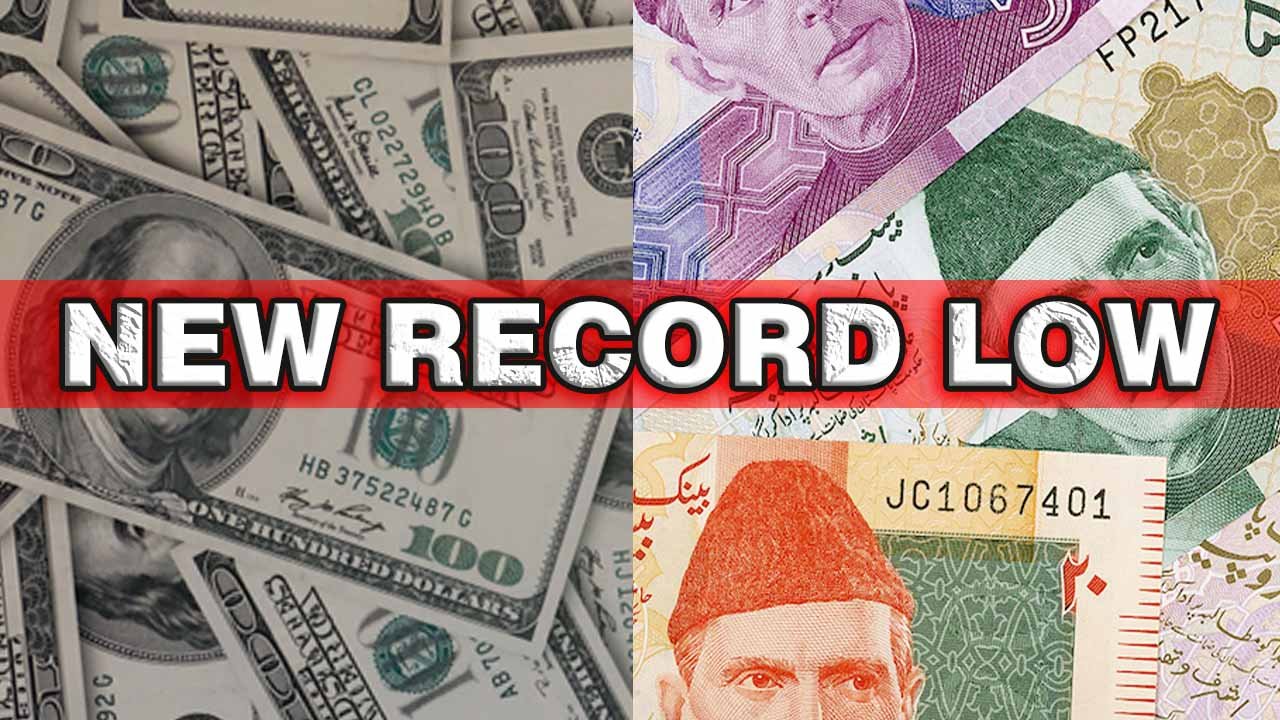
  • Pakistani rupee sets new record, falls to Rs307.10 per US dollar 

    Pakistani rupee sets new record, falls to Rs307.10 per US dollar 

    In the interbank market on Tuesday, the Pakistani rupee (PKR) continued to weaken against the US dollar, losing PKR 1.4569 (0.48 per cent) on a day-over-day basis and ending the session at PKR 307.0996 per US dollar.

    On Monday, the Pakistani rupee experienced a slight decline against the US dollar, settling at Rs305.64 in the interbank market.

    The government has not yet finalised relief measures for the surging electricity bills of consumers, primarily due to disagreement between the federal government and the International Monetary Fund (IMF) regarding the provided data.

    On the international front, the US dollar remained strong on Tuesday, while the Australian dollar faced some pressure. Traders were closely monitoring the Reserve Bank of Australia’s upcoming interest rate decision, speculating that interest rates may have reached their peak.