Tag: SBP

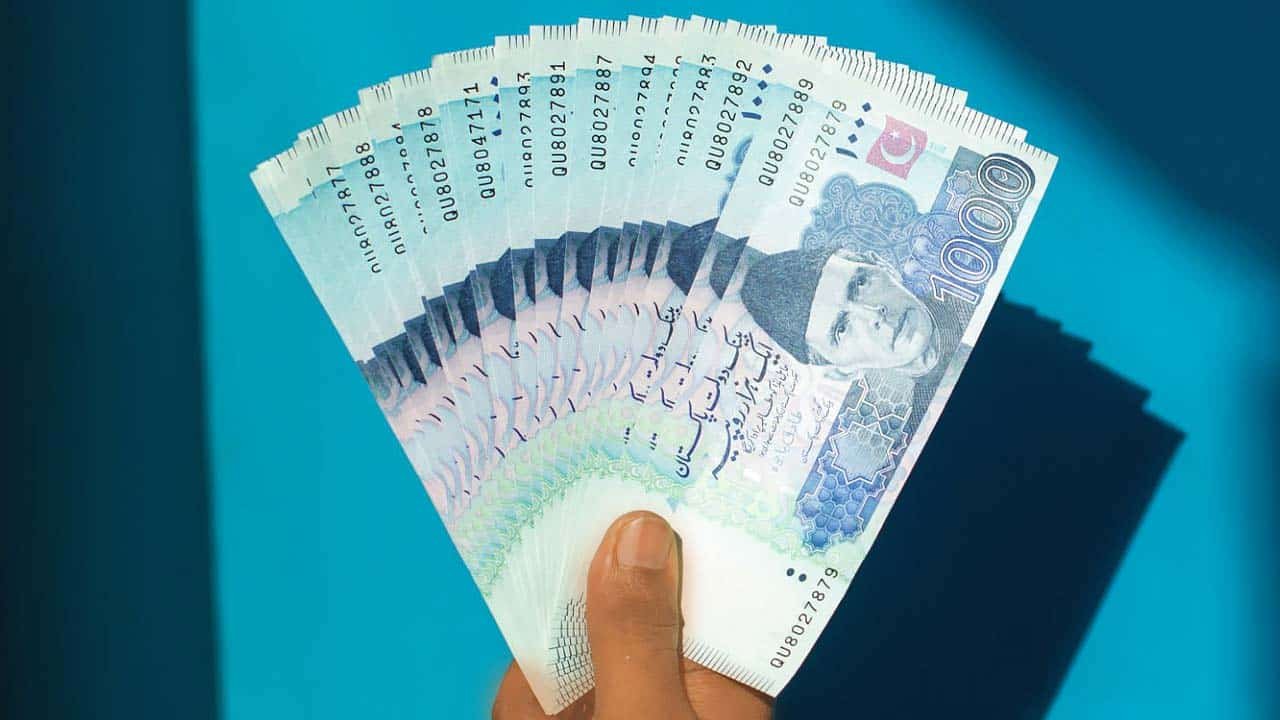
  • Pakistani rupee depreciates for the 5th day in a row, settles at Rs222.67

    Pakistani rupee depreciates for the 5th day in a row, settles at Rs222.67

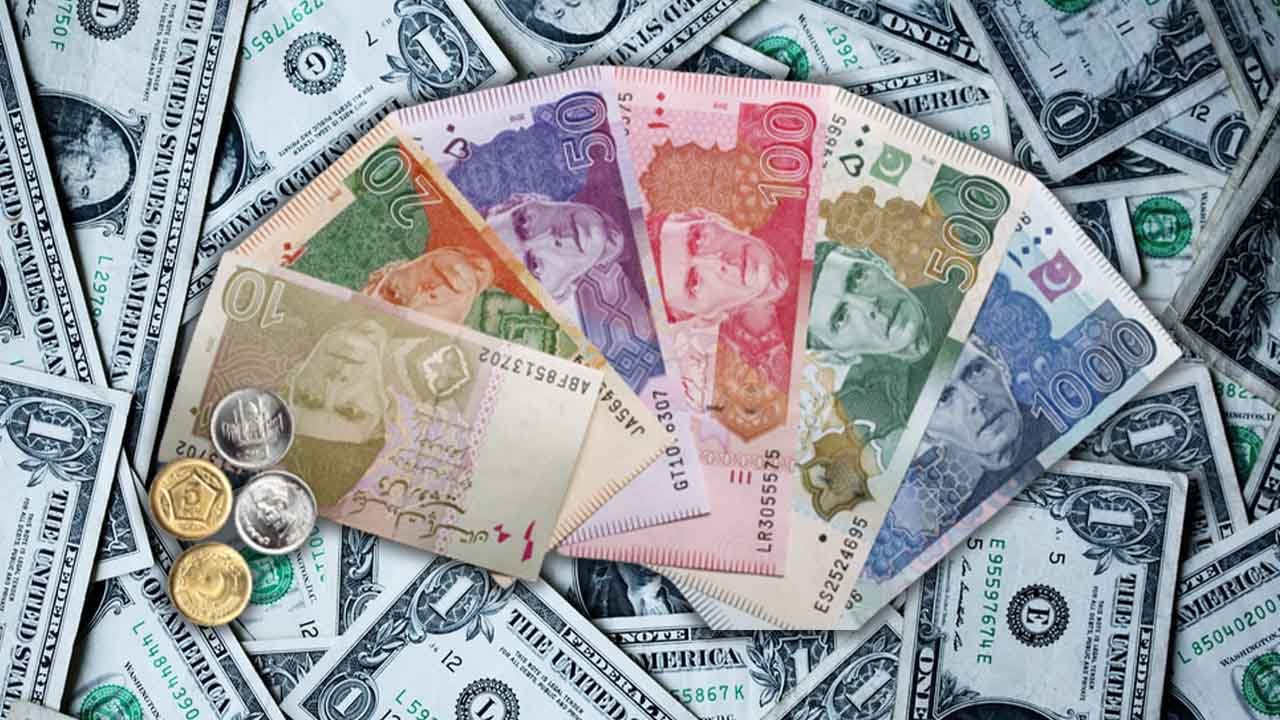
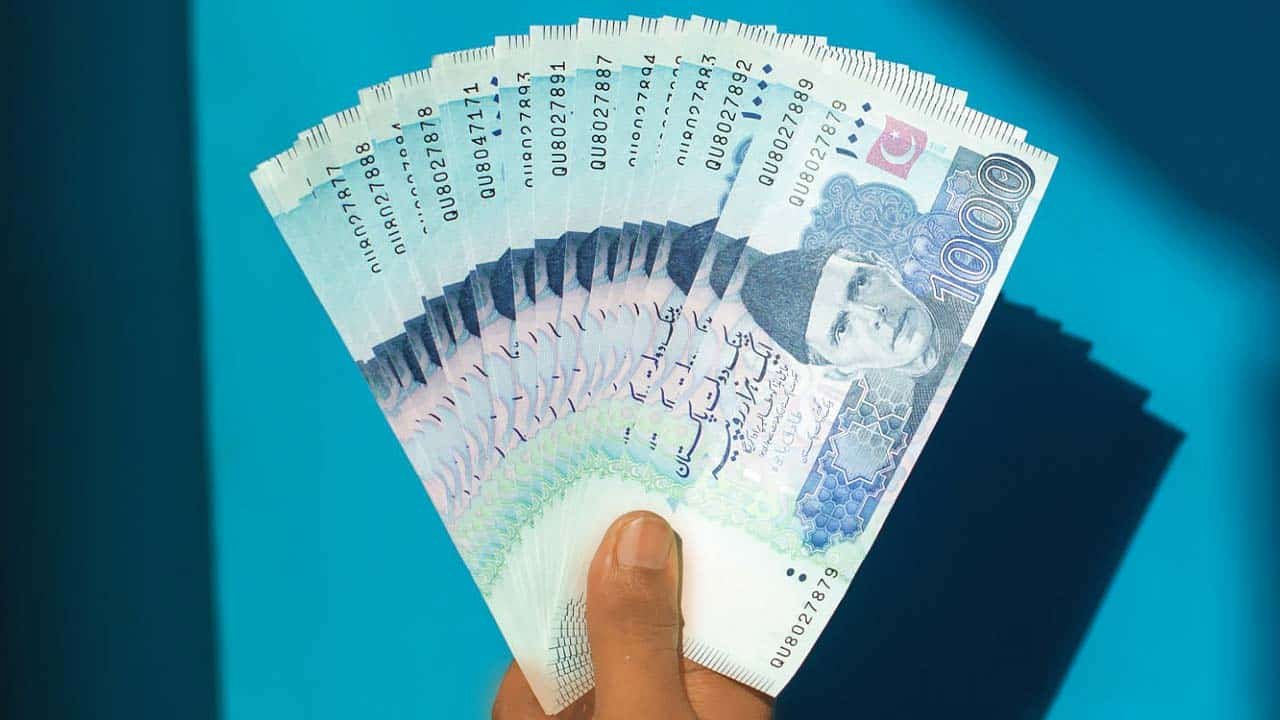
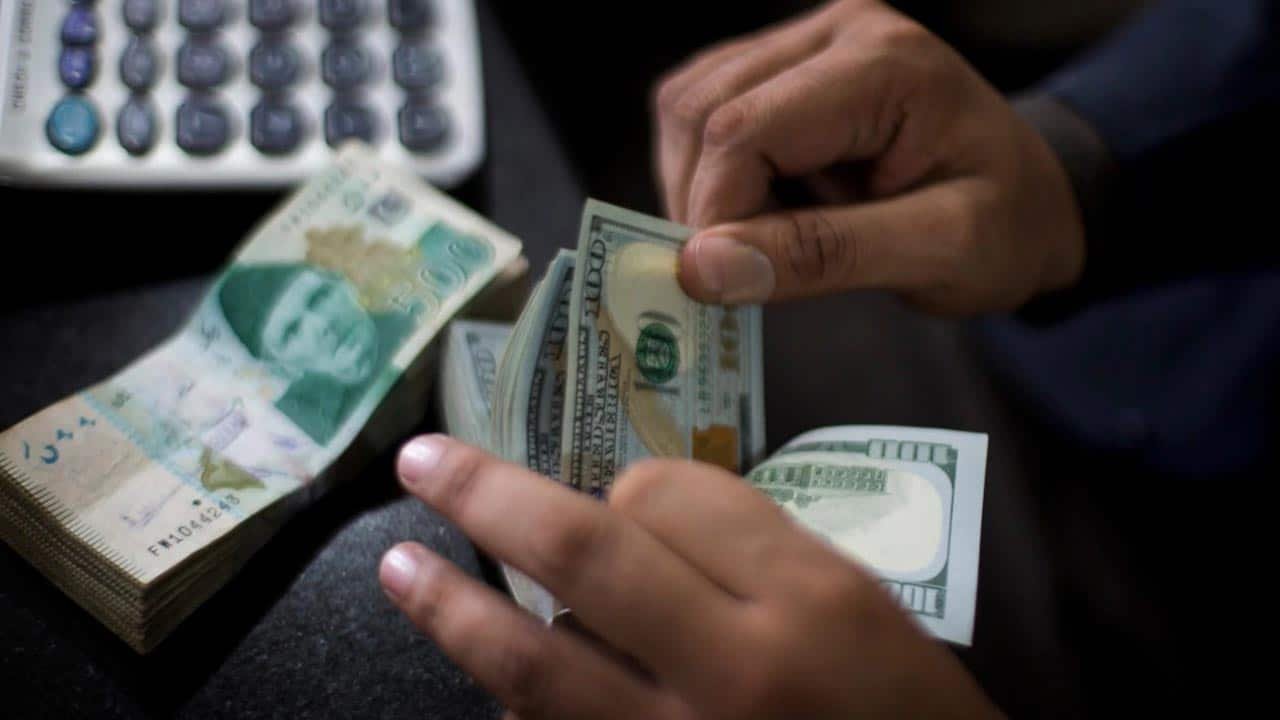
    The Pakistani rupee (PKR) lost 0.12 per cent on Thursday in the inter-bank market, continuing its downward trend against the US dollar.

    The rupee dropped by Rs0.26 and ended the day at Rs222.67. The rupee has decreased by Rs1.25, or 0.56 per cent, over the last five trading sessions.

    PKR continued to lose value against the US dollar on Wednesday, falling Rs0.50 (0.22 per cent) to settle at Rs222.41.

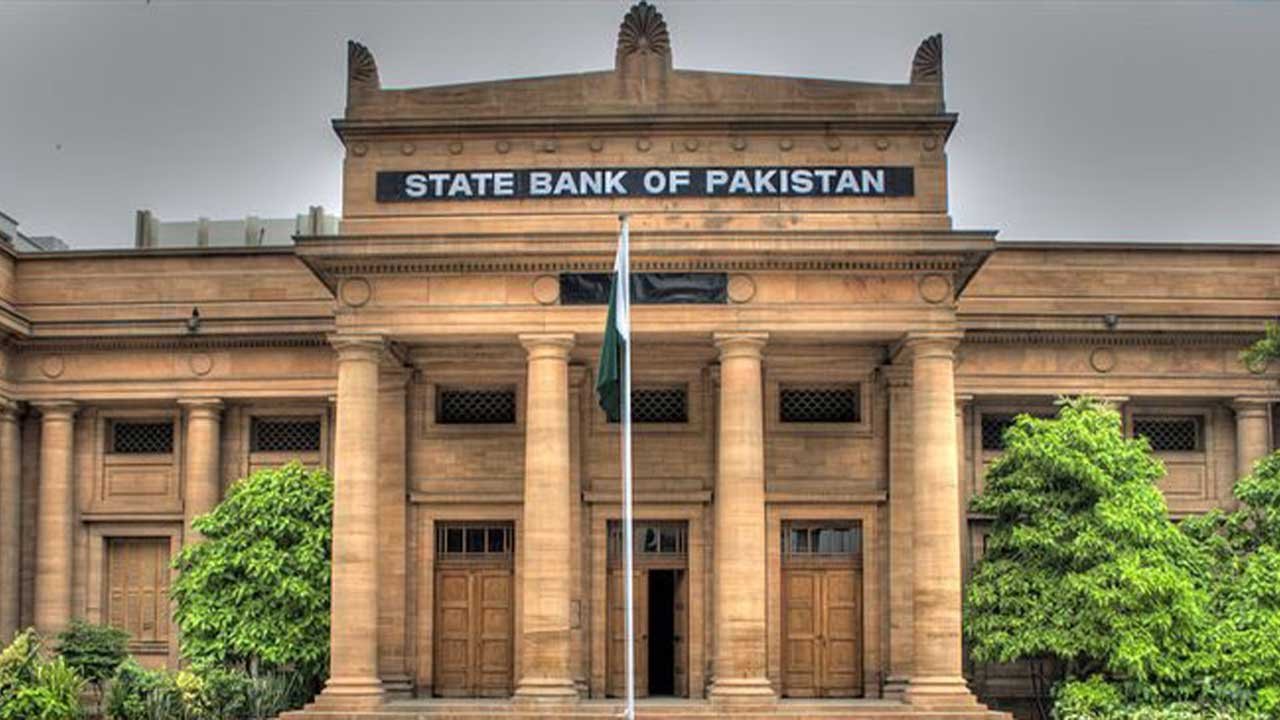
    In a significant breakthrough on Wednesday, the State Bank of Pakistan (SBP) promised the Standing Committee on Finance of the National Assembly that action would be taken against banks by the end of the month for allegedly overcharging importers when establishing Letters of Credit.

    The SBP informed the banks in person about the practise and counselled them to rationalise the margins they were charging customers, according to information provided to the committee.

    Additionally, Pakistan’s external debt and liabilities reduced by $3.282 billion from $130.196 billion as of June 30, 2022, to $126.914 billion at the end of September 2022.

    The dollar recovered globally on Thursday as strong US retail data challenged the recent narrative that inflation is declining and US interest rates do not need to increase significantly more.

    The US reported overnight that retail sales increased 1.3 per cent in October, exceeding economists’ expectations of 1.0 per cent, a positive sign but one that dashed expectations for a pause in rate increases.

    The dollar index, which compares the value of the dollar to six important peers, increased 0.18 per cent to 106.46.

    A key indicator of currency parity, oil prices fell on Thursday due to easing geopolitical tensions and worries about Chinese demand, though signs of tighter supply, such as lower US inventories, provided support.

  • SBP reduces cash-carrying limits by 50% for international travel

    SBP reduces cash-carrying limits by 50% for international travel

    The State Bank of Pakistan (SBP) said in a statement that the cash-carrying limitations on foreign currency for international travel have been cut in half to $5,000 (or equivalent in other foreign currencies) each visit and $30,000 per year for individuals aged 18 and over.

    Under-18s (minors) will be subject to a 50 per cent reduction in both ceilings, or $2,500 per visit and $15,000 per year.

    The cap on withdrawing foreign currency in cash, however, will continue to be $1,000 per visit and $6,000 per year for visitors to Afghanistan.

    Now, overseas debit and credit card transactions are also subject to the same annual cap ($30,000).

    To curb speculation and the grey market, the SBP and the Federal Investigation Agency (FIA) have independently decided to work together against illegal foreign exchange businesses.

    The yearly trip cash limits, according to the central bank, won’t take effect until January 1, 2023, but the per-visit limits will be effective right away.

    A $30,000 yearly restriction on overseas transactions was also imposed by the SBP after it discovered that debit and credit cards were being used for transactions that “are not linked with the profile of the individual or are meant for commercial purpose.”

    SBP advised banks to “ensure that the use of debit and credit cards for international transactions was aligned with the profile of cardholders and for their personal needs only”.

    “It is emphasised that the purpose of debit/credit cards is to facilitate individuals in making payments for transactions that are of personal nature. The limits on these cards as well as payments through them, both domestic and international, should therefore be aligned with the profile of the cardholder,” it said.

    It continued by stating that it was the customer’s duty to make sure that their annual quota was never exceeded. However, banks are required to track these caps for every person on a combined basis.

  • Pakistan’s total liquid foreign reserves increases to $14.68 billion

    Pakistan’s total liquid foreign reserves increases to $14.68 billion

    The Asian Development Bank (ADB) contributed to an increase of $1.517 billion in Pakistan’s foreign exchange reserves during the week ending October 28 to bring them to $14.679 billion, the central bank reported on Thursday.

    The State Bank of Pakistan’s foreign exchange holdings increased by $1.473 billion to $8.912 billion.

    “This increase is attributed to the receipt of US$ 1,500 million from ADB,” the SBP said in a statement.

    The SBP has enough reserves to cover imports for 1.29 months. Additionally, commercial bank reserves increased by $44 million to $5.766 billion.

    When the government is dealing with a balance of payments issue, the increase in foreign reserves is encouraging for the nation’s finances. At least $30 billion has been lost as a result of the country’s devastating floods this summer.

    A $500 million deal between Pakistan and the World Bank has been signed. The $200 million investment will be used to support an agricultural transformation project in Punjab.

    According to The News, another project in Khyber Pakhtunkhwa for $300 million in climate change projects will be funded by the World Bank.

  • Pakistani rupee drops by 0.35% to close at Rs221.43 versus dollar

    Pakistani rupee drops by 0.35% to close at Rs221.43 versus dollar

    As investors await the US Federal Reserve’s decision on the policy rate, the Pakistani rupee (PKR) depreciated by 0.35 per cent against the greenback on Wednesday.

    According to the State Bank of Pakistan (SBP), the local unit appreciated by Rs0.78 and ended the day at Rs221.43.

    The Pakistani rupee enjoyed gains against the US dollar on Tuesday, and it ended the day at Rs220.65 after rising by Rs0.24 (or 0.11 per cent) in the interbank market.

    Gains were recorded when market confidence improved as a result of discussions held by Finance Minister Ishaq Dar with senior bank and exchange company executives.

    However, in a significant development, according to the most recent data released by the Pakistan Bureau of Statistics (PBS) on Tuesday, consumer price index (CPI)-based inflation increased to 26.6 per cent on an annual basis in October 2022 as opposed to an increase of 23.2 per cent in the previous month and 9.2 per cent in October 2021.

    Globally, the US dollar slipped on Wednesday as investors awaited the US Federal Reserve’s policy decision amid speculation it might indicate a slowdown in future rate hikes. The central bank will soon release its policy statement with investors widely expecting a 75 basis points (bps) rate hike, the fourth such increase in a row.

    The dollar index – which gauges the greenback against a basket of six counterparts that includes the yen, euro and sterling – eased 0.2 per cent to 111.28, but was not far below Tuesday’s high of 111.78, the strongest level since October 25. The index has fluctuated widely around the 112 level since its retreat from a two-decade high of 114.78 at the end of September.

    Oil prices, a crucial gauge of currency parity, increased on Wednesday after data from the sector revealed a surprising decline in US oil supplies, indicating that demand is still strong despite sharp interest rate increases that are slowing down global development.

  • Ishaq Dar leaves for US to attend annual IMF, World Bank meetings

    Ishaq Dar leaves for US to attend annual IMF, World Bank meetings

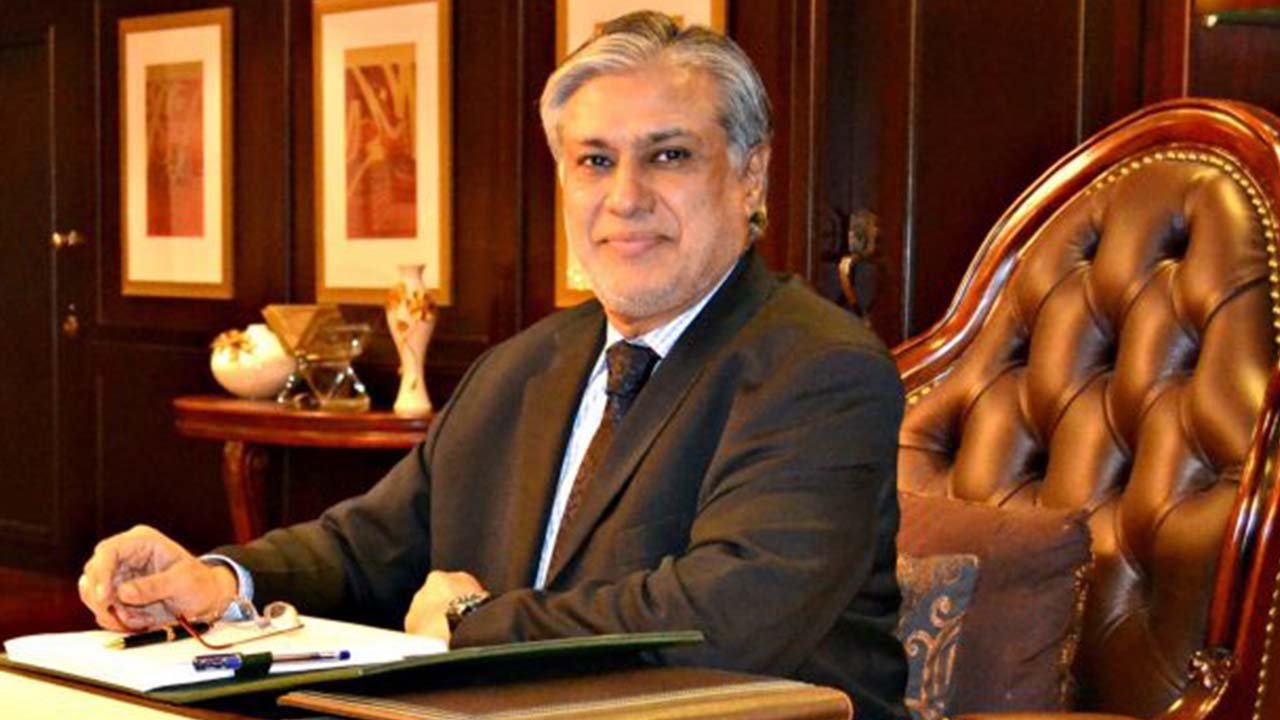
    The Federal Minister of Finance and Revenue Ishaq Dar would ask the World Bank (WB) for an early release of cash and the International Monetary Fund (IMF) to relax the program’s rules.

    Alongside the annual meeting, Ishaq Dar will meet representatives from the IMF and WB. He will also meet representatives of the global rating agency Moody’s and the IMF to examine the state of the economy and the loan programme.

    According to Dawn, the discussions will also include participation from the Finance Secretary and the Governor of the State Bank of Pakistan (SBP).

    At a press conference on Saturday, the minister firmly denied rumours that he will visit the Paris Club to reschedule loans from multilateral lenders and donor organisations.

    The minister added that they had complied with the report of the most recent Moody’s credit rating in a hurry and that the ministry had provided its response in a press release.

    The Prime Minister met with representatives from the World Bank and the International Monetary Fund last month on the UN sidelines to review the current flood situation and request relief in the programme terms, which they pledged to take favourably.

  • Pakistani rupee becomes best performing currency after recording impressive gains

    Pakistani rupee becomes best performing currency after recording impressive gains

    The unpredictable Pakistani rupee, which made the highest rise of 3.9 per cent over five working days to Rs219.92 against the dollar on anticipation of sizable inflows of foreign cash, was dubbed the “world’s best-performing currency” in the week that concluded on Friday.

    According to analysts monitoring currency movements, the rupee proved to be the best-performing currency throughout the week.

    Friday marked the rupee’s 11th straight successful working day since the current finance minister, Ishaq Dar, announced his return to Pakistan by ending a five-year self-exile last month, according to the Express Tribune.

    Clearly, Dar continued his previous strategy of defending the rupee from the assault of the US currency after assuming power. He thought the rupee was undervalued at its all-time low of roughly Rs240 to the dollar in July and suspected commercial banks of manipulating the rupee’s value to advance their own interests.

    In a swift move, Pakistani officials notified Moody’s that during recent meetings with multilateral creditors, the government had received an additional funding commitment of more than $2.5 billion from the Asian Development Bank.

    This was done while strongly responding to Moody’s downgrading Pakistan’s credit rating to Caa1. The World Bank has also committed to providing an additional $1.3 billion in finance for infrastructure improvement and other projects during the current fiscal year.

  • Pakistani rupee maintains winning streak against dollar for 8th consecutive session

    Pakistani rupee maintains winning streak against dollar for 8th consecutive session

    On Tuesday, the Pakistani rupee (PKR) gained against the US dollar for the eighth session in a row, finishing more than 0.7 per cent stronger.

    According to the State Bank of Pakistan (SBP), the rupee strengthened by Rs1.55, or 0.73 per cent, to close at Rs225.64. The rupee has gained a total of Rs14.06, or 6.23 per cent, over the last eight trading sessions.

    For the seventh consecutive session, the Pakistani rupee appreciated versus the US dollar on Monday, finishing at Rs227.29 after gaining Rs1.16 (or 0.51 per cent) in the inter-bank market.

    Ishaq Dar’s return, who is renowned for supporting a strong rupee, and the reduction in speculation activity, according to analysts, are to blame for the currency’s recent increase.

    On Monday, the country’s newly appointed finance minister even predicted that the rupee may increase to less than Rs200 versus the dollar.

    In an interview, he claimed that the rupee’s actual worth is less than Rs200 (against dollar), and that it will fall to Rs200 soon.

    He continued by saying that because speculation had caused the present rate to rise, the rupee would be supported by policies.

    Experts claim that the dollar’s international strength has decreased, which is reflected in the currency market. Still, it would be very difficult to drive the rupee below Rs200, even if the speculative aspect is taken out of the equation.

    Despite the UN’s $816 million request, Pakistan has only received between $100 and $150 million in flood aid.

    The dollar index, which compares the value of the dollar to six other currencies, including the pound and the euro, remained roughly unchanged at Rs111.55, not far from the low set on Monday of Rs111.46, which was last seen on September 23.

    Oil prices, a major factor in defining currency parity, increased on Tuesday as optimism over OPEC+’s potential Wednesday agreement to significantly reduce crude output outweighed worries about the state of the world economy.

  • Rs75 commemorative banknote is now officially available

    Rs75 commemorative banknote is now officially available

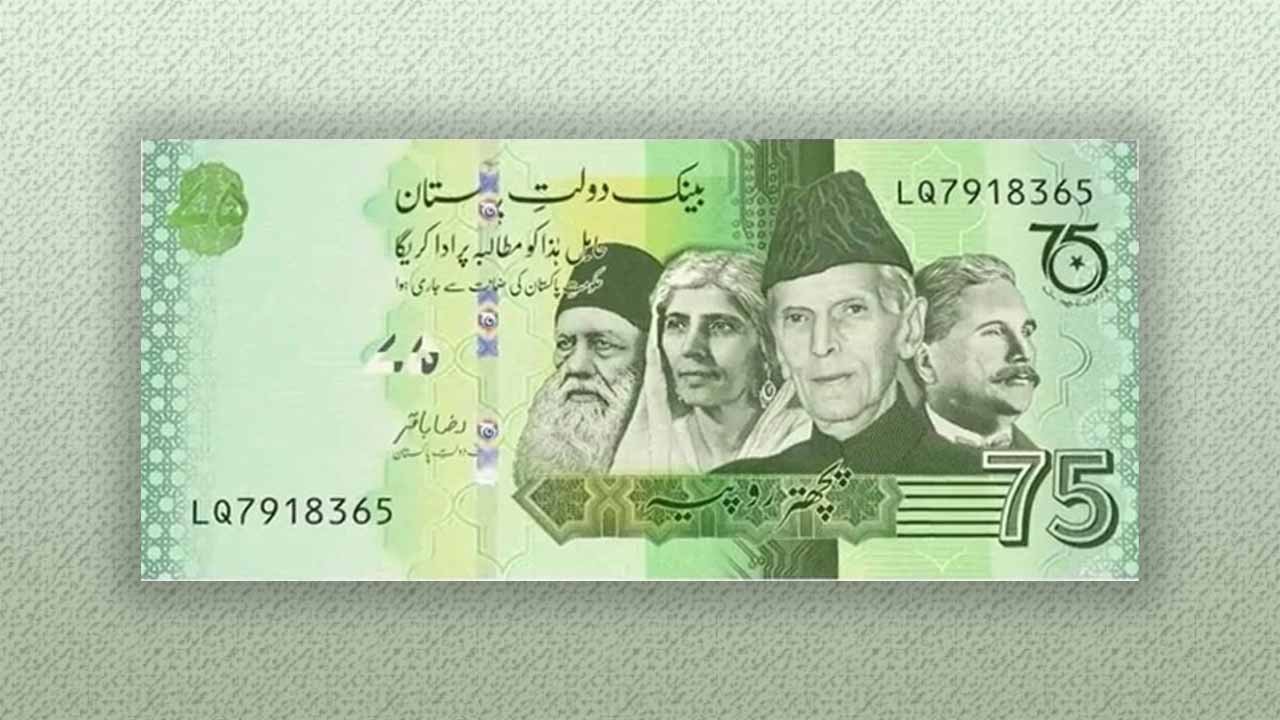
    The commemorative banknote of Rs75 is available for the general public from September 30 (today), which was released by the State Bank of Pakistan (SBP) on August 14th to mark Pakistan’s 75th Independence Day.

    At a ceremony held at the SBP offices in Karachi on August 14, 2022, the design of this commemorative banknote was presented.

    The SBP announced in a statement that starting on September 30, the general public can get the commemorative Rs75 banknote from SBP BSC offices and commercial banks’ branches.

    As a result, the Quaid-e-Azam Muhammad Ali Jinnah, Allama Sir Muhammad Iqbal, Mohtarma Fatima Jinnah, and Sir Syed Ahmed Khan are shown on the banknote’s obverse, according to the statement.

    According to SBP, the reverse of the banknote emphasises the nation’s commitment to combating climate change and its effects on Pakistan. This issue has become even more urgent in light of the unprecedented loss brought on by the recent torrential rains and flooding that affected large portions of Pakistan, according to SBP.

    The portraits of the national animals Markhor and Deodar on the reverse also draw attention to the threat of extinction and the necessity of protecting these species.

  • Pakistani rupee crashes against US dollar for 11th day in a row

    Pakistani rupee crashes against US dollar for 11th day in a row

    For the eleventh session in a row, Pakistan’s rupee has lost value versus the US dollar, falling 0.41 per cent on Friday in the interbank market as the dollar gained momentum throughout the world and investors’ concerns about the increasing trade imbalance intensified.

    The rupee dropped by Rs0.96, according to the State Bank of Pakistan (SBP), and ended the day at Rs236.84. The rupee has lost Rs18.24, or 7.7 per cent, overall over the last 11 trading sessions against the US dollar.

    In the interbank market on Thursday, the Pakistani rupee declined against the US dollar for the tenth straight session as investors expected funding from allies and foreign creditors. It ended the day down 0.66 per cent at Rs235.88.

    The local currency increased in value last month as a result of Pakistan fulfilling all previous IMF requirements, which allowed the programme to resume. This development enabled Pakistan to receive $1.17 billion under the Extended Fund Facility (EFF).

    The local currency has recently, however, been under intense pressure once more and is currently hovering close to its all-time low as funding anticipated from allies has not yet materialised.

    Additionally, the State Bank of Pakistan’s (SBP) foreign exchange reserves decreased by $176 million, reaching $8.62 billion as of September 9, 2022, according to information made public on Thursday.

    According to the SBP, the nation possessed $14.32 billion in liquid foreign reserves. Commercial banks held $5.7 billion in net foreign reserves.

    Globally, the dollar remained close to recent highs on Friday as Treasury yields rose and the demand for the currency persisted on expectations that the Federal Reserve would need to raise rates further to control inflation.

    The US dollar index, which compares the value of the dollar to a basket of other currencies, increased to Rs109.69, which is not far from its two-decade high of Rs110.79.

    In the meantime, oil prices—a crucial factor in determining currency parity—were largely stable on Friday, but they were headed for a weekly decrease due to worries about sudden interest rate hikes that would likely slow global economic growth and fuel demand.