Tag: school

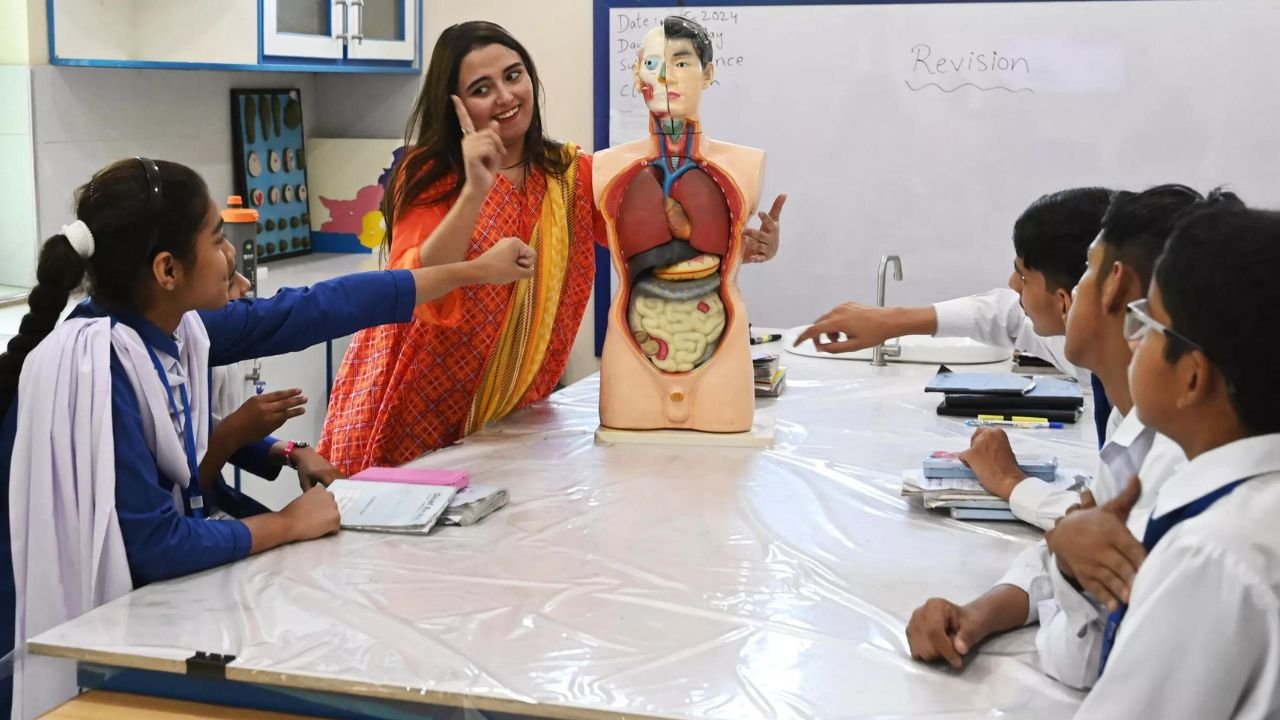
  • Sindh government will start testing for drugs in schools

    Sindh government will start testing for drugs in schools

    Sindh Information Minister Sharjeel Memon has announced that children in educational institutions will undergo drug tests, with positive results reported only to their parents.

    Memon highlighted that President Asif Ali Zardari, upon taking office, had directed officials to combat drug abuse, reflecting his concern over the rising trend of drug abuse.

    At the inaugural meeting of the high-powered anti-narcotics committee, Memon stated that if a child tests positive, only the parents will be informed, and the child will then be questioned about the source of the drugs, including suppliers, dealers, and their accomplices.

    The primary focus will be on making arrests.

  • Candidate who failed matriculation in 1988 passes in 2024

    Candidate who failed matriculation in 1988 passes in 2024

    In a startling revelation, a candidate who reportedly failed matriculation exams back in 1988 managed to obtain a passing result in 2024, raising questions on the integrity of educational records and administrative oversight.

    The candidate, originally from Karachi, appeared in matriculation board’s records from 1988 to have failed the exam. However, documents show that the same individual was later issued a degree, indicating a successful completion.

    According to official records, degrees were issued to students who had previously failed under the signature of Secretary Matric, Naveed Gujjar.

    In response to inquiries, he stated that a fake certificate of matriculation was issued to the candidate and that he has nothing to do with it.

  • Did you know Hania Aamir, Imran Ashraf were suspended from school?

    Did you know Hania Aamir, Imran Ashraf were suspended from school?

    Who has not had a bad day in school? Sometimes we forgot to do our homework, other days we wore accessories with uniforms and many times we got bad marks in exams. We have all been there, celebrities included. Actress and model Hania Aamir recently appeared as a guest on ‘Mazaq Raat’ where she revealed that she got suspended for 10 days for a uniform violation, while heartthrob Imran Ashraf was suspended for climbing his hostel’s wall. Imran Ashraf and Hania Aamir are classmates.

    When Imran was Hania’s senior in school, they both attended the same Abbottabad school. Hania Amir said, “I was suspended because I wasn’t following the school uniform policy,” while Imran Ashraf got in trouble for sneaking out at night. “I broke curfew and climbed the hostel wall, and got caught by the authorities,” he laughingly said. It’s good to know that all of us were rebels in schools.

  • For deaf children in Pakistan, school is life

    For deaf children in Pakistan, school is life

    Lahore (Pakistan) (AFP) – At a school for the deaf in Pakistan, the faces of students are animated, their smiles mischievous, as their hands twirl in tandem with their sign language teacher.

    The quiet classes exude joy, led often by teachers who are also deaf.

    “I have friends, I communicate with them, joke with them, we share our stories with each other about what we have done and not done, we support each other,” said Qurat-ul-Ain, an 18-year-old deaf woman who joined the school a year ago.

    More than 200 pupils, children and adults mostly from disadvantaged backgrounds, are among the few given a new fervour for life at this inner-city school in historic Lahore.

    Of more than a million deaf school-age children in Pakistan, less than five percent go to school.

    The figure is even lower for girls and, without a language to express themselves, many children are marginalised by society and even their families.

    “Life is a little difficult. There is a huge communication gap here where people generally don’t know sign language,” said Qurat-ul-Ain.

    At the school run by charity Deaf Reach, pupils learn sign language in English and Urdu before progressing on to the national curriculum.

    Everyone has a name in sign language, which often has to do with a physical characteristic.

    Younger children learn with visuals: a word and a sign are associated with an image.

    Their peers turn their thumbs down for a wrong answer and make the applause sign — twisting hands –- for a correct one.

    Families learning to sign

    Founded in 1998 by an American and funded with donations, Deaf Reach now has eight schools across the country, educating 2,000 students on a “pay what you can afford” basis, with 98 percent of children on scholarships.

    The vast majority of students at the school come from hearing families, who are also offered the chance to learn how to sign and break the language barrier with their son or daughter.

    Adeela Ejaz explained how she struggled to come to terms with her first born son — now 10 years old — being deaf.

    “When I couldn’t understand what he was trying to say he would bang his head against the wall and floor,” the 35-year-old told AFP.

    “It was tough for everyone because no-one knew how to communicate with him. Everyone would tell us he is deaf but I wasn’t prepared to accept that.”

    The mother and son pair are now both learning to sign.

    “I am getting better at signing and I am able to communicate with my son. He’s now become so attached to me.”

    The programme makes extensive use of technology, and offers an online dictionary and a phone app.

    It has also found employment for more than 2,000 deaf people with around 50 Pakistani companies.

    Huzaifa, 26, who became deaf after contracting a fever at a young age, was given a stitching apprenticeship at Deaf Reach to help him into the skilled workforce.

    “Teachers in the government school didn’t know any sign language. They would just write notes on the board and tell us to copy it. We used to get really disheartened, and I would be extremely worried for my future,” he told AFP.

    His family pushed for him to become educated, helping him to learn the basics of sign language before he received formal coaching.

    “My parents never threw me away. They spared no effort in ensuring I was able to continue my education,” he said.

    Without their dedication, he said: “I’d be working as a day labourer somewhere, cutting leaves or cementing walls.”

    Isolated and fearful

    Sign language varies from one country to another, with its own associated culture, and regional variations sometimes exist.

    According to World Federation of the Deaf, 80 percent of the approximately 70 million deaf people in the world have no access to education.

    “I used to sit idly at home, use the mobile or play outside. I never had a clue about what people were saying,” said Faizan, 21, who has been at Deaf Reach for 11 years and dreams of working abroad.

    “Before learning how to sign I used to feel very weak mentally and had an inferiority complex and fear. But thankfully there is none of that anymore.”

    Attitudes towards people with disabilities are slowly improving in Pakistan, which has introduced laws against discrimination.

    “We have seen over the years the mentality change tremendously. From many people hiding their deaf children, feeling embarrassed, ashamed,” noted Daniel Marc Lanthier, director of operations of the foundation behind Deaf Reach.

    Nowadays families are “coming out in the open, asking for education for their children, asking to find employment for them,” he said, though much work remains.

    “With a million deaf children who don’t have access to school, it’s a huge challenge, it’s a huge goal to be met.”


  • ‘Everybody is vulnerable’: Fake US school audio stokes AI alarm

    ‘Everybody is vulnerable’: Fake US school audio stokes AI alarm

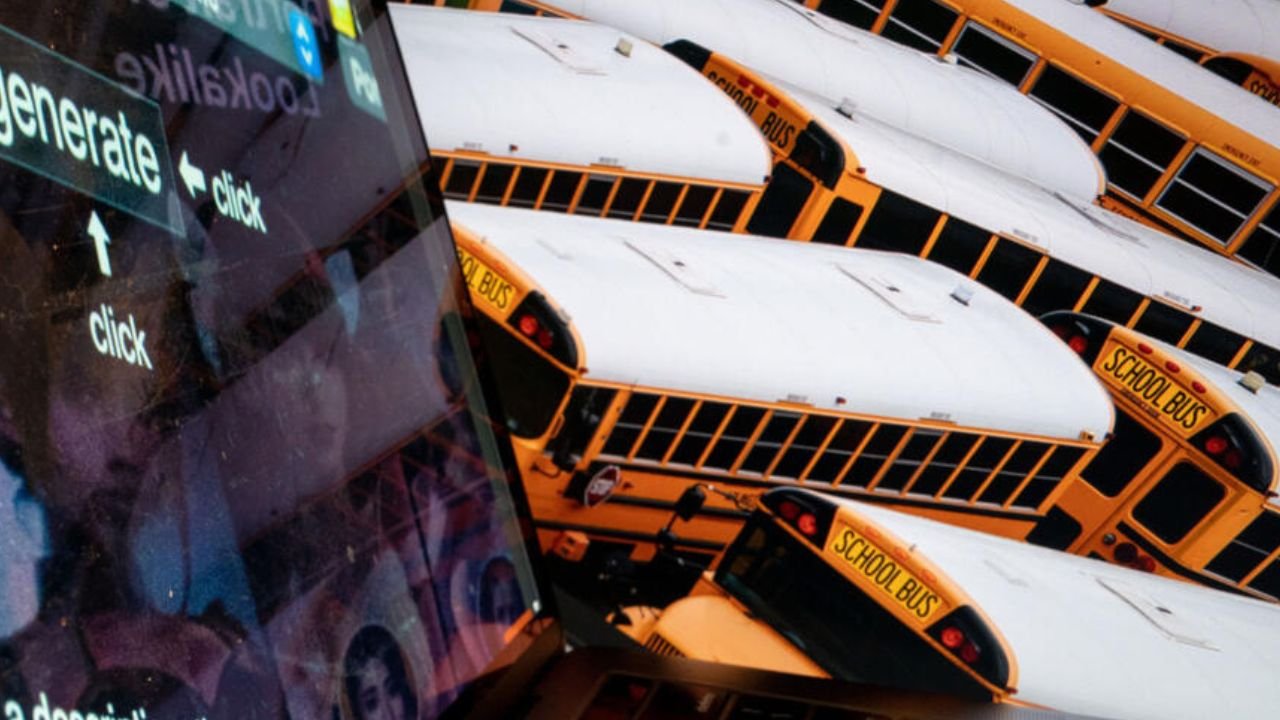
    A fabricated audio clip of a US high school principal prompted a torrent of outrage, leaving him battling allegations of racism and anti-Semitism in a case that has sparked new alarm about AI manipulation.

    Police charged a disgruntled staff member at the Maryland school with manufacturing the recording that surfaced in January — purportedly of principal Eric Eiswert ranting against Jews and “ungrateful Black kids” — using artificial intelligence.

    The clip, which left administrators of Pikesville High School fielding a flood of angry calls and threats, underscores the ease with which widely available AI and editing tools can be misused to impersonate celebrities and everyday citizens alike.

    In a year of major elections globally, including in the United States, the episode also demonstrates the perils of realistic deepfakes as the law plays catch-up.

    “You need one image to put a person into a video, you need 30 seconds of audio to clone somebody’s voice,” Hany Farid, a digital forensics expert at the University of California, Berkeley, told AFP.

    “There’s almost nothing you can do unless you hide under a rock.

    “The threat vector has gone from the Joe Bidens and the Taylor Swifts of the world to high school principals, 15-year-olds, reporters, lawyers, bosses, grandmothers. Everybody is now vulnerable.”

    After the official probe, the school’s athletic director, Dazhon Darien, 31, was arrested late last month over the clip.

    Charging documents say staffers at Pikesville High School felt unsafe after the audio emerged. Teachers worried the campus was bugged with recording devices while abusive messages lit up Eiswert’s social media.

    The “world would be a better place if you were on the other side of the dirt,” one X user wrote to Eiswert.

    Eiswert, who did not respond to AFP’s request for comment, was placed on leave by the school and needed security at his home.

    ‘Damage’

    When the recording hit social media in January, boosted by a popular Instagram account whose posts drew thousands of comments, the crisis thrust the school into the national spotlight.

    The audio was amplified by activist DeRay McKesson, who demanded Eiswert’s firing to his nearly one million followers on X. When the charges surfaced, he conceded he had been fooled.

    “I continue to be concerned about the damage these actions have caused,” said Billy Burke, executive director of the union representing Eiswert, referring to the recording.

    The manipulation comes as multiple US schools have struggled to contain AI-enabled deepfake pornography, leading to harassment of students amid a lack of federal legislation.

    Scott Shellenberger, the Baltimore County state’s attorney, said in a press conference the Pikesville incident highlights the need to “bring the law up to date with the technology.”

    His office is prosecuting Darien on four charges, including disturbing school activities.

    ‘A million principals’

    Investigators tied the audio to the athletic director in part by connecting him to the email address that initially distributed it.

    Police say the alleged smear-job came in retaliation for a probe Eiswert opened in December into whether Darien authorized an illegitimate payment to a coach who was also his roommate.

    Darien made searches for AI tools via the school’s network before the audio came out, and he had been using “large language models,” according to the charging documents.

    A University of Colorado professor who analyzed the audio for police concluded it “contained traces of AI-generated content with human editing after the fact.”

    Investigators also consulted Farid, writing that the California expert found it was “manipulated, and multiple recordings were spliced together using unknown software.”

    AI-generated content — and particularly audio, which experts say is particularly difficult to spot — sparked national alarm in January when a fake robocall posing as Biden urged New Hampshire residents not to vote in the state’s primary.

    “It impacts everything from entire economies, to democracies, to the high school principal,” Farid said of the technology’s misuse.

    Eiswert’s case has been a wake-up call in Pikesville, revealing how disinformation can roil even “a very tight-knit community,” said Parker Bratton, the school’s golf coach.

    “There’s one president. There’s a million principals. People are like: ‘What does this mean for me? What are the potential consequences for me when someone just decides they want to end my career?’”

    “We’re never going to be able to escape this story.”

  • Nawazuddin Siddiqui’s daughter joins acting school

    Nawazuddin Siddiqui’s daughter joins acting school

    Bollywood actor Bollywood thespian Nawazuddin Siddiqui’s daughter has enrolled in an acting school.
    Despite not having a film background himself, Nawazuddin made a name for himself in the industry as one of its most talented actors. Now, he wants his daughter, Shora Siddiqui, to join the film world too.

    In an interview, he said he wished for her to follow his footsteps. Nawazuddin and his wife have resolved their differences for the sake of their children.
    “I want for Shora to achieve her dreams. At 13-years-old, she’s ready to excel in the performing arts.”

    He added, “I’ve enrolled her in an acting school. If she chooses to pursue acting as a profession, I want her to be a skilled actress.”
    Nawazuddin also said that acting is an art, and he will always support her in every possible way.

  • Teacher doesn’t take wedding day chuti in Sindh

    Teacher doesn’t take wedding day chuti in Sindh

    Teacher doesn’t take wedding day chuti in Sindh

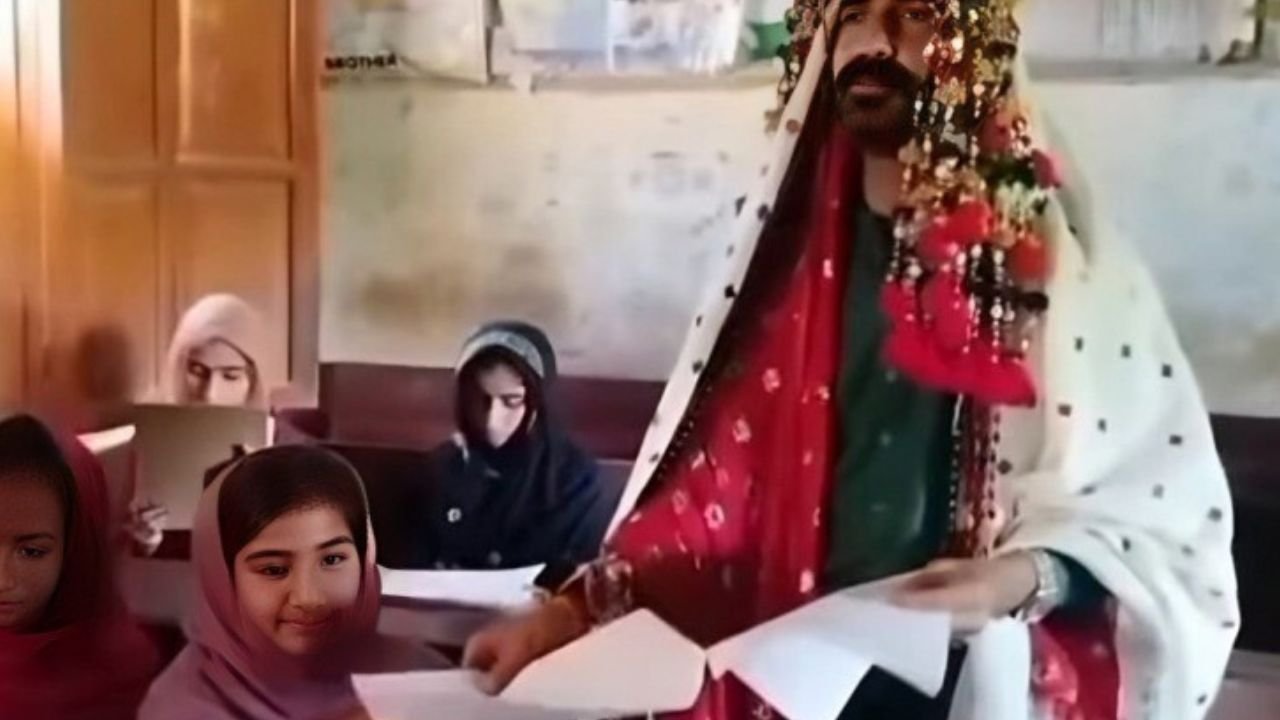
    Sheeraz Rasool Khaskheli, a teacher in Chambar, Tando Allahyar, went to school on his wedding day to collect exam papers from his students. He wore his wedding dress and took the papers before heading home for his wedding. A photo and video of him taking papers has become popular on social media.

    Sheeraz Rasool said it was important to take the exam papers even on his wedding day, showing his dedication to his job as a teacher.

  • Two out of five Yemeni children out of school: aid group

    Two out of five Yemeni children out of school: aid group

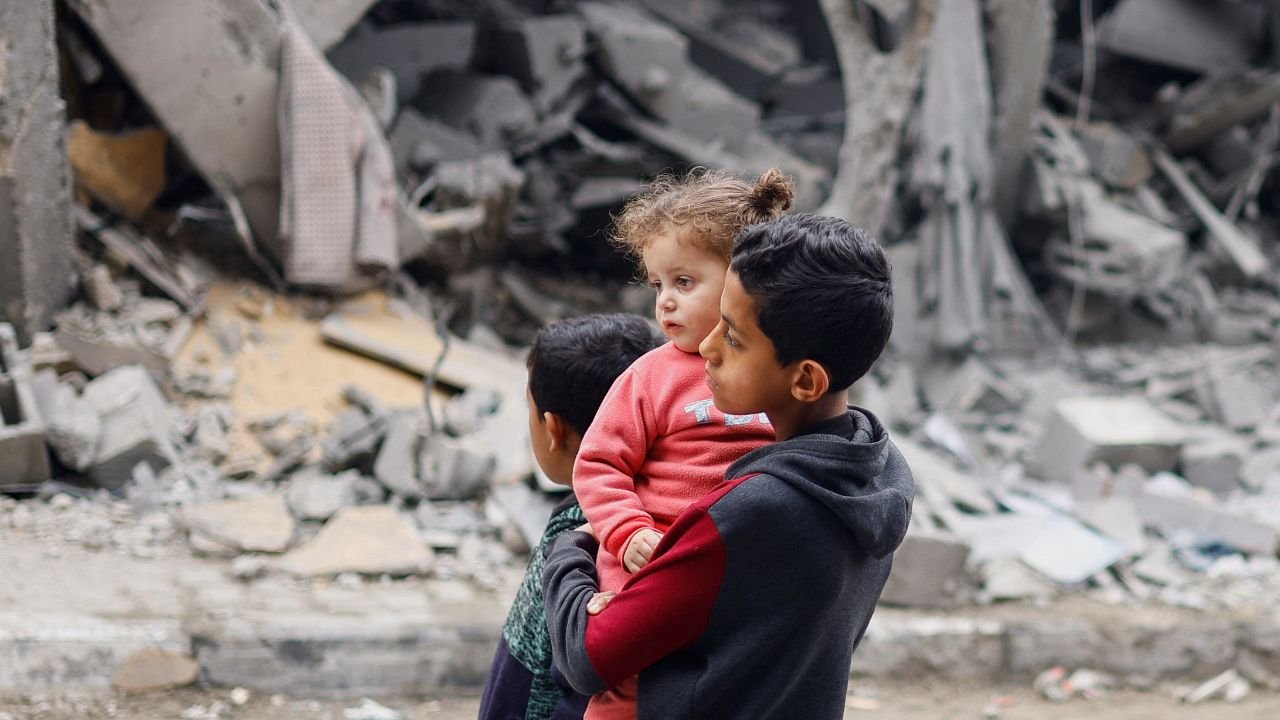
    Dubai: Nearly a decade into Yemen’s brutal war, some 4.5 million of its children are not attending school, the charity Save the Children said Monday.

    The figure underlines how precarious daily life remains in the Arabian Peninsula’s poorest country, despite relative calm since an April 2022 ceasefire.

    “Two in five children, or 4.5 million, are out of school, with displaced children twice as likely to drop out than their peers,” the group said in a report.

    “One third of families surveyed in Yemen have at least one child who has dropped out of school in the past two years despite the UN-brokered truce,” it added.

    The conflict in Yemen began when Iran-backed Houthi rebels seized the capital Sanaa in September 2014, prompting Saudi Arabia to lead a coalition to prop up the internationally recognized government months later.

    Economic insecurity amid the war has plunged two thirds of Yemen’s 33 million inhabitants below the poverty line, the charity said, while also displacing about 4.5 million people.

    “Displaced children are twice as vulnerable to school dropouts,” Save the Children said.

    “Nine years into this forgotten conflict, we are confronting an education emergency like never before,” said Mohammed Manna, Save the Children’s interim country director in Yemen.

    “Our latest findings must be a wake-up call and we must act now to protect these children and their future.”

    The report said 14 percent of families interviewed by the aid group pointed to insecurity as the reason behind their children dropping out.

    But a larger majority — some 44 percent — pointed to economic reasons, in particular the need to support family incomes. Some 20 percent said they were unable to afford regular school costs.

    “The impact of the education crisis on Yemen’s children and their future is profound,” the charity said.

    “Without immediate intervention, an entire generation risks being left behind.”

  • Afghan schools restart, with girls barred for third year running

    Afghan schools restart, with girls barred for third year running

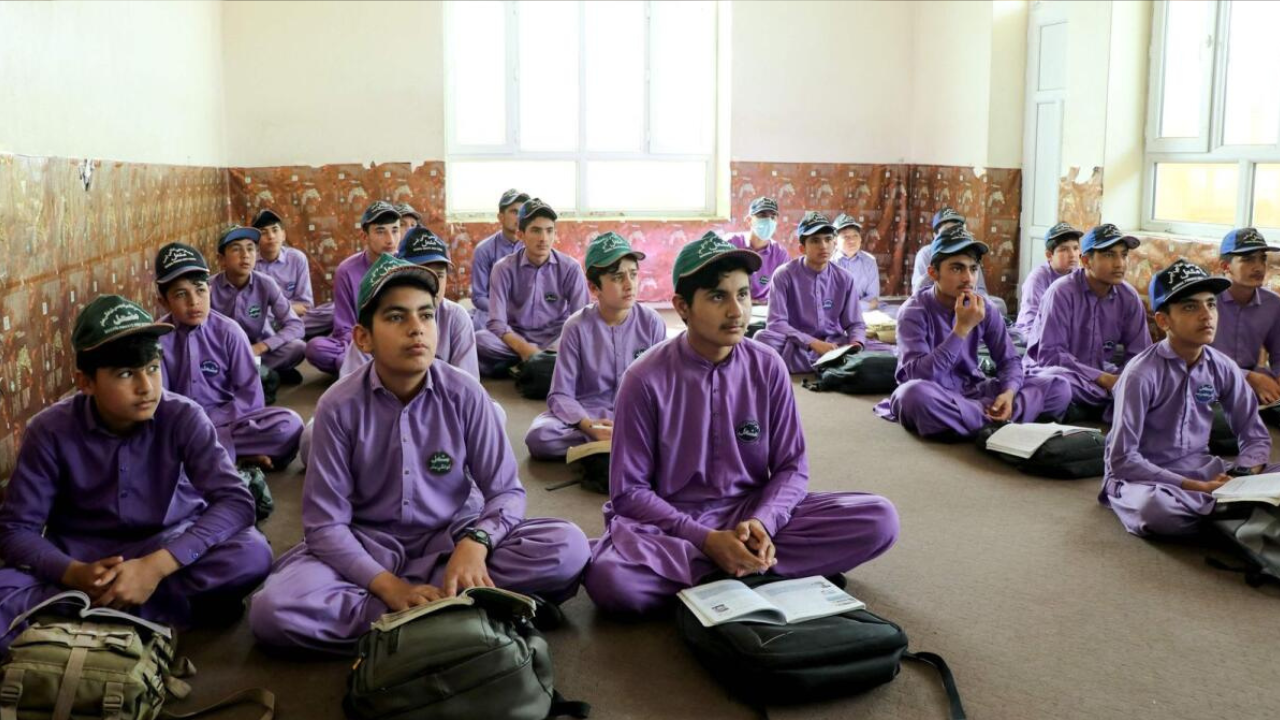
    Kabul, Afghanistan – Schools in Afghanistan opened for the new academic year on Wednesday, with girls lamenting being banned from joining secondary-level classes for a third year in a row.

    Taliban authorities barred girls from secondary school in March 2022, after surging back to power in 2021 and imposing an austere vision of Islam with curbs the United Nations labels “gender apartheid”.

    On Wednesday morning, uniformed boys carried black and white Taliban flags as they lined the entrance of Kabul’s Amani school, where local officials arrived for the ceremonial start of the school year.

    But 18-year-old Kabul resident Zuhal Shirzad had to stay home when the school bell rang.

    “Every year when my brother went to school, I felt very disappointed,” she told AFP.

    “I was happy for him and sad for myself,” she said.

    “This winter, my brother was studying and preparing for the university entrance exam,” she added.

    “I looked at him desperately and said that if I had been allowed to go to school, I would also be preparing for the university entrance exam now.”

    Afghanistan is the only country where girls’ education has been banned after elementary school.

    “None of the girls like me can continue our education and studies, and it is excruciating that boys can continue,” said 18-year-old Asma Alkozai, from the western city of Herat.

    “When there are barriers to education in society, such societies can never progress,” she told AFP.

    Online classes have sprung up in response to restrictions but a dearth of computers and internet, as well as the isolation of learning via screen, makes them a poor substitute for in-person learning, students and teachers say.

    Education ‘essential’

    The education ministry announced the new school year on Tuesday, a day before the start of the Afghan calendar’s new year, in a media invitation that expressly forbade women journalists from covering the ceremony at the Amani school.

    At the ceremony, Taliban government Deputy Prime Minister Abdul Salam Hanafi praised education, saying, “A nation without education will always be dependent on others”, local media reported.

    Universities also recently started the new academic year, but women have been blocked from attending since December 2022.

    Under the Taliban authorities, women have been excluded from many spheres of public life. Beauty salons have been shuttered and women have been barred from parks, funfairs and gyms.

    Women’s rights remain a key obstacle to international recognition of the Taliban government, which has not yet been recognised by any country.

    The United Nations mission in Afghanistan (UNAMA) called on the authorities to “end this unjustifiable and damaging ban”.

    “Education for all is essential for peace & prosperity,” the agency said in a post on social media platform X.

    ‘Half of society’

    Taliban authorities have insisted since girls were barred from secondary school that they are working on establishing a system that aligns with their interpretation of Islamic law.

    Thirteen-year-old Mudasir in eastern Khost province said girls and women should be given their rights to education “in the Islamic framework”.

    “They can go to school wearing Islamic hijab (covering),” he told AFP.

    “They must be given their rights, because if a sister is educated, she can be the reason for the whole family to be educated.”

    Faiz Ahmad Nohmani, who started secondary school at a private institution in Herat on Wednesday, was excited to start the new academic year but said he was “very sorry” that girls were not also returning.

    “Today, when I came to school, I wanted our sisters to come as well because they are half of society,” the 15-year-old told AFP. “They should study like us.”

    Ali Ahmad Mohammadi, an 18-year-old student in his final year of secondary school, also in Herat, said he’s aware of the chance he has to study.

    “Literacy helps us progress, it saves society,” said the teenager, who hopes to go on to university.  “An illiterate society will always face stagnation.”

    qb-sw/ssy

    © Agence France-Presse

  • Only 20 per cent students passed Inter Arts 1st year

    Only 20 per cent students passed Inter Arts 1st year

    The results for first-year (Part-I) examination announced by the Board of Intermediate Education Karachi (BIEK) raises concerns as more than 50 per cent of the students have failed.

    According to the inter board spokesperson, 72 per cent of the candidates failed in arts first year (private) and 80 per cent in arts (regular).

    He added that 11,046 candidates participated in the Arts (regular) exams in which only 2,298 candidates were successful while 2,795 candidates participated in the Arts private exams in which 792 candidates passed all the papers.

    Additionally, 63 per cent of the candidates failed in Commerce (private) as 1,986 candidates participated in the exams, out of which 744 candidates passed all the papers.