Tag: schools

  • What Must Pakistan Do to Achieve SDG4 Targets By The Year 2030?

    What Must Pakistan Do to Achieve SDG4 Targets By The Year 2030?

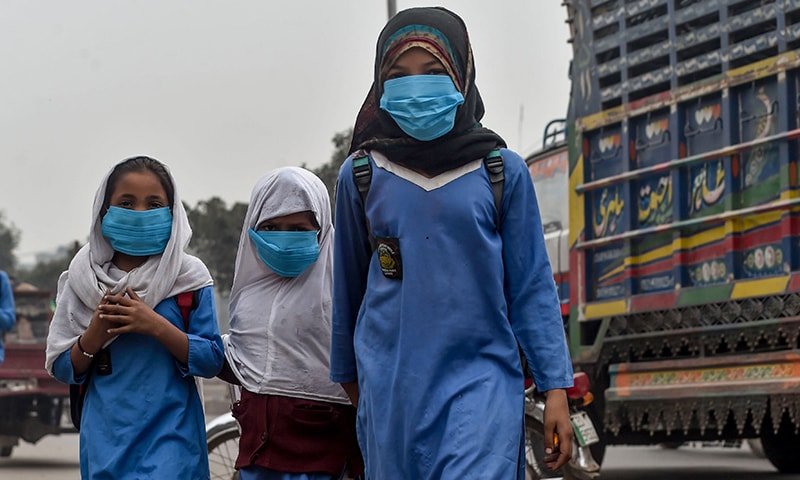
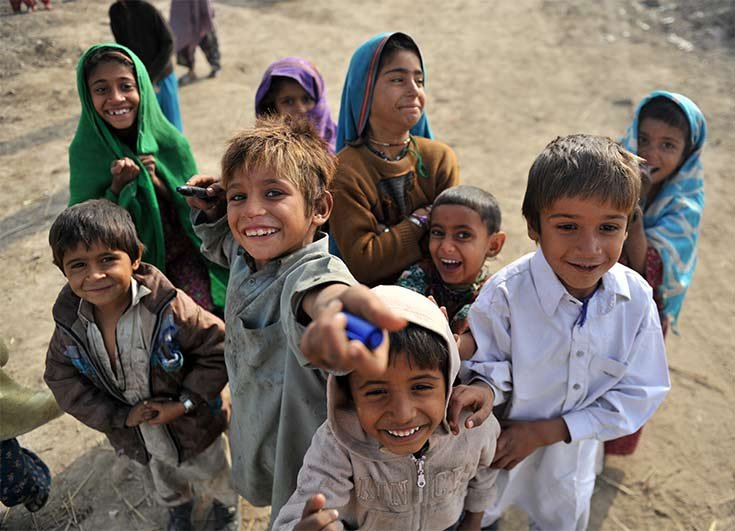
    “Pakistan has the second largest population of out-of-school children in the world”. This population makes up of 22.8 million children being out-of-schools in Pakistan who are between the ages of 5 and 16. This also means that 44% of the population of Pakistan in this age group is out-of-schools.

    The on-going pandemic of Covid-19 has further escalated the challenges in education in the country and it is said that an additional 1 million school going children will have dropped out of schools when the pandemic ends. The government of Pakistan alongside other stakeholders managed to enroll around 2.2 million children in schools in the last decade and these efforts seem to going at a loss owing to the pandemic.

    The parliament of Pakistan adopted the UN Sustainable Development Goals (SDGs) as the country’s national development goals in February of 2016. With the current government coming in to power in 2018, all the provinces were given a free hand in development and practicing their own priority frameworks.

    The provinces were able to conclude drafting their policy framework and SDG 4 (quality education for all) turned up to be a common goal for the provinces.

    Economist and public finance expert Asim Bashir Khan recently authored a white-paper “Public Investment in Education: An Appraisal of SDG 4 in Pakistan” which was published by Pakistan Youth Change Advocates (PYCA) and The Education Champion Network. This white-paper takes stock of Pakistan’s progress towards SDG4 and highlights several glaring gaps that negate the high priority accorded to education on paper.

    On paper, the provinces have key policies to achieve the SDG 4 targets including:

    • Access to Education
    • Quality of Education
    • Gender Parity in Education
    • Adult Literacy
    • Educational Infrastructure
    • Teacher’s Training

    Despite a limited number of targets and poor baseline figures, the progress towards achieving the target of quality education for all has been dauntingly slow. With the current pace of progress, it seems that Pakistan will not be able to meet the targets of Agenda2030.

    This white-paper presents the findings towards the SDG4 progress and also provides a concrete set of recommendations for Pakistani to meet the international commitments of SDG4. With 8 years still remaining, the federal and provincial governments must work collectively and effectively to ensure that Pakistan is able to live up to the international commitments.  

    A summary of the key recommendations in the White-Paper include:

    Eliminating Political Inertia:

    Despite the passage of more than five years since ratifying the 2030 Sustainable Development Agenda, Pakistan is yet to begin making the preliminary but significant adjustments identified in its National Framework.

    The federal and the provincial governments of Pakistan must be synced and work collectively on one agenda. The progress can’t bring any fruits if there is a different agenda on the federal level and a different on provincial level. This will ensure swift progress in the implementation and realization of the necessary steps.

    Classification of Education Budgets:

    It is equally important that budgets for education-related interventions, even if they are undertaken by other departments, should be classified under the education budget. The current approach under which at times large education development projects are classified under “social welfare,” “population development,” or other departments only serves to scatter the effort, making it unnecessarily tedious to monitor progress.

    Alignment of education budget heads with relevant SDG 4 indicators:

    First of all, there is a need to set up an SDG Committee for Equitable Quality Education-related policy scrutiny and parliamentary control. Budget must be adjusted to reflect on SDG4 targets and indicators while drafting budget proposals. SDG 4 budget tagging needs to be introduced and integrated into the Financial Management Information System (FIMS).

    Enrollment in Schools:

    To encourage more students to enroll in schools, the government must increase education stipend programs and introduce new ones that focus on girls and children with impairments.

    Elimination of Gender Disparities:

    In order to curb education inequality across Pakistan, the government should adopt gender-responsive budgeting. Solutions to track and trace out-of-school children by gender and location can greatly help identify the deserving children in need of education. There is also a dire need for a new infrastructure that focuses on facilitating continued learning for girls beyond the primary level.

    Qualified Teachers and Training Programs:

    To provide quality education, the federal and provincial governments must increase the number of qualified teachers with an emphasis on recruiting subject specialists in Math and Science. Investing in the recruitment of female teachers at a secondary and higher level to encourage parents to send their daughters to schools can also be a positive step towards progress.

    This article is part of Pakistan Youth Change Advocates’ #InvestInEducationStrengthenPakistan campaign. For more information follow their Facebook, Twitter, Instagram, and YouTube channels.
  • Corporal punishment allegedly led to the death of a teenage student in Lahore

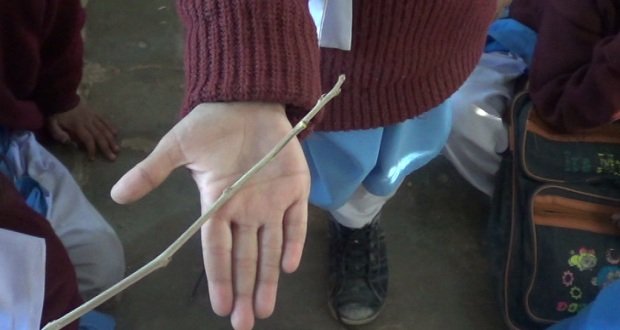
    Corporal punishment allegedly led to the death of a teenage student in Lahore

    Lahore Police has filed a first information report (FIR) against several teachers, for allegedly beating a student to death, ARY News has reported.

    The FIR was registered after the victim’s father, Wajid Hussain, lodged a complaint at Badami Bagh Police Station Lahore. As per the complaint, the 14-year-old Hamza died after being subjected to corporal punishment by his teachers.

    The complaint further states that the father found his son in an unconscious state as teacher Mohammad Majid, along with his colleagues, subjected him to torture. The student was rushed to Mayo Hospital and he died there two days latter.

    As per details, the accused have left the area and the police is trying to locate them.

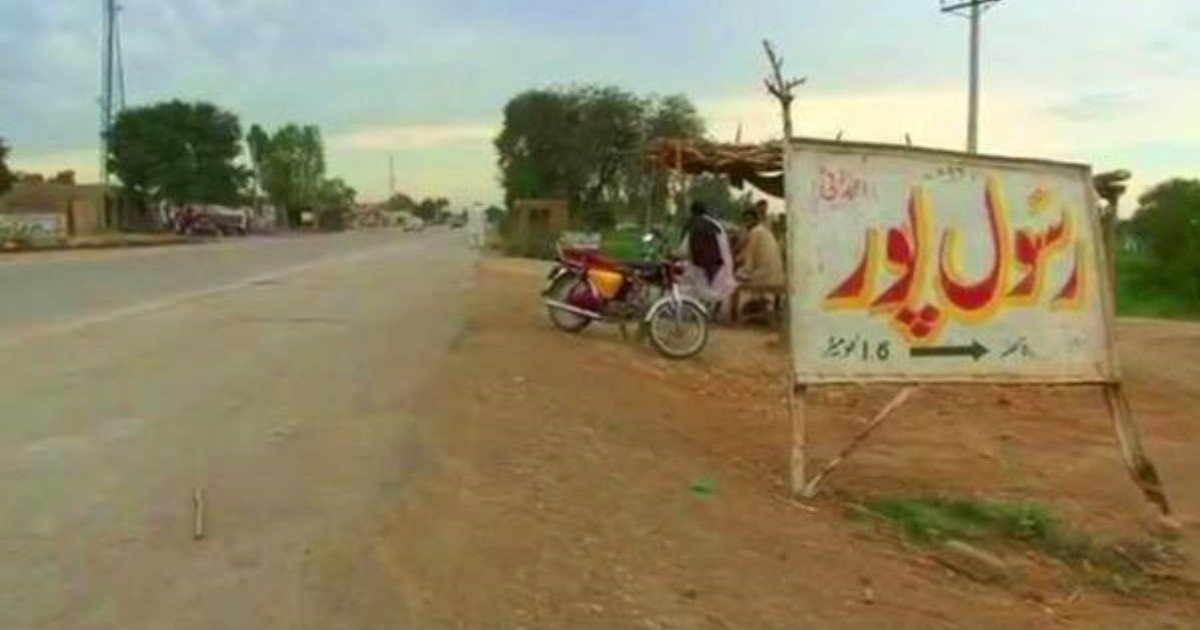
  • This village in Punjab has 100 percent literacy rate

    This village in Punjab has 100 percent literacy rate

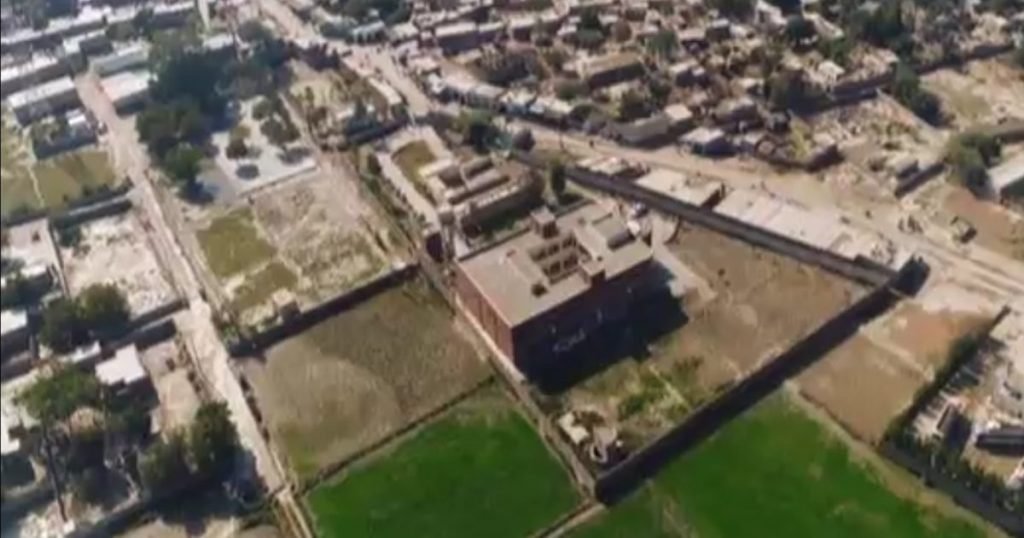
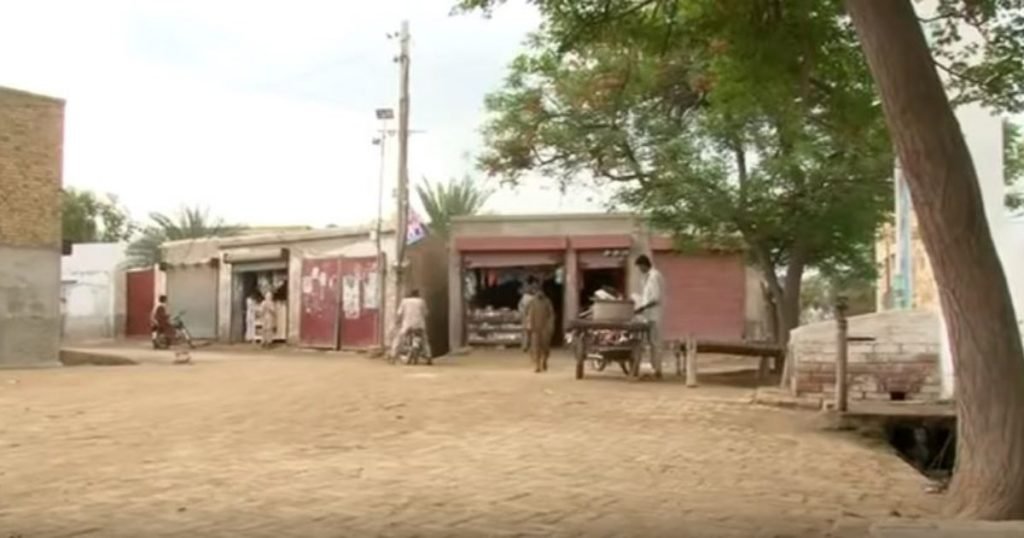
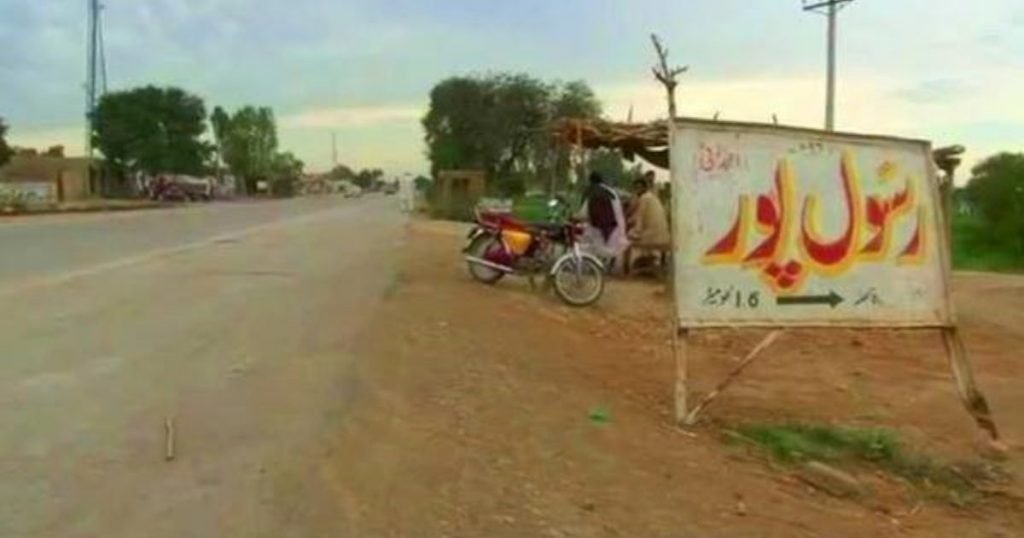
    Rasool Pur is a village, located in the Rajanpur district of Punjab. This amazing village not only has 100% literacy rate, but it also has zero percent crime rate.

    According to a report of Samaa News, Rasool Pur was established as a village in 1933 when people migrated from Balochistan and made this place their home.

    The villagers not only know how to read and write, but most of them have finished their high school education.

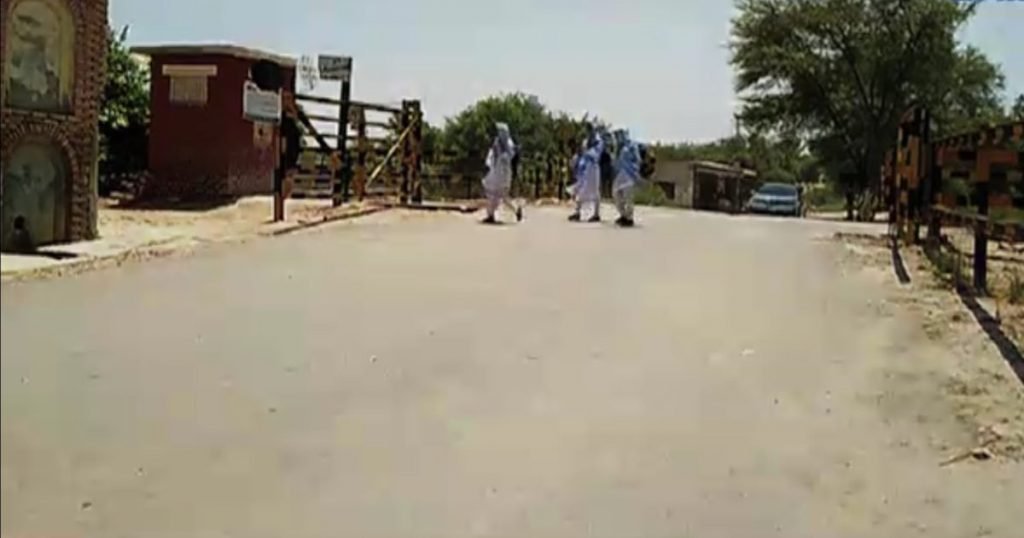
    There are two high schools in Rasool Pur, one for girls and one is for boys.

    It is one of the most peaceful places to live in Pakistan. The crime rate in the village is zero percent.

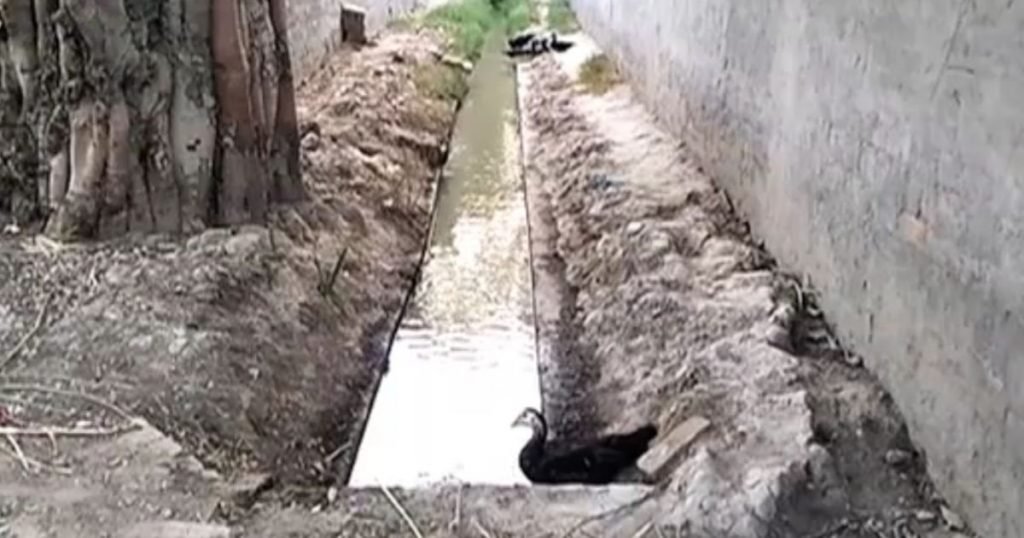
    One of the things that you will notice in Rasool Pur is the cleanliness. Although the village has limited resources, the villagers have made sure that their village does not have any garbage lying around. The sewerage system here is also well maintained.

    They have their own department to cater the issues and development projects of their village.

    Many of the women from this village are highly educated and working as doctors and engineers in different areas of Pakistan.

    The locals of this village understand the value of education and know that it is much more than simply a means of earning more.

  • Schools to reopen in districts with less than 5% covid positivity ratio: NCOC

    The National Command and Operations Centre on Wednesday allowed the reopening of schools in districts with less than five per cent coronavirus positivity ratio.

    The meeting reviewed the ongoing situation of coronavirus in the country.

    Key decisions

    From May 24, outdoor restaurants will be opened daily till 11:59 pm, and takeaway will be allowed 24/7.

    The tourism sector will be allowed to operate under strict coronavirus protocols.

    Outdoor marriage ceremonies with a limit of 150 individuals will be permitted.

    Opening of educational institutions from June 7 (other than those opened from May 24).

    Meanwhile cinemas, indoor dining, indoor gyms, amusement parks, shrines, all kinds of festivals, cultural and other events shall remain banned till further notice.

    June 1 onwards, several sectors will be allowed to open after a review meeting on May 27.

    In addition to this, the NCOC decided all SSC and HSSC exams will be held after June 20, while conducting professional and non-professional exams would take place on a case-to-case basis on recommendations from the Ministry of Education.

    The forum decided that wearing masks would remain compulsory.

    The NCOC had earlier imposed a lockdown in the country during the Eid holidays in order to stop the spread of the virus amid the deadly third wave.

  • Pak Army to help implement coronavirus SOPs, announces PM Imran

    Pak Army to help implement coronavirus SOPs, announces PM Imran

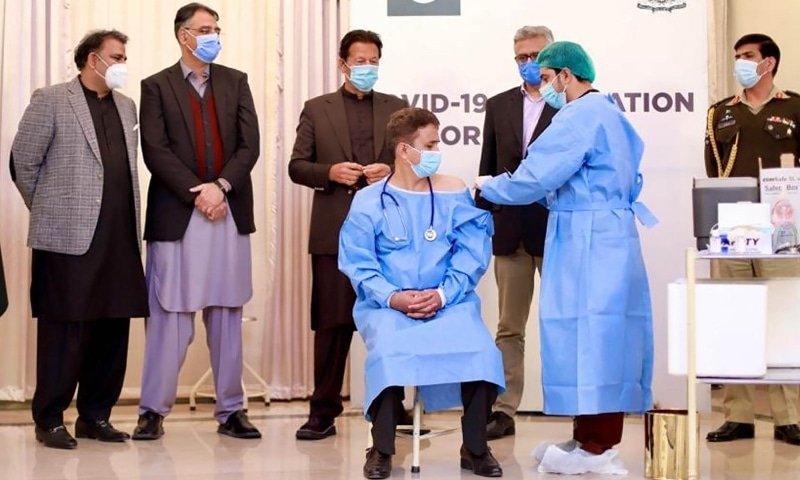
    Prime Minister Imran Khan on Friday announced that there will not not be a complete lockdown but in order to control the situation, people must follow SOPs. PM appealed to the nation that if they follow SOPs and wear masks regularly, Pakistan will not have to take any strict measures. PM said that despite suggestions of lockdowns in cities, he has not taken this decision as it affects the poor the most. “Be careful yourself. Otherwise we will have no other option.”

    PM said that the Pakistan Army will assist the police in imposing SOPs.

    Key decisions taken by the National Command and Operation Centre (NCOC):

    1. Schools in districts with positivity rates above 5% closed until Eid
    2. Markets to close at 6pm. Only shops selling essential goods to operate after 6pm
    3. Outdoor and indoor dining banned during Ramzan
    4. Indoor gyms to be closed
    5. Offices to close at 2pm daily with 50% capacity. Rest of the staff to work from home

  • ‘In-person classes in schools for Grades 1-8  to be suspended till April 28’

    ‘In-person classes in schools for Grades 1-8 to be suspended till April 28’

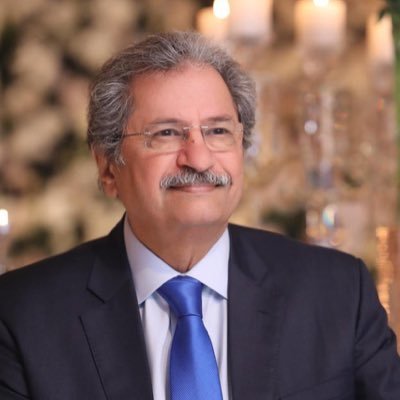
    Minister for Education and Professional Training Shafqat Mehmood on Tuesday announced that there will be no on-campus classes for Grades 1 to 8 in areas affected by coronavirus till April 28.

    The minister made the announcement while addressing the media after a meeting of the National Command and Control Centre (NCOC) that reviewed the opening of the country’s educational institutions. Besides this, the meeting also discussed the schedule for exams including those for Grades 9, 10 and 11 as well as those for O’ and A’ Levels.

    “During today’s meeting it was decided that classes for grade 1 to 8 will not be held in districts that are affected [by Covid-19] and this will go on till April 28,” said the minister.

    Punjab Minister for Education Dr Murad Raas informed that 13 districts have been affected by the virus and therefore no on-campus classes will take place in these areas for grade 1 to 8 students. The minister added that this decision will be reviewed again in the last week of April, when the NCOC will decide on whether or not to close down educational institutions till Eid.

    The minister also said that classes for grade 9, 10, 11 and 12 will be allowed to continue with strict standard operating procedures (SOPs) from April 19 so that students can finish the syllabus and be prepared for their exams.

    He added, however, that universities in affected districts will remain closed and classes will shift online.

    “Otherwise, universities will function as per usual,” he said.

    Later, Mahmood also asserted that “decisions regarding [the] exams are final,” and told students to start preparing and working hard.

    “This decision will not be changed so no one should have any uncertainty in their mind,” added the minister.

  • COVID-19: Schools in hotspot areas to stay closed till April 11

    COVID-19: Schools in hotspot areas to stay closed till April 11

    Schools located in COVID-19 hotspot areas will remain closed till April 11, Minister for Education Shafqat Mahmood has announced.

    Addressing a press conference on Wednesday, after an important meeting of education and health ministers at the National Command and Operation Centre (NCOC), Mahmood said that the number of active COVID-19 cases have doubled in the last three weeks while the positivity ratio has crossed 8%.

    Mahmood further said the government will discuss this with the Cambridge exams board to see whether CIE examinations can be postponed or not.

    “We have seen that the number of cases in Punjab, Khyber Pakhtunkhwa and Azad Kashmir has increased,” said Mahmood, adding: “The number of infections is relatively less in Sindh, Balochistan and Gilgit-Balochistan.”

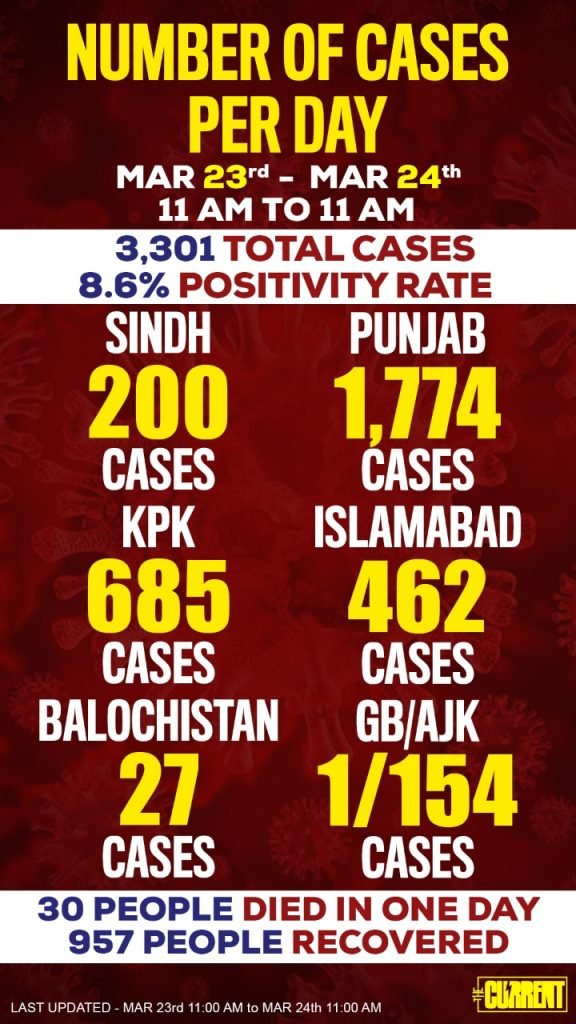
    Pakistan has reported 637,042 cases and 13,965 deaths so far. 3,301 cases and 30 deaths have been reported in the last 24 hours.

    Number of cases recorded in different provinces in the last 24 hours are:

  • Surge in COVID cases: Educational institutions to close down in at least 7 cities

    Special Assistant to the Prime Minister on Health Dr Faisal Sultan and Federal Minister for Education Shafqat Mahmood, in a press conference, have announced that educational institutes in Punjab will remain closed from March 15 to 28. The decision was taken after a meeting of the National Command and Operation Center (NCOC) to review the situation of coronavirus in the country.

    The government officials said that educational institutes in Punjab will remain closed from March 15 to March 28 to contain the spread of Covid-19, adding that spring break will begin in seven districts of Punjab, including Faisalabad, Gujranwala, Lahore, Gujrat, Multan, Rawalpindi and Sialkot. Mahmood said the same decision will also apply to educational institutions in Islamabad, Muzaffarabad and Peshawar.

    However, the decision of the closure of the schools will not be applicable to schools that are already conducting examinations.

    Educational institutions in Sindh and Balochistan would continue with 50 percent attendance every day.

    Earlier today, Minister for Planning, Development and Special Initiatives Asad Umar presided over the NCOC meeting. To contain the spread of the virus the in the country, the following decisions have been taken:

    • Strict compliance of Mask Wearing will continue across the board.
    • SLDs / Micro SLDs will continue to be imposed based on the disease prevalence / hotspots.
    • 50% work from home policy will be implemented on the discretion of federating units. However, it will be enforced in ICT with immediate effect.
    • Time limit of 10:00 PM on all commercial activities will be re-enforced with immediate effect, less essential services.
    • Amusement Parks across the country will be closed at 6:00 PM..
    • Earlier decision of allowing indoor weddings, indoor dining and opening of cinemas and shrines with effect from March 15, 2021 has been withdrawn. However, outdoor dining / take away will continue to remain open as per previous practice.
    • Outdoor gatherings will continue to remain limited to a maximum of 300 individuals with strict enforcement of COVID -19 SOPs.
    • Review of all enforced  non-pharmaceutical interventions (NPIs) will be carried out on April 12, 2021.

    The above-mentioned decisions regarding non-pharmaceutical interventions (NPIs) are the baseline decisions. Federating units are at liberty to impose stricter NPIs in selected cities/districts keeping in view the local disease trend/ spread.

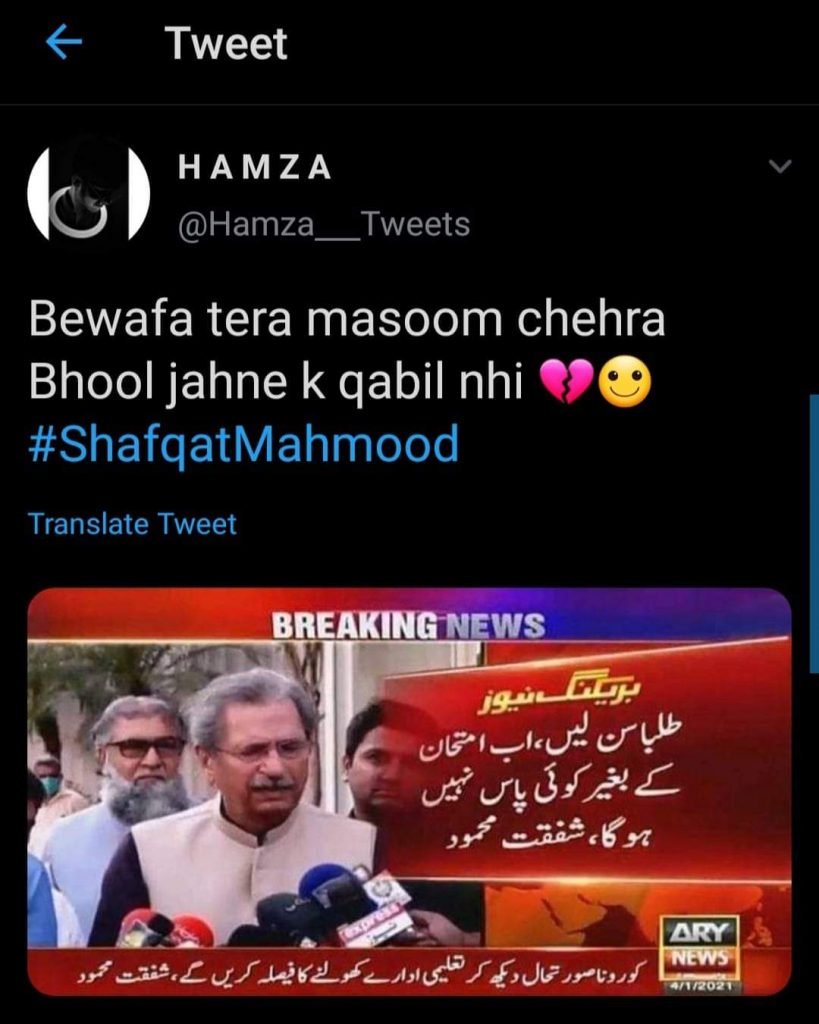
  • ‘Bewafa’: Students react to Shafqat Mahmood announcing schools to open from March 1

    ‘Bewafa’: Students react to Shafqat Mahmood announcing schools to open from March 1

    Federal Minister for Education Shafqat Mahmood has once again given ‘memers’ a chance to show off their skills. Breaking the hearts of a lot of Pakistani students, the ‘Bewafa‘ minister announced that schools will be resuming from March 1.

    Following the announcement, social media was filled with memes with students expressing their heartbreak and sadness over the decision.   

    https://twitter.com/MemebyPutin/status/1364824875110645764?s=20

    Read more – Sarfaraz vs Hafeez memes break the internet

    https://twitter.com/PakistanAug1947/status/1364871706012246017?s=20

  • Memes break the internet after Shafqat Mahmood announces reopening of schools

    Memes break the internet after Shafqat Mahmood announces reopening of schools

    Amid the second wave of coronavirus, the government has decided to open educational institutions in phases from January 18.

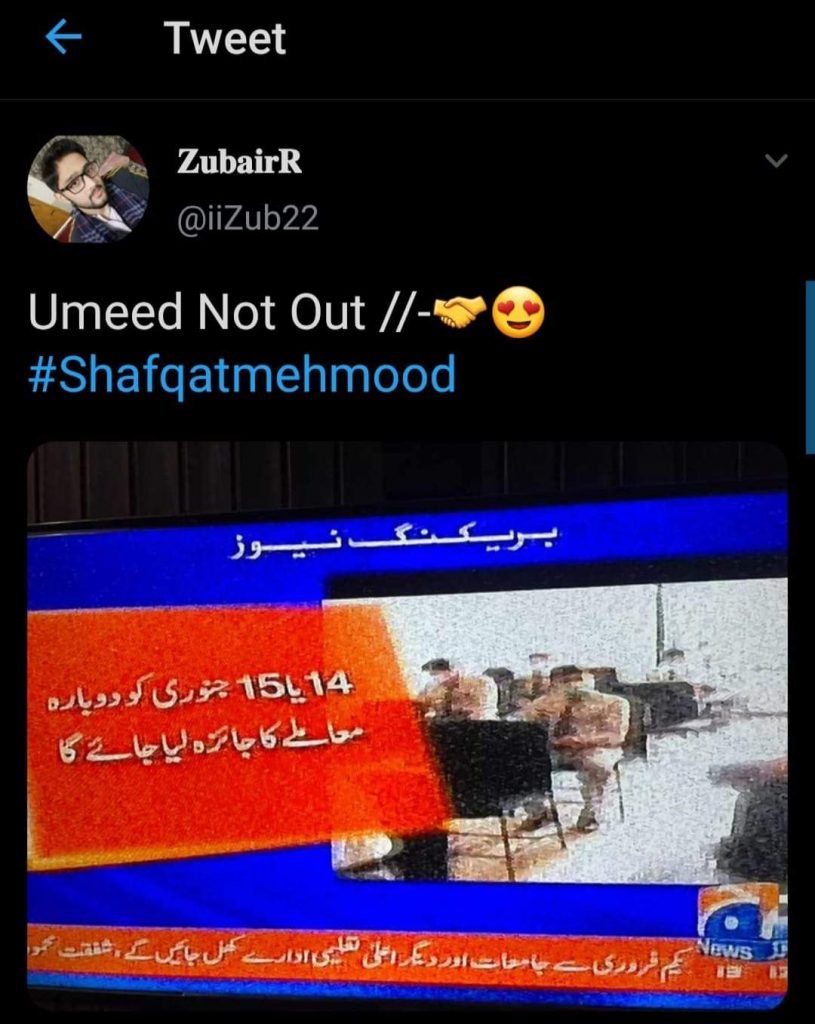
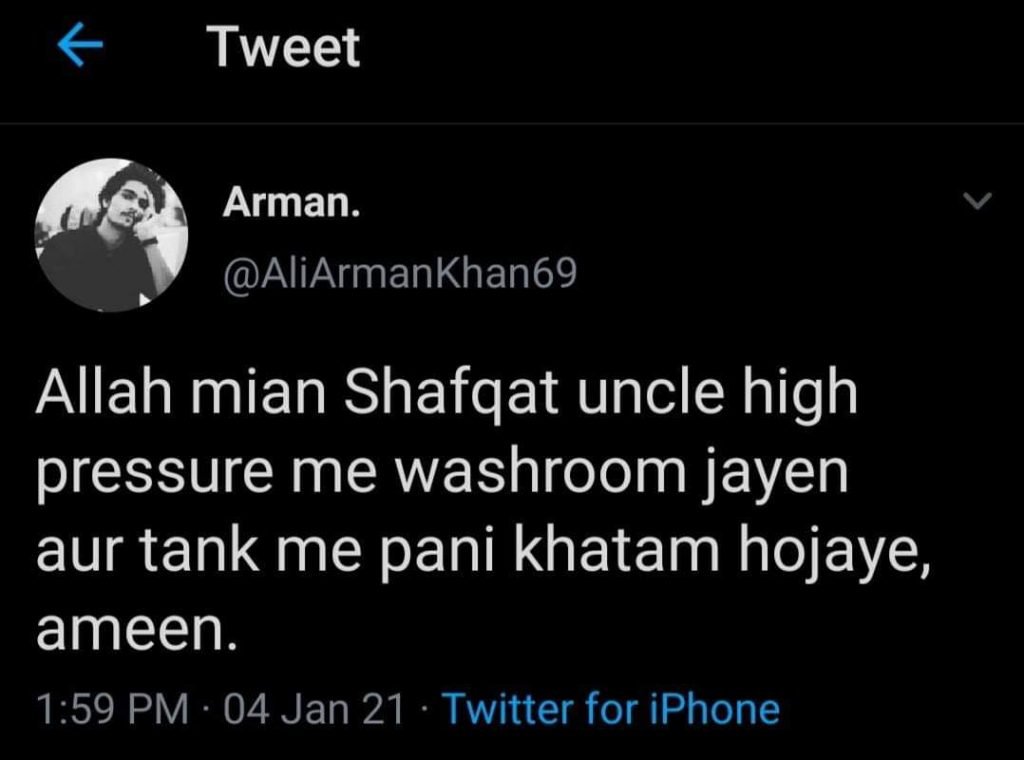
    Soon after the news was announced, memes started doing rounds on social media adding to the popularity of Federal Minister for Education Shafqat Mahmood.

    Mahmood’s memes also went viral earlier after he announced that educational institutions would be closed till January 11 due to rising COVID-19 cases. In an exclusive interview with The Current, the minister talked about the memes and which ones were his favourite.