Tag: security

  • Fatima Effendi says single women pursue married men for financial security

    Fatima Effendi says single women pursue married men for financial security

    Actress and digital content creator Fatima Effendi is never afraid to speak her mind. Recently, she appeared as a guest on ‘FHM Podcast’ where she talked about her unfiltered thoughts on extramarital affairs, social media, and the changing dynamics of relationships.

    Fatima said, “These days’ men are a bit scared before they start affairs as they fear being found out on social media and their wives leaving them. This is a change from what used to happen before.”
     
    Fatima highlighted that women frequently target the other woman when they find out about an affair.
    “When an affair comes to light, women should not target the other woman. Women should look at their own men instead of looking at the women around them.”

    About society’s growing materialism, she said, “Today, people have become materialistic, and it’s alarming that single women now go for married men, not because they love them but because they only want financial stability.”
     
    Fatima Effendi and Kanwar Arsalan have two sons together after their marriage in November 2012.

  • Federal Government authorises ISI to record, trace calls

    Federal Government authorises ISI to record, trace calls

    The federal government of Pakistan has granted permission to the Inter-Services Intelligence (ISI) agency to intercept phone calls in the interest of national security across any telecommunications system, and apprehension of criminal activities.

    According to a government notification, ISI has been authorised to record phone calls under Section 54 of the Pakistan Telecommunication Act, 1996.

    The notification also grants the agency authority to trace messages and calls including WhatsApp calls, messages, and other applications.

    This authority is vested upon ISI officers of Grade 18 or above, subject to approval by the Prime Minister.

    On June 30, Justice Babar Sattar of the Islamabad High Court stated in the judgement of the Audio Leaks case of son of former Chief Justice Saqib Nisar and Bushra Bibi that any form of surveillance of citizens is illegal under the law, including the surveillance of four million citizens.

    The responsibility for this mass surveillance lies with the federal government, and the Prime Minister and the cabinet are collectively and individually accountable for it.

    The court order also expressed the expectation that the Prime Minister would seek reports from intelligence agencies and present the matter before the cabinet. The order further directed the Prime Minister to identify those responsible for implementing the lawful Interception Management System and conducting mass surveillance, with reports to be submitted by July 5.

  • NADRA’s appeal against restoration of Hafiz Hamdullah’s identity card scheduled for hearing

    NADRA’s appeal against restoration of Hafiz Hamdullah’s identity card scheduled for hearing

    The Supreme Court of Pakistan has scheduled the hearing of NADRA’s appeal against the restoration of the identity card of Jamiat Ulema-e-Islam leader Hafiz Hamdullah.

    A two-member bench headed by Justice Muneeb Akhtar of the Supreme Court will hear the case on July 10.

    NADRA had cancelled the identity card on grounds of Hamdullah being a foreigner.

    The Islamabad High Court declared the cancellation of Hafiz Hamdullah’s identity card null and void and ordered its restoration.

    NADRA has now filed an appeal in the Supreme Court against the decision of the Islamabad High Court.

  • Illegal Afghan citizens banned from entering Peshawar during Eid, Muharram

    The government has decided to ban illegal Afghan citizens from entering Peshawar during Eid-ul-Adha and Muharram.

    Speaking to Geo News, Capital City Police Officer (CCPO) Peshawar Qasim Ali Khan stated that this decision has been made due to security concerns and in order to control crime.

    He emphasised that ensuring a peaceful religious festival is the top priority, and during Eid and Muharram, illegal Afghan citizens will not be allowed to enter the city.

    Qasim Ali Khan further mentioned that security at sensitive locations and places of worship will be reassessed, and additional security measures will be implemented during Eid and Muharram.

    The CCPO added that practical steps will be taken to curb street crime.

  • Cases of fake notices increasing: FIA

    Cases of fake notices increasing: FIA

    The Federal Investigation Agency (FIA) has stated that there has been an increase in the issuance of fake notices among the public.

    FIA has categorically warned citizens to be aware of fake notices including emails and WhatsApp, adding that receivers of fake notices must never contact the sender either.

    The notices include fake details of involvement in criminal activities, threats of legal action, and fake profiled trying to obtain personal information under the pretext of verification or compliance.

    FIA has also clarified that they never ask for sensitive information.

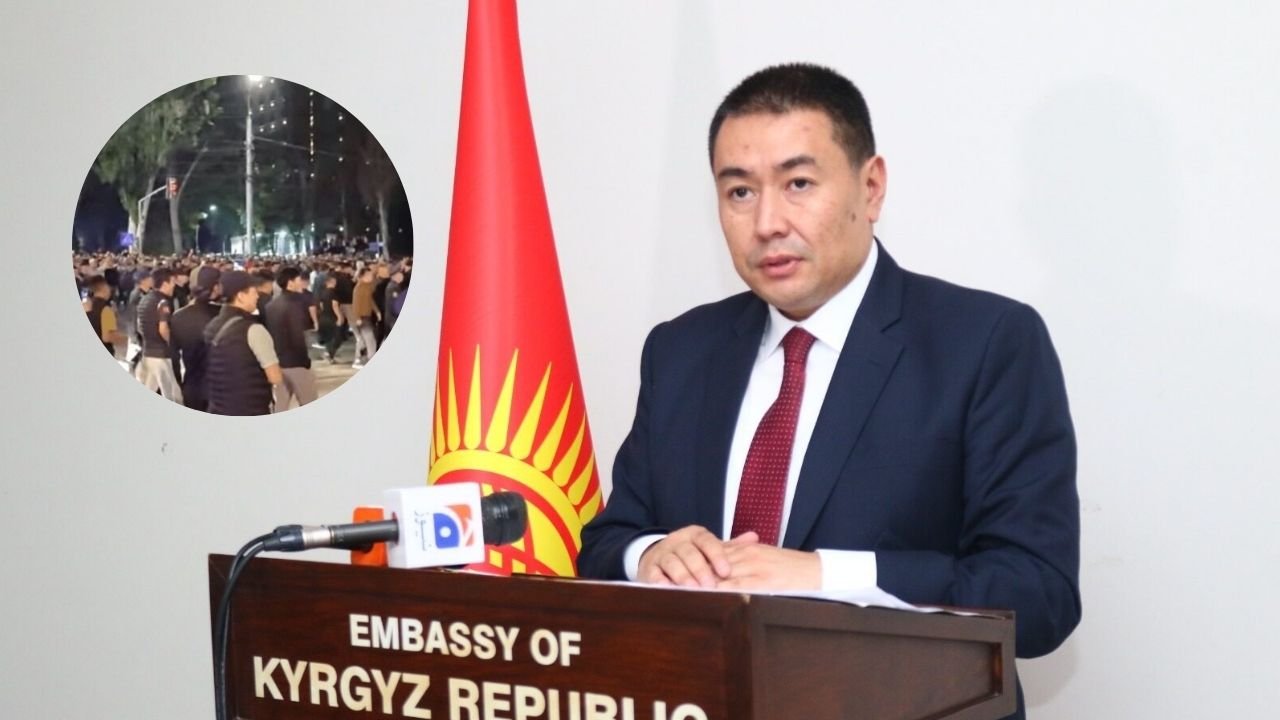
  • Situation in Bishkek under control, suspects will be punished according to law: Kyrgyz Ambassador

    Situation in Bishkek under control, suspects will be punished according to law: Kyrgyz Ambassador

    Kyrgyz Ambassador Ulanbek Totuiaev has said that the situation in Bishkek is under control, and that suspects charged with violence will be punished according to the law.

    During a media briefing in Islamabad, he asserted that the news shared on foreign media social networks were completely baseless, especially in Pakistan.

    The ambassador reiterated that on May 13, a clash took place between local and foreign students in a hostel in Bishkek. On May 18, Kyrgyz citizens demonstrated to bring foreign students to justice. As soon as the information was received, the police detained four Egyptians and ten Kyrgyz citizens.

    He further clarified that no one was injured in the riots and that the media is requested to refrain from broadcasting or publishing unverified information. He emphasized that all the rioters will be punished according to law in Kyrgyzstan, whereas Pakistan will be asked to investigate those spreading false information in the media.

  • UN Security Council seeks inquiry into mass graves in Gaza

    UN Security Council seeks inquiry into mass graves in Gaza

    The UN Security Council on Friday called for an immediate and independent investigation into mass graves allegedly containing hundreds of bodies near hospitals in Gaza.

    In a statement, members of the council expressed their “deep concern over reports of the discovery of mass graves, in and around the Nasser and Al-Shifa medical facilities in Gaza, where several hundred bodies, including women, children and older persons, were buried.”

    The members stressed the need for “accountability” for any violations of international law and called on investigators to be given “unimpeded access to all locations of mass graves in Gaza to conduct immediate, independent, thorough, comprehensive, transparent and impartial investigations.”

    Hospitals in the Gaza Strip have been repeatedly targeted since the beginning of the Israeli military operation in the Palestinian territory, following the October 7 attack.

    Israel has accused Hamas of using medical facilities as command centers and to hold hostages abducted during the initial attack.

    The World Health Organization (WHO) said in April that Al-Shifa, in Gaza City, had been reduced to an “empty shell,” with many bodies found in the area.

    The Israeli army has said around 200 Palestinians were killed during its military operations there.

    Bodies have reportedly been found buried in two graves in the hospital’s courtyard.

    The UN rights office in late April had itself called for an independent investigation into reports of mass graves at Al-Shifa and at the Nasser Medical Complex in Khan Yunis.

    Gaza officials said at the time that health workers at the Nasser complex had uncovered hundreds of bodies of Palestinians they alleged had been killed and buried by Israeli forces.

    Israel’s army has dismissed the claims as “baseless and unfounded.”

    The statement Friday from the Security Council did not say who would conduct the investigations.

    But it “reaffirmed the importance of allowing families to know the fate and whereabouts of their missing relatives, consistent with international humanitarian law.”

    Israeli genocide against Palestinians has killed at least 34,943 people in the Gaza Strip, mostly women and children, the health ministry in the Hamas-run territory said Friday.

  • Women journalists bear the brunt of cyberbullying

    Women journalists bear the brunt of cyberbullying

    Perugia (Italy) (AFP) – Women journalists face greater threats online in the course of their work, and the trend is increasing, one expert told an international conference in Italy this weekend.

    “There is significant potential for online violence to escalate to offline harm,” said Julie Posetti research director of the International Center for Journalists (ICFJ).

    “Women tend to face greater threats online,” she told delegates at the Perugia International Journalism Festival on Saturday. And, she added, “the kind of threats they face are increasing”.

    That toxic environment was being “facilitated by Big Tech companies”, she added, accusing them of “a failure to take responsibility”.

    In a joint UNESCO/ICFJ study in 2022, nearly three-quarters of women journalists interviewed said they had experienced online violence or abuse in connection with their work. They interviewed 900 journalists from 125 countries.

    Attacks online include insults, sexist and sexual comments, and physical threats, including death threats to journalists and their families, the conference heard.

    Increasingly sophisticated attacks include blocking accounts, hacking, publishing private photos and creating “deep fakes” — fake sexual images of people without their consent.

    Violent threats tend to increase when combined with discrimination linked to skin colour, religion or sexual orientation.

    Physical violence

    Posetti and two other researchers have built a guide and toolbox on the topic targeting journalists, together with the Organization for Cooperation and Security in Europe (OSCE).

    Filipino journalist Maria Ressa, the 2021 Nobel Peace Prize winner, was a victim of online abuse, as she explained in the ICFJ-UNESCO report.

    “I was a CNN war correspondent for two decades, but nothing in the field prepared me for the orchestrated, misogynistic attacks on me and our women-led news outlet, Rappler,” she said.

    BBC disinformation specialist Marianna Spring received an avalanche of abusive tweets last year, threatening to kidnap her or slit her throat.

    Much of the abuse followed her investigation into the takeover of social media network X, then known as Twitter.

    In some cases, online threats can translate into physical violence.

    A fifth of women surveyed said they had suffered attacks or insults in real life that were linked to online abuse.

    The consequences can be far-reaching, with some journalists potentially dissuaded from covering sensitive topics and some choosing to opt out of the industry altogether.

    Paris-based media rights campaigners Reporters Without Borders (RSF) has warned that this type of harassment forms a new threat to press freedom.

    Developing counter measures

    French journalist Nadia Daam told AFP that she received a flood of hateful messages in 2017 after a column that criticised an online forum.

    Since then, she has moved house twice and tends to stay away from social media, but says she still gets cyber-bullying messages and “doesn’t work the same anymore”.

    However, she thinks there is more awareness of the problem now, saying that she believes the wider industry “talks more about cyberharassment”, with more severe legal sentences.

    Freelancer Melina Huet covered the war in Ukraine as well as the Israel-Hamas conflict, and said she regularly gets online threats related to her coverage.

    “I received threats of beheading and rape on Instagram,” she said. “The perpetrators can easily re-create accounts, there is impunity.”

    Some media have put protocols in place to try and tackle cyberbullying.

    Jessica Ziegerer is an investigative journalist for the daily HD Sydsvenskan, and regularly receives hostile messages.

    “Before publishing a sensitive article, we have a meeting with security specialists and review all the aspects” both online and offline, she said.


  • Meta shouldn’t force users to pay for data protection: EU watchdog

    Meta shouldn’t force users to pay for data protection: EU watchdog

    Brussels, Belgium – Facebook owner Meta and other online platforms must not force users to pay for the right to data protection enshrined in EU law when offering ad-free subscriptions, the European data regulator said Wednesday.

    “Online platforms should give users a real choice when employing ‘consent or pay’ models,” the European Data Protection Board (EDPB) chair Anu Talus said in a statement.

    “The models we have today usually require individuals to either give away all their data or to pay,” she said. “As a result, most users consent to the processing in order to use a service, and they do not understand the full implications of their choices.”

    Meta in November launched a “pay or consent” system allowing users to withhold use of their data for ad targeting in exchange for a monthly fee — a model that has faced several challenges from privacy and consumer advocates.

    Meta has long profited from selling user data to advertisers but this business model has led to multiple battles with EU regulators over data privacy.

    The latest announcement came after the data protection authorities of The Netherlands, Norway and the German state of Hamburg went to the EDPB for an opinion regarding the pay-or-consent model used by Meta.

    The Silicon Valley company allows users of Instagram and Facebook in Europe to pay between 10 and 13 euros (around $11 and $14) a month to opt out of data sharing.

    Meta pointed to an EU court ruling last year that it said opened the way for subscriptions as a “legally valid” option. “Today’s EDPB opinion does not alter that judgment and subscription for no ads complies with EU laws,” a Meta spokesperson said.

    Meta is waiting for a decision on its model by the data privacy regulator in Ireland where the company is headquartered.

    ‘Binary choice’

    All digital platforms must comply with the European Union’s mammoth general data protection regulation (GDPR), which has been at the root of EU court cases against Meta.

    The EDPB in its opinion argued that Meta’s model was at odds with the GDPR’s requirement that consent for data use must be freely given.

    “In most cases, it will not be possible for large online platforms to comply with the requirements for valid consent if they confront users only with a binary choice between consenting to processing of personal data for behavioural advertising purposes and paying a fee,” the opinion read.

    The EDPB also warned the type of subscription service put forward by Meta “should not be the default way forward” for platforms.

    It suggested that platforms should consider an alternative that would give users the right to reject being tracked for advertising purposes without the need to pay.

    Privacy defenders welcomed the opinion.

    “Overall, Meta is out of options in the EU. It must now give users a genuine yes/no option for personalised advertising,” said prominent online privacy activist Max Schrems.

    “We know that ‘Pay or Okay’ shifts consent rates from about three percent to more than 99 percent — so it is as far from ‘freely given’ consent as North Korea is from a democracy,” said Schrems.

    Tech lobby group CCIA however warned the EDPB risked “opening a Pandora’s Box”.

    “Forcing businesses to offer services at a loss is unprecedented and sends the wrong signals,” said CCIA Europe’s senior policy manager, Claudia Canelles Quaroni.

    “All companies should be able to offer paid-for versions of their services.”

    raz/gv

    © Agence France-Presse

  • Pakistani man among those killed in Sydney attack: community groups

    Pakistani man among those killed in Sydney attack: community groups

    A 30-year-old Pakistani man was named on Sunday as the security guard killed in a weekend knife attack in a Sydney shopping mall, according to two local community groups.

    The Australian Pakistani National Association and Ahmadiyya Muslim Community said Faraz Tahir was killed by a knife-wielding man who also killed five women.

    On Sunday evening, members of the Muslim community held a silent vigil for the man, who is said to have moved to Australia last year.

    “He quickly became an integral part of our community,” a statement said.

    The Australian Pakistani National Association encouraged the community to “stand together in solidarity, offering support and prayers to those grieving and affected by this heartbreaking loss”.

    As the attack unfolded on Saturday, online social media accounts falsely reported that the attack was linked to ideological or religious groups or events in the Middle East.

    Police have named the assailant as 40-year-old itinerant man Joel Cauchi who was previously diagnosed with a mental health issue.