Tag: security

  • Indian spy arrested in Karachi

    Indian spy arrested in Karachi

    According to Samaa news, law enforcement agencies have apprehended a man alleged to be an Indian spy along with a Pakistani facilitator in Karachi.

    Senior Superintendent of Police (SSP) City, Arif Aziz has said that the detained is identified as Akhil Dev and has been accused of having been working undercover for India.

    The operation was carried under the jurisdiction of the Kalakot police station in Lyari. Resultantly, incriminating evidence has been retrieved including two Indian passports, firearms, and foreign currency totaling five lakhs among other items. In addition, fake jewellery boxes, six mobile phones, one tablet, and various documents were also recovered from the suspects.

    SSP Arif Aziz stated that this arrest is a proof of rigour and commitment of Pakistani law enforcement agencies to protect national security.

    He also confirmed that investigations are underway to capture any potential aide linked to the accused.

  • Islamabad police takes action against online propagandists

    Islamabad police takes action against online propagandists

    A spokesperson for Inspector General of Islamabad police, Dr. Akbar Nasir Khan, has said that the process of countering hate-mongering content and pages online that instigate conflicts in the capital city has been sped up. The action comes under the structure of the Violent Extremism Prevention Unit (VEPU) in order to prevent propaganda aimed against the state and its institutions.

    It has been claimed that more than 700 social media accounts, extensively investigated across Twitter, Facebook, and other media platforms, are unfurling religious hatred and terrorism. The Federal Investigation Agency (FIA) has been asked to shut down such accounts and so far, more than 200 have been suspended.

    The IGP is adamant to objectively curb extremism and VEPU has been prompt in taking measures against propagandists.

    Violent Extremism Prevention Unit (VEPU) was inaugurated earlier this year in February by Director General National Counter Terrorism Authority (NACTA) Muhammad Tahir Rai along with Inspector General of Police (IGP) Islamabad at Safe City Islamabad. The mission of the unit is to “monitor the political, linguistic, sectarian and religious extremist content on social media and websites and submit its report” supervised by SP.

    The police and Counter Terrorism Department (CTD) are to work together to fulfil the goal. Apart from identifying the suspects online, the goal is also to hold them accountable. Additionally, communication experts are included and recommendations for legislation are to be made as well.

  • Nadra launches eye recognition biometric identification system

    Nadra launches eye recognition biometric identification system

    The National Database and Registration Authority (NADRA) has recently implemented a state-of-the-art iris recognition or eye recognition biometric identification system.

    According to a NADRA spokesperson, this innovative system will work in conjunction with existing fingerprint and facial identification methods. The spokesperson emphasized that the iris identification method has proven to be highly reliable, with an error margin that is practically non-existent.

    Furthermore, the spokesperson highlighted that the eye scanning of an individual at a young age can serve as a permanent means of identification. This advancement showcases the long-term effectiveness of the iris recognition technology, offering enhanced security and accuracy.

    Iris recognition, also known as eye recognition, is an automated biometric identification technique that employs advanced mathematical pattern-recognition algorithms on video images of an individual’s irises. These irises possess intricate and unique random patterns, discernible even from a considerable distance.

    Prior to this development, NADRA had already introduced its cutting-edge Automated Finger Identification System (AFIS) for various civil purposes.

  • Meta blocks over 1,000 malicious URLs disguised as ChatGPT and AI tools

    Meta blocks over 1,000 malicious URLs disguised as ChatGPT and AI tools

    The internet is becoming more hazardous as the number of scams on the internet increases. Social media giants are now alerting users to fraudulent ChatGPT apps that are circulating on the internet. It is essential for users to be vigilant and only download ChatGPT apps from reliable sources.

    Meta has identified scammers exploiting people’s interest in ChatGPT by enticing users to download harmful apps and browser extensions. Cybercriminals are taking advantage of people’s curiosity and trust in ChatGPT to launch attacks, using tactics similar to those used in cryptocurrency scams.

    Meta has discovered about ten malware families that pose as ChatGPT and other similar tools. These malware strains are used to compromise accounts across the internet. Once a user downloads the malware, the malicious actors can launch an attack and keep updating their methods to bypass security protocols.

    Meta’s Q3 2023 security report states, “Over the past several months, we’ve investigated and taken action against malware strains taking advantage of people’s interest in OpenAI’s ChatGPT to trick them into installing malware pretending to provide AI functionality.” The company has detected and blocked over 1,000 unique malicious URLs from being shared on their apps, protecting unsuspecting users from falling prey to these cyberattacks.

    Furthermore, Meta has reported these malicious URLs to their industry peers at file-sharing services where malware is hosted, enabling them to take appropriate action to protect their users and networks. Meta has taken significant steps to combat the threat posed by malware strains posing as ChatGPT and similar tools.

    Cybercriminals are also using other websites such as LinkedIn, Chrome, Edge, Brave, and Firefox to deceive people. Meta has taken action against nine groups worldwide who are attempting to influence people secretly and steal information.

    Meta advises people to be cautious and ensure that the things they download are safe. They recommend that people only download things from trusted sources.

  • China’s $57.7 billion railway project aims to boost Pakistan’s economy

    China’s $57.7 billion railway project aims to boost Pakistan’s economy

    A study conducted by scientists from China Railway First Survey and Design Institute Group has estimated the cost of a proposed China-Pakistan railway project to be $57.7 billion. The railway will connect Gwadar Port with Xinjiang’s Kashgar, and is expected to have strategic significance, potentially reshaping trade and geopolitics. The project will improve connectivity among the countries along the ancient Silk Road trade routes and is part of a plan to reduce dependence on Western-dominated routes.

    The study urges the Chinese government and financial institutions to provide strong support for the project, including increasing coordination and collaboration among relevant domestic departments and striving for the injection of support funds. Pakistan’s economy is expected to receive a much-needed boost from the infrastructure and will easily trade with China. The researchers said the project is expected to create more jobs, boost infrastructure investment, and increase trade.

    However, the study notes that Pakistan’s GDP last year was just six times the estimated cost of the project, making sufficient financing difficult. Pakistan is mainly relying on Chinese enterprises for investment and construction, as it is unable to provide sufficient financial and material support.

    Moreover, the security issues in Pakistan pose a risk to Chinese workers and investments, which may hinder the railway project. Despite these challenges, the study emphasizes the strategic significance of the railway project and urges strong support and policy guarantees for its construction.

  • WhatsApp to introduce biometric chat locks for enhanced privacy and security

    WhatsApp to introduce biometric chat locks for enhanced privacy and security

    A number of Android OS skins from prominent brands such as Xiaomi offer app lock capabilities, whereby individual apps require authentication to gain access, sometimes by way of biometric verification.

    Stock Android can also be endowed with this feature by utilising various apps accessible on the Play Store, though their reliability can be called into question. Given the confidential nature of WhatsApp conversations, Meta’s ongoing development of a per-chat biometric lock embedded into the app is a positive move in the right direction.

    For an app that is advertised as having a strong focus on privacy and security, the absence of in-app biometric authentication options is highly noticeable. Luckily, according to WABetaInfo, the latest WhatsApp beta update available on the Play Store (v2.23.8.2) gives indications of a new feature being developed. This feature will allow users to lock individual chats using either a passcode or fingerprint, even though only the latter’s toggle is visible. It is suspected that the fingerprint unlock will require a passcode to be set up as a backup.

    Screenshots imply that it will be possible to lock sensitive group chats from the group info section. It also appears that all locked chats will be relocated to a vault-like space, separated from regular chats, hence requiring authentication only once. While it isn’t apparent from the shared screenshots, WABetaInfo reports that WhatsApp will erase the chat if users wish to unlock it by force, such as in the event of forgetting the passcode.

    There is little information available about how notifications for these chats will be displayed, what will happen to the media in the conversations, and how many chats can be locked. WhatsApp is one of the most well-known encrypted messaging apps in existence, yet it is not at the forefront of this feature. For instance, Telegram has allowed passcode or fingerprint unlocking since around 2018, but it is for the app as a whole rather than individual chats. It is somewhat perplexing why WhatsApp has not followed this path.

  • ‘Whatever is happening is the result of your actions’; IHC slams Imran’s lawyers

    ‘Whatever is happening is the result of your actions’; IHC slams Imran’s lawyers

    The Islamabad High Court (IHC) on Wednesday morning slammed former Prime Minister Imran Khan’s legal team as a hearing began on a petition filed by Pakistan Tehreek-e-Insaf (PTI) challenging arrest warrants for the Chairman on security grounds.

    PTI had filed the plea on Tuesday and requested a hearing on the same day. However, the Registrar raised objections because there was no biometric verification on the application.

    IHC Chief Justice Amir Farooq began hearings by asking Imran Khan’s counsel if they had removed the Registrar’s objections. PTI lawyer Khawaja Haris replied that what is happening in Lahore is known.

    “Whatever is happening is a result of your actions,” replied the Chief Justice.

    He also said that the plea is yet to be fixed, and he will hear it once it is fixed for hearing. Khawaja Haris asked the court to fix 12PM for the hearing.

    Meanwhile, Imran Khan tweeted on Wednesday morning that the real intent of arrest was to “abduct and assassinate” him.

  • WhatsApp refuses to compromise on end-to-end encryption despite UK pressure

    WhatsApp refuses to compromise on end-to-end encryption despite UK pressure

    Will Cathcart, the head of WhatsApp, has stated that the company will not comply with the proposed online safety bill in the United Kingdom (UK), which aims to ban end-to-end encryption. Cathcart made these remarks during a visit to the UK, where he will meet with legislators to discuss the government’s internet regulation flagship policy. He further described the bill as the most concerning piece of legislation being discussed in the western world.

    Cathcart explained that users worldwide demand security, and 98 per cent of WhatsApp’s users are outside the UK. Therefore, it would be an odd choice for the company to lower the product’s security in a way that would affect the majority of its users. He added that end-to-end encryption is essential in messaging services to prevent anyone other than the communication recipients from decrypting it. WhatsApp cannot read messages sent over its service and cannot comply with law enforcement requests to hand over messages or actively monitor communications for child protection or anti-terrorism purposes.

    Cathcart noted that the online safety bill is an expansion of the UK government’s power to demand the removal of encryption, and it poses a grey area in the legislation. He called for similar language to be inserted into the UK bill as in the EU’s digital markets act, which explicitly defends end-to-end encryption for messaging services.

    Furthermore, under the proposed bill, the UK government or Ofcom could require WhatsApp to apply content moderation policies that would be impossible to comply with without removing end-to-end encryption. If WhatsApp refused to comply, it could face fines of up to 4 per cent of its parent company Meta’s annual turnover, or it would have to withdraw entirely from the UK market.

    Cathcart argued that large communities that use end-to-end encryption, such as WhatsApp’s “communities” offering, which allows group chats of over 1,000 users to be grouped together, have slim chances of causing trouble. He suggested that one person reporting any serious issues would suffice, making it easy for investigators to gain access.

    The online safety bill is expected to return to parliament in the summer, giving Ofcom significant new powers as the internet regulator and enabling it to require effective content moderation under the penalty of large fines. WhatsApp has never received a legal demand to remove encryption from the UK government, according to Cathcart.

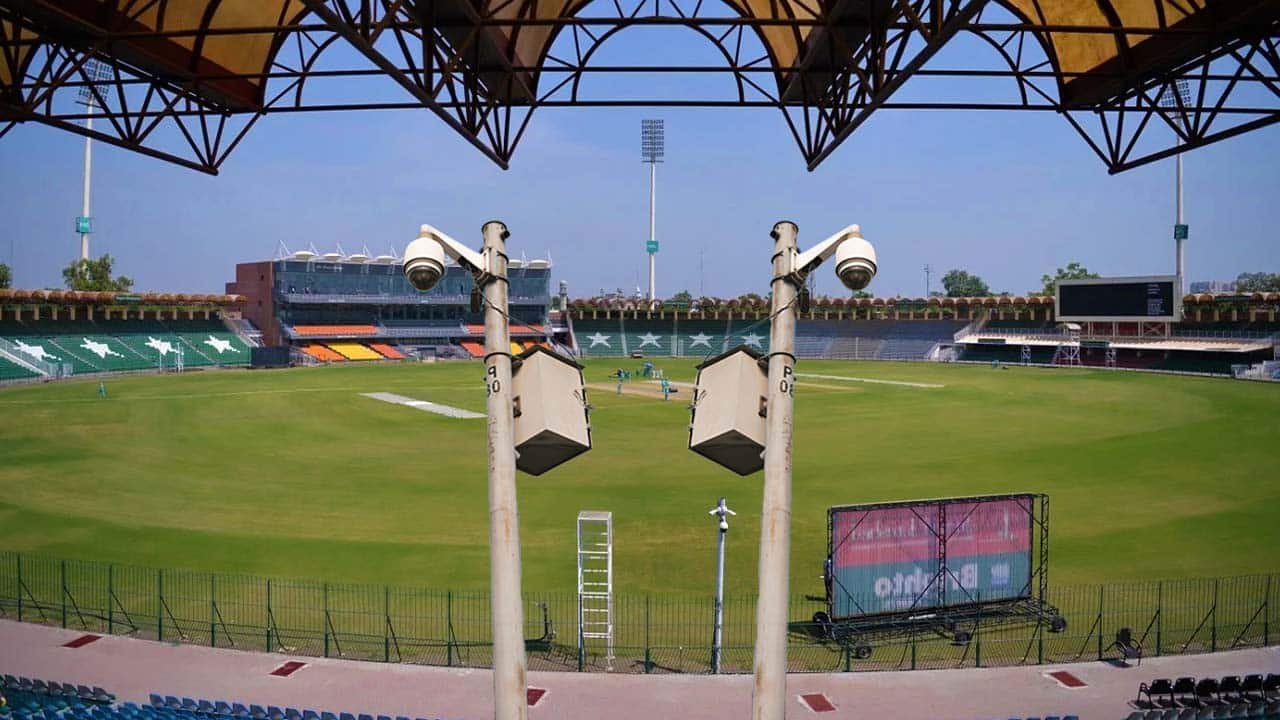
  • PSL 8: Eight CCTV cameras installed for security stolen from Lahore’s Gaddafi Stadium

    PSL 8: Eight CCTV cameras installed for security stolen from Lahore’s Gaddafi Stadium

    Several CCTV cameras, generator batteries, and fiber cables were stolen from Gaddafi Stadium in Lahore. The cameras, reportedly worth millions of rupees, were installed to monitor the Pakistan Super League (PSL 8) Lahore leg matches.

    The batteries of the generators that were installed for lighting in the stadium were also found missing. The theft has resulted in two cases being registered against the culprits at the Gulberg police station.

    It is important to mention that security measures for cricket matches held in Lahore have always been strict, particularly following the tragic terrorist attack on the Sri Lankan cricket team in 2009.

     The team was on their way from their hotel to the Gaddafi Stadium when the attack occurred, resulting in six players being wounded, along with six security personnel and two civilians losing their lives.

  • Pakistan’s forex reserves increase by 9%, cross $3 billion mark

    Pakistan’s forex reserves increase by 9%, cross $3 billion mark

    After declining for three weeks in a row and losing a cumulative $1,685 million during that period, the foreign exchange reserves held by the State Bank of Pakistan (SBP) have rebounded, according to a statement from the central bank.

    As of February 10, SBP’s foreign currency reserves totaled $3,192.9 million, which is up $276 million from the previous week. This increase represents a gain of over 9 per cent and has broken the streak of declining reserves.

    However, even with this increase, the amount is still only enough to cover one month of imports. Meanwhile, the net forex reserves held by commercial banks are $5,509.3 million, which is $2,316.4 billion more than SBP, bringing the total liquid foreign reserves of the country to $8,702.2 million. The statement did not provide a specific reason for the increase in SBP-held reserves.

    Pakistan’s economy is in dire straits due to a balance-of-payments crisis, political chaos, and deteriorating security. The government has banned all but essential food and medicine imports until it receives a crucial loan tranche from the International Monetary Fund (IMF), which could unlock other sources of funding for the country.

    Inflation has risen sharply, the rupee has declined, and the country is struggling to afford imports, which has caused a severe decline in its industry. Pakistan is no longer issuing letters of credit, except for essential food and medicine, since January, which has led to a backlog of raw material imports that the country can no longer afford.

    According to Geo, the rupee devaluation and the logjam have resulted in a significant decline in manufacturing, including textiles and steel, and building projects.

    While the IMF cash injection alone will not be enough to rescue Pakistan, the government hopes that it will boost confidence and pave the way for other friendly countries like Saudi Arabia, China, and the UAE to offer additional loans.