Tag: shanghai

  • The fallen kings of crypto

    The fallen kings of crypto

    Binance boss Changpeng Zhao has become the most powerful cryptocurrency figure to fall in a two-year period chaotic even by the standards of the notoriously volatile industry. 

    Zhao stepped down as CEO of Binance — the largest crypto exchange in the world — after he and the company pleaded guilty on Tuesday to sweeping US money laundering violations and agreed to fines of more than $4 billion.

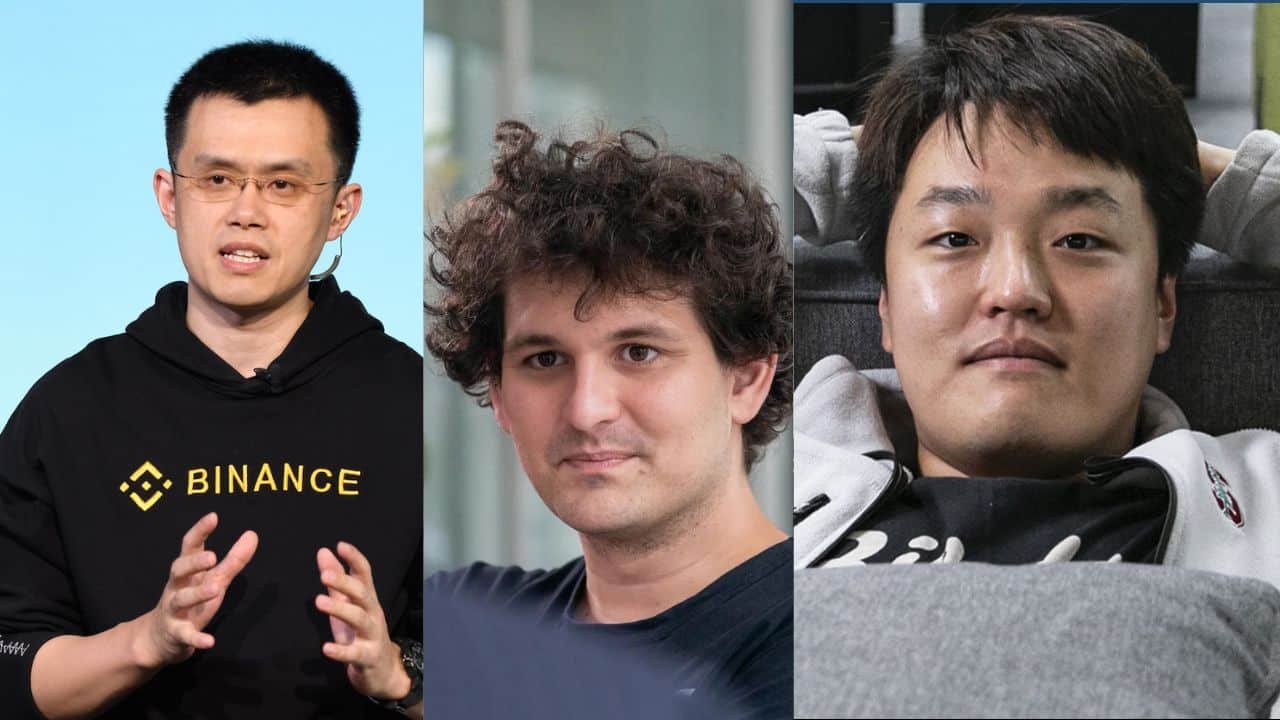
    Here are three of the highest-profile crypto executives who have fallen foul of the law since last year:

    Changpeng ‘CZ’ Zhao

    Born in China in 1977, Zhao moved with his family to Canada in the 1980s and later got a degree in computer science from McGill University, according to his profile in the Bloomberg Billionaires Index.

    Zhao Changpeng, chief executive officer of Binance, speaks during a Bloomberg Television interview in Tokyo, Japan, on Thursday, Jan. 11, 2018. The world’s biggest cryptocurrency exchange keeps getting bigger. Binance.com is adding “a couple of million” registered users every week, with 240,000 people signing up in just an hour on Wednesday, said Zhao. Photographer: Akio Kon/Bloomberg

    He founded Binance in 2017 in Shanghai, and led the company’s explosive growth into the world’s biggest cryptocurrency exchange.

    An outspoken celebrity in the crypto world with 8.7 million followers on X, Zhao became the richest known figure in the nascent industry. His net worth peaked at around $65 billion in 2022, according to a Forbes index.

    With the prestige and wealth came increased scrutiny of Binance’s operations, as prominent crypto firms around the world began to buckle under a wave of criminal investigations.

    The United States accused Zhao and Binance of multiple violations, including knowingly allowing transactions to militant groups such as the Islamic State and in barred jurisdictions such as North Korea and Iran.

    On Tuesday, they pleaded guilty. The firm has agreed to total penalties of nearly $4.4 billion, while he will pay $50 million, according to court documents.

    Zhao resigned as CEO of Binance and while he will reportedly retain his shares in the company, he has been banned from any involvement in its business. He is expected to face sentencing later.

    Forbes listed his net worth as $10.2 billion as of Wednesday.

    Sam Bankman-Fried

    If Zhao was the richest and most powerful person in crypto, Sam Bankman-Fried was easily the most famous.
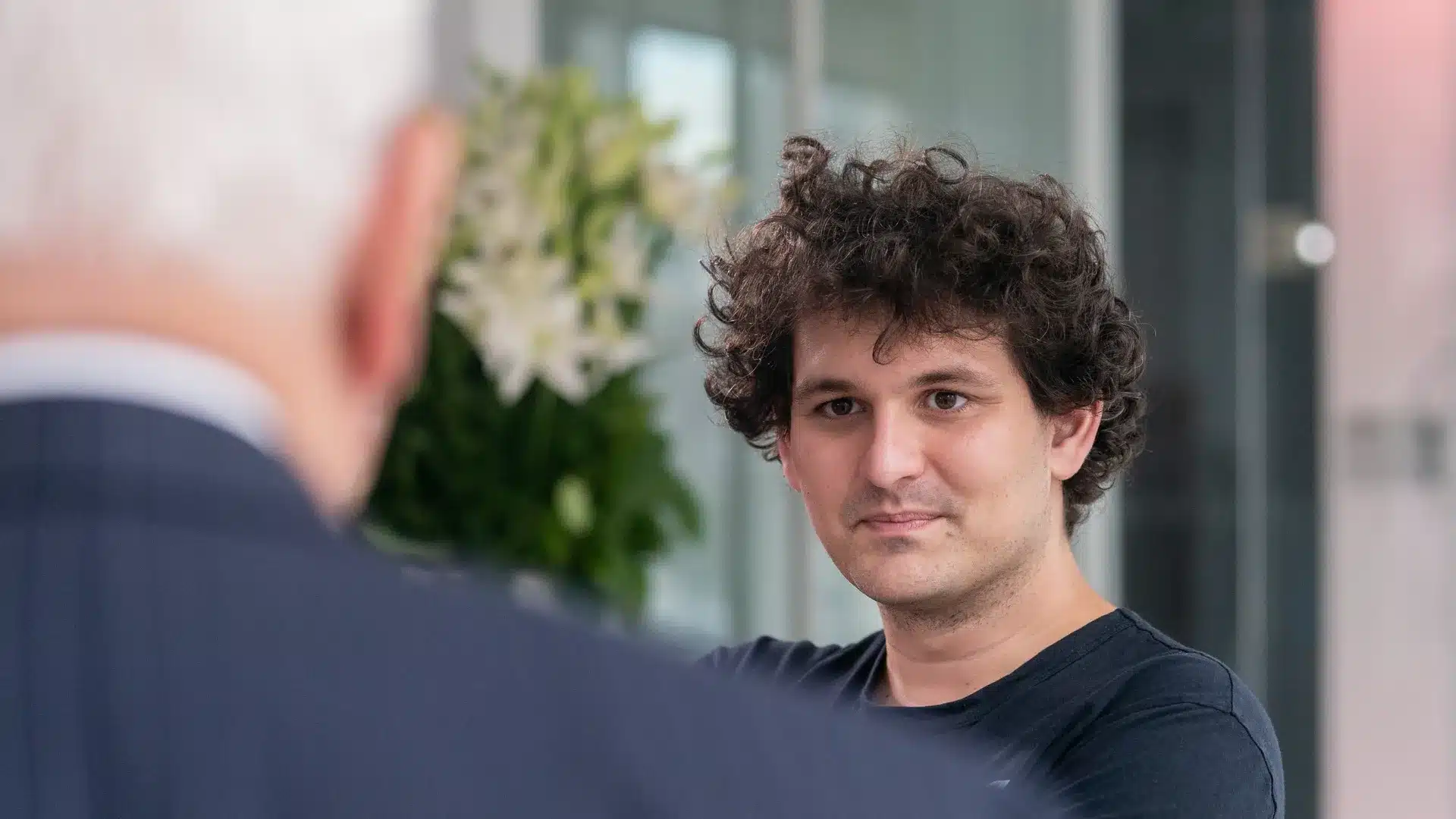
    Born to Stanford University professors, Bankman-Fried graduated from MIT with a degree in physics.

    In 2019, he founded FTX, which skyrocketed to become the world’s second-largest crypto exchange.

    Along the way, Bankman-Fried built up his image as the unofficial ambassador for the cryptocurrency industry, with high-profile appearances in the media and even the US Congress.

    At one point in 2022, he had a net worth of $24 billion, according to Forbes.

    But he had been walking a dangerous path — his team used customers’ money for everything from buying posh real estate to covering risky moves by affiliate Alameda Research.

    It all came crashing down when these moves were revealed in the media in November 2022. Within hours, rival CZ Zhao said Binance would sell all the FTX tokens it held.

    It sparked a stunning collapse of FTX and Bankman-Fried’s empire, his fame turning to notoriety.

    Arrested in the Bahamas in January, he was found guilty this month of what US prosecutors described as “one of the biggest financial frauds in American history”. He faces up to 110 years in prison.

    During his trial, the 31-year-old admitted to making “mistakes” but denied trying to defraud anyone.

    Do Kwon

    South Korean entrepreneur Do Kwon co-founded Terraform Labs in 2018, developing the cryptocurrencies TerraUSD and Luna.

    Do Kwon, co-founder and chief executive officer of Terraform Labs, poses in the company’s office in Seoul, South Korea, on Thursday, April 14, 2022. Kwon is counting on the oldest cryptocurrency as a backstop for his stablecoin, which some critics liken to a ginormous Ponzi scheme. Photographer: Woohae Cho/Bloomberg via Getty Images

    The Stanford grad successfully marketed them as the next big thing in crypto, attracting billions in investments and global hype.

    Media reports in South Korea described him as a “genius”.

    But in May last year, the value of these currencies — marketed as “stablecoins” — plummeted, wiping out around $40 billion in investments and sending a shock wave through the rest of the industry.

    It led to more than $500 billion in further losses on global crypto markets, industry data suggested.

    Experts said Do Kwon — whose full name is Kwon Do-kyung — had marketed a glorified Ponzi scheme.

    Brash and outspoken on social media, Do Kwon left South Korea before the collapse and spent months on the run.

    He was arrested in Montenegro this year after being caught trying to catch a flight using fake Costa Rican travel documents.

    He faces multiple criminal charges in the United States and South Korea.
  • Nio electric car falls from third floor of office, killing two

    Nio electric car falls from third floor of office, killing two

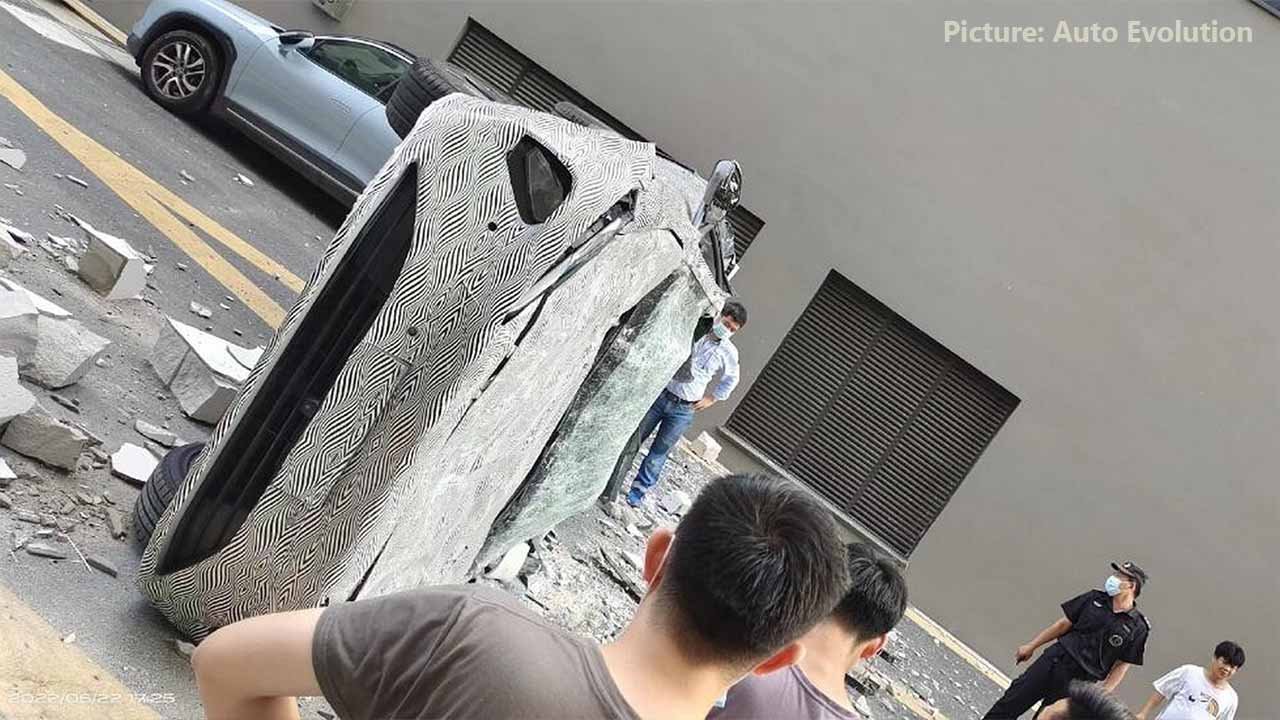
    Two employees were killed, according to Chinese electric vehicle (EV) manufacturer Nio, when one of its vehicles fell from the third floor of its Shanghai headquarters.

    One staff member and one worker from a joint venture were inside the car as it crash-landed from Nio’s Shanghai office.

    The incident happened on Wednesday at around 05:20 PM, according to the company. As the car fell from the building, those who were inside perished.

    According to Nio, it launched an investigation into the incident right away in collaboration with authorities.

    The third-floor space where the car fell has variously been referred to as a showroom, a testing facility, or a parking lot.

    “Our company has collaborated with public security department to launch the investigation and analysis of the cause of the accident. Based on the analysis of the situation at the scene, we can initially confirm that this was an accident (not caused by the vehicle),” the company said in a statement.

    “We feel very sad about this accident and would like to express our deepest condolences to our colleague and partner employee who lost their lives. A team has been set up to help the families,” it added.

    Within a half-hour, thousands of netizens commented on Nio’s initial Weibo post before it was removed. Social media users reacted angrily to the final clause of the statement, “not related to the vehicle itself.”

    The Chinese business to dominate the electric vehicle market is led by Nio. To allay customers’ worries about needing to charge their cars frequently, it has placed a lot of faith in interchangeable batteries in its vehicles.

    Nio is a rival to the US-based electric car manufacturer Tesla, owned by multi-billionaire Elon Musk, who also operates a manufacturing facility in Shanghai.

  • Beijing Covid spike prompts mass testing, panic buying

    Beijing Covid spike prompts mass testing, panic buying

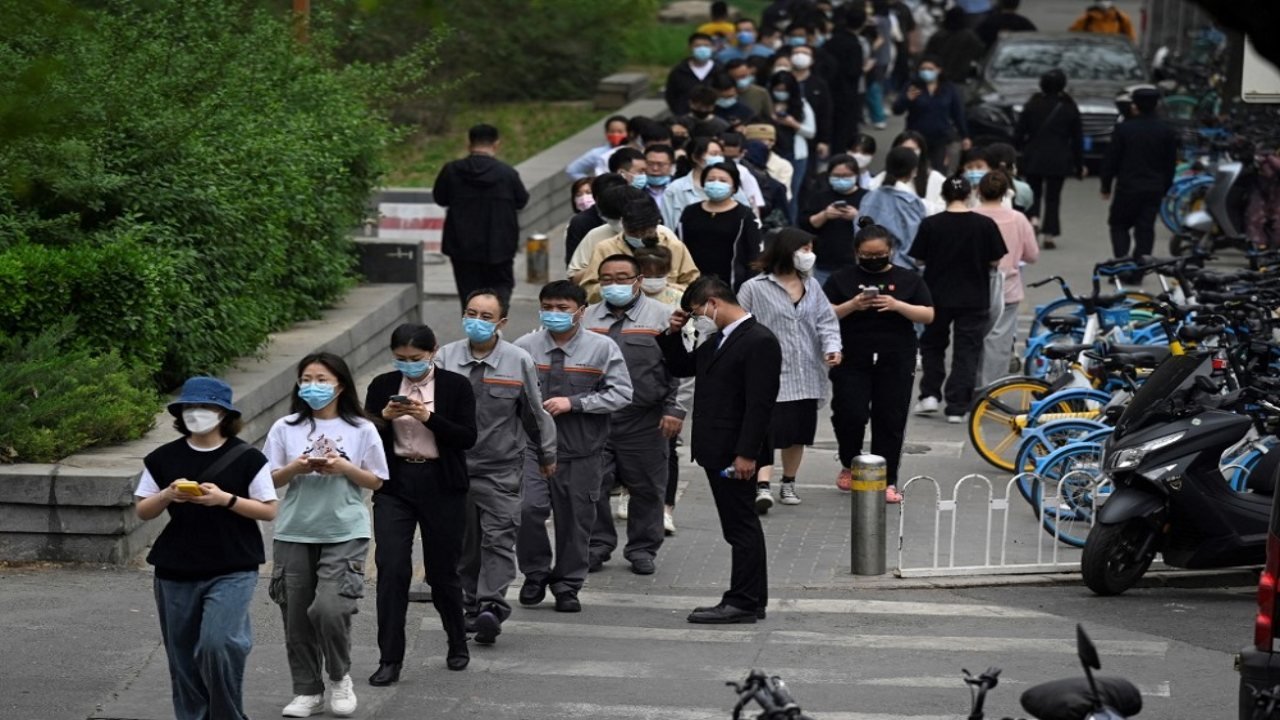
    Fears of a hard Covid lockdown sparked panic buying in Beijing as long queues formed on Monday in a large central district for mass testing ordered by the Chinese authorities, according to AFP.

    China was already trying to contain a wave of infections in its largest city Shanghai, which has been almost entirely locked down for weeks and reported 51 new Covid deaths on Monday.

    Downtown Beijing’s biggest district Chaoyang, home to around 3.5 million people, ordered mass testing from Monday for residents and those coming to work there — the area hosts the headquarters of many multinational firms and embassies.

    Many of the capital’s fitness studios and gyms have cancelled classes or closed. Beijing has also imposed tight controls on entry to the city, with travellers required to have a negative Covid test from within 48 hours.

    On the other hand, anger mounts among locked-down Shanghai residents as city reports more Covid deaths

    China’s major financial hub of Shanghai has reported more Covid-19-related deaths, as residents vented their anger over a harsh lockdown and strict censorship online.

    The city, battling China’s biggest coronavirus outbreak so far, reported 12 new Covid-19 deaths, up from 11 a day before.

    On social media, netizens battled against censors overnight to share a six-minute video entitled “The Voice of April”, a montage of voices recorded over the course of the Shanghai outbreak, Reuters reported.

    PAKISTAN REPORTS 105 COVID CASES

    Pakistan has reported 105 coronavirus cases during the last 24 hours, taking the total number of cases to 1,527,856.

    No new fatalities were reported during this period and the death toll remains 30,369. The positivity rate was recorded as 0.54 per cent while 186 patients are critical.

    Breakdown of deaths and cases: Punjab: 59 cases

    Sindh: 28 cases; Khyber Pakhtunkhwa: 11 cases; Islamabad: 5 cases

    Azad Jammu and Kashmir: 2 cases

    Similarly, Pakistan reports 52 Covid-19 recoveries

    Pakistan has reported 52 coronavirus recoveries during the last 24 hours, according to the government’s portal for tracking the spread of the disease in the country.

    The total number has risen to 1,494,050 and the recovery rate is 97.8 per cent.

    COOK ISLANDS RECORDS FIRST COVID-19 DEATH

    The tiny South Pacific nation of the Cook Islands has reported its first coronavirus-related death, more than two years after the pandemic erupted.

    A 63-year-old woman, who had underlying health conditions, died on her way to hospital on the island of Aitutaki late on Saturday.

    “It is with great sadness that I announce that we have just recorded our first in-country death attributed to Covid-19,” Prime Minister Mark Brown said in a statement Sunday. “She had had all three anti-Covid vaccinations, but also had several serious underlying health conditions.”

    ONLY 29PC HOSPITALISED COVID PATIENTS FULLY WELL ONE YEAR ON: UK STUDY

    Not even one in four people have completely recovered from Covid a full year after being hospitalised with the disease, a UK study indicated, warning that long Covid could become a common condition.

    The study involving more than 2,300 people also found that women were 33 per cent less likely to fully recover than men, AFP reports.

    It also found that obese people were half as likely to fully recover, while those who needed mechanical ventilation were 58pc less likely.

    The study looked at the health of people who were discharged from 39 British hospitals with Covid between March 2020 and April 2021, then assessed the recovery of 807 of them five months and one year later.

  • Largest virus outbreak: China relies on TCM to fight Covid-19

    Largest virus outbreak: China relies on TCM to fight Covid-19

    Shanghai is distributing to residents millions of boxes of traditional Chinese medicine (TCM), such as herbal products and flu capsules, which it says can treat Covid-19 in the battle to control its largest virus outbreak.

    China’s commercial capital, now under an extended lockdown, reported more than 17,000 new Covid-19 infections on April 5, including 311 symptomatic cases, among a population of more than 26 million.

    “Facing the extremely transmissible Omicron variant, we should use TCM treatment as soon as possible,” said Fang Min, president of the city’s Shuguang Hospital.

    “For general public, including high-risk groups, taking TCM treatment when the epidemic is severe has good preventive effect,” he told a news briefing on Tuesday, adding that such treatments for more than 21 million people had been handed out.

    Several residents told Reuters they had received free boxes of over-the-counter flu medicine Lianhua Qingwen from neighbourhood committees in recent weeks. Others who caught Covid said they got TCM medication to be dissolved in hot water.

    About 98% of Shanghai’s Covid-19 patients are taking TCM treatment, and teams of TCM workers have fanned out to designated hospitals and quarantine sites since the latest outbreak began in March, Fang said.

    China’s health authority has recommended several TCM drugs and ingredients, such as Lianhua Qingwen, for use by Covid-19 patients, although a lack of reliable clinical data limits their use outside the country.

    China approved several treatments including Pfizer’s Paxlovid and Brii Biosciences Ltd’s antibody-based medicine to treat Covid patients, but it is not clear how widely they are used.

    Reuters

  • China reports highest daily covid tally since pandemic starts

    China reported more than 20,000 Covid-19 cases on Wednesday, the highest daily tally given since the start of the pandemic, as millions in locked-down Shanghai began a new round of testing.

    The country’s “zero-Covid” strategy has come under immense strain as cases spike, with around 25 million residents of Shanghai — China’s largest city and economic engine room — ordered to stay-at-home as the authorities struggle to contain the outbreak.

    Until March, China had kept daily cases low with snap localised lockdowns, mass testing, and strict restrictions on international travel.

    But the caseload has hit thousands per day in recent weeks, with Shanghai driving the surge of the highly transmissible Omicron variant.

    The city locked down its residents in phases last week, prompting scenes of panic-buying and mass testing.

    But state broadcaster CCTV reported that the city will launch a fresh round of tests on the entire population on Wednesday.

    Shanghai is “testing its strength against the virus,” senior city health official Wu Qianyu said at a press conference Wednesday, the latest dour warning from authorities suggesting a long run in lockdown may be ahead.

    The city is converting its landmark National Exhibition and Convention Center into a makeshift Covid hospital for 40,000 people, state news agency Xinhua reported Wednesday, just days after setting up a temporary quarantine centre in another expo hall.

    – Extended lockdown –

    The China’s National Health Commission said in a statement it is the country’s highest-ever daily infection number given by authorities, even during the peak of the initial outbreak which centered around Wuhan.

    The majority of the cases are, however, asymptomatic.

    Authorities reported no new deaths, in a country which says only one person has died of the virus in nearly two years.

    In Shanghai quarantine facilities are bulging with people who test positive — even if they are asymptomatic — as city officials stick rigidly to virus protocols.

    Those include separating Covid-positive babies and children from parents who test negative, a policy that has stirred anxiety and anguish from worried families.

    City officials said on Wednesday that parents of some child patients with “special needs” would now be allowed to remain with their Covid-positive children.

  • Man in China attempts suicide, ashamed son still single at 29

    Man in China attempts suicide, ashamed son still single at 29

    A man in China allegedly attempted suicide because of his unmarried son, reports Geo News. According media reports, the incident took place at Shanghai Railway Station on January 22 when an unidentified 55-year-old man suddenly fainted after handing over a piece of paper to a security guard.

    “People my age have become grandparents in the village but you are still not married, because of you I am living a very embarrassing life,” the note read.

    As per media reports, the man tried to commit suicide with pesticides. He was rushed to a hospital, where he was given immediate medical attention. The man is now out of danger.

    He has claimed that he met his son in Shanghai before attempting suicide.