Tag: shaukat tarin

  • Budget 21-22: Minimum wage is 20,000 and other key announcements

    Budget 21-22: Minimum wage is 20,000 and other key announcements

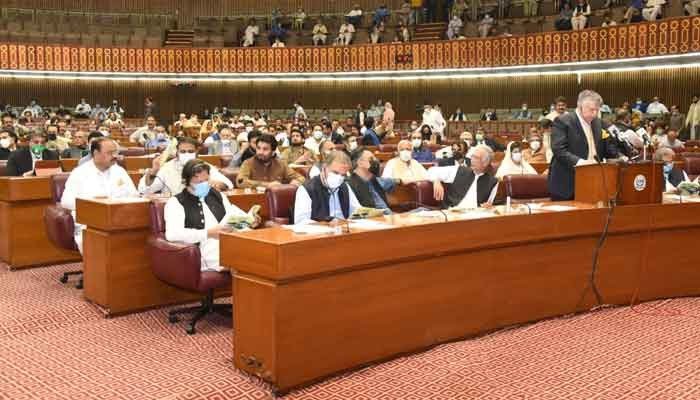
    Finance Minister Shaukat Tarin on Friday presented the Rs 8.48 trillion federal budget for fiscal year 2021-22 (FY22) in the National Assembly.

    Key announcements during the budget presentation

    Rs 900 billion allocated for federal Public Sector Development Program (PSDP) — 40 per cent increase from last year.

    Minimum wage has been increased to Rs 20,000.

    Rs 12 billion allocated for agriculture sector.

    Rs 118 billion for power distribution.

    Rs 61 billion for Viability Gap Fund.

    Rs 14 billion for Climate Change mitigation projects.

    $ 1.1 billion for vaccines procurement.

    Rs 100 billion for Covid-19 Emergency Fund.

    Rs 12 billion special grant for Sindh.

    For Fiscal Year (FY) 2022, the government had set Gross Domestic Product (GDP) growth target at 4.8 per cent.

    Large-scale manufacturing sector recorded growth after many years and posted 9 per cent growth during FY-21.

    During the fiscal year 2020-21, tax revenue increased and showed 18 per cent growth as tax receipts crossed Rs 4 trillion.

    Exports increased by a significant 14 per cent as a rebate, duty drawback helped the sector flourish.

    Special economic zones (SEZs) will be used to create jobs which will also ensure growth in exports.

    Highlighting PM Imran’s vision of planting trees, he said Rs 14 billion have been allocated for the government’s vision of “One Billion Tree Tsunami.”

    Non-tax revenues to rise by 22 per cent during FY-22, meanwhile federal expenditures to rise 15 per cent.

     The finance minister said no taxes to be applied on salaried class.

    The government decided to reduce sales tax on electric vehicles from 17 per cent to 1 per cent.

    Federal excise duty has been reduced from 17 per cent to 16 per cent, he said adding that the withholding tax (WHT) will be reduced by 40 per cent.

    The finance minister further added that the WHT on mobile phone services has been reduced from 12 per cent to 10 per cent.

    The government plans to further reduce taxes on mobile phone services to 8 per cent.

    If mobile phone call duration exceeds three minutes, one rupee per call in addition to the rates of duty will be charged.

    For SMS service, ten paisa per sms in addition to the rates of duty will be charged.

    Tax on Internet services not approved by the Cabinet. FED reduced to 16 per cent from 17 per cent . IT and IT-enabled services given zero duty regime status. Data storage and Cloud computing included in the definition of IT enabled services .

    Withholding tax on oil field services, warehousing services and collateral services have been reduced to 3 per cent from 8 per cent

    The Telecom sector will be given industrial status in the fiscal year 2021-22.

    The finance minister also announces a one-year customs duty exemption for electric vehicles.

     Pensioners will get 10 per cent rise. Integrated allowance for Grade 1-5 has been raised from Rs 450 to Rs 900.
  • Federal budget to be presented today

    Federal budget to be presented today

    All eyes will be on the National Assembly today (Friday) as the federal budget for the fiscal year 2021-22 will be presented in the lower house of parliament.

    According to Radio Pakistan, the federal cabinet will meet in Islamabad today to discuss and approve budget proposals. Prime Minister Imran Khan will preside over the meeting.

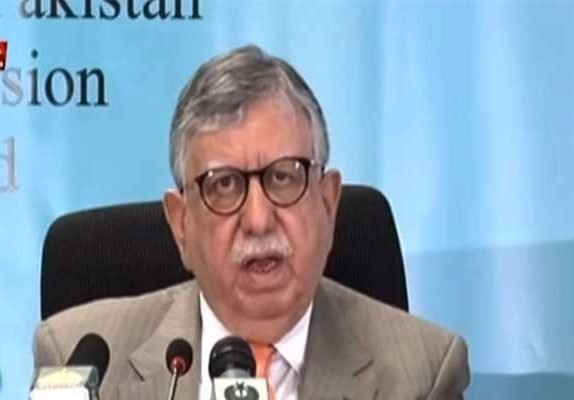
    Finance Minister Shaukat Tarin, who presented the Pakistan Economic Survey 2020-21 a day earlier, will unveil the Pakistan Tehreek-e-Insaf (PTI) government’s budget. The session will begin at 4:00pm.

    The upcoming budget for the new fiscal year is likely to be pro-growth with an overall focus on increasing expenditures.

  • Shaukat Tarin presents the Pakistan Economic Survey 2020-21

    Shaukat Tarin presents the Pakistan Economic Survey 2020-21

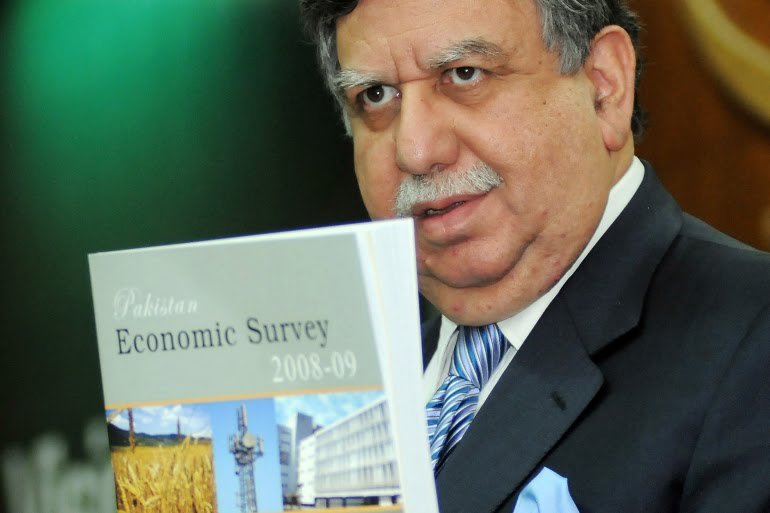
    Finance Minister Shaukat Tarin presented the Pakistan Economic Survey 2020-21 at a press conference in Islamabad on Thursday. However, the document did not have the latest figures on poverty and unemployment.

    Tarin revealed that the industrial and services sectors had helped the country post-Gross Domestic Product growth of 3.94 per cent in the first nine months of the fiscal year [FY](July to March), significantly higher than the target of 2.1 per cent.

    “The agriculture and manufacturing sectors helped the economy grow to 4.4%, laying stress on the need for sustainable growth in Pakistan in the years to come,” added Tarin.

    Coronavirus Pandemic

    The minister opened his press briefing by speaking highly of Prime Minister Imran Khan’s policies in combating the coronavirus pandemic.

    “The government itself had set [GDP] growth will be 2.1pc and the IMF predicted even lower. But the decisions by this government such as incentivising manufacturing and textiles, construction, and interventions in agriculture have helped the economy recover,” said Tarin.

    He said many people lost their jobs when the pandemic hit Pakistan, however, due to PM’s visionary policy of not imposing a complete lockdown across the country, millions of people who were unemployed were hired again. 

    “The economy is recovering,” he said. 

    Remittances

    Tarin said Pakistan’s remittances had broken records, adding that they had crossed $26bn. He said that lately imports, especially food in the form of wheat and sugar, were increasing as Pakistan’s economy was growing at the same time. 

    “We were net exporter of food but now, we have become a net importer,” he said. “Our exports registered a growth but our remittances increased manifold,” he added. 

    Ehsaas Programme

    Tarin spoke highly of the Ehsaas programme, adding that the World Bank had described it as “one of the best and the largest” poverty alleviation initiatives across the globe. 

    “Full credit goes to Sania Nishtar,” he said, adding that handing out cash to 15 million people was not a small achievement.

    Growth rate

    Tarin said he had told the prime minister it was time to focus on sustainable growth “until we go to 5-8pc GDP growth”.

    “We will do interventions and take care of the poor. The poor man has been crushed in this stabilisation phase because the dreams we have shown them have been of a trickledown economy. And this can only happen when growth is sustainable and continuous for 20-30 years,” he said.

    “Countries which had sustainable growth, they grew continuously for 20-30 years. What have we done? Every time we grow by borrowing money, which is credit-based growth.”

    Current Account

    According to the survey, during FY 2021, while the world was reeling from the economic impact of the pandemic, Pakistan’s “external sector appeared as a key buffer for resilience.”

     “The main driver of improvement in current account balance was the robust growth in remittances,” it stated.

    Trade Deficit

    “During July-March FY 2021, export of goods grew by 2.3 percent to $18.7 bn as compared to US$ 18.3 bn the same period last year. Import of goods grew by 9.4pc to $37.4 bn as compared to US$ 34.2 bn last year. Consequently, the trade deficit increased by 17.7per cent to $18.7bn as compared to $15.9bn last year,” the survey said.

    Inflation

    The finance minister said the government wanted to control inflation “but prices are still high and affecting the common man”.

    “So the way to solve this is by increasing production and that is why we have focused on agriculture in this budget,” Tarin said.

    Federal Board of Revenue (FBR)

    Speaking about the FBR, Tarin said he would end the practice of people being harassed by the bureau. “FBR will not audit [businesses or persons] but a third-party audit will be conducted,” he said. 

    International Monetary Fund (IMF)

    Tarin said Pakistan’s negotiations with the IMF were ongoing, adding that the international money lender had asked the government to hike tariffs and increase taxes. 

    The finance minister said Pakistan and the IMF want the same thing; sustainable growth, adding that the country cannot afford to increase taxes or hike tariffs so that the poor and the salaried class do not feel additional burden of inflation. 

    “This is a red line for the prime minister,” he said. “We will not further burden the poor,” he added. 

    Energy Sector

    Tarin said Pakistan’s economy was burdened due to the overcapacity in the power sector, saying that “it was a very big challenge and a black hole” for Pakistan. 

    Privitisation

     Tarin said it was fair to ask how he can privatise state-owned enterprises when all others, before him, promised to do the same but failed to. 

    “Nawaz Sharif used to shout the same slogan during the first time [when he was prime minister] and then for a second time [when he again became the prime minister] and then a third, but nothing happened,” he said. 

  • ‘Will not increase electricity tariffs, told IMF,’ says Tarin

    ‘Will not increase electricity tariffs, told IMF,’ says Tarin

    The Federal Minister for Finance Shaukat Tarin predicted that the economy of Pakistan would grow by six per cent as the incumbent government has dealt with COVID-19 in a better way.

    “Growth rate is projected at five percent this year and would move further upwards to six percent during the next fiscal year. The government has developed short and long-term plans to achieve the target,” Tarin said while addressing a virtual press conference.

    “The government of Pakistan is doing long-term planning not just to stabilise the economy but to push economic growth,” he added.

    The strategy is divided into short, medium, and long-term planning for almost 12 sectors, and the plan will be presented to Prime Minister (PM) Imran Khan for approval by the end of May. Shaukat Tarin made these strategies after taking over again as finance minister.

    In addition, Pakistan is going through food scarcity and has to import from outside. Tarin blamed the lack of agriculture industry behind food shortage.

    By paying attention and taking action against people who are profiting and hoarding food, these issues are addressable. “We will tackle this through the creation of strategic reserves and dump food wherever people try to profit,” Tarin said.

    On the financial sector, he said that we will bring more people into the tax net. Besides, people should be encouraged to deposit money into banks so it could be used productively, and the money can be spent on all provinces rather than “nine cities”.

    While responding to a question about power tariffs, he said the government would not increase tariffs to prevent further burden on the people, and the same would follow for taxes.

    He said the International Monetary Fund (IMF) had been told that money would instead be collected through other “innovative ways” and he had “full hope” that the IMF would give space.

    He also explained that Pakistan had fulfilled most of the Financial Action Task Force’s conditions with one or two “transactional items” left so he said the government was hopeful of a favourable response in the meeting in June.

  • ‘Govt to renegotiate programme with IMF’: Finance Minister

    ‘Govt to renegotiate programme with IMF’: Finance Minister

    The new Federal Minister for Finance and Revenue, Shaukat Tarin has said that the government of Pakistan is trying to renegotiate the terms of the International Monetary Fund (IMF) programme.

    Tarin said this during the National Assembly Finance and Revenue meeting on Monday. He said he is trying to convince IMF that price hikes in electricity tariffs will only create problems for the people, as the country is already deeply impacted by the COVID-19 pandemic.

    “We have assured IMF of reducing circular debt but the demand of increasing tariff is not understandable,” he said.

    Tarin further added that the terms and conditions can also be fulfilled if the government “curtails circular debt through other means instead of increasing the tariff.”

    “Financial and monetary wallets are open all over the world but the IMF’s sword is only hanging over us,” Tarin maintained.

    In addition, the State-Owned Enterprises (SOEs) cannot be managed by the government, and they must be privatised.

    “The 17 per cent General Sales Tax (GST) rate is very high, and a mechanism has been prepared for its reduction,” he said.

    On stabilising Pakistan’s economy, the finance minister said that the four to five per cent economic growth is enough for Pakistan, and the government will now focus on achieving the above-stated targets.

    He regretted that the government is spending 85 per cent revenue on only nine cities and rarely invests in education and health.

    Unless the country moved to higher economic growth, nothing would improve, and if we continue with stabilisation that has been in place for over two years, neither revenue collection would go up, nor job opportunities would be available to people, he explained.

    He said the government would increase the Public Sector Development Programme (PSDP) in the next budget and provide equal growth opportunities to all provinces.

    As the country lacks proper planning, Tarin said that he had selected 10 to 12 sectors on which economic experts had already started working so that they could come up with long-term planning for areas such as price stability, agriculture, industry, revenue, housing, social protection, national services, debt management and privatisation of loss-making state-run entities.

    The committee chairman assured the finance minister of all cooperation by committee members.

  • Cabinet reshuffle, again

    Cabinet reshuffle, again

    The Pakistan Tehreek-e-Insaf (PTI) government has had another cabinet reshuffle this past week. The news of another reshuffle was doing the rounds for some weeks and finally it was announced on Friday, April 16. Except for one new but expected addition, all other portfolios have been given to already serving cabinet ministers. Only their portfolios have been changed.

    Hammad Azhar, who had just been appointed the finance minister less than three weeks ago after the ouster of Hafeez Shaikh, has now been removed and given the portfolio of energy. Shaukat Tarin, who served as the finance minister in the Pakistan People’s Party (PPP) regime, has been appointed as minister for finance. He has been given the additional charge of revenue as well. Tarin is the fourth finance minister under the current regime and the second ex-PPP finance minister after Shaikh. Asad Umar was originally appointed the finance minister by PTI before being removed unceremoniously after a few months into his tenure whereas Hammad Azhar’s stint as finance minister was the shortest of all in this government. Tarin will be finance minister for at least six months and then the government will have to get him elected for him to remain in the ministerial position. Tarin has been extremely critical of PTI’s economic management. We will have to wait and see how he turns around the economy.

    Omar Ayub has been made the minister for economic affairs; he was previously energy minister. Khusro Bakhtiar, who held Ayub’s portfolio has now been given the portfolio of industries and production – a portfolio held earlier by Hammad Azhar, who now has Ayub’s portfolio. If this does not make your head hurt, do not fret for we now have Fawad Chaudhry back as the Information Minister while his ministry – Science & Technology – has been given to former information minister Shibli Faraz. Musical chairs, much?

    Fawad Chaudhry was an asset as the information minister when the PTI government came to power but he was replaced by Dr Firdous Ashiq Awan. Shibli Faraz later replaced Firdous. Chaudhry is the fourth – yet the original – information minister. When Chaudhry took on the science ministry, he brought his ministry to the limelight by starting many new projects. One of Chaudhry’s feats was his tussle on moonsighting for Ramzan and Eid with Mufti Muneeb. Chaudhry won in the end through his use of technology. Unfortunately, the new science minister Shibli Faraz thinks that moonsighting and the use of technology for this should not be the science ministry’s concern. We hope that Faraz will not rollback all the good work done by Chaudhry.

    We also hope that we will not need a new finance minister or a new information minister anytime soon.

  • PTI govt’s fourth finance minister in two years here for only six months?

    PTI govt’s fourth finance minister in two years here for only six months?

    As the government has decided to appoint Shaukat Fayyaz Ahmed Tarin as the new minister of finance and revenue, it needs to get him elected as the member of parliament within six months to have him continue in office, reports said.

    This is the same as witnessed in Hafeez Shaikh’s case earlier.

    In yet another shuffle in the federal cabinet, Prime Minister Imran Khan on Friday removed Hammad Azhar from the Finance Ministry less than a month after his appointment and replaced him with Tarin.

    Prime Minister Imran, instead of appointing Tarin as his adviser on finance, appointed the banking wizard as the finance minister, for which, as per law, he needs to be a member of parliament within six months.

    While most ministers have to be elected representatives – i.e. members of the National Assembly (NA) or Senate – there is a clause in the Constitution that allows short-term appointments of non-elected ministers.

    According to clause nine of Article 91 of the Constitution, a non-elected person can be appointed a federal minister for six months once during the five-year tenure of the NA.

    “A minister, who, for any period of six consecutive months, is not a member of the National Assembly, shall, at the expiration of that period, cease to be a minister and shall not before the dissolution of that assembly be again appointed a minister unless he is elected a member of that assembly,” reads the clause.

    It is worth mentioning here that Tarin had become a senator and the federal finance minister in former president Asif Ali Zardari’s government.

    According to an official at the Finance Ministry, Tarin, who was the finance minister during the Pakistan People’s Party (PPP) tenure, would help the government in resolving many issues. As he had completed the 7th National Finance Commission (NFC), he may play an important role in resolving the longstanding issues related to the next NFC. No NFC award was given after the 7th NFC as differences between the Centre and provinces remained unresolved.

    As Tarin had also signed the International Monetary Fund (IMF) programme during the PPP government, he may also handle matters with the IMF to complete the existing loan programme signed by the Pakistan Tehreek-e-Insaf (PTI) government. Islamabad had signed the 39-month bailout programme with the IMF to avert sovereign default because of a balance-of-payment crisis.

    As the finance minister under the PPP government, Tarin had signed the bailout programme with the IMF under that government and concluded the seventh NFC Award. However, he left the ministry without completing his tenure to start his own bank, Silk Bank, where he served on the top slot.

    These changes come at a time when Pakistan has just received another $500 million from the IMF as part of the $6 billion bailout package it signed in July 2019.
    The third and latest tranche of the program brings the total borrowing for budget support to $2 billion.

    Tarin was already a member of the prime minister’s Economic Advisory Council. He is a banker by profession and worked as the president of HBL in 1997. In 2000, he built Union Bank, which was later sold to Standard Chartered Bank.

    Earlier this month, it was reported that the government had made an offer to Tarin to join the federal cabinet as special assistant or adviser to the PM, but he linked his joining the federal cabinet with the decision on an accountability reference that he has been facing for nearly a decade.

    He had that said he would not accept the offer, which he claimed had been made for a second time, unless a case against him filed by the National Accountability Bureau (NAB) was disposed of.