Tag: Sheikh Hasina

  • Time to leave: Hasina’s son convinced her to flee the country

    Time to leave: Hasina’s son convinced her to flee the country

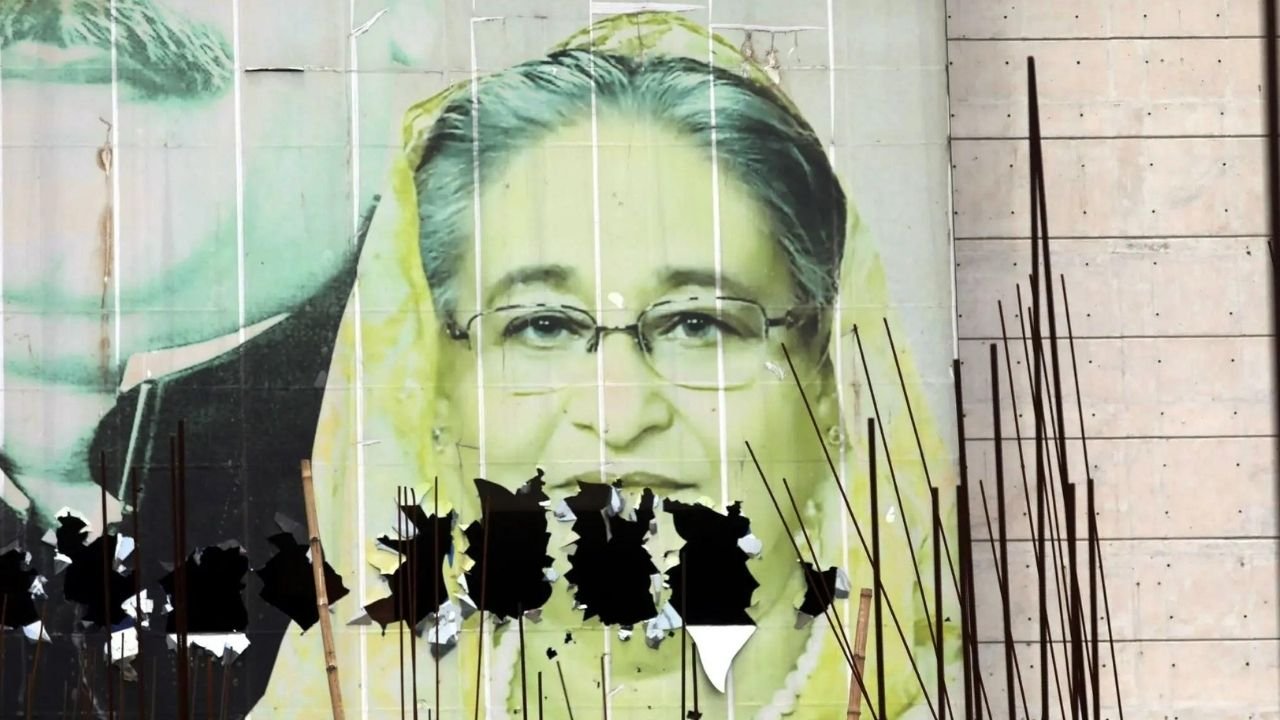
    On August 5 2024, Bangladeshi Prime Minister Sheikh Hasina fled to India as the demonstrations grew bigger and bolder.

    Ruling since 2009, her resignation was deemed as a major victory by the people of Bangladesh who, moments after she left, had barged into her palace.

    And while the protests were happening for over a month, with over 300 killed while thousands injured and arrested, what really prompted Sheikh Hasina to escape?

    The New York Times reports that until the final hours, Hasina firmly believed she could withstand the crowd gathering around her. Three sources familiar with the internal conversations disclosed that she ignored the suggestions of her security advisors, who had warned that their efforts to suppress anti-government protests had already been unsuccessful and that any additional action would lead to more violence and bloodshed.

    Her top security advisors then resorted to her family in order to dispel Sheikh Hasina’s rigidity and make her realise that, “it was the end”.

    The heads of army, police, air force, and navy came to her residence where she met with them alongside her sister, Sheikh Rehana, who had come from London just days earlier for a visit.

    Her sister spoke to Hasina in private for about 20 minutes after which she was “quiet, but still reluctant”.

    Army chief Gen. Waker-uz-Zaman, who is also a relative of Sheikh Hasina, then contacted her son, Sajeeb Wazed, living in Virginia, US, to urge him to persuade his mother to recognize the seriousness of the situation.

    “She wanted to stay, she did not want to leave the country at all,” Mr. Wazed later told Indian news channels. “We were concerned for her physical safety first. So we persuaded her to leave.”

    By then, the security personnel had estimated that Sheikh Hasina had less than an hour to leave.

    “At very short notice, she requested approval to come for the moment to India,” India’s foreign minister, S. Jaishankar told the Indian Parliament.

  • Bangladesh’s Hasina wins re-election after polls without opposition

    Bangladesh’s Hasina wins re-election after polls without opposition

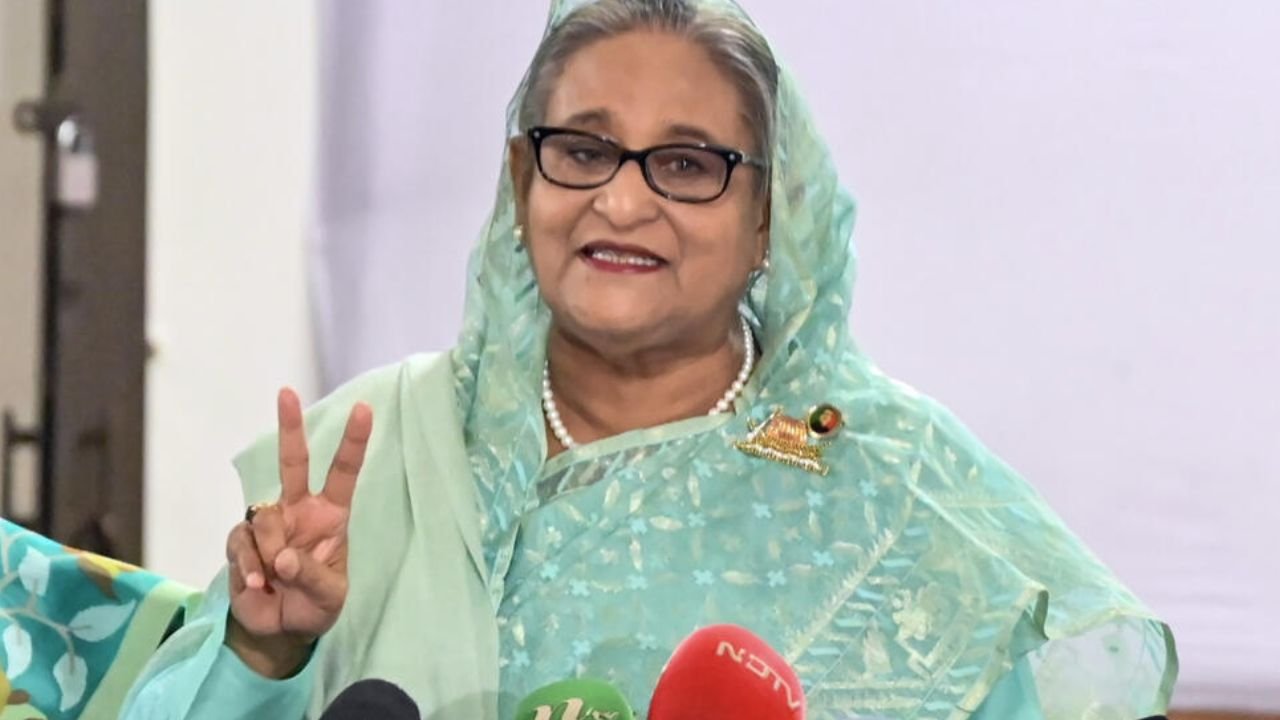
    Bangladesh’s Prime Minister Sheikh Hasina won re-election for a fifth term Sunday, officials said, following a boycott led by an opposition party she branded a “terrorist organisation”.

    Hasina’s ruling Awami League “has won the election”, an Election Commission spokesman told AFP in the early hours of Monday morning, after a vote that initial reports suggested had a meagre turnout of some 40 percent.

    She has presided over breakneck economic growth in a country once beset by grinding poverty, but her government has been accused of rampant human rights abuses and a ruthless opposition crackdown.

    Her party faced almost no effective rivals in the seats it contested, but it avoided fielding candidates in a few constituencies, in an apparent effort to avoid the legislature being branded a one-party institution.

    The opposition Bangladesh Nationalist Party (BNP), whose ranks have been decimated by mass arrests, called a general strike and, along with dozens of others, refused to participate in a “sham election”.

    While the final result and exact figures will be formally announced at a ceremony later on Monday, election commission officials said Hasina’s party had won around three-quarters of seats, at least 220 of the total 300.

    But support of other lawmakers including from allied parties could push Hasina’s control over parliament even higher.

    ‘Disgrace’

    Hasina, 76, had called for citizens to show faith in the democratic process.

    “The BNP is a terrorist organisation,” she told reporters after casting her vote. “I am trying my best to ensure that democracy should continue in this country.” 

    First-time voter Amit Bose, 21, said he had cast his ballot for his “favourite candidate”, but others said they had not bothered because the outcome was assured.

    “When one party is participating and another is not, why would I go to vote?” said rickshaw-puller Mohammad Saidur, 31.

    BNP head Tarique Rahman, speaking from Britain where he lives in exile, told AFP he feared “fake votes” would be used to boost voter turnout.

    “What unfolded was not an election, but rather a disgrace to the democratic aspirations of Bangladesh,” he wrote on social media, alleging he had seen “disturbing pictures and videos” backing his claims.

    Among the victors was Shakib Al Hasan, the Bangladesh cricket team captain, who won his seat for Hasina’s party in a landslide, local officials said.

    Fear of ‘further crackdown’

    The BNP and other parties staged months of protests last year, demanding Hasina step down ahead of the vote. Officers in the port city of Chittagong broke up an opposition protest Sunday, firing shotguns and tear gas canisters.

    But election officials said voting was largely peaceful, with nearly 800,000 police officers and soldiers deployed countrywide.

    Meenakshi Ganguly, from Human Rights Watch, said Sunday that the government had failed to reassure opposition supporters that the polls would be fair, warning that “many fear a further crackdown”.

    Politics in the country of 170 million people was long dominated by the rivalry between Hasina, the daughter of the country’s founding leader, and two-time premier Khaleda Zia, wife of a former military ruler.

    Hasina has been the decisive victor since returning to power in a 2009 landslide, with two subsequent polls accompanied by widespread irregularities and accusations of rigging.

    Zia, 78, was convicted of graft in 2018 and is now in ailing health at a hospital in Dhaka. BNP head Rahman is her son.

    ‘Dangerous combination’

    Hasina has accused the BNP of arson and sabotage during last year’s protest campaign, which was mostly peaceful but saw several people killed in police confrontations.

    The government’s security forces have been dogged by allegations of extrajudicial killings and enforced disappearances — charges it rejects.

    Economic headwinds have left many dissatisfied with Hasina’s government, after sharp spikes in food costs and months of chronic blackouts in 2022.

    Pierre Prakash of the International Crisis Group said before the vote that Hasina’s government was clearly “less popular than it was a few years ago, yet Bangladeshis have little real outlet at the ballot box.”

    “That is a potentially dangerous combination.”
  • Nobel winner Yunus convicted in Bangladesh labour law case

    Nobel winner Yunus convicted in Bangladesh labour law case

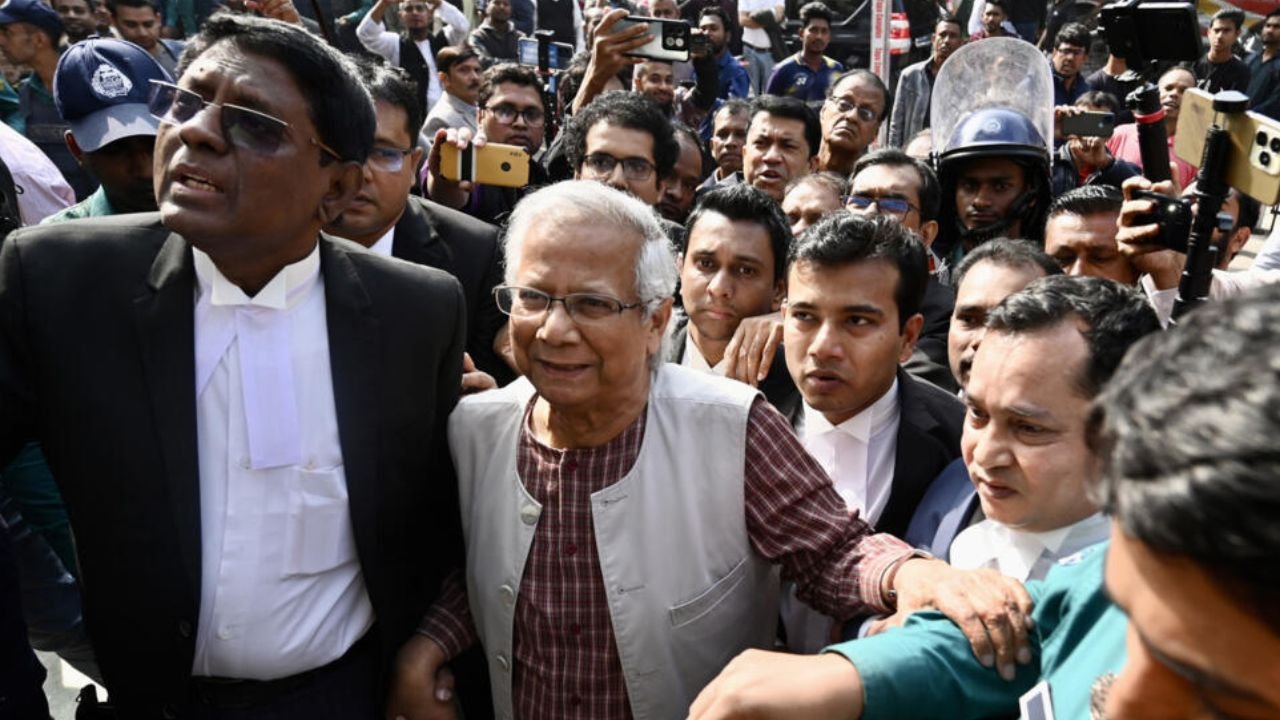
    Dhaka (AFP) – Nobel peace laureate Muhammad Yunus was convicted on Monday of violating Bangladesh’s labour laws in a case decried by his supporters as politically motivated.

    Yunus, 83, is credited with lifting millions out of poverty with his pioneering microfinance bank but has earned the enmity of longtime Prime Minister Sheikh Hasina, who has accused him of “sucking blood” from the poor.

    Hasina has made several scathing verbal attacks against the internationally respected 2006 Nobel Peace Prize winner, who was once seen as a political rival.

    Yunus and three colleagues from Grameen Telecom, one of the firms he founded, were accused of violating labour laws when they failed to create a workers’ welfare fund in the company.

    A labour court in the capital Dhaka convicted and sentenced them to “six months’ simple imprisonment”, lead prosecutor Khurshid Alam Khan told AFP, adding that all four were immediately granted bail pending appeals.

    All four deny the charges. Dozens of people staged a small demonstration of support outside the court for Yunus, who left without speaking to media.

    “This verdict is unprecedented,” Abdullah Al Mamun, a lawyer for Yunus, told AFP. “We did not get justice.”

    Yunus is facing more than 100 other charges over labour law violations and alleged graft.

    He told reporters after one of the hearings last month that he had not profited from any of the more than 50 social business firms he had set up in Bangladesh.

    “They were not for my personal benefit,” Yunus said.

    Another of his lawyers, Khaja Tanvir, told AFP that the case was “meritless, false and ill-motivated”.

    “The sole aim of the case is to harass and humiliate him in front of the world,” he said.

    ‘Travesty of justice’

    Irene Khan, a former Amnesty chief now working as a UN special rapporteur who was present at Monday’s verdict, told AFP the conviction was “a travesty of justice”.

    “A social activist and Nobel laureate who brought honour and pride to the country is being persecuted on frivolous grounds,” she said.

    In August, 160 global figures, including former US president Barack Obama and ex-UN secretary-general Ban Ki-moon, published a joint letter denouncing “continuous judicial harassment” of Yunus.

    The signatories, including more than 100 of his fellow Nobel laureates, said they feared for “his safety and freedom”.

    Critics accuse Bangladeshi courts of rubber-stamping decisions made by Hasina’s government, which is all but certain to win another term in power next week at elections boycotted by the opposition.

    Her administration has been increasingly firm in its crackdown on political dissent, and Yunus’s popularity among the Bangladeshi public has for years earmarked him as a potential rival.

    Amnesty International accused the government of “weaponizing labour laws” when Yunus went to trial in September and called for an immediate end to his “harassment”.

    Criminal proceedings against Yunus were “a form of political retaliation for his work and dissent”, it said.

  • Bangladesh PM Sheikh Hasina likely to visit Pakistan for the first time

    Bangladesh PM Sheikh Hasina likely to visit Pakistan for the first time

    Prime Minister (PM) of Bangladesh Sheikh Hasina had written to PM Imran Khan to accept Khan’s invitation to visit Pakistan, which was extended last July, reported Dawn on Monday.

    Hasina also invited Khan to visit Bangladesh. According to the media outlet, no dates have been set yet for the Bangladeshi PM’s trip to Pakistan.

    The Pakistani side has proposed to Bangladesh to prepare a road map for the PM’s historical trip.

    Sheikh Hasina met with Pakistan’s High Commissioner to Bangladesh Imran Ahmed Siddiqui in the capital Dhaka where she reiterated her government’s desire for stronger trade ties and economic collaboration with Pakistan.

    The Foreign Office of Pakistan said that the high commissioner conveyed Khan’s message of goodwill and friendship to Hasina and the people of Bangladesh and presented her a photo album of late PM Sheikh Mujibur Rahman’s [PM Hasina’s father] visit to Pakistan to attend the Organisation of Islamic Cooperation (OIC) in 1974.

  • Mango diplomacy: Bangladesh PM sends mangoes to PM Khan

    Mango diplomacy: Bangladesh PM sends mangoes to PM Khan

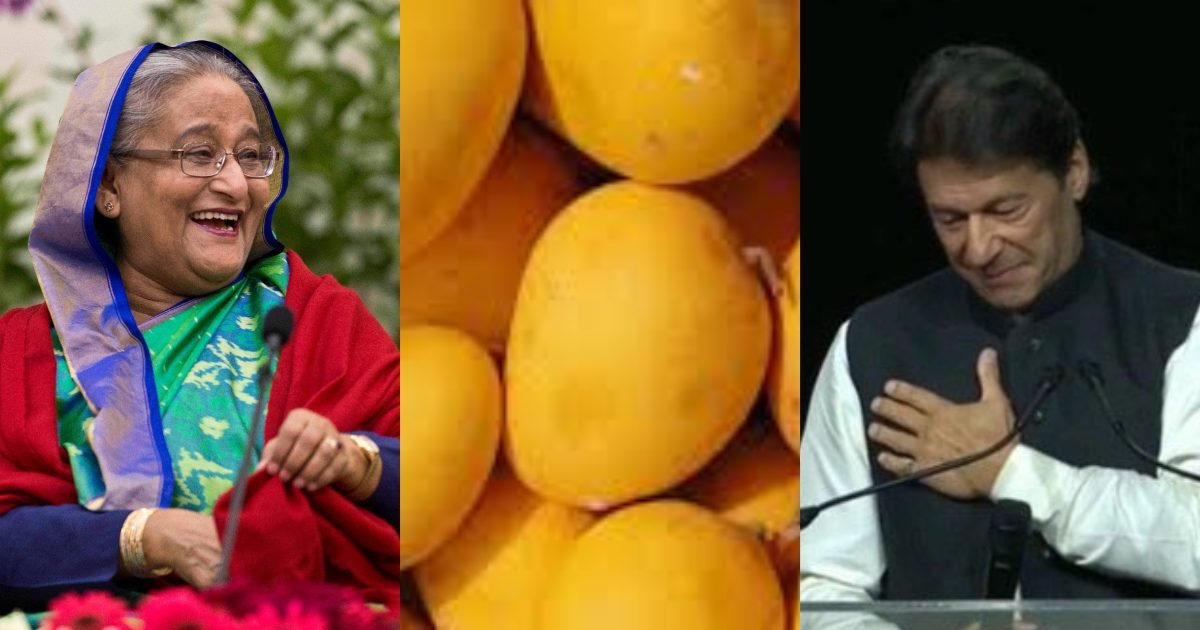
    Bangladesh Prime Minister Sheikh Hasina sent special Bangladeshi mangoes to Prime Minister Imran Khan on Eid.

    The mangoes were handed over to the Pakistan Prime Minister’s Protocol at the Prime Minister’s Office on Eid-ul-Azha.

    Prime Minister Sheikh Hasina sent Bangladeshi premier quality ‘Haribhaga’ mangoes as a goodwill gesture to her Pakistan counterpart.

    The mangoes were received by PM Khan with much appreciation, according to a press statement issued by the Bangladesh High Commission in Islamabad.