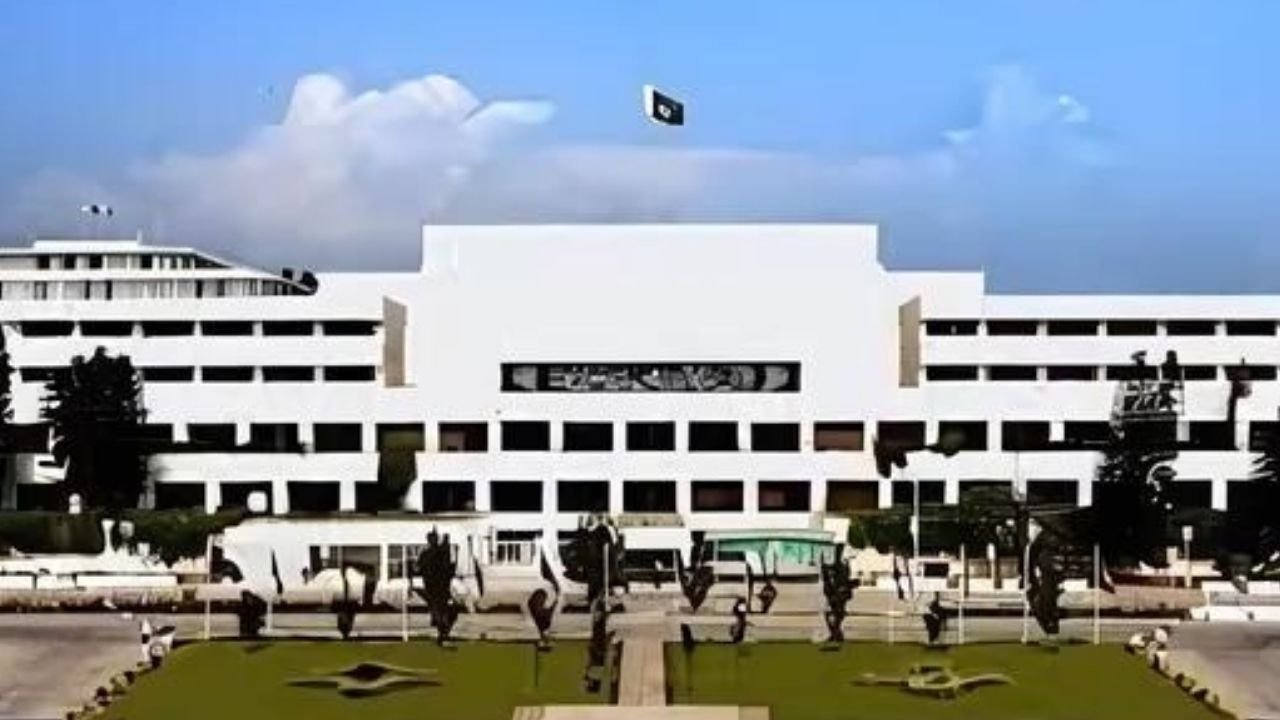
The National Assembly Secretariat has issued a new list of party positions in the National Assembly (NA) and declared all Pakistan Tehreek-e-Insaf (PTI) lawmakers as Sunni Ittehad Council (SIC) members.
According to the new list, seats in the coalition government of political parties is two hundred thirteen as Pakistan Muslim League Nawaz (PML-N), hold one hundred ten seats; Pakistan Peoples Party (PPP) has sixty-nine seats, and Muttahida Qaumi Movement Pakistan (MQM-P) has twenty-two seats.
Meanwhile, on the opposition benches, SIC has eighty seats, Jamiat Ulema-e-Islam Fazl (JUI-F) has eight seats, and PTI independent supporters have eight members.
Secretariat officials did not mention twenty-three reserved seats and declared them disputed.
Earlier, Speaker Ayaz Sadiq had penned a letter to the Election Commission of Pakistan (ECP) on September 19 stating that after the Elections Act Amendments, 2024, has been passed by the parliament, the Supreme Court’s reserved seats verdict of July 12 can no longer be implemented
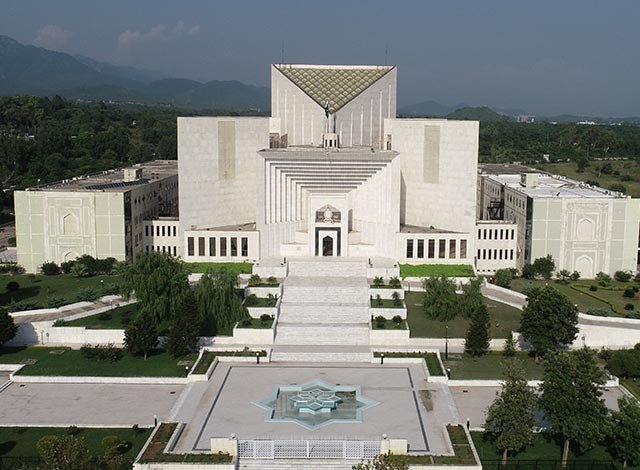
A full court bench of the Supreme Court (SC) will hear the petition of Pakistan Tehreek-e-Insaf (PTI)-backed Sunni Ittehad Council (SIC) today challenging the Peshawar High Court’s (PHC) decision that denied it reserved seats for women and minorities.
As per the report of senior court reporter Hasnaat Malik, the apex court will also decide about the live streaming of today’s hearing in the reserved seats case.
Chief Justice of Pakistan (CJP) Qazi Faez Isa will lead the 13-member full court bench; however, Justice Musarrat Hilali will not be the part of bench after falling ill.
On May 6, the apex court suspended the Election Commission of Pakistan’s (ECP) decision to allocate SIC’s reserved seats to other parties.
The National Assembly (NA) session on Thursday, chaired by speaker NA Sardar Ayaz Sadiq, ended with heated arguments and important parliamentary decisions.
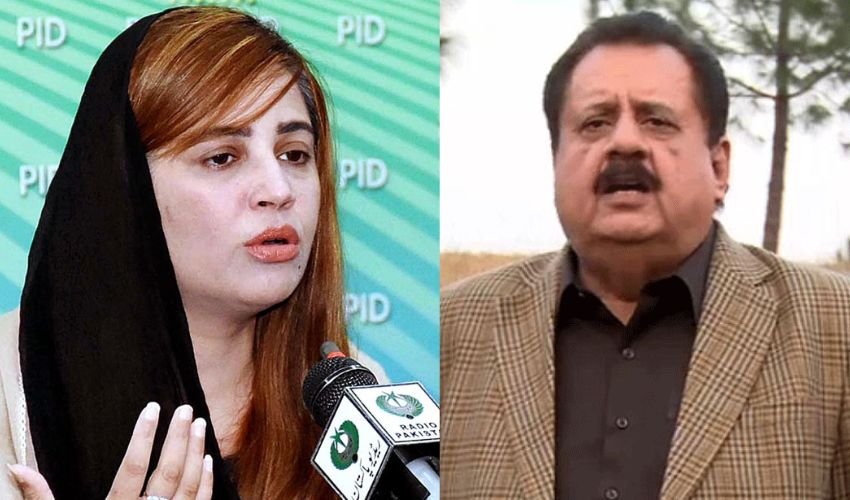
Sardar Ayaz Sadiq, suspended Pakistan Muslim League-Quaid-e-Azam (PML-Q) leader Tariq Bashir Cheema for today’s parliamentary session after a heated argument took place between him and Pakistan Tehreek-e-Insaf (PTI) leader Zartaj Gul.
The decision to suspend Cheema was taken to keep decorum and maintain parliamentary standards.
However, the House accepted the question raised by the NA speaker in this regard.
Earlier, the PTI-backed Sunni Ittehad Council (SIC) claimed that Tariq Bahir Cheema used abusive words against Zartaj Gul during the parliamentary session.
Ayaz Sadiq also banned YouTubers, TikTokers, and media personnel from making videos in the corridors of the parliament to keep the environment peaceful.
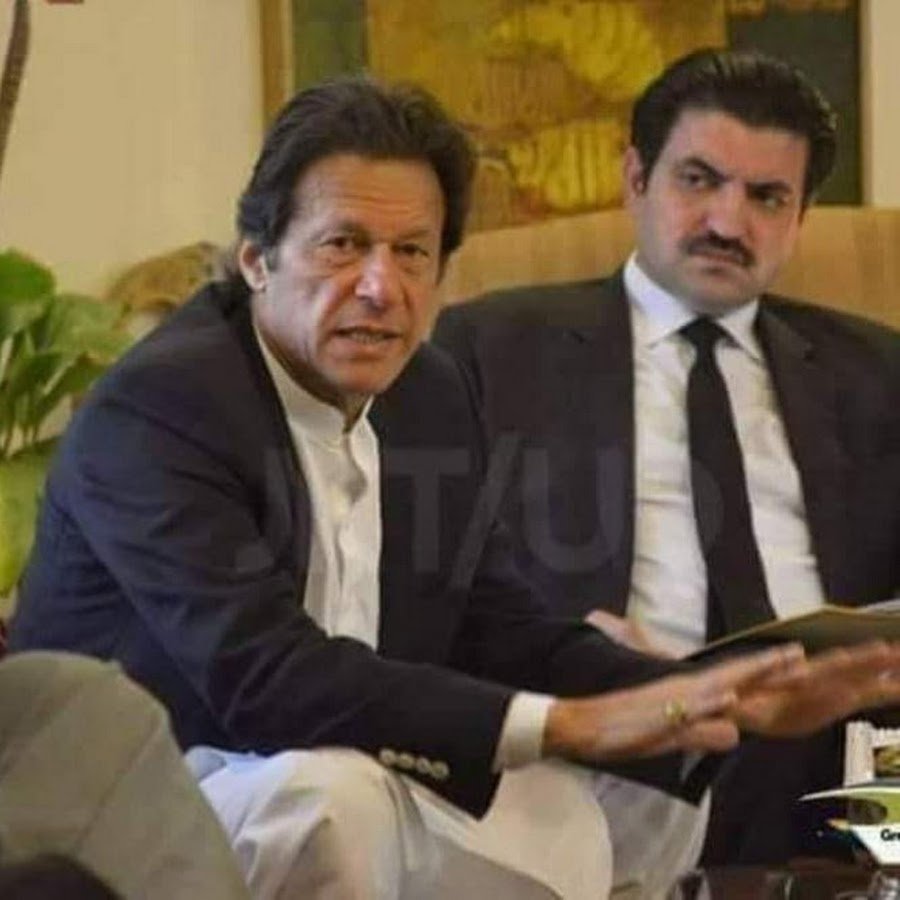
Pakistan Tehreek-e-Insaf (PTI) founder Imran Khan has removed maverick leader Sher Afzal Marwat from main party roles, ARY News reported on Tuesday.
An internal party source claimed that removing Marwat from key party roles was the decision of the party’s core committee.
Marwat’s name is not on the list of individuals who can meet Imran Khan in Adiala jail anymore. The new focal persons are Umar Ayub, Barrister Ali Zafar, Shibli Faraz, and Barrister Gohar Ali Khan.
Adiala jail authorities are also aware of the development.
After Eid-ul-Fitr, PTI and other opposition parties are going to form an alliance to start an anti-government movement in the country.
Sunni Ittehad Council (SIC), Pakhtunkhwa Milli Awami Party (PkMAP), Majlis-e-Wadhat-e-Muslimeen (MWM), and Balochistan National Party (BNP) will also be part of the opposition alliance.
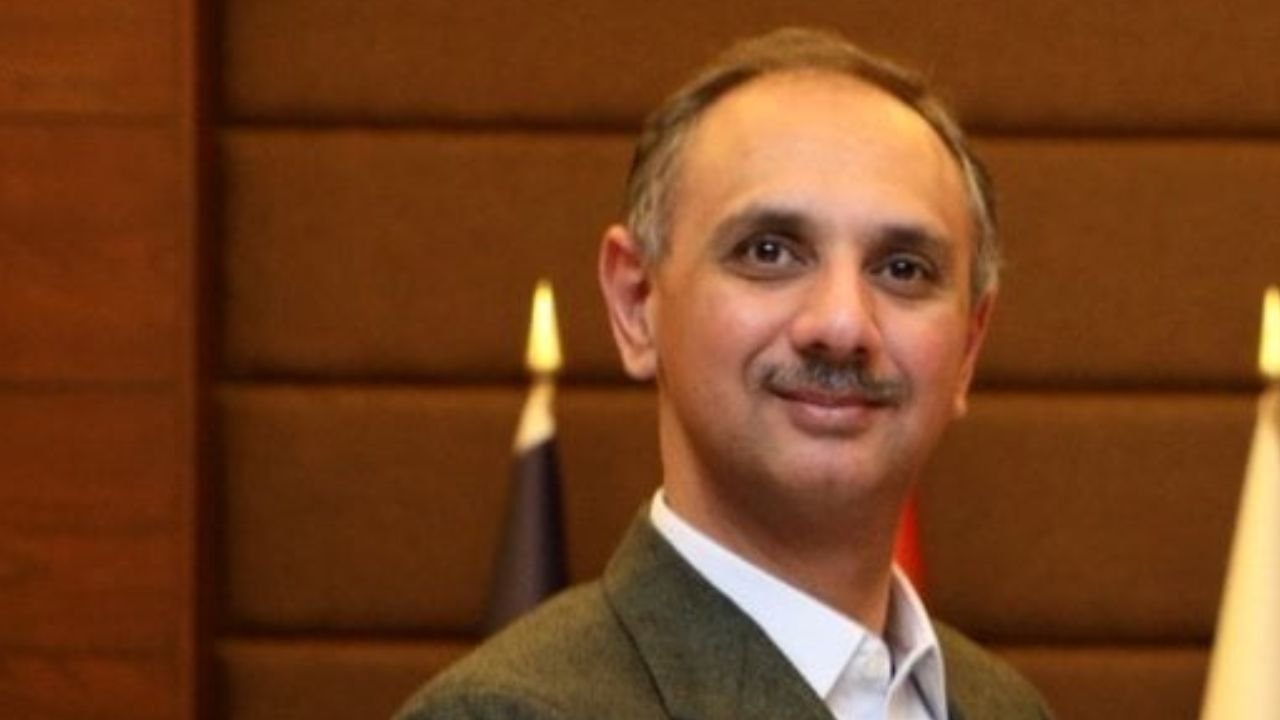
Pakistan Tehreek-e-Insaf (PTI) leader Omar Ayub has been notified as the leader of the opposition in the National Assembly.
Ayaz Sadiq, the speaker of the National Assembly, declared Omar Ayub as the opposition letter after completing the due process.
Ayub met the speaker with Gohar Ali Khan and Malik Amir Dogar, also opposition members.
Ayub’s name was proposed by the majority of the opposition. The PTI-Sunni Ittehad Council (SIC) alliance had nominated him on March 10 as the leader of the opposition.
Leader of the opposition enjoys the status of a federal minister. He gets a separate office where opposition parties hold meetings. Moroever, the Public Accounts Committee is usually headed by leader of the opposition, as well.
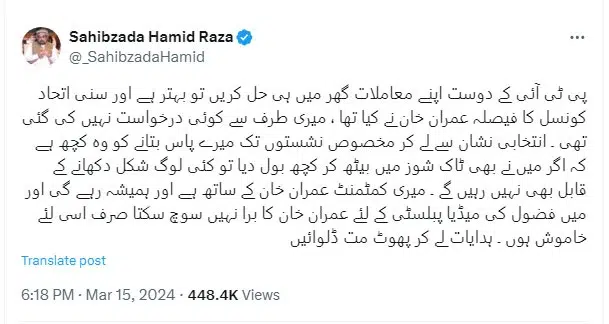
Sahibzada Hamid Raza, Chairman of the Sunni Ittehad Council (SIC), issued a stern warning to leaders of the Pakistan Tehreek-e-Insaf (PTI), cautioning them against airing internal grievances publicly.
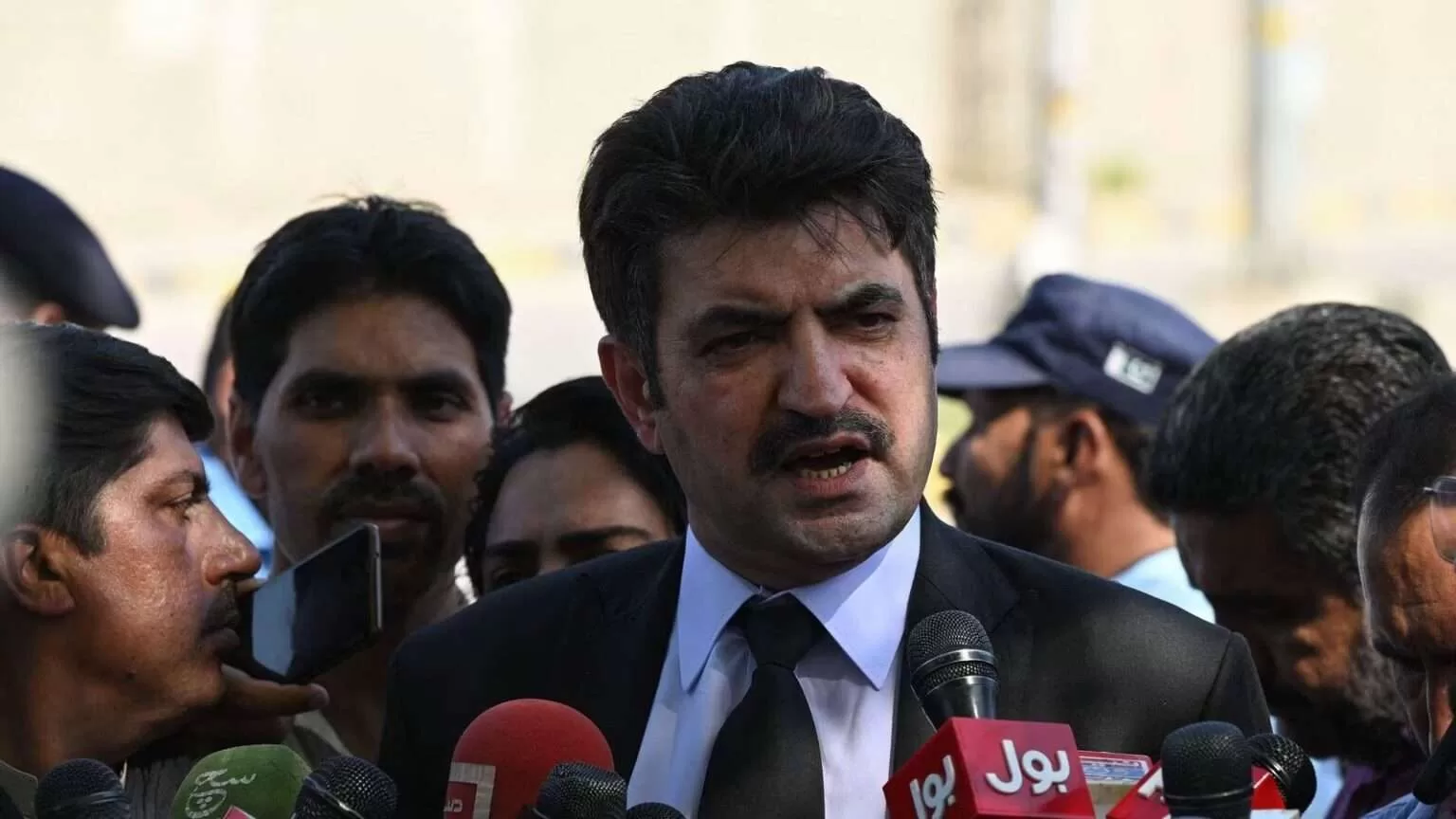
Raza’s remarks came in response to PTI leader Sher Afzal Marwat’s statement, where he criticized the decision to ally with the SIC, attributing it to the loss of 80 seats.
Marwat said the first major mistake was committed when party founder Imran Khan gave instructions for a political alliance with the Jamiat Ulema-i-Islam Sherani and the second major mistake was the announcement of the inclusion into the Majlis Wahdat-i-Muslimeen, adding that some people gave a sectarian colour to the issue and gave threatening messages to the PTI leadership.
Expressing strong disapproval of Marwat’s comments, Raza advised PTI to resolve its internal issues internally, underscoring that the decision to collaborate with the SIC was endorsed by PTI founder Imran Khan.
Raza wrote on X (former Twitter), ” It is better that PTI friends resolve the matters internally and Imran Khan made the decision of Sunni Ittehad Council, I didn’t make any request. From electoral symbol to reserve seats I have so much to tell that if I say something in a talk show then these people won’t be able to show their faces.”
In a statement made during the Geo News talk show ‘Naya Pakistan with Shahzad Iqbal Kay Sath,’ PTI leader Senator Barrister Ali Zafar shed light on the decision-making process regarding alliances for reserved seats.
Zafar revealed that initially, the plan was to merge with Majlis Wahdatul Muslimeen (MWM), but it was later altered in favor of the SIC following discussions with Imran Khan.
Expressing his astonishment on the development, Zafar said: “When I asked Imran Khan about this, he said he had not changed the decision.”
Ali Zafar, however, emphasised: “The decision will have to be revised no matter how it was taken; it was our mistake; as to where and how this miscommunication was committed.”
He conceded that Sher Afzal Marwat was right.
“At first, a decision was made to join the MWM. Prior to that, a decision was also made to unite with Maulana Sheerani’s party as Sheerani’s group also participated in the election and had also given a list of reserved seats.”
Zafar emphasized the need for clarity in decision-making, noting discrepancies in interpreting constitutional provisions and the Elections Act.
He indicated that the matter may need adjudication by the Supreme Court to resolve conflicting opinions.
The Supreme Court has to decide whether our interpretation is correct or the verdict of the ECP or the Peshawar High Court.
“We also referred to the Election Commission’s decision to give specific seats to the BAP party in the court. To which, the ECP said that they do not know why they gave reserved seats to the BAP, so this decision cannot be used as an example here,” he said.
PTI leader Sher Afzal Marwat has said the party is paying the cost of two wrong decisions.
Speaking on Geo News show Aaj Shahzeb Khanzada Kay Sath, he said the first major mistake was committed when party founder Imran Khan gave instructions for a political alliance with the Jamiat Ulema-i-Islam Sherani.
He said the second major mistake was the announcement of the inclusion into the Majlis Wahdat-i-Muslimeen, adding that some people gave a sectarian colour to the issue and gave threatening messages to the PTI leadership.
Later, Marwat said, the PTI suddenly decided to join the Sunni Ittehad Council.
“These are two wrong decisions and their culprits should be determined because we lost more than 80 seats due to them.”
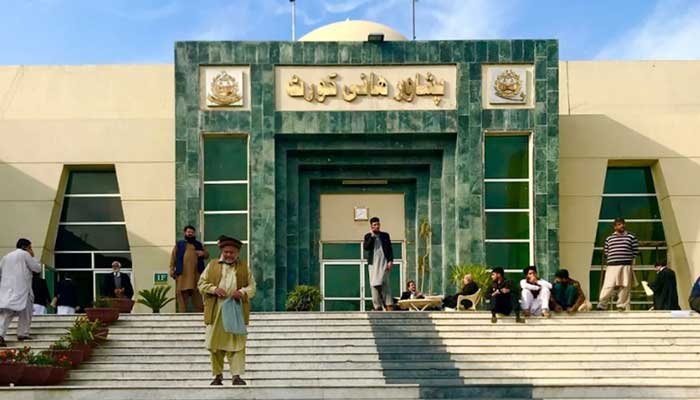
The Peshawar High Court (PHC) has rejected a petition of Pakistan Tehreek-e-Insaf (PTI)-backed Sunni Ittehad Council (SIC) against the Election Commission of Pakistan’s (ECP) verdict on reserved seats.
“Petitions are unanimously rejected,” the court maintained.
Earlier today, PHC chief justice Mohammad Ibrahim Khan resumed the hearing and five members of the bench, including Justice Ijaz Anwar, Justice Ishtiaq Ibrahim, Justice Shakeel Ahmad, and Justice Arshad Ali, heard the petition.
SIC’s lawyer, Barrister Ali Zafar, argued during the hearing that it’s not mentioned in the constitution that a party should submit any list to the ECP for reserved seats.
“It is not written anywhere that you cannot resubmit the list or when it has to be submitted,” the barrister argued, adding that there is no restriction on providing a second list and that the ECP could have issued a second schedule, as it did for the general elections.
“As per the law, those who participate in elections will get seats,” Justice Anwar remarked.
The court then questioned Barrister Zafar if it wasn’t clearly stated anywhere that the second schedule cannot be issued.
“The law does not prevent the Election Commission from issuing another schedule,” the lawyer responded.
Justice Arshad remarked that Section 104 explains the mechanism for reserved seats as it states that when a list is submitted then another list can be given.
“Section 104 says that if a political party participates in an election, it will give a list,” the lawyer argued.
He earlier argued that whoever wins the number of seats, they get reserved seats in the same proportion.
“Their seats cannot be increased.”
“If these seats are not given, the parliament will not be complete,” remarked the chief justice, responding to which the lawyer requested the court to interpret the Constitution in a way that there remains no gap in its interpretation.
Barrister Ali Zafar also told the court that the ECP has authority to maintain justice, adding that there should be transparency in the election for reserved seats.
Polling for six vacant senate seats from Sindh, Balochistan, and Islamabad is underway on Thursday, scheduled to continue till 4:00 pm.
Lawmakers can’t hold dual membership, so these six seats became vacant under Article 223 of the Constitution.
Sub-section 4 of article states: “Subject to clause (2), if a member of either House or of a Provincial Assembly becomes a candidate for a second seat, which, in accordance with clause (1), he may not hold concurrently with his first seat, then his first seat shall become vacant as soon as he is elected to the second seat.”
However, in Sindh, two major opposition parties, including the Muttahid Qaumi Movement-Pakistan (MQM-P) and Jamat-e-Islami (JI), have boycotted senate elections in Sindh, Geo has confirmed.
Polling to fill two general seats in the upper house in Sindh is underway, where Pakistan Peoples Party’s (PPP) Jam Saifullah Khan Dharejo and Muhammad Aslam Abro are contesting against Nazeerullah and Shazia Sohail of the Sunni Ittehad Council (SIC).
Meanwhile, a total of seven candidates have been in the running for three general seats of the Senate from Balochistan on which the by-polls are underway.
These candidates are Syed Mahmood Shah (Independent), Abdul Shakoor Khan (Independent), Abdul Qudoos (PPP), Kauda Babar (Balochistan Awami Party), Muhammad Mobeen Khilji (Balochistan Awami Party), Mir Hair Bayar Khan Domki (Independent) and Mir Dostain Khan Domki (PML-N).
On the other hand, the National Assembly (NA) will elect only one senator, and former Prime Minister Yousaf Raza Gillani is a joint candidate of the ruling coalition of six parties on the seat, with SIC’s Ilyas Mehrban contesting against him.
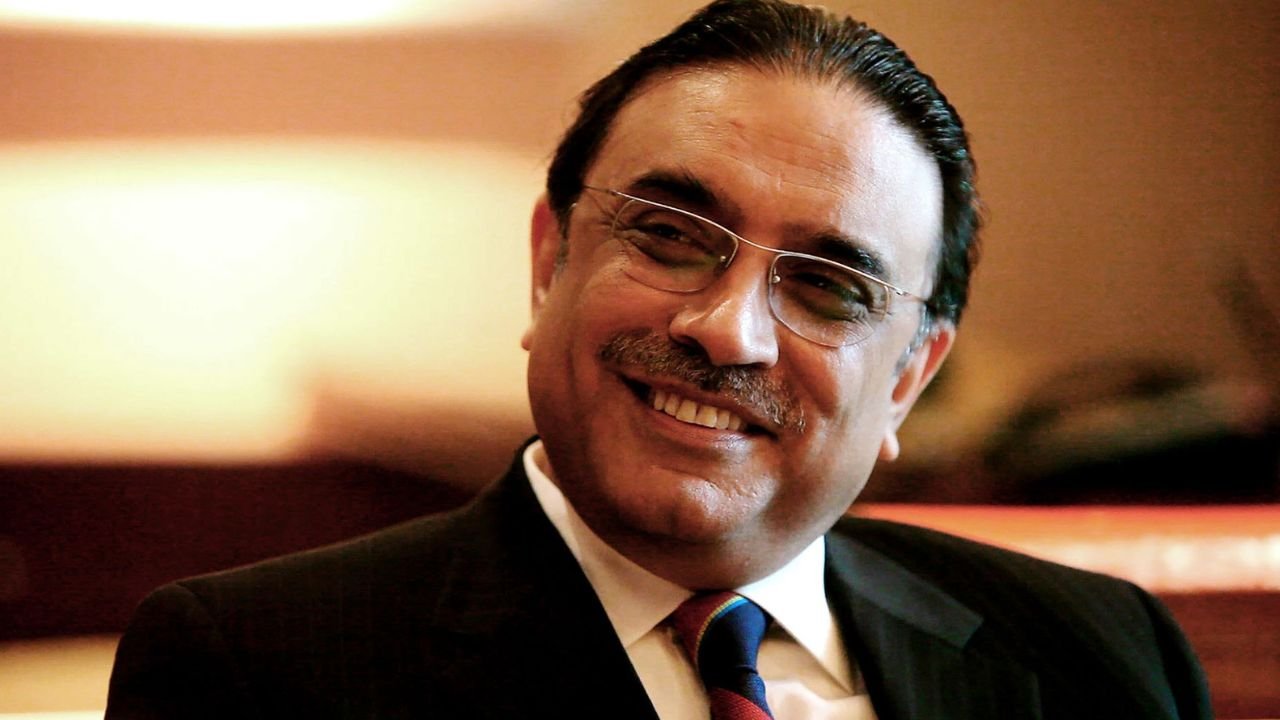
Lawmakers across Pakistan, the Senate, National Assembly, and the four provincial assemblies, cast their votes to elect the 14th president of the country and Asif Ali Zardari won by securing 411 votes.
His opponent, Mehmood Khan Achakzai, secured 181 votes.
The Election Commission of Pakistan (ECP) orchestrated the process, which unfolded between 10 am and 4 pm, with meticulous arrangements in place.
The presidential race sees former President Asif Ali Zardari, representing a coalition of the Pakistan Muslim League-Nawaz (PML-N), Pakistan Peoples Party (PPP), and other allied parties, vying for a potential second term. He faces stiff competition from Mahmood Khan Achakzai, President of the Pakhtunkhwa Milli Awami Party and the joint candidate of the opposition.
Polling stations were set up within the respective houses of parliament, where the election took place through a secret ballot. The Parliament House in Islamabad accommodated senators and MNAs, while the four provincial assemblies served as polling stations for provincial lawmakers.
During the voting process, PPP Senator Sherry Rehman acted as Zardari’s polling agent, while Senator Shafiq Tareen represented Achakzai. Islamabad High Court Chief Justice Aamir Farooq presided over the proceedings at the Parliament House, with notable figures like Zardari’s children, Bilawal, Bakhtawar, and Aseefa Bhutto-Zardari, in attendance.
However, not all political parties participated in the election. JUI-F chief Maulana Fazlur Rehman and Jamaat-e-Islami decided against voting, citing concerns over the credibility of the process.
The newly elected president of Pakistan is slated to be sworn in on Sunday at 4 pm at the President’s House. Chief Justice of Pakistan Justice Qazi Faez Isa will administer the oath, with invitations already issued to guests for the ceremony.
In the provincial assemblies, strict security measures were enforced to ensure a smooth and transparent electoral process. Election Commission members oversaw proceedings, guaranteeing fairness and peace throughout the voting.
Despite tension and security concerns, the Election Commission upheld its decision to proceed with the scheduled polling, dismissing requests for postponement from opposition candidate Mahmood Achakzai. This commitment underscores the commission’s dedication to upholding democratic principles and adhering to electoral timelines.