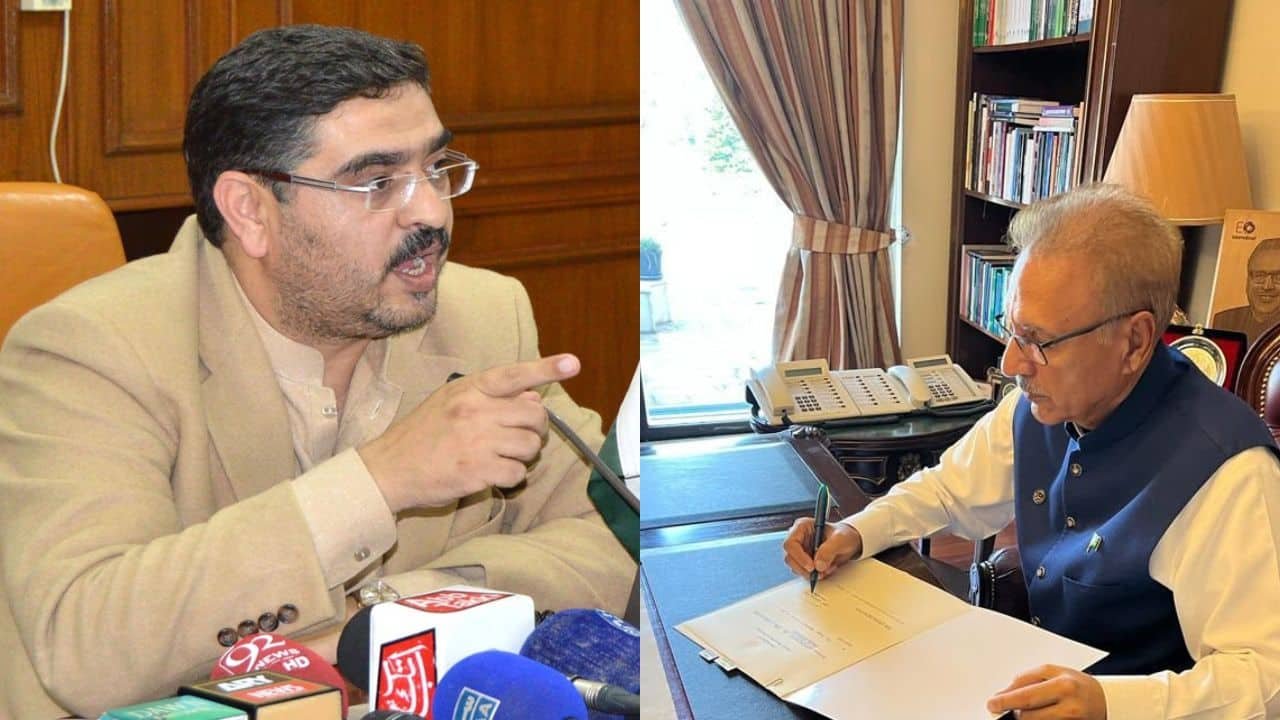
Tag: Sikandar Sultan Raja

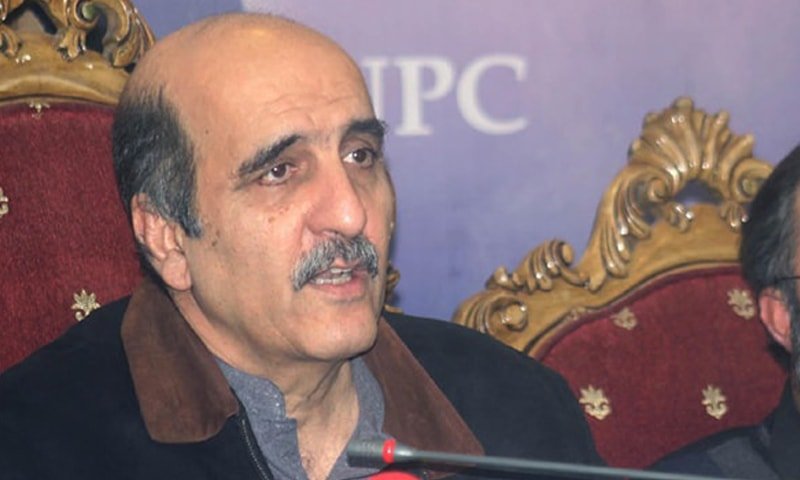
  • Akbar S Babar challenges fresh PTI’s intra-party polls in ECP

    Akbar S Babar challenges fresh PTI’s intra-party polls in ECP

    Disgruntled Pakistan Tehreek-e-Insaf (PTI) founding member Akbar S Babar filed two separate petitions with the Election Commission of Pakistan (ECP) to challenge the party’s intra-party elections for the second time.

    The Supreme Court (SC) on January 13 upheld the ECP’s verdict regarding the party’s intra-party elections as invalid, leading the party to lose its ‘bat’ electoral symbol.

    A five-member ECP bench headed by Chief Election Commissioner (CEC) Sikandar Sultan Raja declared the PTI’s internal polls unlawful.

    In the fresh petition, Babar has requested the ECP to declare the recent intra-party polls invalid too.

    PTI’s fresh intra-party elections were held on March 3.

    The beleaguered party’s federal election commissioner Raoof Hasan formally announced last Sunday that Barrister Gohar Ali Khan and Omar Ayub Khan had been elected as the party’s chairman and secretary general unopposed, respectively, in the intra-party polls.

    Taking to journalists, Babar said that he moved the ECP against the “fresh fraud” of the PTI, adding that he was kept away from the intra-party elections.

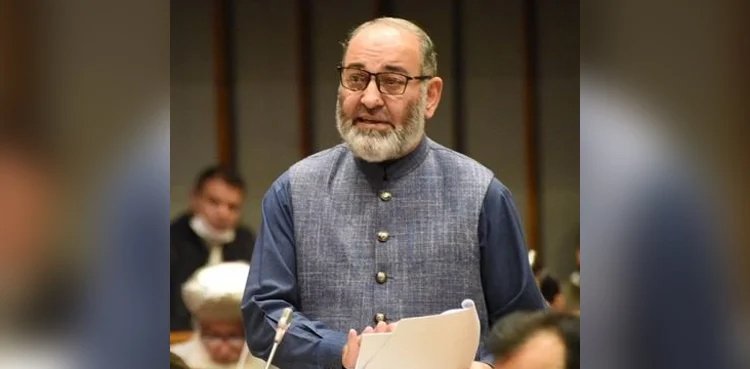
  • Senator Mushtaq Ahmed demands resignation from Chief Election Commissioner Sikandar Raja

    Senator Mushtaq Ahmed demands resignation from Chief Election Commissioner Sikandar Raja

    Jamaat-e-Islami (JI) Senator Mushtaq Ahmed has demanded that Chief Election Commissioner (CEC) Sikandar Sultan Raja resign from his post as he didn’t fulfil his responsibility to conduct free and fair elections in the country.

    While addressing the senate, he said that the February 8 elections were fake and that they will not accept the fake government as the result of these rigged elections.

    Senator Mushtaq Ahmed then accused the Election Commission of Pakistan (ECP) of committing treason and suggested that the electoral body should apologise to the nation for its actions.

    “Legal proceeding should be carried out against the CEC under Article 6 of the constitution, for the ECP was given Rs 50 billion from the national exchequer but it failed to hold transparent polls,” he alleged.

    The JI senator also said that the money wasted in the name of elections should be returned and a case should be lodged against CEC Sikandar Sultan Raja.

  • ECP ready to conduct polls on February 8, despite security challenges

    ECP ready to conduct polls on February 8, despite security challenges

    The Election Commission of Pakistan (ECP) has declared on Thursday that it is determined and ready to conduct upcoming elections on February 8 as per schedule, despite facing security challenges in Khyber Pakhtunkhwa and Balochistan provinces.

    With only one week remaining until the February 8 polls, election preparations and campaigns are in full swing. However, the country is grappling with a series of violent incidents that have led to multiple deaths, particularly at political party rallies in the two provinces most affected by terrorism.

    Law enforcers have tightened security across the country to maintain law and order during the upcoming general elections.

    “The February 8 polls will take place on time. Though the security challenges exist but the election commission is fully ready [to hold the elections], and with the help of Law Enforcement Agencies (LEAs) and Pakistan Army, the elements involved in hindering the electoral process and disrupting security situation will be dealt strictly,” Chief Election Commissioner (CEC) Sikandar Sultan Raja said during the ECP’s security meeting.

    On Thursday evening, the electoral body held an important meeting on the worsening law and order situation in two provinces.

    After the meeting ended, the ECP released a statement saying that the CEC voiced concerns about the worsening security situation in KP and Balochistan. However, he emphasised that the electoral process will continue despite the challenges.

  • No surveys; PEMRA to take action against media channels violating ECP’s Code of Conduct

    No surveys; PEMRA to take action against media channels violating ECP’s Code of Conduct

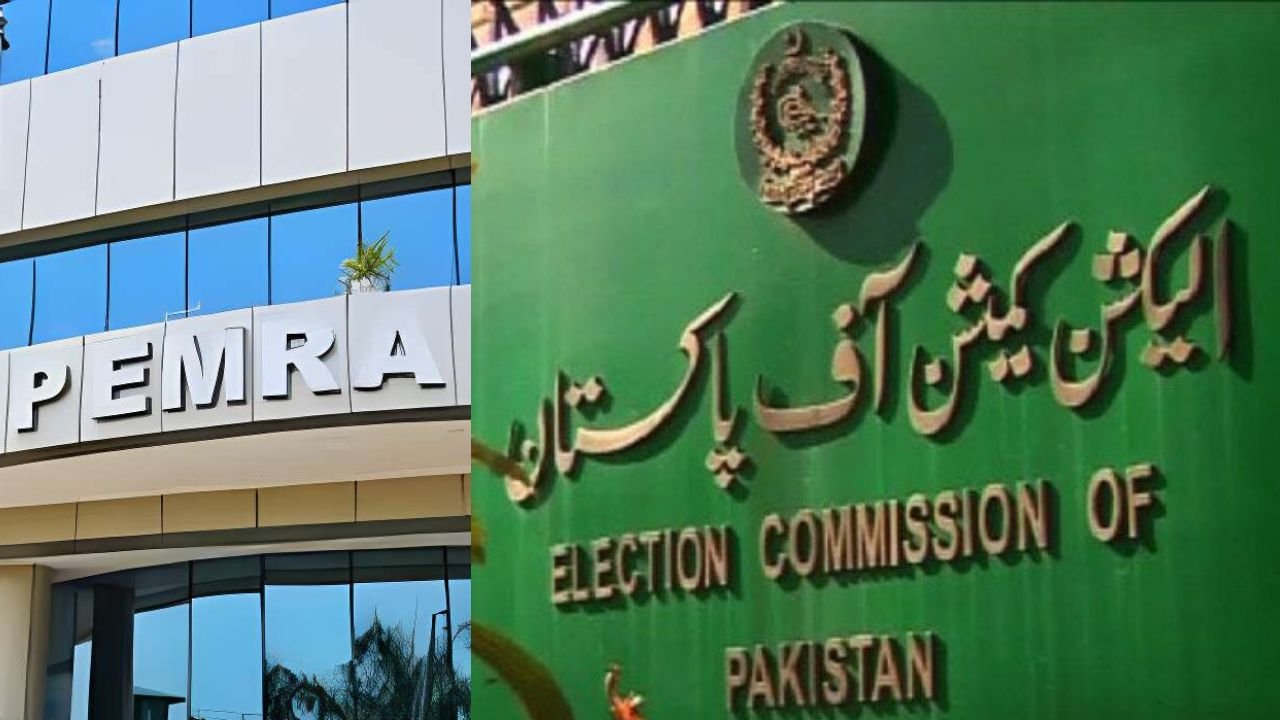
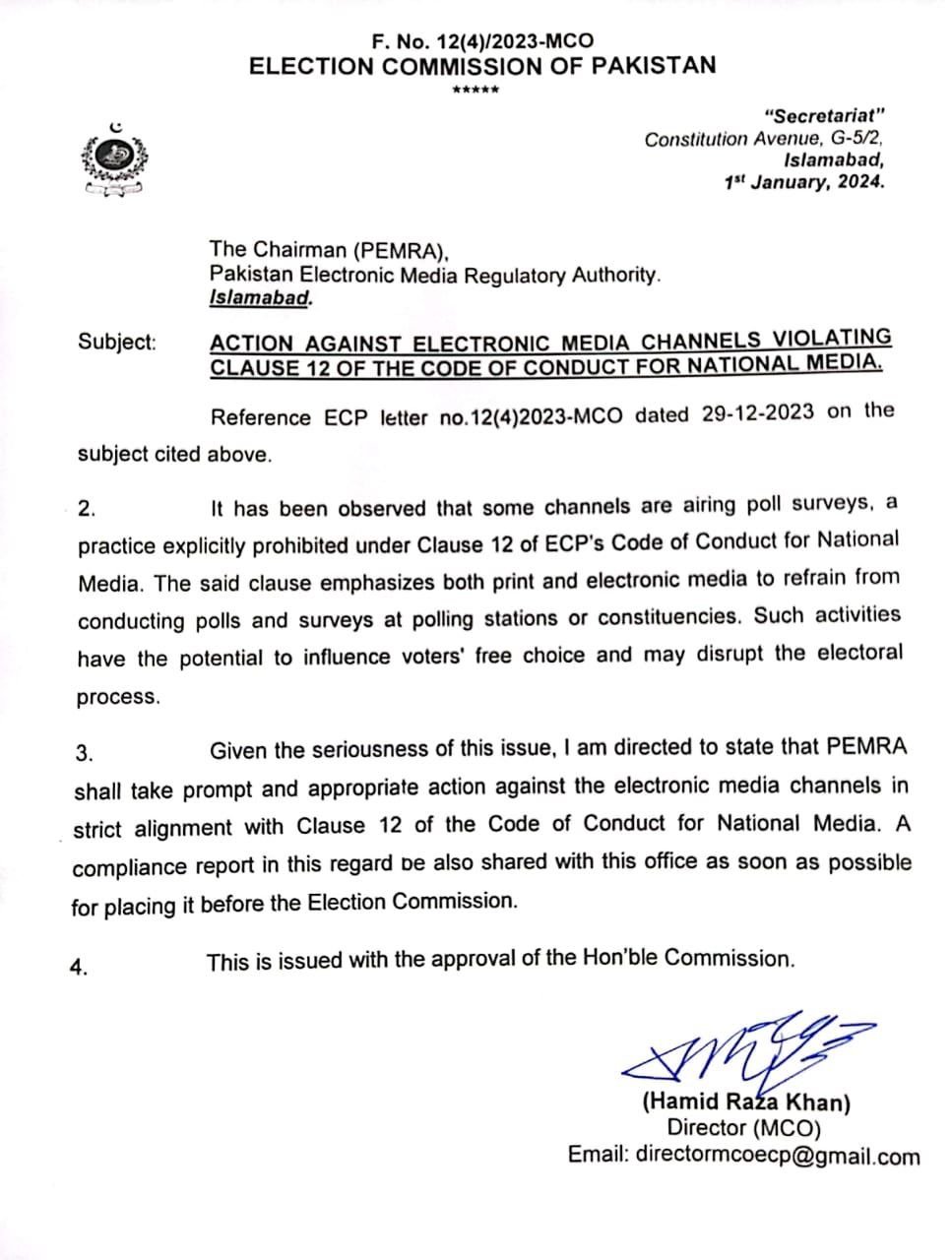
    The Election Commission of Pakistan (ECP) has officially communicated with the Pakistan Electronic Media Regulatory Authority (PEMRA), seeking strict action against media channels found violating the established code of conduct for the upcoming February 8 polls.

    The letter explicitly points out the airing of voting surveys by certain media channels. This practice, as per the ECP’s Code of Conduct for National Media, is prohibited under Clause 12.

    According to Clause 12, individuals working in print, electronic, and social media are prohibited from obstructing the election process and are required to display accreditation cards provided by the Election Commission.

    The ECP emphasized that both print and social media should refrain from conducting polls and surveys at polling stations or constituencies. The electoral watchdog stated that such activities have the potential to influence voters’ free choice and may disrupt the electoral process.

    The letter stated, “Given the seriousness of this issue, I am directed to state that PEMRA shall take prompt and appropriate action against the electronic media channels in strict alignment with Clause 12 of the Code of Conduct for National Media. A compliance report in this regard be also shared with this office as soon as possible for placing it before the Election Commission.”

    The ECP’s comprehensive 18-point code of conduct for media during elections includes provisions preventing the dissemination of content that reflects opinions prejudicial to the sovereignty, uprightness, or security of Pakistan. It also prohibits statements that could harm national solidarity or create a law and order situation.

    The regulatory framework extends to personal attacks on candidates or political parties in media content, mandating that any allegations should include comments from both sides. Monitoring responsibilities are delegated to Pemra, Pakistan Telecommunication Authority, Press Information Department, and the Cyber Wing and Digital Media Wing of the Ministry of Information and Broadcasting.

    The ECP further emphasized that these authorities are accountable for monitoring political parties’ and candidates’ coverage during election campaigns through electronic channels, print, and social media. Details of payments made by political parties and candidates must be submitted within 10 days after the poll day.

    The Election Commission of Pakistan warns that, in case of any violation of this Code of Conduct, it reserves the right to withdraw accreditation from individual journalists or media organizations. The authority to determine violations also rests with the electoral body. The media is also prohibited from airing unofficial results of a polling station until one hour after the close of the poll during the polling process coverage.

  • ECP likely to announce election schedule on December 14

    ECP likely to announce election schedule on December 14

    As a result of the rise in political temperature in country, the Election Commission of Pakistan (ECP) is going to announce the schedule for upcoming general election on December 14, as per a report in The News.

    Political parties are making political alliances with multiple stakeholders to win the polls on February 8.

    ECP recently released the final list of delimitations, which was the only obstacle to the announcement of  election. Now the final step is the appointment of district returning officers, returning officers and assistant officers according to the Elections Act 2017.

    According to Sections 50 and 51 of the Elections Act, a district returning officer is appointed for each district or a specified area and a returning officer for each constituency for elections to an assembly.

    The provincial election commissioner and election commission secretariat have designed lists of government officers for election duty. Their appointment will follow the election-related training.

    Chief Election Commissioner (CEC) Sikandar Sultan Raja also confirmed that ECP is ready to provide voters with complete security, privacy, and transparency in the entire election process.

  • PEMRA nay laga dee TV channels pay aik aur pabandi

    PEMRA nay laga dee TV channels pay aik aur pabandi

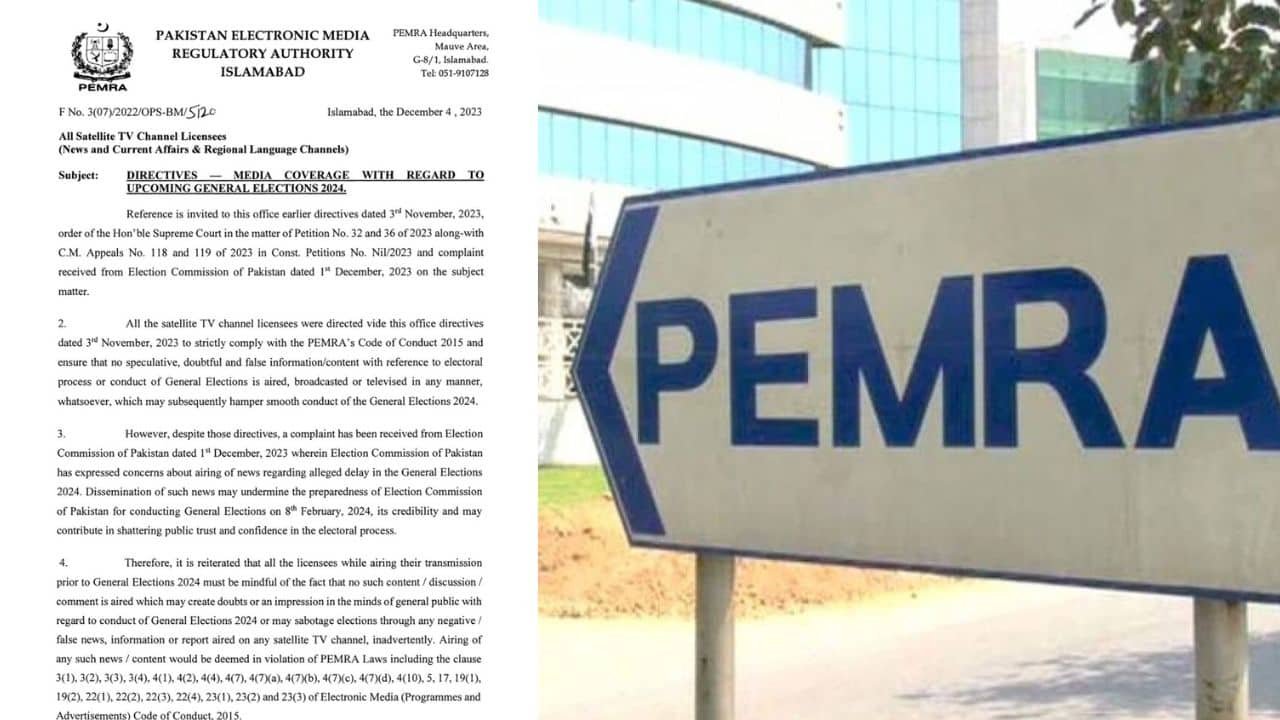
    Pakistan Electronic Media Regulatory Authority (PEMRA) has barred television channels from airing anything that casts doubt on the electoral process.

    The notification, issued on November 3, states, “All the satellite TV channel licensees were directed vide this office directives dated 3* November, 2023 to strictly comply with the PEMRA’s Code of Conduct 2015 and ensure that no speculative, doubtful and false information/content with reference to electoral process or conduct of General Elections is aired, broadcasted or televised in any manner, whatsoever, which may subsequently hamper smooth conduct of the General Elections 2024.”

    It further says that all the licensees, while airing their transmission before General Elections 2024, must be mindful of the fact that no such content/discussion / comment is aired which may create doubts or an impression in the minds of the public about the polls or may sabotage elections through any negative/false news, information or report aired on any satellite TV channel, inadvertently.

    Anchor Person Mohammad Malick took to X (former Twitter) and wrote, “Has Pemra gone absolutely bonkers? media barred from even discussing the possibility of flawed election process by EC. All media outlets & journo orgs must outrightly reject this ridiculous ‘unholy commandment’. this is brazen censorship and must be resisted.”

    Secretary General South Asian Free Media Association (SAFMA) Imtiaz Alam said, “Indeed, Election Commission of Pakistan should be respected, but it must earn respect by ensuring even-playing field fo all and transparently conducting electoral process. However, PEMRA order must be rejected. Media must critically evaluate the conduct of elections and ECP.”

  • When will ECP issue schedule of general elections in Pakistan?

    When will ECP issue schedule of general elections in Pakistan?

    The Election Commission of Pakistan (ECP) revealed on Friday that the eagerly awaited schedule for the general polls will be issued 54 days before the February 8 elections, as per Geo News.

    The Chief Election Commissioner (CEC), Sikandar Sultan Raja, said during an informal discussion with journalists that the election body is diligently working on completing all prerequisites for the upcoming polls.

    In June, the Pakistan Democratic Movement (PDM) government amended Section 57 of the Elections Act, empowering the ECP to set the general election date while defining a timeline of procedures from the announcement of the schedule to the polling day.

    CEC Sikandar Sultan Raja assured that the election schedule, appointment of returning officers (ROs), and district returning officers (DROs) will be announced promptly. He mentioned that updated constituency lists had already been released, and the ECP was proactively handling election-related responsibilities ahead of schedule.

    Despite concerns and speculations in political circles about potential delays in the already postponed polls, the ECP recently issued the final list of delimitation of constituencies for national and provincial assemblies, dismissing reports of possible delays.

    According to the notification issued by the ECP, the National Assembly (NA) has a total of 266 seats; 60 seats are reserved for women and 10 for religious minorities.

    Balochistan has a total of 20 NA seats, including 16 general and four reserved seats for women; Khyber Pakhtunkhwa has 45 general NA seats and 10 reserved seats for women; Sindh has a total of 75 NA seats, of which 61 are general and the remaining 14 are reserved for women.

    On the other hand, considering population, Punjab is a big province, and it has 141 NA seats, of which 32 are reserved for women. The federal capital has three general NA seats, with no reserved seat for women.

    Article 106 pertains to the constituencies of the four provincial legislatures. According to this article, Balochistan comprises 51 general seats, with 11 reserved for women and three for non-Muslims, making a total of 65 seats.

    In the case of Khyber Pakhtunkhwa, there are 115 general seats, along with 26 reserved for women and four for non-Muslims, bringing the total number of seats in the legislature to 145.

  • Petitions seek postponement of elections, citing ‘snowfall’ and ‘terrorism’

    Petitions seek postponement of elections, citing ‘snowfall’ and ‘terrorism’

    Two separate petitions seeking the postponement of elections have landed before the Election Commission of Pakistan (ECP) a day before the commission is set to publish final delimitation lists.

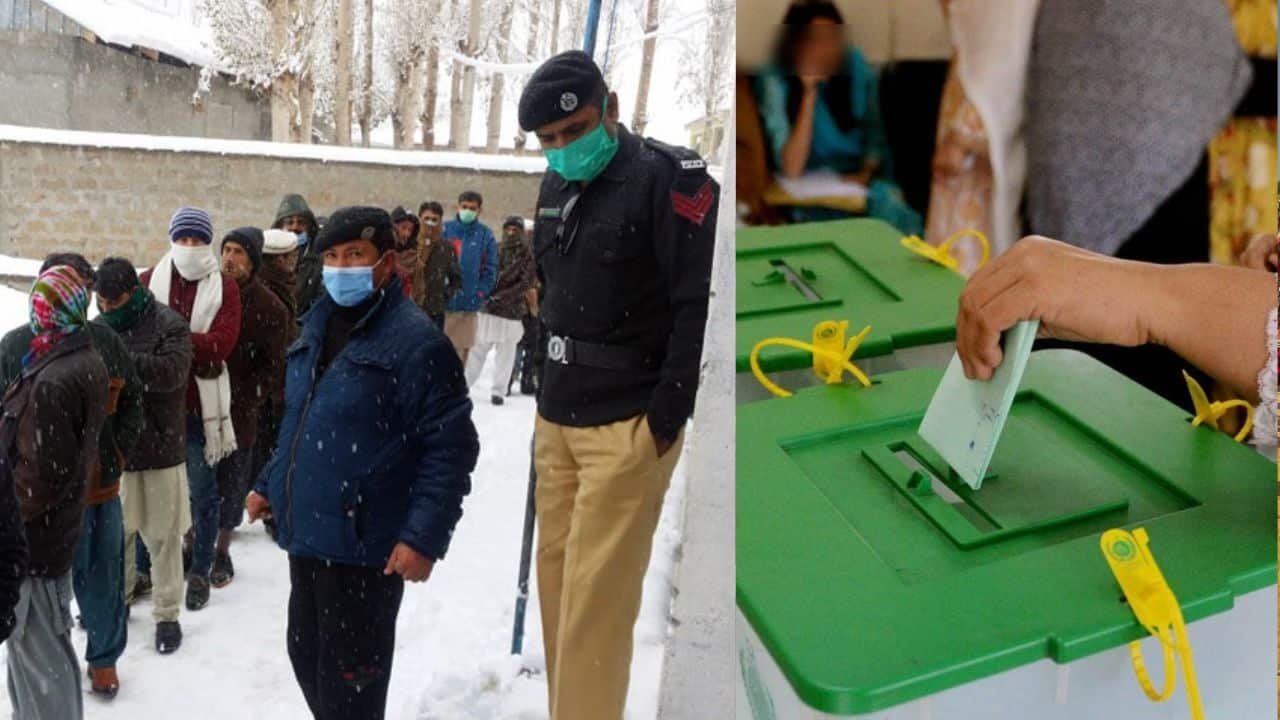
    The petitions, filed by individuals hailing from Balochistan, cited security issues and snowfall in several districts as reasons to seek the postponement of elections.

    One of the petitions filed by Meena Majeed, a general councilor from Mand tehsil of Kech district, through Advocate Fatima Nazar, stated that Balochistan was dealing with heightened security concerns.

    “Specifically, the Mekran division has witnessed a surge in terrorist activities, ranging from target killings of innocent daily wage earners to alarming incidents such as IED blasts and women suicide bombing,” it stated. The impact was most pronounced in districts such as Kech and Gwadar, where 61 acts of terrorism during the last three months alone claimed 32 lives, it read.

    “This topography coupled with inadequate road infrastructure and poor connectivity presents a formidable obstacle to implementing effective security measures and ensuring the feasibility of free and fair elections,” it added.

    The other petition, filed by Toor Gul Khan Jogezai from district Kila Saifullah Khan through Advocate Azizullah Kakakhel, pointed out that many districts and divisions in the country face heavy snowfall in winter which affects the daily routines of residents.

    As a result, elections can not be held in such areas, since the inhabitants of these areas were either displaced or are limited, until the month of May or restoration of normal life.

    The petition argued that if elections are held in such areas, it is feared that provincial or national assembly candidates would either lose their vote bank or voters would lose their votes in favor of their candidates.

    Hence, it is need of time that the election be postponed to any other suitable time through which the citizens of such an area could participate in a free and fair election and elect representatives according to their choice of constituency, the petition read.

    Elections ‘on time’

    ECP issued a firm rebuttal, cautioning that legal action could be taken against individuals disseminating misleading news about a potential delay in the polls scheduled for February 8, 2024.

    The ECP had earlier set February 8, 2024, as the election date following consultations with President Arif Alvi and in accordance with the Supreme Court’s directives.

    Despite the announcement and a consensus among political parties welcoming the development, some political leaders and analysts persisted in casting doubts on the scheduled elections.

    A spokesperson for the ECP, in a statement on Thursday, termed the media reports regarding election delay as “baseless and misleading”.

    The statement said a report claiming that the voters’ lists were not being prepared is “completely false”.

    The spokesperson further said that it has approached the Pakistan Electronic Media Regulatory Authority (Pemra) to take legal action against those “spreading misleading news”.
  • Murtaza Solangi says President Alvi undermining his credibility by speaking for one political party

    Murtaza Solangi says President Alvi undermining his credibility by speaking for one political party

    Caretaker Minister for Information and Broadcasting and Parliamentary Affairs, Murtaza Solangi, has said that President Dr. Arif Alvi should represent all political parties in accordance with the law and the constitution, to foster unity in the country.

    Talking to the media on Sunday, Solangi said that the President’s role was not limited to one party, urging him to speak on behalf of all political parties.

    “If the president continues to speak for one political party, it would undermine his own credibility,” he said.

    Highlighting the essence of democracy as a platform for dialogue, Solangi dismissed concerns over complaints and grievances, stating that every party and individual had the right to voice their concerns at appropriate forums including courts and the election commission.

    As regards the upcoming elections, Solangi pledged the caretaker government’s full cooperation and assistance to the Election Commission of Pakistan (ECP), in accordance with the law and the constitution.

    He commended the competence and the sense of responsibility shown by the current ECP management, noting that they adhered to the action plan outlined for the elections.

    The people of Pakistan will determine the country’s future course on February 8, 2024, a date slated for the elections, he added.

  • President Alvi writes letter conveying PTI concerns to PM Kakar

    President Alvi writes letter conveying PTI concerns to PM Kakar

    President Arif Alvi has penned a letter to Interim Prime Minister Anwaarul Haq Kakar, expressing the concerns of the Pakistan Tehreek-e-Insaf (PTI) regarding the “erosion of fundamental rights and a level playing field for all political parties” in the upcoming general elections.

    This communication follows the announcement of elections being held on February 8, 2024, stirring political activity across major party lines.

    The details mentioned on X (formerly Twitter) account state, “President Dr. Arif Alvi has conveyed to the Care-taker Prime Minister, Mr. Anwar ul Haq Kakar, the concerns of Pakistan Tehreek-e-Insaf (PTI) on the erosion of fundamental rights and level playing field for all political parties.”

    He also forwarded a letter addressed to him by the General Secretary of PTI, Mr. Omar Ayub Khan, to the Prime Minister containing the concerns of the party.

    In his letter, the President stated that it was of utmost importance that the caretaker government under the Prime Minister’s leadership made efforts as a neutral entity to provide a level playing field for all political parties.

    “In this context, it was reassuring to hear your recent statements whereby you stated that it was the caretaker government’s policy that all registered political parties should have equal rights and opportunities to contest the forthcoming elections”, he wrote.

    He said that “there was a resonance in Pakistan that for free, fair and credible elections, all political parties and leaders had right to contest and it was up to people to decide.”

    In his letter, President Alvi said that he was constitutionally “duty-bound, along with the prime minister and all institutions, to protect the rights of the citizens”.

    He said that in his missive, the PTI secretary general had conveyed the party’s concerns and allegations regarding the “erosion of fundamental rights, with particular reference to enforced disappearances, forced conversions of political loyalties, absence of level playing field for major political parties, crackdown on media and mistreatment of female political activists through prolonged illegal detentions”.

    In response to the concerns, PM Kakar has offered assurances that individuals affiliated with PTI Chairman Imran Khan, currently incarcerated in connection with the cipher case and convicted in the Toshakhana case, will be permitted to participate in the upcoming polls.