Tag: Silicon Valley

  • Payouts approved for iPhone owners who alleged that Apple intentionally slowed down older models

    Payouts approved for iPhone owners who alleged that Apple intentionally slowed down older models

    iPhone owners who were participants in a class action lawsuit against Apple, claiming that the company intentionally reduced the speed of their older iPhones to encourage them to upgrade to the latest model, are finally on the verge of receiving their compensation. Recently, a judge has given the green light for the payment process to proceed, as stated in a report from SiliconValley.com last week.

    The settlement obtained preliminary approval in March 2020. Although the opportunity to be included in the settlement has since expired, approximately 3 million claims were submitted, according to information from SiliconValley.com. These individuals are now anticipating the arrival of their $65 checks, over three years after the initial settlement.

    The distribution of payments faced delays due to objections raised by two iPhone owners who disagreed with certain aspects of the settlement. However, these objectors have now lost their appeal in the 9th US Circuit Court of Appeals, as detailed in the report.

    Apple encountered this lawsuit after confessing in 2017 that its iOS software intentionally slowed down the performance of older iPhones. During that period, the technology giant issued an apology, updated its software, and also offered replacement batteries.

  • AI’s disruptive power hits tech industry: Job cuts and demand for AI experts

    AI’s disruptive power hits tech industry: Job cuts and demand for AI experts

    The rise of artificial intelligence (AI) has sparked concerns about job displacement in the future. However, it is already having an impact in the tech industry, where employees once seemed secure in their positions. 

    A growing number of tech companies are attributing layoffs and reevaluations of new hires to AI advancements happening right in Silicon Valley.

    For example, Chegg, an education technology company, recently announced in a regulatory filing that it would be cutting 4 per cent of its workforce, around 80 employees. The reason given was to align the company with its AI strategy and create sustainable value for students and investors.

    IBM’s CEO, Arvind Krishna, stated in a May interview with Bloomberg that the company plans to pause hiring for roles that could be potentially replaced by AI in the future. However, in a subsequent interview with Barrons, Krishna clarified that his comments were taken out of context, emphasising that AI will generate more jobs than it eliminates.

    In late April, Dropbox, a file-storage service, revealed that it would be reducing its workforce by approximately 16 per cent, or 500 employees, also citing AI as a factor. Outplacement firm Challenger, Gray & Christmas reported that in May alone, 3,900 individuals were laid off due to AI, marking the first time job cuts were specifically attributed to this factor. All of these layoffs occurred within the tech sector.

    These developments in Silicon Valley not only demonstrate its leadership in AI development but also provide insight into how businesses might adapt to these tools. Rather than rendering entire skill sets obsolete overnight, AI is currently compelling companies to redirect resources to maximize its potential. Consequently, workers with AI expertise are in high demand.

    Dropbox CEO Drew Houston, in a note announcing the job cuts, acknowledged that AI has captured people’s imagination and expanded the market for AI-powered products. He highlighted the need for a different skill set, particularly in AI and early-stage product development, for the company’s future growth.

    Dan Wang, a professor at Columbia Business School, believes AI will lead to organizational restructuring but does not foresee machines entirely replacing humans just yet. He suggests that AI enhances human work rather than replaces it. Wang argues that the real competition lies in human specialists who can effectively leverage AI tools.

    Overall, the influence of AI is already evident in the tech industry, prompting companies to adapt their strategies and prioritize workers with AI expertise, rather than causing immediate job obsolescence.

  • Elizabeth Holmes sentenced for more than eleven years in prison for fraud startup

    Elizabeth Holmes sentenced for more than eleven years in prison for fraud startup

    Elizabeth Holmes, the founder of Theranos, was found guilty of cheating investors in her now-defunct blood-testing firm, which had a $9 billion valuation at the time, and a California judge sentenced her to 11 years and three months in prison.

    In San Jose, California, US District Judge Edward Davila sentenced Holmes on three charges of investor fraud and one count of conspiracy. Holmes, 38, was found guilty by a jury in January after a three-month trial.

    According to Al Jazeera, Holmes’s surrender was scheduled for April by the judge. Her attorneys are anticipated to ask the judge to keep her out on bail while she files an appeal.

    Before the judge imposed the sentence, Assistant US Attorney Jeff Schenk said that a 15-year term would “make a statement that the aims don’t justify the means.”

    However, Holmes’ attorney Kevin Downey argued at the hearing that, unlike someone who committed a “big crime,” Holmes was not driven by money.

    Holmes pleaded with the judge not to make her a “martyr to public passion” in court filings, asking for a more moderate sentence of 18 months of home detention followed by community service.

    Theranos’ technology and financial standing, according to the prosecution, were misrepresented throughout the trial by Holmes, who claimed that the company’s miniature blood testing device could perform a variety of tests using just a few drops of blood. Prosecutors said that the business used covertly purchased standard machines from other businesses to do patients’ tests.

    Prosecutors had stated that a 15-year term was essential to dissuade Holmes and others from fraud prior to her sentencing.

    Her misdeeds, according to them, “undermined the trust and integrity” that Silicon Valley’s startup ecosystem depends on.

    According to court documents, the federal probation agency had suggested a nine-year prison term.

    Forbes dubbed Holmes the world’s youngest female self-made billionaire in 2014 when she was 30 and her stake in Theranos was worth $4.5bn.

    However, the firm failed after a series of Wall Street Journal stories published in 2015 cast doubt on its technology.

    Prosecutors contended that Holmes, rather than letting Theranos collapse, lied to investors about the company’s technology and finances.

    In her testimony in her own defense, Holmes stated that she had thought her claims to be true at the time.

    Holmes was exonerated on four counts that claimed she defrauded patients who paid for Theranos tests, despite the fact that she was found guilty on the other four.

    Davila had turned down Holmes’ attempts to have her convictions overturned, stating that the evidence presented at trial supported them.

    Holmes can appeal those decisions and her sentencing to the 9th US Circuit Court of Appeals now that the sentence has been given.


  • Naya Pakistan: PM appoints former Silicon Valley, IBM executive as special tech zones chief

    Naya Pakistan: PM appoints former Silicon Valley, IBM executive as special tech zones chief

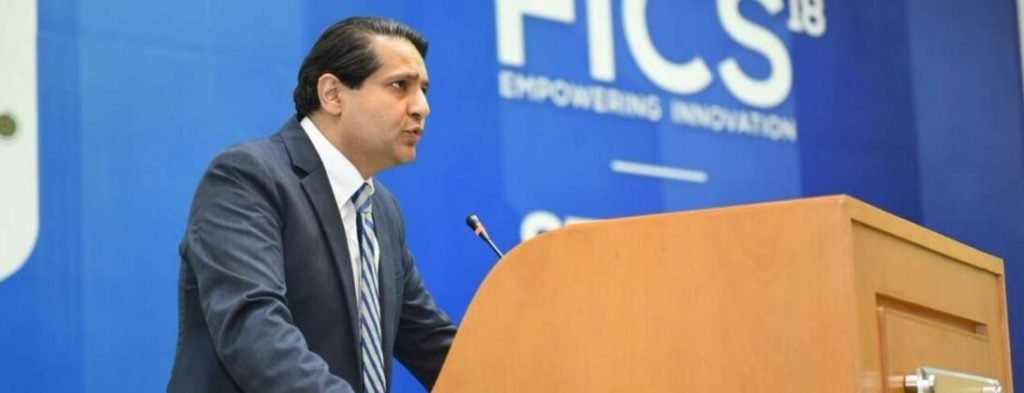
    Prime Minister (PM) Imran Khan has appointed Amer Ahmed Hashmi as chairperson for the Special Technology Zones Authority (STZA).

    According to the ordinance passed on Dec 2 for the establishment of Special Technology Zones Authority, the new authority will focus on the growth of scientific and technological ecosystem in the country, primarily by fostering the development of technology zones and high-tech industrial parks, thereby contributing to the acceleration of the evolution of the national system of innovation.

    Headquartered in Islamabad, the federal body will help promote the global competitiveness of the domestic technology sector, as well as provide institutional and legislative support to attract foreign direct investments in the high-tech sector.

    Amer Ahmed Hashmi

    The prime minister would serve as the president of the Board of Governors of the STZ Authority.

    As a global strategist, IT executive, and entrepreneur, Amer Hashmi possesses diverse global experience in organisational leadership with companies like IBM and MCI Systemhouse. He was the founding CEO of Si3 – Pakistan’s pioneering technology outsourcing firm that helped stimulate IT systems integration in public and private organizations in Pakistan. His work has been featured in Forbes Asia, Businessweek & Financial Times UK.

    Hashmi spent the last 10 years building a knowledge ecosystem in his capacity as advisor and chief strategy officer at National University of Sciences & Technology (NUST).

    He was also the chairman of executive committee of NUST Science & Technology Park and founding president of the Global Think Tank Network (GTTN).

    Hashmi is a graduate of York University, Toronto, and has been trained in several technical and specialised programmes, including executive leadership on ‘Innovation for Economic Development’ from Harvard’s Kennedy School of government.