The Supreme Court (SC) has given orders to authorities to take strict action against those officials who issued construction permits to build the illegal 15-storeyed Nasla Tower on Monday.
A two-judge bench comprising Chief Justice Gulzar Ahmed and Justice Qazi Mohammad Amin ordered the anti-corruption department to register a case against those who are responsible for the issuance of construction permits. They also directed the police to file a separate case against them.
The Deputy Inspector General (DIG) West has been given instructions to take immediate action against the officials who had approved the Nasla Tower building plan and present a report to the Supreme Court.
The Supreme court also ordered to seize the 780 square yards of the land the tower was constructed upon and directed the official assignee of Sindh High Court (SHC) to take possession of the land and prohibit its sale.
The Chief Justice also expressed his anger over the slow pace of the demolition procedure of the Nasla Tower. He asked Karachi Commissioner Iqbal Memon, “Such a building is torn down within one hour in the world. What are you people doing?”
The Karachi Commissioner replied that five floors have been demolished so far and currently 400 labourers are working on the given task.
Pakistan Railways used its land of 53 acres to construct the housing society for its employees which was allocated for railway purposes only, reports The Express Tribune.
On Monday, it was revealed during the hearing of Sindh High Court that the land was primarily given for railways purposes but it turned to real estate against all regulations to provide accommodation to their employees.
The petition was heard by a two-judge bench headed by Justice Zafar Ahmed Rajput. Sindh Additional Advocate General Barrister Sheharyar Mehar informed about the government’s decision to the court.
Shehryar Mehar said that the land consisting of 53 acres was given to the Railways for railway purposes but they did not use the land for the given purpose.
Mehar added, “The Supreme Court has declared that railway land can only be used for the railway system.”
He added, “We are taking back the land in the light of the decision of the Supreme Court.”
Sindh High Court has ordered a reply from Pakistan Railways Corporation Housing Society and others on the response from the Sindh Government regarding usage of land which is adjacent to Safari Park in Gulistan-e-Jauhar.
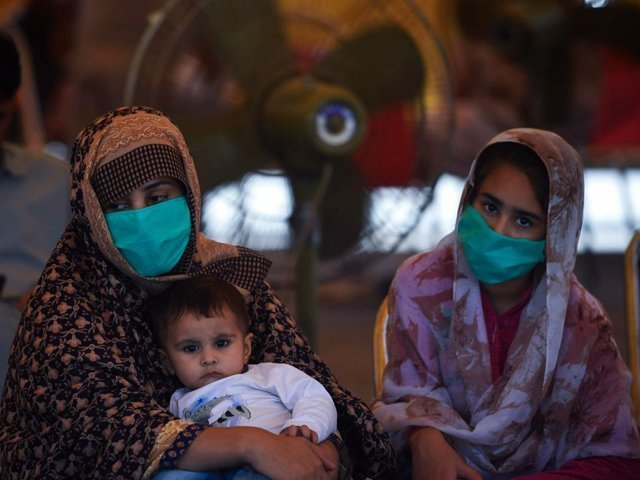
In a ruling, the Sindh High Court (SHC) has ordered the National Database Registration Authority (NADRA) to issue Computerised National Identity Card (CNIC) to a woman who didn’t know about her father’s whereabouts, reports Samaa.
Rubina was brought up by a single mother as her father had left the family many years ago. The local court ordered NADRA to issue CNIC to Rubina based on her mother’s citizenship record. Her mother works in the Education Department.
When Rubina, who is specially-abled, turned 18 and went to a local NADRA office to obtain her CNIC, she was told that the card would not be issued unless she provides the record of both her parents.
“When I went to the NADRA office, they refused to issue me CNIC and asked to bring my father or any other guardian. Where could I have found my father, who left me and my mother when I was young?”
She filed a petition with the court, which resulted in a landmark verdict. In the past, many orphans in Pakistan have faced this problem regarding the issuance of CNIC.
Advocate Usman Farooq stated that the ruling would apply to similar cases and now the children with single parents would be able to get their CNICs after producing the record of only a single parent.
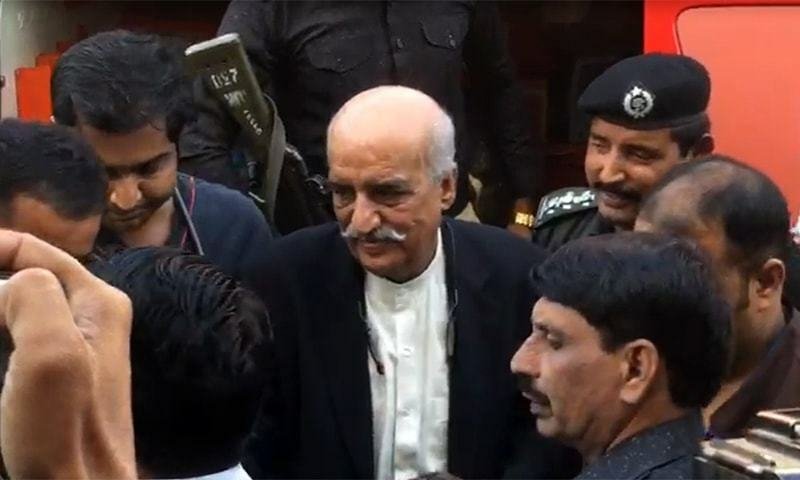
Pakistan People’s Party (PPP) leader Khursheed Shah was granted bail from the Supreme Court (SC) of Pakistan today (Thursday) in the assets beyond means case, reports Geo News.
The court has directed Shah to submit bail bonds worth Rs10 million as the surety against his bail and ordered that his name be placed on the Exit Control List (ECL).
Justice Umar Atta Bandial, who chaired the hearing of Shah’s bail plea, also directed the National Accountability Bureau (NAB) to continue its investigations but not keep Shah permanently in jail.
In July, the Sindh High Court (SHC) dismissed Shah’s request for bail. Later, he challenged the local court’s decision in the apex court.
NAB had arrested Khursheed Shah on September 18, 2019, accusing him of allotting himself an amnesty plot illegally from a cooperative society in Sukkur.
NAB also accused Shah of acquiring assets worth some Rs700 million in the names of his frontmen through illegally acquired money.
The Sindh High Court (SHC) has lifted the ban on the video-sharing app, TikTok. The ban was imposed on June 28 for spreading immorality and obscenity in the country. The case has been adjourned till July 5.
Information Minister Fawad Chaudhry has welcomed the decision by the SHC. “Technology war is being fought in the world right now.”
“The regulatory bodies and judiciary should stay away from such fights and the investors wanting to invest in Pakistan should be welcomed,” Chaudhry added.
خوشی ہے کہ سندہ ہائیکورٹ نے TikTok پر پابندی کا فیصلہ واپس لے لیا ہے، دنیا میں اس وقت ٹیکنالوجی کی جنگ چل رہی ہے کمپنیاں ایکدوسرے کے خلاف پراپیگنڈا کر رہی ہیں ہمارے ریگولیٹری ادارے اور جج صاحبان کو اس لڑائ سے علیحدہ رہنا چاہئے اور جو پاکستان میں سرمایہ کاری کرے اسے خوش آمدیدکہیں
Senator Faisal Javed Khan has urged youth to utilise social media platforms in a responsible and productive manner. The senator further added that PTA has promised to dispose of the complaints by July 5.
There are rules of ethics & etiquette for social media that must be followed. It is important particularly for our youth to leverage social media appropriately & use it in the right manner. Also we must treat ppl in our social media community with respect & kindness. All the best
— Faisal Javed Khan (@FaisalJavedKhan) July 2, 2021
The recent ban on TikTok was imposed for the third time in Pakistan. Earlier this year in March, the Peshawar High Court (PHC) banned TikTok over immoral content, but the ban was later lifted in April.
Last year, Pakistan blocked the app on October 9, 2020. The ban was lifted after the TikTok management assured the Pakistani authorities that it will block all accounts repeatedly involved in spreading obscenity and immorality.
The US State Department has said that it’s “deeply concerned” over the Sindh High Court’s (SHC) decision to release the suspects in the Daniel Pearl murder case.
“We are deeply concerned by the reports of the December 24 ruling of Sindh High Court to release multiple terrorists responsible for the murder of Daniel Pearl. We have been assured that the accused have not been released at this time,” said the State Department in a series of tweets in response to the ruling of the high court.
According to the State Department, the US government has been following this case closely. “We continue to stand with the Pearl family through this extremely difficult process,” it said, adding that it would continue to honour Pearl’s legacy.
On Thursday, the high court asked the Sindh government to release the suspects, including prime accused Omer Saeed Sheikh, who were convicted by an anti-terrorism court in 2002 for the murder of Wall Street Journal reporter Daniel Pearl. The court had also ordered the government to place their names on the no-fly list.
However, the federal government said that it would challenge the ruling and that the suspects would remain behind the bars till the decision on its review appeal.
The family of the slain US journalist also denounced the high court’s decision. Pearl’s parents said that they refused to believe that the Pakistani government and the Pakistani people will “let such a travesty of justice tarnish the image and legacy” of Pakistan.
Pearl was working on a story about religious extremists in Pakistan in the aftermath of the September 11, 2001, attacks, when he was kidnapped in Karachi.
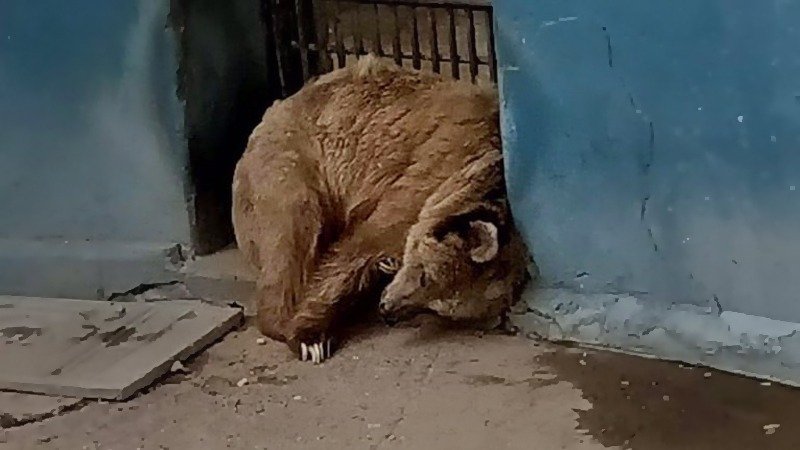
The Sindh High Court has ordered the Karachi Metropolitan Corporation (KMC) and Karachi Zoo administration to shift Rano from her 25-foot wide Victorian ‘grotto’ pit to another open cage, reportedly 500 times bigger than her current enclosure.
According to a report in Samaa News, the court ordered authorities to immediately shift the 20-year-old Syrian brown bear, who has been living a solitary life for the last three years. The instructions, recommended by a five-member team formed to evaluate the condition of the bear and the zoo, were passed on an interim basis until a final decision is taken.
It has been reported that the new cage is spread over 2,100 square feet and is on ground level, unlike her previous enclosure which was an underground pit. However, it too requires some improvisations.
@spar_pk speaking after court hearing on Rano. As an interim measure, while the lawyers from the Sindh Govt asked for more time, @spar_pk lawyers pushed and got an order to relocate Rano immediately to an adjacent space which is an above ground cage, pic.twitter.com/xwWBrSr9vE
Rano’s plight had sparked nationwide protests in the summer following which 38 people signed a petition filed in the Sindh High Court by Barrister Mohsin Shahwani on October 1, 2020. In the application, the petitioners had highlighted the animal’s plight and had alleged that the bear was not being well taken care of and was not being fed on time. The petition has demanded Rano be sent back to Skardu so that she can be among her own.
In the successive hearing on October 5, the court had instructed KMC to install an air-cooler inside Rano’s enclosure to provide her some relief. It also ordered authorities to present the zoo’s budget and details of details, expressing anger over the fact that there was only one doctor for all animals at the zoo.
According to animal experts, Rano is suffering from emotional and psychological distress which is why she is often seen panting heavily and roaming in circles. The Society for the Protection of Animal Rights (SPAR) is hopeful that Rano, in her new temporary cage, is able to move around easily, explore and play with items of an enrichment program, be able to see zoo activities, birds, trees and other animals and have a less lonely, stressed life.
For now.Till the next hearing.We will follow up with the Karachi Zoo management to ensure the new space is as per her needs,as defined in the report we submitted which was discussed in court today along with the reports of the previous court appointed committee. Source @spar_pk
Meanwhile, Islamabad’s Marghazar Zoo — which drew international condemnation for its treatment of lonely elephant Kaavan — shut down on December 16 after its final occupants Babloo and Suzie were relocated to a sanctuary inJordan.
As per details, the Himalayan brown bears suffer from psychological problems due to living in a substandard enclosure, with the female Suzie undergoing major surgery in the summer after a tumour was removed from her chest. Local vets were unable to stitch up seven inches open cut in the centre of her chest and she developed an infection. Four Paws vets, who arrived in August, operated on Suzie again and cleaned the infected wound. This was also the reason why sanctuaries within Pakistan refused to take them in.
“She is now recovering and healthy. Both bears are doing well physically now that we have put them on a better nutritional diet of fruits and vegetables. Suzie had diarrhoea all the time because she was mostly fed milk,” a spokesperson for Four Paws, Marion Lombard had told local media outlets.
Several celebrities including Hamza Ali Abbasi and Mehwish Hayat have called for zoos across the country to be shut down given the mistreatment of animals there.
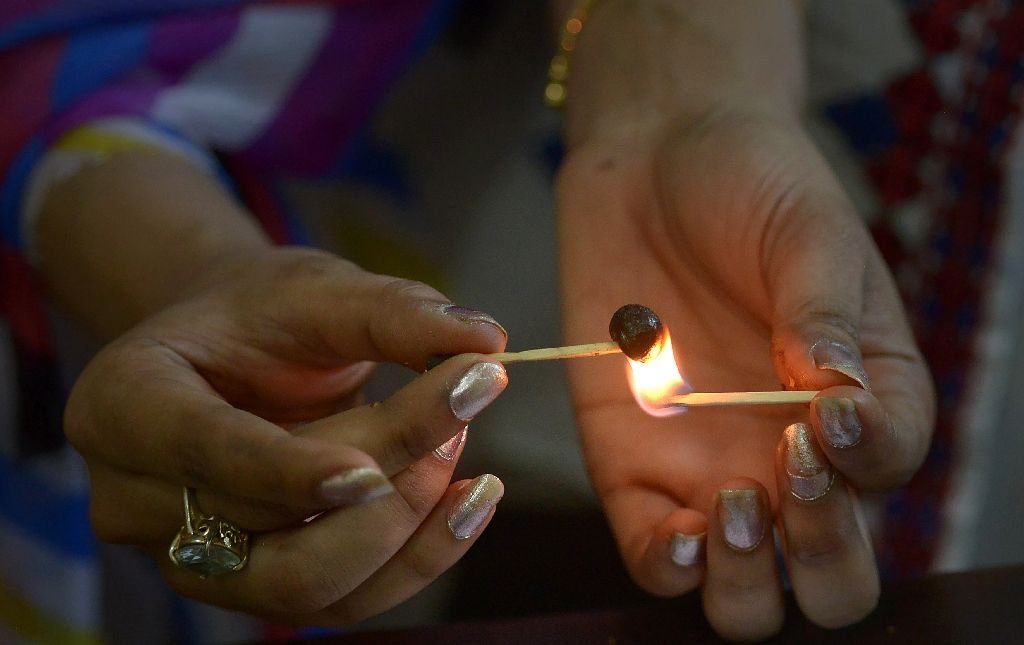
A man has approached the Sindh High Court, asking it to decriminalise carrying and smoking small quantities of hashish in the public interest.
The petitioner had requested the court that people be allowed to carry 10 grammes of hashish (chars) on their person. “What kind of a petition have you brought? Do you want everyone to start smoking chars?” responded Justice Muhammad Ali Mazhar, visibly perturbed by the plea.
At this, petitioner Ghulam Asghar Saeein informed the bench that several countries in the world have decriminalised hash.
“If you want to smoke hash then go to those countries, it is not allowed here,” responded Justice Muhammad Ali Mazhar, as he dismissed the petition.
“It will increase the country’s income and revenue,” said the petitioner at the judge’s questioning. “We do not want such money, as there are legitimate ways to increase income,” responded the judge.
Many Pakistanis are surprisingly open to using cannabis, with the spongy, black hash made from marijuana grown in the country’s tribal belt and neighbouring Afghanistan the preferred variant of the drug, said AFP news agency in a feature on the use of hashish in Pakistan in 2017.
Whereas alcohol is explicitly forbidden in Islamic scripture, hash seemingly straddles a theological gray zone, which could explain its popularity in the country.
Even if most observant Muslims in Pakistan scoff at the idea of drinking, a prod into their feelings on marijuana often triggers a wry smile followed by a trite maxim about how good it makes food taste or how restful sleep can be after a toke.
People have been smoking hash on the subcontinent for centuries. It predates the arrival of Islam in the region, with reference to cannabis appearing in the sacred Hindu Atharva Veda text describing its medicinal and ritual uses.
According to a 2013 UN survey, cannabis was the most widely consumed drug in Pakistan with around four million users, representing 3.6 per cent of the population – a figure that has drawn scepticism in a country where reliable data can be hard to come by.
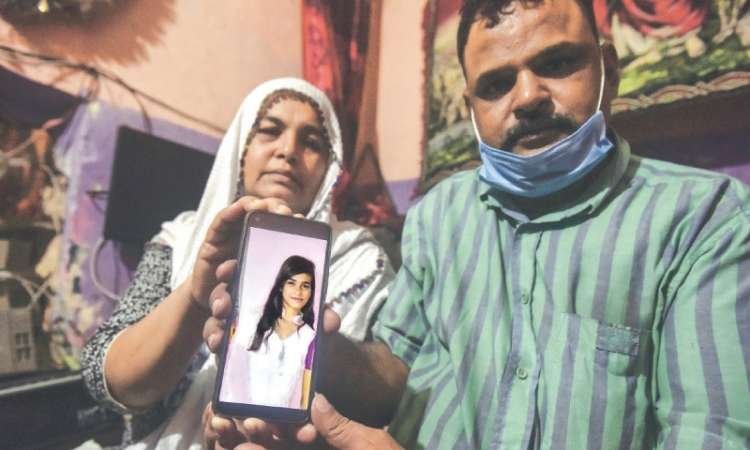
The Sindh High Court has asked the Karachi police to recover and produce Arzoo Raja — a teenage Christian girl allegedly abducted and forced to marry a man thrice her age after conversion to Islam– in the court on Nov 5.
Sindh Chief Minister’s spokesperson Murtaza Wahab confirmed this development. He said the high court ordered the police to recover the teenage girl in response to an application filed by the SHC. The girl is supposed to located within five days and then moved to a shelter home, he tweeted.
Today the Sindh High Court, on the application filed by #SindhGovt has ordered police to locate #Aarzoo within 5 days and shift her to a shelter home
On Oct 27, a two-member bench of SHC had admitted a petition filed on behalf of Arzoo Raja that claimed that she was 18 years old and had married Ali Azhar and converted to Islam with her free will, according to a report in Newsday Pakistan.
The petition also sought protection against alleged harassment of the girl’s family. Underage girls in such cases in Pakistan come under intense pressure, including threats to them and their families, to give false statements in court.
Azhar allegedly abducted Arzoo in Karachi’s Muhalla Railway Colony West Camp Road locality on Oct. 13, according to the family, which registered a kidnapping case on the same day. On Oct. 15 police summoned them to the local station and showed them documents claiming that Arzoo was 18 years old and had willingly converted to Islam after marrying Azhar.