Tag: Sindh

  • 84 per cent Pakistanis consider inflation biggest problem: survey

    84 per cent Pakistanis consider inflation biggest problem: survey

    Quarterly Performance Evaluation Survey (QPES), a Pulse Consultant’s indigenous tracking tool of public perceptions and opinions about the government’s performance and current political situation, states that 84 per cent of Pakistanis consider inflation as the biggest problem of the country.

    Almost every Pakistani has been hit by inflation and 99 per cent are reporting that ‘Inflation increased in past three months’, reveals the survey.

    According to the survey, 65 per cent of Pakistanis blame the current sitting government for the country’s poor economic conditions, while 29 per cent blame previous governments.

    18 per cent of the country is satisfied by Prime Minister (PM) Imran Khan’s performance — 56 per cent believe PM Khan’s claim that Pakistan is out of the economic crisis. Just 15 per cent think that inflation will be reduced in the next three months.

    About the problems in the country, 80 per cent of the people think that unemployment is the biggest problem of the country while 37 per cent of the people have of opinion that corruption is the main problem of Pakistan.

    Similarly, 70 per cent Pakistanis believe that the economic situation of the country is going downhill as well.

    Read More- 59% traders consider Pakistan is not ‘moving in right direction’: Gallup Survey

    Furthermore, 69 per cent of Pakistanis believe that the country is going in the wrong direction.

    Respondents of the survey did not buy the government’s narrative where all blame was hurled at the previous regime that the current economic crises are due to previous governments’ loans. The majority of the respondents — 65 per cent — believe that it’s all due to Pakistan Tehreek-e-Insaf’s (PTI) wrong economic policies.

    When it comes to the provincial province’s performance, 55 per cent of Pakistanis in Punjab are dissatisfied and just 9 per cent are satisfied – 34 per cent are in between. Talking about Sindh, 42 per cent are dissatisfied and just 18 per cent are happy; the remaining 39 per cent are in-between.

    In Khyber Pakhtunkhwa (KP), 55 per cent are dissatisfied and just 24 per cent are satisfied –20 per cent are in-between. Whereas in Balochistan, 55 per cent are dissatisfied and just 10 per cent are satisfied – 35 per cent are in-between.


  • PPP plans protest against PTI in Islamabad, PTI retaliates with own protest in Sindh

    PPP plans protest against PTI in Islamabad, PTI retaliates with own protest in Sindh

    Addressing a press conference in Karachi, federal Minister for Marine Affairs Ali Haider Zaidi along with federal Minister for Planning and Development and Special Initiatives Asad Umar, said that the Pakistan Tehreek-e-Insaf (PTI) will launch a mass movement from February 26 from Ghotki towards Karachi, a day before Pakistan People’s Party’s (PPP) planned long march towards Islamabad on February 27.

    The PTI leaders said that the march would lead to the fall of the “Zardari mafia” and put PTI in charge of the provincial government in 2023.

     “Prime Minister (PM) Imran Khan is clear about this and confident that this bandit rule in Sindh should end. And for that, the PTI Sindh is going to launch a massive movement from February 26 to reach out to every single person in the province and unite the people against this unjust rule of corruption and bad governance,” said Zaidi.

    “The PPP government has only promoted the culture of corruption, bribery, and incompetence. From water supply to farmers to jobs for youngsters, every segment of life is marred by corruption,” said Zaidi.

    “The PPP administration in Sindh is not a government but a mafia”, said Zaidi, adding that the key example of this corrupt system was the chief minister, who was actually an accountant of former president Asif Ali Zardari and was given the role only to serve his master.

    Earlier this month, PPP Chairperson Bilawal Bhutto-Zardari announced that he will lead a “long march” against the PTI government from Karachi to Islamabad on February 27.

    Bilawal said that the nation wants to get rid of the “selected” government and a transparent election is the only solution.

  • NCOC bans indoor events in cities with Covid positivity rate over 10%

    NCOC bans indoor events in cities with Covid positivity rate over 10%

    According to the National Command and Operation Centre (NCOC), all indoor gatherings and events have been banned in the districts and cities with Covid-19 positivity rate exceeding 10 per cent. However, only outdoor wedding events are allowed to be organised with a maximum of 500 guests.

    The ban will go into effect from January 24 , the NCOC said.

    The decisions were taken after the NCOC held a detailed review of the country’s current coronavirus situation along with the corresponding Nonpharmaceutical Interventions (NPIs). The forum differentiated the new NPIs depending on whether districts have Covid-19 positivity rate up to 10 per cent or above.

    The NPIs to be implemented are as follows depending on the positivity rate and specify that they are for fully vaccinated individuals:

    Gatherings

    • Indoor gatherings allowed up to 300 individuals, outdoor up to 500 for districts with positivity up to 10pc
    • Indoor gatherings banned, outdoor up to 300 for districts with positivity rate more than 10pc (with effect from Jan 24)

    Weddings:

    • Indoor weddings allowed up to 300 individuals, outdoor up to 500 for districts with positivity rate up to 10pc
    • Indoor weddings banned, outdoor up to 300 for districts with positivity rate more than 10pc (with effect from Jan 24 and will remain effective till February 15)

    Dining:

    • Indoor and outdoor dining both allowed for districts with positivity rate up to 10pc
    • Indoor dining banned (with effect from Jan 24), outdoor allowed for districts with positivity rate more than 10pc

    Education sector:

    • Education activities will continue for those under and over 12 in districts with positivity rate up to 10pc
    • Education activities will continue with staggered attendance at 50pc capacity for those under 12 and 100pc attendance for those over 12 in districts with positivity rate more than 10pc
    • Those over 12 will need to be fully vaccinated in both situations
    • Vaccination will be mandatory (at least one dose) for those over 12 from Feb 1
    • Aggressive sentinel testing to be carried out for targeted closures in institutes with high disease prevalence
    • Federating units in consultation with health authorities will decide limits for closure of educational institutions

    Gyms, cinemas, shrines, amusement parks:

    • Indoor activities allowed for districts with positivity rate up to 10pc
    • Indoor activities allowed at 50pc capacity for districts with positivity rate more than 10pc

    Sports:

    • All sports activities allowed for districts with positivity rate up to 10pc
    • Ban on contact sports (karate, boxing, martial arts, rugby, water polo, wrestling and kabaddi) for districts with positivity rate more than 10pc


    The NCOC decided that markets and business activities will continue without any restrictions. Employers are encouraged to let people work from home where possible.

    Similarly, intercity public transport has been restricted in districts with high coronavirus positivity ratios at 70pc and 80pc in railways. The ban on serving of meals was also maintained for public transport and domestic air travel.

    The curbs come as the country is in the grip of the fifth wave, which is being driven by the highly transmissible Omicron variant.

    It should be noted that in the last 24 hours, the coronavirus positivity ratio in Pakistan was 9.48pc when 5,472 infections were recorded, with Sindh and Punjab leading the charge in new cases reported.

    Owing to a surge in the number of Covid-19 cases, several educational institutions in Islamabad and Karachi have also decided to close all schools to curb the rapid spread of the virus.

  • Usman Buzdar is ahead of all Chief Ministers in performance: survey

    Usman Buzdar is ahead of all Chief Ministers in performance: survey

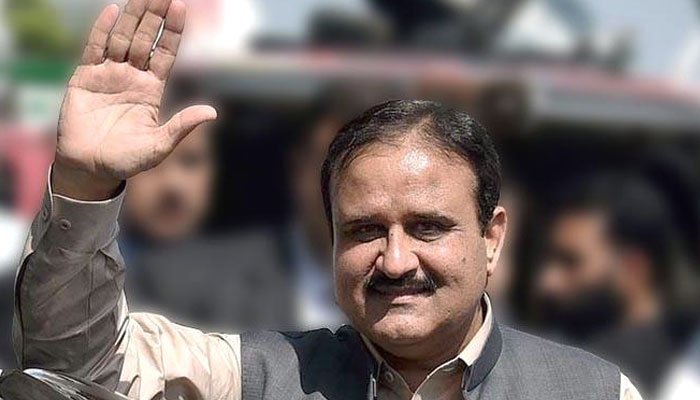
    The Institute for Public Opinion Research (IPOR) in its recent survey has found Punjab Chief Minister (CM) Usman Buzdar is leading in satisfaction level for developmental works in comparison to other chief ministers, reports The News.

    As per the survey, Buzdar is ahead as 51 per cent of respondents from Punjab are satisfied with him. CM KPK Mahmood Khan ranked second by securing a 48 per cent satisfaction rating. CM Balochistan Mir Abdul Qudoos Bizenjo secured 43 percent while CM Sindh Murad Ali Shah got only a 38 per cent rating.

    The research center surveyed from December 22, 2021, to January 9, 2022, in which they ask the opinion of 3,700 respondents from different provinces.

    About the improvement in the performance of provincial health departments, 72 per cent are satisfied with Buzdar while CM Shah is at last with a 53 per cent rating.

    Similarly, in the education sector 86 per cent of people have shown their satisfaction with CM Punjab and KPK education department drew the appreciation of 80 per cent of respondents.

    In all the sectors, Pakistan People’s Pakistan (PPP) CM Sindh is behind among all the other CMs.

  • Sindh bans meals in public transport amid Omicron upsurge

    Sindh bans meals in public transport amid Omicron upsurge

    A notification issued by the Home Department, Government of Sindh, on Tuesday says that “in exercise of the powers conferred under Section 3(1) of the Sindh Epidemic Diseases Act, 2014 (The Sindh Act VIII of 2015) is pleased to impose ban on serving of meals / snacks in domestic air travel and public transport within the territorial jurisdiction of the province of Sindh with effect from 17 January 2022 and till further orders”.

    The Civil Aviation Authority (CAA) on Saturday banned the serving of meals on domestic flights in line with the directives of the National Command and Operation Centre (NCOC) to curb the spread of Omicron variant of coronavirus in the country while Sindh has also banned meals in public transport.

    The NCOC decided to extensively engage with provinces, especially with the Sindh government, for necessary measures to tackle the rising disease.

    The Sindh Home Department empowered the deputy commissioners, additional deputy commissioners, assistant commissioners, Mukhtiarkars, as well as the transport department and police officers not below the rank of inspector to take legal action against any violation of the direction.

  • NCOC to decide on closing schools after checking positivity rates

    NCOC to decide on closing schools after checking positivity rates

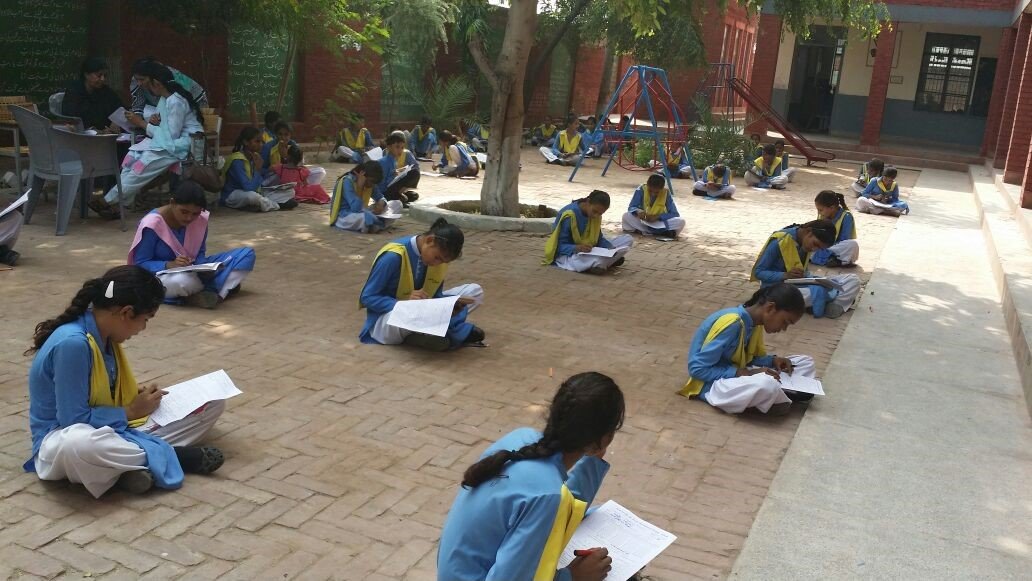
    After the much-awaited meeting today about the schools’ closure, the National Command and Operation Centre (NCOC) did not make a decision on whether schools will be closed or not in the wake of the highly transmissible Omicron variant.

    The NCOC had called a meeting of the provincial health and education ministers on Monday.

    In a statement, they said, “Decision about education institutions will be taken on data of positive cases of various institutions for which massive testing in educational institutions is being carried out.”

    Punjab health minister Dr Yasmin Rashid informed the ministers that 85 per cent of the students in Punjab have been fully vaccinated and the Covid-19 situation in the province is under control.

    In Sindh, Chief Minister (CM) Murad Ali Shah decided that educational institutions will continue in the province despite an alarming surge in cases as Karachi has reached a 40 per cent positivity rate.

    Meanwhile, earlier today a total of 4,340 new cases have been reported in the country.

  • PML-N is the most popular party in Punjab, reveals survey

    PML-N is the most popular party in Punjab, reveals survey

    Institute of Public Opinion Research (IPOR) did a survey in which it was revealed that Pakistan Muslim Leauge-N (PML-N) is still the most famous party in Punjab.

    Punjab:

    As per the survey with 46 per cent of people said they will vote for PML-N. PML-N is followed by PTI with 31 per cent voters. The survey further revealed that bout 5 per cent will vote for the PPP, 3 per cent for the TLP, while 2 per cent said that they will vote for the PMLQ.

    Sindh:

    Whereas in Sindh Pakistan Peoples Party (PPP) is leading with 44 per cent voters supporting it. Only 13 per cent people voted for PTI and over 7 per cent said they will vote for MQM. Three per cent people said they will vote for Tehreek-e-Labaik Pakistan (TLP) and only one per cent people in Sindh will vote for the most popular party in Punjab, PML-N.

    Khyber Pakhtunkhwa:

    In Khyber Pakhtunkhwa, the ruling party is the most popular with 44 per cent votes followed by Jamiat Ulema-e-Islam with 17 per cent votes. 11 per cent people said they will vote for PML-N and 11 per cent said they will vote for ANP. Seven per cent for the PPP, 3 per cent for Jamaat-e-Islami, while one per cent of people will vote for the Qaumi Watan Party.

    Balochistan:

    In Balochistan, 20 per cent people said they will vote for Balochistan Awami Party (BAP). Over 18 per cent said that of people will vote for the PTI. While 15 per cent said that they will vote for PPP, 14 per cent for PML-N, 8 per cent JUIF, 5 per cent Balochistan National Party, 5 per cent said they will vote for PkMAP, while 2 per cent said they will vote for ANP.

  • Factcheck: Sindh is not closing down schools, offices because of Covid

    Factcheck: Sindh is not closing down schools, offices because of Covid

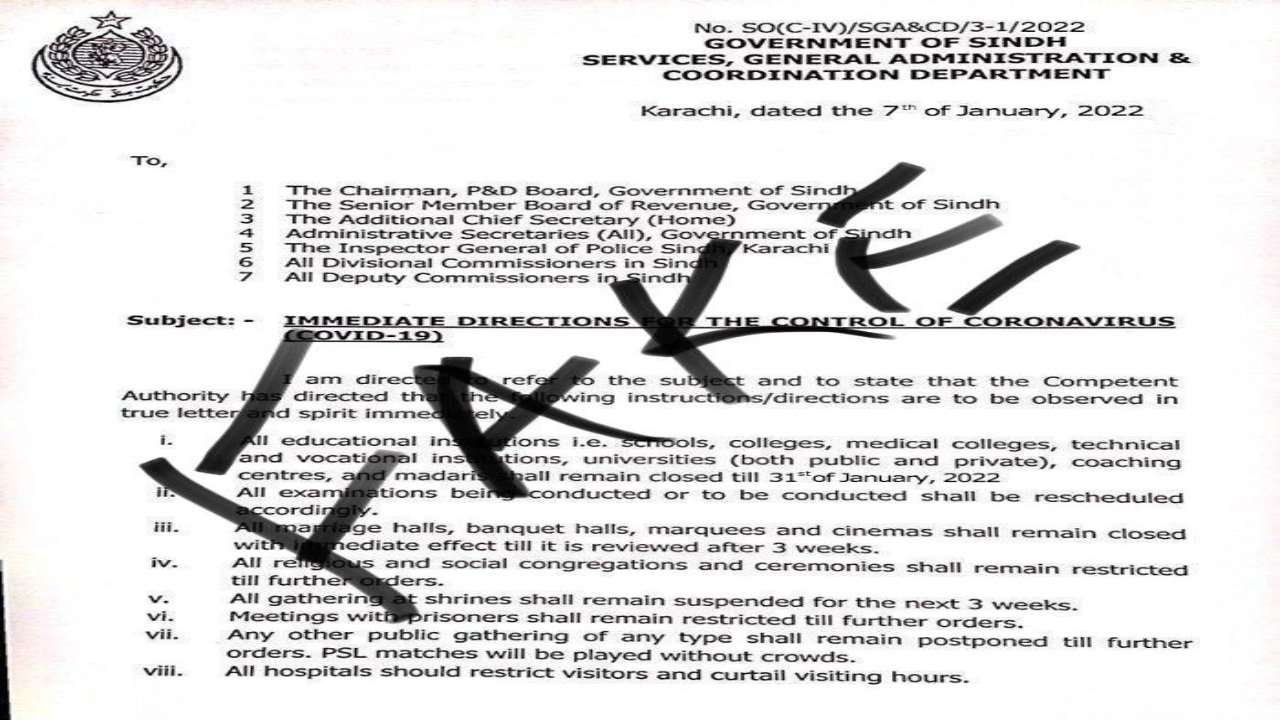
    A notification circulating all over social media stating that schools and offices are being closed until January 31 is fake. The notice was allegedly issued by the provincial government. However, the spokesperson of the Sindh government, Murtaza Wahab has denied that the provincial government issued any notification on the lockdown and closure of schools.

    Murtaza Wahab also said previously, in a high-level meeting, that the provincial government does not want to take strict action and requested people to follow precautionary measures to avoid the spread of the virus.

    The emergence of cases related to the omicron variant of coronavirus have exceeded 50 percent in the province, especially in Karachi.

    Meanwhile, the Sindh Minister for Health, Dr Azra Pechuho said on Thursday that the lockdown could be imposed after assessing the cases of omicron variant which is increasing steadily day by day.

    She also revealed that 500 cases have been reported during the last 24 hours which shows a widespread increase of the new strain of coronavirus.

  • ‘No lockdown for now,’ says NCOC chief despite rising cases

    ‘No lockdown for now,’ says NCOC chief despite rising cases

    The National Command and Operation Center (NCOC) chief Asad Umar said that the government has no intentions of imposing a coronavirus lockdown for now in the country.

    According to Geo News, Asad highlighted that instead of lockdowns, the government is focusing on ramping up vaccinations and strict implementation of the bans placed earlier on certain activities if one is not vaccinated.

    50 per cent of the cases in Sindh are of Omicron and the statistics show that the city’s positivity ratio reached 9.23 per cent on Wednesday.

    Jinnah Sindh Medical University (JSMU) Acting Vice-Chancellor Prof Dr Shahid Rasul said, “Coronavirus cases of the Omicron variant are going up in Karachi because of a lack of vaccinations.”

    Meanwhile, Pakistan’s coronavirus positivity ratio exceeded 2 per cent for the first time since October 14 last year, as 1,085 new infections were detected.

  • How and where to get your free booster shot in Pakistan

    How and where to get your free booster shot in Pakistan

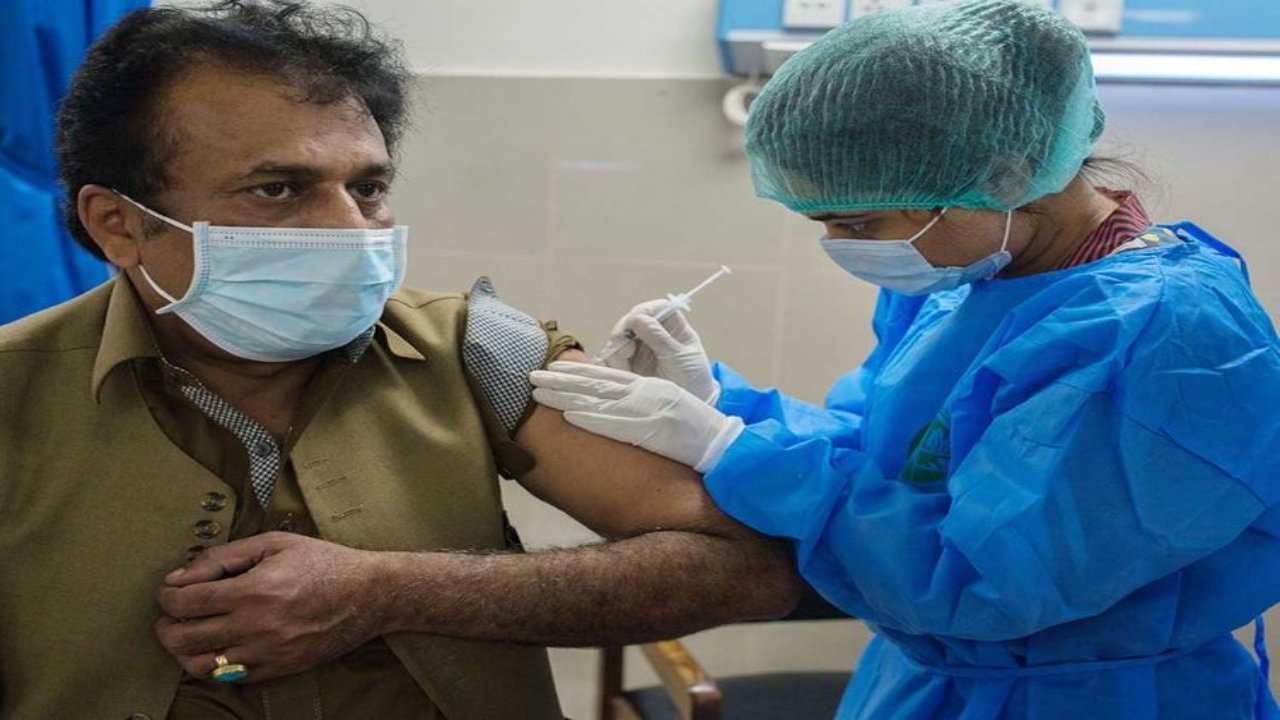
    The fifth wave of Covid-19 has recently emerged all over Pakistan. Authorities have urged citizens to get vaccination completely and follow strict SOPs. Those who completed two doses of the vaccine can get booster shots from designated centres.

    Eligibility of booster shot

    According to the National Command and Operation Centre (NCOC), health personnel, citizens who are above aged 30, and those children who are above age 12 and have weak immune systems can receive booster shots.

    It is important to note for those people who want to get a booster shot, the gap between the second dose of vaccine and booster shot should be more than six months.

    Which vaccine you can choose?

    People can choose booster shots of their choice from four available vaccines which are Sinopharm, Sinovac, Moderna, and Pfizer.  

     Director-General of Ministry of National Health Service, Dr Rana Safdar said, “mix and match has been allowed or booster of the same company, which was administered earlier, can be given as per the choice of the people.”

    Here, the term “mix and match” means those people who had been vaccinated with another vaccine, can get booster shots from the different manufacturing companies.

    Where people can receive booster shots?

    Sindh:

    The media coordinator of the Provincial Health Department, Mehar Khursheed told that people can get booster shots from any vaccination centre in the province. People need to take their vaccination cards and the National Identity cards to get shot in the vaccination centre.

    Punjab:

    According to the spokesperson for the Primary and Secondary Healthcare Department, doses for booster shots are available in all approved district headquarters hospitals (DHQs) and tehsil headquarters hospitals (THQs).

    Balochistan

    The administration of booster shots had started already from December 30 according to the Provincial Coronavirus cell in charge Dr Naqeebullah. The facility of booster shots is available at 96 vaccination centres in the province. He notified that the people who got the dose for booster were all above aged 30 with six month time period gap from the second dose of vaccination.

    Khyber Pakhtunkhwa

    Director-General Health Department Niaz Mohammad said that all approved vaccines are available to vaccination across the province for booster shots. People need to take their vaccination cards to get a dose of the booster.

    Islamabad

    According to the spokesperson of the Ministry of Health, Sajid Shah, all Chinese manufacturing vaccines, Sinopharm and Sinovac are available in all vaccination centres for booster shots however for other vaccines Moderna and Pfizer are available in mass vaccination centres.

    Azad Jammu and Kashmir

    Divisional Monitoring Officer for Covid-19 Vaccination, Shafaq Malik said that people can get booster shots from any of the approved vaccines available at currently 142 centres in the region.