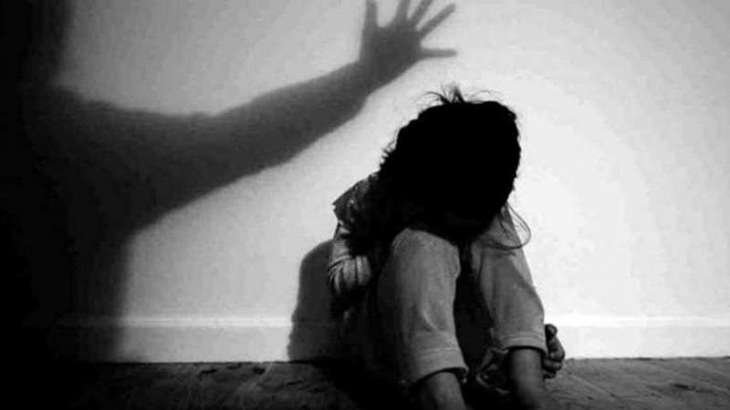
Pakistan has been plagued by episodes of rape and abuse over the years that it has now become common to the extent that people have started normalising such acts.
Back in 2002, Mukhtaran Mai’s gang-rape was one of the most horrifying gang-rape incidents that were reported.
Another major incident that took place in 2014 was the Layyah gang-rape case, where a 20-year-old girl after being gang-raped, was found hanging from a tree. Such inhumane incidents haven’t stopped even now.
Two men stole her money and the jewellery she had on her. They then raped her in front of her two children in a nearby field and escaped.
The incident sparked national outrage but what happened next? Before the arrest of the two culprits, questions like “Why was she out on the motorway so late without a brother or husband? Why didn’t she check her gas tank before leaving the house? And if she had to travel, why didn’t she take the more public GT Road route?” were asked because, sadly, in our country ‘getting raped’ is the woman’s fault. Apparently, a woman gets raped because ‘she was driving alone, on the wrong road, at the wrong time, in the wrong place’.
Later, the motorway rapists were sentenced to death but rape cases continued to rise in Pakistan.
On October 12, 2020, our team started counting rape cases on a daily basis from 13 different sources, which included these newspapers: Dawn, The News, The Express Tribune, The Nation, Pakistan Today, Daily Times, Nawa-e-Waqt, Daily Jang. And from these websites: ARY News, Geo News Samaa News Dunya News Aaj News.
It is to be noted that the given stats only include the reported incidents, not the ones that go unreported.
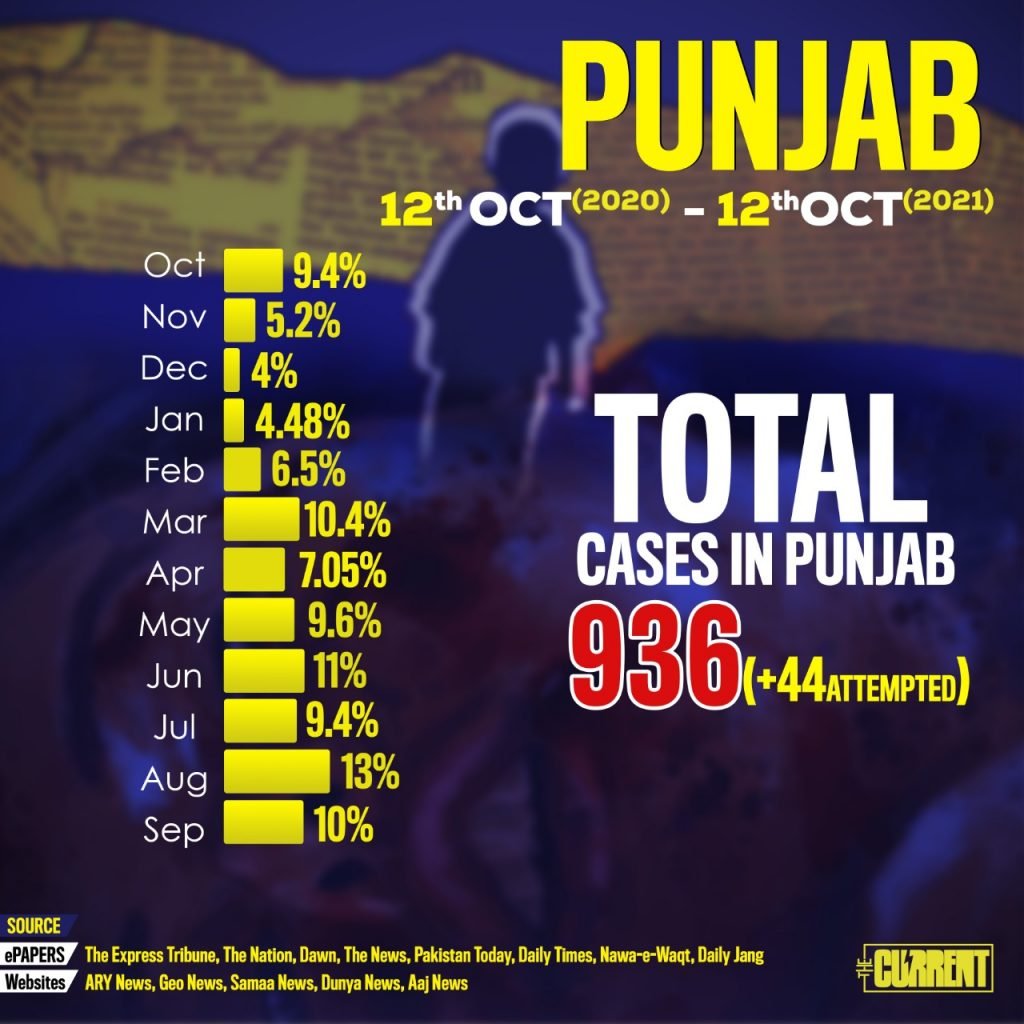
During the process, we have included reported rape cases of girls, boys, women, men and transgenders. Moreover, we have divided the rape cases province-wise, according to which Punjab till date has the highest number of rape cases, i.e. 936 rape cases and 44 attempted incidents.
It has been a year since we have started posting our rape template daily to analyse the record of reported rape cases. We have collected the data of the entire year (October 12, 2020 to October 12, 2021) and prepared slides of reported cases of each month provinces-wise.
Provinces Categorisation:
Sindh
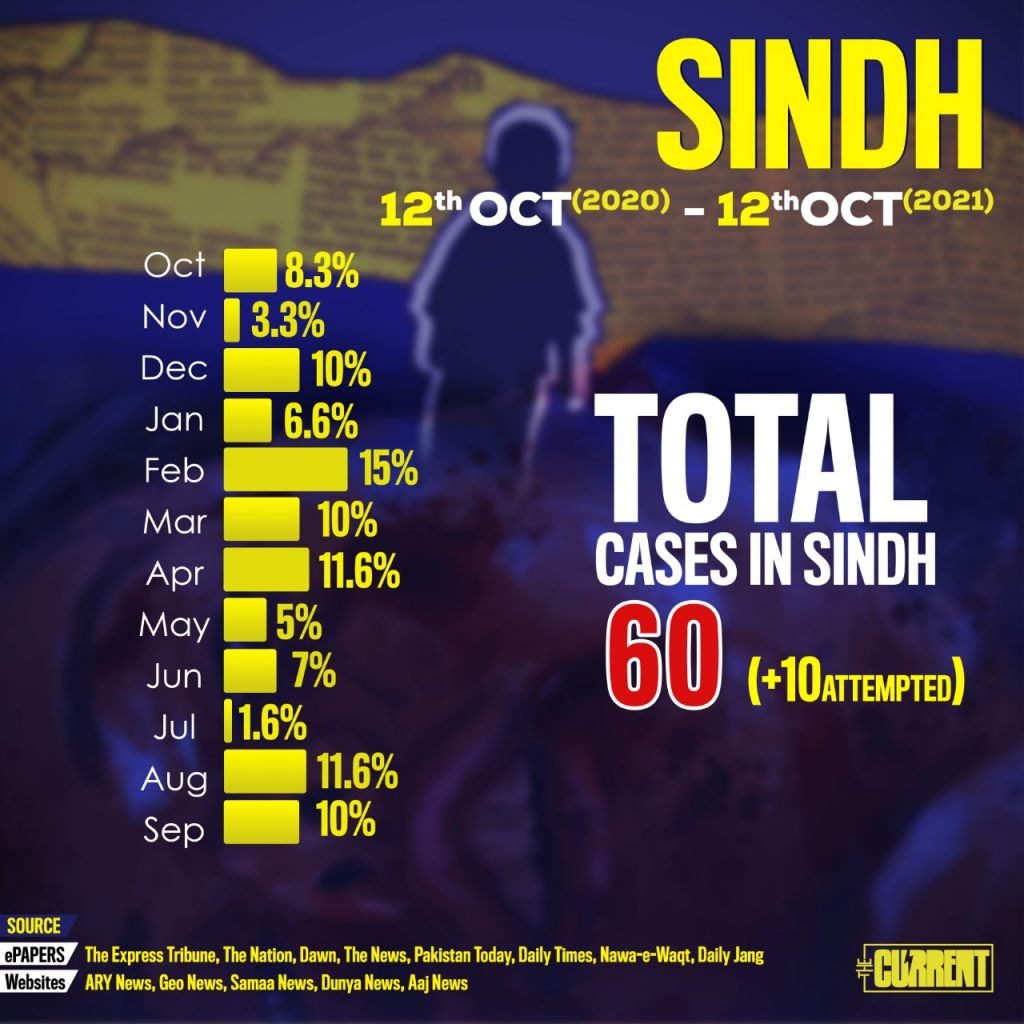
Till date, Sindh has recorded a total of 60 reported rape cases in which 10 are attempted incidents. 11.6 per cent of cases were reported in the month of April and August as per the graph.
Punjab
Punjab has recorded a total of 936 reported rape cases in which 44 are attempted incidents until now. 13 per cent of cases were reported in August.
Islamabad
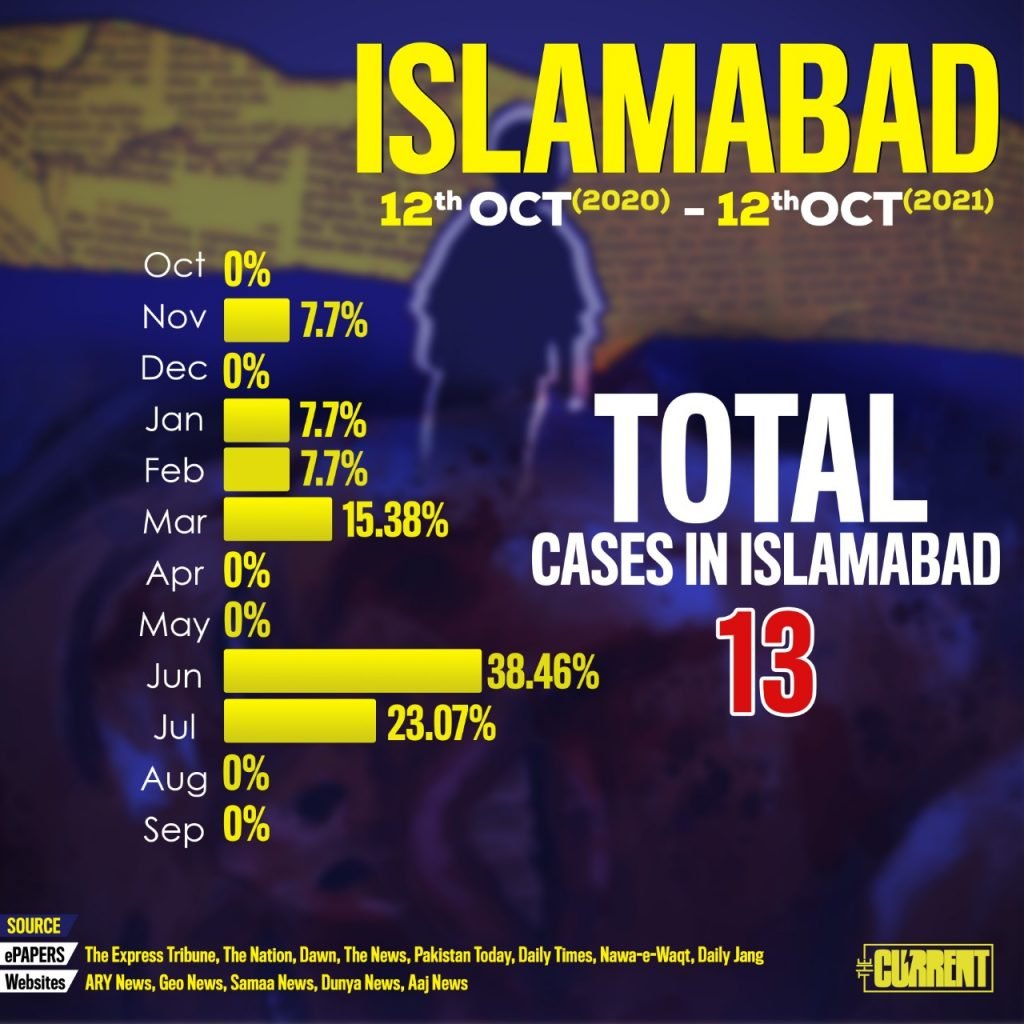
The capital has recorded a total of 13 reported rape cases which no attempted cases until now. The reported cases are relatively low as compared to other provinces’ data. However, 38.46 per cent of rape cases were reported in June this year.
Balochistan
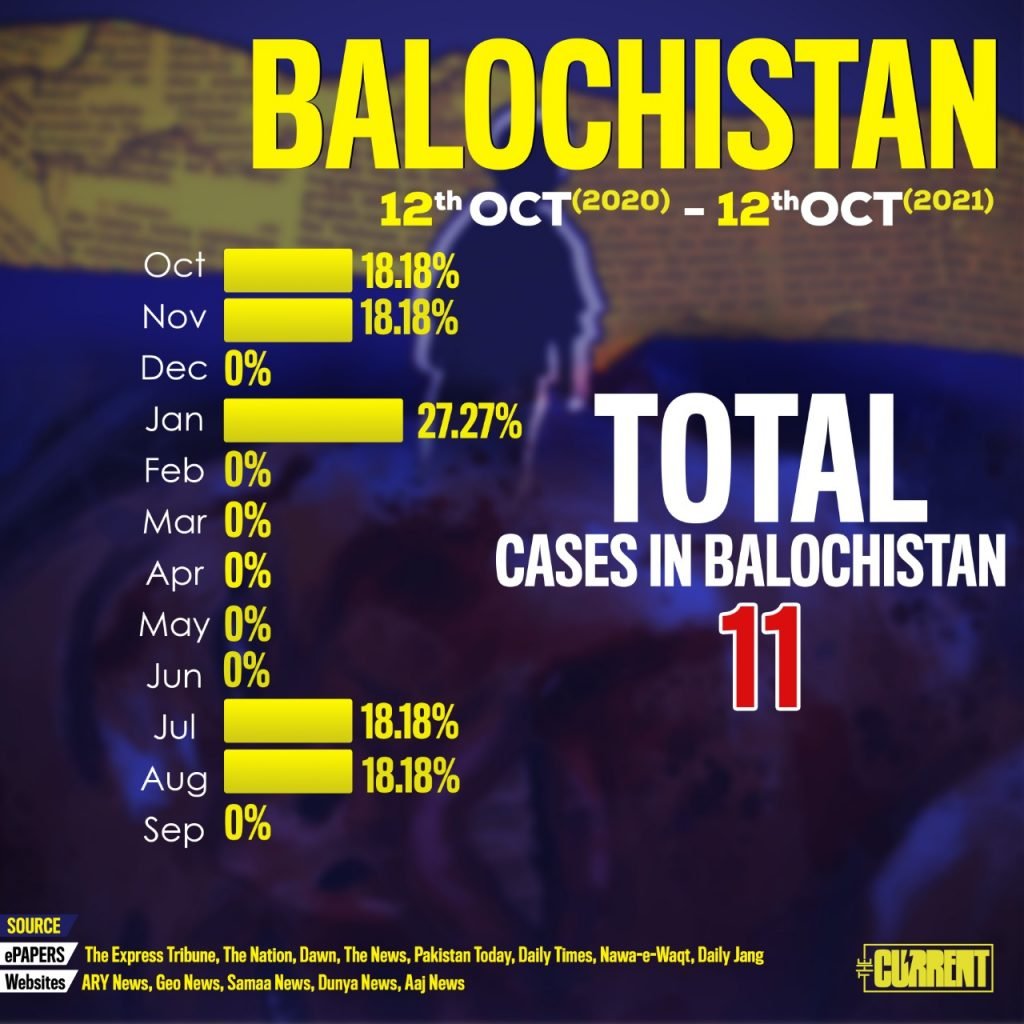
Balochistan has reported a total of 11 reported rape cases. Most of the months show zero reported rape cases, according to the graph.
KPK
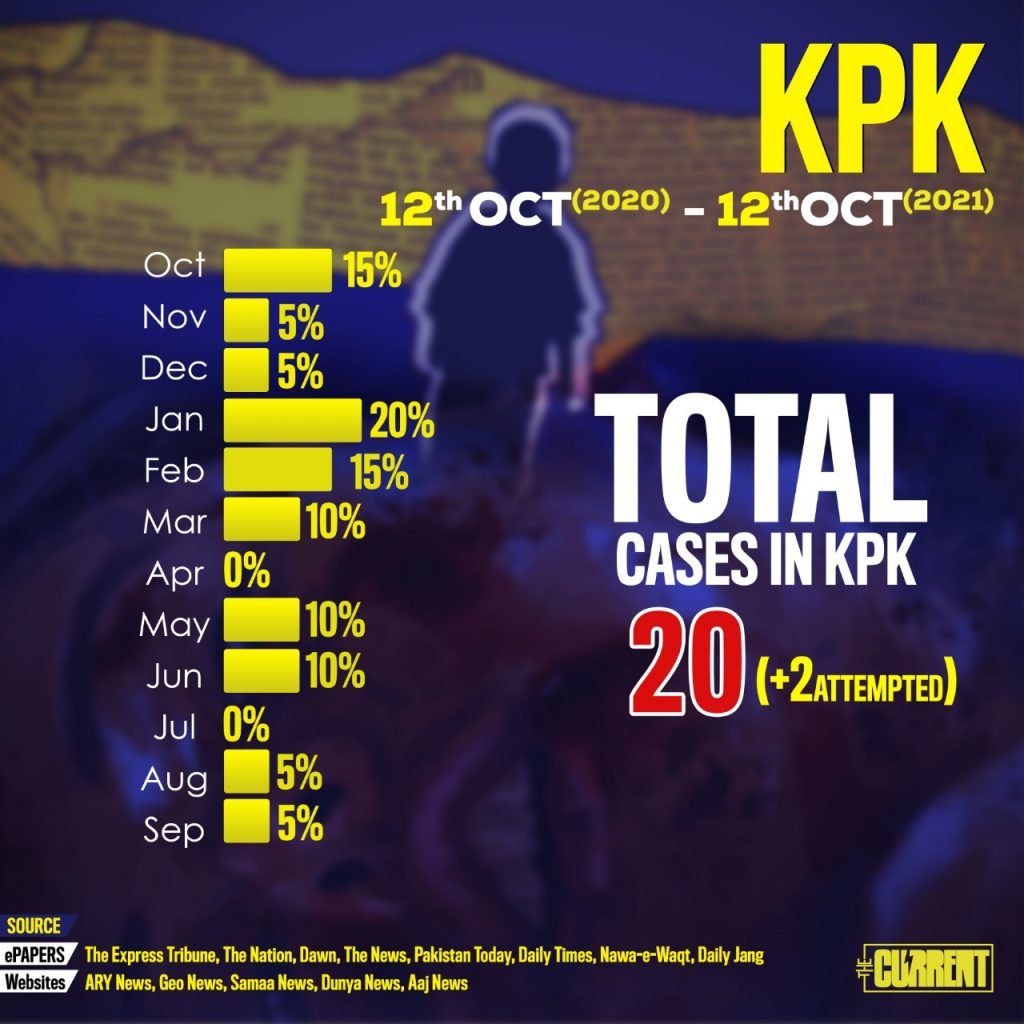
Khyber Pakhtunkhwa (KPK) has reported a total of 20 reported rape cases of which 2 were attempted incidents. The numbers throughout the months are quite the same.
Deaths (province-wise)
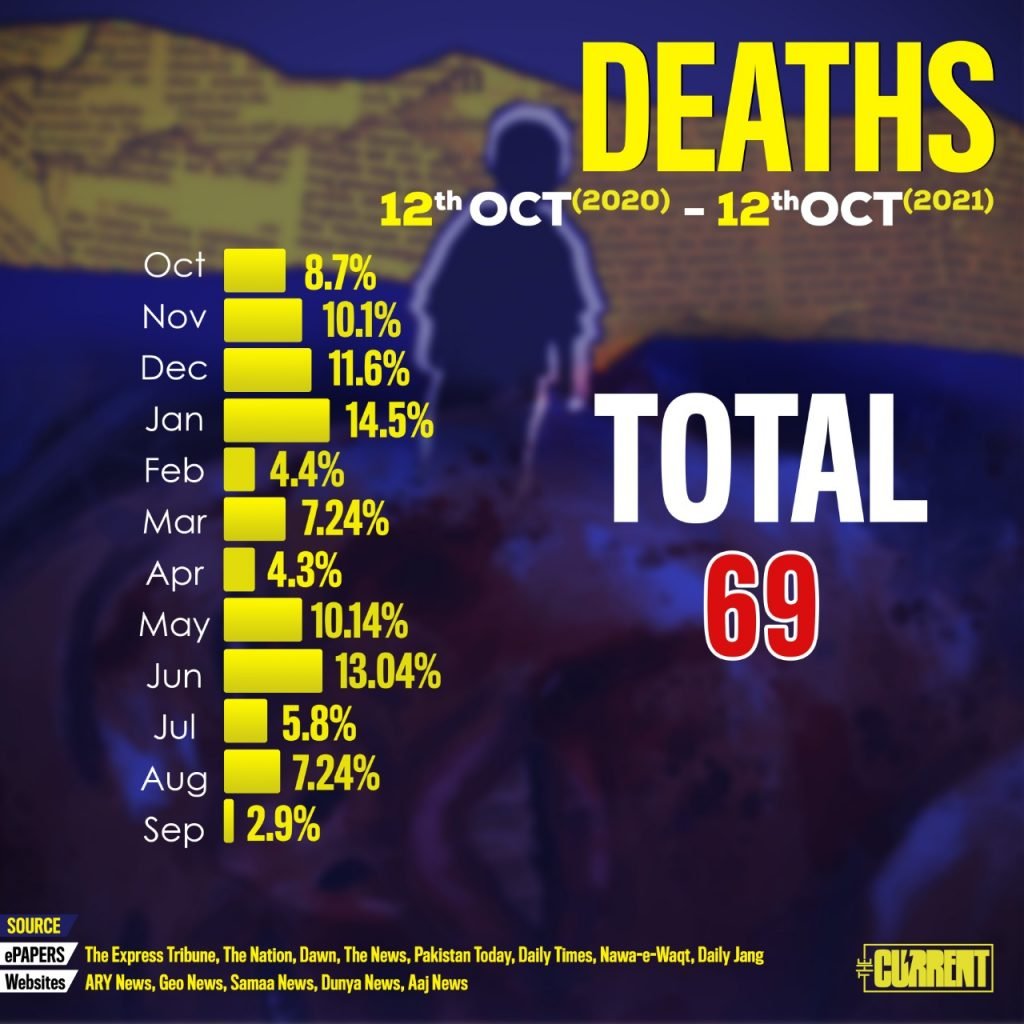
As per the graph, the death rate was high in the month of January i.e.14.5 per cent.
Numbers of the recorded cases after the highlighted incidents of 2021
After the following incidents, we noticed an increase in the reporting of rape cases.
Mufti Aziz-ur-Rehman: sexual assault case
On June 17, police registered a criminal complaint against Mufti Aziz after a male student accused him of sexual abuse. In the aftermath of a viral graphic video that showed Mufti engaging in sexual intercourse with the male student, who was the victim, the action was taken against Mufti Aziz. After the incident, we noticed an increase of 10.7 per cent in the reporting of rape cases in the month of June.
Usman Mirza’s sexual assault on a couple
Usman Mirza was arrested on July 7. He was seen torturing and assaulting a couple. He was also seen stripping naked a woman in the video. The video sparked outrage across Pakistan. After the petrifying incident, an increase of 9 per cent was observed in the reporting of rape cases in the month of July.
Noor Mukadam’s murder case
On July 20, Noor Mukadam, daughter of former Pakistani diplomat Shaukat Mukadam, was raped, beheaded and murdered, in a posh neighbourhood of Islamabad in July. Noor’s murder led to nationwide protests. After her murder, as per the reported cases we have monitored, there was an increase of 12.6 per cent in the month of August.
There are many more cases that are still unreported due to various reasons.
According to The News, official statistics obtained from the Police, Law, and Justice Commission of Pakistan, Human Rights Commission of Pakistan, Women’s Foundation, and provincial welfare agencies in 2020 revealed that there are at least 11 rape cases reported in Pakistan every day with over 22,000 rape cases reported to the police across the country in the last six years.
The Sindh Blood Transfusion Authority (SBTA) has revealed that a total of 1,357 people were diagnosed with HIV in Sindh during the first eight months of 2021 after their blood samples were tested at the blood banks in 24 districts of the province, Waqar Bhatti reported for Geo News.
“During the first eight months of this year, around 455,742 donors donated their blood at 166 blood banks in the 24 districts of Sindh, of which 1,357 donors were found to be infected with HIV, which amounts to 0.29% of the samples,” Dr Durre Naz Jamal, the SBTA director, revealed in a meeting of the provincial health department.
“Of the 455,742 blood samples tested in the province, around 24,088 were found reactive or infected with either of five different diseases,” Dr Durre Naz said as she explained that 5.28% (24,088) of the donors were diagnosed with one or more infectious diseases and could not donate blood. Blood samples in Pakistan are screened for five infectious diseases — HIV, hepatitis B, hepatitis C, syphilis, and malaria — to prevent recipients from having these diseases through blood transfusion but sometimes, unscreened blood is transfused to people as most of the blood banks lack the facility of nucleic acid testing (NAT), a molecular technique for screening the donated blood.
The SBTA data presented to the provincial health minister revealed that 8,155 or 1.79% of blood donors in Sindh were infected with hepatitis B while 7,995 or 1.75% were infected with hepatitis C.
In addition to that, as many as 6,142 blood donors were found to be infected with syphilis, a sexually transmitted infection. The percentage of the donors infected with syphilis was 1.34, Dr Durre Naz said, adding that 448 blood donors had also been found to be infected with malaria. According to the data presented to the health department, the highest number of blood donors infected with HIV were found in Karachi’s District East where 653 persons were found to have HIV in their blood, followed by District South of Karachi, where 431 blood donors were found to be infected with HIV.
Similarly, Karachi’s District South had the highest number of blood donors infected with hepatitis B and C, where 2,603 donors were found to be infected with HBV and 2,923 blood donors with HCV.
Directing the SBTA to strictly implement the screening system for safe blood transfusion across the province, Dr Pechuho said a dashboard of blood screening results should be immediately established to prevent the spread of diseases caused by blood transfusions.
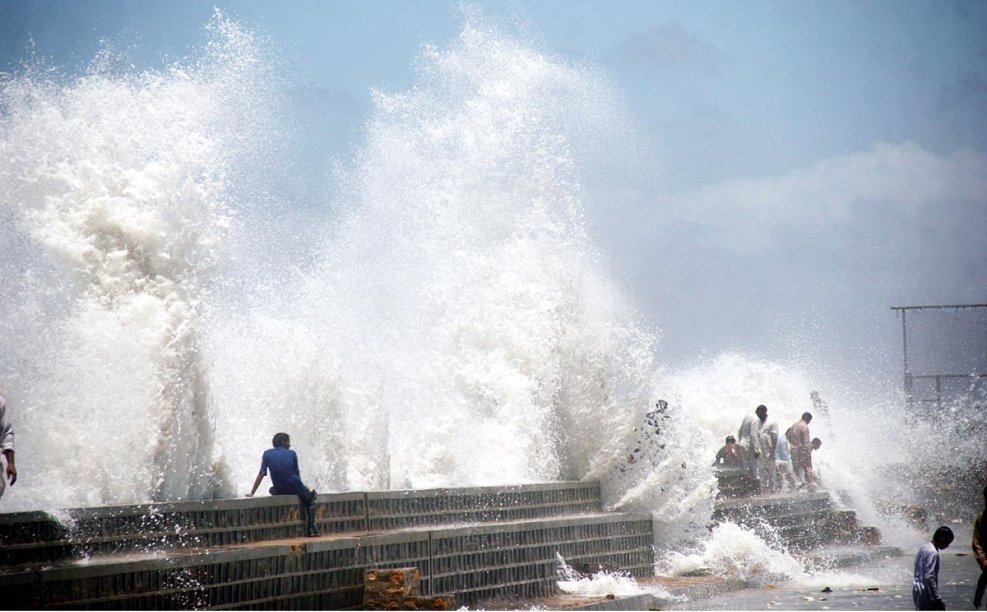
The Pakistan Meteorological Department (PMD) issued a warning to Karachi residents as a cyclone named Gulab nears the Sindh-Makran coast.
People are advised to keep at a distance from trees, billboards and polls, Director Met Office Sardar Sarfaraz told ARY News.
Earlier, as per the official notification, the coastal belts had also been warned as the sea conditions would remain very rough with high surge at times till October 3.
The department also suggested that there will be urban flooding in Karachi, Badin, Thatta, Hyderabad, Dadu, Mirpurkhas, Shaeed Benazirabad, Lasbela, Sonmiani, Ormara, Pasni, Gwadar, Turbat and Jiwani.
The notification said: “The system is likely to intensify further into a cyclonic storm during the next 24 hours and move northwestwards.”
However, the Met Office said that the PMD Tropical Cyclone Warning Centre, Karachi is closely monitoring the system.
Currently, Hashtag #CycloneGulab is one of the top trends on Twitter Pakistan as heavy rainfall has caused electricity poles to fall in different parts of the city.
JUST IN: Gusty winds, taller waves feared in Pakistan’s Karachi, as storm nears. People are advised to keep at a distance from trees, billboards and polls, authorities issue alert for people near coastal belts to evacuate. Para-military force on scene #CycloneGulabpic.twitter.com/nKYxBO4yOF
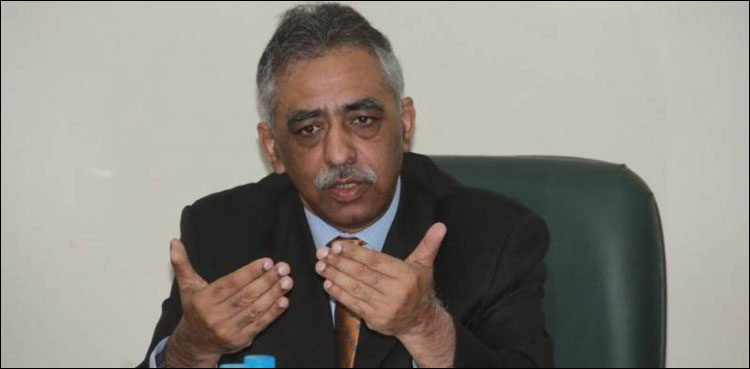
Pakistan Muslim League-Nawaz’s (PML-N) Muhammad Zubair’s leaked video, where he is allegedly seen in compromising acts with women, went viral on social media.
The former governor of Sindh has categorically denied the video and termed it to be a “new low in politics” along with claiming that the video is “fake and doctored”.
“Whoever is behind this has done an extremely poor and shameful act. I have served my country with honesty, integrity and commitment. Will continue to raise my voice for betterment of Pakistan,” Zubair wrote on Twitter.
The mobile footage, which allegedly shows the PML-N leader in bedrooms with women is blurred and the women cannot be identified. It has stirred a debate on social media on whether the video is real and if so, how the ‘footage’ has been leaked.
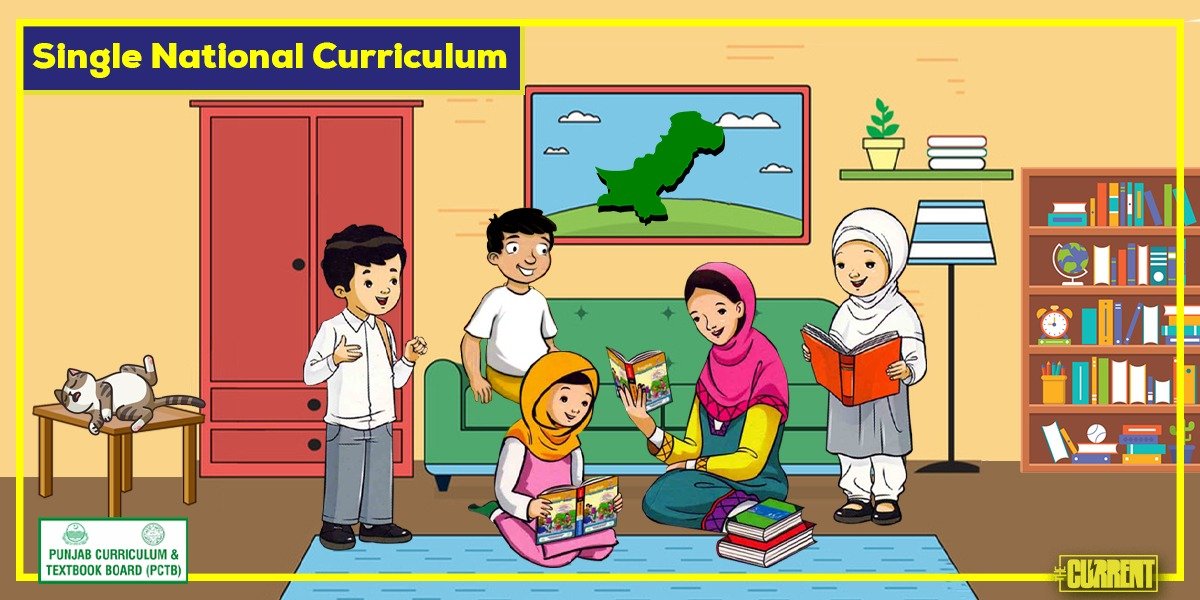
On August 16, 2021, Prime Minister Imran Khan officially launched the Single National Curriculum (SNC). The newly launched curriculum was prepared by the National Curriculum Council (NCC) and the Ministry of Federal Education, in consultation with the provinces. According to PM Khan, “SNC would transform the nation into a unified one.”
What is SNC?
According to the Ministry of Federal Education and Professional Training, the SNC is a ‘uniform’ system of education, which means the same curriculum for everyone. All public schools, private schools, and madrassas were meant to have the same curriculum so that the learning outcomes are similar and without any discrimination in teaching standards. This is not the first time SNC was imposed in Pakistan. It was previously introduced in 2006 by Former President Musharraf. Whereas the previous SNC was a curriculum-based initiative, the one introduced by the PTI government is imposing the use of the textbooks produced by the provincial boards.
Is it being implemented across the country?
No. Sindh has decided not to implement the curriculum since education is a provincial issue. Only Punjab and Khyber Pakhtunkhwa have enforced it so far. However, many schools in both provinces — including the prestigious Aitchison College, Lahore — expressed their concerns over the books in the curriculum. The Director of the National Curriculum Council (NCC), Dr Mariam Chughtai, has also said that madrassas will implement the SNC syllabus in five to six years, which undermines the reason why the government had wanted to introduce the SNC in Pakistan – to bring madrassas into the mainstream so students would be able to get jobs in other professions after they graduated.
Controversies surrounding the SNC
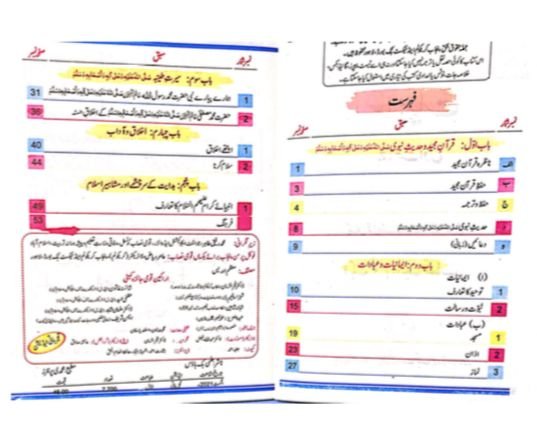
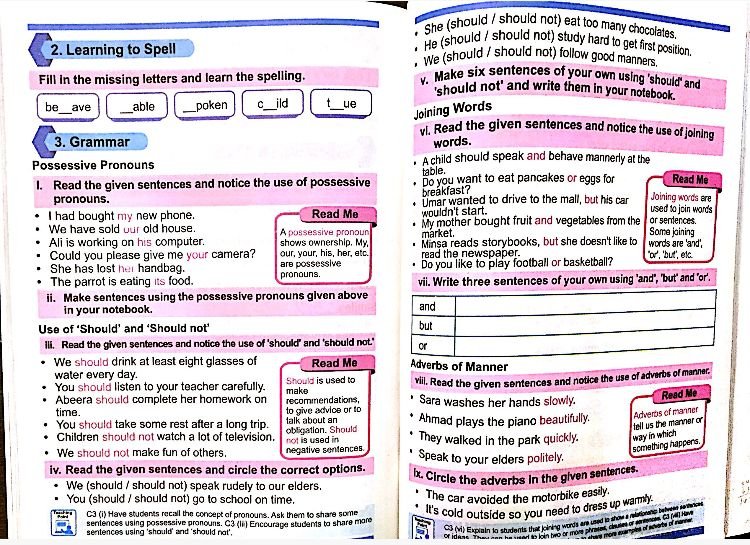
After the SNC syllabus was imposed on schools across Punjab, many controversies surrounding the books and the curriculum came forward. From the disparity in gender representation, the reinforcement of patriarchal gender roles, the lack of female heroes, and religious texts in the non-religious books.
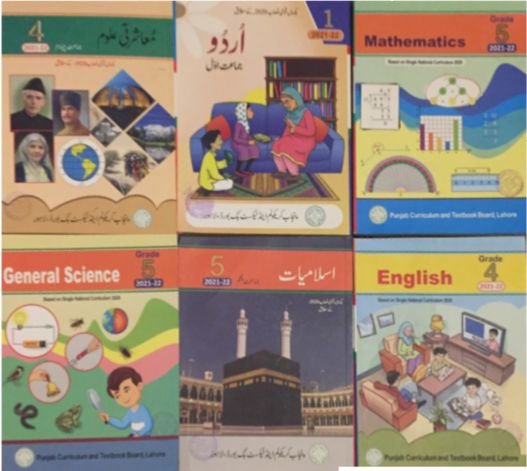
To see if the criticism is valid, The Current analysed the following books published under the Punjab Textbook Board (PTB):
Urdu books from grades 1 to 5, English books from grades 1-5, Mathematics books grades 1, 2, 4, and 5, General Science grades 4-5, Waqfiyat Aama grade 1 and 3, Social Studies 4-5, and Islamiat grade 1- 5.
Two books were not available at the time of research. Grade 3 Math and Waqfiyat Aama grade 2, which have not been included in the study.
The analysis here has been divided into two parts.
Part one comprises the data analysis of all the books included in the SNC by the Punjab Text Book board.
Part two comprises the data analysis of individual subjects being taught to the students.
We studied the total number of male and female representations in the books, a comparison of the eastern and western wear of both genders, the presence of religious (Islam and others) content in non-religious books, and studying the distribution of power roles assigned to both men and women.
Here is the list of most common criticism against the curriculum and the evidence we found:
SUMMARY OF CONTENT IN ALL SNC BOOKS
1- Disparity in Gender Representation:
One of the most debatable points in the entire SNC is the representation of men and women.
After a thorough evaluation, we found that the concerns about the disparity in gender representation are TRUE.
The study reveals that a total of 60.2 percent of the books have images of men, including boys and only 39.4 percent of the books have images of women, including girls.
2-Women represented in hijab vs non-hijab, and women in western clothes:
What the women are wearing became a source of contention in the discussion about the SNC, with critics suggesting that the women should equally represent the country in terms of the hijab, eastern clothes, and the choice to wear western wear.
It is TRUE that there is no equal representation of women’s appearance in the books.
Women’s appearance was divided into three categories.
A) Number of women wearing eastern clothes with hijab.
B) Number of women wearing eastern clothes without hijab.
C) Number of women wearing western clothes.
Our research shows that 41.6% of all women and girls in the SNC books are wearing a hijab, 28.9% are wearing eastern clothes without a hijab, and 29.4% of the images show girls wearing western wear. It is important to note that in the western wear percentage, almost all of the images are of young girls. Older women are not shown wearing western wear.
3-Men represented in eastern vs western clothes:
Since the appearance of women in eastern wear and hijab became controversial, we also studied how many times men appeared in western or eastern wear.
A massive 79.9 percent of men were seen wearing western clothes, in comparison to 20 percent dressed in eastern clothes.
4- More men in ‘power roles’ compared to women:
Another controversy suggested that the books did not show women in positions of ‘power’, and they were mostly listed as helpers or homemakers. While there were many images that showed women in ‘inferior roles’ to men, there were women that were shown in roles of power.
This controversy is TRUE.
We defined power roles shown in the books as doctor, pilot, lawyer, police officer, traffic warden, army sports personality, etc and after analysing all the books, we found that a men are given power roles three times more than women. The results in the graphic below are based on the total number of images shown of men and women in all the SNC Punjab books.
I
5. Religious content in non-religious books
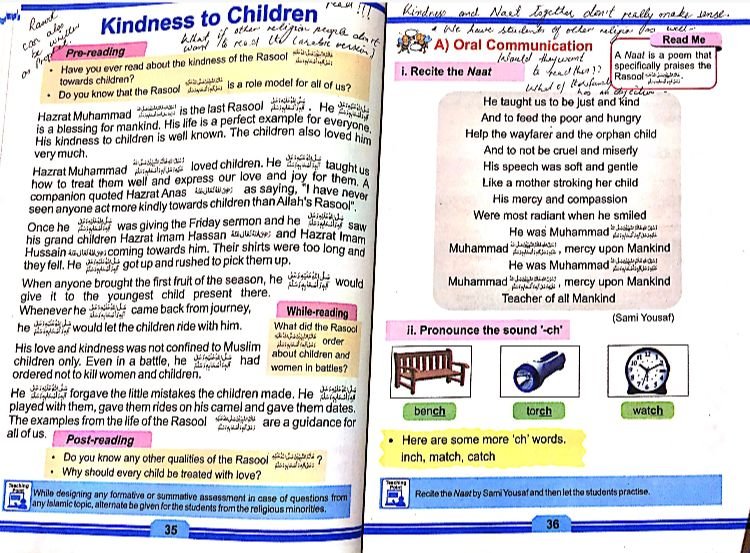
In almost all the books which were studied, we saw the presence of religious references or mentions in non-religious books. Minorities felt their rights were being compromised since books that are not for religious studies should not have references to a specific religion, which may come under the context of ‘preaching’.
In our analysis, we saw a total of 7.77 percent of religious text in all SNC non-religious books, which lends TRUTH to the fact that there is religious content in non-religious books.
Religious content is present in 7.7 percent of English, Math, Social Studies, Urdu, Science, and General Knowledge books.
7.47 percent of books have references to Islam while 0.27 percent mention other religions in all non-religious books.
Dr Mariam Chughtai, while answering a question for The Current about the religious references in non-religious books, did not provide a clear answer but stated that these are model books that require changes.
SNC BOOKS ANALYSIS – SUBJECT ANALYSIS
This section of the report comprises an analysis of individual subjects being taught to students. The subjects under study were, Urdu books from grades 1-5, English books from grades 1-5, Mathematics books grades 1, 2,4, and 5, General Science grades 4- 5, Waqfiyat Aama (General Knowledge) grades 1-3, Muashrati Uloom (Social Studies) grades 4-5.
The graphical representation of the subject-wise evaluation is as follows:
English:
In 668 pages of English books, 58.1 percent have male representation while females have 41.8 percent.
29.7 percent of women are seen with Hijab and 70.2 percent are without Hijab.
There is a total of 9.8 percent presence of religious text in English books. This is based on the total number of pages in English books.
Mathematics:
In 672 pages of the Math books, when gender representation was analysed, 51.1 percent of the books have male representation and 48.8 percent have female representation.
A total of 53.9 percent of females are seen without hijab and 46 percent are seen wearing hijab.
The Math books have a 4.1 percent presence of religious text. This is based on the total number of pages in Math books.
Urdu:
The five Urdu books comprising 791 pages. A total of 59.7 percent presence of males are seen as compared to 40.4 percent of females.
58.5 percent of women/girls are seen wearing hijab and 41.4 percent are seen without hijab.
12.8 percent of religious text is present in Urdu books. This is based on the total number of pages in Urdu books.
General Science:
Out of 310 pages, 76.8 percent have male representation as compared to 23.1 percent female representation.
64 percent of women/girls are seen without hijab and 36 percent of women/girls are seen with hijab.
The General Science books have a 0.96 percent presence of religious content. This is based on the total number of pages in Science books.
Waqfiyat Aama (General Knowledge):
49.5 percent of male images are seen in comparison to 50.15 percent of females.
23.1 percent of females are seen with hijab and 76.8 percent without hijab.
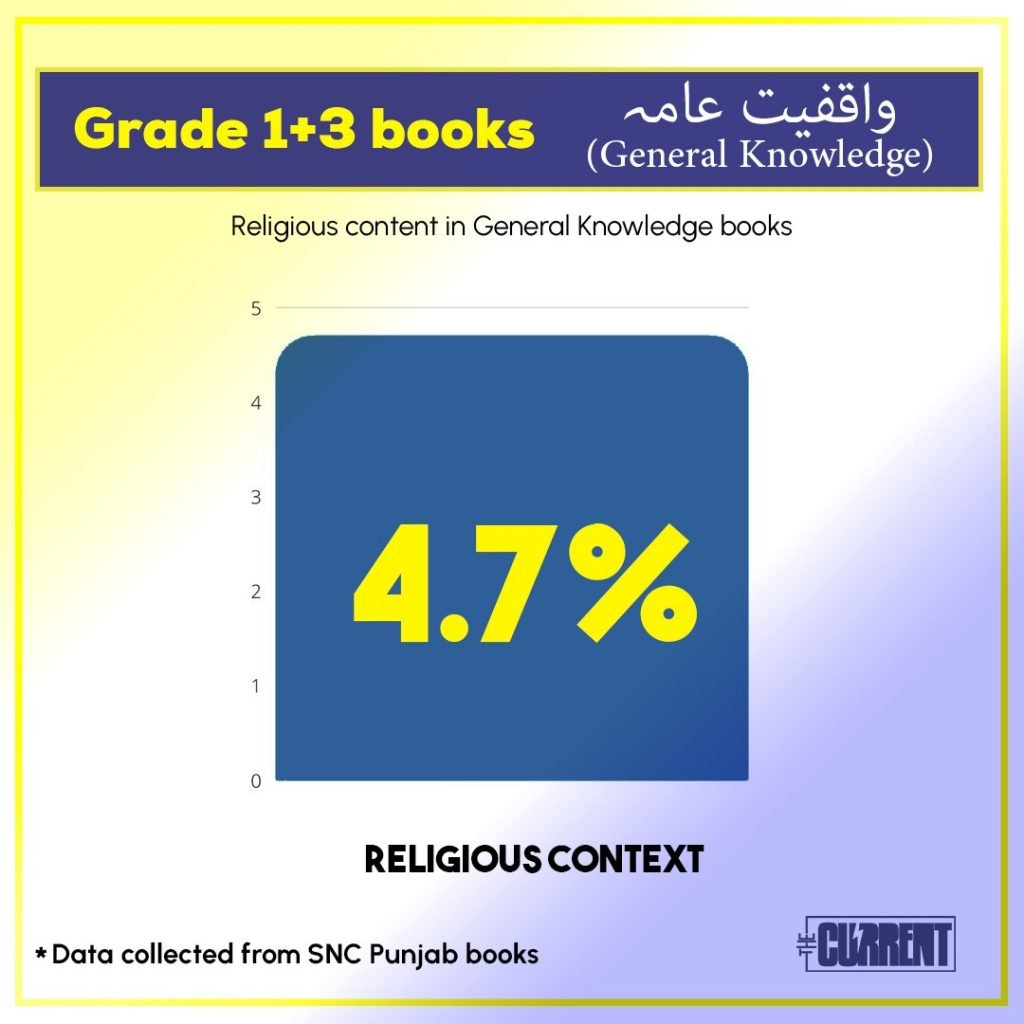
There is a 4.7 percent presence of religious text in the books studied. This is based on the total number of pages in General Knowledge books.
Muasharti Uloom (Social Studies):
From 234 pages analysed, 65.1 percent of men/boys are represented in the books and 34.8 percent of females are shown.
36.8 percent of females are seen without hijab and 63.1 percent are seen with hijab.
10.2 percent of religious content is present in the books. This is based on the total number of pages in Social Studies books.
The last portion of the report highlights the pros and cons, which we have observed in almost all the books. We have provided both positive and negative outcomes deduced from the books after careful analysis.
The positive outcome deduced from the books:
1. The books are locally published and designed. The books are affordable, with a total set for one grade set at Rs. 800 per child according to Dr Chughtai.
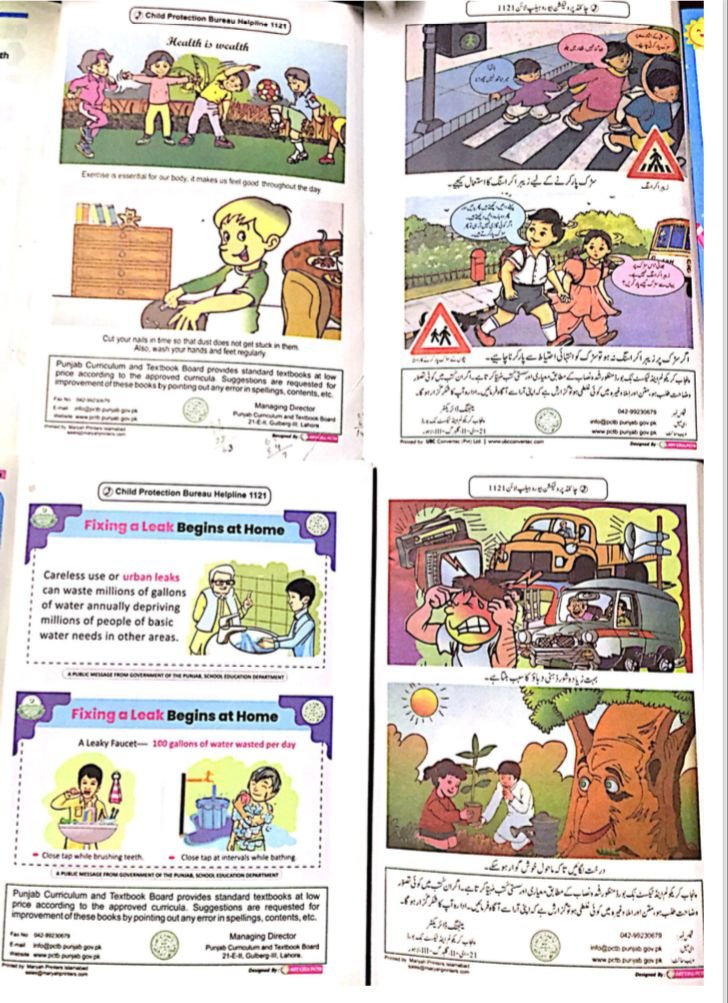
2. There is a public service message printed at the end of each book to raise awareness against talking to strangers, crossing the road, exercising, and even information about fighting dengue.
The possible negative impact of the books
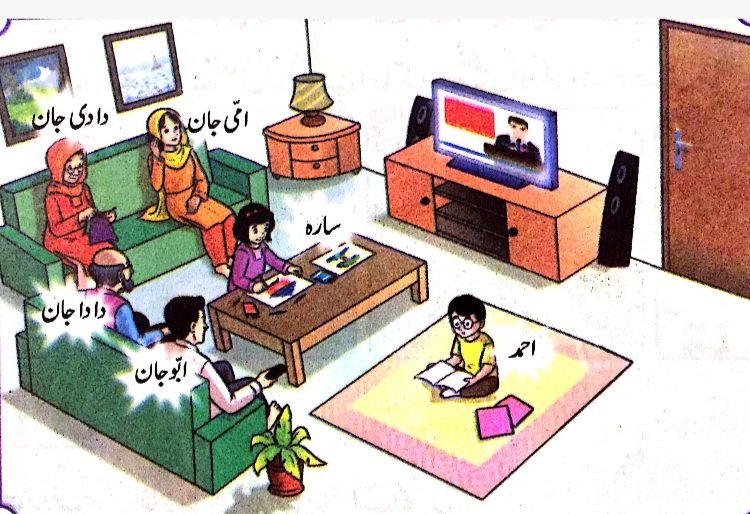
1. After analysing the books, we deduced that mostly nuclear families have been shown in the books. No representation of single parents or children being raised by guardians is seen. Moreover, the presence of both parents is seen as almost essential in all stories in the books.
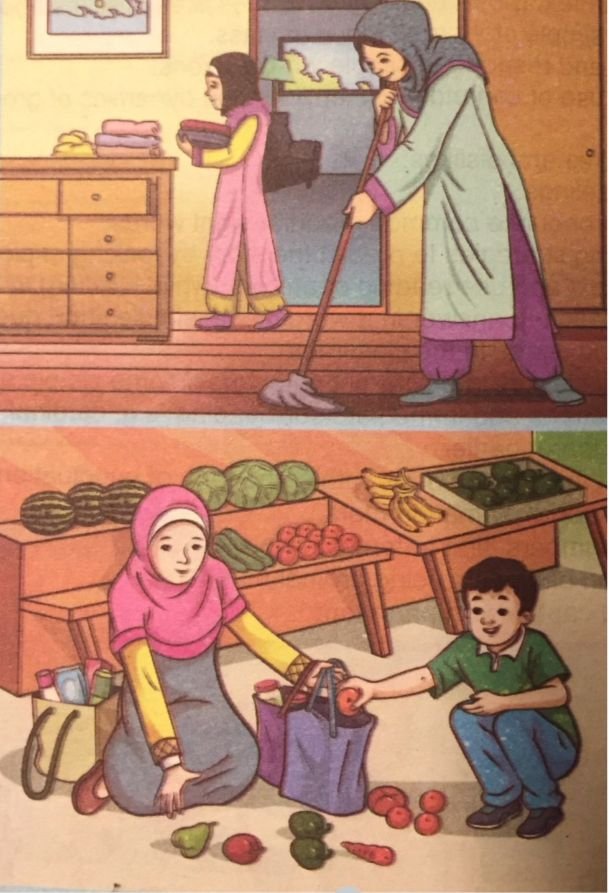
2. Women are mostly shown doing domestic work, taking care of the family, and looking after their children. In stories as well, they seem to come second to their male counterparts.
3. As discussed in detail above, there is the presence of religious text in non-religious books.
4. The stylisation of the books are difficult to understand, fonts and texts are way too clustered. The quality of the pages is not refined, making them unattractive and confusing for students.
CONCLUSION:
According to NCC director, Dr Chughtai, the curriculum is an evolving process and the books can be changed in future publications, based on the response by schools and parents. The biggest hurdle to the books is that the teachers have not been trained in teaching these new books and according to Dr Chughtai, it is up to the school to teach and implement the books. There are no worksheets given with the books and from initial student reactions, students are confused and wary of books that are laid out in a clustered fashion. There is also the subject of a language change. Where students study general knowledge, a precursor to Science, in Urdu, they switch to difficult English in grades 4-5.
While the government should be commended in trying to create a national syllabus, the forced enforcement of the books along with the lack of supplemental information and training will make this very difficult for teachers and students. Moreover, parents should be given a choice as to what they want their children to study. This implementation should be a free choice rather than that of enforcement. What would have been a practical approach is that the government should have improved the structure of the government/public schools, provided better teacher training, spent more on financially improving the conditions rather than lowering the standard for all.
*Graphics credits: Asma Ahmad (Graphic Designer)
How did we collect the data?
The percentage of male characters in the books: Divided the total number of male by the total number of characters. The percentage of female characters in the books: Divided the total number of female by the total number of characters.
The percentage of Islam: Divided the Islamic pictures or references given in the books by the number of total pages of all books. The percentage of other religion: Divided the other religions pictures or reference given in the books by the number of total pages of all books.
The percentage of female power roles: Divided the number of female by the total number of characters (female and male). The percentage of male power roles: Divided the total number of male by the total number of characters (female and male).
The same process/calculation/method was applied to the findings of each book.
The police have rescued a woman from an apartment in Karachi’s Marwari Line of the Ranchore Line neighbourhood after a neighbor hinted that she was imprisoned, Aamir Majeed reported for Samaa News.
Eidgah Assistant Sub-Inspector Zahid Mehmood told Samaa Digital that they received a complaint on police helpline 15 Madadgar by a man who identified himself as Junaid to make them aware of the suspected hostage in Jannat Bibi Building.
A police team instantly went to the venue where a large number of people were gathered outside the building. According to ASI Mehmood, when they entered the single-room apartment, there was a very weak woman covered in a bedsheet. The woman was so weak that she could not even walk. She was taken to Civil Hospital, Karachi, for rehabilitation in an ambulance.
According to ASI Mehmood, neighbours caught her brother — identified as Iqbal — and handed him over to the police.
An FIR was registered against her brother on the complaint of the victim’s maternal uncle Muhammad Hassan. He told the police that the woman’s parents had passed away and her brother took her with him three years ago and did not contact the extended family.
Junaid contacted the police and said that Iqbal was living in an apartment that he had rented two-and-a-half years ago. Everyone knew Iqbal lived with his sister there but no one ever saw her. He claimed that sometimes they heard her crying, but no one interfered, thinking it was a personal matter.
Junaid told the police that people in the area suspected that something was wrong after someone threw used condoms out of the apartment. Though the apartment was locked, the women of the area tried to look inside through a window. They saw a woman lying naked.
District City SSP Sarfaraz Nawaz said that a woman medico-legal officer examined the victim.
“According to the WMLO, the victim was raped,” he confirmed. The police have acquired semen samples from the suspect and sent them for tests. Further investigation is underway.
The Sindh Government has decided to arrest unvaccinated people in the province, following the new directions from the National Commands and Operation Centre (NCOC), Business Recorder has reported.
Travellers on motorways would require to get vaccinated by September 20, as per a notification issued by the Sindh Home Department in light of fresh directives issued by the NCOC.
The notification further added that if a company’s employees are proven to be unvaccinated, its buses and other equipment will be confiscated.
Unvaccinated employees would be barred from working in hotels and restaurants, including those who provide home delivery services.
Pakistan recorded 2167 number of Covid-19 cases with a positivity rate of 4.22 per cent.
Statistics 20 Sep 21: Total Tests in Last 24 Hours: 51,348 Positive Cases: 2167 Positivity % : 4.22% Deaths : 40 Patients on Critical Care: 4840
A senior female doctor who works at a major public sector hospital in Karachi says that she is being harassed and blackmailed for the last several months on gender and ethnic grounds and being forced to quit her job.
The doctor is in-charge of the hospital’s gastroenterology and hepatology ward. She claims she is the only female gastroenterologist working at any public sector hospital in Pakistan.
“I’m in charge of the Gastroenterology and Hepatology Ward at Jinnah Postgraduate Medical Centre (JPMC) and the only female gastroenterologist working at any public sector hospital in entire Pakistan. I have been harassed and blackmailed for the last several months on the basis of my gender and ethnicity,” Dr Nazish Butt told Waqar Bhatti of The News.
She showed several messages sent to her, accusing her of being a “non-Sindhi” and “a draconian lady”, who is not allowing ‘natives’ to work at the hospital. She said she was constantly receiving calls from unknown numbers.
“First of all, I’m a Pakistani citizen who was born in Karachi. I have studied in this city and graduated from the Sindh Medical College. I even married a person who is Sindhi-speaking, but still, some people, including some staff members [of the hospital], are harassing me. They are doing negative propaganda against me, which has made me mentally disturbed,” the publication reported her as saying.
“I have filed several complaints with the relevant authorities against this harassment and blackmailing. but now I want to make my ordeal public and urge the high authorities to take notice of this hooliganism. They call me a Punjabi woman, hurl abuses at me, put baseless posts on Facebook, and then send it to me and my colleagues on WhatsApp. This should end now,” she added.
Dr Butt stated that she was bringing this issue to the notice of the newly-appointed executive director at the JPMC, Dr Shahid Rasool. She also urged provincial health minister Dr Azra Pechuho to take notice of this harassment.
According to a recent study, Pakistan lacks trained and qualified female gastroenterologists even though more than 80% of students who graduate from medical colleges are women.
One of the most-wanted target killers, Shaheen Bihari, committed suicide in Karachi’s Orangi Town because he was afraid of the raids and being arrested, Geo News reported.
Police claim that target killer Shaheen Bihari has committed suicide out of fear of arrest.
The incident took place in Orangi Town Mansoor Nagar area of Karachi. The deceased has been identified as Shaheen Bihari, an alleged target killer.
Police found a pistol and a letter written before the suicide at the scene.
According to SSP West, Shaheen Bihari along with his accomplice Asif Bhiya had murdered ASI Akram Khan at a hotel in Orangi on August 28.
Bihari wrote in the letter that he had thrown away the pistol which he had used to shoot the ASI. “I am committing suicide with another pistol.”
According to Sahai Aziz, Asif Bhaya, an accomplice of the accused, was arrested by Rangers and police recently. Shaheen Bihari is also seen in the CCTV footage of the incident.
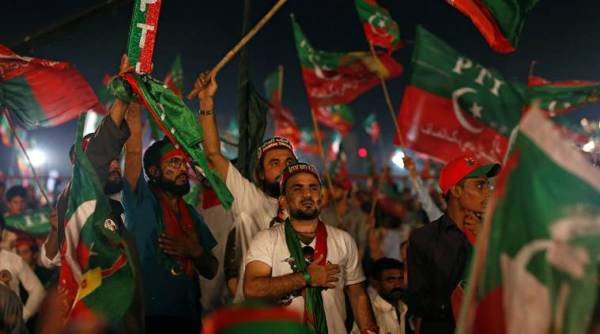
Pakistan Tehreek-e-Insaf (PTI) emerged as the biggest winner in the Cantonment Board elections held across Pakistan on Sunday, reports Radio Pakistan.
According to the unofficial results, PTI got 58 seats, while the Pakistan Muslim League-Nawaz (PML-N) scored 51. Independent candidates claimed 49 seats.
Pakistan People’s Party (PPP) has managed to win 14 seats and Muttahida Qaumi Movement (MQM) got 10 seats. Jamaat-e-Islami (JI) won five seats while Balochistan Awami Party (BNP) got two seats.
Minister for Information and Broadcasting Fawad Chaudhry in a tweet said the Cantonment Board election results show that the Opposition has left with no standing following a crushing defeat.
کنٹونمنٹ بورڈز الیکشن میں مقابلہ #PTI کے ٹکٹ ہولڈرز اور ان کارکنان کے درمیان رہا جن کو ٹکٹ نہیں مل سکا، اور انھوں نے آزاد حیثئت میں انتخابات میں حصہ لیا، نتائج نے ظاہر کیا ہے کہ اپوزیشن کی رہی سہی حیثئت بھی ختم ہو چکی ہے اور وہ بری طرح شکست کھا چکے ہیں #بلے_کی_بلےبلے
Reacting to the ruling party’s victory, federal Minister for Planning, Development and Special Initiatives Asad Umar said: “Cantonment elections once again show the PTI not only as the largest party but also the only national party.”
Cantonment elections once again show PTI not only as the largest party but also the only national party. Pti won either highest or second highest seats in every province. PMLN 0 in balochistan, 5th in sind. PPP 0 in punjab & balochistan, 3rd in kp. PMIK only national leader
PTI won the most number of seats in Khyber Pakhtunkhwa (KP) — 18 — followed by 28 in Punjab, 14 in Sindh, and three in Balochistan.
PML-N won big in Punjab, bagging 51 seats, managing only five in KP, three in Sindh, and none in Balochistan. In Lahore, the PML-N bagged 15 of 19 wards.
PPP was surprisingly unable to defeat PTI in Sindh, instead of tying with them for 14 seats. The remaining three seats were won in KP, meaning none were won in either Punjab or Balochistan.
Independent candidates scored big in Punjab, bagging 32 seats. They secured nine in KP, seven in Sindh, and four in Balochistan.
MQM won all of its 10 seats in Sindh, whereas JI won five in Sindh and two in Punjab.
ANP won two seats in KP, whereas BAP won two in Balochistan.