Tag: smartphone market

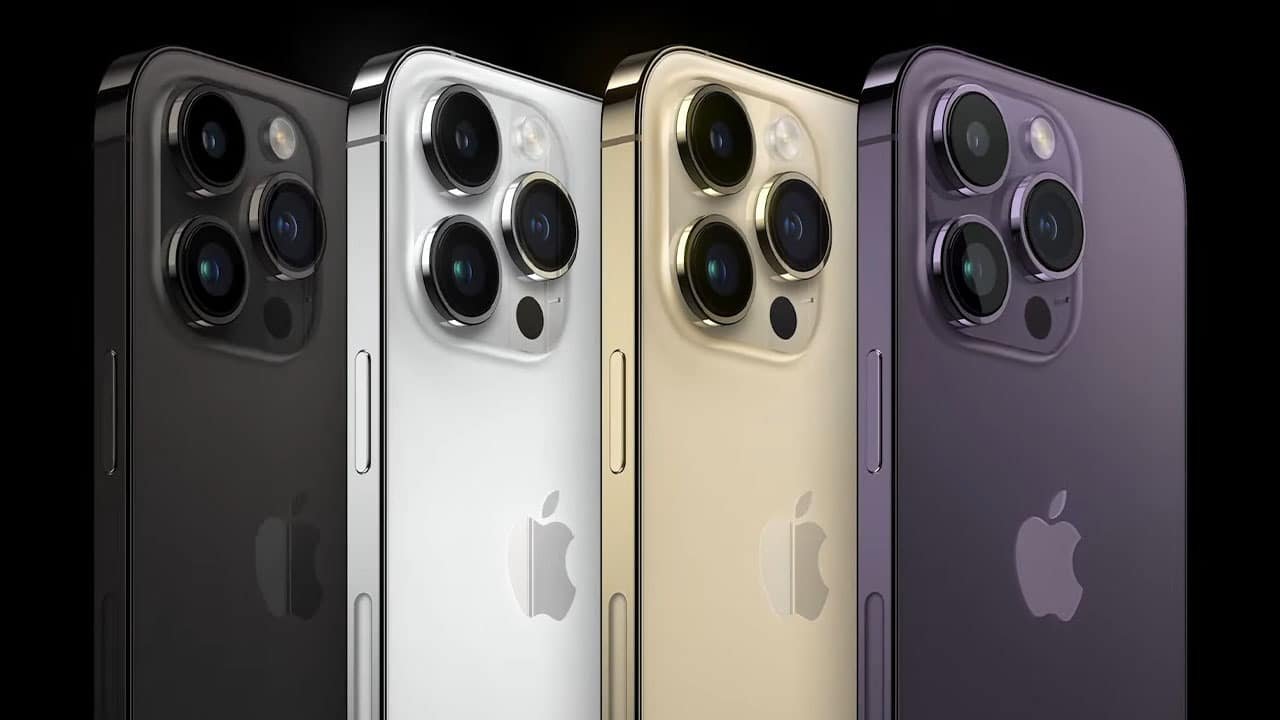
  • Apple’s iPhone sales decline by 24% in China, while Huawei’s sales surge

    Apple’s iPhone sales decline by 24% in China, while Huawei’s sales surge

    In the first six weeks of 2024, Apple experienced a significant downturn in iPhone sales in China, facing a 24 per cent year-on-year decrease, according to a report by research firm Counterpoint.

    The decline was attributed to heightened competition from local rivals, notably Huawei, which witnessed a remarkable 64 per cent increase in unit sales during the same period.

    Apple, once holding the second position in the Chinese smartphone market in 2023 with a 19 per cent market share, now finds itself in fourth place with a reduced share of 15.7 per cent.

    On the other hand, Huawei climbed to second place, expanding its market share from 9.4 per cent to 16.5 per cent year-over-year.

    Counterpoint’s senior analyst, Mengmeng Zhang, explained the dynamics, stating that Apple faced formidable competition from a resurgent Huawei at the high end while also encountering pricing pressures from domestic brands like OPPO, Vivo, and Xiaomi in the middle segment.

    To counteract the decline, Apple initiated measures such as subsidising certain iPhone models by up to 1,300 yuan ($180.68) through flagship stores on Tmall, Alibaba’s major marketplace platform.

    Earlier, the company had offered discounts of up to 500 yuan on its official sites.

    Huawei’s resurgence in premium smartphone sales was attributed to the successful release of its Mate 60 series in August.

    Overcoming years of challenges posed by US restrictions on key component exports, Huawei managed to reclaim its position in the market.

    Additionally, Honour, the smartphone brand that separated from Huawei in 2020, witnessed a 2 per cent increase in unit sales, making it the only other top-five brand to experience growth in the first six weeks of the year.

    Contrastingly, Chinese brands Vivo, Xiaomi, and Oppo faced declines of 15 per cent, 7 per cent, and 29 per cent, respectively, highlighting the fiercely competitive landscape in the Chinese smartphone market.

    Overall, the report indicates a 7 per cent shrinkage in the country’s smartphone market during this period.
  • Can Huawei’s Mate 60 Pro finally kill the iPhone’s dominance?

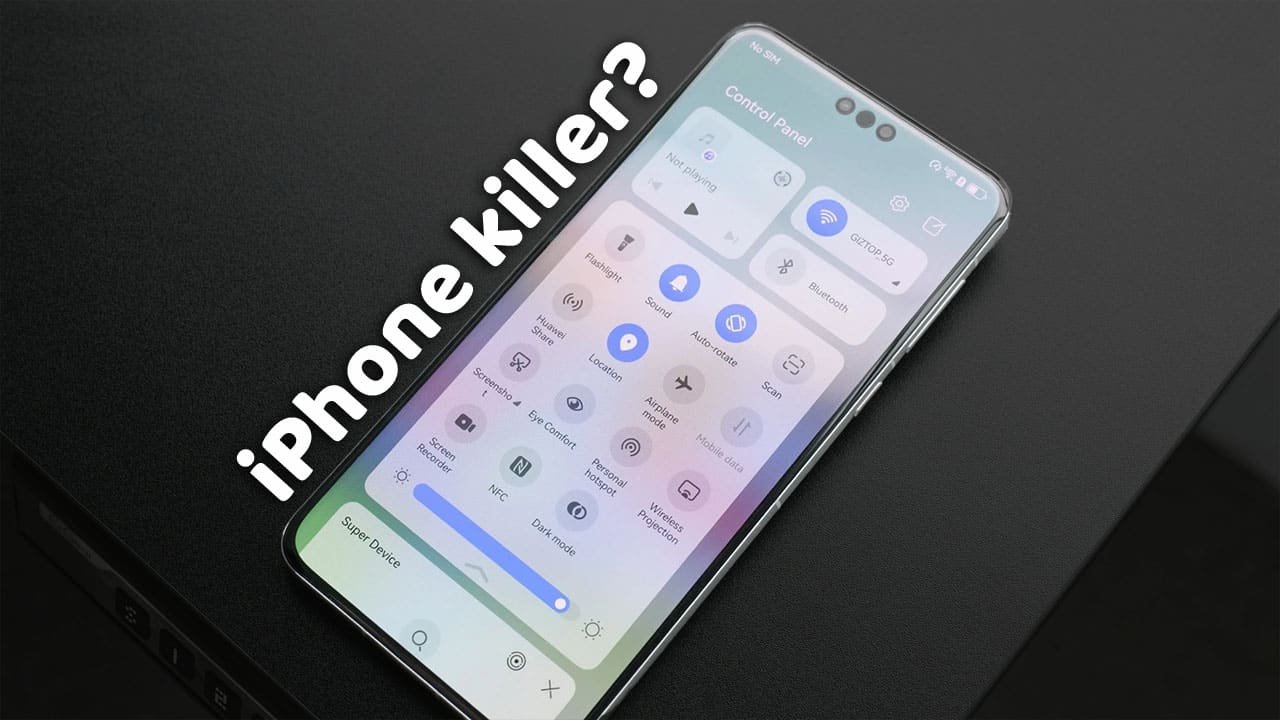
    Can Huawei’s Mate 60 Pro finally kill the iPhone’s dominance?

    Huawei’s tenacity in the smartphone market, despite grappling with the challenges of the US embargo, has been nothing short of remarkable. Undeterred by adversity, the company has fervently strived to regain its foothold in the realms of both hardware and software.

    The latest chapter in Huawei’s resurgent narrative is embodied in the Huawei Mate 60 and Mate 60 Pro, devices that have ignited widespread intrigue and earned global user acclaim. In a mere five days following their debut, these smartphones remarkably achieved nearly 800,000 unit sales, signifying a triumphant comeback. 

    Within the confines of China, the Huawei Mate 60 series has emerged as a resounding success story. Officially launched on August 29th, these devices rapidly gained traction in the market, boasting sales figures that approached the 800,000-unit milestone within the initial five days.

    This achievement stands as a substantial improvement over the sales performance of their predecessors in the Mate series, which managed to muster approximately 500,000 units. Such resounding success is undoubtedly a testament to meticulous planning and unwavering commitment. 

    In the wake of challenging years, Huawei’s aspiration for resurgence led to the creation of a technological marvel. Powered by the cutting-edge Kirin 9000S processor, it reigns supreme as the swiftest mobile processor available in China. Notably, the Mate 60 series is equipped with a novel triple-lens rear camera system, featuring a 50MP main sensor, a 48MP ultrawide sensor, and a 12MP telephoto sensor. 

    The fervor surrounding the Huawei Mate 60 series extends beyond the Chinese borders, capturing the enthusiasm of international consumers. For instance, Japanese consumers have been keen to acquire the 12GB + 512GB version of the Huawei Mate 60 Pro, which is priced at approximately 70,000 Chinese yuan in the Chinese market, translating to around 140,000 Japanese yen (PKR 292,800).

    Interestingly, local dealers in Japan have been pricing the same smartphone model at levels exceeding 200,000 Japanese yen, roughly equivalent to 10,000 Chinese yuan, underscoring its immense popularity in the Japanese market. 

    Key Specifications: 

    Huawei Mate 60 

    – Display: 6.69-inch LTPO OLED display with a 1-120 Hz variable refresh rate 

    – Processor: Kirin 9000S 

    – RAM: 12GB 

    – Storage: 256GB, 512GB, or 1TB 

    – Rear Cameras: 50MP main camera with variable aperture (f/1.4 to f/4.0), 48MP telephoto camera, 12MP ultrawide camera 

    – Front Camera: 13MP 

    – Battery: 5000mAh 

    – Charging: 88W wired charging, 50W wireless charging 

    Huawei Mate 60 Pro 

    – Display: 6.82-inch LTPO OLED display with a 1-120 Hz variable refresh rate 

    – Processor: Kirin 9000S 

    – RAM: 12GB 

    – Storage: 256GB, 512GB, or 1TB 

    – Rear Cameras: 50MP main camera with variable aperture (f/1.4 to f/4.0), 48MP telephoto camera, 12MP ultrawide camera 

    – Front Camera: 13MP 

    – Battery: 4750mAh 

    – Charging: 88W wired charging, 50W wireless charging 

  • Local manufacturing plants in Pakistan assemble 4.88 million mobile phones in first five months of 2023

    Local manufacturing plants in Pakistan assemble 4.88 million mobile phones in first five months of 2023

    According to official data, local manufacturing plants in Pakistan have successfully manufactured and assembled 4.88 million mobile handsets during the first five months (January-May) of 2023. This figure stands in stark contrast to the mere 0.41 million handsets that were commercially imported during the same period.

    For the month of May 2023, local manufacturing plants contributed 1.44 million mobile handsets, while commercial imports lagged behind at 0.11 million.

    However, it is worth noting that the local manufacturing industry experienced a decline in production during the calendar year 2022, manufacturing 21.94 million mobile handsets compared to the 24.66 million produced in 2021. This decline can be attributed to import issues caused by restrictions on the opening of letters of credit (LCs).

    Providing additional insight, the Pakistan Telecommunication Authority (PTA) disclosed that out of the 21.94 million mobile handsets assembled in 2022, only 1.53 million were commercially imported.

    Of the 4.88 million locally manufactured and assembled mobile handsets, 4 million were 2G phones, while 0.88 million were smartphones.

    Furthermore, the PTA data reveals that smartphones accounted for 56 per cent of the mobile devices used in Pakistan, while 44 per cent were 2G phones.

    Moving on to imports, Pakistan imported mobile phones valued at $516.488 million during the first 11 months (July-May) of the current fiscal year 2022-23, indicating a significant negative growth rate of 73.46 per cent compared to the $1.946 billion imported during the same period last year.

    In May 2023, the country experienced a remarkable 308 per cent month-on-month increase in mobile phone imports, reaching $43.201 million. This figure surpasses the $10.587 million worth of imports recorded in April 2023, as reported by the Pakistan Bureau of Statistics (PBS).

    When compared to May 2022, however, mobile phone imports in May 2023 exhibited a negative growth rate of 68.52 per cent, with the value dropping to $137.212 million.

    Taking a broader view of the telecom industry, overall imports into Pakistan amounted to $860.441 million during the July-May 2023 period. This marks a substantial negative growth rate of 66.87 per cent compared to the $2.597 billion recorded during the same period in the previous fiscal year.

  • Apple CEO Tim Cook to meet India’s PM Modi during store opening

    Apple CEO Tim Cook to meet India’s PM Modi during store opening

    Tim Cook, the CEO of Apple, is scheduled to meet India’s Prime Minister, Narendra Modi, and the country’s deputy IT minister as part of his visit to inaugurate the tech giant’s first retail store in India.

    Cook’s visit to Mumbai and New Delhi to open the first official company-owned outlets in the country highlights Apple’s growing interest in India, despite only having a 3 per cent market share.

    The company has been expanding iPhone assembly through contract manufacturers and increasing its exports. Cook will meet Modi on Wednesday in New Delhi, and he is also expected to meet India’s deputy IT minister, Rajeev Chandrasekhar.

    Apple and the IT ministry did not immediately respond to requests for comment, while Modi’s office declined to comment. Cook’s meetings with Indian officials come as Apple focuses more on India, which is the world’s second-largest smartphone market.

    According to data from the India Cellular and Electronics Association, iPhones accounted for more than 50 per cent of the $9 billion worth of smartphones exported from India between April 2022 and February 2023.

    On Monday, Apple opened its first store in Mumbai, but only for a private event where bloggers and tech analysts reviewed the store layout and design. The Mumbai store is located in the Reliance Jio World Drive mall, which is home to luxury clothing and jewellery brands like Michael Kors, Kate Spade, and Swarovski. It is 20,800 square feet, far larger than the planned Delhi outlet, according to local registration documents.

    Apple has sold its products in India through resellers or e-commerce websites such as Amazon. The Mumbai store will open to the public from Tuesday, while a second store will be inaugurated inside a New Delhi mall on Thursday.

    In India, iPhones are assembled by three of Apple’s contract manufacturers – Foxconn, Wistron Corp, and Pegatron Corp. Apple plans to assemble iPads and AirPods in India as well.