Tag: smog in lahore

  • ‘Not sending pollution through missiles,’ says Indian climate expert

    ‘Not sending pollution through missiles,’ says Indian climate expert

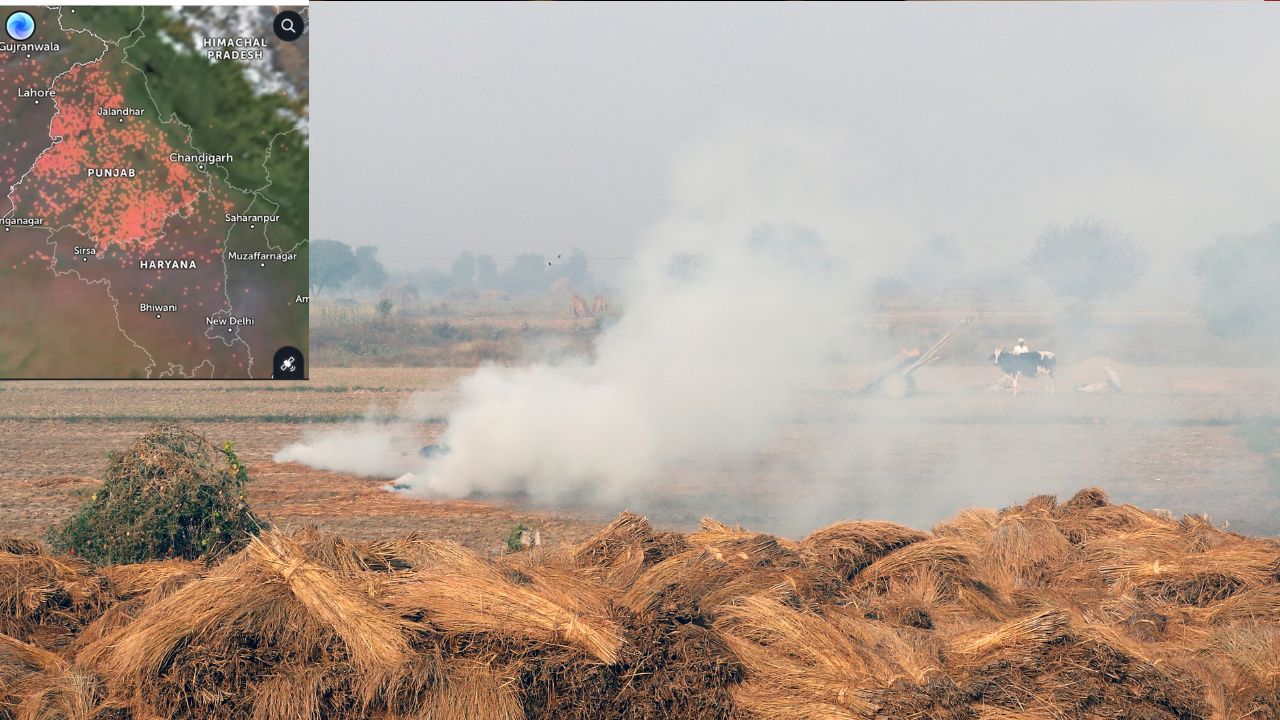
    Punjab’s Air Quality Index, on both sides of the border between India and Pakistan, has become one of the biggest causes of concern, not just in South Asia but globally as well.


    A BBC Urdu report about the hazardous conditions of smog in Lahore and Delhi, with the former being particularly in a bad spot with AQI at 1000 plus points, Indian Punjabi correspondent Harmandeep Singh quoted Punjab Agricultural University’s Department of Climate Change and Punjab Pollution Control Authority’s study about the air pollution in the area. 


    “There is no scientific study that can prove that the fires in the villages of Indian Punjab after harvesting the crops cause air pollution in Lahore and Delhi,” says the university’s report.
    Experts say that there are scientific arguments which prove that the air pollutants created by burning the residue of harvested crops are not reaching the borders of Lahore and Delhi.


    However, on both sides of the border, stubble burning is considered to be the main cause of smog, whereas farmers claim that fire is set only to prepare the land for the next harvest. 


    Contrary to the claims of experts from Indian Punjab, experts from the country’s central educational institutions also blame the fires as the cause of Delhi’s pollution while maintaining that the contribution of this fire to pollution is very minor.


    Notably, smoke from post-harvest fires in any state, including Punjab, contributed only 4.44 percent to Delhi’s pollution this year, as per Indian research institutes.


    Satellite data of the US space agency NASA showed more fires seen on the Indian side than on the Pakistan side. Pakistani side concluded that because Lahore is close to the Indian border, so it can easily be affected by cross-border smog.


    Additionally, the Pakistani Punjab’s Environment Department claimed the reason behind the hazardous conditions of smog in Lahore is because of the “Eastern Corridor of winds” while talking to The Current a week ago. 


    Meanwhile, talking to BBC Urdu, the Department of Climate Change and Agricultural Meteorology at Punjab Agricultural University, India, said that it is natural that light and moderate winds prevail in Punjab in October and November. “For the polluted particles to move from one place to another, the speed of the air must be more than six kilometres per hour,” the department said in their defence, implying the wind is not the reason for pollution in Delhi and Lahore. 


    Puneet Kaur Dhingra, Head of the Meteorological Department, says, “Wind speed should be more than six kilometres per hour for particulate matter and smoke to move in any direction. Since October, there is light wind in eastern Punjab. Only twice the wind speed was more than four kilometres per hour.”


    Adding on, he said, “For the first time on October 5, the wind speed was recorded at 4.4 km per hour and for the second time on October 24, the wind speed was recorded at 4.1 km per hour. Therefore, the pollution created by the fires set after harvesting the crops in Punjab cannot travel in any direction.”


    University’s Department of Climate Change further asserted that the concentration of pollution and smog in a particular place during the months of October and November is associated with a drop in temperature.


    When the temperature gets warmer, the air expands and the pollutant particles disperses easily. Meanwhile, when the temperature drops like it is happening with the start if winters, the pollutant particles stay in one place and smog is created. 


    “Therefore, if there is smoke and pollution in Lahore and Delhi, there are self-generated reasons behind it.”


    Adarsh Pal Vij, the chairman of the Pollution Control Board of Indian Punjab, emphasised that the PM 10 and PM 2.5 polluting particles released from the gases produced by the stubble fires in Punjab don’t have the potential to travel much. “There is no such research which proves that the pollution of Punjab plays a role in the pollution of Delhi and Lahore. PM 10 and PM 2.5 particles do not fly as far,” he said categorically. 


    Punjab Pollution Control Board’s Environmental Scientist Avatar Singh rationalizes his claim by saying, “After harvesting, the land is set on fire in Indian as well as Pakistani Punjab, so Lahore is itself responsible for the polluted air.”


    “Even under these conditions, PM 10 particles can travel a maximum distance of 25 km, while PM 2.5 can travel a maximum distance of 50 km,” emphasised another expert as quoted by BBC Urdu. 


    Former Chairman of the Indian Punjab Pollution Control Board SS Marwaha strongly criticised the ongoing claims as he asserted, “Punjab can play an important role in the pollution of Lahore and Delhi if it sends its pollution towards these two cities through missiles.”


    Notably, Professor Vinayak Sinha of the Department of Earth and Environmental Sciences at the Indian Institute of Science Education and Research admitted that the impact of Punjab’s pollution on Delhi’s pollution is negligible.


    “The effect of pollution in Punjab is only in Punjab. Incidents of post-harvest fires in Uttar Pradesh or other neighboring states have a greater impact on pollution in Delhi than in Punjab,” he noted. 
    Indian Institute of Science Education and Research is a government research institute located in New Delhi and their finding say that pre-Diwali and winter analysis in Delhi found that the main cause of pollution is vehicle smoke rather than farm fires.


    Talking to The Current, Environment Department’s Secretary Raja Jahangir also highlighted the other factors contributing to the pollution.  “Lahore is a city of 15 million, with 4.5 million bikes and 1.3 million cars on roads. There are 6,800 industrial units because it is the fastest growing city in the country and has the most construction sites, as well as more than 1,200 brick kilns,” Jahangir highlighted.


    For a city spread over 1,757 square kilometres, the green cover is not enough.


    “Ideally, it needs to be more than 30 per cent, but unfortunately, it is not more than four per cent,” he said, further that the smoke emitted from harvesting of 6.6 million of rice given a boost by air pressure is disturbing the air of Lahore while it doesn’t have enough to combat.


    “Ideally, it needs to be more than 30 per cent, but unfortunately, it is not above four per cent,” he said, adding that the smoke emitted from the harvesting of 6.6 million tons of rice, combined with air pressure, is contributing to the air pollution in Lahore, which lacks sufficient resources to combat it.

    Read more: Why is Lahore more polluted than Delhi?
  • Smog closes motorways, commercial activities

    Smog closes motorways, commercial activities

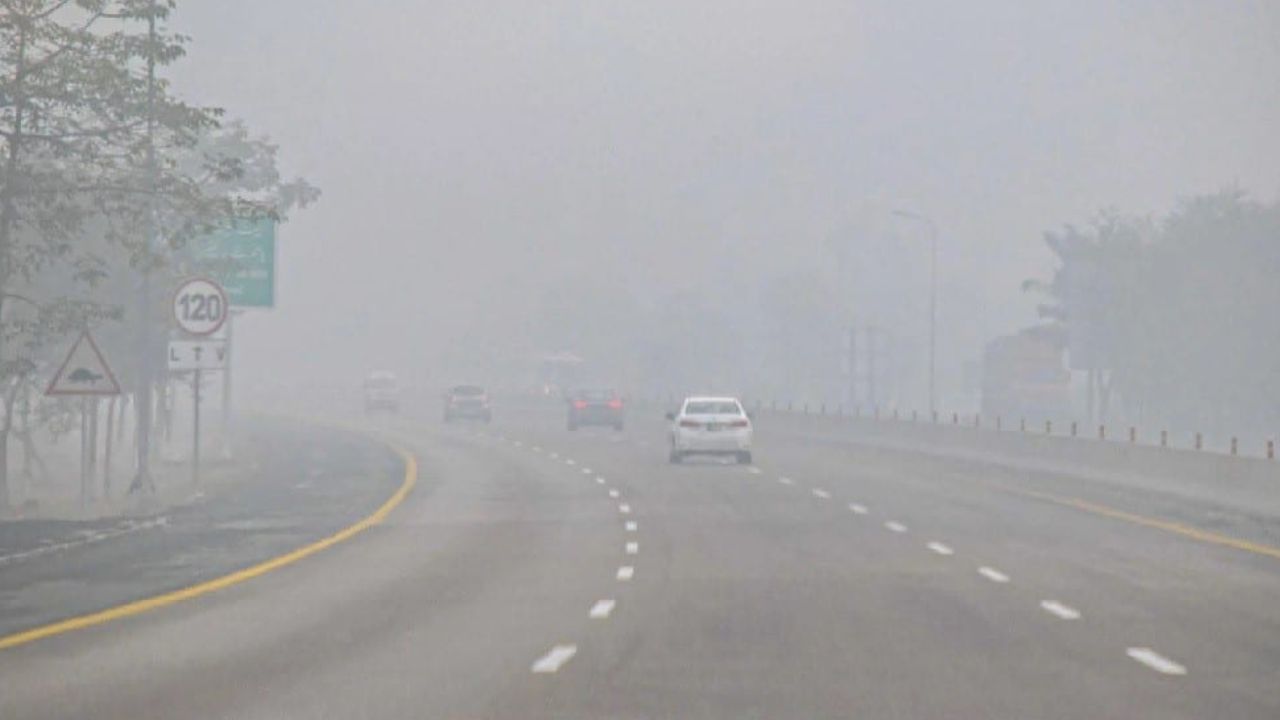
    Thick clouds of smog are covering the plains of Punjab, including Lahore have severely restricted visibility affecting traffic flow, causing multiple motorway sections to close for all types of traffic, including M2 from Lahore to Kot Sarwar, Motorway M3 from Samundri to Darkhana, Motorway M4 from Pindi Bhattian to Abdul Hakim, and Motorway M11 from Lahore to Sialkot.

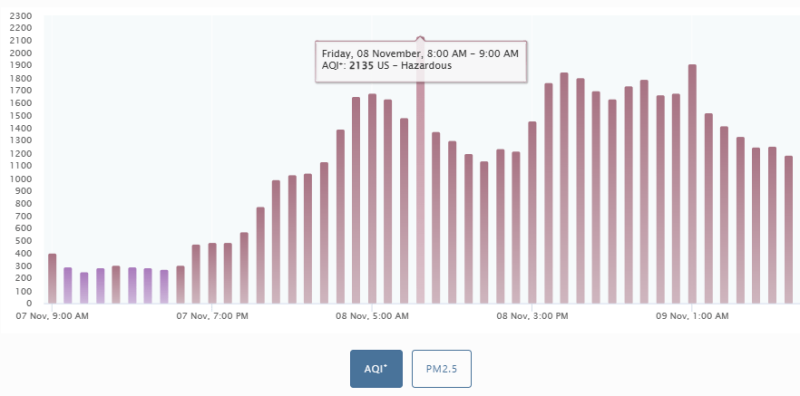
    The air quality index (AQI) reading in Multan crossed the 2,000 mark on Friday morning and is still ranging from 1000 to 1500, which has raised alarm bells across the province, prompting the administration to double the restrictions and control the air quality. 

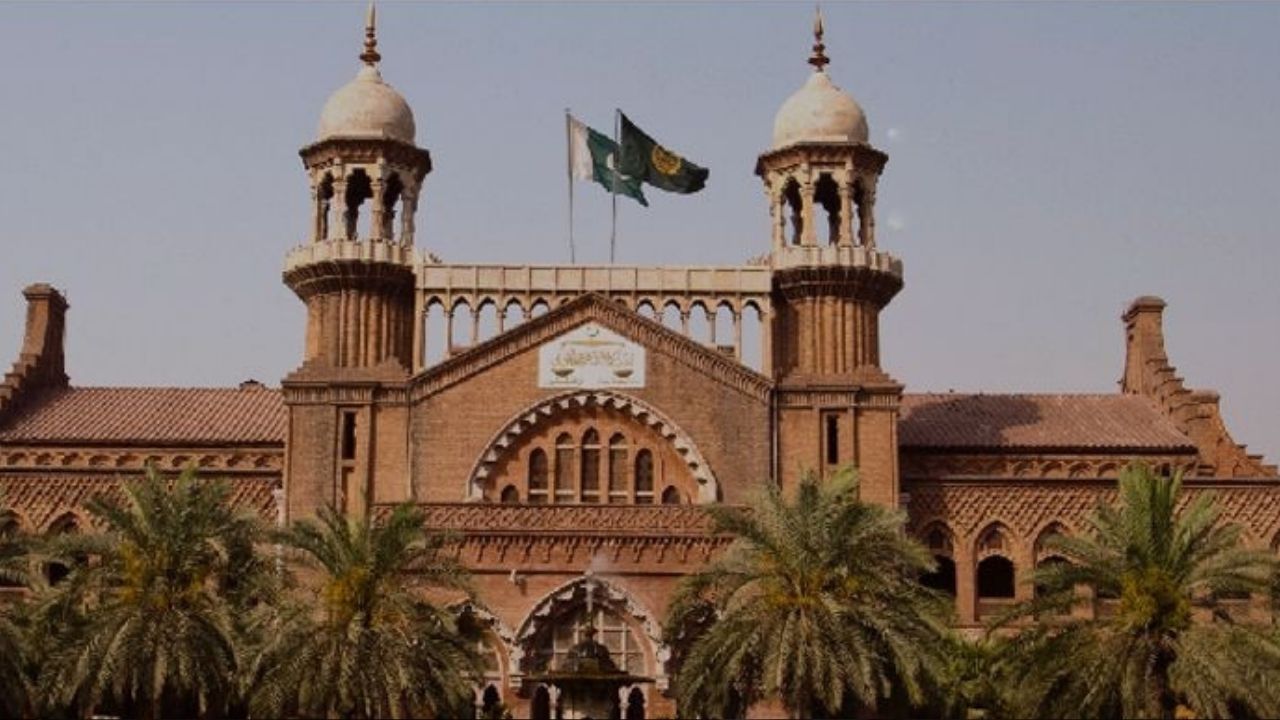
    Additionally, the Lahore High Court (LHC) ordered the commissioner of the Lahore division to ensure that all commercial activities are closed within the provincial capital and its peripheries at 8 pm for the next 15 days.


    During a recent hearing on a plea filed against the Punjab government for not taking effective measures to combat smog, Justice Shahid Karim on Friday ordered all private offices to announce a work-from-home policy for two days and ordered markets to close at 8 pm.

    However, the court also ordered the complete closure of markets on Sunday and directed officials to start a crackdown on smog-emitting vehicles.

    LHC  directed traffic police to immediately stop smoke-emitting vehicles and remarked that the dolphin police should also take action along with the traffic police.


    Justice Karim also observed that an out-of-the-box solution would also include limiting the marriage functions as well as limiting the number of persons attending these functions.


    The judge sought a report on the matter of smog on Nov 11.


    Meanwhile, the Punjab government has issued a notification about the ban on public entry in public and amusement parks.

    Green lockdown is already in place to bring down the pollution in smog hotspots in the province. 

  • Lahore High Court orders shops to shut down early to combat smog

    Lahore High Court orders shops to shut down early to combat smog

    Lahore High Court (LHC) has imposed a new order to combat smog in Lahore.


    Local markets will be closed by 8 pm in the evening to prevent smog while authorities will crack down on smog-emitting vehicles.


    During a recent hearing on a plea filed against the Punjab government for not taking effective measures to combat smog, the court ordered all private offices to announce a work-from-home policy for two days and ordered markets to close at 8 pm.


    However, the court also ordered the complete closure of markets on Sunday and directed officials to start a crackdown on smog-emitting vehicles.


    LHC  directed traffic police to immediately stop smoke-emitting vehicles and remarked that the dolphin police should also take action along with the traffic police.

    Meanwhile, the Punjab government has issued a notification about the ban of public entry in public and amusement parks. 

  • Dhund nay kar dia safar mushkil

    Dhund nay kar dia safar mushkil

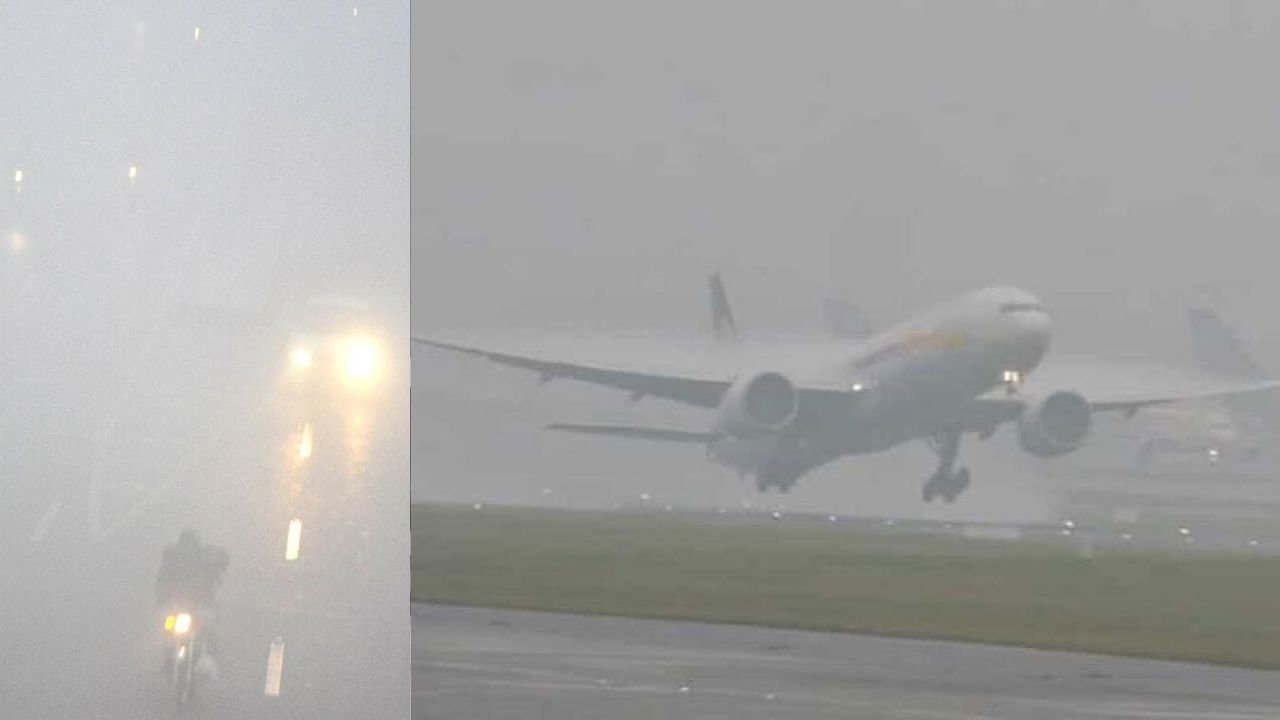
    A thick blanket of heavy fog has descended on different parts of Pakistan, severely impacting visibility and causing widespread transportation disruptions.

    Adverse weather conditions have compelled authorities to take precautionary measures, resulting in the closure of main highways and affecting air travel.

    The impact of the fog extends beyond Lahore, spreading as far as Mandi Bahauddin, Pindi Bhatian, Kot Addu, and Uch Sharif.

    Residents and commuters in these regions are urged to exercise caution and adhere to any instructions issued by local authorities.

    Sialkot and its surrounding regions, including Pasrur, Daska, and Sambrial, are grappling with reduced visibility levels, significantly disrupting traffic flow. Commuters are advised to stay informed about the latest weather updates and road closures to ensure their safety.

    The fog has not only affected ground transportation but has also disrupted air travel. Multiple flights have been canceled, and others delayed, impacting cities in Sindh and Punjab.

    The closures of major motorways, including the M2, M3, M4, M5, and M11, further compound transportation challenges.

    In addition to the transportation disruptions, the air quality in Lahore has deteriorated, earning the city the unfortunate distinction of being the most polluted in the world.

    Meanwhile, dense fog in various cities of Sindh and Punjab has led to operational challenges for flights. The Pakistan International Airliner (PIA) spokesperson emphasizes the importance of obtaining flight information from the PIA Call Centre before heading to the airport, considering the potential disruptions caused by the fog.

    Over the past week, a total of 32 flights destined for Faisalabad, Multan, Lahore, and other Punjab airports had to be redirected to Islamabad International Airport due to the prevailing fog conditions.

    “Severe fog ongoing in the country has affected PIA flights from Lahore, Multan and Sialkot airport,” the airline’s spokesperson, Abdullah Khan, said in a statement, adding the PIA apologized for any inconvenience caused due to these operational challenges.

    “Low visibility and intensity of fog pose difficulties in flight operations,” he added. “Flights from Lahore, Multan, and Sialkot may be canceled, changed or delayed due to fog.”

    Khan noted that flight operations were usually affected in these cities in winter.

    “All passengers are urged to obtain information about their flights from the PIA call center before heading to the airport,” he added.

    Unusual Winter Conditions Across Northwest India:

    Meanwhile, across Northwest India, including Punjab and Uttar Pradesh, a thick blanket of fog has descended, impacting visibility levels. Despite the fog, winter temperatures are milder than usual for this time of the year.

    The India Meteorological Department (IMD) reports that night temperatures in north-western states remain higher than normal, with at least 2-3°C above-normal readings in several regions. Delhi recorded a minimum temperature of 7.8°C, one degree above normal, with daytime temperatures reaching 22°C.

    Meteorologists attribute the warmer winter to the absence of strong western disturbances, traditionally responsible for winter rainfall over North India. Additionally, global warming is increasingly influencing weather patterns throughout the year, delaying the onset of winter and reducing the intensity of cold waves.

  • Smart lockdown fails as Lahore remains on top in Air Quality Index

    Smart lockdown fails as Lahore remains on top in Air Quality Index

    Despite the efforts of the caretaker government of Punjab to curb smog, Lahore is still one of the most polluted cities in the world.

    After three days of holidays and a smart or soft lockdown, Lahore’s hazardous smog has barely dissipated.

    Caretaker Chief Minister Mohsin Naqvi posted an update on Saturday about the trend of smog tending towards healthier.

    The average air quality index (AQI) of Lahore was recorded at 356 (hazardous) on Sunday while the maximum was 444 at 3 am.

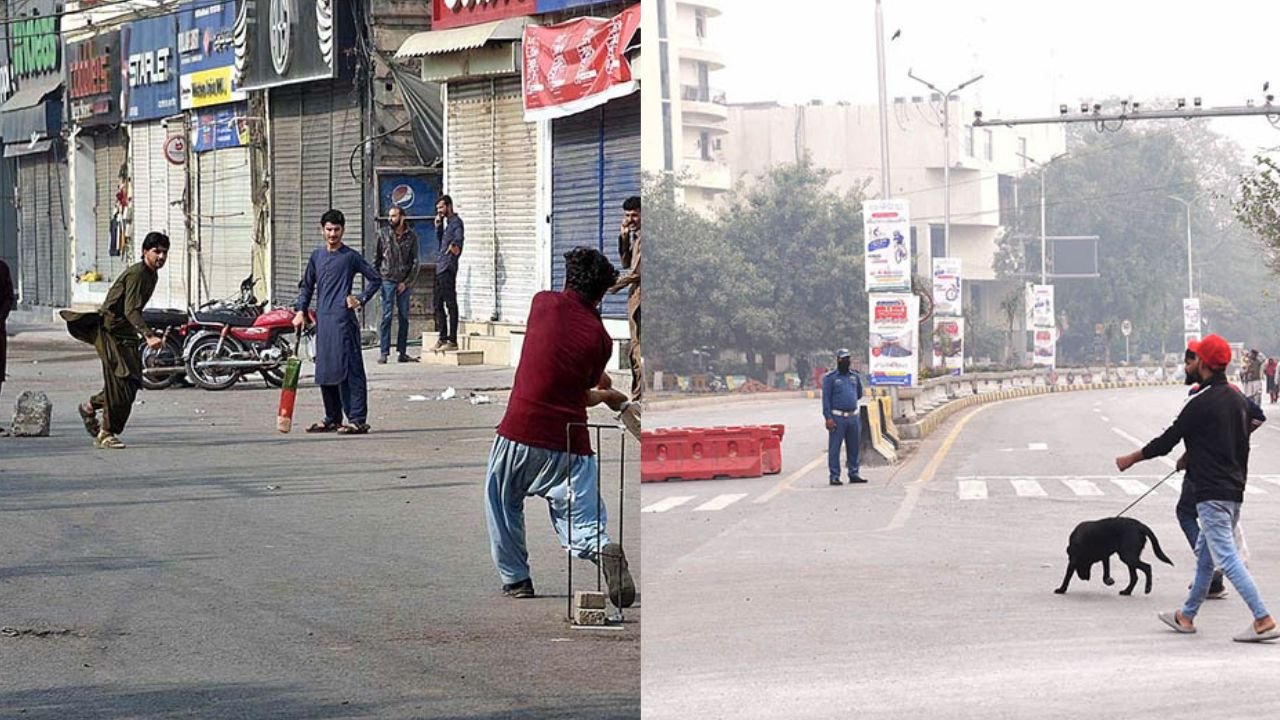
    The government completely closed vehicular traffic on Mall Road for a day but the effort seemed futile as the AQI around the road was 458 in the morning while AQI in the DHA Phase 8 was 437, in Gulberg it was 412 and in Johar Town, it stood at 402, reports Dawn.

    As of today, the air quality index of Lahore was recorded at 415 (extremely hazardous) around 10 a.m. and by the evening, when this report is being filed, it is standing at 305 (hazardous).

    While Mall Road was totally barricaded, some markets and shops were found open despite restrictions till 4 pm on Sunday and people were thronging food points in Liberty Market, Ichhra and Anarkali Bazaar.

    Netizens criticised the Punjab government for a lack of effective steps to counter smog.

    A user posted about it being attributed to the endless construction in the city while others complained about it being lethal for citizens.