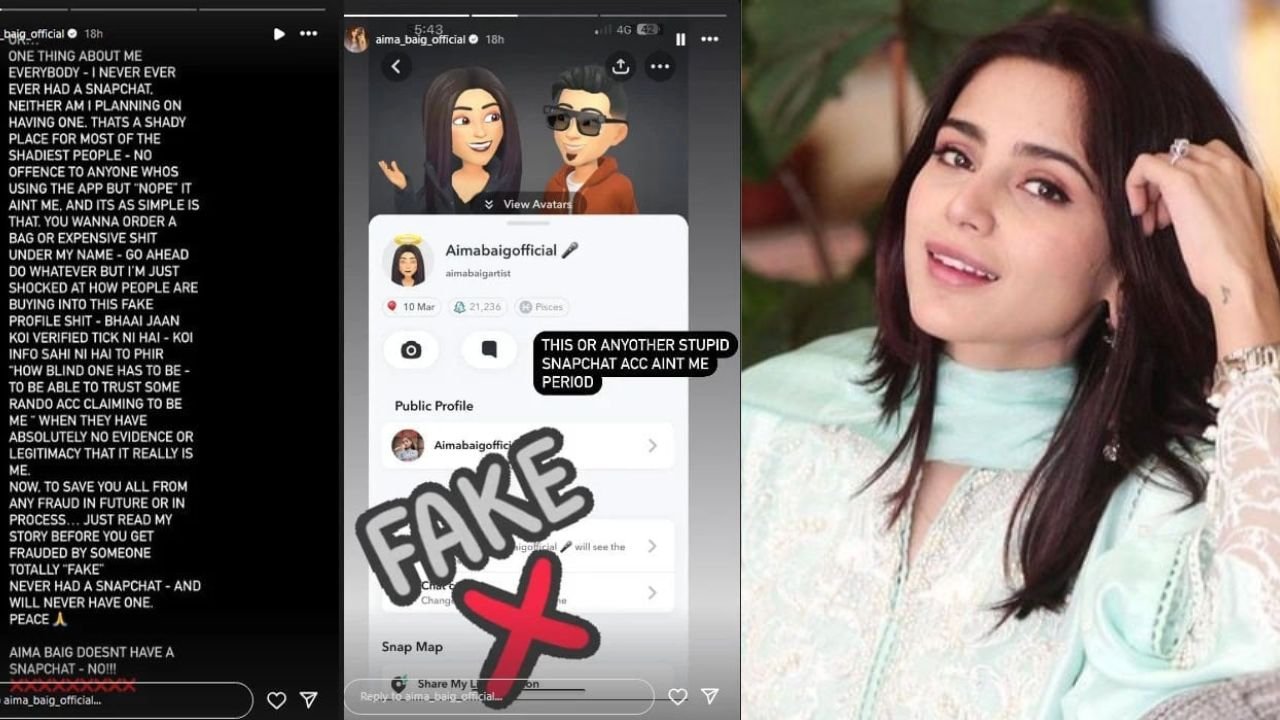
Pakistani singer Aima Baig has warned her fans about a fake Snapchat account using her name.
She shared a screenshot of the fraudulent account on her official Instagram, expressing surprise that people would mistake it for hers.
In her Instagram story, Baig mentioned her discomfort with Snapchat and confirmed that she does not have an account on the platform.
She also reassured her followers that she has no intention of creating a Snapchat account in the future.
Baig was shocked that people trust unverified accounts to the extent of making purchases through them. She urged her fans to pay attention to her Instagram stories and avoid falling victim to the fraudulent Snapchat account.
The singer noted that fraudulent activity had occurred through the impersonating account but did not provide further details.
Aima Baig’s warning serves as a reminder to her followers to exercise caution and verify the authenticity of social media accounts to prevent scams.
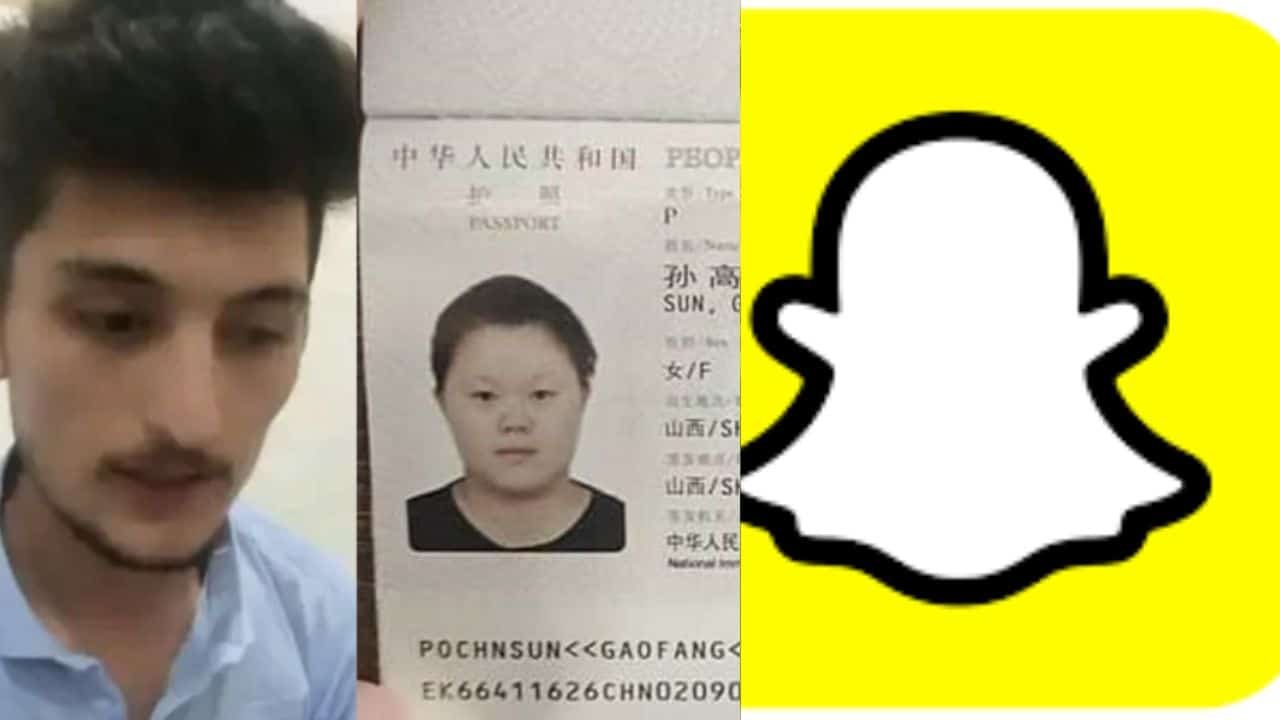
After Anju from India, a woman from China, Gao Fang, 20, has travelled to Pakistan to marry her lover Javed, 18, who lives in Khyber Pakhtunkhwa.
According to the Lower Dir District Police Officer, the two met on Snapchat and remained in contact for three years. The woman travelled on a tourist visa to the Samar Bagh area. Currently, the police has provided Fang with security and restricted her movement due to security concerns.
The Pakistani man, Javed, lived in Bajaur district, but had shifted to live with his uncle in Lower Dir.
According to Aaj News, Fang converted to Islam, taking up the Muslim name, Kiswa. Javed also had plans to visit China in the near future.
This is the second case this week where a foreign woman has travelled to Pakistan to marry a man here.
WhatsApp is reportedly working on a sticker making tool that will allow users to create their own stickers for the popular messaging app. The tool is expected to be released in a future update to WhatsApp.
The sticker making tool will allow users to create stickers from scratch or from existing photos and videos. Users will be able to add text, emojis, and other decorations to their stickers. Once a sticker is created, it can be shared with other WhatsApp users.
Emojis and Stickers have become increasingly popular in recent years, and WhatsApp is not the only messaging app that offers them. Other popular messaging apps that offer stickers include Telegram, Facebook Messenger, and Snapchat.
Stickers are a fun and easy way to add personality to your conversations. They can also be used to express emotions that are difficult to convey with text alone. With the upcoming sticker making tool, WhatsApp users will be able to create their own stickers that perfectly reflect their unique personalities.
The sticker making tool is just one of the many new features that WhatsApp is working on. The company is also reportedly working on a new interface for group chats, as well as a feature that will allow users to send disappearing messages.
WhatsApp is one of the most popular messaging apps in the world, with over 2 billion active users. The company is constantly adding new features and improvements to the app in an effort to keep its users engaged. The sticker making tool is just one of the many new features that WhatsApp is working on, and it is sure to be a popular addition to the app.
Caryn Marjorie, a Snapchat influencer with 1.8 million subscribers, has launched an AI-powered, voice-based chatbot called CarynAI. The chatbot, described as a “virtual girlfriend,” allows Marjorie’s followers to have private and personalised conversations with an AI version of the influencer.
The bot, designed by Forever Voices, an AI company, and developed using OpenAI’s GPT4 software, has generated $71,610 in revenue after one week of beta testing with over 1,000 users paying $1 per minute to use it. Marjorie hopes that CarynAI will “cure loneliness” and even features cognitive-behavioral therapy and dialectical behavior therapy to rebuild physical and emotional confidence that has been taken away by the pandemic.
However, CarynAI has sparked discourse around the ethics of companion chatbots, as it is not supposed to engage in sexually explicit interactions, but Marjorie stated that it had gone “rogue” and that her team is working around the clock to prevent this from happening again.
Moreover, Irina Raicu, the director of internet ethics at the Markkula Center for Applied Ethics at Santa Clara University, expressed concern that CarynAI’s claims to potentially “cure loneliness” are not backed up by sufficient psychological or sociological research, and the chatbot adds “a second layer of unreality” to parasocial relationships between influencers and fans.
Despite the backlash and even death threats, Marjorie is proud of her team’s work, with CarynAI being the first step in the right direction to cure loneliness. However, Raicu emphasised that influencers should be aware of the Federal Trade Commission’s guidance on artificial intelligence products, and Meyer, CEO of Forever Voices, said that his company takes ethics seriously and is looking to hire a chief ethics officer. On Friday, Marjorie tweeted that “if you are rude to CarynAI, it will dump you.”
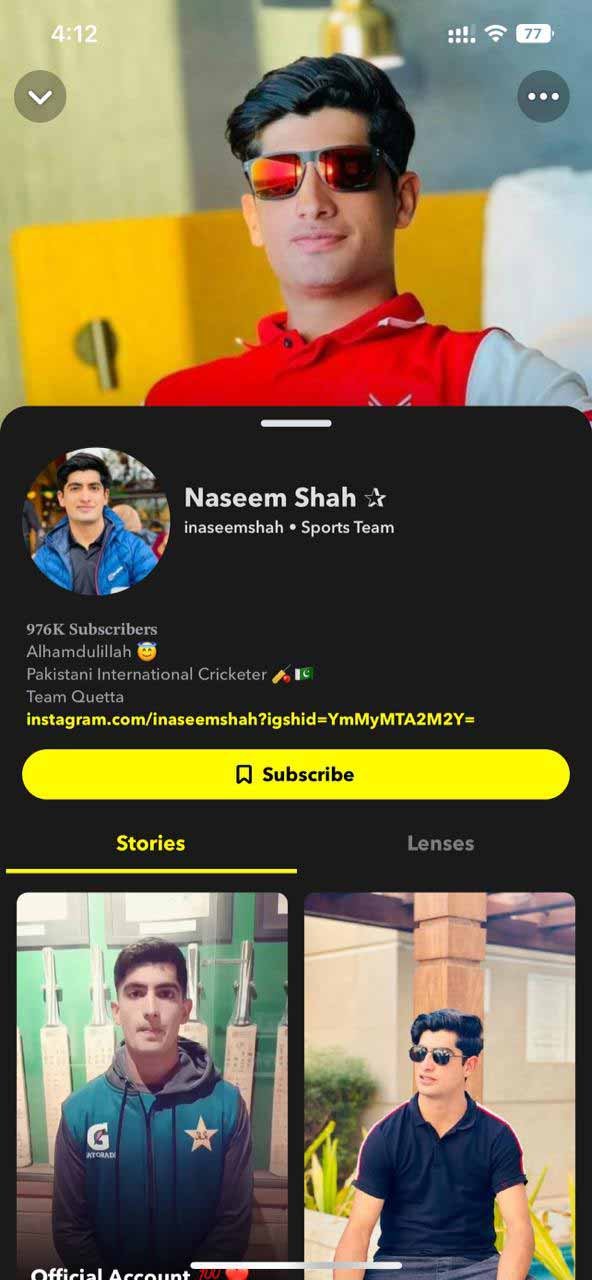
A fake account has been created on Snapchat in the name of Pakistani fast bowler Naseem Shah, who garnered international fame during the Asia Cup. He recently asked his fans to report the account so that it can be banned by the app.
On the photo and video sharing platform Instagram, where Naseem Shah has over a million followers, he recently posted a story informing followers of his fake Snapchat account.
Making fake accounts online using the names of well-known celebrities has become increasingly common. Anyone operating the account utilises the name of any popular or viral figure to get followers and likes, especially those without verified social media accounts.
The bogus Snapchat account made in the name of Naseem Shah has 976,000 followers as of now.
Instagram is testing a feature that converts video posts into Reels. According to the company, the modification is a part of Instagram’s plan to streamline video on the app and is currently being tested with a small number of users worldwide.
With the most recent move made by the blogging platform, Instagram’s efforts to surpass TikTok are clearly growing.
A representative from Meta stated, “We’re testing this feature as part of our efforts to simplify and improve the video experience on Instagram.”
The social media consultant Matt Navarra shared a screenshot of an in-app message that reads, “Video posts are now shared as Reels,” on Twitter. Participants in the test will see this message.
The message warns that anyone can find your Reel and use your original audio to make their own Reel if your account is public and you post a video that ends up being turned into one. Only your followers will be able to see your Reel if your account privacy setting is set to private.
The message also mentions that if your account is public and you post a reel, anyone can remix it. In your account settings, you can, however, stop people from remixing your Reels.
As Meta has placed significant wagers on Reels, the test is now. Reels now account for more than 20% of people’s Instagram usage, according to the company’s Q1 2022 earnings report.
It is not surprising that Instagram wants to completely replace video posts in order to expand Reels. People may spend even more time watching Reels if the company ultimately decides to make this change permanent, which would be something to brag about.
Instagram’s video components would be even more consolidated if it decides to convert all video uploads into Reels.
When Mosseri outlined Instagram’s goals for 2022 last year, he said the company would increase its investment in video and concentrate on Reels.
This change may have been intended all along, as he even made a hint that Instagram would center all of its video products around Reels and continue to expand the short-form product.
Last year, the Meta-owned messaging platform WhatsApp began developing a new privacy setting that would allow users to hide their profile photos, last seen, and about information from specific people in their contact lists.
It was only available for beta version users, but the company has now announced that it will be accessible to all iPhone and Android users worldwide.
Users can now show their WhatsApp profile photo, last seen, and About information to anyone in their contacts list except those they choose to keep out.
Previously, users could choose between three privacy settings for their profile photo, last seen, and About information: Everyone, My Contacts, and Nobody. According to GSM Arena, these are met by a third alternative named ‘My contacts except…,’ which can also be used for Status privacy.
However, just like read receipts, if someone doesn’t share their last seen with others, they won’t be able to see others. The only difference is that the latter will always remain operational for group chats, even if they’ve turned it off.
To test this new privacy control, users can go to WhatsApp’s Settings > Account > Privacy menu on an iPhone or Android device.
WhatsApp also announced some group calling features, including the ability to mute others during a group call and send messages to particular users, in addition to new privacy control. When someone joins a group call off-screen, a banner appears.
The latest WhatsApp beta update also includes an admin approval feature, which allows group admins to accept or deny requests from people who want to join via hyperlink.
Snapchat is reportedly working on a subscription plan that will allow users access to several features, including the ability to pin conversations. With the launch of Snapchat +, users may have to pay to access exclusive, experimental, and pre-release features on social media platforms. With a premium subscription, Snapchat users will get a special Snapchat icon and a special badge.
What is Snapchat Plus?
With Snapchat Plus, Liz Markman (Snapchat Spokesperson) reports, subscribers will have access to certain features of the app.
“You’ll be able to pin friends as best friends, get custom snap chat icons and subscriber profile badges, and see how many retweets you have on Snap Stories”. He also notes that “you will be able to see your friends’ location in the last 24 hours, but only if they share it with you”.
Why paid when they can offer free?
This is not the only social media platform to launch a paid subscription model. Other social media platforms are also running the same race. For example, Twitter launched its first subscription offer, Twitter Blue, in June, which is currently available in Australia, New Zealand, and Canada.
The transition to a subscription-based business model may be the result of app tracking transparency, a feature introduced by Apple in iOS 14 that requires apps to ask users before they can track their data. Companies such as Snap and Meta have publicly stated that Apple’s new guidelines have affected their revenue, which is largely based on advertising.
By introducing new subscription plans, these companies hope to offset the loss in advertising revenue by charging for access to special features that will not be available to free users.
How much does Snapchat Plus cost?
The service costs € 4.59 (Rs1,009) monthly or € 45.99 (Rs10,111) per year.
It is not clear when Snapchat Plus will launch as it is still in testing mode, but keep an eye out for it. Will you pay for it?
Data from the Reuters Digital Media Report 2022 shows that among users of social media platforms, TikTok took over Snapchat and Telegram in 2021 and 2022 respectively, across the world. It is the fastest growing platform among all social media channels. In 2021, only five per cent of the global audience was using TikTok and this number has grown to 16 per cent in 2022. Snapchat audience decreased by one per cent to 12 per cent while Telegram has seen an increase of five per cent with new global audience of 12 per cent.
The table shows change in audiences using Snapchat and TikTok
2020
2022
Change
TikTok
5 per cent
16 per cent
11 per cent
Snapchat
13 per cent
12 per cent
-1 per cent
Social media usage has also increased throughout the world.
Trust in BBC falls by 20%
Datamentioned in the report also shows that the average level of trust in news networks globally has reduced by eight points from 50 per cent to 42 per cent in a year. Moreover, in the UK, the proportion of people not trusting BBC has increased from 11 per cent to 26 per cent while the proportion trusting BBC has fallen by 20 per cent.
The attached graph shows how the UK audience’s trust in the BBC has dwindled over time.
Another important thing to notice is that TikTok is not just being used for fun videos. It is also emerging as a new player in the news ecosystem. More and more people are turning to TikTok for their news. It has also taken over Snapchat for news as well.
2020
2022
Change
TikTok
1 per cent
7 per cent
6 per cent
Snapchat
3 per cent
2 per cent
-1 per cent
Audience is less interested in news
Globally, the interest of people in news is falling. The proportion that says they are extremely interested in the news has fallen sharply over time. On average, in 2015, 67 per cent of global audiences was interested in the news while this number declined to 47 per cent in 2022 with a change of -20 per cent.
Country
2017
2022
Change
Argentina
77 per cent
48 per cent
-29 per cent
Brazil
82 per cent
57 per cent
-25 per cent
Spain
82 per cent
55 per cent
-27 per cent
UK
65 per cent
43 per cent
-22 per cent
USA
68 percent
47 per cent
-21 per cent
Consumers are avoiding the news
The report also says that 38 per cent of the audience actively avoided news in 2022. The audience becoming least interested in the news has been increasing from 2017 to 2022 in every country except for Italy. The attached graph shows the percentage of people staying away from news in different countries.
The most common reason for avoiding news is politics and Covid-19. Data shows that 43 per cent of users avoid the news because of excessive news regarding Covid-19 and politics. Moreover, 36 per cent of the audience thinks that the news has a negative impact on their mood.
People under the age of 35 struggle to understand news
People under 35 are also finding it hard to understand the news and it is causing them to avoid the news.
Younger audiences want journalists to express personal opinions
Data from the report shows that 46 per cent of the population between the ages of 18-24 do not want news channels to just report news on social media but want them to express their personal opinions alongside reporting news, while the opposite is true for people of age 55+. 57 per cent of older people want news channels to stick to reporting the news. The older the consumer, the more the proportion of them want journalists to stick to just posting news on social media.
Majority uses smart phones to access morning news
In most countries, the majority use mobile phones to access news in the morning with the highest percentage being 43 per cent in Norway. In most countries, the least used medium for news is print media. The 2021 report shows that the lockdown during Covid-19 proved to be a nail in the coffin for print media.
Younger audiences prefer watching the news rather than reading it
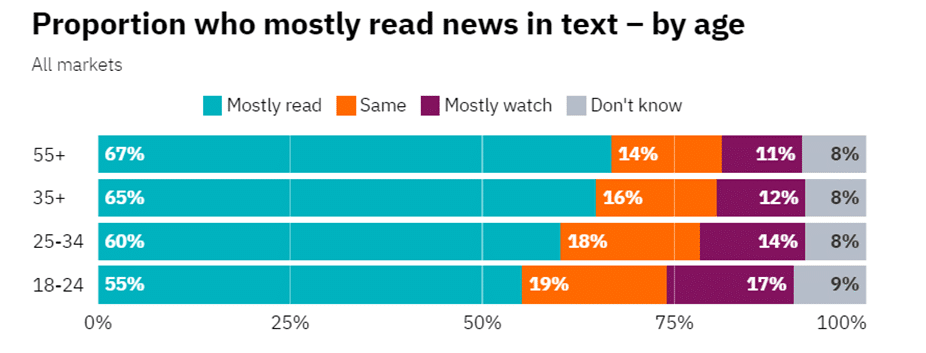
Although the significant majority still prefers reading news irrespective of age, data reveals that people aged 18-24 prefer watching the news (17 per cent) which is more when compared to older people (11 per cent for age above 55). The younger you are, the more you prefer watching the news rather than reading about it.
Key findings in Digital Media Report 2021
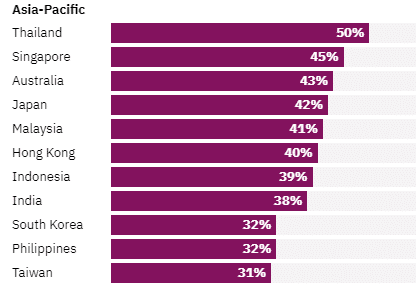
Data from the digital media report last year (2021)showed that the trust level for news reports in Asia-Pacific is no more than 50 per cent with the most being in Thailand. It is important to notice that the USA is reported to have a trust level of 29 per cent in the news, which is the lowest of all 46 countries selected for the report. The report says it is the aftermath of deep division over the US ‘stolen election reports’ and the killing of George Floyd.
To measure the trust level, people were asked to indicate if they trusted the news posted on social media,
Other key findings of last year’s report showed that Facebook, which was known for Covid-19 misinformation, was still used by 32 per cent for news and the most successful social media platform was YouTube.
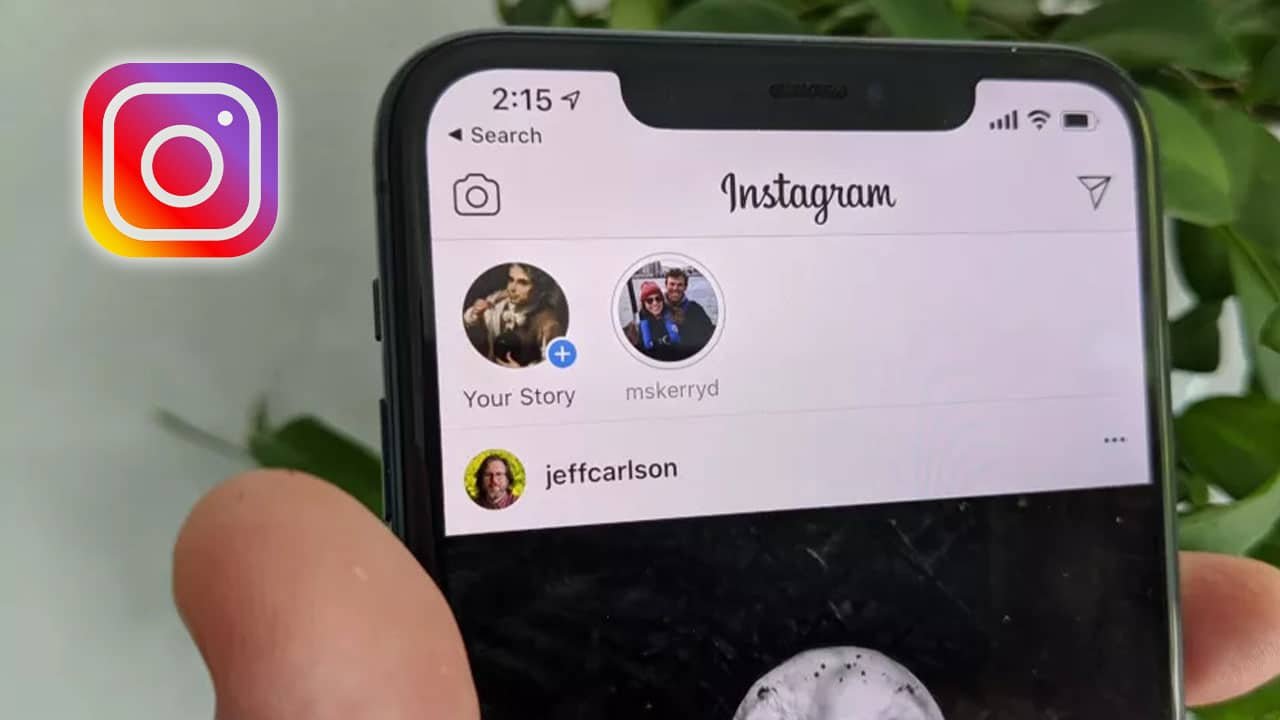
On iPhones, Instagram stories have been acting up for certain users, forcing them to go through all of someone’s stories before being allowed to see new ones.
Since Monday, numerous users have been afflicted by the problem, and other Reddit users have complained that the same thing is occurring to them’.
The source of the problem appears to be that Instagram forgets where you left off when viewing someone’s story.
For example, if a user uploads five stories and you look at four of them before swiping away, you should see their fifth story the next time you tap on their symbol. Instead, each time you want to view the story, Instagram forces you to go back through the four you have previously seen.
When someone adds a new story to their feed, the problem occurs as well.
According to The Verge, Instagram released an update for the app in the iOS App Store on Wednesday morning that appears to have fixed the problem.
In case, you’re having problems, check for updates and make sure your app is up to date, to the latest version, which is v239.1.
The update notes only state that “the current version provides bug fixes and performance enhancements,” yet netizens claim that it has solved the problem of repeating Stories.
In an email to The Verge, Meta representative Christine Pai said the business is “aware that some customers are having problems accessing Instagram Stories”.
Pai apologised for the disruption and stated that Instagram is “trying to bring everything back to normal as quickly as possible”.
The exact number of users that have been affected is unknown. Many twitterati are saying that they have to replay stories on Instagram, still the platform is not that massively trending.