Tag: social issues

  • Young Pakistanis in the UK lead in unemployment, govt stats confirm 

    Young Pakistanis in the UK lead in unemployment, govt stats confirm 

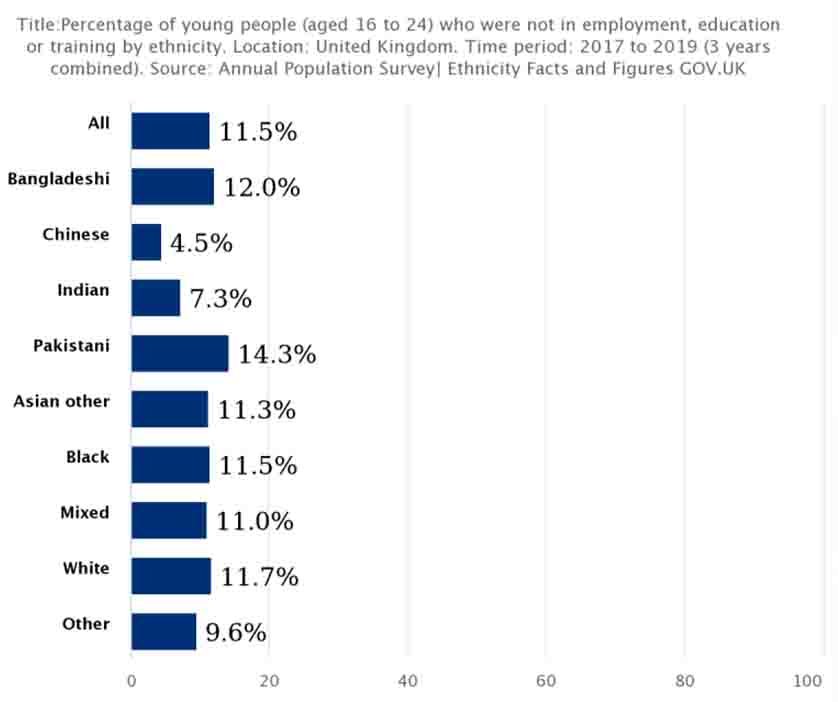
    Official data from the United Kingdom’s government shows that among different ethnic groups in the country, young Pakistanis are the least active in terms of work and education. 

    The dataset in question is categorised as “unemployment,” encompassing individuals aged 16 to 24 who are neither employed nor engaged in any form of training or educational pursuits. This data was systematically collected over a three-year period spanning from 2017 to 2019. 

    Notably, within the spectrum of ethnic backgrounds in the UK, individuals of Pakistani origin stand out with the highest unemployment rate at 14.3 per cent, surpassing their counterparts from nine other nations. The next highest rate pertains to individuals of Bangladeshi descent at 12 per cent, while young individuals of Indian heritage exhibit a comparatively lower inactivity rate of 7.3 per cent, as indicated by the data. 
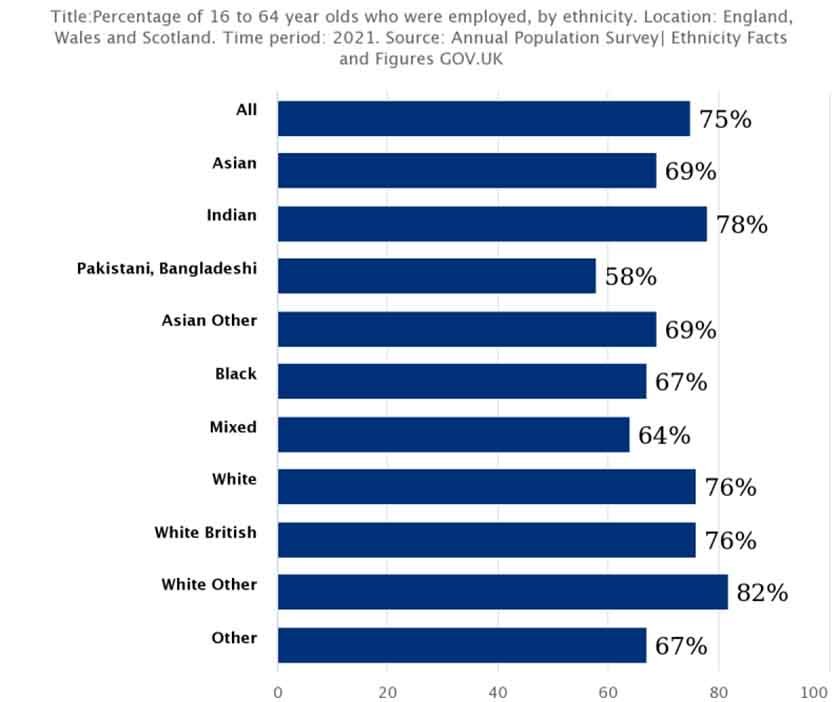
    A similar pattern is discernible when examining the overall employment data for the country, which encompasses individuals aged 16 to 64. In this context, Pakistani and Bangladeshi individuals are grouped together and collectively exhibit the lowest employment rate, standing at a mere 58 per cent, the lowest among ten defined categories. In contrast, individuals of Indian descent display a more favourable employment rate at 78 per cent, trailing only those of non-British white origin, of whom 82 per cent are gainfully employed. 
    It is worth noting, however, that the observed trends in employment and unemployment figures do not appear to have a conclusive impact on the overall happiness score, as the data does not differentiate by age and represents the broader community. The happiness index assigns a score on a scale of 10, and according to the data, individuals of Pakistani descent in the UK have a happiness score of 7.57, ranking as the fourth highest among the ten surveyed ethnic groups. 
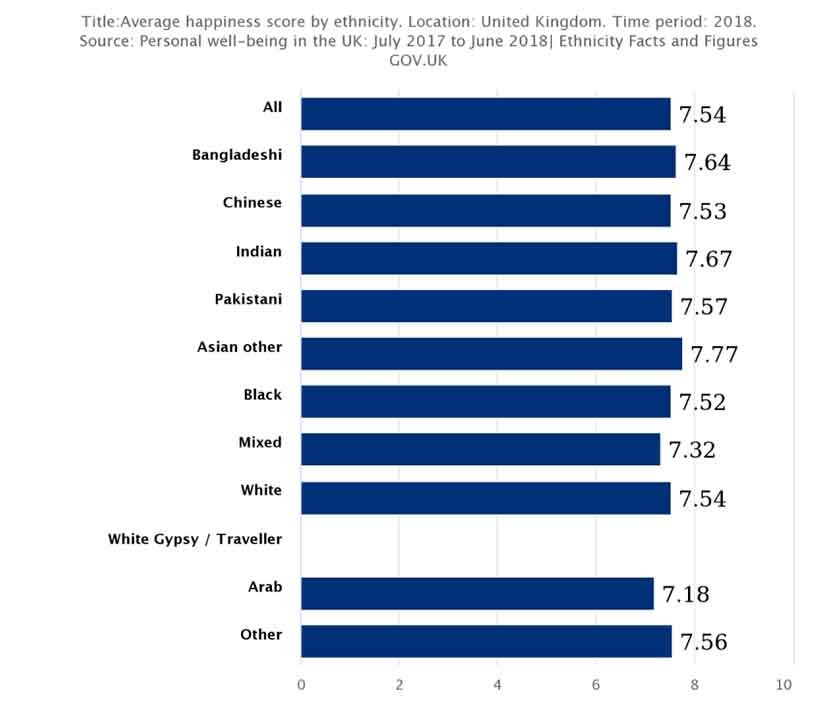
    While individuals of Indian, Bangladeshi, and other ethnic backgrounds report higher levels of happiness than those of Pakistani origin, individuals of Arab, black, Chinese, and even white ethnicities exhibit lower happiness scores in comparison. 
  • Editorial: Are we betraying our culture if we accept something might be different?Bilkul nahi

    Editorial: Are we betraying our culture if we accept something might be different?Bilkul nahi

    Sar-e-Rah, a drama well known to the Pakistani audience, recently aired one of its most anticipated episodes that explored the struggles of a transgender boy who tries to gain acceptance from his family by studying hard.

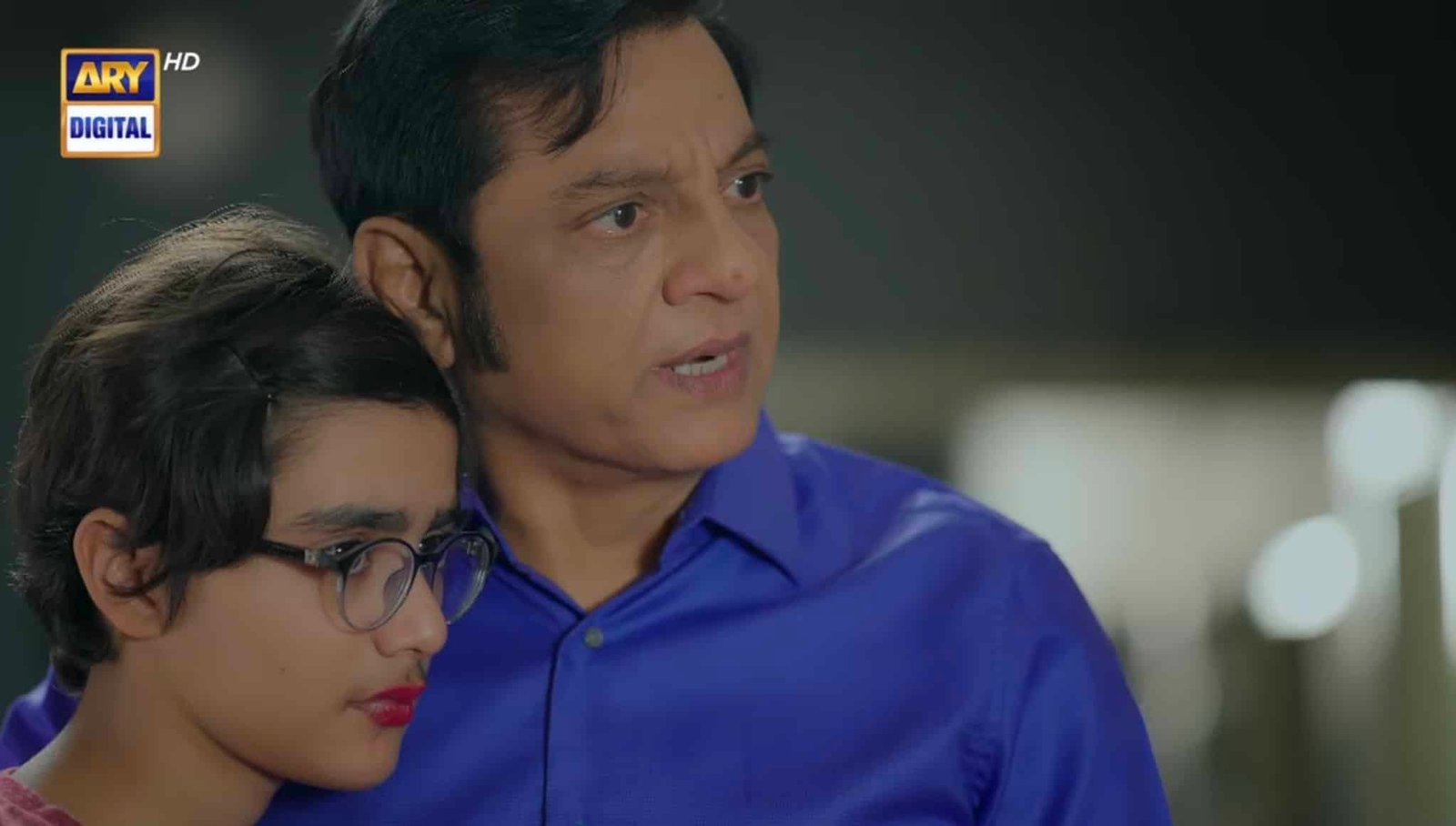
    The episode delved into how Sarim (played by Muneeb Butt) is bullied by his stepmother and brother because of the fact that he is an intersex boy. However, Sarim and his father have a close bond, who encourages him to work hard and is the only one who embraces his true nature rather than hiding it away.

    In a scene that gained massive audience attention and praises on Twitter, the father and son are sitting by the sea where he teaches his son that there is no shame in wanting to be feminine, and he can choose to be whatever he likes because it won’t diminish his father’s love for him.

    Many users praised the way this episode depicted the relationship between the father and son, as portrayed by Nabeel Zafar and Butt’s moving acting. The show was lauded for handling a taboo subject in a delicate manner, and showing how important it is for parent’s to empathise with and support their children.

    In a time when censorship overrules freedom of thought, and many drama creators refuse to engage with the audience, there are creators who are making stories for the audience by taking bold steps in crafting unique stories that tackle social issues in a sensitive yet thorough manner.

    Unfortunately this message did not resonate with everyone, as harsh critics like fashion designer Maria B once again stepped up to criticise the drama for ‘promoting vulgarity’ and encouraging the acceptance of the transgender community. This isn’t the first time Maria B has targeted the transgender community through her hate campaigns and probably won’t be the last time either. But it all comes down to a few questions we really need to ask ourselves: How is being an intersex a bad thing? Why can’t we as people accept everyone for who they are and what they are? Why is it so hard for us to choose kindness? What are we so afraid of? How is accepting a child for what and who they are a problem? At a tender age, a child only needs validation and acceptance. Parents don’t love in categories, their love is unconditional. Then why do we always put conditions on things which only need love and kindness.

    Moving forward to the larger debate, which is about culture and what will people say. We need to understand that the world has massively changed. It’s the 21st century and people have a way of living on their own terms. Why do we always bring society, culture in things we ourselves are afraid to handle? Take the example of the scene in this drama itself, in our society a father is mostly shown as the angry adult, who doesn’t speak much, expresses even lesser and then here was a father, calm, tender and accepting of his son. We should promote such culture where fathers shower their children with kindness and love.

    Kindness and love is the need of the hour. Pakistan already has a lot of problems. Let’s not make acceptability a problem as well. Our children deserve better. They deserve peace, security and assurance that yes our parents have our back. It all starts from home. Children need these little affirmations from a young age. Let’s not disappoint them just because they are different.

  • While Twitter praises Sar-e-Rah for encouraging empathy, Maria B claims it’s actually ‘spreading destruction’

    While Twitter praises Sar-e-Rah for encouraging empathy, Maria B claims it’s actually ‘spreading destruction’

    Sar-e-Rah dropped its most anticipated episode this Saturday which explored the struggles of a transgender boy who tries to gain acceptance from his family by studying hard.
    The episode delved into how Sarim (played by Muneeb Butt) is bullied by his step-mother and brother a because of the fact that he is an intersex man, who is regularly pushed away from spending time with them. However, Sarim and his father have a close bond, who encourages him to work hard and is the only one who embraces his true nature rather than hiding it away.
    In a scene that is gaining praises on Twitter, the father and Sarim are sitting near a beach where he teaches his son that there is no shame in wanting to be feminine, and he can choose to be whatever he likes because it won’t diminish his father’s love for him.
    Prominent transgender activist Mehrub Moiz Awan praised this scene for its ‘beautiful message’.

    ‘What a beautiful message! Who wrote this scene?’ she wrote.

    Actress Iffat Omar also sent praises to this scene

    Many users praised the way this episode depicted the relationship between the father and son, as portrayed by Nabeel Zafar and Butt’s moving acting. They lauded the show for handling a tabooed in a delicate manner, and showing how important it is for parent’s to empathize with and support their children.

    “The relationship between Sarang & his father is beautiful in #SarERah this week. This father is honest with his son, loves & supports him – what every child needs, but particularly those struggling against society. Nabeel Zafar & Muneeb Butt are brilliant,” one user wrote.

    Another user praised how the show was uplifting the minorities that it depicted on screen:

    “Best thing about #SareRah is that its not depressing. There is always hope and light at the end and thats what makes it special.”

    In a time when censorship overrules freedom of thought, and many drama creators refuse to engage with the audience they are creating stories for, this user praised Sar-e-Rah for taking a bold step in crafting unique stories that tackled social issues in a sensitive but thorough manner.

    #SareRah @arydigitalasia a breath of fresh air,every minute worth spent. Meticulously crafted stories reflect talent, passion and time spent to study each one. Brought alive by superb acting,a rare positive take on negative social issues,absolutely no loose ends.”

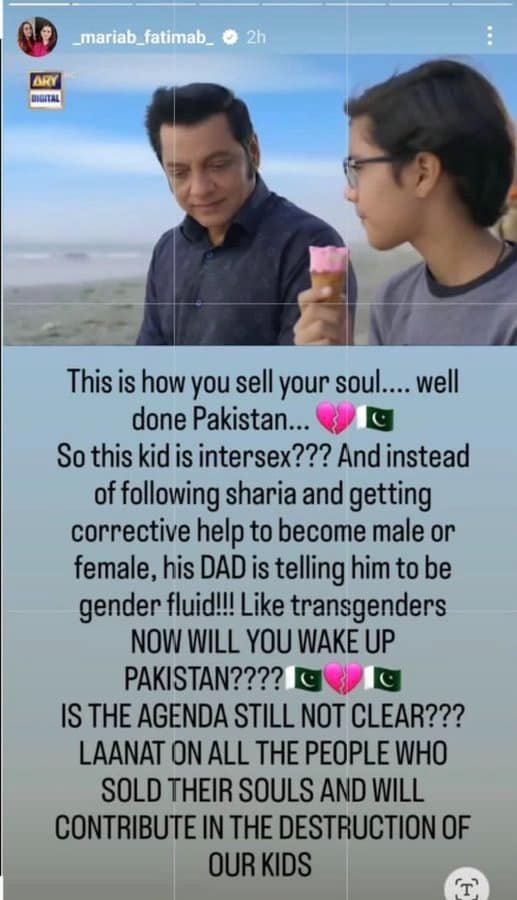
    Unfortunately this message did not resonate with everyone, as harsh critics like fashion designer Maria B once more stepped up to criticize the drama for promoting vulgarity and encouraging the acceptance of the transgender community. On her Instagram stories, the fashion designer said:

    “So this is how you sell your soul…well done Pakistan.

    So this kid is intersex??? And instead of following sharia and getting corrective help to become male or female, his DAD is telling him to be gender fluid!!! Like transgenders.

    Now will you wake up Pakistan??

    Is the agenda still not clear? Lannat on all the people who sold their souls and will contribute to the destruction of our kids.”

  • PM Khan congratulates winner of ‘Asia’s highest honour’ Ramon Magsaysay Award

    Prime Minister Imran Khan has congratulated Founder of Akhuwat, Dr. Amjad Saqib for winning the Ramon Magsaysay Award.

    “Have been told this year’s Ramon Magsaysay Award, Asia’s highest honour, has been given to a Pakistani, Dr. Amjad Saqib, Founder Akhuwat,” wrote the Prime Minister.

    “Congratulations to him. We are proud of his achievement as we move forward in creating a welfare state based on Riasat e Madina Model,” he added.

    Dr Saqib received the award for his efforts for eradicating poverty in Pakistan. His profile on the website of Ramon Magsaysay Award Foundation  says, “A visionary who founded one of the largest micro finance institutions in Pakistan, servicing millions of families.”

    As per the details on the website, “Muhammad Amjad Saqib, in 2001, invited a group of friends to present to them his plan for a first-of-its-kind interest-free micro finance program, offering to design, organise, and implement it. Two years later, Akhuwat was formed and its first branch opened in Lahore.”

    “It also promotes volunteerism among staff and clients, aims at transforming borrowers into donors, and fosters diversity and inclusion, serving all—irrespective of religion, caste, color, and gender.”

  • Ahsan Khan says Kohat rape case ‘is a reflection of our failure as a society’

    Ahsan Khan is demanding justice for three-year-old Hareem Fatima, who was brutally murdered after being sexually assaulted in Khyber Pakhtunkhwa (KP)’s Kohat district. According to reports, Fatima’s father lodged a complaint with the police stating that Hareem went out to play with other children but unfortunately did not return.

    “Another Twitter trend, another baby girl, another rape, another family destroyed. Another story,” said Ahsan. “Would be remembered for few days and forgotten.”

    “We always talk about upbringing and protection of our daughters, maybe it’s time for us to stress on raising our sons right,” said the actor further, stressing on the importance of educating children.

    “The Kohat incident is a reflection of our failure as a society,” he added.

    Read more – Motorway rape case culprits handed death sentence

    Despite the introduction of an Anti-Rape Ordinance by the government, rape cases continue to rise in the country. The Current is maintaining a daily tally of cases and the numbers are alarming.

    According to a report published by a child protection NGO Sahil, at least 173 children were gang-raped in Pakistan in the first six months of 2020, whereas there were 227 reports of attempted sexual assault. 

  • Ali Xeeshan responds to criticism on ‘anti-dowry’ bridal campaign

    Ali Xeeshan’s latest collection ‘Numaish,’ which debuted at the Hum Bridal Couture Week 2021 last week, has created a bit of a storm on social media. The collection, aimed to highlight the burdening culture of dowry in our society, was designed in collaboration with UN Women Pakistan.

    While the campaign was well-intended, the designer received backlash on social media, with people criticising Xeeshan for the cost of his outfits and referring to Ali’s campaign as an act of hypocrisy.

    Responding to the criticism, Xeeshan said: “When I was developing it [the campaign], I was only looking into girls’ struggle but later I realised that dowry pressurises the parents more.”

    “I remember last year a client’s wedding was called off because one of the demands from groom side was to have a gold-plated shaving kit,” shared Xeeshan.

    He continued: “Many people say that you make expensive outfits, then why are you talking about this? These two are very different things – that [designing outfits] is my business and no one is compelled [to buy them].”

    “If you can afford my clothes please be my guests and if you can’t then don’t put yourself under the pressure,” added Xeeshan.

    The designer concluded by saying, “Agar meray say koi poochay keh mere kapray khareeday ya beti ko education de, toh beti ko education day dein. Mein kapray baich loon ga.”

  • Shirakat animations — a way towards progressive thinking and self-analysis

    Shirakat animations — a way towards progressive thinking and self-analysis

    Non-governmental organisation (NGO) Shirakat works on human rights, especially women’s rights in Pakistan.

    The NGO has recently released some animated videos addressing different social issues, including harassment, discriminatory behaviours, sexual abuse and domestic violence against women, to change mindsets and dismantle patriarchy and stereotypes that equally affect both men and women.

    The videos’ topic, script, voiceovers and colourful animations are put together rather well, which keep viewers engaged throughout the videos. The videos have subtitles and are also being explained via sign language.

    Talking to The Current, Shirakat Executive Director Bilquis Tahira said that the project’s main focus is to convey messages like how the brought up of daughters and sons develop a certain mindset and then the behavior and reaction of both men and women accordingly construct our society.

    “This project is on GBV (Gender-Based Violence) prevention. We have made this to engage women’s voices because most perpetrators of domestic violence are men and the victims are women. And we believe that we will have to change the behaviors of both men and women or boys and girls equally because they live in the same society”, she said.

    “We have used this medium of animation because the videos are short and interestingly represented to give the message of positive masculinity also so that people can use these short video messages for self-analysis.”

    “We do not say that this project will completely change the mindset of the people but these short videos are based on real stories and we have obviously crafted those but these are the incidents that normally happen. The goal is to make people think about their behaviours, men and women both to analyse that should they be reacting like this in a certain situation.”

    She added: “We have chosen the topics from our previous 20 years’ work on violence against women. We have understood the pattern of abuse, how an abuser is not stopped, how an abuser’s behaviour is constructed and how the community enhances his behaviour.”

    Read: “““““Tips to raise kids in line with Islamic values

    Speaking about the need to develop progressive thinking in our coming generations, she said, “If we start teaching our children from an early age that we all are humans, everybody has equal rights regardless of their gender. If we start changing the behaiovurs from their childhood so we can be more peaceful as a society. If kids are seeing negative messages from society and they also watch these positive messages, then they get to see the positive side also. They can relate to these stories and bring change in their behaviours.”

    Shirakat believes that the main focus of developing progressive thinking should be on the younger generation and particularly on kids.

    They run an ‘Early childhood care programme’ and have concluded from their experience that “the earlier you catch them the better”. Working on children’s thinking is more convenient, long-lasting and can be more powerful.

    The Current also talked to Wakhra Studios who are behind the animations in this project. The team told The Current that they keep in mind the demographics and psychological aspects of society and its members.

    “We try to keep them short with fewer dialogues and more animations so that it is more attractive and understandable. We have also added key messages at the end of the videos so that every person can understand it.”

    They said that while making these, they keep in mind that no stereotypes are reinforced or communicated via these videos and sentiments of any part of the community are not hurt.

    Answering how much time did it take, they revealed that normally it takes 1.5 to 2 weeks to make an animated video with a duration of three minutes, from the script to the final video

    The project comprises of 24 videos and Shirakat has posted 11 videos on their page yet. You can watch the videos on their Facebook page.

  • World Bank okays $300 million to improve Pakistan’s health and social services

    World Bank okays $300 million to improve Pakistan’s health and social services

    To improve social and health indicators in Pakistan, World Bank has approved $300-million financial package, including a loan of $200-million, reported Express Tribune.

    The loan has been approved under the Punjab Human Capital Investment Project that will strengthen services regarding health and social protection for poor and vulnerable households in various districts in Punjab.

    READ MORE: ‘IMF putting Pakistan on path of stability’ says Dr. Reza Baqir

    World Bank Country Director for Pakistan Illango Patchamuthu said that “investing at the start of life, especially for girls and women, is essential to empower citizens to thrive.”

    He further added, “the project would help the Punjab province to invest in early years now to create a productive workforce for the future. The project is also aimed at increasing the quality and uptake of health services, including maternal care, immunisation and childbirths attended to be qualified professionals, reaching up to 18 million people.

    READ MORE: Pakistan ranks 76th on ‘Inclusive Internet Index 2020’

    It will provide early childhood education and skills training for young parents and will improve systems to more efficiently manage economic and social inclusion programmes.”

    The recent Human Capital Index (HCI) has highlighted that an average girl born in Pakistan will have realized only 40% of her overall human capital potential by the time she turns 18.

    Pakistan’s high stunting rate among children under five and poor educational and learning outcomes also highlights the challenging human capital outcomes.