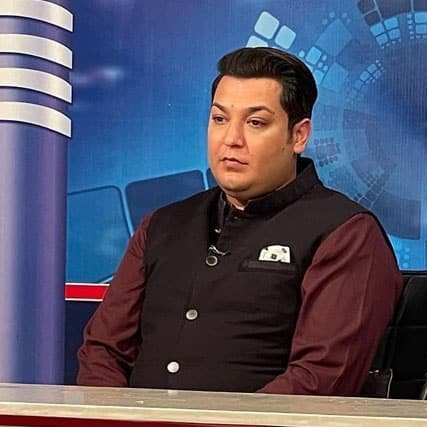
The past month, Assistant Commissioner Hazim Bangwar broke the internet with his larger than life personality and fashion choices. The government official has been a model, rapper and music producer in Hollywood.
Bangwar showed up on Mathira’s show, where the former singer opened up about why he had decided to leave behind his career in Hollywood and come Pakistan to do his CSS. Bangwar revealed that it was the realization that he wanted to help his country that made him want to come back: “I completed my Bachelors in Fashion Marketing, my second degree was LLB. My mind would keep fluctuating between art and academia…Then I got signed to a music label. So I was travelling, limousines, first class, this and that…So when I came to Pakistan, reality would hit me. I’m first class in Emirates and here people would get pushed around while travelling on buses. I’m eating the best food from the best restaurants, and here people don’t have anything to eat. So I would ask myself ‘What am I doing?’ I was disconnected from reality, and somehow felt like I was wasting my time. So while I was on my break, I came back to Pakistan and decided to stop complaining and take action.”
Bangwar also ta about how shocked other people in his life were when they found out about his decision to stay in Pakistan. “People would say to me ‘Why have you come back? You’re set in life go back! A government job?!’ Because of that I was absolutely determined to show them that why not? If someone wants to do something good for their country then why can’t they come back?”
Our morbid fascination with domestic violence seems have become one of the essential tools required to make a hit drama. There aren’t many television dramas which depict healthy family relations, where women are accepted and loved without being told to lose their identity. Kuch Ankahi, therefore, is an anomaly, a breath of fresh air on our screens because it depicts a supportive family where the father isn’t holding back his daughters from their dreams, women aren’t constantly plotting to one-up each other and the male lead isn’t a toxic, triggering person. It proves that more dramas need to follow its lead and start portraying women in a positive light. On last night’s episode, we witnessed how the youngest sister, Tania, is openly dancing at her sister’s wedding event when a person behind her body shames her, forcing her neighbor to stand up for her.
The moment resonated with viewers and clips of the scene are now being widely shared.
Its the way #KuchAnkahi tells you whats right and whats wrong without making it in your face. Salman’s mom telling off the lady who body shamed Taniya we dont need 100 pages long speeches, just one little dialogue blended in well is enough
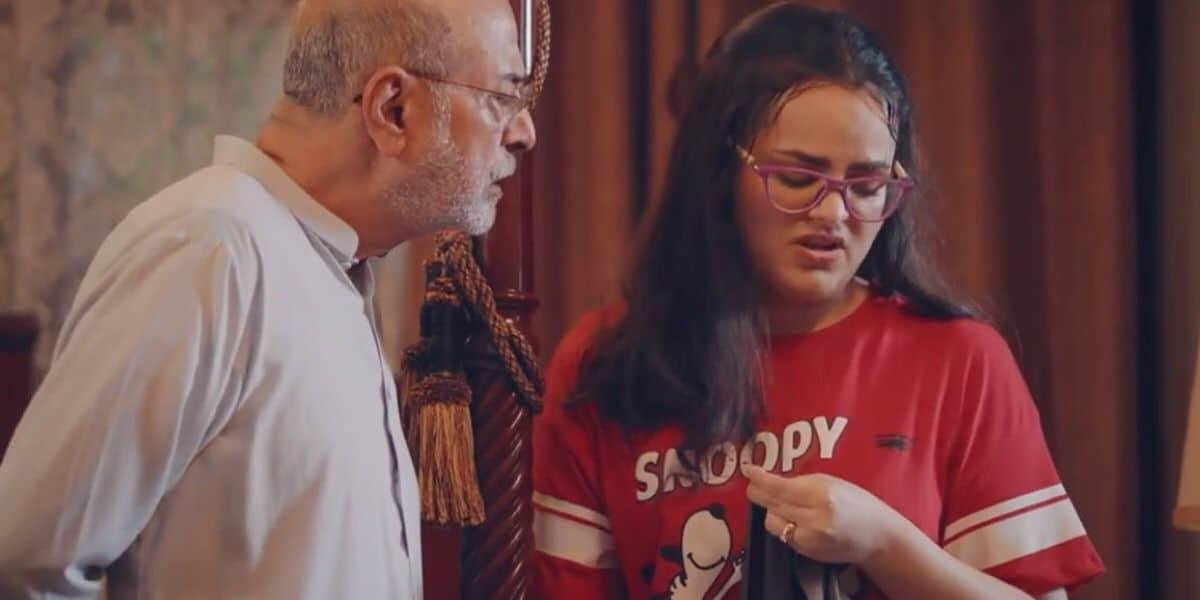
What social media users have called the most touching moment in this episode is the scene between the father, Agha Jee, and the eldest daughter Samiya where he witnesses her unhappiness and reminds her that if she refuses, then he will call off the wedding. This kind of empowerment and kindness is rarely depicted in Pakistani dramas, and is teaching fathers to be more gentle to their daughters as Agha Jee assures Samiya that he will keep holding her hand regardless of whether she chooses to get married or not.
#KuchAnkahi winning my heart again! Agha Jaan explains his POV w/out putting down his wife infront of his children. He knows she’s wrong but how he explains her errors in judgement to Samiya – so touching, poignant & free from toxicity. Thank you #MohammadAhmed@KashfFoundationpic.twitter.com/f091XE0Cpm
This kind of warmth and support between the family members is not once-in-a-blue-moon, but a regular occurrence in this drama. Agha Jee never shies away from praising his daughters’ strengths and consistently empowers them to advance further in society. In several episodes, we witness Agha Jee doing his own chores while telling his daughters that they’re not responsible for household duties.
This gentleness and respect towards women isn’t just prevalent in Agha Jee, but extends to all the men in the drama. The way they are completely the anti-thesis to the kind of male lead we have grown up watching is frankly shocking. Like the male lead Salman, who is time and again shown doing his own work. In one scene, he makes his own roti, an act we have only ever seen women perform.
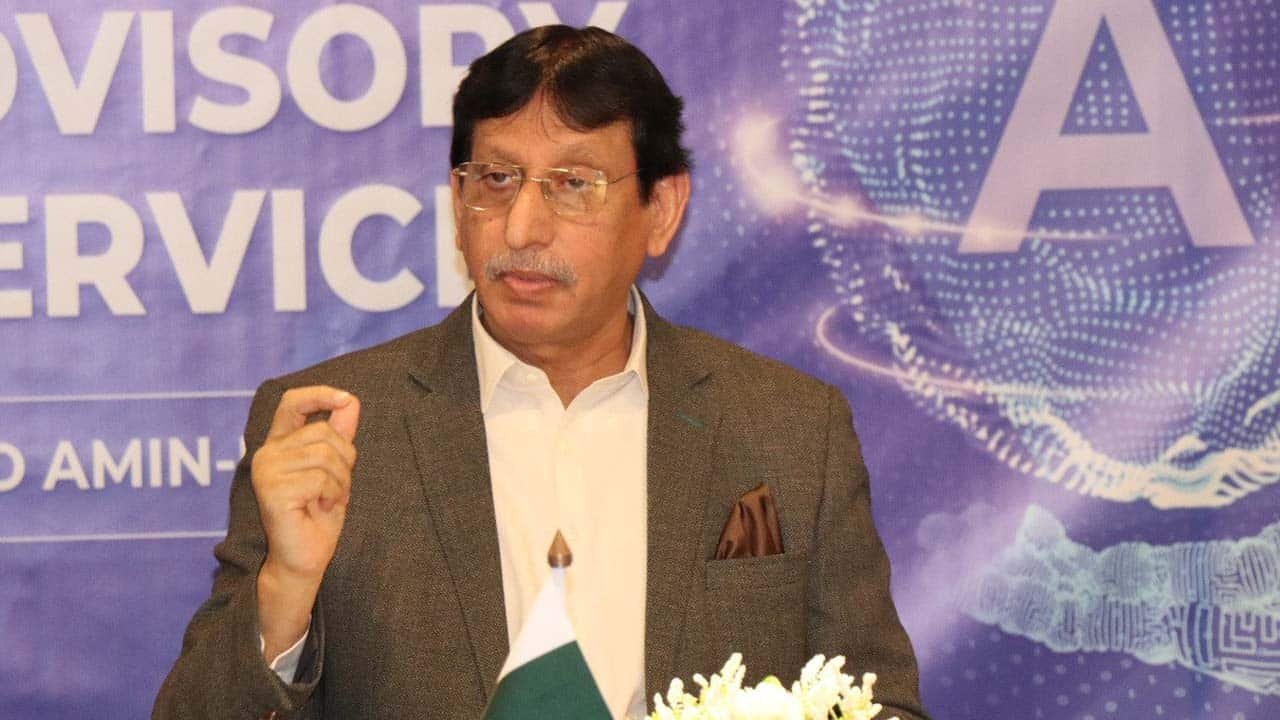
Speaking at the ‘Accelerating US Investments in Pakistan’ event in Karachi, Federal IT and Telecommunication Minister Aminul Haq said that closing social media sites and applications is not the solution to the problem, and Pakistan has decided that no website or app will be closed in any case.
Pakistan has a history of banning social media platforms like YouTube, TikTok, and most recently, Wikipedia. However, Haq emphasized that “banning can never be a solution.” Haq’s statement is a significant departure from Pakistan’s previous actions, and he promised that any such action would go through the IT ministry, where there will be no ban from now on.
Despite bureaucratic hurdles at the Finance Division, the Federal Board of Revenue (FBR), and the State Bank of Pakistan (SBP), Haq’s ministry has been persistent and able to get many things done, such as allowing IT export companies to retain 35% of dollars in their accounts.
During the event, Haq praised Prime Minister Shehbaz Sharif for supporting the Digital Pakistan vision despite all the bureaucratic hurdles.
Yesterday social media lit up once more on speculations on what exactly is going on between Urvashi Rautela and Pakistan cricket pacer Naseem Shah. Sparks flew in September 2022 when the Bollywood actor shared an edited video of her and the 19 year old cricket player. When asked about the video by the media, Rautela responded by saying that the video was made by her fans, and she didn’t know the other person in it. Now this time, fans are convinced daal main kuch kaala hai when under a post where Shah had sent good wishes to Shadab Khan for his wedding, Rautela posted a birthday wish to the cricket player.
“Happy birthday @inaseemshah congratulations on being conferred with honorary DSP rank”
This smol but meaningful interaction has fans scratching their heads regarding the bond between Naseem Shah and Rautela.
It looks like the lonely singles in India will have something to do other than side-glaring at all the happy couples out there. An appeal signed by The Animal Welfare Board of India has encouraged people to hug cows on Valentine’s Day, suggesting that it will bring about “emotional richness” and “increase individual and collective happiness.”
Calling cows the backbone of Indian culture and rural economy, the organisation has emphasized how the mammal sustains life, represents cattle wealth and biodiversity. “It is known as ‘kamdhenu’ and ‘gaumata’ because of its nourishing nature like a mother, the giver of all providing [sic] riches to humanity. Vedic traditions are almost on the verge of extinction due to the progress of west [sic] culture over time. The dazzle of western civilization has made our physical culture and heritage almost forgotten. In view of the immense benefits of the cow, hugging [the] cow will bring emotional richness hence will increase our individual and collective happiness. Therefore, all the cow lovers may also celebrate February 14 as Cow Hug Day, keeping in mind the importance of the mother cow and making life happy and full of positive energy. This [was] issued with the approval of competent authority and on the direction of the Department of Animal Husbandry and Dairying, Ministry of Fisheries, Animal Husbandry and Dairying.”
As soon as this news began circulating on social media, #CowHugDay started to trend both in Pakistan and India, and for once users from both countries began to bond over the pointlessness of politics.
Social media users are demanding a ban on ScrapFest for allegedly promoting homosexuality in Pakistan. The hashtag #BanScrapFest trended on Pakistani Twitter this week, after a recent news report stated that the event is LGBTQ exclusive.
However, Urvah Khan, one of the organsiers of the event, confirmed to The Current said that the show exclusively features artists from minority groups of Pakistan, not just based on gender and sexuality.
Urvah told The Current that ScrapFest (Pakistan) is a performance based music festival showcasing artists from the trans and underground community of Pakistan. Ranging from trans singers/ dancers/ comedians, rappers and hip hop artists from Lyari to musicians and more.
“This show exclusively features artists from minority groups of Pakistan. Not just based on gender and sexuality but also featuring artists who continue to face discrimination based on race and class”
While talking about the reasons why the event has been shifted to a virtual venue, Khan said, “The event has been shifted virtually to ensure the physical safety of our artists and audiences. Regardless, by going virtual, now the whole world will be able to see the talent, drive, passion and commitment our artists and communities hold.”
ScrapFest is a platform created by an artist for artists. Artists who don’t get paid opportunities to showcase their art respectfully come together on this platform to celebrate one another.
“ScrapFest in Pakistan represents the trans and underground community here. I find it deplorable that when finally the chance to perform for a mainstream audience is given to indigenous, transgender and underground artists in order to come out of an economy of crime, abuse and violence; suddenly folks here are branding this event as such,” she said while talking about the criticism the event is being subjected to.
“When I am in Canada, I belong to multiple minority groups myself. I do and will continue to support, empower and create performance based opportunities for any artists belonging to any marginalized community.”
Talking exclusively to The Current, Dr Mehrub, who is hosting the event said that she has no clue how and why the event is being branded as LGBTQ exclusive. Mehrub continued by saying that she does not feel anything about the hate the event is getting because it has become a norm
. She said that she and other transgenders are exhausted at this point. Mehrub further said that “i don’t think that the event was very well managed,” adding that if an event is including minorities and sexual minorities in the lineup one needs to understand the politics going behind it. “You need to follow certain measures and protocols,” she said.
Gujranwala police on Monday arrested two brothers who have allegedly killed their cousin for having more followers on TikTok. The Rasool Nagar police station arrested the two brothers during the investigation of the murder of 17-year-old Rizwan Aslam.
According to the police, Aslam and his cousins were all frequent users of TikTok. Additionally, they used to play the popular online game PUBG.
When the victim allegedly swore at both brothers while playing the game, things got out of hand. The brothers were also envious of Aslam’s quick ascension on TikTok, where he had accumulated more followers than the brothers.
After that, the brothers hatched a plan to kill their cousin. They called him to a guest house and murdered him, the police have said.
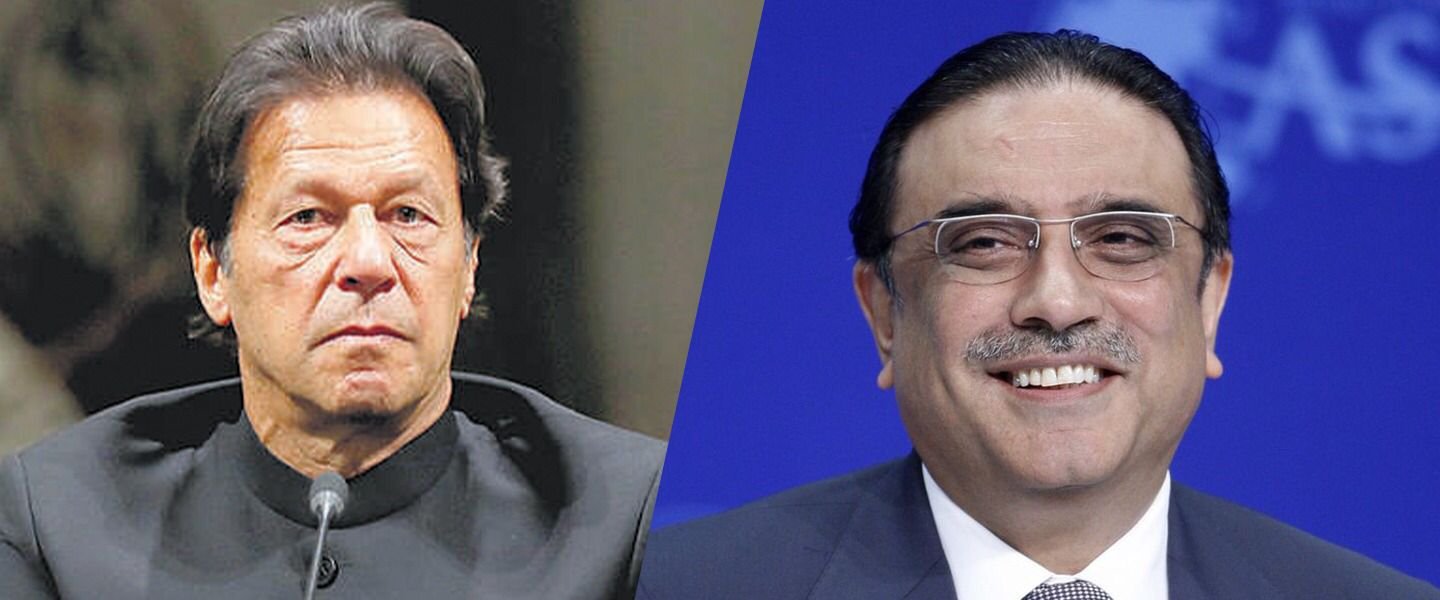
Pakistan People’s Party (PPP) has sent a legal notice to Pakistan Tehreek-e-Insaf (PTI) Chairman Imran Khan for levelling “baseless allegations” against former President Asif Ali Zardari.
“You are…. called upon to render unconditional apology from our client, on television, print and social media, within 14 (fourteen) days from the receipt of this notice, failing whereof, our client shall be constrained to institute appropriate legal proceedings against you, civil as well as criminal, before the competent courts of law and forums of Pakistan as well as of England, including but not limited to Suit for Damages for Rs.10,000,000,000/- (Rupees ten billion Only) at your risk as to cost and consequences,” said the notice.
The notice contends that the PTI chief through his “baseless accusations” tried to create a link between Zardari and terrorist organisations “blindly disregarding the fact that our client and his party has remained the victim of terrorism”.
The notice also reads that the PTI chief through his “defamatory actions” caused “severe agony, mental stress and loss of reputation” to the PPP co-chairperson.
Senator Farooq Naek Advocate SC has sent a legal notice to Imran Khan on behalf of President Asif Ali Zardari. Asks for an unconditional apology on TV & social media within 14 days for slanderous and false allegations. pic.twitter.com/yEkiTi38Wg
Imran Khan had alleged on Friday, January 27, in a televised speech, that Zardari was plotting and financing an assassination attempt for which the ex-president had hired terrorists.
Khan had claimed that four people orchestrated a plan “behind closed doors” to assassinate him.
“I got to know about it and then I recorded a video explaining the attack. In a public rally, I announced that I would release the video if something happened to me. They stepped back after this,” said Khan.
Without naming anyone again, Khan said that another plan was made to have me killed by a religious extremist — hinting towards the November 3, 2022, Wazirabad attack, where he was shot in the legs and is still recovering from his injuries.
“Now, there’s a Plan C. Asif Zardari is behind it. He has amassed a lot of money through corruption, invested that money with terrorists and hired a militant organisation.”
Donald Trump will be allowed back on to Facebook and Instagram after Meta announced it would be ending its two-year suspension of his social media accounts.
The ban will end “in the coming weeks,” Meta said. In a statement, Nick Clegg, Meta’s president of global affairs, said the public “should be able to hear what their politicians are saying.”
The former US president was indefinitely suspended from Facebook and Instagram after the Capitol riots in 2021.
The social media giant had acted following Trump’s “praise for people engaged in violence at the Capitol,” Clegg said. “The suspension was an extraordinary decision taken in extraordinary circumstances,” he added.
Clegg said a review had now found that Trump’s accounts no longer represented a serious risk to public safety. However, owing to Trump’s past, he would now face intensified penalties for any offences in the future.
Meta’s Oversight Board, a body it set up to review moderation rulings, said that the decision to reinstate Trump on its platforms “sat with Meta alone; the board did not have a role in the decision.”
The board had already informed Meta that a review of Trump’s suspension was necessary.
It encouraged Meta to be open and to offer more details about new laws protecting public figures so that it could assess how they were being applied.
By Anum Hanif, Lubna Jerar Naqvi, Shreya Pareek, Zeba Warsi
Sara Zafar Mir, a social media entrepreneur from Karachi, Pakistan, is busy making her own money. She specializes in premium baby products and Facebook is her social media platform of choice. Every day, she reaches more than 150,000 followers who are all potential buyers, bringing to them customized baby clothes and postpartum care packages at the click of a button. She leads this while also raising two young pre-teens.
Mir said: “I am blessed to have a supportive husband and in-laws, who go out of their way to help me in my work. Both my kids help me in my business. It is great to be able to lean on family when needed.”
Nearly 500 miles away, in Jaipur, India, thirty-one-year-old Kriti Gupta has a busy morning ahead. She needs to get her daughter ready for school while her toddler demands her attention. Amid this hustle, Gupta’s phone chimes. It’s an Instagram notification. One of her clients has left a thank-you message for the timely delivery and premium quality of soap she sold on the social networking app. Like Mir, Gupta is also a social media entrepreneur who has built a credible brand of customized soaps and toiletries.
Both Mir and Gupta may be separated by the India-Pakistan border, but their similarities far outweigh their differences. They both belong to a new generation of South Asian boss ladies who are taking social media by storm. They’re creating unique online businesses. They use Instagram, WhatsApp, and Facebook, not just to post selfies, or share pictures of their baby showers and family dinners but to earn a livelihood, chase their dreams, and be financially independent.
Over 4.26 billion people use social media worldwide, a number projected to increase to almost six billion in 2027. That’s where a new, dynamic market is emerging, and South Asian women entrepreneurs are here to reach that whole new world of consumers. They are breaking stereotypes and patriarchal norms which had long been dominant in South Asian communities.
Mir, a Kashmiri, was married off at a very young age, moving to Karachi with her new husband. As a young mother in Karachi in 2013, Mir found herself searching for premium baby products and felt that there was a void to be filled. That led her to start Mummy and MiniMe, which is almost like her third baby.
Mir was a teacher before she got married. She left her job when she moved to Karachi. After her son was born, she was ready to start something but didn’t quite know what and how.
“At the time my son was young, so I would always be looking for baby clothes, shoes and products,” Mir said, “so I had some experiences (laughs). I realized that Karachi has some very good quality products which you don’t find in other cities.”
She explored the internet and found that there were not a lot of people in Pakistan who offered quality products at affordable prices. “We began with PKR 25,000 at the time, which is not a lot of investment,” she added. And so, Mother and MiniMe was born on Facebook and then expanded to Instagram. After the launch of her business, Mir was joined by her sister-in-law Nauwarah, who was studying at the time. Mummy and MiniMe currently has 157,673 people following on Facebook and 4,782 followers on Instagram.
“My goal as a young mother was to provide affordability and uniqueness. When I used to shop for my son, I realized there were so many options and I thought to help mothers to get quality stuff in one place,” Sara said. Apart from baby products she also began curating wooden toys. With time, the online space started becoming saturated. Many new businesses popped up online and the online market became competitive.
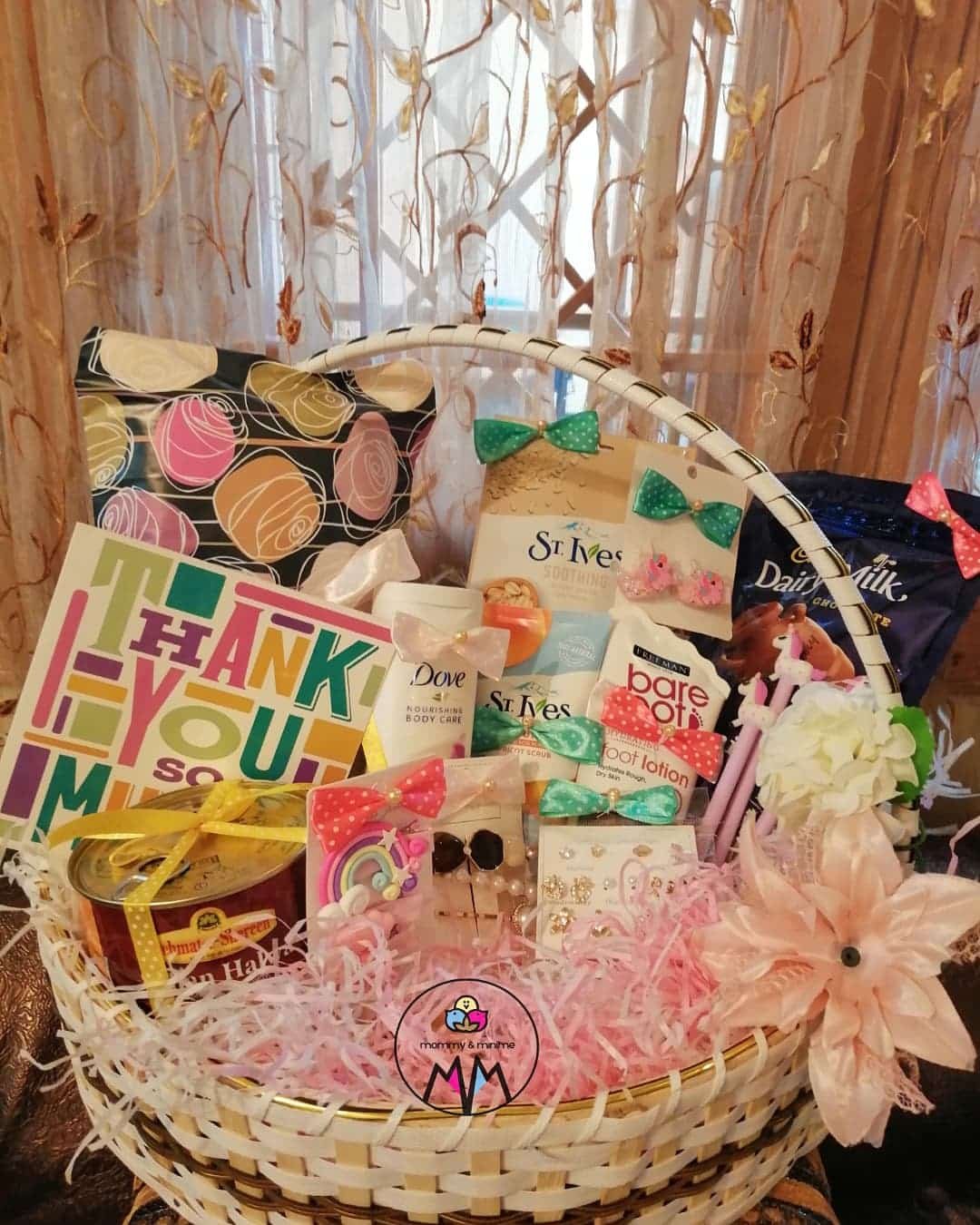
“In 2017, I realized that we need a new strategy. So, we began offering baby gift baskets for new-borns. This is now a favorite among our customers. Mostly grandmothers, aunts, and friends are ordering these.” Mir then started collaborating with bloggers on social media to promote her products.
“I sent a basket with panjeeri (nutritious mixture) to this blogger who had lost her mother and had just had a baby. When I sent her a PR basket, she called me crying saying that my mother used to send her this,” Mir said.
On the other side of the border, Gupta is running her own little online empire with the support of her family.
Gupta said: “My Insta-shop never shuts down. It is open 24×7. Living in a joint family I have realized that everything is manageable if you have a good mother-in-law. And I am blessed in that department,” Gupta said. Living in a three-storey home in Jaipur in northwestern India, she cradles her toddler in one arm, while updating her Instagram business account with the other. The festive season is upon her, she has an order of more than 50 exclusive bath hampers in the pipeline. But she knows she can make it with the support of her family.
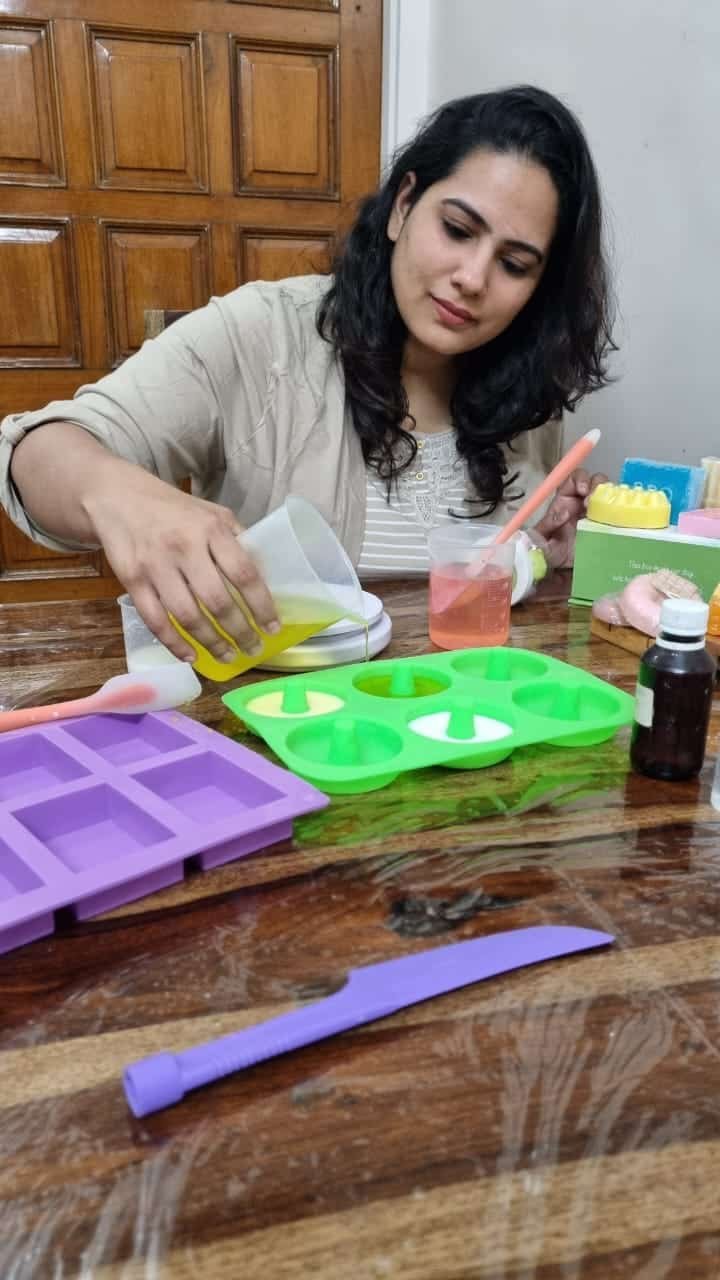
Born and brought up in Bangkok, Gupta was 21 years old when she moved to India to get married. Initially, it was a culture shock to settle down in a rich but conservative Marwari (an Indian ethnic group from Rajasthan) family. She dropped out of journalism school to have her dream wedding. Soon, she had her first child, and her career took a back seat. It was on her daughter’s fifth birthday in 2020 that she kickstarted her entrepreneurial journey by starting Bath and Bubble Co, a brand that sells handmade, natural, artisan soaps and bath products.
The business model
In Pakistan, Mir’s business has now reached a stage where she earns a decent living since she first began in 2013. The revenue spikes during Eid but even otherwise her business is consistent and is doing good. She receives around 10-15 queries a week. And a good 80 percent of those convert to sales.
Since it takes time to build trust among customers online, many first-time buyers pay through cash on delivery but the majority of her customers make online payments. Due to her regular and direct engagement with customers online, Mir’s business rarely sees any returns or exchanges.
“It is hard work. You have to be consistent and patient. With time, we can get an idea who is going to continue ordering products and who is there just to window shop, just like a regular retail shop,” Mir said.
There are thousands of such women who use social media exclusively as their main marketplace, especially in South Asian countries.
In India, Gupta exclusively uses Instagram to sell her products. Despite her humble 760 followers on Instagram, she has already found some dedicated and returning customers. Gupta offers over 25 varieties of exclusive, natural soaps. Currently shipping across India, Gupta’s products are favorite among children due to their quirky and colorful designs. Her personalized hampers are a huge hit and are often ordered in bulk through Instagram and WhatsApp for special occasions. Since creating a website or an offline store would require a huge investment of money and time, she decided to stick to Instagram in the beginning.
Gupta manages to get four-to-five queries each day through Instagram. A majority of her buyers use Instagram DMs and WhatsApp to place orders and use online modes of payments like Google Pay or PayTm. Gupta also mentioned how using the right hashtags and trending reels has helped her reach her target audience. The visual format on Instagram has helped business owners like Gupta to connect with her customers in a better way. She claims it is easier to track her customers on a real-time basis on social media and immediately find out what is working for them. Instagram trends also help in boosting the sales.
“You never know what clicks. You have to constantly keep thinking of new ideas. I am currently manufacturing the soaps myself at home after I send my daughter off to school. I soon plan to set up a separate space for my business. The first person I plan to hire is someone who can handle our social media,” she said.
The rise and rise of social media
Economies worldwide have been disrupted by the pandemic, but it has also created new opportunities to do business through social media. Women-owned businesses have received a big boost in recent years. And with a second income coming in, the standard of living of most families has improved. This means the women are not only being empowered financially, but are also getting family support and acceptance for their role as working women.
Nighat Dad from Lahore, Pakistan, a lawyer, internet activist and founder and executive director of Digital Rights Foundation has closely tracked the trend of women using social media for their growing businesses in recent years. “I have so many examples of women who started online businesses and they have grown over the years. They started to have an online presence. A couple of years back, women were really not confident about using these platforms (social media) for their businesses not only in terms of what to do and how to use these platforms but also not having knowledge of financial gains and opportunities,” Dad said.
In Pakistan, Instagram has gradually become the preferred choice to run businesses replacing Facebook as the most popular platform. In 2019, Facebook signed a Memorandum of Understanding of its #SheMeansBusiness with Lahore Chamber of Commerce and industry to provide support in hands on training, skills enhancement and resources to women. This was a major step towards empowering women to become entrepreneurs. It is estimated that women’s earnings in Pakistan have increased by four percent compared to previous year. One of the reasons is start-ups owned by women, and social media has played a pivotal role in helping them grow their businesses.
In India, Sairee Chahal, founder of “Sheroes”, India’s first women-only social media network, has also looked into the changing trends of how women are using social media.
Chahal said: “When I started Sheroes, there were maybe 10 million women online in India. Today, there are 350 million women who are online, who have tasted the internet at least once and there’s an increasing number of women who are using this to their advantage.”
Chahal, who started her first company in 1999 as a first-generation entrepreneur shares her insights on how digital platforms have helped many women entrepreneurs grow: “The mobile phone in a very patriarchal society is a personal device, it has your name on it. And once you have it, there’s no looking back.”
For women in a patriarchal setup, running a business requires much more than entrepreneurial skills. There are many family dynamics that women are expected to navigate and balance.
“Women are invisible in their societal setups, whether it’s families or the work that they do both at home and outside. It’s this recognition that is driving women online. Look on the internet, everybody’s somebody you know. You’re the handler, you are handling your content. So, this recognition more than other things is what makes a difference,” Chahal said. She also said that only 9 percent of women are in the formal workforce. That means that most women are left to fend for themselves.
Thanks to social media, women are now getting a fair chance to establish their businesses and sustain a balanced personal and professional life.
Not all’s well in the digital universe
Although social media has played a pivotal role in helping women become financially independent, it also has its share of challenges. The major issue that entrepreneurs like Gupta and Mir face is developing a sense of trust among customers since it is difficult to showcase the quality of products through just pictures and videos. Another concern shared by various women was the easy imitation of handcrafted products at lower prices. This makes it difficult for micro-entrepreneurs to compete in the vast market.
The digital world can also be intimidating for some entrepreneurs who belong to a different generation. So, while it is a blessing for some women who have grown up with technology, it might not work for others who are still trying to get used to it.
“Social media can be very demanding and takes a toll on one’s life. We have to constantly think of the next reel, next trend, and next viral post,” Gupta said. At the same time, there is a serious threat to cyber security. Several entrepreneurs have found their accounts to be hacked causing them not just financial but also immense emotional loss.
“Sometimes I feel it is easier to make soaps as compared to making an Instagram reel,” Gupta said.
Dad from Pakistan believes there are serious challenges and risks associated with online entrepreneurship.
“All kinds of challenges these women face in terms of harassment, finances, and stumbling upon bad actors online and trusting them. In offline spaces, sometimes they are earning but sometimes they don’t own what they are earning due to having a patriarchal society. Even if you are earning, you really don’t have ownership of your income,” she added.
She also emphasized how women who work online should be aware of their rights. “How safe their devices are, how safe their platforms are, how much women know about digital security, and how strong are their passwords,” she added. Dad’s foundation has a toll-free number on its website to help women entrepreneurs in need.
While Dad is providing much-needed help to the women entrepreneurs of Pakistan, Chahal is filling this gap in India. She uses her platform ‘Sheroes not only provide livelihood and financial support to women but also the offer crucial mental support to them. Over three million women have benefited from Sheroes’ counseling services. During the pandemic, Sheroes launched a digital bank called Mahila Money. The platform exclusively serves women who are not served by microfinance. Sheroes also acts as a marketplace for women where they can sell a range of items online.
Is this the beginning of a new revolution?
This rise of women entrepreneurs on social media is not just restricted to South Asia. It is a global phenomenon attracting millions of dollars of investment.
In 2020 Facebook COO Sheryl Sandberg announced that the social media giant is investing $100 million to help 30,000 small businesses in over 30 countries. According to the latest statistics, there are 252 million female business owners in the world.
In 2021, Instamojo saw a 14.83 per cent spike in new female users in comparison to a five per cent drop in male new users. This shows that women are more eager to start their own businesses now and want to go online. Social media has enabled women to connect across boundaries, cultures, genders and has shown a positive trend where many women are comfortable establishing their businesses in a male-dominated society.
“I never got a chance to look back and see how far I have come. I can’t believe that something which was just an idea or a dream is now a fully functional business. It has not just made me financially independent but has also given my life a new purpose,” Gupta said.
Mir, who started her business with a small investment of 25000 Pakistani rupees, is always looking for innovative ideas to continually grow her business.