Tag: social media

  • Waqar Younis to quit social media after ‘hacker likes porn video from his Twitter account’

    Waqar Younis to quit social media after ‘hacker likes porn video from his Twitter account’

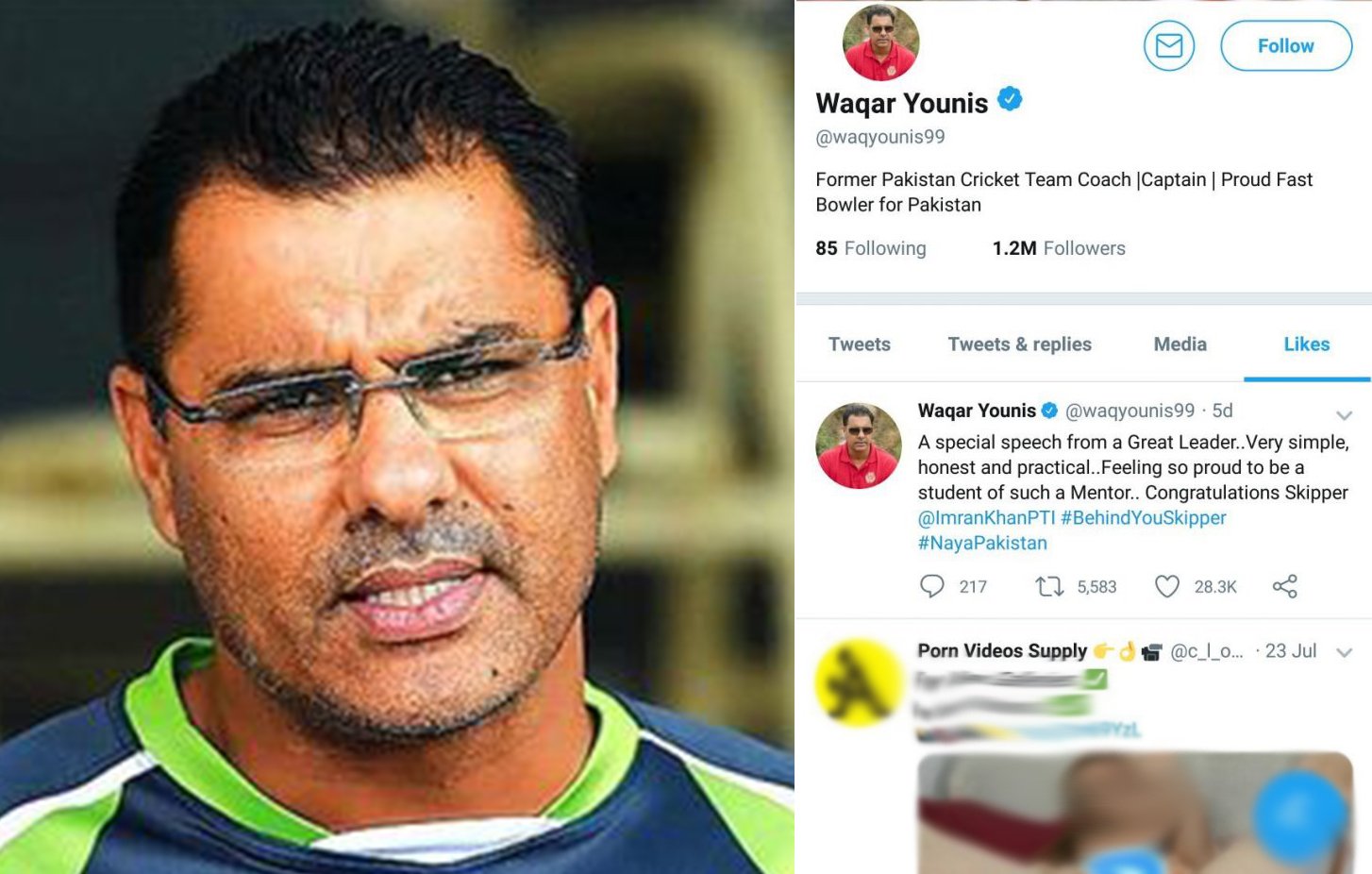
    Former Pakistani paceman Waqar Younis has announced his decision to delete his social media accounts after “a hacker liked a porn video from his official Twitter handle”.

    Mentioning the incident in a video message, Younis said that he would never be seen on social media again and it was not the first time that his social media account had been hacked.

    Critics were quick to lambaste Younis to which he responded with what may be his final post on any of his social media accounts.

    Younis clarified that he was not the man behind the inappropriate action.

    “Today I have to say with great regret that when I woke up this morning, someone hacked my Twitter account and liked grossly inferior videos from my account.”

    WATCH VIDEO:

    https://twitter.com/waqyounis99/status/1266180048492482560

    “So it is a matter of great shame, it is a matter of great regret and discomfort. For me and my family too. I used to think that social media or Twitter is a way of interacting with people. But unfortunately this man ruined everything. By the way, the hacker has not done this for the first time. I have had an account hack three or four times,” he said further.

    The former cricketer and Pakistan team coach also said he did not think the man was going to stop, so he had decided that he would not come on social media after today. “I love my family more. You will not see me on social media after today. I am sorry if this hurts anyone.”
  • VIDEO: Allama Zameer Akhtar Naqvi allows Pakistanis to continue making memes

    VIDEO: Allama Zameer Akhtar Naqvi allows Pakistanis to continue making memes

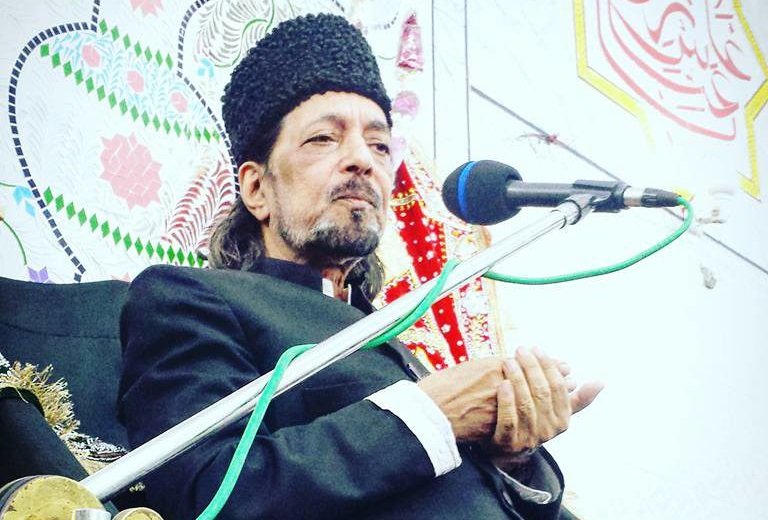
    Controversial cleric Allama Zameer Akhtar Naqvi, who has time and again made headlines for his claims such as possessing the antidote for coronavirus, has allowed netizens to continue making memes about him.

    “Continue making memes… those who don’t listen to me seriously are able to understand my teachings by going through these funny memes,” he said in a viral video doing rounds over social media.

    WATCH VIDEO:

    He went on to say that none of his words are to be considered as something funny, but those who are able to understand them in a funnier way may continue to do so as long as they understand his teachings.

    Naqvi went on to “pretend” getting mad at those making memes about him, and later clarified that he was a “master of articulation” and his earlier viral “nahi bataoonga” rant was a prank that he played on netizens.

    “Stop making a fool out of yourself by all these comments you post. Learn the art of balance. If you follow me, you will be successful,” he maintained.

    A few days earlier, Allama Zameer Akhtar Naqvi had also claimed to possess the antidote for coronavirus. This claim was highly criticised by Pakistanis who believed that this claim showed how non-serious Pakistani clerics were in dealing with this global health crisis.

  • ‘Worst clampdown on freedom of expression,’ rights groups regret PTI’s social media laws

    ‘Worst clampdown on freedom of expression,’ rights groups regret PTI’s social media laws

    Pakistan Federal Union of Journalists (PFU), lawyers and civil society members have decided to launch a nationwide movement for getting trashed the Pakistan Tehreek-e-Insaf (PTI) government’s Citizens Protection (Against Online Harm) Rules, DAWN reported.

    Addressing a press conference at the National Press Club on Thursday, the journalists’ union, lawyers, and civil society termed the government’s notified rules unacceptable, and demanded that the government revoked them.

    READ: PM House’s conversion into university to cost taxpayers over Rs35 billion

    Members of the Human Rights Commission of Pakistan (HRCP), the Islamabad High Court Bar Association (IHCBA) and Media Matters for Democracy attended the presser.

    READ: Pakistan secures four-months to comply with FATF agenda

    Many prominent journalists were of the view that these rules exceeded the mandate given by the 2016 Prevention of Electronic Crimes Act. In addition, they all said the regulation was a clampdown on online content as the final extreme in the series of restrictions on freedom of expression as well as press freedom in the country.

    READ: Here is everything that happened at the opening ceremony of PSL V

    They, however, appreciated Prime Minister (PM) Imran Khan’s statement regarding having consultation with all stakeholders before enforcing the rules.

  • PTI’s new social media laws: Are you in some sort of danger?

    PTI’s new social media laws: Are you in some sort of danger?

    The Pakistan Tehreek-e-Insaf (PTI) government in centre has approved a new set of rules to regulate social media, requiring companies such as Facebook, Twitter, YouTube and even TikTok, to register themselves and open offices in Pakistan to provide the government data of accounts found guilty of targeting state institutions, spreading fake news and hate speech, engaging in harassment, issuing statements that harm national security or uploading blasphemous content, Geo reported.

    But similar to claims of proponents of internet freedom, who fear that the legal document would be used to keep social media companies in check and curb dissent over the internet, is your freedom over the web really at risk?

    According to reports, the rules and regulations have been included in the Prevention of Electronic Crimes Act, 2016, and senior officials in the Ministry of Information Technology have confirmed that the cabinet has already given green light to the legal document.

    Further, IT & Telecommunication Federal Secretary Shoaib Siddiqui confirmed that after the cabinet’s approval, the rules and regulations need not be presented in the parliament for approval.

    According to the law, all global social media platforms and companies would have to register in Pakistan within three months and open offices in Islamabad within the same time period. The law requires digital media companies to appoint a representative in Pakistan to deal with a national coordination authority, which would be responsible to regulate content on social media platforms.

    It further requires the companies to set up data servers in Pakistan within a year and makes it compulsory for them to provide data of accounts found guilty of various crimes — including targeting state institutions, spreading fake news and hate speech, engaging in harassment, issuing statements that harm national security or uploading blasphemous content — to intelligence and law enforcement agencies (LEAs).

    It, however, is safe to say that only time would tell if the government can actually convince any digital media outlets to actually operate under these new regulations.

    Follow this link to give the new set of rules a read.

  • Govt mulls new rules to ‘control’ digital media in Pakistan

    Govt mulls new rules to ‘control’ digital media in Pakistan

    The government is planning to impose new rules that could radically redefine the digital landscape of Pakistan, ProPakistani reported Wednesday.

    According to reports, the government wants to curb blasphemous content for social media and the new rules would allow institutions to control all online content in the country.

    The new rules — named the Citizens Protection Against Online Harm Rules — are a sort of extension of legislation like the Prevention of Electronic Crimes Act (PECA) and would allow the government to bypass industry stakeholders following approval of the federal cabinet.

    While the document (available here courtesy of Digital Rights Monitor) talks about social media companies, the definition for “social media companies” is broad enough to bring any company with an online presence under its ambit. If companies don’t abide by any of the rules in the 14-page document, they’ll be blocked in Pakistan.

    The move comes days after a Senate panel rejected a proposed move to be initiated by the Pakistan Electronic Media Regulatory Authority (PEMRA) for regulating web TV and over-the-top (OTT) media service in the country following the authority failed to establish its jurisdiction for doing so before the house’s body.

    The Senate Functional Committee on Human Rights which met with Senator Mustafa Nawaz Khokhar in the chair held a detailed discussion on PEMRA’s proposal of regulating web TV and OTT content.

  • ‘Follow me for more recipes’ memes are hilarious

    ‘Follow me for more recipes’ memes are hilarious

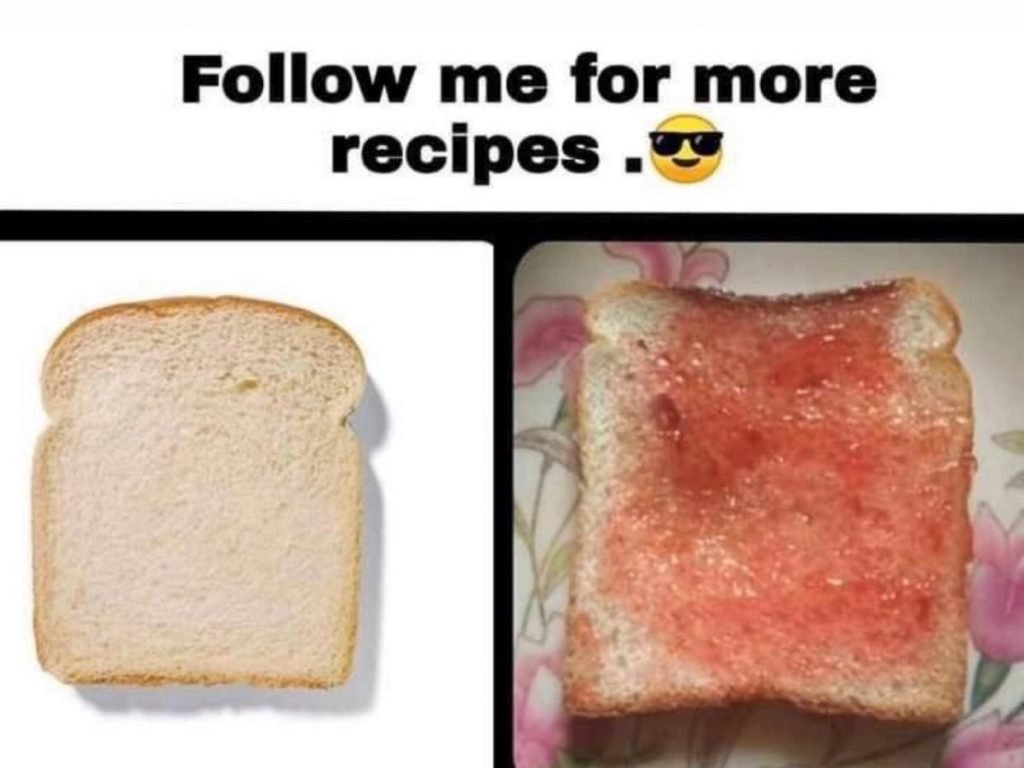
    Who does not like memes? Memes not only lightens up our mood but also make us all go LOL and we wish this meme culture never dies at least as long as the internet exists. We all have seen these ‘follow me for more recipes’ memes on social media and they are hilarious.

  • How to reduce social media’s toxicity

    How to reduce social media’s toxicity

    You often decide to take a break from social media that is called “toxic” by a large number of people.

    Toxic social media is disturbing the sanity of their minds because there are tons of disturbing news out there. Despite deactivating all social media profiles, you see them coming back again. Yes, it is addictive, but here is what you can do to reduce its toxicity.

    1. UNFOLLOW ON FACEBOOK

    Most of us have Facebook profiles along with other 1.5 billion people who use it every day. We all started with sharing pictures on our profiles, or with our friends, but now it has turned into a battlefield of narratives between people. The best thing you can do is to ‘unfollow‘ those people who you want to avoid.

    Facebook is structured in a way that it will show you everything that you have searched in the past or what your friends are discussing, but when you unfollow someone, you’ll no longer see their activities or discussions.

    In some circumstances, you cannot unfriend or block a person, because of the reaction that you will get would be proportional to a threat of breakup or a divorce. So unfollow that person to cut down negativity.

    2. Stop tapping on everything on Instagram 

    Although you might have control over what you follow on Instagram, you may turn off comments on your posts, or you do not follow hashtags that you do not like. But, what about the search tab that shows you the weirdest stuff you cannot even imagine in your nightmare. Here come the algorithms of Instagram.

    If you are tapping on the pictures of dogs, 50-60% of the picture you might see would be of dogs – the rest of the pictures will depend on the previous searches done from your account. So, if you want to cut down what you see in the search tab, skip it for a few days and tap on only those items that you want to follow.

    3. Twitter is not easy

    Cutting toxicity on Facebook or Instagram might be little convenient, but handling Twitter in this regard is tricky. You might follow a writer that posted something you like, but their next tweet ruins your entire day, what you can do about it? Here is what you can do.

    To block or unfollow that most toxic account would be just right. But if you like the real tweets of someone’s account and do not like their retweets, you can simply turn off retweet on a per-account basis. Moreover, you can use quality and advance filters to censor the words you do not like.

    These are few tools you can tweak to filter toxicity, but if you really want to cut down of social media poison; discipline yourself. The biggest filter one can use is to have positive thinking, but that is another topic for some other day.

  • Is Taher Shah making a comeback?

    Good news for all Taher Shah fans.

    The Eye to Eye sensation is apparently making a comeback. Taher took to social media to share a close up picture of his eyes with the hashtag #ComingSoon. However, he shared no further details.

    Needless to say, Taher’s announcement sent his followers into frenzy.

    https://twitter.com/znb91/status/1210961562367877120?s=20

    Taher became a social media sensation in 2013 after his song Eye to Eye, which he took 20 years to write, went viral. It became so popular that even Ranveer Singh did a rendition of it.

    Following that, in 2016, Taher released his second music video Mankind’s Angel. While it did not have the same effect as Eye to Eye, it still managed to stir up a social media frenzy.

    In December 2016, it was reported that Taher had left Pakistan after receiving death threats. But it looks like after years of staying low, the singer is returning with a bang.

  • Student sues TikTok over alleged data transfer

    Student sues TikTok over alleged data transfer

    A university student in California named Misty Hong, has filed a class-action lawsuit against Chinese-based social media video app TikTok, accusing it of harvesting large amounts of user data and storing it in China, Dawn reported.

    According to the details, the court filing said, “TikTok clandestinely has vacuumed up and transferred to servers in China vast quantities of private and personally-identifiable user data”.

    The lawsuit has alleged, “TikTok also has surreptitiously taken user content, such as draft videos never intended for publication, without user knowledge or consent”.

    “In short, TikTok’s lighthearted fun comes at a heavy cost,” the lawsuit said.

    The social media app which is quiet popular with teenagers around the world, was launched by Chinese company ByteDance in September 2017.

    The suit marks the latest legal battle for the app. Earlier in November, the United States (US) government had opened a national security investigation into TikTok, according to the New York Times, potentially looking into whether the app was sending data to China.

    Misty Hong alleges that the app retrieved her data without permission – including videos that she had created but not shared online with friends – and transferred that data to servers run by companies that cooperate with the Chinese government.

    Hong filed the suit on behalf of the approximately 110 million US residents who have downloaded the app.

    In November, TikTok didnot gave any comment on a possible US investigation but emphasised that the respect of US users and regulators was its highest priority.

    TikTok claimed that it has distanced itself from Chinese authorities, maintaining that its servers are located outside of the country and that its data is therefore not subject to Chinese law.

    In November, the app hit 1.5 billion downloads worldwide, outperforming the photo-sharing app Instagram.

  • Aurat March 2020 receives backlash on social media

    The poster Aurat
    March was met with rape and death threats after it was upload on social media
    last week.   

    Aurat March
    (women march) calls for women, transgender, and other suppressed gender groups
    to raise voice against injustice and deeply embedded patriarchy in our society.
    Unfortunately, within an hour of upload – the post was bombarded with crushing
    sexist and misogynist comments

    While talking to
    Express Tribune, the organizers said that they can take little action against
    such response on social media.

    “The maximum we
    can do is to report it on Facebook,” said the organizers adding, “We’ll stand
    for the cause and call out this unjust treatment – those who’re posting threats
    will not get away with all this.”

    The Aurat March
    team said that they are partnering with legal teams to tackle bullying and
    threats. 

    It is ironic that
    these people are getting uncomfortable because suppressed genders are demanding
    equal rights and better treatment in society, whereas when people like Khadim
    Hussain Rizvi outrageously abused and curse publically – the only concern for
    people is the inconvenience in traveling and day to day life.