Tag: Social Welfare

  • Pakistan’s poverty rates may remain elevated: World Bank report

    Pakistan’s poverty rates may remain elevated: World Bank report

    The World Bank’s latest Pakistan Development Update has shed light on the country’s ongoing battle with poverty.

    Despite efforts, the poverty headcount rate, measured at the lower-middle-income country poverty line of $3.65/day in 2017 purchasing power parity (PPP), is anticipated to hover around 40 per cent from FY24 to FY26.

    The report highlights several key factors contributing to this stagnation in poverty reduction. Weak economic growth, stagnant real labor incomes, and persistently high inflation are cited as primary culprits.

    Importantly, the continuation of import management measures and potential cuts in public spending on social sectors are expected to exacerbate the situation.

    This could disproportionately affect poorer households, already struggling with depleted savings and reduced incomes.

    The combination of chronic inflation and policy uncertainty poses additional challenges, potentially leading to social unrest and negative welfare impacts.

    To mitigate these risks, increased targeted transfers are identified as crucial to safeguarding the most vulnerable segments of society.

    Moreover, the report warns of potential consequences on education and healthcare. The escalating cost of living, coupled with rising transportation expenses, may result in an increase in out-of-school children and delayed medical treatments, particularly among disadvantaged families.

    Food security remains a pressing issue, particularly in rural areas affected by natural disasters such as the 2022 floods.

    In 43 rural districts across Khyber Pakhtunkhwa, Sindh, and Balochistan, acute food insecurity is projected to rise from 29 per cent to 32 per cent in the second and third quarters of FY24.

    Lastly, the report underscores the persistent challenge of poor air quality and smog during autumn and winter months.

    With 71 per cent of the population affected nationwide, these environmental hazards continue to pose significant public health risks.
  • ECC greenlights 25% sales tax increase on domestic cars

    ECC greenlights 25% sales tax increase on domestic cars

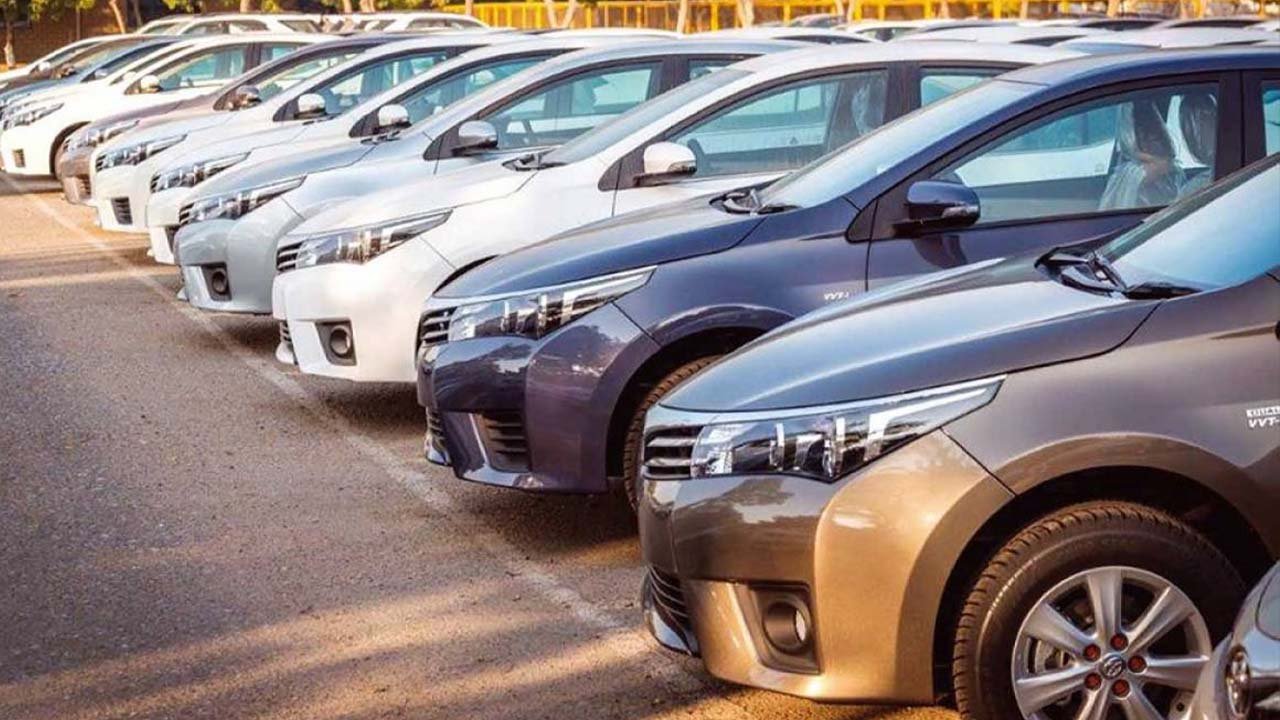
    In a significant development, the Economic Coordination Committee (ECC) of the Cabinet has given its nod to a proposal for increasing the sales tax on vehicles manufactured and assembled within the borders of Pakistan.

    The decision was finalised during a pivotal ECC meeting held in the capital city on Wednesday.

    The proposal, presented by the Federal Board of Revenue (FBR), suggested an elevation in the sales tax applicable to the auto sector, particularly on vehicles produced and assembled domestically.

    Following a comprehensive deliberation, the ECC cabinet sanctioned the process for determining a 25 per cent sales tax rate on locally manufactured and assembled vehicles.

    As per the endorsed proposal, vehicles valued at Rs4 million or equipped with 1400 cc engines will be subject to a 25 per cent sales tax.

    This taxation structure is anticipated to persist in the upcoming budget, signalling potential implications for consumers as a result of the price hike.

    The imposition of a 25 per cent sales tax on 1400cc vehicles is expected to have a direct impact on the pricing structure, leading to a potential surge in vehicle costs. The ECC’s decision aligns with ongoing efforts to streamline fiscal policies in the country.

    In addition to this decision, the ECC also greenlit a substantial subsidy of Rs7,492.75 million under the Ramazan Relief Package 2024.

    Chaired by Caretaker Finance Minister Shamshad Akhtar, the meeting aimed to address the financial aspects of the relief package, particularly subsidising the targeted beneficiaries of the Benazir Income Support Programme (BISP).

    According to a press statement issued by the finance ministry, the subsidy allocation is part of the budget for 2023–24, with a primary focus on providing support to those identified under the BISP. This move underscores the government’s commitment to social welfare initiatives.

    Furthermore, the ECC approved a proposal related to the “Permission to Import Wheat and Export of Wheat Flour under the Export Facilitation Scheme 2021.” This decision, brought forth by the Ministry of Commerce, reflects the government’s strategic measures to balance wheat supply and demand dynamics in the country.

    The ECC meeting signifies a pivotal moment in shaping economic policies, with decisions that carry far-reaching implications for both the automotive sector and social welfare initiatives in Pakistan.

    The approved proposals are poised to contribute to the broader economic landscape and address pertinent challenges in the nation’s fiscal framework.

  • ‘An unparalleled humanitarian’: Bilquis Edhi declared ‘Person of the Decade’

    Bilquis Eidi has been selected as the Person of the Decade by an international web based organisation ‘Impact Hallmarks’.

    As per details, the finalists were shortlisted out of over 1.6 million notables with diverse backgrounds and from over 190 countries. According to the organisation’s website, the finalists were then presented to the global audience to pick out the person of their choice by voting.

    In a statement, the organisation said: “As per the domino effect verdict, concerning the IH international opinion poll outcomes, Stephen Soldz, an upright ethicist and moralist from the US, Ms Bilquis Edhi, an unparalleled noted humanitarian from Pakistan and Prof Yanghee Lee, the fabled unsurpassed human rights rapporteur of the UN, have evidently stretched and segmented the top of the decade’s impact hallmarks and the opinion poll’s top ‘tri-archy’ as well.”

    Bilquis Bano Edhi is a professional nurse, who heads the Bilquis Edhi Foundation. She has spent more than six decades of her life serving humanity in need. Her charity has saved over 42,000 unwanted babies so far by placing ‘jhoolas’ [cradles] at the Edhi Homes and centres across the country.

    Called the Mother of Pakistan, Bilquis Edhi has already been given various national and foreign awards including Hilal-e-Imtiaz, the Lenin Peace Prize, Mother Teresa Memorial International Award for Social Justice (2015), and the Ramon Magsaysay Award for Public Service, she received along with her husband Abdul Sattar Edhi in 1986.

    Besides the three topmost ‘Persons of the Decade’, the verdict announcement called seven other persons “true patrons of change, the flag-bearers of righteousness and the domino effect architects of the Top-10 of the impact hierarchy of the decade,” which includes Prof. Aurangzeb Hafi from Pakistan.

  • Iftikhar Thakur to set up hospital for children with thalassaemia

    Iftikhar Thakur to set up hospital for children with thalassaemia

    Iftikhar Thakur has expressed his desire to build a hospital for children suffering from thalassemia in his native town Mian Channu.

    According to reports, the veteran comedian has said that he wants to build a state-of-the-art facility that would provide free of cost treatment to children with thalassaemia. He said that work on the hospital, which would also provide liver transplant facility to the patients in need, would begin in January 2021.

    Thakur said he decided to build the facility while doing charity work at a hospital in Multan. He shared that he felt that there was a lack of treatment facilities for children with thalassaemia in the country.

    “When I worked on this subject, I came to know that there were mobile hospitals for such children [in some countries],” said Thakur.

    The comedian further said that later during a show in the United Kingdom (UK), he appealed for donations for a mobile hospital, adding that responding to his appeal one of his fans donated funds for the facility that was working here. Thakur said over 25,000 children were registered as thalassaemia patients only in south Punjab.

    Thakur also hailed late journalist, poet and playwright Munno Bhai for establishing the Sundas Foundation which works for children with thalassaemia.

    Meanwhile, responding to a question, Thakur suggested that in order to bring improvement in the local commercial theatre, there should be proper script scrutiny committees to eliminate “vulgar content”.

    To another question regarding the Artist Support Fund, Thakur suggested that the government should create job opportunities for artistes, instead of giving them Rs5,000 per month scholarships.