Tag: solar power

  • Further reduction in solar panel prices

    Further reduction in solar panel prices

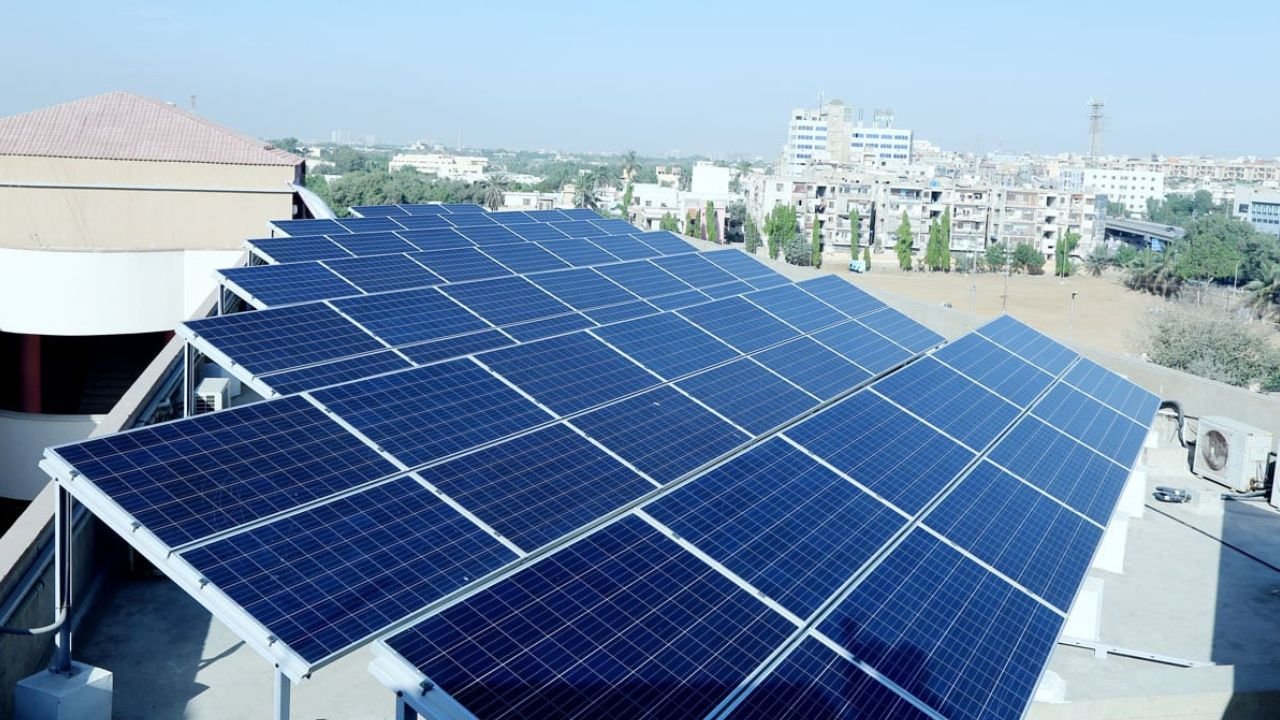
    Dealers of solar panels have revealed that the price per watt has come down to 40 rupees or below, with the average rates of panels of various types and brands reduced to 37 rupees.

    The rates have reportedly crashed due to oversupply, coming down by 30 per cent in just six months.

  • No plans for fixed tax on solar power, says Power Division

    No plans for fixed tax on solar power, says Power Division

    The Power Division has dismissed recent media reports suggesting that the government is imposing a fixed tax on solar power.

    According to a notification released by the Information Ministry today, these reports are unfounded and inaccurate.

    The Power Division clarified in a statement that there is no substance to the claims about a fixed tax on solar power.

    It highlighted that neither the Central Power Purchasing Agency nor the Power Division has submitted any summary to the government proposing such a measure.

    The statement highlighted that the Net Metering Policy of 2017 was designed to encourage the use of alternative energy sources, contributing to a significant increase in solar energy adoption.

    This rapid solarization is seen as a positive trend, aligning with the government’s objectives to promote clean energy.

    The Power Division also mentioned that any proposed changes or amendments to current policies are aimed at alleviating financial burdens on the economically disadvantaged.

    It stressed that protecting the interests of the 152,000 net metering consumers remains a priority.

  • Govt not reducing solar net metering rate of Rs19 

    Govt not reducing solar net metering rate of Rs19 

    In an official statement, Muhammad Ali, the Caretaker Minister for Energy and Petroleum, has provided clarity on the government’s stance regarding incentives for solar net metering. Addressing recent speculation in the media and on social platforms, he affirmed that the government has no intentions of reducing the incentives associated with solar net metering, particularly the rate of Rs19.  

     “There were talks of a change in the rate of solar net metering in media and social media that the government is reducing the net metering rate from Rs19. I want to clarify and ensure that we are not taking any such measure,” he said. 

    Furthermore, Ali announced the government’s upcoming initiative to introduce a special incremental tariff for industrial electricity users before October 31. This endeavor is aimed at ensuring affordable electricity for industrial sectors, thereby relieving some of the financial burden on energy consumers. 

    In its ongoing efforts to support energy consumers during the winter season, the government is actively working on devising a special tariff designed to mitigate expenses for this specific period. 

    Ali also disclosed the government’s rigorous measures to combat electricity theft, which includes a nationwide crackdown on the illegal activity. He reported that individuals implicated in electricity theft within distribution and other utility companies have been reassigned, and comprehensive actions are being taken against them. Additionally, a crackdown against gas theft has been initiated to curb such practices. 

    Previously, reports had suggested that the government was contemplating the issuance of an ordinance to further regulate net metering. This decision was prompted by concerns that the installation of solar panels on rooftops had inadvertently increased capacity payments to Independent Power Producers (IPPs). Notably, the proposed ordinance is expected to include provisions criminalizing non-payment of electricity bills, as reported by Geo News

  • Pakistan buys Russian oil amid chronic energy shortages

    Pakistan, which is facing a severe economic crisis and chronic energy shortages, has turned to Russia for oil imports. However, Pakistan’s petroleum minister, Musadik Malik, believes that the future of energy lies in diversification, particularly towards green energy sources.

    During his visit to the United States, Malik confirmed that Pakistan had placed an initial order for Russian oil, which will arrive within a month, and based on the results, the country will assess how much to import in the future.

    Pakistan, which imports 84 per cent of its petroleum products, mainly from Gulf Arab allies Saudi Arabia and the United Arab Emirates, has been transparent about its dealings with Russia. Malik stated that their initial dealings with Moscow were far less than those of other countries, particularly China and India, whose enthusiastic buying of Russian oil has cast a shadow over India’s warming relationship with Washington.

    Malik spoke with US companies during his visit about buying shale liquified natural gas, upgrading Pakistani refineries and storage facilities, exploring offshore oil and gas and starting horizontal drilling, a method that Pakistan has not yet used.

    However, he emphasized that his talks with the United States also included support for green energy sources, in line with Pakistan’s goal of generating 30 per cent of its electricity from renewables by 2030, including a plan for widespread solar power on rooftops.

    Pakistan is one of the nations most vulnerable to climate change, with floods last year submerging one-third of the country. Geoffrey Pyatt, the assistant secretary of state for energy resources, has promised US backing for Pakistan’s renewable goals during his visit to the country.

    According to France24, Malik also believes that the future of energy security lies in green energy sources. Although Pakistan’s share of Russian oil imports is small, it helps, and the country is open to cheaper sources of energy.