Tag: South Africa

  • Three runaway minor girls dressed as boys found by police

    Three runaway minor girls dressed as boys found by police

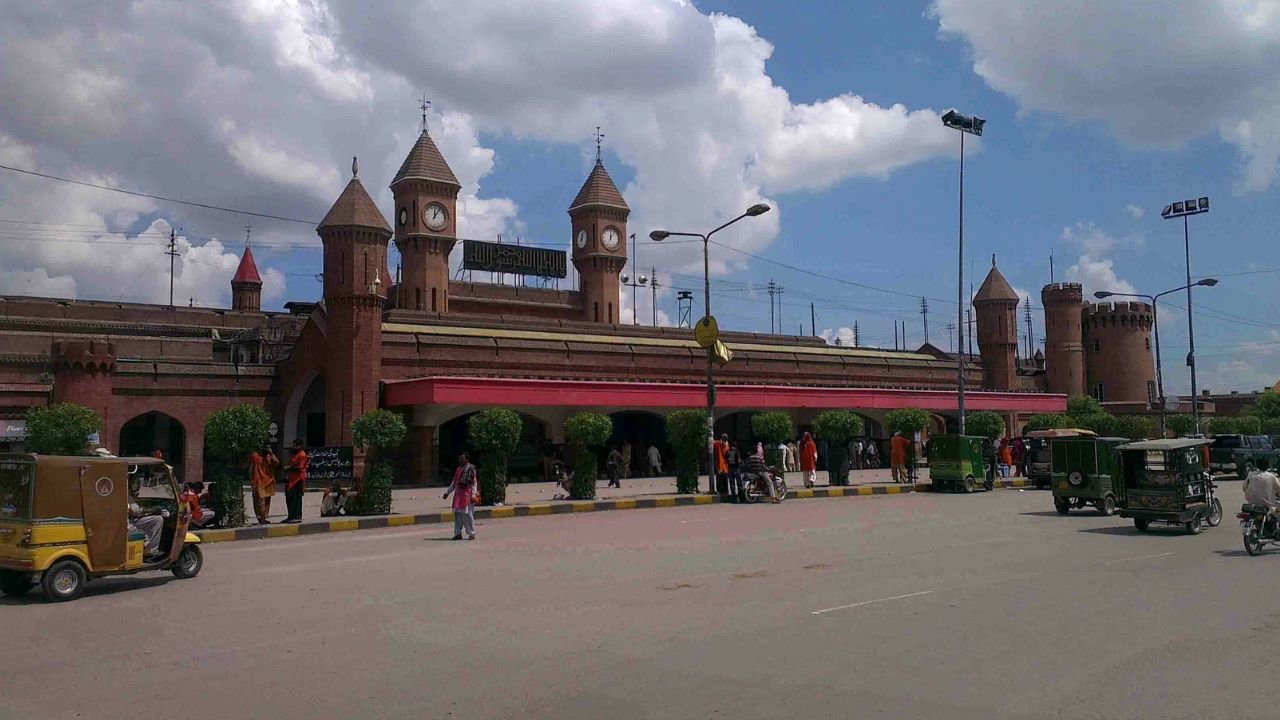
    Three young girls, trying to escape to South Africa in the guise of boys, were taken into protective custody by Lahore police at the city’s main Railway Station on Tuesday.

    All three girls were Grade 7 students from Dera Ghazi Khan.

    The police said they were carrying a mobile phone with the password ‘My Love My Dream’.

    Upon checking the phone’s data, the police could not find any evidence of outside involvement.

    After recording their statements, the police contacted the Dera Ghaz Khan police, where their parents had registered a missing persons report and the police was searching for them.

    Subsequently, the parents arrived in Lahore and took their daughters back home.

    The girls’ plan

    The girls had an unrealistic and immature plan, influenced by social media, according to the police.

    The investigation suggests that they first managed to escape to Lahore via bus. Their plan was to cross the Wagah border and enter India on foot. From there they planned to make their way to South Africa and pursue a glamourous life.

    Dawn reports that “the police on duty at Lahore station took these girls into custody, who had travelled alone from DG Khan by a bus. The girls left their homes in search of a glamorous lifestyle.”

    The girls impersonated boy by wearing their brothers’ clothes and cutting their hair short to appear male.

    The police found out that the girls were carrying two pairs of scissors, maps of India, South Africa, a few clothes, and only Rs100 when the police found them.

    A male passenger offered to take them to Karachi, but before they could decide, the police came in to intervene.

    In their statements to the police, the girls also revealed their naive intentions to travel to South Africa.

    An FIR regarding their disappearance had already been registered in their hometown, Dera Ghazi Khan.

    They were found at the railway station platform by constable Shah Nawaz, who handed them over to the lady constables to protect them from any danger, including human traffickers.

    However, the police urged parents to always monitor their children’s activities to protect them.

  • Turkey joins South Africa’s case against Israel

    Turkey joins South Africa’s case against Israel

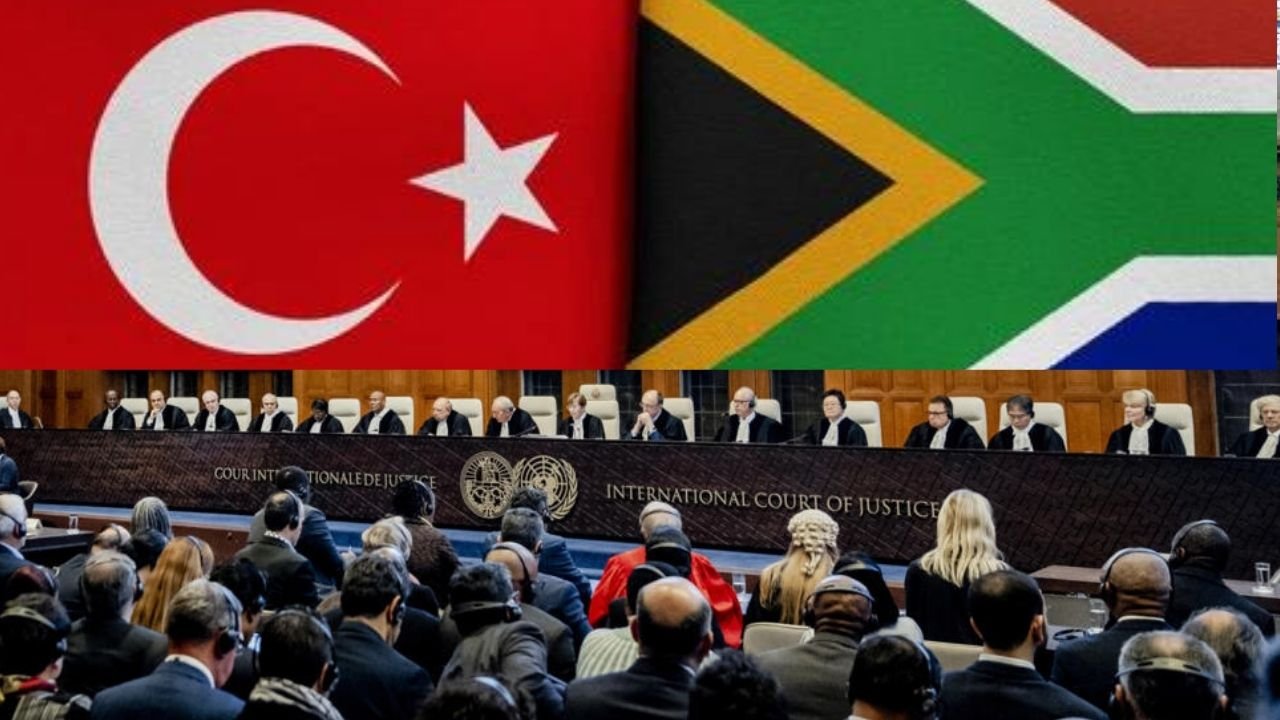
    Turkey has filed an official request to join South Africa’s genocide case against Israel in the International Court of Justice (ICJ) in the Hague.

    In a statement, the Turkish foreign ministry announced that it had decided to join the case—formally known as submitting a declaration of official intervention—and would make the necessary legal preparations.

    Turkish Foreign Minister Hakan Fidan said it had made the formal request on Wednesday.

    “The international community must do its part to stop the genocide and exert the necessary pressure on Israel and its supporters,” Fidan said in a post on X (formerly Twitter).

    “Turkiye will make every effort to do so,” he added.

    The court will make the final decision of admission to the case.

    South Africa brought its case against Israel in December, accusing it of state-led genocide in Gaza.

    To read more: All you need to know about South Africa’s genocide case against Israel at ICJ

    However, in January, the ICJ ordered Israel to refrain from any acts that could fall under the Genocide Convention and to ensure its troops commit no genocidal acts against Palestinians.

    Turkish President Recep Tayyip Erdogan said that in January, Turkiye provided documents for the case at the ICJ, also known as the World Court. In June, Spain said it had asked to intervene in the case at the ICJ.

    Israel has repeatedly dismissed the case’s accusations of genocide, claiming its right to self-defence after Oct 7 last year that killed 1,200 Israelis and foreigners. In 10 months of subsequent Israeli attack, more than 39,600 Palestinians have been martyred in Gaza. Hundreds of thousands are displaced, and most of the strip suffers from a humanitarian crisis.

  • Why is South Africa still waiting for a female president?

    Why is South Africa still waiting for a female president?

    South Africa has one of the world’s highest rates of female parliamentary representation in the world while boasting one of the most progressive constitutions.

    Yet the country is yet to produce a female president — something upcoming general elections are unlikely to change.

    Of the more than 50 parties in the running on May 29, only a handful are led by a woman. The five largest are all headed by men.

    “It is rare for a woman-owned party to stand, succeed and be sustainable,” said Colleen Makhubele, one of the few female party chiefs, who runs the small South African Rainbow Alliance (SARA).

    The dearth is despite South Africa ranking 11th globally for female representation in parliament, just below Sweden and higher than Finland.

    Women played a major role in the anti-apartheid struggle, and have held important government posts since the advent of democracy in 1994.

    About half the country’s ministries, including the key departments of foreign affairs and defence, are currently run by women.

    Women’s rights activists say the reason partially lies in the disconnect between the liberal views on which democratic South Africa was founded, and what still remains a fairly conservative society.

    The rainbow nation’s constitution lists “non-racialism and non-sexism” as the country’s second founding value after democracy itself.

    Yet many still see women as fit to lead their family — but not the nation.

    About one in five respondents to a 2017 Ipsos survey said that a woman’s place was in the home. Moreover, 22 percent thought men made better political leaders.

    This results in women often being overlooked when parties choose a leading candidate, said Bafana Khumalo, co-director of NGO Sonke Gender Justice.

    “Women are seen as important… but not to be voted into power,” he said.

    Makhubele of SARA, a former Johannesburg council speaker, said she has to work twice as hard as her male colleagues to win votes, funding and media coverage.

    Attitudes are slowly changing.

    A 2020 poll by Women Deliver, a non-profit, found 91 percent of respondents believed gender equality was important.

    Forty-three percent supported the government taking action to achieve equal representation in politics, and 69 percent backed gender quotas.

    The latter are already implemented by the ruling African National Congress (ANC) and the leftist Economic Freedom Fighters (EFF) — the country’s third largest party.

    The second largest party, the liberal Democratic Alliance (DA), had a female leader between 2007 and 2015.

    But that’s not enough, said political analyst and author Susan Booysen.

    “I’m blaming political parties for not systematically nurturing women’s ascendancy in party politics to get them to the top… women don’t see that systemic mentoring and promotion” she said.

    Parties might be missing out.

    Women make up more than 55 percent of registered voters in the upcoming elections and are seen as key drivers of support.

    “They’re the ones who actually make sure the people they live with go and vote on election day,” said Zama Khanyase of the ANC’s youth league.

    The ANC is largely expected to get less than 50 percent of the vote and for the first time lose its absolute majority in parliament when South Africans head to the polls in a month’s time.

    That could force it into a coalition to remain in power.

    After the parliamentary vote national assembly lawmakers then appoint a president.

  • South Africa to arrest citizens fighting alongside Israeli forces in Gaza

    South Africa to arrest citizens fighting alongside Israeli forces in Gaza

    South Africa’s foreign minister Naledi Pandor has said that citizens who are fighting in the Israeli armed forces or alongside them in Gaza will be arrested when they return home.

    Naledi, part of South Africa’s governing African National Congress party, passed the policy statement earlier this week at a Palestinian event. “I have already issued a statement alerting those who are South African and are fighting alongside or in the Israeli Defense Forces: We are ready. When you come home, we are going to arrest you,” Pandor said, to rapturous applause from the audience.

    The minister asked people to protest outside the embassies of what she called the “five primary supporters” of Israel and its military action in Gaza. She didn’t name them but almost certainly was referring to the United States, the U.K., and Germany among others.

    Those with dual South African-Israeli citizenship could be stripped of their South African citizenship, she said further.

    Pandor’s comments represent an apparent hardening of the government’s stance.

    It’s not clear how many South African citizens have fought for Israel during the current war in Gaza. South Africa has a significant Jewish population of around 70,000 people, as reported by the Associated Press.

    The South African government is a vocal supporter of the Palestinian people and a critic of Israel. Back in December, the foreign ministry had said that the South African government was concerned that some of its citizens or permanent residents had joined the IDF to fight in Gaza and warned that they could face prosecution if they hadn’t been granted permission to do so under South Africa’s arms control laws.

    Pandor asked audience members at the Palestinian solidary event this week to make posters with the words “Stop Genocide” and protest outside the embassies of what she called the “five primary supporters” of Israel.

    “Don’t only come to this dinner. Be visible in the support of the people of Palestine,” she said.

    The recent statement by the minister is a proof that the Government may deal with these citizens iron-handedly for going against the state’s policy.

    Read more: All you need to know about South Africa’s genocide case against Israel at ICJ

  • Top UN court rejects South Africa request for more Gaza measures

    Top UN court rejects South Africa request for more Gaza measures

    THE HAGUE: The UN’s top court Friday rejected South Africa’s request to put more legal pressure on Israel to halt a threatened offensive against the Gaza city of Rafah, saying it was “bound to comply with existing measures.”

    Pretoria has already filed a complaint against Israel in the International Court of Justice (ICJ) in The Hague, alleging that its assault on Gaza amounts to a breach of the Genocide Convention.

    The court has yet to rule on the underlying issue, but on January 26 it ordered Israel to ensure it took action to protect Palestinian civilians from further harm and to allow in humanitarian aid.

    South African officials on Tuesday filed a further request to the court, asking it to order new measures in the light of Israel’s preparation of a new operation against Rafah.

    More than half of Gaza’s 2.4 million population have sought shelter there from Israel’s offensive on the Gaza Strip.

    The ICJ’s judges acknowledged that the recent developments “’would exponentially increase what is already a humanitarian nightmare with untold regional consequences’” — citing remarks by UN Secretary-General Antonio Guterres.

    But although Israel needed to act immediately to ensure the safety and security of Palestinians, that did not require “the indication of additional provisional measures,” they added.

    Israel remained “bound to fully comply with its obligations under the Genocide Convention and with the said Order,” the ICJ ruling said.

    Hamas’s October 7 attack resulted in the deaths of about 1,160 people in Israel, mostly civilians, according to an AFP tally based on official Israeli figures.

    Militants also took about 250 people hostage, around 130 of whom are still in Gaza, including 30 who are presumed dead, according to Israeli figures.

    Israel’s assault on Gaza has since killed at least 28,775 people, mostly women and children, according to the territory’s health ministry.

    Israel’s foreign minister on Friday said the country would coordinate with Egypt before launching any military offensive in the southern border city of Rafah.

    “We will operate in Rafah after we coordinate with Egypt,” Israel Katz told journalists on the sidelines of the Munich Security Conference, where 180 dignitaries have gathered to discuss conflicts around the globe.

    Fears had been growing for the hundreds of thousands of people who have fled the north of Gaza to Rafah as Israeli troops advanced into the territory to wage war on Hamas.

    But Israel is now planning a major operation in the overcrowded city. With the border to Egypt closed, nearly 1.5 million Palestinians are essentially trapped there.

  • International Court of Justice acknowledges Israeli genocide against Palestinians; does not call for ceasefire

    International Court of Justice acknowledges Israeli genocide against Palestinians; does not call for ceasefire

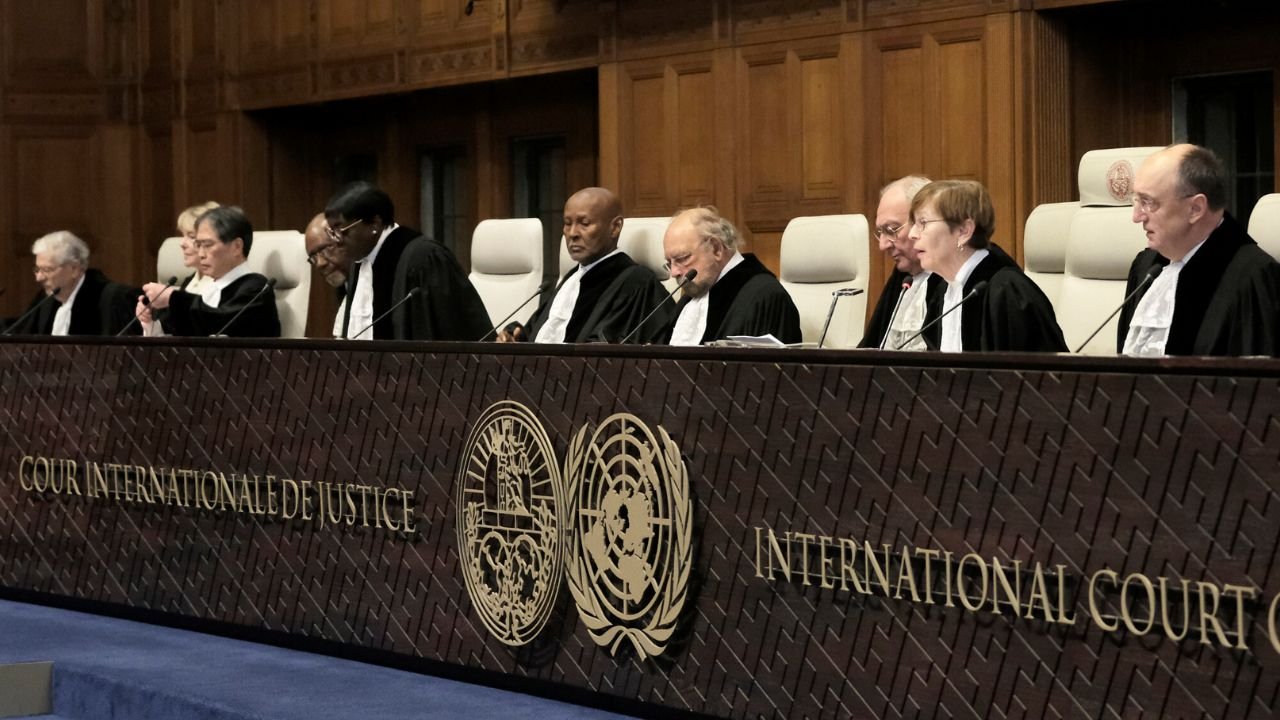
    The International Court of Justice (ICJ) has announced its first ruling on South Africa’s genocide case against Israel on Friday evening, calling on Israel to take urgent and effective measure to protect Palestinians, contain death toll and destruction, acknowledging that there is a risk of genocide in Gaza. However, it did not call for an immediate ceasefire.

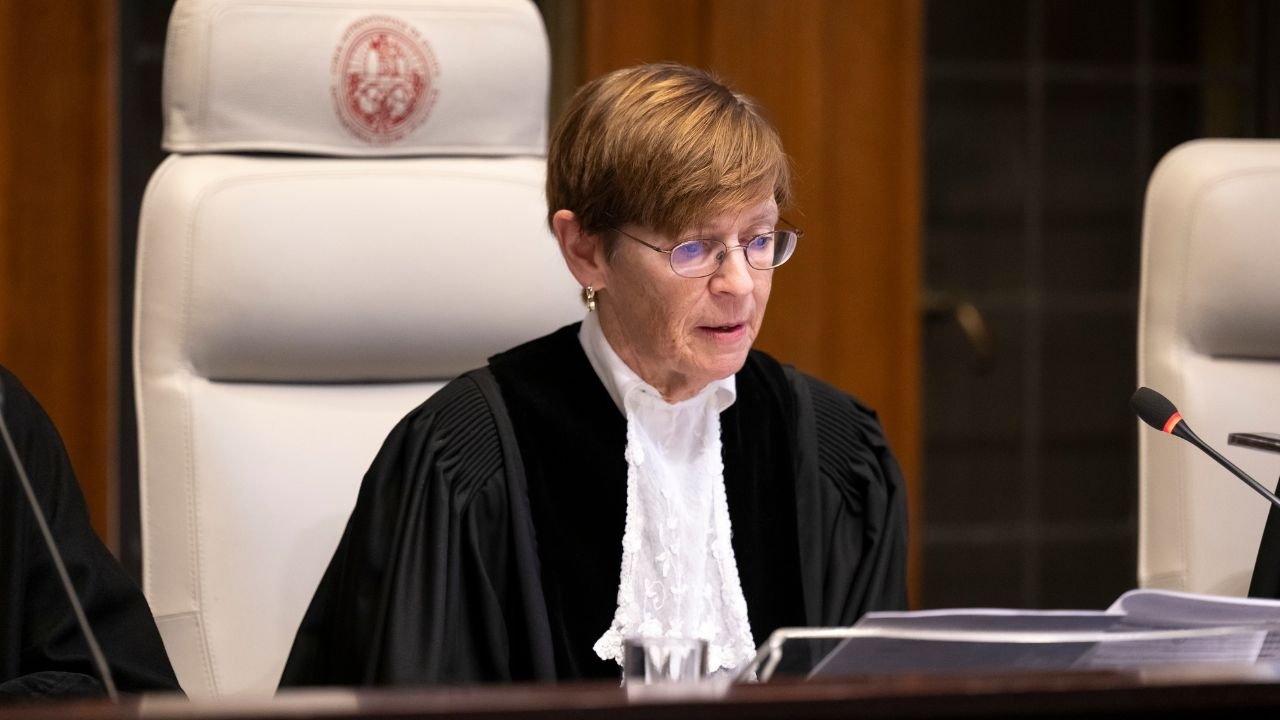
    The hearing took place on Friday with 16 judges out of the court’s 17-member panel, present. Presiding Judge Joan Donoghue asserted that the court has the authority to rule over emergency measures in the case.

    The court noted that the charges against Israel fall under the provisions of the Genocide Convention, additionally acknowledging that Israeli military operations have killed as well as injured a large number Palestinians in Gaza, destroyed a number of homes and infrastructure, and resulted in the internal displacement of about 1.7 million people.

    It was further acknowledged that the Palestinians’ have the right to be protected from acts of genocide.

    The issue of “dehumanising language” used against Palestinians was also highlighted, particularly shedding light on statements by Israeli Defence Minister Yoav Gallant ordering a “complete siege” of Gaza and apprising the soldiers that they are fighting against “human animals”.

    Social Media Reacts

  • Game of Thrones’ actors read South Africa’s case file charging Israel with genocide at ICJ

    Game of Thrones’ actors read South Africa’s case file charging Israel with genocide at ICJ

    Famous actors from ‘Game of Thrones’ read excerpts from South Africa’s case filed at the International Court of Justice (ICJ) against Israeli genocide of Palestinians.

    Among dozens of readers were the megahit series’ stars Charles Dance, Lena Heady, Liam Cunningham, and Carice van Houten. Other notable names include Hollywood veteran Susan Sarandon, comedy film star Steve Coogan, Tobias Menzies, and Tunde Adebimpe.

    The actors read excerpts in support of South Africa’s charges against Israel. The hearing of the first day, January 11, was not aired by the mainstream western media when South Africa laid out its case.

    The case put in motion by South Africa in The Hague, Netherlands, called for the court to look into the genocide being committed by Israel against Palestinians and impose emergency measures, putting a stop to the offensives at urgent basis.

  • ‘We love life’: Gaza couple celebrate wartime wedding

    ‘We love life’: Gaza couple celebrate wartime wedding

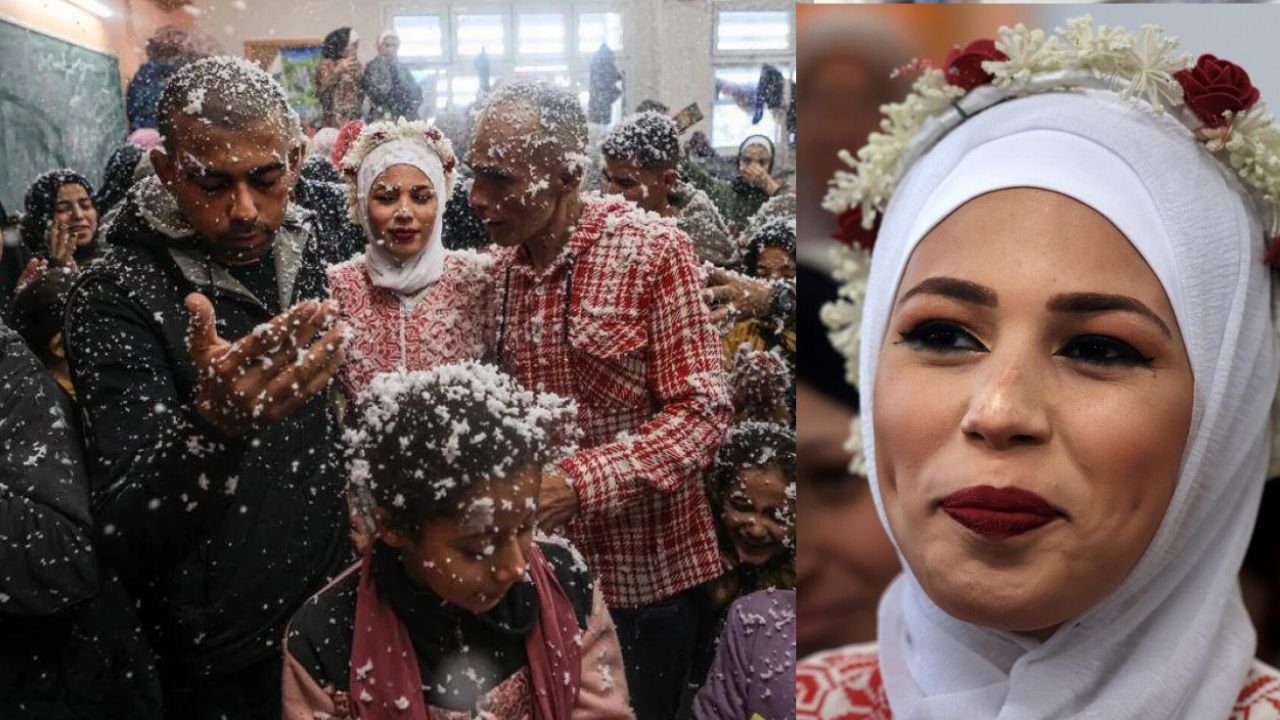
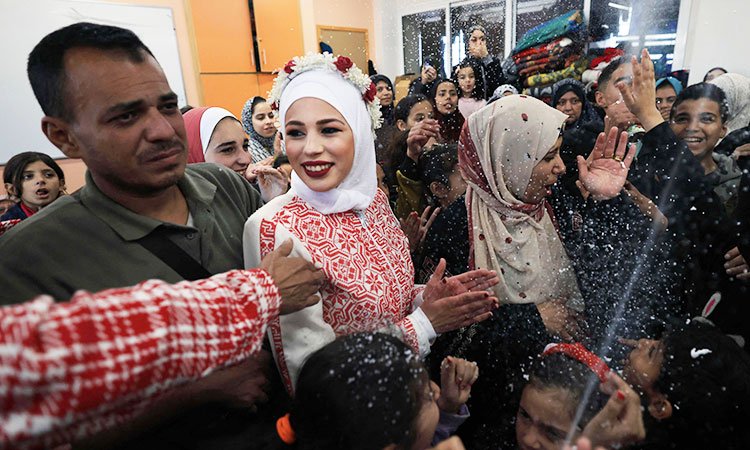
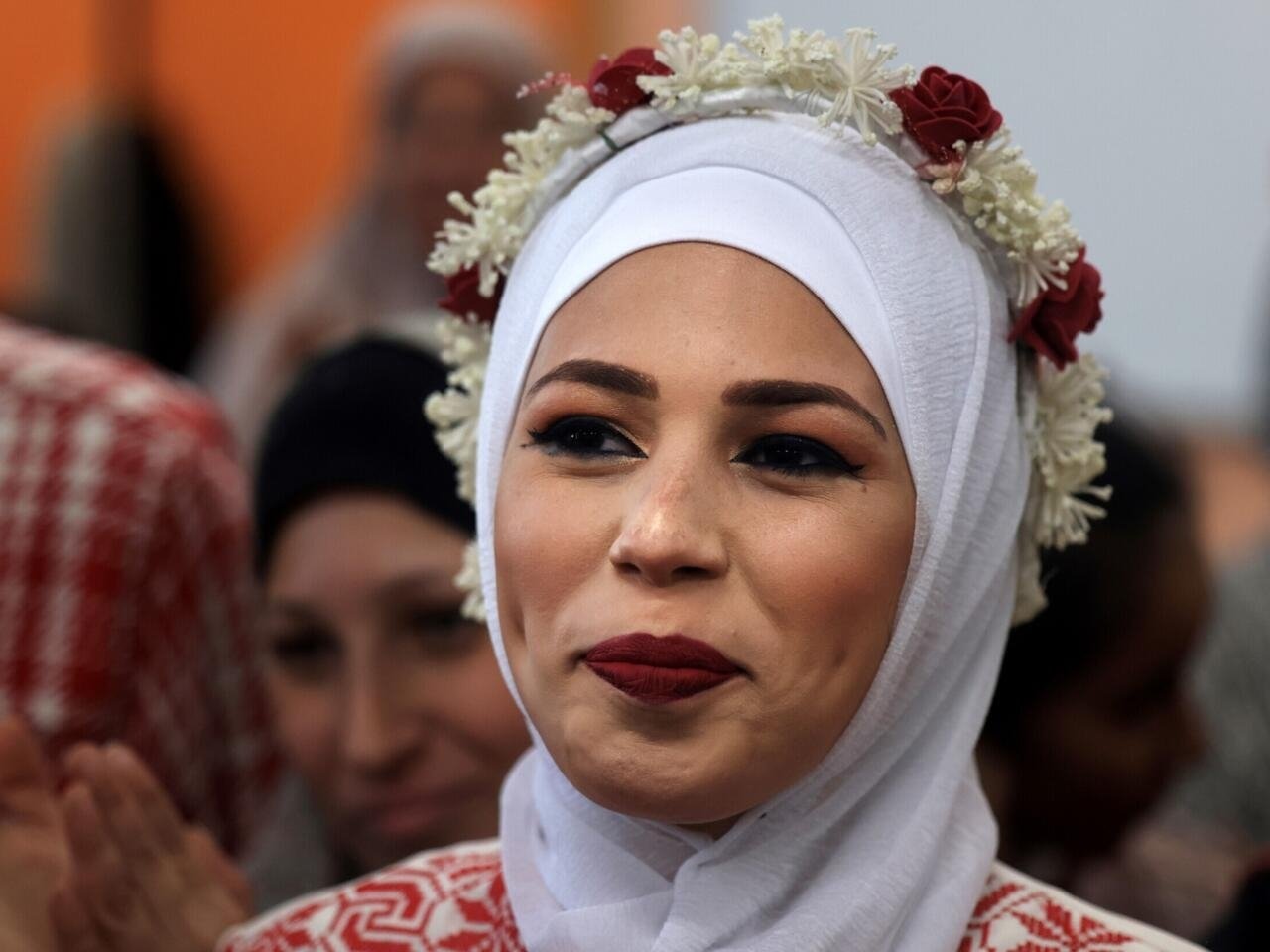
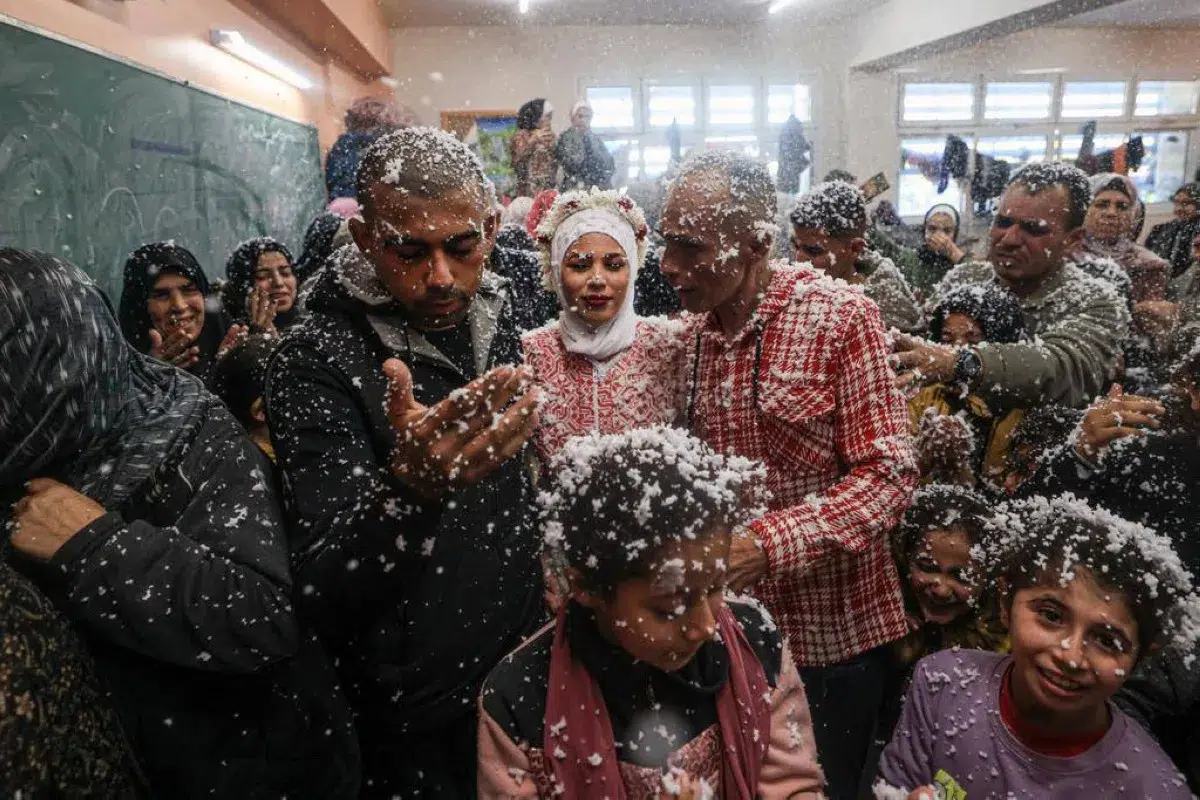
    Surrounded by family and friends, clapping and cheering, Gaza woman Afnan Jibril beams a brilliant smile on her wedding day, determined to celebrate even as war rages.

    “We are a people that love life, despite death, murders and destruction,” said her father, Mohamed Jibril.

    Relatives were gathered on Friday for the wartime wedding in a tiny room at an abandoned school building in the besieged Gaza Strip’s southern city of Rafah, near the frontier with Egypt.

    The city has suffered daily Israeli bombardment, and the families of both bride and groom are among hundreds of thousands of Palestinians who have fled the fighting further north.

    “The usual preparations for marriage are not possible, and traditional ceremonies are not feasible,” said the bride’s father. “However, clothes are available, although they are scarce and expensive.”

    Afnan, 17, donning a crown of flowers and pristine white dress with stark red embroidery, and her partner Mustafa Shamlakh, 26, want to make the most of their rare chance to celebrate.

    They dance and laugh as guests spray white mousse around the room.

    But eventually they have to face reality.

    Israel’s relentless military campaign, triggered by attacks by Palestinian militants, has killed at least 23,843 people, mostly women and children, in Gaza, according to the health ministry in the Hamas-run territory.

    The war began when Hamas militants launched an unprecedented attack on October 7, which resulted in about 1,140 deaths in Israel, mostly civilians, according to an AFP tally based on official figures.

    The newlyweds make up part of another grim tally — those displaced by the violence, which UN estimates put at 1.9 million Palestinians out of a total population in Gaza of 2.4 million.

    “The house where the groom was supposed to live was destroyed,” Ayman Shamlakh, the groom’s uncle, told AFP.

    As the war went on, both families felt there was nothing to be gained from waiting and they agreed to the marriage.

    After the school celebration, the couple head for a ceremony set to take place in a tent.

    As they dive into a waiting black SUV, surrounded by a massive crowd of well-wishers, it almost looks like any other wedding day.

    “We are all living through the same tragedy,” said Ayman Shamlakh. “However, we must continue to live, and life should go on.”

  • Israel weakly counters South Africa’s strong stance in genocide case: What’s next?

    Israel weakly counters South Africa’s strong stance in genocide case: What’s next?

    On January 11-12, the International Court of Justice (ICJ) heard the genocide case filed against Israel by South Africa.

    On Day 1, South Africa’s legal team put forward its case, pointing at the atrocities being committed against Palestinians in Gaza by Israel.

    Israel is accused of committing genocidal acts during their military operations which included mass killings of Palestinians, bodily and mental harm, forced displacement and food blockade, destruction of the healthcare system, and preventing Palestinian births.

    On Day 2, Israel defended itself against the charges, arguing that South Africa “ignored” the incident of October 7 and that Israel had the right to defend itself, adding that the court should put provisional measures against South Africa, accusing it of having ties with Hamas. Israel did not submit any evidence to support its claims that Hamas was the cause of the attacks in Gaza whereas South Africa submitted video evidence of Israeli atrocities in Gaza.

    They also blamed Hamas for the high civilian death toll in Gaza, claiming that Israel did not bomb hospitals and that they enabled humanitarian aid.

    What’s next?

    Al Jazeera explains that even though South Africa’s case against Israel can take years, an “interim measure” intended to halt Israel’s attack in Gaza can be taken “within weeks”.

    If the interim measure is implemented, Israel will be legally obligated to put an end to its offences. And while the “court’s rulings are final”, it has no authority to impose them, nonetheless.

    On the other hand, if the court does not implement an interim measure, “it could still decide it has jurisdiction and proceed with the case”, adds Al Jazeera’s explainer.

  • Israel accused at UN court of Gaza ‘genocide’

    Israel accused at UN court of Gaza ‘genocide’

    South Africa on Thursday accused Israel of breaching the UN Genocide Convention, arguing that even the deadly October 7 Hamas attack could not justify such alleged actions, as it launched a landmark case at the top UN court.

    Pretoria has lodged an urgent appeal at the International Court of Justice (ICJ) to force Israel to “immediately suspend” its military operations in Gaza.

    Israel has dismissed the case as “atrocious” and “preposterous” and vowed to set out a robust defence on Friday.

    “No armed attack on a state territory, no matter how serious… can provide justification for or defend breaches of the convention,” said Pretoria’s Justice Minister Ronald Lamola.

    “Israel’s response to the October 7 attack has crossed this line and given rise to the breaches of the convention,” he added.

    The Gaza war erupted when Hamas launched its unprecedented attack, which resulted in about 1,140 people killed in Israel, mostly civilians, according to an AFP tally based on official figures.

    Israel has responded with a relentless military campaign that has killed at least 23,357 people, mostly women and children, according to Gaza’s health ministry.

    A world away from the death and destruction in Gaza and Israel, robed lawyers battled it out over technical legal arguments in the Peace Palace in The Hague.

    South Africa argues Israel is breaking its commitments under the UN Genocide Convention, a treaty signed in 1948 in the wake of the Holocaust.

    Top lawyer for South Africa Adila Hassim said Israel’s bombing campaign aimed at the “destruction of Palestinian life” and had pushed Palestinians “to the brink of famine”.

    “Genocides are never declared in advance, but this court has the benefit of the past 13 weeks of evidence that shows incontrovertibly a pattern of conduct and related intention that justifies a plausible claim of genocidal acts,” she said.

    As a fellow signatory to the treaty, South Africa can take Israel to the ICJ, which rules on disputes between countries and is often described as the “World Court”.

    The ruling African National Congress (ANC) has long been a firm supporter of the Palestinian cause, often linking it to its own historic struggle against the white-minority government, which had cooperative relations with Israel.

    South Africa has acknowledged the “particular weight of responsibility” of accusing Israel of genocide. It “unequivocally” condemned the Hamas attacks that sparked off the war in Gaza.

    ‘Atrocious and preposterous’

    Israel President Isaac Herzog has already hinted at his country’s likely defence against what he called an “atrocious and preposterous… claim”.

    “We will present proudly our case of using self defence… under international humanitarian law,” he said.

    Herzog said the Israeli army was “doing its utmost under extremely complicated circumstances on the ground to make sure that there will be no unintended consequences and no civilian casualties”.

    The United States is backing its ally Israel, with the State Department describing the charges as “unfounded”.

    “In fact, it is those who are violently attacking Israel who continue to openly call for the annihilation of Israel and the mass murder of Jews,” said State Department spokesman Matthew Miller.

    As it is an urgent procedure, the ICJ could rule in a matter of weeks.

    Its rulings are final and cannot be appealed. However, countries do not always follow the court’s verdicts — the ICJ has ordered Russia to stop its invasion of Ukraine, for example.

    But a court ruling against Israel would certainly increase political pressure on the country, with many speculating it could serve as a pretext for sanctions.

    Cecily Rose, assistant professor of public international law at Leiden University, noted the court did not have to rule on the fundamentals of the case at this stage — that issue will likely take years.

    “Instead, the court would only be evaluating whether there is a risk of irreparable prejudice to rights held under the Genocide Convention, in particular the right of the Palestinians in Gaza to be protected from acts that threaten their existence as a group,” Rose told AFP.

    Dutch police kept rival demonstrations apart in The Hague. Hundreds of pro-Israeli protesters waving flags marched through the streets while a smaller group of pro-Palestinian supporters brandished placards saying: “End Israel apartheid.”

    Pro-Israeli protester Ada Deyl, an 80-year-old pensioner, said: “I think it’s a shame that Israel — who is doing all the right things and is attacked by Hamas — is now facing a lawsuit.”

    On the other side, Zohar Janovitch, 40, alleged that Israeli leaders had “explicitly expressed their disregard for the lives of Palestinian civilians.”