Pakistan’s current-year growth forecast has been significantly reduced by the World Bank due to tighter financial conditions and limited fiscal space. The country’s economy is now expected to grow only 0.4 per cent in the current year, compared to the October 2022 forecast of 2 per cent growth.
This bleaker forecast assumes that an agreement is reached with the International Monetary Fund for bailout funds. Pakistan’s fiscal year runs from July to June, and the country expects its economy to grow 2 per cent in FY23, although the country’s central bank chief has warned that this forecast could face downward pressure.
Pakistan has been in economic turmoil for months, with an acute balance of payments crisis. Talks with the IMF to secure $1.1 billion in funding as part of a $6.5 billion bailout agreed upon in 2019 have not yet yielded fruit. Lower economic output and high prices in Pakistan have led to stampedes and looting at flour distribution centres set up across the country. The World Bank attributed the greater food insecurity for South Asia’s poor to elevated global and domestic food prices.
The World Bank also lowered its 2023 regional growth forecast to 5.6 per cent from 6.1 per cent in October, citing rising interest rates and uncertainty in financial markets as putting downward pressure on the region’s economies. Most countries have raised interest rates at a rapid pace since the war in Ukraine last year led to choking supply chains and stoked inflation globally.
Sri Lanka’s economy is forecast to contract by 4.3 per cent this year, reflecting the lasting impact of the macro debt crisis, with future growth prospects heavily dependent on debt restructuring and structural reforms. In January, President Ranil Wickremesinghe said Sri Lanka’s economy could contract by 3.5 per cent or 4.0 per cent in 2023 after shrinking by 11 per cent last year.
The World Bank also lowered its forecast for India’s economic growth in the current fiscal year to 6.3 per cent from 6.6 per cent, due to the expected negative impact of higher borrowing costs on consumption. The current fiscal year began on April 1.
According to the World Bank’s “Food Security Update,” the consumer price inflation for food items in Pakistan in February 2023 on a year-on-year basis was 45.1 per cent, which is the highest in South Asia after Sri Lanka, which experienced 54.4 per cent inflation.
The report further states that domestic grain and wheat flour prices remained volatile across South Asia at the beginning of 2023, and were well above their year-earlier levels. Specifically, in Pakistan, wheat flour prices in January 2023 reached record highs and were 20 to 140 per cent higher year on year.
The high prices of food items have been attributed to several factors, including generally stagnant production since 2018, stock losses and disrupted trade flows due to the 2022 floods, high agricultural input and transportation costs, and high headline inflation, according to the Food and Agriculture Organization of the United Nations (FAO).
The report noted that India, Bangladesh, and Nepal experienced year-on-year consumer price inflation for food prices of 6.2 per cent, 7.8 per cent, and 5.6 per cent, respectively, in January 2023. Rice production increased in 2022 in several countries, including India, despite reductions in Pakistan and Tanzania, according to the report.
The US Department of Agriculture predicts a 4.5 per cent contraction in rice shipments due to a decrease in exports from Pakistan, Thailand, the United States, and Vietnam, which will more than offset an increase from India. Moreover, domestic food price inflation remains high around the world.
According to Brecorder, the latest month between October 2022 and February 2023, for which food price inflation data are available, shows high inflation in almost all low- and middle-income countries, with inflation levels above 5 per cent in 94.1 per cent of low-income countries, 86 per cent of lower-middle-income countries, and 87 per cent of upper-middle-income countries, with many experiencing double-digit inflation.
Furthermore, about 87.3 per cent of high-income countries are experiencing high food price inflation, and the countries affected most are in Africa, North America, Latin America, South Asia, Europe, and Central Asia, according to the report.
According to a recent UN report, women continue to make up the majority of trafficking victims in South Asia.
However, compared to other years, more men were identified as trafficking victims in the area in 2020, according to the UN Office of Drugs and Crime study (UNODC). Even while pandemics and catastrophes made populations more vulnerable to trafficking, the “Global Report on Trafficking in Persons 2022” also revealed a drop in the crime. In 2020, there were 11% fewer victims worldwide than there were in 2019.
Over the same time period, the number of convictions for trafficking offences decreased by 27 percent as well, strengthening the downward trend that UNODC has been tracking since 2017. South Asia (by 56%), Central America and the Caribbean (by 54%), and South America all had declines (46pc).
The report also stated that both men and women were trafficked in South Asia for the purposes of forced labour, sexual exploitation, and to a lesser extent, forced marriage.
By Anum Hanif, Lubna Jerar Naqvi, Shreya Pareek, Zeba Warsi
Sara Zafar Mir, a social media entrepreneur from Karachi, Pakistan, is busy making her own money. She specializes in premium baby products and Facebook is her social media platform of choice. Every day, she reaches more than 150,000 followers who are all potential buyers, bringing to them customized baby clothes and postpartum care packages at the click of a button. She leads this while also raising two young pre-teens.
Mir said: “I am blessed to have a supportive husband and in-laws, who go out of their way to help me in my work. Both my kids help me in my business. It is great to be able to lean on family when needed.”
Nearly 500 miles away, in Jaipur, India, thirty-one-year-old Kriti Gupta has a busy morning ahead. She needs to get her daughter ready for school while her toddler demands her attention. Amid this hustle, Gupta’s phone chimes. It’s an Instagram notification. One of her clients has left a thank-you message for the timely delivery and premium quality of soap she sold on the social networking app. Like Mir, Gupta is also a social media entrepreneur who has built a credible brand of customized soaps and toiletries.
Both Mir and Gupta may be separated by the India-Pakistan border, but their similarities far outweigh their differences. They both belong to a new generation of South Asian boss ladies who are taking social media by storm. They’re creating unique online businesses. They use Instagram, WhatsApp, and Facebook, not just to post selfies, or share pictures of their baby showers and family dinners but to earn a livelihood, chase their dreams, and be financially independent.
Over 4.26 billion people use social media worldwide, a number projected to increase to almost six billion in 2027. That’s where a new, dynamic market is emerging, and South Asian women entrepreneurs are here to reach that whole new world of consumers. They are breaking stereotypes and patriarchal norms which had long been dominant in South Asian communities.
Mir, a Kashmiri, was married off at a very young age, moving to Karachi with her new husband. As a young mother in Karachi in 2013, Mir found herself searching for premium baby products and felt that there was a void to be filled. That led her to start Mummy and MiniMe, which is almost like her third baby.
Mir was a teacher before she got married. She left her job when she moved to Karachi. After her son was born, she was ready to start something but didn’t quite know what and how.
“At the time my son was young, so I would always be looking for baby clothes, shoes and products,” Mir said, “so I had some experiences (laughs). I realized that Karachi has some very good quality products which you don’t find in other cities.”
She explored the internet and found that there were not a lot of people in Pakistan who offered quality products at affordable prices. “We began with PKR 25,000 at the time, which is not a lot of investment,” she added. And so, Mother and MiniMe was born on Facebook and then expanded to Instagram. After the launch of her business, Mir was joined by her sister-in-law Nauwarah, who was studying at the time. Mummy and MiniMe currently has 157,673 people following on Facebook and 4,782 followers on Instagram.
“My goal as a young mother was to provide affordability and uniqueness. When I used to shop for my son, I realized there were so many options and I thought to help mothers to get quality stuff in one place,” Sara said. Apart from baby products she also began curating wooden toys. With time, the online space started becoming saturated. Many new businesses popped up online and the online market became competitive.
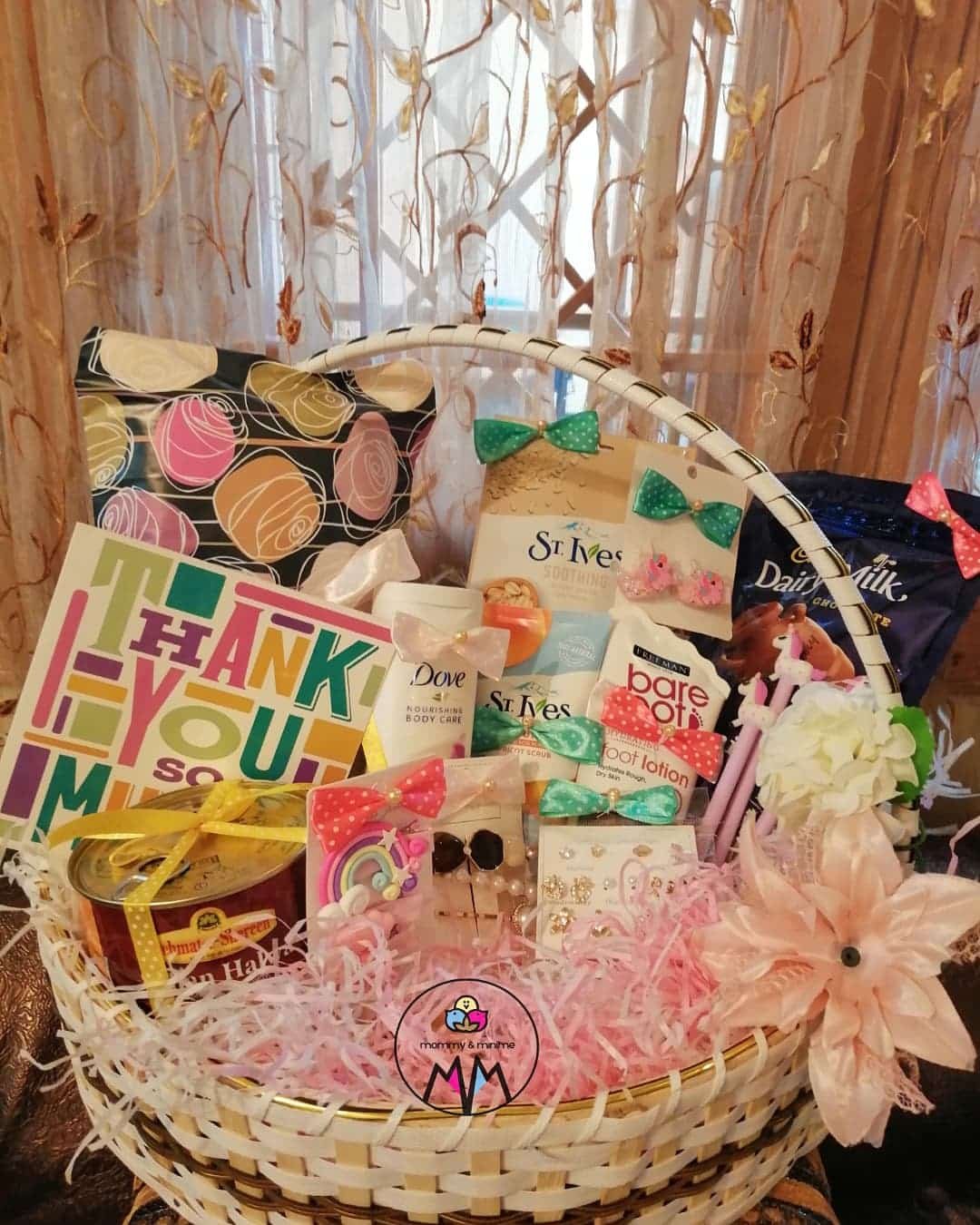
“In 2017, I realized that we need a new strategy. So, we began offering baby gift baskets for new-borns. This is now a favorite among our customers. Mostly grandmothers, aunts, and friends are ordering these.” Mir then started collaborating with bloggers on social media to promote her products.
“I sent a basket with panjeeri (nutritious mixture) to this blogger who had lost her mother and had just had a baby. When I sent her a PR basket, she called me crying saying that my mother used to send her this,” Mir said.
On the other side of the border, Gupta is running her own little online empire with the support of her family.
Gupta said: “My Insta-shop never shuts down. It is open 24×7. Living in a joint family I have realized that everything is manageable if you have a good mother-in-law. And I am blessed in that department,” Gupta said. Living in a three-storey home in Jaipur in northwestern India, she cradles her toddler in one arm, while updating her Instagram business account with the other. The festive season is upon her, she has an order of more than 50 exclusive bath hampers in the pipeline. But she knows she can make it with the support of her family.
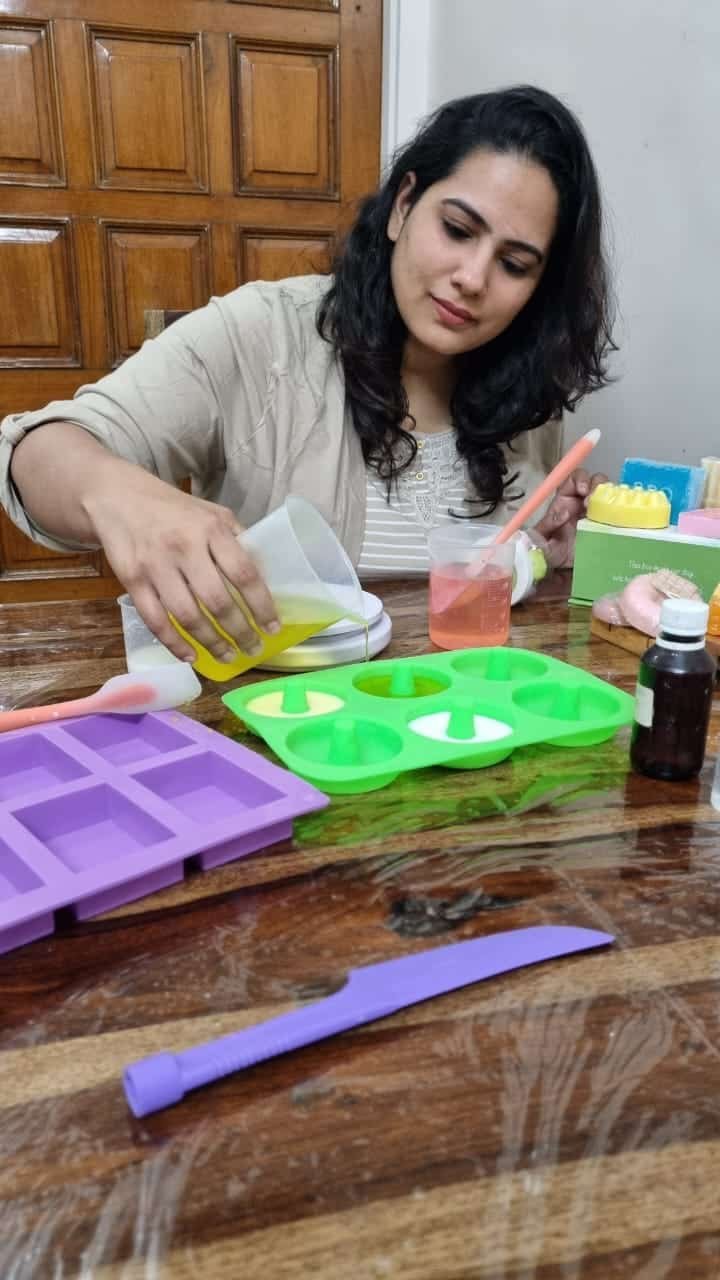
Born and brought up in Bangkok, Gupta was 21 years old when she moved to India to get married. Initially, it was a culture shock to settle down in a rich but conservative Marwari (an Indian ethnic group from Rajasthan) family. She dropped out of journalism school to have her dream wedding. Soon, she had her first child, and her career took a back seat. It was on her daughter’s fifth birthday in 2020 that she kickstarted her entrepreneurial journey by starting Bath and Bubble Co, a brand that sells handmade, natural, artisan soaps and bath products.
The business model
In Pakistan, Mir’s business has now reached a stage where she earns a decent living since she first began in 2013. The revenue spikes during Eid but even otherwise her business is consistent and is doing good. She receives around 10-15 queries a week. And a good 80 percent of those convert to sales.
Since it takes time to build trust among customers online, many first-time buyers pay through cash on delivery but the majority of her customers make online payments. Due to her regular and direct engagement with customers online, Mir’s business rarely sees any returns or exchanges.
“It is hard work. You have to be consistent and patient. With time, we can get an idea who is going to continue ordering products and who is there just to window shop, just like a regular retail shop,” Mir said.
There are thousands of such women who use social media exclusively as their main marketplace, especially in South Asian countries.
In India, Gupta exclusively uses Instagram to sell her products. Despite her humble 760 followers on Instagram, she has already found some dedicated and returning customers. Gupta offers over 25 varieties of exclusive, natural soaps. Currently shipping across India, Gupta’s products are favorite among children due to their quirky and colorful designs. Her personalized hampers are a huge hit and are often ordered in bulk through Instagram and WhatsApp for special occasions. Since creating a website or an offline store would require a huge investment of money and time, she decided to stick to Instagram in the beginning.
Gupta manages to get four-to-five queries each day through Instagram. A majority of her buyers use Instagram DMs and WhatsApp to place orders and use online modes of payments like Google Pay or PayTm. Gupta also mentioned how using the right hashtags and trending reels has helped her reach her target audience. The visual format on Instagram has helped business owners like Gupta to connect with her customers in a better way. She claims it is easier to track her customers on a real-time basis on social media and immediately find out what is working for them. Instagram trends also help in boosting the sales.
“You never know what clicks. You have to constantly keep thinking of new ideas. I am currently manufacturing the soaps myself at home after I send my daughter off to school. I soon plan to set up a separate space for my business. The first person I plan to hire is someone who can handle our social media,” she said.
The rise and rise of social media
Economies worldwide have been disrupted by the pandemic, but it has also created new opportunities to do business through social media. Women-owned businesses have received a big boost in recent years. And with a second income coming in, the standard of living of most families has improved. This means the women are not only being empowered financially, but are also getting family support and acceptance for their role as working women.
Nighat Dad from Lahore, Pakistan, a lawyer, internet activist and founder and executive director of Digital Rights Foundation has closely tracked the trend of women using social media for their growing businesses in recent years. “I have so many examples of women who started online businesses and they have grown over the years. They started to have an online presence. A couple of years back, women were really not confident about using these platforms (social media) for their businesses not only in terms of what to do and how to use these platforms but also not having knowledge of financial gains and opportunities,” Dad said.
In Pakistan, Instagram has gradually become the preferred choice to run businesses replacing Facebook as the most popular platform. In 2019, Facebook signed a Memorandum of Understanding of its #SheMeansBusiness with Lahore Chamber of Commerce and industry to provide support in hands on training, skills enhancement and resources to women. This was a major step towards empowering women to become entrepreneurs. It is estimated that women’s earnings in Pakistan have increased by four percent compared to previous year. One of the reasons is start-ups owned by women, and social media has played a pivotal role in helping them grow their businesses.
In India, Sairee Chahal, founder of “Sheroes”, India’s first women-only social media network, has also looked into the changing trends of how women are using social media.
Chahal said: “When I started Sheroes, there were maybe 10 million women online in India. Today, there are 350 million women who are online, who have tasted the internet at least once and there’s an increasing number of women who are using this to their advantage.”
Chahal, who started her first company in 1999 as a first-generation entrepreneur shares her insights on how digital platforms have helped many women entrepreneurs grow: “The mobile phone in a very patriarchal society is a personal device, it has your name on it. And once you have it, there’s no looking back.”
For women in a patriarchal setup, running a business requires much more than entrepreneurial skills. There are many family dynamics that women are expected to navigate and balance.
“Women are invisible in their societal setups, whether it’s families or the work that they do both at home and outside. It’s this recognition that is driving women online. Look on the internet, everybody’s somebody you know. You’re the handler, you are handling your content. So, this recognition more than other things is what makes a difference,” Chahal said. She also said that only 9 percent of women are in the formal workforce. That means that most women are left to fend for themselves.
Thanks to social media, women are now getting a fair chance to establish their businesses and sustain a balanced personal and professional life.
Not all’s well in the digital universe
Although social media has played a pivotal role in helping women become financially independent, it also has its share of challenges. The major issue that entrepreneurs like Gupta and Mir face is developing a sense of trust among customers since it is difficult to showcase the quality of products through just pictures and videos. Another concern shared by various women was the easy imitation of handcrafted products at lower prices. This makes it difficult for micro-entrepreneurs to compete in the vast market.
The digital world can also be intimidating for some entrepreneurs who belong to a different generation. So, while it is a blessing for some women who have grown up with technology, it might not work for others who are still trying to get used to it.
“Social media can be very demanding and takes a toll on one’s life. We have to constantly think of the next reel, next trend, and next viral post,” Gupta said. At the same time, there is a serious threat to cyber security. Several entrepreneurs have found their accounts to be hacked causing them not just financial but also immense emotional loss.
“Sometimes I feel it is easier to make soaps as compared to making an Instagram reel,” Gupta said.
Dad from Pakistan believes there are serious challenges and risks associated with online entrepreneurship.
“All kinds of challenges these women face in terms of harassment, finances, and stumbling upon bad actors online and trusting them. In offline spaces, sometimes they are earning but sometimes they don’t own what they are earning due to having a patriarchal society. Even if you are earning, you really don’t have ownership of your income,” she added.
She also emphasized how women who work online should be aware of their rights. “How safe their devices are, how safe their platforms are, how much women know about digital security, and how strong are their passwords,” she added. Dad’s foundation has a toll-free number on its website to help women entrepreneurs in need.
While Dad is providing much-needed help to the women entrepreneurs of Pakistan, Chahal is filling this gap in India. She uses her platform ‘Sheroes not only provide livelihood and financial support to women but also the offer crucial mental support to them. Over three million women have benefited from Sheroes’ counseling services. During the pandemic, Sheroes launched a digital bank called Mahila Money. The platform exclusively serves women who are not served by microfinance. Sheroes also acts as a marketplace for women where they can sell a range of items online.
Is this the beginning of a new revolution?
This rise of women entrepreneurs on social media is not just restricted to South Asia. It is a global phenomenon attracting millions of dollars of investment.
In 2020 Facebook COO Sheryl Sandberg announced that the social media giant is investing $100 million to help 30,000 small businesses in over 30 countries. According to the latest statistics, there are 252 million female business owners in the world.
In 2021, Instamojo saw a 14.83 per cent spike in new female users in comparison to a five per cent drop in male new users. This shows that women are more eager to start their own businesses now and want to go online. Social media has enabled women to connect across boundaries, cultures, genders and has shown a positive trend where many women are comfortable establishing their businesses in a male-dominated society.
“I never got a chance to look back and see how far I have come. I can’t believe that something which was just an idea or a dream is now a fully functional business. It has not just made me financially independent but has also given my life a new purpose,” Gupta said.
Mir, who started her business with a small investment of 25000 Pakistani rupees, is always looking for innovative ideas to continually grow her business.
Karachi has been ranked in the top 10 start-up-friendly South Asian cities in Blink’s Startup Ecosystem Report 2022. Karachi has emerged as the highest-ranked city in Pakistan, taking the position away from Lahore.
Karachi’s position has moved up in South Asia but globally it lost five spots to rank 291st. Lahore dropped a heartbreaking 48 positions to rank 305th whereas Islamabad dropped one position to 438th. This year has not been good for city rankings of smaller Pakistani cities – Faisalabad, Rawalpindi, Multan, and Jhelum are out of the global top 1,000, leaving Pakistan with only three ranked cities, versus seven in 2021.
Pakistan has dropped one spot in 2022 to rank 76th globally and maintains its second rank in South Asia. Pakistan is ranked fourth in the CAREC (Central Asia Regional Economic Cooperation Program) business region.
Pakistan’s overview:
“With a population of over 220 million, Pakistan’s economy has massive potential to grow. For this to happen, digitalisation and successful startups will be a critical element. Amid the Covid-19 pandemic, digital entrepreneurship increased side by side with investment in local startups,” says the report.
The report further states that digital infrastructure in Pakistan has seen improvement with the introduction of broadband internet coverage, including 4G. All this came together with new legal frameworks that regulate and promote digital payments, investment, and credit under the State Bank of Pakistan’s Digital Banking Policy.
“In addition, the government set up Special Technology zones offering several tax exemptions and incentives. Pakistan has come a long way with its legal framework, but there are still some areas that require more clarity when it comes to taxation or incentives for domestic investments. The country’s turbulent political climate is not helping to create certainty and stable policies to boost the local startup ecosystem.” As per the report, “The spike in funding and startups needs to be fuelled by talent with experience in scaling startups. To sustain this need, the country needs to come up with ways of providing its startup ecosystems with qualified and trained personnel.”
The global rating evaluates the state of the startup economy and describes the dynamics of their growth and the main trends. This year’s report evaluated startup ecosystems in 1,000 cities and 100 countries.
The Asian Development Bank (ADB) on Wednesday projected that inflation in Pakistan would remain the highest in the region at 7.5 per cent, and the economy would grow by 4 per cent – the fifth-lowest growth rate among seven South Asian nations, contradicting the government’s claim of lowest prices in the country, reported Shahbaz Rana for The Express Tribune.
Pakistan’s “economy is expected to continue recovering in the fiscal year 2021-22, with real GDP projected to rise by 4 per cent”, according to the ADB report.
It was the fifth-lowest economic growth rate in the region as the economic growth rate in the Maldives (15 per cent) and India (7.5 per cent) remain the highest in the region. Bangladesh is projected to grow at 6.8 per cent and Nepal at 4.1 per cent in 2022, according to the ADB.
The ADB said that the 4 per cent growth rate was contingent on the resumption of structural reforms later in the year in an ongoing programme under the International Monetary Fund (IMF) Extended Fund Facility.
“The economic outlook is clouded, however, by high uncertainty because it is closely tied to the course of the pandemic in Pakistan and globally.”
The ADB has also cautioned about a further increase in prices in Pakistan, provided the Pakistan-IMF deal collapses.
“Risk of inflation higher than forecast derives from any unusual increase in oil prices or from potential currency depreciation in the wake of any early winding down of the ongoing IMF programme,” said the ADB.
Federal Minister for Finance and Revenue Pakistan, Shaukat Tarin has said that Pakistan may have to send experts to Afghanistan because of the country’s major experts have left the country which has complicated the Taliban’s administration, reports The News.
While giving an extensive briefing to the Senate Standing Committee on Finance on Thursday, Mr Tarin said that the government was building up strategic reserves of essential food commodities to meet domestic as well as Afghanistan’s requirements.
According to him, “they [Afghanistan} require assistance and we may have to dispatch experts because of the brain drain in Afghanistan. The situation is fluid and we are analysing it. The West has stopped foreign reserves of Afghanistan to the tune of $10 billion, as the IMF has stopped $400 million and many others so Kabul will be facing a scarcity of foreign exchange. Our bilateral trade will surge but we may have to undertake bilateral trade in the Pak rupee.”
Talking about Pakistan’s economic situation he stated, “Pakistan’s trade deficit stands at $4 billion and remittances are hovering around $2.5 billion.”
“On tax revenue, FBR revenues are ahead of target by 23 percent. The track and trace system will be placed for five major sectors. The Point of Sale (POS) will integrate receipts and standardised and frivolous notices will be withdrawn,” he assured.
More than 120,000 people evacuated from Afghanistan are qualified professionals from civil servants to lawyers.
Michael Barry, a specialist on Afghanistan who taught at the American University in Kabul, said that many members of the Taliban are from rural areas and lack the knowledge to run the state bureaucracy, as perAgence France-Presse (AFP).
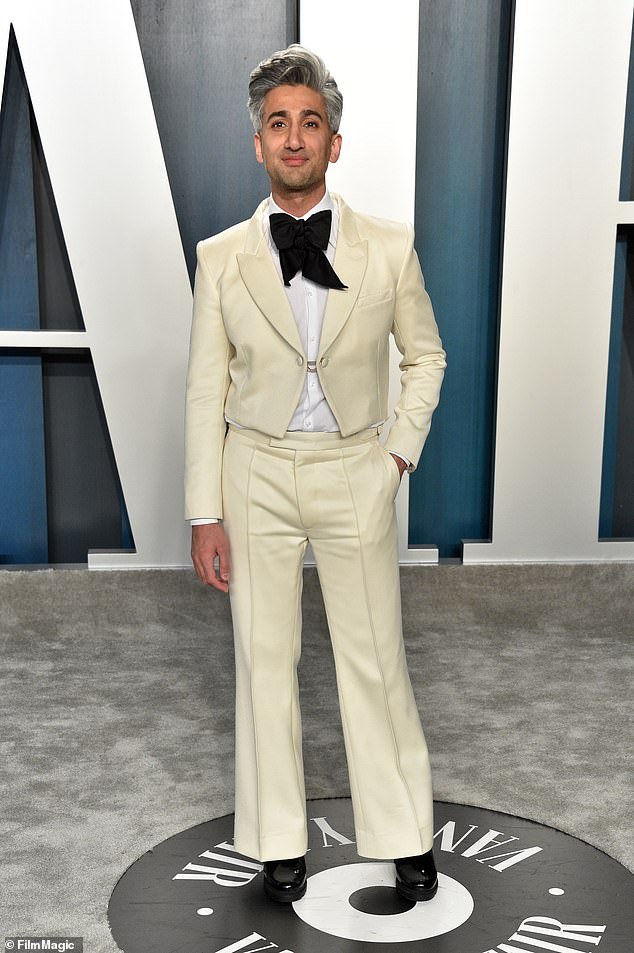
British-Pakistani-American fashion designer famed for Netflix’s makeover series Queer Eye, Tan France in a recent interview with a local media publication opened up about being a queer Pakistani-Muslim and shed light on his love for his home country.
Talking about taking the burden of representation, France said: “I think the pressure on me is a little different – I am the only member of the LGBTQ community, who is also South Asian and very open about the fact that I am Muslim also. And so, I’m a few things in America – I’m an immigrant, I’m Muslim, I’m South Asian and I’m gay – and there hasn’t been anybody like that on TV in the US before, or entertainment in general, so the pressure is really really great. It’s the hardest part of this job without a doubt.”
He continued: “I’m sure you can imagine when you are somebody who is a little different, a lot of Pakistanis don’t appreciate that. There still are a lot of small-minded Pakistani people in and outside of Pakistan, who say ‘we don’t have gay people in our community’, and that’s the most difficult part when there’s nobody else to help you balance it out. When there’s only one person to focus your anger on, you are responsible to make sure you are the ‘perfect’ version of that. That pressure is a lot.”
“The first year of Queer Eye was very difficult, though I’m very grateful for its success. Being on such a massive international show may be lovely for my white castmates because they just get to enjoy the joy of being famous and successful and wealthy and all those things,” said the reality show star further.
“Whereas for me the bigger the show got, the more pressure I got from my own community, to be perfect, to not bring shame onto the community. To not embarrass Pakistan. And that’s not easy, and it doesn’t get any easier,” said Tan, adding that the pressure on his has become less now “because I’ve stopped giving a sh*t, quite honestly, what ‘Uncle Bilal’ thinks of me – but – the bigger my star gets, the more pressure is put on me.”
Later, responding to another question, France said: “The amount of DMs I get through the likes of Instagram, both good and bad where the Pakistani community is saying we don’t have gay people here. Well, that is ridiculous. The other community, the gay community, and the ally community say we need people that show that we exist, that we are not alone, we are not monsters and we deserve love and kindness. The fact that I get those DMs so regularly, makes it clear that things aren’t where they need to be in Pakistan.”
“That’s why people like me are so important in entertainment. If I had people like me on TV, I wouldn’t have felt like a freak, I wouldn’t have felt alone as a child. I think it comes from the top, so laws need to be changed from the top”, said France.
Meanwhile, recalling memories from the last time he visited Pakistan, Tan said: “My favourite memory is my last trip, about 14 years ago when I went to Rawalpindi to design my sister-in-law’s wedding lehenga. My brother was getting married, and our family was to provide the clothes so I was a designer, and I said I want to design it, but I want to go to Pakistan to make it.”
“So, I went with my mom, and we stayed in Rawalpindi with my brother’s wife’s family who also came with us (I’m really close with my sister-in-law) and I had probably one of the best vacations of my life. I helped cook every day and my sister-in-law’s mom, who has never been to England–found it so strange that this boy from England wanted to make gobhi and bhindi every morning with her -and I would teach her to make it my way! She was just so confused that this boy was cooking!”
“It was one of my favourite trips, I loved it so much! The rest of the time I would do whatever I wanted. I could go and explore, I went to a zoo, a theme park in Islamabad, it felt like the most fun trip there,” he shared.
Pakistan has improved its position in the World Bank’s Ease of Doing Business Index for the second year in a row.
According to the latest rankings released by the global organization, Pakistan has improved its position by an impressive total of 28 points, surging from 136th place to 108th on the rankings. The World Bank report calls this an “unprecedented improvement”, and it is highly indicative of the country managing to exceed even its own expectations yet again.
Out of the six reform areas highlighted in the 2020 edition of the report, Pakistan made the highest improvement in the “Starting a Business” indicator, which is an area largely being revolutionized by the Securities and Exchange Commission Pakistan (SECP).
Pakistan’s ranking in this indicator has improved from 130 to 72 and is placed at second position in South Asian countries in terms of ease of starting a business.
The improvement, according to the SECP, is primarily due to the integration of e-services with the Federal Board of Revenue (FBR) and the Employees Old Age Benefits Institution (EOBI) at the federal level and with business registration portals of Punjab and Sindh at the provincial level.
After this integration, SECP’s e-services offer a one-window facility for company registration with FBR, EOBI, provincial employees social security institutions, the labour department and excise and taxation departments of Punjab and Sindh.
As a result of this reform, the number of procedures to start a business, as recorded in the Doing Business Report 2020, have been reduced from ten to five and Pakistan has managed to rank “among the top ten reformers globally”.
Pakistan emerging as an increasingly business-friendly nation is massively good news for the local hustle culture and the entrepreneurship environment that has rapidly been garnering interest over the past few years.
The South African cricket team has arrived in Pakistan to play two tests and three T20 international matches. It is the first tour by the cricket team since 2007. The South African team is led by Quinton de Kock.
As per reports, the visiting side has cleared two COVID-19 tests before coming to Pakistan and will be tested again for COVID-19. Till then, the squad will remain in quarantine. However, they will be allowed to practice after testing negative for coronavirus.
According to anofficial of the Pakistan Cricket Board (PCB): “The South African team will be training at the Karachi Gymkhana cricket ground from January 17-22 in a biosecure bubble before moving to National Stadium for a full-fledged training session.”
Both sides will undergo another round of COVID-19 testing before the first test match.
Meanwhile, the Pakistan cricket team will reach Karachi on January 19 and commence their practice session from January 21.
Earlier on Friday, the boardannounced a 20-player squadfor the Test series against South Africa (SA). As per details, the squad includes nine uncapped players.
The five-day matches will be staged in Karachi from January 26-30 and in Rawalpindi from February 4-8, T20 fixtures will be played in Lahore from 11th February to 14th of February.