Tag: South Korea

  • Nobel peace laureate Malala brings new documentary to Toronto 

    Nobel peace laureate Malala brings new documentary to Toronto 

    Nobel peace laureate Malala Yousafzai, who unveiled her first documentary with Apple TV+ at the Toronto film festival, said Monday that its inspiring story of elderly South Korean women sea divers dovetails perfectly with her own activism.

    “The Last of the Sea Women” tells the compelling story of the matriarchal haenyeo community, whose members support themselves by fishing off South Korea’s Jeju island, using only wetsuits, masks, flippers, baskets and hooks.

    The traditional community, inscribed on UNESCO’s intangible cultural heritage list in 2016, has existed for centuries, but is at risk as many of the women are now in their 60s, 70s or even 80s.

    “I was looking for stories of women… I wanted stories of their resilience. And when I heard about this project from Sue, I was like, ‘This is exactly what I’m looking for’,” Yousafzai told AFP in an interview with Korean-American director Sue Kim.

    “When I look at the stories of the haenyeo, it inspires me about the possibilities and the capabilities that women have in their bodies, in their minds,” said the 27-year-old Pakistani activist, who is one of the film’s producers.

    “They have inspired me in so many ways, in their activism and how they are cooperating with nature, how they have built the community.”

    – ‘Total badasses’ –

    In the 1960s, 30,000 women plucked everything from abalone to octopus from the sea to support their families. Today, that number has dwindled to 4,000.

    The film shows the women speaking candidly about their difficult jobs, which involves holding their breath underwater for up to two minutes, and includes beautiful under-sea images of them at work.

    It explores how the haenyeo are attempting to breathe new life into their culture through training and social media outreach, and how they work together to prevent overfishing.

    It also examines the threat they believe is posed by the release into the Pacific Ocean of wastewater from Japan’s stricken Fukushima nuclear power plant.

    “I met them first when I was a child, and I was so struck by them, because they cut such a confident, bold figure,” Kim, making her feature directorial debut, told AFP.

    “They’re total badasses. They’re so physically agile and adept and strong, and they’re advocating for the environment, and they’re caring about the next generation.”

    As a teenager, Yousafzai survived a 2012 assassination attempt by the Taliban over her campaigning for education rights for girls. She was co-awarded the Nobel Peace Prize in 2014 at age 17.

    She signed a deal with Apple TV+ in 2021 to produce content focused on women and girls and has started her own production company.

    “Storytelling has been part of my activism, and I believe that we need to create platforms and opportunities for girls and women to reflect on the world as they see it,” Yousafzai said.

    “I hope to continue to work with these incredible female directors and storytellers to bring more stories to the screen.”
  • Deepfake porn crisis batters South Korea schools

    Deepfake porn crisis batters South Korea schools

    Many of the cases she documented followed the same pattern: schoolboys steal innocuous selfies from private Instagram accounts and create explicit images to share in the chat rooms, specifically to humiliate female classmates — or even teachers.

    Super-wired South Korea, with the world’s fastest average internet speeds, has long battled sexual cyber violence, but experts say a toxic combination of Telegram, AI tech, and lax laws has supercharged the issue — and it is tearing through the country’s schools.

    “It’s not just the harm caused by the deepfake itself, but the spread of those videos among acquaintances that is even more humiliating and painful,” Bang, 18, told AFP.

    She has received thousands of reports from devastated victims since authorities in August found the first such Telegram chatrooms, typically set up within a school or university to prey on female students and staff.

    Most perpetrators are teens, police say.

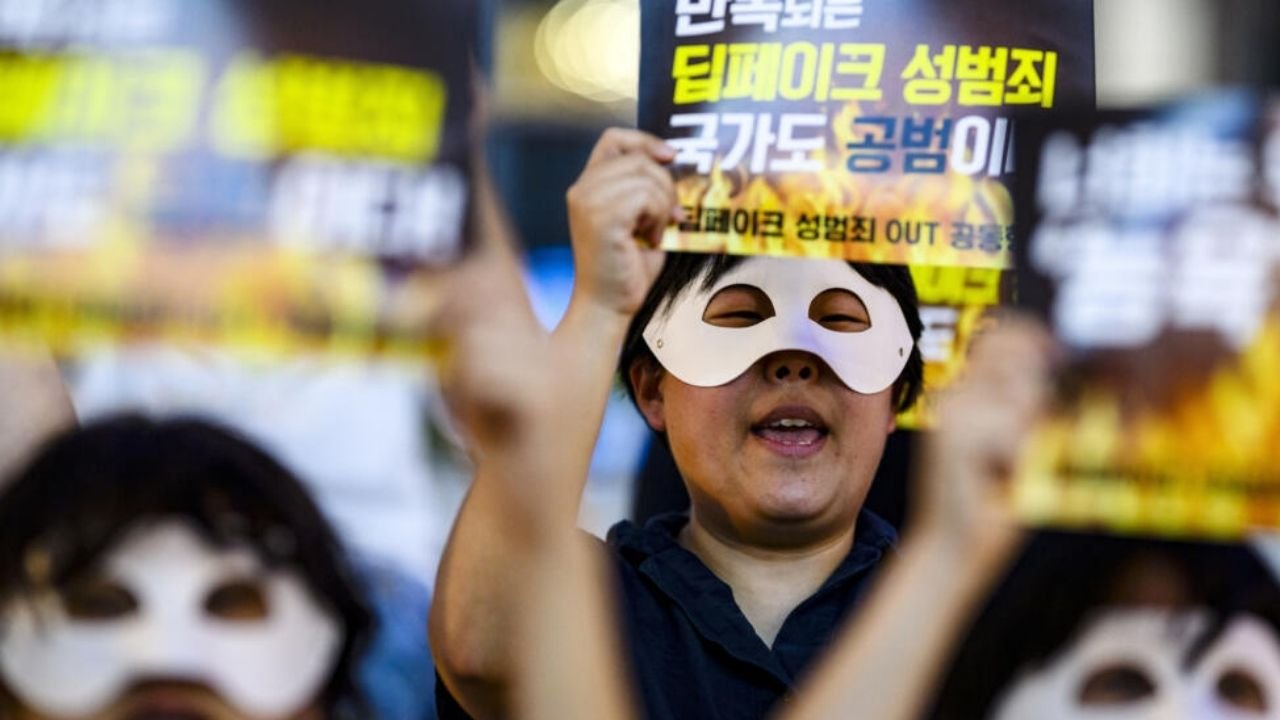
    Activists wearing eye masks, hold posters reading ‘Repeated deepfake sex crimes, the state is an accomplice too’ during a protest against deepfake porn in Seoul on August 30, 2024 © Anthony WALLACE / AFP

    Deepfake prevalence is increasing exponentially globally, industry data shows, up 500 percent on year in 2023, cybersecurity startup Security Hero estimates, with 99 percent of victims women — typically famous singers and actresses.

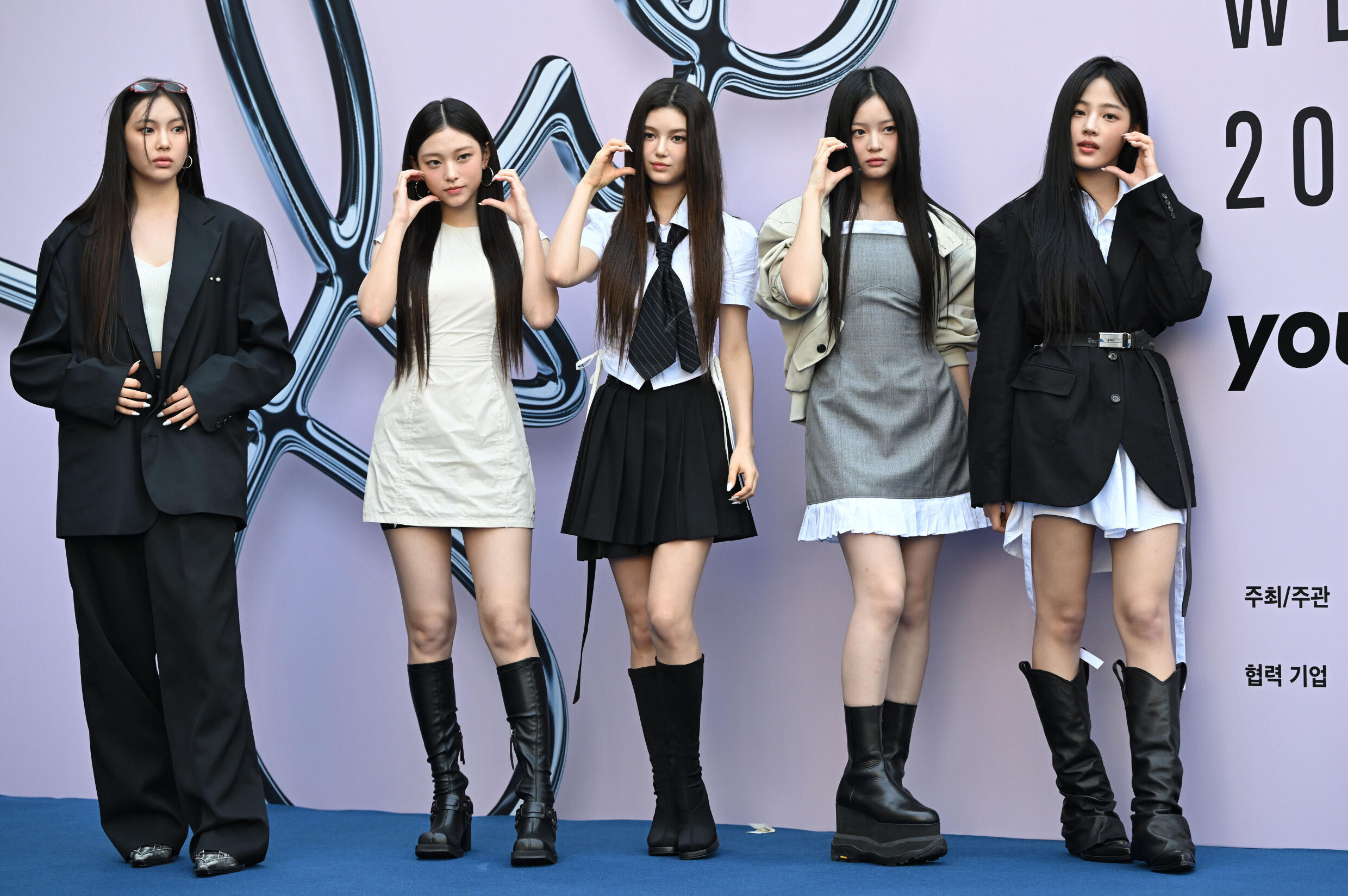
    But while celebrities have powerful backers to protect them — the K-pop agency behind girlband NewJeans recently took legal action against deepfake porn — many ordinary victims are struggling to get justice, activists say.

    ‘Live in fear’

    Prosecution rates are woeful: between 2021 and July this year, 793 deepfake crimes were reported but only 16 people were arrested and prosecuted, according to police data obtained by a lawmaker.

    After news of the chat rooms spread, complaints surged, with 118 cases reported in just five days in late August and seven people arrested amid a police crackdown.

    But six out of seven alleged perpetrators were teenagers, police say, which complicates prosecutions as South Korean courts rarely issue arrest warrants for minors.

    The chatrooms, multiple of which AFP attempted to join before being removed by moderators, have lewd names such as “the lonely masturbator” and rules requiring members to post photos of women they wish to see “punished”.

    Agents for the K-pop group NewJeans took legal action after band members appeared in deepfake porn images
    Agents for the K-pop group NewJeans took legal action after band members appeared in deepfake porn images © Jung Yeon-je / AFP/File

    Victims find themselves “sexually insulted and mocked by their classmates in online spaces”, Kang Myeong-suk, head of victim support at the Women’s Human Rights Institute of Korea told AFP.

    “But the perpetrators often face no consequences,” she said, adding that victims now “live in fear of where their manipulated images might be distributed by those around them”.

    “Some online comments say the victims should ‘get over it’ as these deepfake images are not even real,” Kang said.

    “But just because manipulated images aren’t real doesn’t mean the pain the victims endure is any less genuine.”

    Victim blaming

    While overall crime rates in South Korea are generally low, the country has long suffered from an epidemic of spy-cam crimes, which led to major protests in 2018 inspired by the global #MeToo movement, eventually forcing lawmakers to strengthen laws.

    Even so “the penalties issued are often trivial, like fines or probation, which are disproportionate to the gravity of the offenses”, professor Yoon Kim Ji-young told AFP.

    The encrypted messaging platform Telegram has frequently been used to share deepfake porn content © Anthony WALLACE / AFP/File

    There have also been Telegram porn scandals before, most notably in 2020, when a group blackmailing women and girls to make sexual content for paid chatrooms was uncovered. The ringleader was jailed.

    But things have not improved.

    President Yoon Suk Yeol’s dismissive views on feminism — which he has blamed for the country’s low birthrate — have signalled to men it is “okay to be hostile or discriminatory towards women”, Yoon Kim said.

    South Korean police blame low prosecution rates on Telegram, which is famed for its reluctance to cooperate with authorities. Its founder was recently arrested in France for failing to curb illegal content on the app.

    But one victim of a 2021 deepfake porn incident told AFP that this was no excuse — many victims manage to identify their attackers themselves simply by determined sleuthing.

    The victim, who requested anonymity, said it had been a “huge trauma” to bring her assailant to justice after she was attacked in 2021 with a barrage of Telegram messages containing deepfake images showing her being sexually assaulted.

    Her attacker was a fellow student at the prestigious Seoul National University, who she had rarely interacted with but always thought was “gentle”.

    “It was hard to accept,” she said, adding police required her to collect all the evidence herself, then she had to lobby hard for a trial, which is now ongoing.

    “The world I thought I knew completely collapsed,” she said in a letter she plans to submit to the court on September 26.

    “No one should be treated as an object or used as a means to compensate for the inferiority complexes of individuals like the defendant, simply because they are women.”

  • Samsung workers begin three-day general strike over pay

    Samsung workers begin three-day general strike over pay

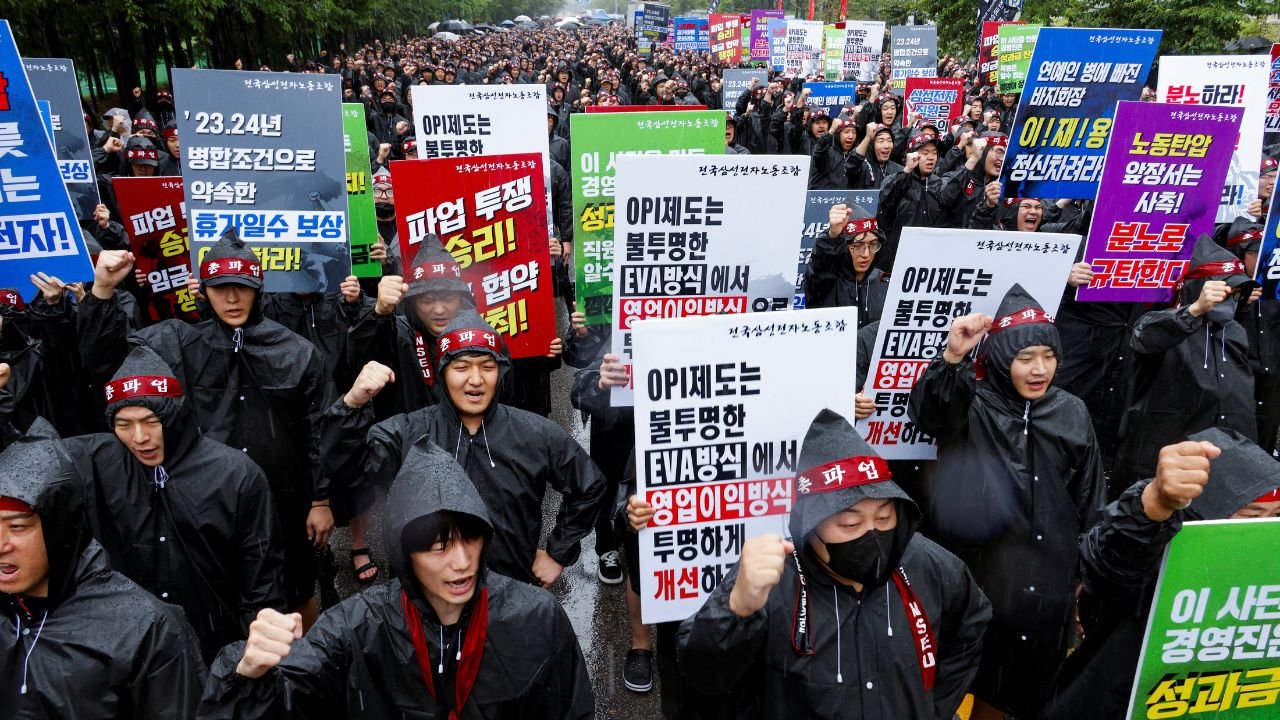
    Workers at South Korean tech giant Samsung began a three-day general strike over pay and benefits on Monday, the head of a union representing tens of thousands of employees told AFP, warning the action could impact memory chip production.

    Samsung Electronics is the world’s largest memory chip maker and accounts for a significant chunk of global output of the high-end chips.

    Wearing rain jackets and ribbons saying “fight with solidarity”, thousands of workers gathered outside the company’s foundry and semiconductor factory in Hwaseong, Gyeonggi, an hour south of Seoul.

    Samsung management has been locked in negotiations with the union since January, with the two sides failing to narrow differences on benefits and a rejected 5.1 percent pay raise offer from the firm.

    “The strike has started from today,” Son Woo-mok, head of the National Samsung Electronics Union, told AFP.

    “Today’s general strike is just the beginning,” he added.

    “Recalling why we are here, please do not come to work until July 10th and do not receive any business calls,” he told the crowd of workers.

    The union said about 5,200 people from factory facility, manufacturing and development had joined the protest.

    “Do they still not think this will affect their production line?” said Lee Hyun-kuk, vice president of the union.

    The union, which has more than 30,000 members, or more than a fifth of the company’s total workforce, announced the three-day general strike last week, saying it was a last resort after talks broke down.

    The move follows a one-day walkout in June, the first such collective action at the company, which went decades without unionisation.

    “We are now at critical crossroads,” the union said in an appeal sent out to members last week, urging them to support the strike.

    “This strike is the last card we can use,” it said, saying that workers at the company needed to “act as one”.

    “I’m really excited,” one union member and protester told AFP. “We’re making history.”

    Workers rejected the offer of a 5.1 percent pay hike in March, with the union having previously outlined demands including improvements to annual leave and transparent performance-based bonuses.

    Samsung declined a request for comment.

    “While the ongoing strike is only scheduled for three days, the participating members include those working in chip assembly lines,” business professor Kim Dae-jong at Sejong University told AFP.

    “Given that the union could carry out additional strikes in case the gridlock continues, it could pose a great risk to Samsung management amid its race for dominance in the competitive chips market.”

    Samsung Electronics avoided its employees unionising for almost 50 years — sometimes adopting ferocious tactics, according to critics — while rising to become the world’s largest smartphone and semiconductor manufacturer.

    Company founder Lee Byung-chul, who died in 1987, was adamantly opposed to unions, saying he would never allow them “until I have dirt over my eyes”.

    The first labour union at Samsung Electronics was formed in the late 2010s.

    The firm is the flagship subsidiary of South Korean giant Samsung Group, by far the largest of the family-controlled conglomerates that dominate business in Asia’s fourth-largest economy.

    It recently predicted a 15-fold increase in its on-year second quarter operating profits, thanks to growing demand for generative AI.

    Semiconductors are the lifeblood of the global economy, used in everything from kitchen appliances and mobile phones to cars and weapons.

    And demand for the advanced chips that power artificial intelligence systems has skyrocketed thanks to the success of ChatGPT and other generative AI products.

    Semiconductors are South Korea’s leading export and hit $11.7 billion in March, their highest level in almost two years, accounting for a fifth of South Korea’s total exports, according to figures released by the trade ministry.

  • South Korean robot commits suicide after tremendous workload

    South Korean robot commits suicide after tremendous workload

    A civil servant robot in South Korea working for the Gumi City Council apparently killed itself leaving many confused on what is being termed the country’s first “robot suicide”.

    The incident occurred last Thursday, leaving the tech community puzzled and in mourning.

    The ‘Robot Supervisor’, according to the eyewitness accounts, was behaving oddly and out-of-character before its fall. It was discovered shattered at the bottom of a stairwell between the first and second floors of the city council building.

    It was employed since August 2023 and performed various tasks including delivering documents, promoting the city, and providing information to residents.

    It worked tirelessly from 9 am to 6 pm, even using elevators—a rare feature of its kind.

    The robot was developed by a California-based startup for a broader range of duties.

    It was seen as a great opportunity by South Koreans but for now the Gumi City Council has decided not to replace the robot, pausing their robot adoption plans and reflecting on the future of automation in the nation.

  • Denmark recalls South Korean noodles for being too spicy

    Denmark recalls South Korean noodles for being too spicy

    Denmark’s food agency has recalled South Korean instant ramen produced by a brand popular in the West, warning noodle lovers that they were so hot they might cause “acute poisoning”.

    Three Samyang Foods noodle products were assessed to have dangerous levels of capsaicin, the active component of chilli peppers, the Danish Veterinary and Food Administration said in a statement on Tuesday.

    The three products from Samyang instant ramen line — Buldak 3x Spicy & Hot Chicken, 2x Spicy & Hot Chicken, and Hot Chicken Stew — were being withdrawn from sale in Denmark.

    The level in a single packet of the noodles was “so high that they pose a risk of the consumer developing acute poisoning”, the Danish body said.

    “If you have the products, you should discard them or return them to the store where they were purchased,” the statement added.

    It issued a special warning against children eating the noodles, urging parents to contact the Poison Line if their little ones appeared to show “acute symptoms”.

    Samyang products are hugely popular overseas, with the company’s operating profit hitting a record high of over $110 million in 2023.

    Samyang Foods said it was the first time the company’s products had been recalled because they were deemed too hot, and added that it would work to better understand local regulations in export markets.

    “Currently, the products are being exported around the world, but this is the first time they have been recalled for this reason,” a spokesperson for the company told AFP.

    Samyang Foods saw its stock price soar 70 percent in recent months after its buldak carbonara ramen went viral on TikTok, with the product becoming so popular in the United States there have been reports of shortages.

    Celebrities such as Cardi B have posted stories online about searching for over 30 minutes to find the flavourful instant noodles.

  • North Korea drops rubbish-filled balloons on South Korea

    North Korea drops rubbish-filled balloons on South Korea

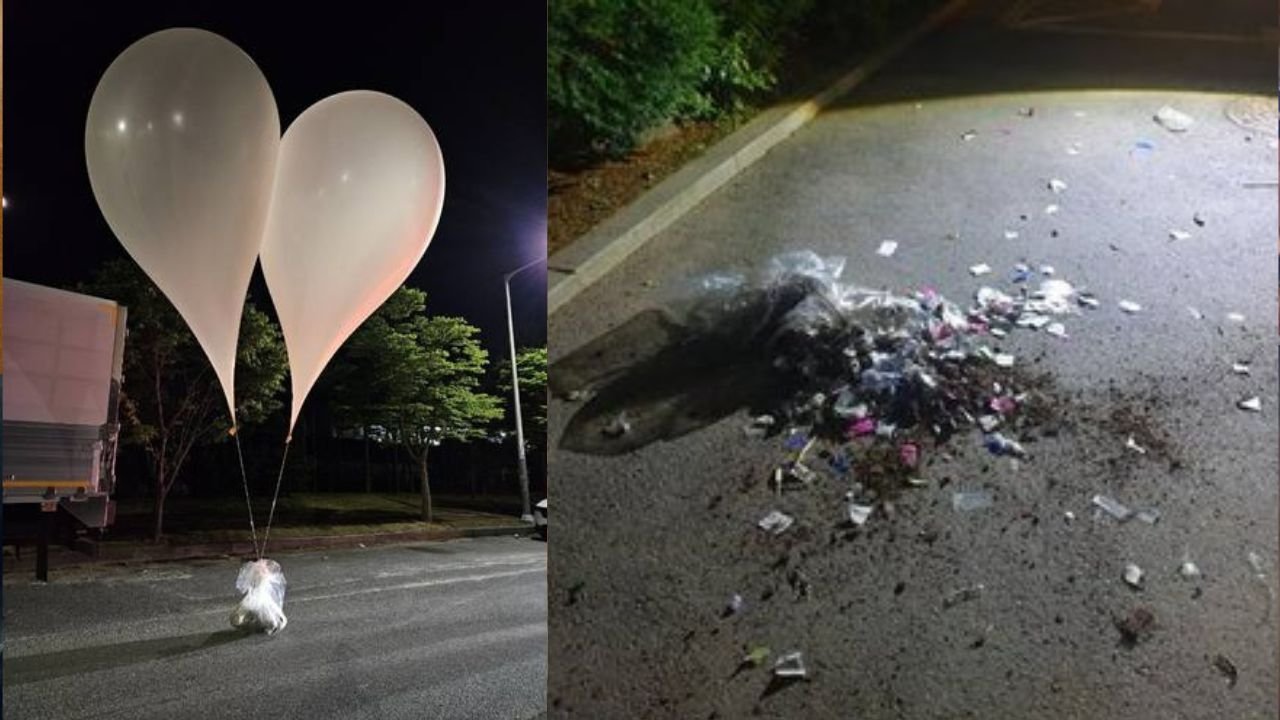
    North Korea just dropped at least 260 filth-filled balloons on South Korea, prompting officials to warn residents to stay indoors.

    South Korea’s army cautioned the public against touching the balloons and the plastic bags attached to them because they contain “filthy waste and trash”.
    The balloons have been found in eight of nine provinces in South Korea and are now being investigated.

    The recent incident comes days after North Korea said it would retaliate against the “frequent scattering of leaflets and other rubbish” in border areas by activists in the South.

    Photographs shared on various social media platforms show bags attached via string to white translucent balloons carrying toilet paper, dark soil, batteries, and leaflets, among other contents.

    BBC quotes South Korea’s Yonhap news agency’s report: “Some of the fallen balloons carried what appears to be faeces judging from its dark colour and odour”.

    Battle of Ballons

    North and South Korea have both used balloons in their propaganda campaigns since the Korean War in the 1950s.

    South Korea’s military had earlier said it was investigating whether there were any North Korean propaganda leaflets in the balloons.

    Earlier this month, a South Korea-based activist group claimed it had sent 20 balloons carrying choco pies, leaflets, and USB sticks containing Korean pop music and music videos across the border, all of which are banned in North Korea.

    Back in 2016, North Korea launched balloons southward that attacked Seoul’s leaders The balloons reportedly carried toilet paper, cigarette butts, and rubbish.

    However, Seoul police described them as “hazardous biochemical substances”.

    “It seriously threatens the safety of our people. North Korea is entirely liable for what happens due to the balloons and we sternly warn North Korea to immediately stop this inhumane and crass action,” the South’s military said.

  • South Koreans contest to find out who is best at doing nothing

    South Koreans contest to find out who is best at doing nothing

    South Korea held one of the strangest competition in the world where contestants are judged for being best at doing absolutely nothing.

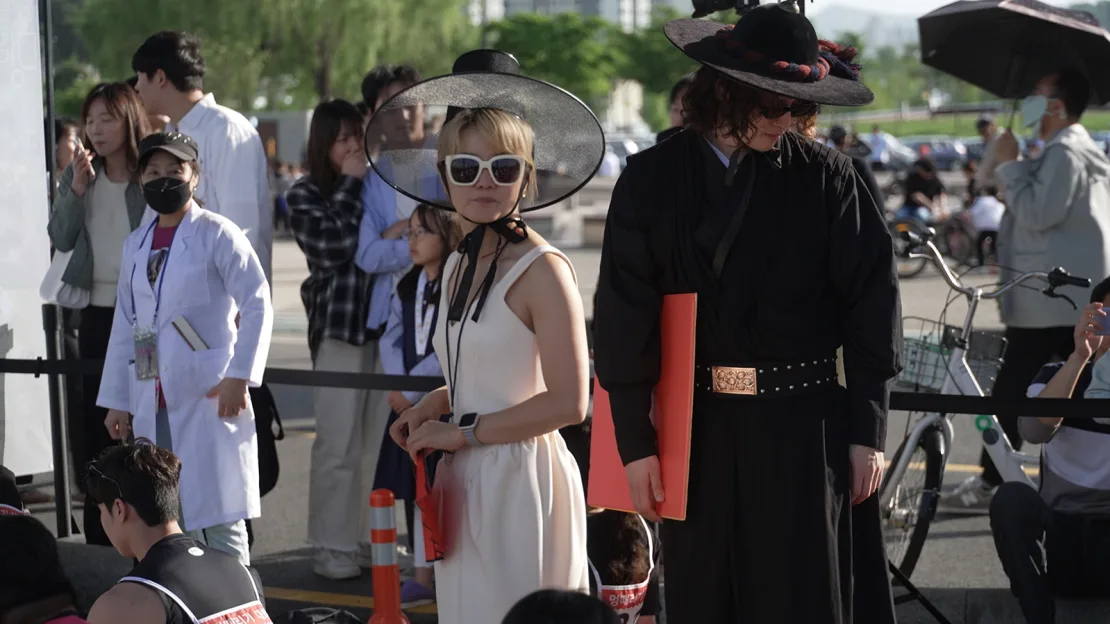
    In Seoul, more than 100 people gathered over the weekend to do nothing. Officially, the event is called Space-Out competition which was started by a visual artist, Woopsyang, as a protest against the country’s hyper-competitive society almost 10 years ago in 2014.

    The Space-out competition was founded by a visual artist who goes by the pseudonym Woopsyang, after she suffered severe burnout. 
    CNN

    She suffered severe burnout and this event provided her along with others a respite.

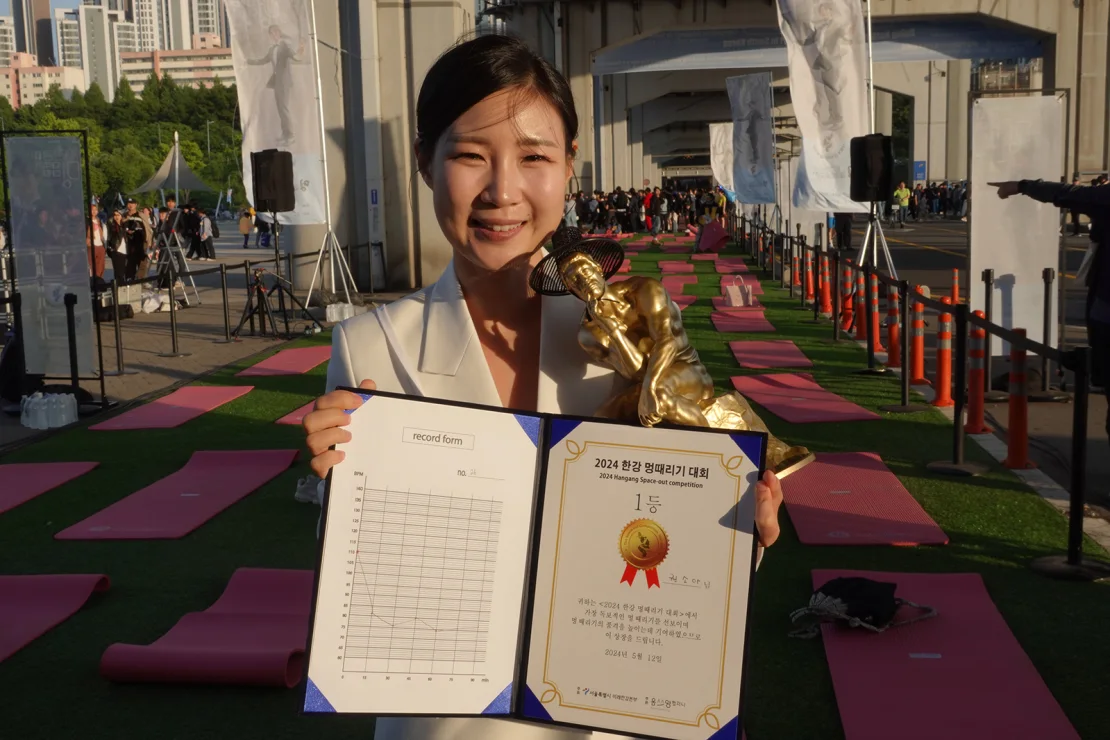
    Spectators vote for the participant who’s best at zoning out for 90 minutes without falling asleep, checking their phone or talking.

    Participants’ heart rates are monitored, while onlookers vote for their 10 favorite contestants. Whoever has the most stable heart rate among the 10 takes home the trophy.

    More than 4,000 people applied to participate in the competition while the 117 contestants ranged from a child in second grade to people in their 60s.
    This year’s competition was won by freelance announcer Kwon So-a, who took home a trophy shaped like the sculpture of “The Thinker.”

    Freelance announcer Kwon So-a won this year’s competition in Seoul and took home a trophy shaped like Auguste Rodin’s sculpture “The Thinker.” 
    Charlie Miller/CNN

    Doing nothing is “good for your mental health as well as your physical health because your body has to relax, but your body can only relax when your brain relaxes,” she said while talking to CNN.

  • S. Korea starts procedures to suspend licences of 4,900 striking doctors

    S. Korea starts procedures to suspend licences of 4,900 striking doctors

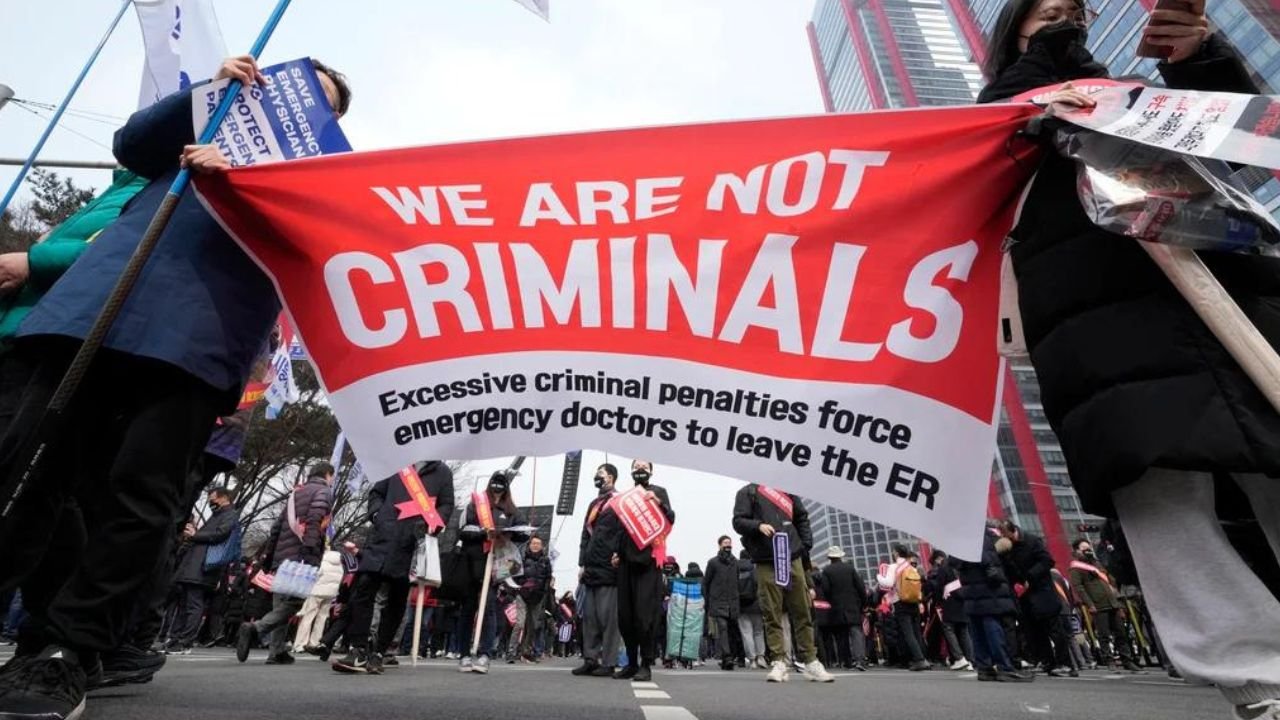
    South Korea said Monday it had started procedures to suspend the medical licenses of 4,900 junior doctors who have resigned and stopped working to protest government medical training reforms, causing health care chaos.

    The walkout, which started February 20, is over government plans to sharply increase the number of doctors, which it says is essential to combat shortages and South Korea’s rapidly aging population, while the medics argue it will erode service quality.

    Nearly 12,000 junior doctors — 93 percent of the trainee workforce — were not in their hospitals at the last count, despite government back to work orders and threats of legal action, forcing Seoul to mobilize military medics and millions of dollars in state reserves to help.

    The Health Ministry on Monday said it had sent administrative notifications — the first step to suspending the doctors’ medical licenses — to thousands of trainee doctors after they defied specific orders telling them to return to their hospitals.

    “As of March 8 (notifications) have been sent to more than 4,900 trainee doctors,” Chun Byung-wang, director of the health and medical policy division at the health ministry, told reporters.

    The government has previously warned striking doctors they face a three month suspension of their licenses, a punishment which, it says, will delay by at least a year their ability to qualify as specialists.

    Chun urged the striking medics to return to their patients.

    “The government will take into account the circumstance and protect trainee doctors if they return to work before the administrative measure is complete,” he said, indicating doctors who come back to work now could avoid the punishment.

    “The government will not give up dialogue. The door for dialogue is always open … The government will respect and listen to opinions of the medical community as a companion for the medical reforms,” he added.

    The government last week announced new measures to improve pay and conditions for trainee medics, plus a review of the continuous 36-hour work period, which is a major gripe of junior doctors.

    The strikes have led to surgery cancelations, long wait times and delayed treatments at major hospitals.

    Seoul has mobilized military doctors and earmarked millions of dollars of state reserves to ease service shortfalls, but has denied that there is a full-blown health care crisis.

    Military doctors will start working in civilian hospitals from Wednesday this week, Chun said.

    Under South Korean law, doctors are restricted from striking, and the health ministry has asked police to investigate people connected to the work stoppage.

    The government is pushing to admit 2,000 more students to medical schools annually from next year to address what it calls one of the lowest doctor-to-population ratios among developed nations.

    Doctors say they fear the reform will erode the quality of service and medical education, but proponents accuse medics of trying to safeguard their salaries and social status.

  • Pakistani passport once again least powerful

    Pakistani passport once again least powerful

    Henley & Partners‘ Passport Index has published a list portraying the world’s travel access hierarchy.

    Top on the list of countries that encourage travelling are France, Germany, Italy, Japan, Singapore, and Spain, whose citizens can visit an astounding 194 destinations without requiring arduous visa procedures. This group of countries offer passport-to-plane experience, setting the bar high for unmatched worldwide mobility.

    With access to 193 locations, Finland, South Korea, and Sweden share second place. Many visa-free or visa-on-arrival options are available to their well-travelled inhabitants, providing access to a variety of cultures and environments.

    Austria, Denmark, Ireland, and the Netherlands take third place with access to 192 destinations. These nations serve as entry points to a wide range of travel opportunities.

    The long list goes on, honouring countries that place a high priority on global connection. Among the notable entries are the United States, Canada, Greece, Switzerland, and New Zealand, all of which provide their inhabitants with an abundance of travel options.

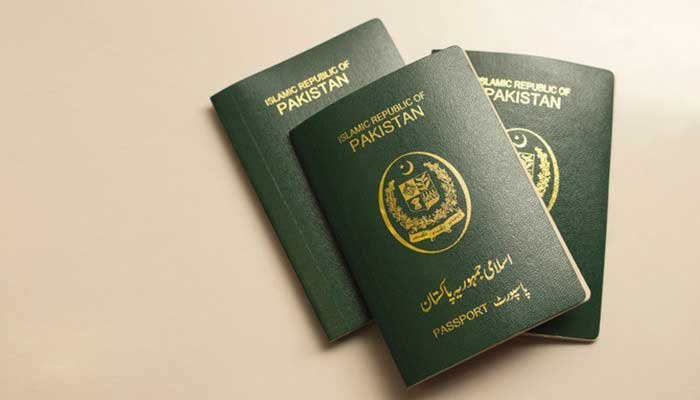
    On the other hand, the Passport Index identifies states with more limited travel options. Afghanistan, Syria, Iraq, and Pakistan are among the least accessible, offering their passport holders entry to just 34 countries that require no visa or one upon arrival.

    The London-based company, which offers residency and citizenship consultancy services, teamed together with the International Air Transport Association to create a unique ranking that takes into account passport holders’ access to countries without a visa or with one upon arrival.

  • South Korean opposition leader stabbed in neck, expected to undergo surgery

    South Korean opposition leader stabbed in neck, expected to undergo surgery

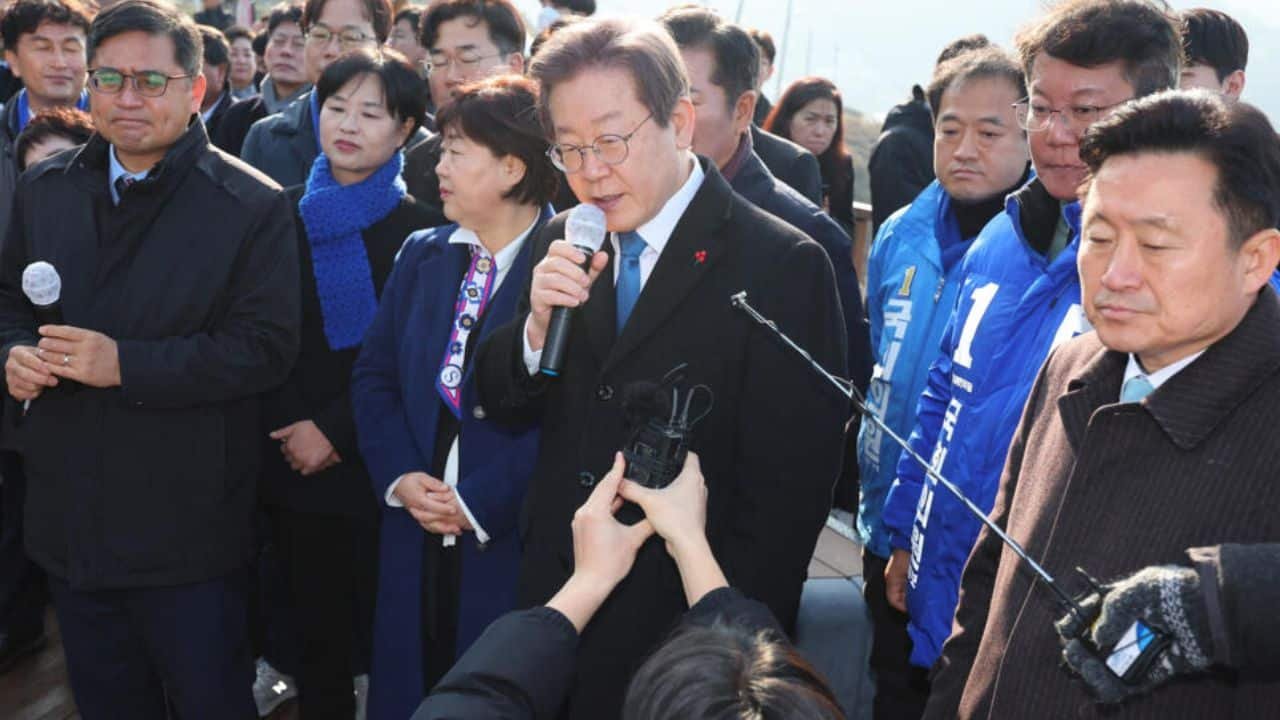
    South Korean opposition party leader Lee Jae-myung was stabbed in the neck on Tuesday by a man who pushed through a crowd pretending to be his supporter.

    Lee was surrounded by journalists and supporters at a construction site in the southern port city of Busan when a man lunged and struck him in the neck, South Korean television channels showed.

    He was bleeding but conscious as he was rushed to a local hospital, the Yonhap news agency reported, before being flown to the capital Seoul for surgery, according to an official from his party.

    An official from Pusan National University Hospital, where Lee received emergency treatment and CT scans before his transfer to Seoul, said the injury was not life-threatening.

    Police were seen wrestling the assailant, who wore a hat with a pro-Lee slogan, to the ground. He was arrested at the scene, Yonhap reported.

    Lee was “walking to his car while talking to reporters when the attacker asked for his autograph”, a witness told local broadcaster YTN, adding that Lee was then struck with what “looked like a knife”.

    The 59-year-old was seen collapsing to the ground as people rushed to aid him, one of whom pressed a handkerchief on Lee’s neck before emergency responders carried him to an ambulance.

    “This is an act of terror against Lee and a serious threat to democracy that should never occur under any circumstances,” Kwon Chil-seung, an MP from Lee’s Democratic Party, told reporters outside the hospital in Busan.

    Lee was later flown to the capital, where Kwon said he would undergo surgery at the Seoul National University Hospital.

    Police in Busan said Lee suffered a “one-centimetre laceration on his neck” and that he “remains conscious and bleeding is minor”, according to South Korean news outlet Chosun Ilbo.

    The attacker has not stated his motive, according to police officials cited by Yonhap.

    Presidential contender

    Lee lost in 2022 to conservative Yoon Suk Yeol in the tightest presidential race in South Korea’s history.

    Yoon expressed “deep concern over the safety of Lee Jae-myung upon hearing of the attack”, his spokeswoman Kim Soo-kyung said.

    “Yoon emphasised our society should never tolerate this kind of act of violence under any circumstances.”

    A former child factory worker who suffered an industrial accident as a teenage school drop-out, Lee rose to political stardom partly by playing up his rags-to-riches tale.

    He is widely expected to run for president again in 2027, and recent polls have indicated that he remains a strong contender.

    But Lee’s bid for the top office has been overshadowed by a string of scandals.

    He avoided arrest in September when a court dismissed a request from the prosecution for him to be taken into custody pending trial on various corruption charges.

    Lee still faces trial on charges of bribery in connection with a firm that is suspected of illicitly transferring $8 million to North Korea.

    He is also accused of breaching his duties, allegedly resulting in a loss of 20 billion won ($15 million) for a company owned by Seongnam city during his term as its mayor.

    Lee has denied all allegations against him.

    In August last year, he launched a hunger strike against what he called the Yoon government’s “incompetent and violent” policies.

    He was hospitalised because of fasting-related ailments after not eating for 19 days.