Tag: Sovereign Debt

  • Moody’s upgrades Pakistan’s credit rating to Caa2, citing improved economic stability

    Moody’s upgrades Pakistan’s credit rating to Caa2, citing improved economic stability

    Moody’s Investors Service has upgraded Pakistan’s long-term issuer rating from “Caa3” to “Caa2” with a stable outlook, reflecting a moderate improvement in the country’s macroeconomic conditions and external financial position.

    This decision follows a similar move by Fitch Ratings in July, which upgraded Pakistan’s credit rating from “CCC” to “CCC+.”

    Moody’s stated that the upgrade is a result of reduced default risks, which are now more consistent with a Caa2 rating.

    This improvement is partly due to greater certainty in Pakistan’s external financing, bolstered by the sovereign’s staff-level agreement with the International Monetary Fund (IMF) on 12 July 2024, for a 37-month Extended Fund Facility (EFF) worth $7 billion. The IMF Board is expected to approve the EFF in the coming weeks.

    Pakistan’s foreign exchange reserves have nearly doubled since June 2023, although they remain below the levels required to meet its external financing needs. The country continues to rely on timely support from official partners to fully meet its external debt obligations.

    Despite the upgrade, Pakistan’s Caa2 rating still reflects very weak debt affordability, which poses a significant risk to debt sustainability. Moody’s expects interest payments to consume about half of the government’s revenue over the next two to three years. The rating also takes into account the country’s weak governance and high political uncertainty.

    The stable outlook indicates a balance of risks, with potential for further improvement if the government can reduce its liquidity and external vulnerability risks and achieve better fiscal outcomes, supported by the IMF programme.

    Sustained implementation of reforms, particularly those aimed at increasing government revenue, could enhance debt affordability. Timely completion of IMF reviews would enable Pakistan to secure continued financing from official partners, essential for meeting external debt obligations and rebuilding foreign exchange reserves.

    The upgrade to Caa2 from Caa3 also applies to the backed foreign currency senior unsecured ratings for The Pakistan Global Sukuk Programme Co Ltd, which Moody’s views as direct obligations of the Government of Pakistan. The outlook for The Pakistan Global Sukuk Programme Co Ltd is positive.

    Additionally, Moody’s has raised Pakistan’s local and foreign currency country ceilings to B3 and Caa2 from B3 and Caa1, respectively.

    The two-notch gap between the local currency ceiling and the sovereign rating is due to the government’s significant role in the economy, weak institutions, and high political and external vulnerability risks.

    The two-notch gap between the foreign currency ceiling and the local currency ceiling reflects limited capital account convertibility and relatively weak policy effectiveness.
  • SBP receives second IMF installment, total disbursements reach $1.9 billion

    SBP receives second IMF installment, total disbursements reach $1.9 billion

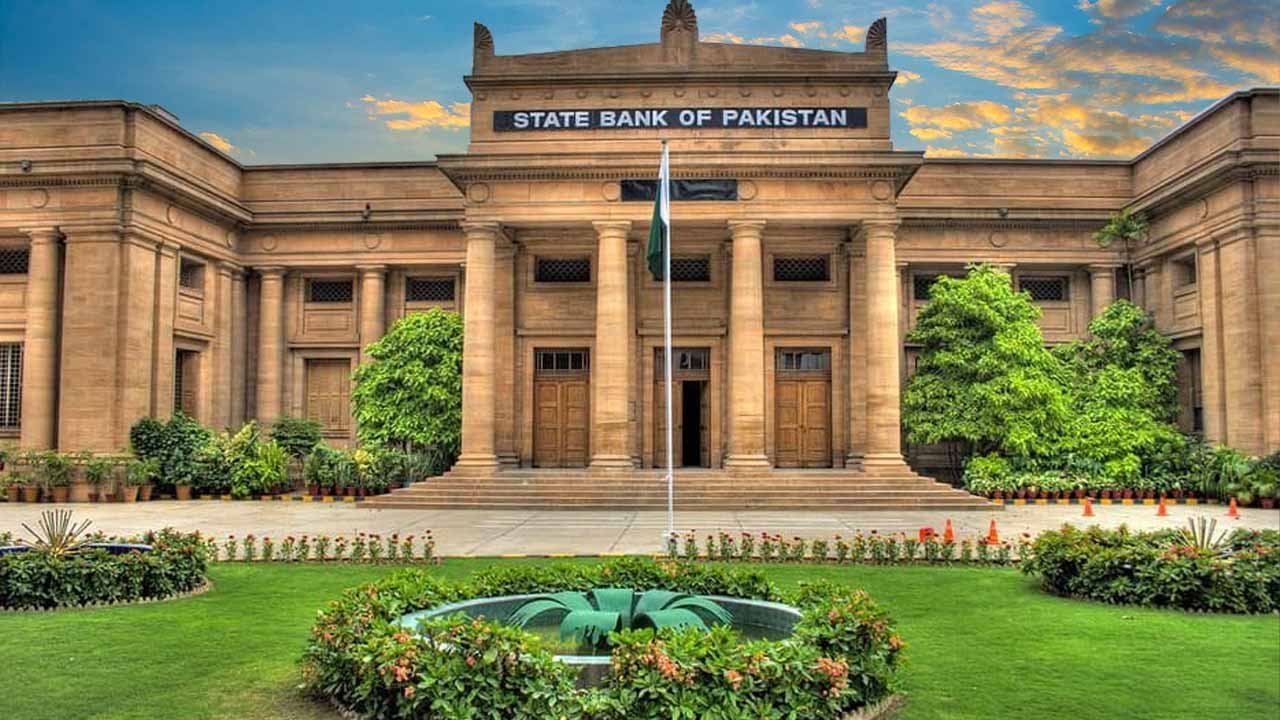
    The State Bank of Pakistan (SBP) announced today that it has successfully received the second installment of SDR 528 million, equivalent to $705.6 million, from the International Monetary Fund (IMF).

    This disbursement, slated to be reflected in SBP reserves for the week ending on January 19, 2024, marks a significant step in the ongoing financial collaboration between Pakistan and the IMF.

    The latest disbursement brings the total disbursements under the stand-by arrangement (SBA) to a substantial $1.9 billion.

    It is noteworthy that the remaining $1.1 billion is expected to be received after another comprehensive review scheduled for February 2024.

    As of January 5, 2024, the State Bank of Pakistan’s total reserves stand at $8.15 billion, showcasing the positive impact of the financial support received through the IMF programme.

    To recall, Pakistan secured a $3 billion SBA from the IMF towards the end of FY23, crucially preventing the nation from defaulting on its sovereign debt.

    The disbursement of the IMF funds has been phased out over two installments, subject to meticulous reviews.

    On January 11, 2024, Pakistan successfully completed the first review of the economic reform programme, a significant milestone in ensuring the country’s financial stability.

    Following the board’s approval, the IMF highlighted that economic activity has stabilised, though acknowledging that the outlook remains challenging and is contingent on the implementation of sound policies.

    Pakistan’s 9-month SBA aims to provide a robust policy anchor for addressing both domestic and external balances, serving as a framework for continued financial support from multilateral and bilateral partners.

    This financial collaboration with the IMF is instrumental in navigating Pakistan through economic challenges, providing a solid foundation for sustained growth and stability in the region.

    The country remains committed to implementing prudent economic policies as outlined in the reform programme, with the ongoing support of international partners.

  • Pakistan expects positive outcome in talks with IMF, eyes $700 million disbursement

    Pakistan expects positive outcome in talks with IMF, eyes $700 million disbursement

    Pakistan is optimistic about the successful completion of the initial review under the $3 billion standby arrangement (SBA) with the International Monetary Fund (IMF). 

    According to reports, the ongoing negotiations, now in their final phase, are anticipated to culminate positively, marking a crucial milestone. 

    Commencing on Monday, policy-level discussions between Pakistani authorities and the IMF are scheduled to persist until November 15, spearheaded by Finance Minister Shamshad Akhtar.  

    The Pakistani delegation, including key figures such as State Bank of Pakistan Governor Jameel Ahmad and Federal Board of Revenue Chairman Malik Amjed Zubair Tiwan, along with representatives from the finance and energy ministries, has been actively engaged in the deliberations. Nathan Porter leads the IMF team in this dialogue. 

    During the latest session, the IMF delegation articulated their recommendations and requirements, while technical-level talks involved the sharing of pertinent economic data with the international lender’s team, according to The News.  

    Sources within the finance ministry assert that Pakistan has diligently fulfilled all stipulated conditions set forth by the IMF. 

    It is anticipated that the staff-level agreement will be finalised during the ongoing policy-level talks, paving the way for the disbursement of approximately $700 million to Pakistan upon the successful completion of the first review. 

    Earlier this month, the IMF review mission commended the Pakistani government for its commendable progress towards economic recovery, as stated by the finance ministry.  

    The IMF’s $3 billion loan programme, sanctioned in July, played a pivotal role in averting a sovereign debt default. The initial tranche of $1.2 billion was disbursed in July, with the remaining amount contingent on subsequent reviews. 

    Finance Minister Shamshad Akhtar has unequivocally ruled out any requests to the IMF for an extension of the SBA programme’s timeframe or an increase in its size. 

  • Pakistan on track to secure second IMF tranche successfully: PM Kakar

    Pakistan on track to secure second IMF tranche successfully: PM Kakar

    Caretaker Prime Minister Anwaar ul Haq Kakar expressed optimism about Pakistan’s upcoming review with the International Monetary Fund (IMF), set for this month.

    The IMF, led by Nathan Porter, will visit Pakistan from November 2–16 to discuss the first review of the country’s current $3 billion stand-by arrangement (SBA).

    Pakistan is navigating a challenging economic recovery path under a caretaker government following an IMF loan programme approval in July, which prevented a sovereign debt default. The country received the first $1.2 billion tranche from the IMF in July.

    Kakar stated that Pakistan has successfully achieved its targets, including revenue goals, and is confident about the negotiations for the second tranche.

    Regarding inflation, the interim prime minister acknowledged a decrease in inflation rates, attributing it to the Pakistani rupee’s appreciation against the dollar and a drop in petroleum prices. 

    The prime minister also encouraged journalists to analyse the impact of the Pakistani rupee’s strength on circular debt and highlighted that stringent measures against smuggling through Afghan transit trade have boosted local industry productivity.

  • IMF team to visit Pakistan next week for crucial $3 billion SBA assessment

    IMF team to visit Pakistan next week for crucial $3 billion SBA assessment

    A delegation from the International Monetary Fund (IMF) is scheduled to visit Pakistan on November 2 to initiate discussions pertaining to the inaugural assessment of the nation’s ongoing $3 billion standby arrangement (SBA). 

    Pakistan is currently navigating a complex journey towards economic recovery, operating under an interim government. 

    This endeavour follows an IMF loan programme sanctioned in July, which was instrumental in averting a potential sovereign debt default. As part of this programme, Pakistan received an initial disbursement of $1.2 billion from the IMF in July.

    Esther Perez Ruiz, the IMF’s resident representative in Pakistan, has disclosed that a delegation led by Mr Nathan Porter from the International Monetary Fund will embark on a mission to Pakistan commencing on November 2, with the primary objective being the evaluation of the current Stand-By Arrangement.

    Additionally, the finance ministry has exerted significant efforts to maintain the budget deficit within the predefined limits agreed upon with the IMF. They issued warnings to the provinces, urging them to curtail their expenditures. Recent provisional estimates indicate that both Punjab and Sindh have made notable strides in this direction.

    However, a notable challenge in the quest to contain the overall fiscal deficit lies in the escalating debt servicing requirements. These obligations are projected to surpass Rs8.3 trillion and reach Rs8.5 trillion for the current fiscal year 2023–24. This surge is attributed to the central bank’s heightened policy rate, a departure from the initial target of Rs7.3 trillion.