Tag: space

  • Pakistan’s first satellite completes six years in orbit

    Pakistan’s first satellite completes six years in orbit

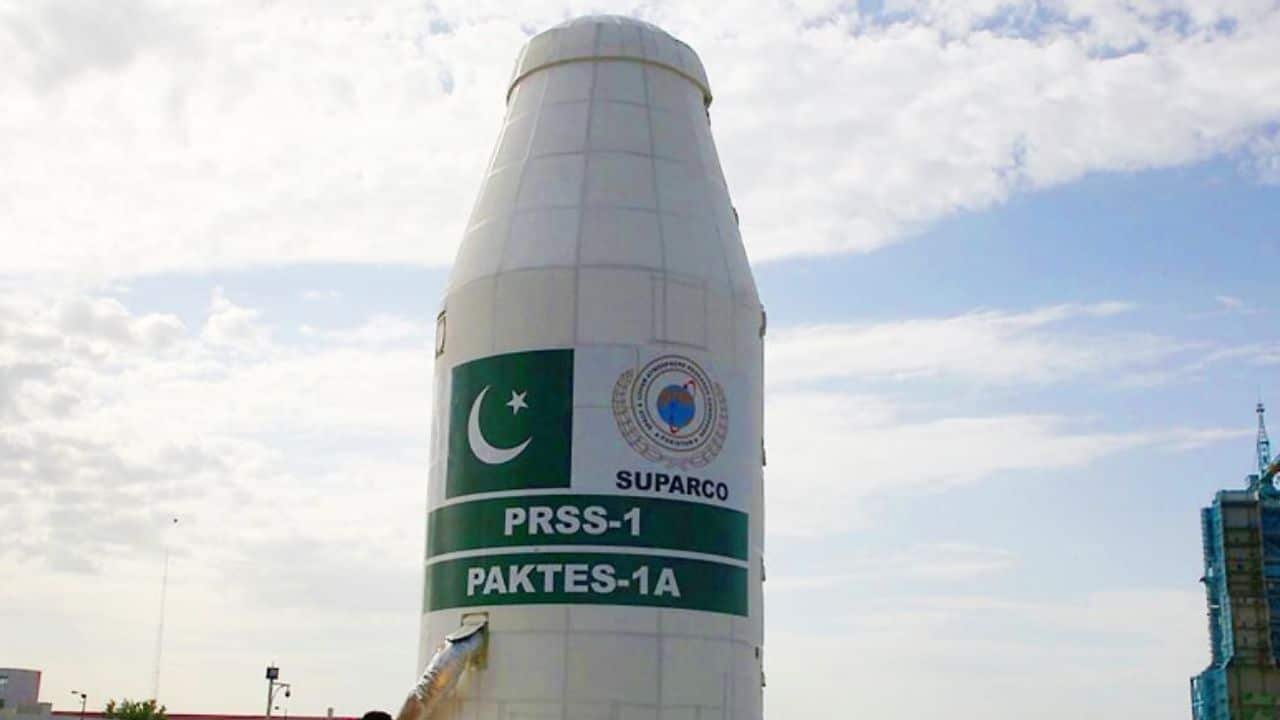
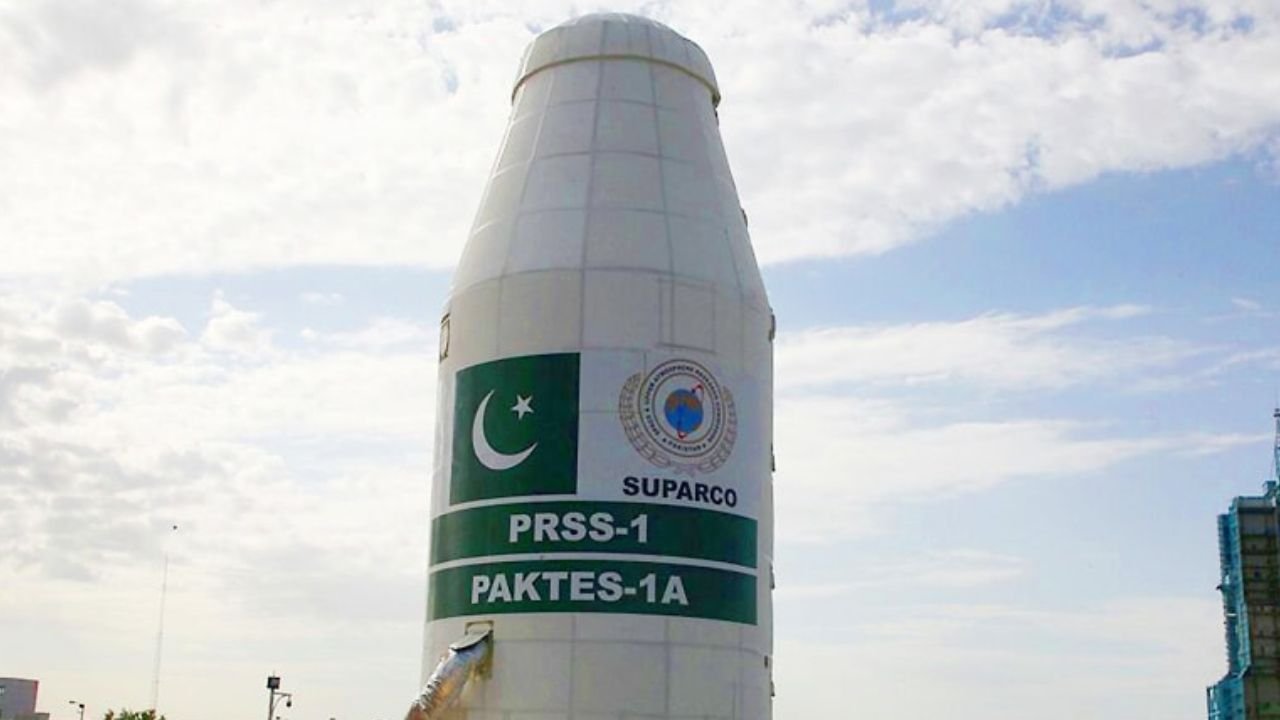
    Pakistan’s first remote sensing satellite and technology evaluation satellite has completed six years in orbit.

    According to SUPARCO’s spokesperson, images taken by the technology evaluation satellite Pak TES One have been released, including images of various places in Dubai, Saudi Arabia, and Pakistan.

    It is said that the data obtained from the satellite has proven to be helpful in national development and scientific research.

    Further progress towards the development of Pakistan’s space program has also been reported.

    The PRSS One and Pak TES One satellites were launched on July 9, 2018, from China’s Jiuquan Satellite Launch Center.

  • Barbie that went to space to go on display in London

    Barbie that went to space to go on display in London

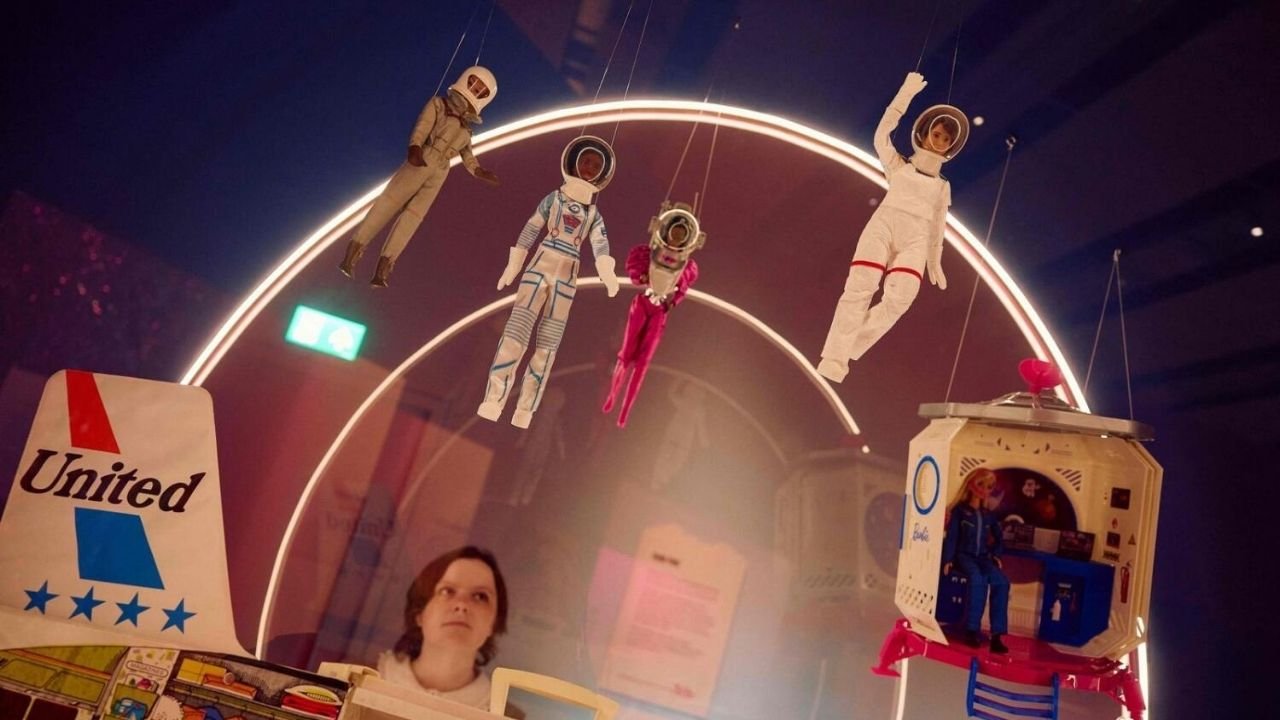
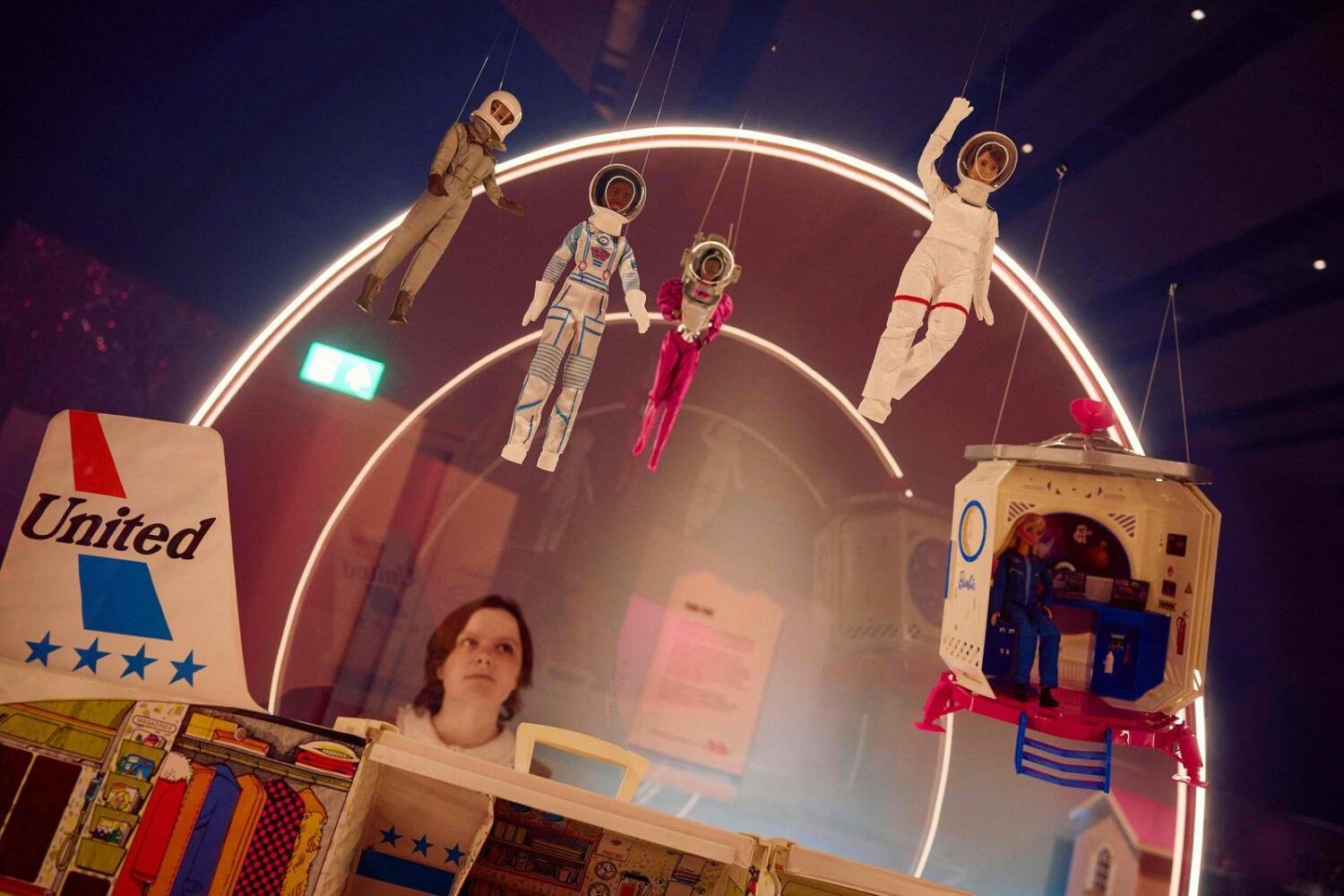
    A Barbie that spent six months orbiting the Earth on the International Space Station will go on public display for this first time this week at the Design Museum in London.

    It will be part of a new exhibition marking the 65th anniversary of the Barbie brand, set to open on Friday in partnership with the doll’s creator Mattel.

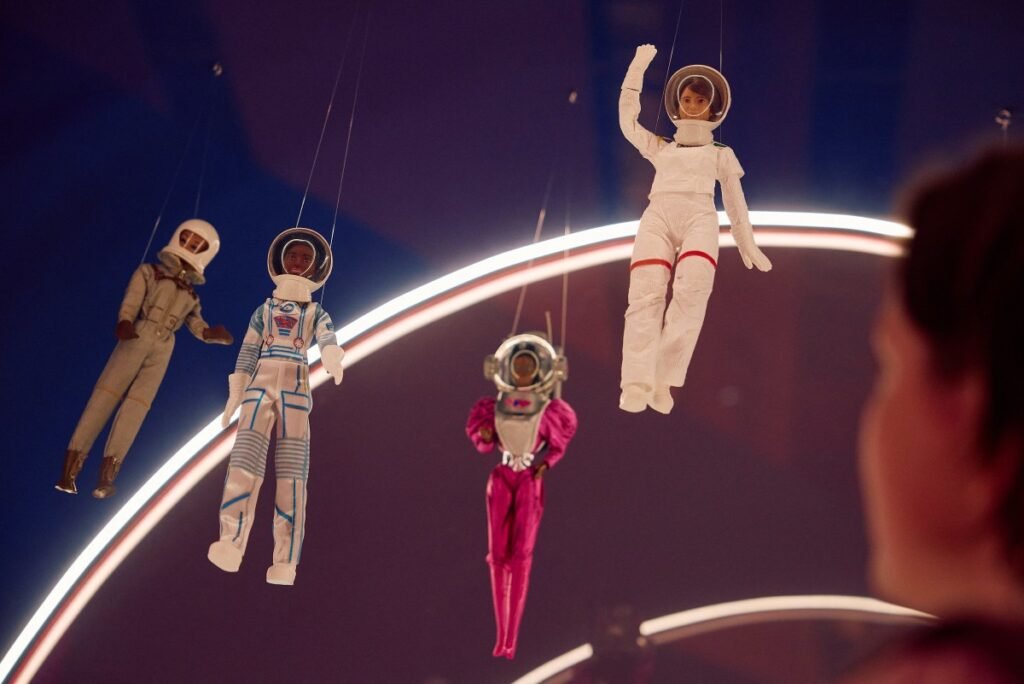
    The Barbie was made to resemble Samantha Cristoforetti, the first female commander of the ISS. On the mission in which she was accompanied by her lookalike Barbie, Cristoforetti became the first European woman to complete a spacewalk.

    There will be videos on display of Cristoforetti answering questions from space to encourage young girls to become scientists and astronauts –- all while floating in zero gravity alongside the Barbie.

    “We’re so excited that the first time anyone can see Samantha’s doll since it returned from the International Space Station is at the Design Museum this summer,” said curator Danielle Thom.

    “Its remarkable journey on Samantha’s history-making mission 400 kilometres above the Earth was one of the most dramatic moments in Barbie’s evolving story.”

    Cristoforetti said she was “thrilled” her Barbie would play a “starring role” in the exhibition.

    Highlighting other connections between Barbie and the cosmos, there will be a rare edition of the first space-themed Barbie on display.

    The silver “Miss Astronaut” was Barbie’s first depiction as an astronaut released in 1965, four years before Neil Armstrong reached the moon.

    Another Barbie in a metallic pink spacesuit on display was released in 1985 after Sally Ride became the first American woman in space.

    Other rare dolls will include a prototype of the first Talking Barbie launched in 1968 and one of the earliest first edition Barbie dolls.

    Visitors can also expect some more iconic figurines on display, including the Sunset Malibu Barbie and Day to Night Barbie.

    Charting the changing design of Barbie through time, the exhibition will also include friends of Barbie including Midge, and a while section dedicated to Ken, Barbie’s male companion.

    Ever since the “Barbie” movie starring Margot Robbie hit cinemas and broke box office records last year, the doll has become ever-more prominent in popular culture, making forays into fashion, music, and now design.

  • Pakistan’s Namira Saleem set to launch into space

    Pakistan’s Namira Saleem set to launch into space

    The Galactic 04 spaceflight will take off today carrying three passengers, including a Pakistani, Namira Salim.

    On Tuesday, Virgin Galactic announced a day’s delay in the space tourism mission to Friday, October 6.

    “The slip will give our team an additional day to complete vehicle prep and checks,” they wrote on their X account. “We look forward to taking to the skies (on Friday)!”

    Caretaker Prime Minister Anwaar ul Haq Kakar congratulated Namira Salim for becoming the first woman from Pakistan to go into space.

    “By proving their mettle as trailblazers in multiple fields, Pakistani women are making the whole nation proud,” Kakar had written on his X account, wishing her luck.

    Namira Salim is a Pakistani polar adventurer and artist based in Monaco and Dubai.

    The other two passengers are British advertising executive Trevor Beattie and Ameri­can astronomy educator Ron Rosano.

    Virgin Galactic’s carrier plane VMS Eve will be piloted by Pakistani-Canadian Jameel Janjua alongside Kelly Latimer and CJ Sturckow

    Galactic 04

    Galactic 04 will take off from Spaceport America in New Mexico, carrying the passengers to suborbital space and back. In simpler words, suborbital flight is a short journey into space where a spaceship goes up but does not stay in space. It leaves the earth’s atmosphere for a brief time and comes back right after. It is a quick trip to experience weightlessness and witness space. Unlike an orbital spaceflight, it does not circle the earth.

    Space.com explains that the space tourists will be carried by Virgin’s VSS Unity space plane taken into the sky by a carrier craft named VMS Eve. Eve will drop Unity at an altitude of about 50,000 feet (15,000 meters); the space plane will then fire up its rocket motor to get to suborbital space.

    “VSS Unity passengers get to experience a few minutes of weightlessness and see Earth against the blackness of space. A ticket to ride the space plane currently costs $450,000”.

  • A Pakistani component will soon be going to the moon

    A Pakistani component will soon be going to the moon

    China’s new mission to the moon, Chang’e 6, will be launched in 2024, carrying a Pakistani satellite.

    As per a statement issued by the China National Space Administration (CNSA), Chang’e 6 mission will be launched to the moon in the first half of 2024.

    The mission is set to carry payloads to the moon from Pakistan, the European Space Agency (ESA), France and Italy.

    This includes French instruments to test radioactive gas, ESA’s Negative Ion Detector, Italy’s Valle Brett Radar System, and Pakistan’s satellite named CubeSat.

    China is currently expanding the International Lunar Research Station project that will result in more international partnerships in the future as well as an increased international cooperation.

    Constituting a first in history, Chang’e-6 mission is to journey towards the dark side of the moon and gather specimens from its surface.

    Previously, samples were collected from the near surface of the moon.

    The aim is to collect samples from various areas of the moon to evaluate its age. This is said to be followed by Chang’e 7 robotic mission to the moon’s south pole.

    This will trace for signs of ice and examine the region’s atmosphere and weather.

    The Chang’e 8 mission is said to conclude the Chang’e missions and to possibly establish a research station on the planet.

  • Do aliens exist? NASA answers in its new report

    Do aliens exist? NASA answers in its new report

    NASA has investigated hundreds of UFO sightings, concluding that there is no evidence of aliens being behind the mysterious occurrences, however, it has said that the possibility cannot be completely discarded.

    While there is no irrefutable evidence, NASA will, nonetheless, investigate UAPs (Unidentified Anomalous Phenomena) with improved technology and artificial intelligence.

    According to the report, “there is no reason to conclude” that extra-terrestrial activity is at the back of UAP sightings, “However… those objects must have travelled through our solar system to get here,” the report added, and that there is no denying the possibility of “potential unknown alien technology operating in Earth’s atmosphere.”

    The latest report, 36 pages long, explores technical and scientific observations.

    Nicola Fox, associate administrator for NASA’s Science Mission Directorate, stated that due to dearth of high quality data “UAP are one of our planet’s greatest mysteries”.

    Which is why, even though a number of UAP have been sighted, the data is not enough to make “definitive scientific conclusions about the nature and origin of UAP”, added Fox.

    NASA has appointed a new UAP research director to “establish a robust database for the evaluation of future data”.

    BBC spoke with the space agency’s panel about the photos of aliens presented before the Mexican Senate this week by Jaime Maussan.

    Maussan claimed that the remains were more than 1,000 years old, Maussan said they belonged to “non-human beings that are not part of our terrestrial evolution”.

    However, as per experts, the legitimacy of the evidence is perceived with skepticism.

    After all, previous claims by Maussan about mummies found in Nazca, Peru, in 2017, turned out to be false.

    Nasa scientist Dr David Spergel told the BBC: “Make samples available to the world scientific community and we’ll see what’s there.”
  • Who is the first Pakistani to travel into space?

    Virgin Galactic will be flying into space on October 5, carrying three space tourists, including one Pakistani.

    Virgin Galactic is a spaceflight company that launched its first commercial space tourism flight on June 29, 2023.

    On Thursday, the company announced the launch of Galactic 04, its fourth commercial spaceflight and ninth space mission overall.

    It will host three space tourists from the US, the UK, and Pakistan. It will be the first time that a Pakistani will fly to space.

    The names of the crewmembers are yet to be released but as per our research, Namira Salim from Pakistan will be onboard.

    Salim is a Pakistani polar adventurer and artist based in Monaco and Dubai.

    Galactic 04 will take off from Spaceport America in New Mexico, carrying the passengers to suborbital space and back. In simpler words, suborbital flight is a short journey into space where a spaceship goes up but does not stay in space. It leaves the earth’s atmosphere for a brief time and comes back right after. It is a quick trip to experience weightlessness and witness space. Unlike an orbital spaceflight, it does not circle the earth.

    Space.com explains that the space tourists will be carried by Virgin’s VSS Unity space plane taken into the sky by a carrier craft named VMS Eve. Eve will drop Unity at an altitude of about 50,000 feet (15,000 meters); the space plane will then fire up its rocket motor to get to suborbital space.

    “VSS Unity passengers get to experience a few minutes of weightlessness and see Earth against the blackness of space. A ticket to ride the space plane currently costs $450,000”.

    So far, the company has launched Galactic 01, Galactic 02 and Galactic 03 on June 29, August 10 and September 8, respectively; keeping up with its goal of launching at least one commercial space flight a month.

  • Aliens? Possibility of life on a distant planet

    Aliens? Possibility of life on a distant planet

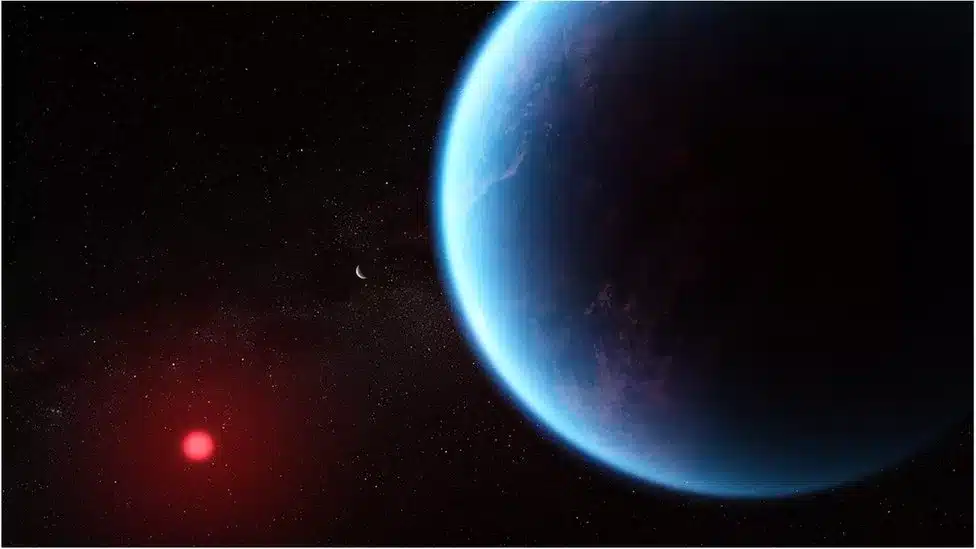
    There is a possibility that NASA’s James Webb Telescope has discovered signs of life on a distant planet.

    BBC reports that the likelihood of life stems from the possible search for a molecule known as dimethyl sulphide (DMS) which is reportedly “only produced by life” in the case of Earth.

    The researchers, however, believe that more data is needed to confirm its presence on the planet, named K2-18b, which is 120 light years away. Prof Madhusudhan from the University of Cambridge, who led the research, deemed the discovery as “tentative” and stressed on acquiring more data for confirmation and that result is expected in a year.

    ”If confirmed, it would be a huge deal and I feel a responsibility to get this right if we are making such a big claim.”, he added.

    Researchers have also detected methane and CO2 in its atmosphere. This means that the planet also possibly has a water ocean.

    Prof Madhusudhan said that his entire team were ”shocked” when they saw the results.

    “On Earth, DMS is only produced by life. The bulk of it in Earth’s atmosphere is emitted from phytoplankton in marine environments,” he said.

    Moreover, it is the first time detecting a possible DMS presence on a planet orbiting a distant star. But the claim is being dealt with caution as a similar claim was made in 2020 regarding the presence of a molecule called phosphine. It is a molecule that could be “produced by living organisms in the clouds of Venus”. This, however, was disputed a year later.

  • Chandrayaan-3: Sulphur, other elements confirmed on moon

    Chandrayaan-3: Sulphur, other elements confirmed on moon

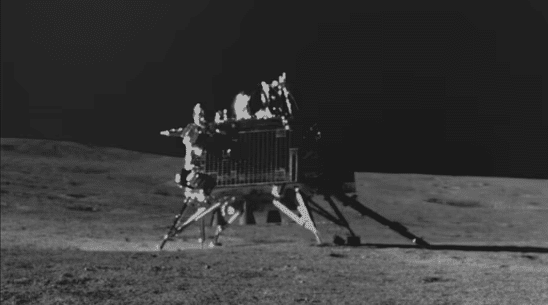
    India’s moon rover, Pragyan of the Chandrayaan-3 mission, has confirmed the presence of sulphur on the lunar south pole, according to the Indian space agency.

    “The Laser-Induced Breakdown Spectroscopy (LIBS) instrument onboard Chandrayaan-3 Rover has made the first-ever in-situ measurements on the elemental composition of the lunar surface near the south pole,” the Indian Space Research Organisation (ISRO) said in a statement on Monday.

    According to Al-Jazeera, spectrographic analysis has also confirmed the presence of aluminium, calcium, iron, chromium and titanium on the lunar surface, ISRO added, with additional measurements showing the presence of manganese, silicon and oxygen.

    Pragyan, literally meaning wisdom in Sanskrit, will saunter the south pole and provide images and scientific data during its two-week lifespan, looking for signs of frozen water that could aid future missions as a potential source of drinking water for astronauts or to make rocket fuel.

    ISRO chairman S Somanath stated that the rover will also study the moon’s atmosphere and seismic activity.

  • India’s next space mission: Sun

    After becoming the first country to land a craft on the moon’s south pole, India will be soon launching its first space-based observatory to study the sun.

    According to Al-jazeera, India’s space agency, in an announcement on Monday, said the Aditya-L1 probe, to be launched on September 2, will study solar winds, which can cause disturbances on Earth and are commonly seen as auroras.

    Aditya-L1 is named after the Hindi word for the sun. It will travel about 1.5 million km (932,000 miles) and will take about four months to travel to its observation point, the Indian Space Research Organisation (ISRO) said in a post on X, formerly Twitter.

    The spacecraft will be fired into a halo orbit in a region of space that will give the craft a continuous clear view of the sun.

    “This will provide a greater advantage of observing the solar activities and its effect on space weather in real time,” ISRO said.

    As reported by Al-Jazeera, the spacecraft will be carrying seven payloads to observe the sun’s outermost layers – known as the photosphere and chromosphere – including electromagnetic and particle field detectors.

    Previously, NASA and the European Space Agency placed probes into orbit to study the sun.

  • Kalpana K — the woman behind Chandrayaan-3

    Kalpana K — the woman behind Chandrayaan-3

    On Wednesday, August 23, India’s third lunar mission Chandrayaan-3, successfully landed on the south pole of the moon, the first landing of its kind.

    Behind this feat is a team of five individuals who steered the mission towards success, among whom is Kalpana Kalahasti, the deputy project director, whose contribution is noteworthy.

    According to Gulte, Kalpana’s roots trace back to Thaduku in Puttur Mandal of Chittoor district. Her father, Muniratnam, worked as an officer in the High Court, and her mother, Indira, was also educated. Kalpana pursued her education in Chennai, studying B.Tech in Electronics and Communication at Madras University.

    She aspired to work at the Indian Space Research Organization (ISRO) since she was a child. After she completed her B.Tech in ECE, she was able to pursue her dream. She passed the intricate selection process and joined ISRO in 2000. She began her career as a radar engineer at the Space Center (SHAR).

    Five years later, she got transferred to the U R Rao Satellite Centre in Bangalore in 2005. The focus of her work then shifted towards satellite systems, and worked as an engineer in satellite building.

    She took up a major role as the deputy project director for the Chandrayaan 3 mission and she supervised the project through its minute details. She remained dedicated and ensured that the mission was not hindered despite the COVID-19 pandemic.

    After the successful landing Chandrayaan-3, Kalpana K addressed the Indian nation at the ISRO Telemetry Tracking and Command Network, expressing, “…this will remain the most memorable moment for all of us…from the day we started rebuilding our spacecraft after the Chandrayaan 2 experience, it has been breathe in-breathe out Chandrayaan 3 for the team.”

    She was also previously involved in the second lunar mission and the Mangalyaan mission.

    Other member of the team were ISRO chairman S Somanath, project director Veeramuthuvel, M Sankaran, director of U R Rao Satellite Centre where the satellite was constructed, and M Srikanth, the mission director.