Tag: special court

  • Lahore High Court gave Pervez Musharraf relief which he didn’t even ask for

    Lahore High Court gave Pervez Musharraf relief which he didn’t even ask for

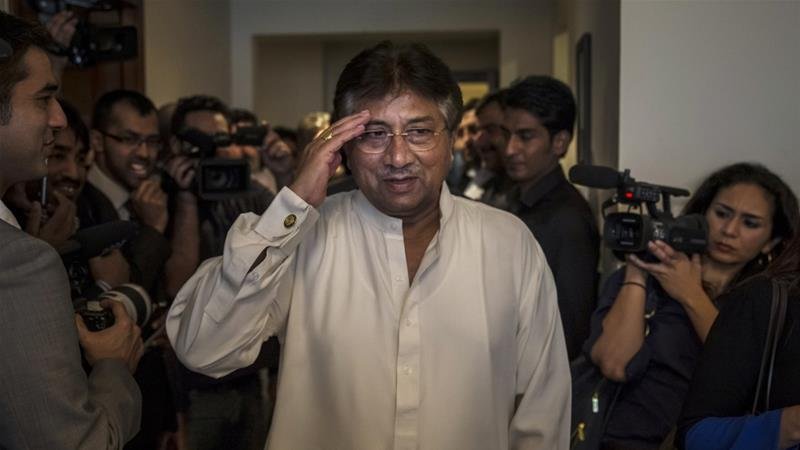
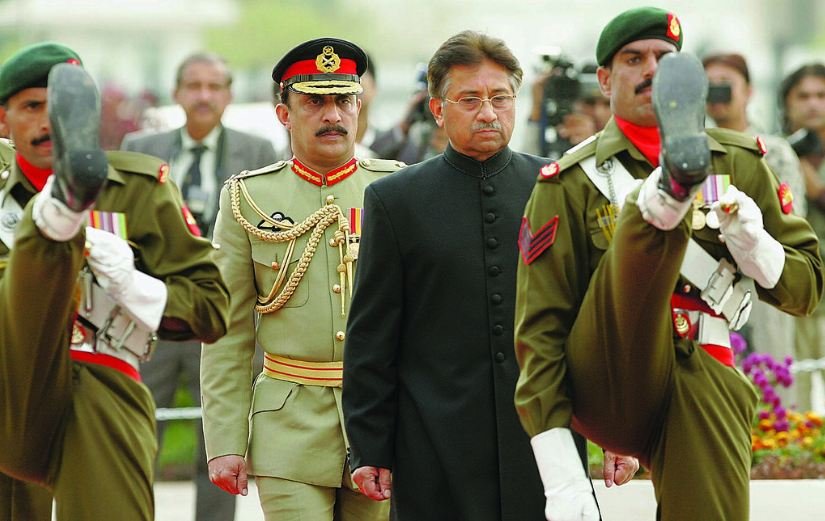
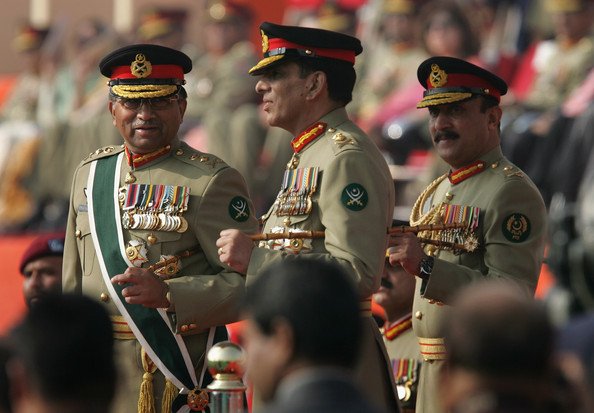
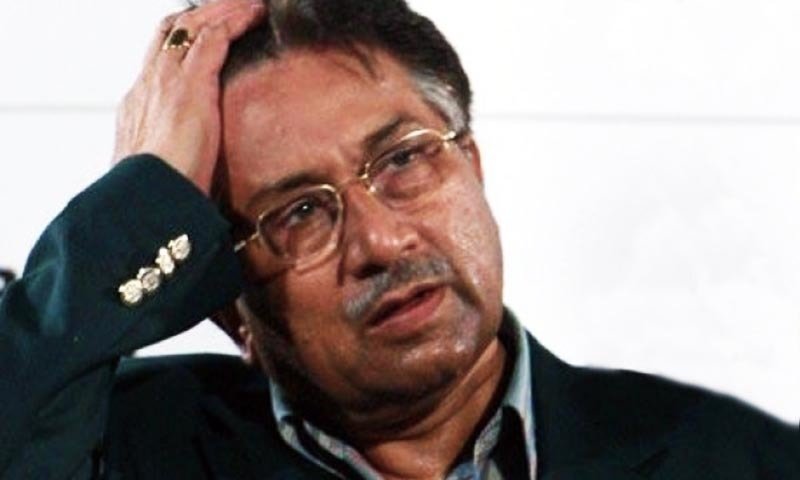
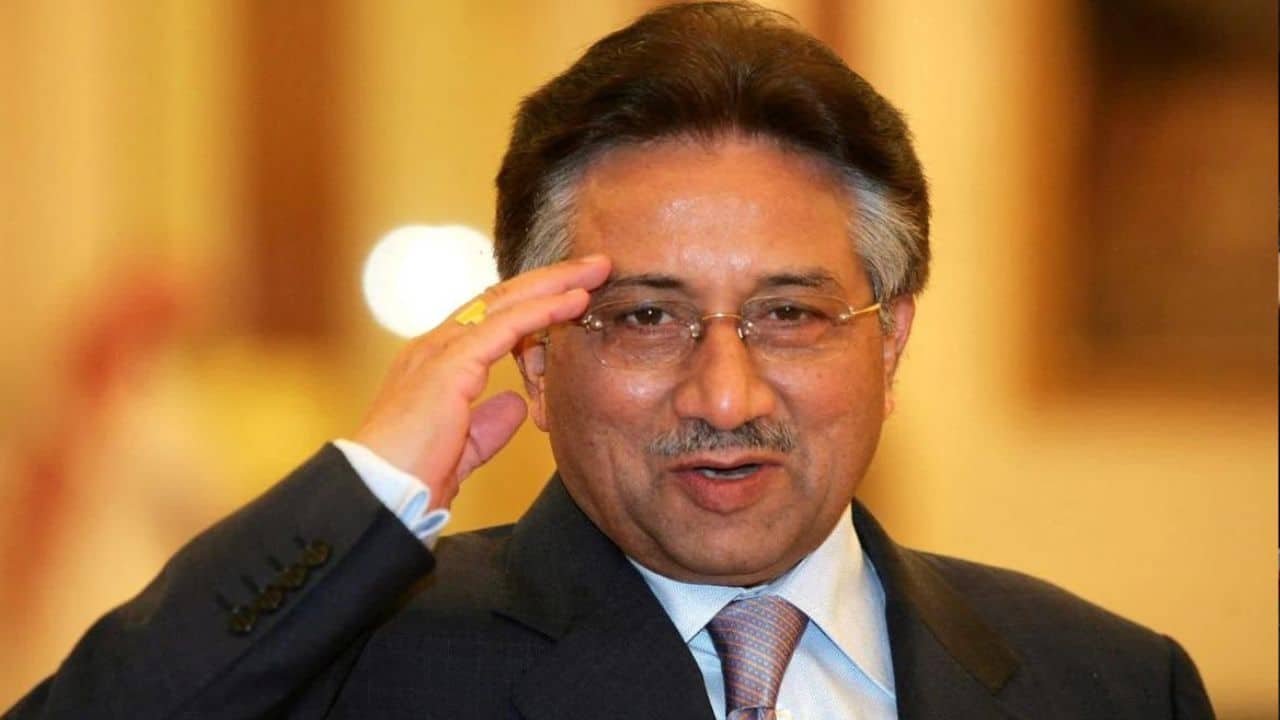
    The Supreme Court of Pakistan has questioned the Lahore High Court’s (LHC) decision to overturn the death sentence of former military dictator Pervez Musharraf.

    The initial death sentence was imposed by a special court in December 2019 on charges of high treason.

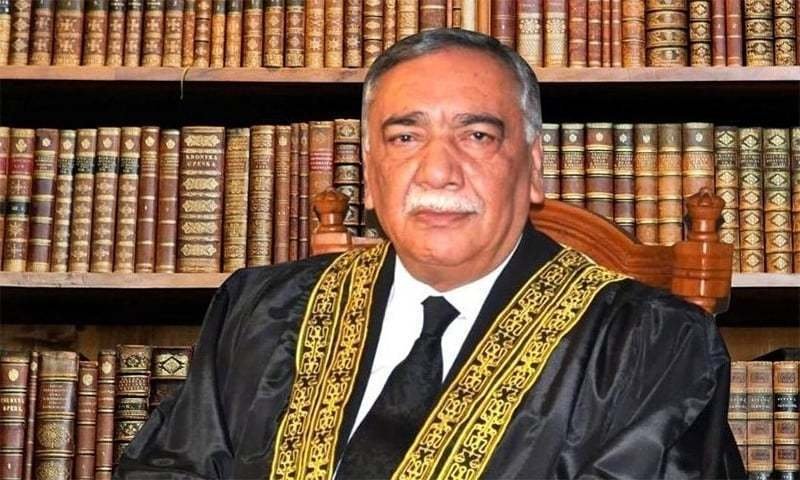
    The Chief Justice of Pakistan, Qazi Faez Isa, leading a four-judge bench, expressed astonishment at the approach taken by LHC, suggesting that it may have exceeded its jurisdiction in the matter.

    “At best, the LHC could do was to allow the prayers sought in the petition, but what the court did was uprooting the special court itself,” Justice Isa said.

    The special court had originally adjudicated the high treason charges against Musharraf.

    A four-member bench, headed by Chief Justice of Pakistan Justice Qazi Faez Isa and comprising Justice Syed Mansoor Ali Shah, Justice Athar Minallah, and Justice Amin-ud-Din Khan conducted the hearing of the appeals of Bar Councils and others against the judgment of a three-member bench of the LHC.

    The Supreme Court’s scrutiny focused on the LHC January 2020 order, which not only declared the special court’s ruling unconstitutional but also entertained Musharraf’s appeal against his death conviction.

    A three-member bench of the LHC, headed by Justice Syed Mazahar Ali Akbar Naqvi, and comprising Justice Muhammad Masood Jahangir and Justice Ameer Bhatti on January 13, 2020, had declared; “The Special Court was established without an iota of doubt that very basis of initiation of proceedings against the petitioner/ General (R) Pervez Musharraf, since its inception to the culmination are beyond the constitutional mandate, ultra vires, coram-non-judice, unlawful, hence, any superstructure raised over it shall fall to ground.”

    It further said; “Trial in absentia is declared as illegal, unconstitutional being repugnant to injunctions of Islam, as well as, Article 2-A, 8 and 10-A of the Constitution.”

    Pervez Musharraf passed away earlier this year, on February 5, after a prolonged illness.

    The Supreme Court’s review also brought attention to concerns about the LHC’s territorial jurisdiction.

    Justice Syed Mansoor Ali Shah noted that the constitution of the special court was never directly challenged.

    The Chief Justice cautioned against labeling Musharraf as an absconder during the hearing, as it could prejudice the ongoing appeal.

    The hearing is set to continue next Tuesday.

    The Supreme Court has asked the petitioner’s counsel to conclude arguments on Musharraf’s petition against the Special Court judgment.
  • He’s gone, but Supreme Court to decide death penalty case against Musharraf

    He’s gone, but Supreme Court to decide death penalty case against Musharraf

    The Supreme Court of Pakistan is set to begin hearing a series of appeals on November 10, including those filed by the late former President, retired General Pervez Musharraf, in an attempt to overturn his death sentence, as per Dawn.

    A four-judge bench, headed by Chief Justice of Pakistan (CJP) Qazi Faez Isa, along with Justice Syed Mansoor Ali Shah, Justice Aminud Din Khan, and Justice Athar Minallah, will preside over the hearings.

    Represented by his counsel Salman Safdar, the late General filed an appeal requesting the annulment of the conviction, citing a trial process that was conducted in violation of the Constitution and the Code of Criminal Procedure (CrPC) 1898.

    The appeal seeks a suspension of the judgment in the interest of justice and fair play.

    The petition highlights Musharraf’s military career and claims that the trial for a constitutional crime was conducted in an unconstitutional manner.

    In a separate development, the Sindh High Court Bar Association contested the Lahore High Court’s decision on January 13, 2020, which deemed the Special Court’s decision unconstitutional.

    The association has appealed to the Supreme Court to reinstate the conviction for subverting the Constitution.

    Presented by counsel Rasheed A. Razvi, the appeal argues that the high court’s verdict is legally flawed, alleging a misinterpretation of evidence and failure to appreciate the material presented by the prosecution during the trial.

    Additionally, the appeal asserts that the high court neglected to acknowledge that the material presented by the prosecution before the Special Court was not denied by Gen Musharraf at any stage of the case.

    It further argues that the verdict contradicts established principles of the Qanoon-e-Shahadat Order, stating that unchallenged facts are deemed admitted by the parties and do not require further proof.

    The petition asserts that the high court’s decision contradicts the precedent set by superior courts and the Supreme Court, referencing the 2019 Lahore High Court Bar Association case.

    A special court in Islamabad found former military ruler retired Gen Pervez Musharraf guilty of high treason and handed him a death sentence under Article 6 of the Constitution on December 17, 2019.

    This was the first time in Pakistan’s history that a military chief has been declared guilty of high treason and handed a death sentence. The verdict was split 2-1.

    Article 6 of the Constitution says: “Any person who abrogates or subverts or suspends or hold in abeyance, or attempts or conspires to abrogate or subvert or suspend or hold in abeyance the Constitution by use of force or show force or by any other unconstitutional means shall be guilty of high treason.”

    The three-member bench of the special court was headed by Peshawar High Court Chief Justice Waqar Ahmad Seth and comprising Justice Nazar Akbar of the Sindh High Court (SHC) and Justice Shahid Karim of the Lahore High Court (LHC).

  • Court postpones indictment of PTI leaders in cipher case

    Court postpones indictment of PTI leaders in cipher case

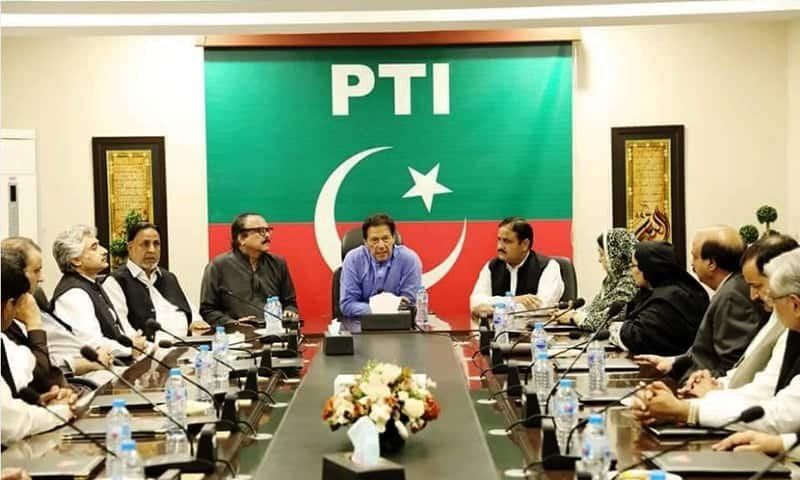
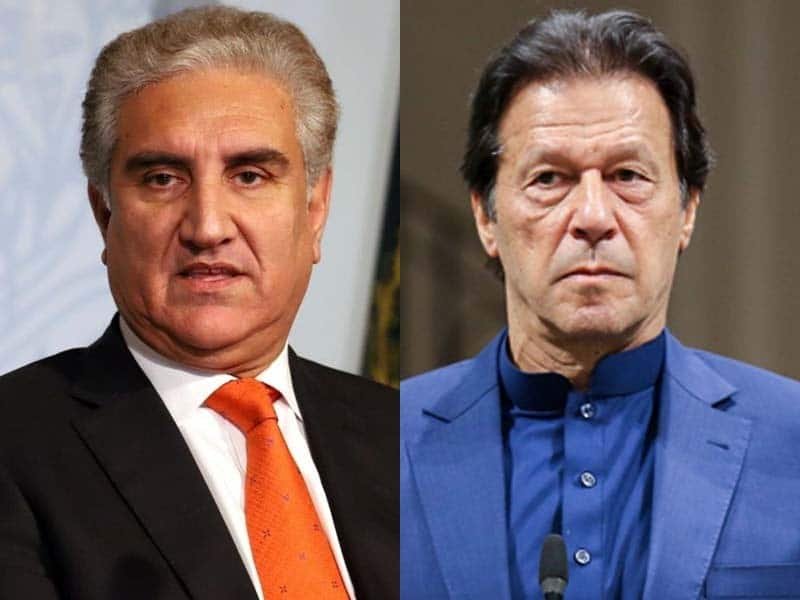
    The indictment of Pakistan Tehreek-e-Insaf (PTI) chief Imran Khan and Vice Chairman Shah Mahmood Qureshi occurred on Tuesday in the cipher case. The special court established under the Official Secrets Act postponed the hearing till next week.

    The hearing took place within Adiala jail in Rawalpindi, during which the Federal Investigation Agency (FIA) provided the accused PTI leaders with copies of the challan submitted against them.

    The special court judge, Abual Hasnat Zulqarnain, postponed the indictment of PTI leaders until next week as the counsel refrained from receiving the copies of the challan in the last hearing.

    The FIA special prosecutor, Shah Khawar, Khan, Qureshi, and their legal teams were all present in the courtroom during the hearing.

    In the last hearing on October 9, the court shared copies of the challan with the accused submitted by the FIA.

    “The accused had refused to receive a copy of the challan at the previous hearing,” the FIA special prosecutor said.

    The PTI chief’s focal person on legal affairs, Umair Niazi, told journalists outside the Adiala Jail that copies of the challan were not given in the last hearing.

  • Imran Khan objects to treatment in Adiala jail

    Imran Khan objects to treatment in Adiala jail

    Pakistan Tehreek-e-Insaf (PTI) Chairman Imran Khan’s attorney, Salman Safdar, said on Monday that the former Prime Minister has objected to the way he is being treated at Adiala jail.

    Salman Safdar said that Imran Khan has been kept in jail like any other prisoner.

    “The chairman protested that he was provided with a room where it was difficult to live. It is also difficult to move or walk in the cell,” said Safdar. He added that he felt that the PTI chief’s blood pressure was high during today’s hearing.
    “The PTI chief strongly protested during the hearing in the court,” said Safdar.
    Moreover, Imran Khan’s attorney requested that the trial be conducted in an open court so that the public could be aware of it, adding that it is not “right” to conduct the trial in jail.

    On the other hand, Khan’s other lawyer, Sher Afzal Marwat, has said that Imran Khan and PTI’s vice chairman, Shah Mahmood Qureshi, were standing in a “cage” during the hearing. Terrorists are not even presented before court in this manner, the indignant lawyer commented.
    The special court also announced that PTI leaders will be indicted in the cipher case on October 17.

  • Imran, Qureshi to appear at court on October 4

    Imran, Qureshi to appear at court on October 4

    Pakistan Tehreek-e-Insaf (PTI) Chairman Imran Khan and Vice Chairman Shah Mahmood Qureshi have been summoned by a special court established under the Official Secrets Act on October 4 in the cipher case.

    The development occurred two days after the Federal Investigation Agency (FIA) submitted a challan against Imran and Qureshi.

    Special court judge Abul Hasnat Zulqarnain has sent notices to respondents, stating that there are enough witnesses to call the suspects to court.

    Judge Zulqarnain directed the superintendent of Adiala jail to present the PTI chief and vice chairman in court on October 4.

    The FIA, in its charge sheet, stated that the former prime minister and former foreign minister were found guilty in the case and requested the court to sentence them in cipher case.

    According to the sources of Geo, the name of former finance minister Asad Umar is not on FIA’s list. On the other hand, Imran Khan’s principle secretary, Azam Khan, is a “strong witness” in the same case.

  • Rs720 million money laundering case: Moonis Elahi appears before FIA

    Rs720 million money laundering case: Moonis Elahi appears before FIA

    Former Federal Minister for Water Resources Moonis Elahi appeared before the Federal Investigation Agency (FIA) after the agency filed a Rs720 million money laundering case against him.

    After his appearance, the former federal minister said the FIA gave him a questionnaire, claiming that its “purpose” was not to conduct an investigation but to arrest him.

    “The government did all this so attention could be diverted from the budget in the Punjab Assembly. If I tell the PML-N today that we will support you, all cases will end,” the Pakistan Muslim League-Quaid (PML-Q) leader further said.

    He added that all information regarding his finances is available in his tax returns. According to Moonis Elahi, the FIA has not issued a notice till date but he would appear again if summoned.

    The investigation agency also arrested two of Elahi’s close associates – Nawaz Bhatti and Mazhar Iqbal – on the charges that both of them used to facilitate Elahi to embezzle money.

    After the case was filed, Moonis rushed to the FIA’s office on Wednesday night but he was told to appear the next morning.

    Prior to this, a special central court in Lahore dismissed Elahi’s pre-arrest bail plea in this case.

    Will not abandon Imran Khan’: Moonis Elahi

    When the case was registered earlier, Moonis denied receiving any notice. He said, “I would have come to the FIA office if I had received the notice. I came to know about the FIR from the media. They have skipped a legal step.”

    Moonis said that he is coming to Lahore to appear before the FIA and they can arrest him if they want to.

    “The PML-N is at a loss to understand that it can pressure me to change my loyalty towards former premier and PTI chairman Imran Khan. We will not abandon Khan, come what may,” he said.

    Moonis added that he never heard of the two other persons named in the FIR. However, he admitted to investing in the Rahim Yar Khan (RYK) Sugar Mills, calling it his “declared investment”.

    What is the case?

    According to the FIA’s First Information Report (FIR), the case against Elahi was registered on Tuesday in which the state has been named as the complainant. The agency said that it has “solid evidence” against the PML-Q leader.

    According to media outlets, the FIA was also investigating suspicious transactions worth Rs250 million involving the PML-Q leader’s sugar mills. Moonis is a shareholder in Alliance Sugar Mills.

    According to the FIR, proceedings against Moonis under the Money Laundering Act started during former Prime Minister (PM) Imran Khan’s tenure. Last year, Khan had tasked the FIA to investigate the sugar crisis throughout the country and find out who benefitted from it.

    Following this, FIA released a report claiming that some of Khan’s own party members and Moonis were among those who had allegedly gained from the sugar crisis in Pakistan.

  • ‘Why would I harm my family business’?: PM Shehbaz, CM Hamza get pre-arrest bails

    A special court in Lahore granted pre-arrest bails to Prime Minister (PM) Shehbaz Sharif and his son Punjab Chief Minister (CM) Hamza Shehbaz in a Rs16 billion money laundering case registered against them by the Federal Investigation Agency (FIA).

    The court asked both PM Shehbaz and CM Hamza to pay Rs1 million in surety bonds, each within seven days.

    Both the PM and his son CM Hamza appeared before the court on Saturday.

    During the hearing, the court asked Shehbaz if he has no ownership of Ashiana Housing Scheme and Ramzan Sugar Mills, to which the PM replied, “I have no stake in either.”

    PM Shehbaz asked: “Why would I engage in corruption and money laundering and harm the family business?”

    He said the Federal Investigative Agency (FIA) was provided with all the facts verbally. “I faced countless hearings and trials. The FIA was admonished for not presenting a challan. I believe the FIA was preparing for an arrest, hence the challan was delayed,” he added.

    “The entire case is built on lies and will be buried,” PM Shehbaz further said during the hearing.

    PM Shehbaz’s attorney Amjad Pervez stated that the fact that both of them [Shehbaz and Hamza] had previously been interrogated in jail by the FIA was sufficient proof for their bail.

    He said, “The case has been ongoing for more than a year and now we discover that the suspects were not made part of the inquiry.”

    Last year, the FIA submitted a challan against Shehbaz and Hamza to the special court for their alleged involvement in a money laundering case.

    The report said that the amount was kept in “hidden accounts” and “given to Shehbaz in a personal capacity”.

  • Death Penalty: Timeline of Musharraf’s high treason case

    Death Penalty: Timeline of Musharraf’s high treason case

    The special court on Tuesday handed over the death sentence to the former military dictator General (r) Pervez Musharraf after analysing the complaints, records, arguments and facts in the case for three months.

    The court ruled that it found Musharraf guilty of high treason according to Article 6 of the constitution.

    The special bench hearing the high treason comprised of Peshawar High Court (PHC) Chief Justice (CJ) Waqar Ahmad Seth Akbar and Justice Shahid Karim of the Lahore High Court (LHC). The bench was formed on the orders of the Supreme Court (SC).

    EXPLAINED: MUSHARRAF’S CRIMES, PUNISHMENT

    The Pakistan Muslim League-Nawaz (PML-N) government had in 2013 filed the treason case against Musharraf over the president’s imposition of extra-constitutional emergency in November 2007.

    Here is the timeline of the high treason case

    • July 22, 2009: The Supreme Court (SC) in an unprecedented move, calls Gen (r) Musharraf to defend his actions on November 3, 2007, following the president’s resignation after a nine-year rule on the country.
    • July 31, 2009: The SC rules that Musharraf’s decision to impose an emergency on November 3, 2007, as well as his PCO [Provisional Constitutional Order] were illegal and unconstitutional. The court gives him seven days to respond.
    • August 6, 2009: Musharraf refuses to answer the charges against him and leaves Pakistan for the United Kingdom (UK).
    • March 22, 2013: Musharraf plans to return to Pakistan after exile and gets a protective bail for 10 days in three high-profile cases against him.
    • March 27, 2013: Senior counsel A.K. Dogar, during a hearing pertaining to strict adherence to articles 62 and 63 during elections, refers to SC’s ruling on Musharraf’s actions on November 3, 2007. A.K Dogar argues that in overthrowing the constitution, Musharraf had committed the offence of high treason.
    • March 29, 2013: Sindh High Court (HC) grants an extension in bail for Musharraf, but rules that he cannot leave Pakistan without permission.
    • April 5, 2013: SC agrees to hear a petition seeking to prosecute the former military dictator under sections 2 and 3 of the High Treason (Punishment) Act 1973.
    • April 7, 2013: Chief Justice (CJ) Iftikhar Mohammad Chaudhry withdraws himself from the three-member bench formed to hear the treason case against Musharraf.
    • April 8, 2013: Supreme Court summons Musharraf in the treason case against him. The court also instructs the interior ministry to add his name to the Exit Control List (ECL).
    • April 18, 2013: Musharraf after the cancellation of his bail application flees from the premises of the Islamabad High Court (IHC).
    • April 19, 2013: The former president surrenders in a magistrate’s court in the judges’ detention case and his farmhouse residence at Chak Shahzad, Islamabad, is declared a sub-jail.
    • April 30, 2013: Peshawar High Court (PHC) bars Musharraf from ever contesting elections for either the National Assembly (NA) or the Senate.
    • June 5, 2013: IHC judge Shaukat Aziz Siddiqui recuses himself from hearing former president’s post-arrest bail plea in the judges’ detention case.
    • June 14, 2013: Minister for Law and Justice Zahid Hamid distances himself from the 2007 emergency. Zahid says there was no question of him having allegedly abetted Musharraf as the proclamation of emergency came from the former dictator’s person. The minister also denies having had any contact with Musharraf.
    • June 24, 2013: Prime Minister (PM) Nawaz Sharif tells the NA that his government will request the SC to try Musharraf under Article 6 of the Constitution.
    • November 18, 2013: SC, headed by CJP Iftikhar Chaudhry, agrees to set up a special board to try Musharraf for high treason.
    • November 19, 2013: The PML-N government submits five charges of high treason against the former military ruler in a special court. A three-member bench to hear the treason case is also formed.
    • December 12, 2013: Special bench summons Musharraf to face treason charges.
    • December 20, 2013: Musharraf, in an interview, seeks “forgiveness” for any wrongs he may have committed during his rule on the country for nine-years.
    • January 2, 2014: Musharraf is shifted to hospital after suffering a “heart problem” while on his way to a special court hearing of the treason case. His arrest warrant is not issued on medical grounds.
    • January 7, 2014: The Armed Forces Institute of Cardiology (AFIC) submits former army chief’s medical report to special court, detailing that Musharraf is suffering from “triple-vessel coronary artery disease and eight other diseases”.
    • January 16, 2014: Special court orders AFIC to constitute a medical board to assess Musharraf’s health and to submit a detailed report. The medical board subsequently declares Musharraf to be in a “critical state” and recommends his treatment at a place of his choice.
    • January 28, 2014: Prosecution expresses lack of confidence in former army chief’s medical report and requests court to summon the AFIC head for cross-examination.
    • February 7, 2014: Special court once again orders Musharraf to appear in the treason case.
    • February 18, 2014: Musharraf after avoiding 22 consecutive hearings, finally appears in special court, but no charges are framed against him as the defence argues that the case should be heard in a military court.
    • February 21, 2014: Special court rules that Musharraf is not to be tried in a military court.
    • March 30, 2014: The former army chief is indicted for treason and pleads not guilty to all charges.
    • April 1, 2014: The PML-N government offers to fly former president’s ailing mother to Pakistan from Sharjah.
    • April 2, 2014: The PML-N government rejects Musharraf’s petition seeking the removal of his name from the no-fly list.
    • April 3, 2014: Musharraf petitions SC for the removal of his name from the ECL so he may travel abroad to visit his ailing mother.
    • May 14, 2014: Federal Investigation Agency (FIA) declares it has “irrefutable proof” that former army chief illegally imposed emergency in 2007.
    • June 12, 2014: SHC strikes down the government’s order barring Musharraf from overseas travel, ruling that “not a single ground was mentioned in the memorandum placing the former president’s name on the ECL”.
    • June 13, 2014: Special court rejects former president’s plea for details of “abettors” who had suggested, endorsed or implemented the 2007 emergency.
    • June 14, 2014: The government moves SC against the SHC ruling allowing Musharraf to travel abroad.
    • June 23, 2014: The apex court suspends the SHC judgment allowing former military ruler to travel abroad until it decides the pending appeal.
    • September 8, 2014: Musharraf’s legal team gets hold of crucial evidence pointing towards then prime minister (PM) Shaukat Aziz’s role in the imposition of the November 3 emergency.
    • October 15, 2014: Musharraf’s defence team asks the special court for a collective trial of all his accomplices.
    • November 21, 2014: Special court directs the federal government to resubmit its complaint in the high treason case, this time including the names of former PM Shaukat Aziz, former law minister Zahid Hamid and former CJ Abdul Hameed Dogar to the charge-sheet.
    • December 22, 2015: The former president says he invoked emergency after consulting Gen Ashfaq Parvez Kayani among other civilian and military leaders.
    • March 14, 2016: Musharraf seeks one-time permission to go abroad on medical grounds.
    • March 16, 2016: SC orders the fovernemnt to remove Musharraf’s name from the no-fly list, allowing him to travel abroad on medical grounds.
    • March 18, 2016: The former president leaves for Dubai to seek medical treatment, promising to come back to his “beloved homeland” in a few weeks.
    • May 11, 2016: Special bench declares former army chief an absconder in the treason case.
    • March 29, 2018: Special court dissolves after Justice Yahya Afridi recuses himself from hearing the high treason case against Musharraf.
    • April 7, 2018: CJ Mian Saqib Nisar reconstitutes special bench hearing Musharraf high treason case.
    • May 31, 2018: Interior ministry, complying with the special court’s orders, asks the National Database and Registration Authority (NADRA) and the Directorate General of Immigration & Passports to suspend former army chief’s national identity card and passport.
    • June 7, 2018: SC allows Musharraf to run for polls on the condition that he appear in person before the court.
    • June 20, 2018: Former president says he was set to return to the country but SC’s orders barring authorities from arresting him made him change his mind.
    • July 30, 2018: Prosecution head in the high treason case against Musharraf quits.
    • August 3, 2018: Special court decides to resume the trial which was delayed due to Musharraf’s departure from Pakistan — beginning August 20.
    • August 20, 2018: Musharraf citing threats to his life, seeks presidential security to appear before the special court in the high treason case.
    • August 29, 2018: Special court is told that Interpol refuses to issue red warrants for former army chief’s repatriation from the United Arab Emirates (UAE) where he has been living since 2016.
    • October 2, 2018: CJ Saqib Nisar grills Musharraf’s councel on the “brave commando’s” overdue return to the country.
    • October 24, 2018: APML discloses that former president is suffering from amyloidosis and has difficulty standing and walking.
    • November 19, 2018: Court tells Musharraf’s lawyer to convince former president to return and provide his itinerary so the high treason case could proceed.
    • March 31, 2019: Supreme Court orders Musharraf to appear before the special court in the treason case on May 2 or lose his right of defence.
    • April 1, 2019: SC, under CJ Asif Saeed Khosa, issues a decree telling the special bench to proceed in the high treason case without Musharraf’s statement if he fails to appear the following month.
    • June 11, 2019: SC orders NADRA to unblock former dictators’s CNIC and passport.
    • July 30, 2019: Prosecution head in high treason case against Musharraf quits.
    • October 8, 2019: Special court decides to hear the high treason trial on a daily basis from October 24.
    • October 24, 2019: The Pakistan Terhreeke Insaf (PTI) government sacks the prosecution team in the high treason case.
    • November 19, 2019: The special court concludes its proceedings in the treason case against Musharraf, saying that a verdict will be pronounced on November 28.
    • November 23, 2019: Former army chief petitions the Lahore High Court (LHC) to challenge the reservation of the judgment in the treason case.
    • November 25, 2019: The case takes a new turn as interior ministry files a petition in the IHC requesting it to set aside the special court’s decision to reserve a judgement in the case without hearing from the prosecution.
    • November 26, 2019: LHC accepts for hearing former president’s petition challenging the special court’s decision.
    • November 27, 2019: IHC stops special court from announcing verdict in Musharraf high treason case.
    • December 2019: Special court says it will announce the verdict in the case on Dec 17. Former army chief moves the LHC to stay the trial at the special court until his earlier petition pending adjudication by the high court is decided.
    • December 17, 2019: Special court hands Musharraf death sentence in the long-drawn high treason case against him.
  • Musharraf treason case: Special court refuses to obey IHC’s order to halt verdict

    Musharraf treason case: Special court refuses to obey IHC’s order to halt verdict

    The special court overseeing former military ruler Gen (r) Pervez Musharraf’s high treason case has refused to accept Islamabad High Court’s (IHC) order to halt the verdict due Thursday, a private media outlet reported Thursday.

    According to reports, the special court has said that they “are not bound to accept IHC’s order” that on Wednesday had stopped it from issuing a ruling in the case filed against Musharraf by the Pakistan Muslim League-Nawaz (PML-N) government for the imposition of an extra-constitutional emergency in November 2007.

    The special court was set to announce the ruling in the treason case Thursday, however, the IHC, which was hearing petitions filed by former president Musharraf and the Pakistan Tehreek-e-Insaf (PTI) government to postpone it, had told the court to not announce the verdict just yet.

    It had also directed the special court to admit the arguments of all parties in the case before announcing the ruling and ensure a fair trial.

    MUSHARRAF TREASON CASE:

    The PML-N government had in 2013 filed the treason case against Musharraf over the president’s imposition of extra-constitutional emergency in November 2007.

    Earlier this year, head of the prosecution, Mohammad Akram Sheikh, tendered his resignation. In his resignation letter sent to the interior secretary, Sheikh expressed his inability to proceed with the case after the imminent change of government at the centre.

    Akram was appointed as the head of the prosecution in the case in November 2013, by the then ruling PML-N.

    Musharraf was indicted in the case in March 2014 after he appeared before the court and rejected all charges.

    On March 18, 2016, the former president left the country for Dubai for medical treatment after his name was removed from the exit control list (ECL) on the orders of the Supreme Court (SC).

    A few months later, the special court had declared him a proclaimed offender and ordered the confiscation of his property owing to his continuous inability to appear.

    Later, his passport and identity card were also cancelled on orders of the apex court.