Tag: Special Courts

  • Change culture of lying, accusations’, Maryam wants speedy trials in defamation cases

    Change culture of lying, accusations’, Maryam wants speedy trials in defamation cases

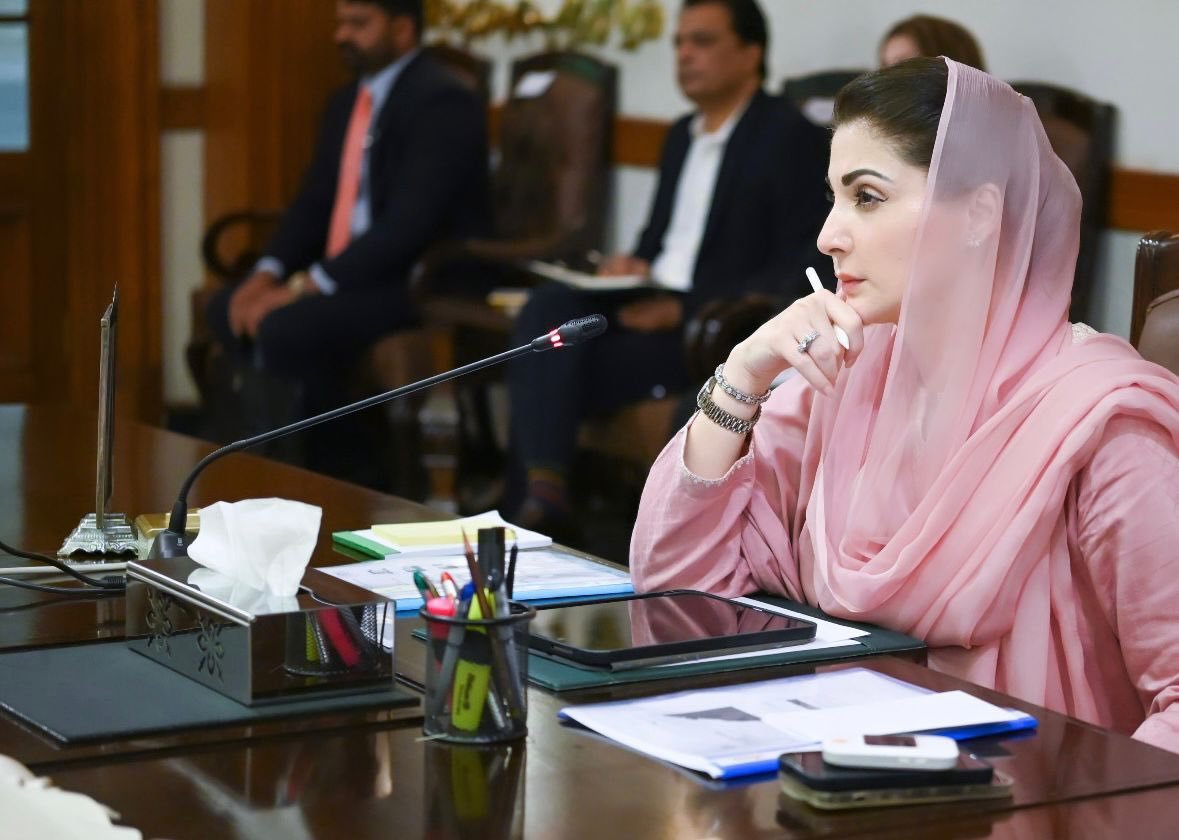
    The Chief Minister of Punjab, Maryam Nawaz presided over the fifth session of the provincial cabinet on April 3.

    The cabinet approved the creation of special speedy trial courts across the province aimed at the expedition of cases related to the physical and sexual assault of children.

    Furthermore, the cabinet was briefed on the proposed amendments to the defamation laws and the establishment of speedy trial courts in defamation cases as well.

    A bill is set to be presented in the Punjab Assembly which would aim to issue decree within ninety days and most importantly completion of trial within 180 days in defamation cases.

    “The culture of lying and accusation will have to be changed,” said Maryam Nawaz in the session.

    It was also observed that the notices in defamation cases could be given through major newspapers, social media, and courier services following the passage of the bill.

  • Lahore High Court gave Pervez Musharraf relief which he didn’t even ask for

    Lahore High Court gave Pervez Musharraf relief which he didn’t even ask for

    The Supreme Court of Pakistan has questioned the Lahore High Court’s (LHC) decision to overturn the death sentence of former military dictator Pervez Musharraf.

    The initial death sentence was imposed by a special court in December 2019 on charges of high treason.

    The Chief Justice of Pakistan, Qazi Faez Isa, leading a four-judge bench, expressed astonishment at the approach taken by LHC, suggesting that it may have exceeded its jurisdiction in the matter.

    “At best, the LHC could do was to allow the prayers sought in the petition, but what the court did was uprooting the special court itself,” Justice Isa said.

    The special court had originally adjudicated the high treason charges against Musharraf.

    A four-member bench, headed by Chief Justice of Pakistan Justice Qazi Faez Isa and comprising Justice Syed Mansoor Ali Shah, Justice Athar Minallah, and Justice Amin-ud-Din Khan conducted the hearing of the appeals of Bar Councils and others against the judgment of a three-member bench of the LHC.

    The Supreme Court’s scrutiny focused on the LHC January 2020 order, which not only declared the special court’s ruling unconstitutional but also entertained Musharraf’s appeal against his death conviction.

    A three-member bench of the LHC, headed by Justice Syed Mazahar Ali Akbar Naqvi, and comprising Justice Muhammad Masood Jahangir and Justice Ameer Bhatti on January 13, 2020, had declared; “The Special Court was established without an iota of doubt that very basis of initiation of proceedings against the petitioner/ General (R) Pervez Musharraf, since its inception to the culmination are beyond the constitutional mandate, ultra vires, coram-non-judice, unlawful, hence, any superstructure raised over it shall fall to ground.”

    It further said; “Trial in absentia is declared as illegal, unconstitutional being repugnant to injunctions of Islam, as well as, Article 2-A, 8 and 10-A of the Constitution.”

    Pervez Musharraf passed away earlier this year, on February 5, after a prolonged illness.

    The Supreme Court’s review also brought attention to concerns about the LHC’s territorial jurisdiction.

    Justice Syed Mansoor Ali Shah noted that the constitution of the special court was never directly challenged.

    The Chief Justice cautioned against labeling Musharraf as an absconder during the hearing, as it could prejudice the ongoing appeal.

    The hearing is set to continue next Tuesday.

    The Supreme Court has asked the petitioner’s counsel to conclude arguments on Musharraf’s petition against the Special Court judgment.

  • He’s gone, but Supreme Court to decide death penalty case against Musharraf

    He’s gone, but Supreme Court to decide death penalty case against Musharraf

    The Supreme Court of Pakistan is set to begin hearing a series of appeals on November 10, including those filed by the late former President, retired General Pervez Musharraf, in an attempt to overturn his death sentence, as per Dawn.

    A four-judge bench, headed by Chief Justice of Pakistan (CJP) Qazi Faez Isa, along with Justice Syed Mansoor Ali Shah, Justice Aminud Din Khan, and Justice Athar Minallah, will preside over the hearings.

    Represented by his counsel Salman Safdar, the late General filed an appeal requesting the annulment of the conviction, citing a trial process that was conducted in violation of the Constitution and the Code of Criminal Procedure (CrPC) 1898.

    The appeal seeks a suspension of the judgment in the interest of justice and fair play.

    The petition highlights Musharraf’s military career and claims that the trial for a constitutional crime was conducted in an unconstitutional manner.

    In a separate development, the Sindh High Court Bar Association contested the Lahore High Court’s decision on January 13, 2020, which deemed the Special Court’s decision unconstitutional.

    The association has appealed to the Supreme Court to reinstate the conviction for subverting the Constitution.

    Presented by counsel Rasheed A. Razvi, the appeal argues that the high court’s verdict is legally flawed, alleging a misinterpretation of evidence and failure to appreciate the material presented by the prosecution during the trial.

    Additionally, the appeal asserts that the high court neglected to acknowledge that the material presented by the prosecution before the Special Court was not denied by Gen Musharraf at any stage of the case.

    It further argues that the verdict contradicts established principles of the Qanoon-e-Shahadat Order, stating that unchallenged facts are deemed admitted by the parties and do not require further proof.

    The petition asserts that the high court’s decision contradicts the precedent set by superior courts and the Supreme Court, referencing the 2019 Lahore High Court Bar Association case.

    A special court in Islamabad found former military ruler retired Gen Pervez Musharraf guilty of high treason and handed him a death sentence under Article 6 of the Constitution on December 17, 2019.

    This was the first time in Pakistan’s history that a military chief has been declared guilty of high treason and handed a death sentence. The verdict was split 2-1.

    Article 6 of the Constitution says: “Any person who abrogates or subverts or suspends or hold in abeyance, or attempts or conspires to abrogate or subvert or suspend or hold in abeyance the Constitution by use of force or show force or by any other unconstitutional means shall be guilty of high treason.”

    The three-member bench of the special court was headed by Peshawar High Court Chief Justice Waqar Ahmad Seth and comprising Justice Nazar Akbar of the Sindh High Court (SHC) and Justice Shahid Karim of the Lahore High Court (LHC).

  • Govt aims to ‘reduce power theft of Rs589 billion at the earliest’

    Govt aims to ‘reduce power theft of Rs589 billion at the earliest’

    The caretaker government unveiled a set of measures to tackle power theft nationwide, aiming to reduce the growing circular debt issue in the power sector, which is causing electricity prices to soar. 

    This announcement comes amid widespread protests against high electricity bills, hindered by strict conditions from the International Monetary Fund.

    During a press conference, Caretaker Energy Minister Mohammad Ali, alongside Interim Information Minister Murtaza Solangi, outlined their plan. 

    According to Geo News, Ali said that the government is working on a new law, the electricity theft act, to create enforcement mechanisms and special courts for those involved in theft. This law will be introduced within the next two to three weeks.

    “We are aiming to stop or reduce power theft of Rs589 billion at the earliest,” the minister said.

    In line with Caretaker Prime Minister Anwaar ul Haq Kakar’s instructions, the Energy Minister announced a crackdown on power theft, emphasising that consumers shouldn’t pay for theft, and lower electricity prices depend on solving this issue. Ali assured that authorities would act based on available data.

    Additionally, the minister revealed a list of power distribution company officers involved in power theft and measures to take action against them. This list was sent to the Election Commission of Pakistan for possible removal.

    In another meeting, Caretaker PM Kakar stressed the urgency of dealing with power theft, urging regular progress reports. He emphasised zero leniency toward power thieves and defaulters.

    During the meeting, detailed briefings covered the energy sector’s challenges, including total installed capacity, actual generation, and overall energy supply across different seasons.