Tag: Special Investment Facilitation Council

  • Diverse Brazilian cattle breeds arriving in Pakistan under new agreement

    Diverse Brazilian cattle breeds arriving in Pakistan under new agreement

    The Special Investment Facilitation Council (SIFC) has inked a deal with a Brazilian company for the import of high-breed cattle from Brazil as part of the Green Pakistan Initiative.

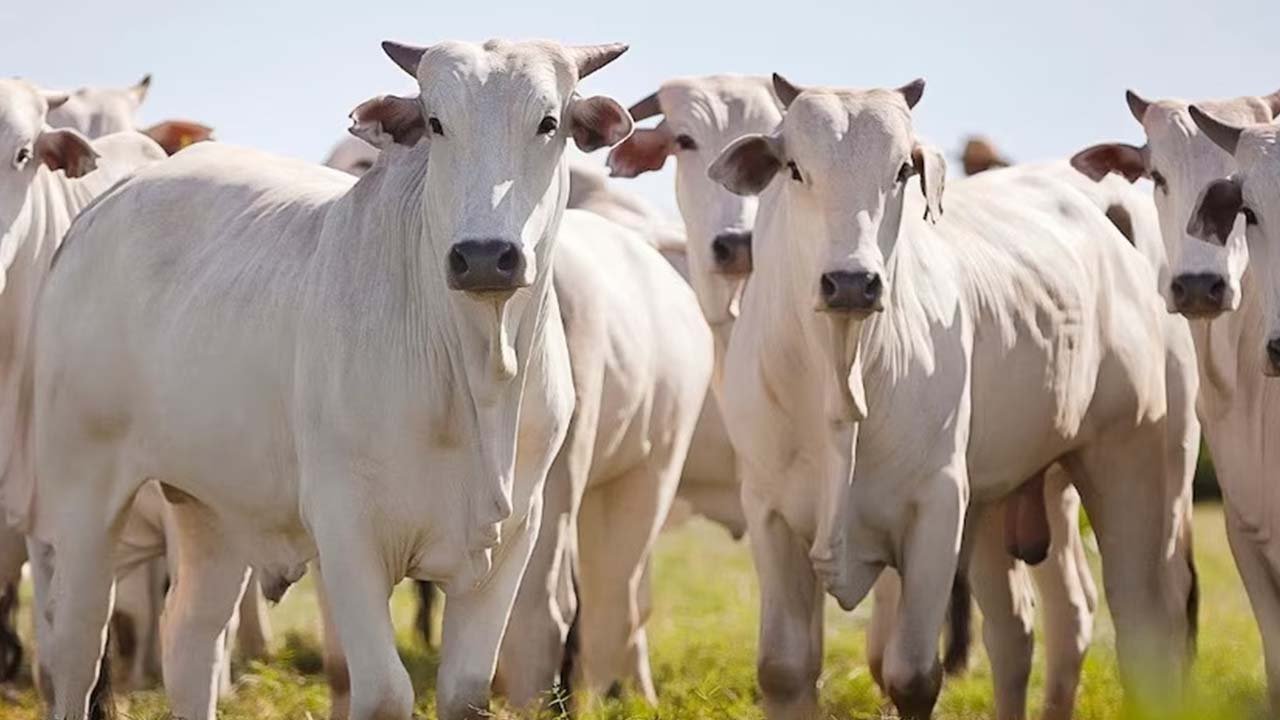
    Under the agreement, Fongrow, a company established under the Green Pakistan Initiative, will import nine breeds of cattle from Brazil, encompassing both local and Brazilian breeds.

    The consignment of cattle from Brazil is slated to arrive at Sialkot International Airport today via air cargo and will subsequently be transported to Peruwal Model Farm in Punjab.

    During an interview, Brazilian Ambassador Olyntho Vieira stressed the significant potential for bilateral trade between Brazil and Pakistan across various sectors.

    He highlighted that investment and technology could enhance livestock productivity, mentioning that red Sindhi cattle were initially transported from Pakistan to Brazil in the 1950s and have been preserved since then.

    The imported cattle comprise breeds such as Nylori, Redus Sindhi, Guzeera, Brahman, Angus, and others.

  • Federal cabinet to approve FBR restructuring in upcoming meeting

    Federal cabinet to approve FBR restructuring in upcoming meeting

    In a significant development, the caretaker government has concluded the comprehensive restructuring plan for the Federal Board of Revenue (FBR).

    The approval for this pivotal reform comes from the Apex Committee of the Special Investment Facilitation Council (SIFC), highlighting a crucial step towards enhancing efficiency and transparency in Pakistan’s tax administration.

    According to reliable sources, the Apex Committee granted its approval for the FBR’s reforms and restructuring plan during its recent meeting. The caretaker government is now poised to move a summary for the approval of the FBR’s restructuring plan in the upcoming federal cabinet meeting.

    The decision to move the summary will follow the meticulous review of the minutes of the last SIFC committee meeting, ensuring a thorough examination of the proposed reforms. The anticipated summary aims at facilitating the implementation of a robust action plan geared towards restructuring Pakistan’s tax administration, thereby fortifying the internal governance mechanisms of the FBR.

    As part of the ongoing reform initiative, the caretaker government is contemplating the establishment of a dedicated Customs Board to oversee the operations of Pakistan Customs. This strategic move aims to streamline and enhance the efficiency of customs affairs while ensuring a clear demarcation from the revenue collection mechanism.

    It is expected that the revenue collection mandate will continue to be under the purview of the FBR. In line with this reform trajectory, the creation of a separate Inland Revenue Board is also under consideration, which will operate under the vigilant supervision of the Revenue Division.

    This bifurcation is designed to address concerns related to smuggling and other illicit activities, providing a specialised focus on each aspect of tax administration.

    Furthermore, as part of the tax reform programme, five federal secretaries, namely Finance, Industries and Production, National Food Security, Commerce, and Interior, are slated to become ex-officio members of the proposed Customs Board. This inclusion is envisioned to bring multidimensional expertise to the board, fostering collaboration among various sectors crucial for effective customs management.

    The restructuring plan marks a pivotal moment in Pakistan’s efforts to modernise and fortify its tax administration system. The caretaker government’s commitment to transparency and efficiency is evident in these strategic reforms, setting the stage for a more resilient and responsive revenue collection framework.

    The anticipated approval of the summary at the federal cabinet meeting will further propel the implementation of these transformative changes.

  • BYD, global electric vehicle leader, explores investment in Pakistan’s EV sector

    BYD, global electric vehicle leader, explores investment in Pakistan’s EV sector

    BYD, the prominent Chinese automotive conglomerate renowned as the world’s foremost electric vehicle (EV) manufacturer, engaged in discussions regarding the potential of Pakistan’s EV sector.

    This revelation surfaced through a modified series of posts released by the Board of Investment (BoI) on Thursday. Initial posts hinted at BYD’s enthusiastic interest in investing in Pakistan’s EV sector, but these posts have since been removed.

    The development follows a meeting between a delegation from BYD Company China, featuring Cai Xiao Xu, Head of the Dealer Division (South Asia), Lei Jian, Country Head (Pakistan), and Sohail Rajput, Secretary at BoI.

    In a statement shared on X, formerly Twitter, the Fortune 500 company and global EV manufacturing leader BYD Company highlighted its substantial presence in key industries, including automobiles, rail transit, new energy, and electronics.

    The ongoing exploratory visit to Pakistan by the BYD delegation, facilitated by BoI, includes pivotal discussions with potential local partners.

    Secretary BOI, during the meeting, warmly welcomed the company’s interest, underscoring the significance of EVs in Pakistan.

    He reassured the BYD delegation of the Government of Pakistan’s steadfast commitment to facilitating foreign investors.

    BYD, recognised as the world’s largest EV manufacturer, produces a diverse range of vehicles, including battery-electric and hybrid cars, buses, and trucks, as well as battery-powered bicycles, forklifts, solar panels, and rechargeable batteries.

    In the previous month, Dr Gohar Ejaz, the Caretaker Minister for Commerce and Industries, disclosed that BYD is actively considering investment opportunities in Pakistan.

    During this period, the caretaker minister briefed the BYD delegation on government policies and the Special Investment Facilitation Council (SIFC), offering unequivocal support for their new ventures.

    This move aligns with Pakistan’s strategic goal to expand its presence in the renewable energy sector, curtail its energy import expenditure, and fulfil climate change objectives.

    Caretaker Prime Minister Anwaar-ul-Haq Kakar has separately extended an invitation to Chinese businesses to invest in Pakistan’s solar parks.

  • PM Kakar pushes for speedy privatisation of financially troubled state-owned enterprises

    Caretaker Prime Minister (PM) Anwaar-ul-Haq Kakar, in a meeting held on Monday, directed the relevant authorities to expedite the privatisation process of state-owned enterprises (SOEs) that are experiencing financial losses.

    Stressing the importance of this privatisation effort, the Prime Minister emphasised its role in safeguarding the national treasury from further deficits.

    During this meeting, Minister for Privatisation Fawad Hasan Fawad provided a detailed update on the progress made in the privatisation of these enterprises.

    PM Kakar also commended the Special Investment Facilitation Council (SIFC) for its commendable contributions to this endeavor. 

    It’s worth noting that the caretaker Premier had previously issued similar directives to accelerate the privatisation process of Pakistan International Airlines (PIA), a loss-making entity.

    This development comes in response to reports suggesting that unless emergency funding is secured, PIA’s flight operations could face suspension.

    A senior PIA director revealed that the operational fleet had been reduced from 23 to 16 aircraft, resulting in the cancellation of numerous flights.

  • Business community finds hope as COAS Munir vows to tackle corruption and boost investment 

    Business community finds hope as COAS Munir vows to tackle corruption and boost investment 

     
    In response to the pressing economic crisis facing the country, Chief of Army Staff (COAS) General Syed Asim Munir has pledged unwavering efforts to attract foreign investment and rejuvenate the economy, as reported by The News on Tuesday. General Munir made these assurances during a recent extensive meeting with members of the business community, where he engaged openly and candidly with them. 

    During an appearance on Geo News‘ “Aaj Shahzeb Khanzada Kay Sath” programme on Monday, President of the Federation of Pakistan Chambers of Commerce & Industry (FPCCI), Irfan Iqbal Sheikh, expressed optimism following their meeting with the army chief. He revealed that General Munir had conveyed discussions of a potential $25 billion investment from Saudi Arabia, encompassing sectors such as IT, minerals, agriculture, and defence. 

    Highlighting a pivotal development, General Munir disclosed that Saudi Crown Prince Mohammad Bin Salman had committed to depositing $10 billion of this investment in the State Bank of Pakistan (SBP), to be reimbursed in Pakistani rupees or goods, thereby bolstering foreign exchange reserves. 

    General Munir also acknowledged the bureaucratic obstacles hindering investment and emphasised the establishment of a Special Investment Facilitation Council (SIFC) to streamline processes and eliminate bureaucratic impediments. He assured that this initiative would protect investors from interference, bureaucratic hurdles, or legal complications. 

    Irfan Iqbal Sheikh further mentioned that Saudi Arabia and the United Arab Emirates (UAE) had both pledged $25 billion in investments, with Qatar and Kuwait following suit with similar commitments. 

    General Munir expressed determination to combat corruption, particularly by curbing land-grabbing and extortion mafias. To this end, he announced the formation of four task forces to address issues related to the Federal Board of Revenue of Pakistan (FBR), border control, smuggling, and social media, aiming to improve the overall situation. 

    Sheikh stressed that the business community had grown disillusioned but found renewed courage and hope through the army chief’s commitments. 

    Meanwhile, Business Group Chairman Zubair Motiwala noted the distinct approach of General Munir in engaging with traders compared to his predecessors. He highlighted the COAS’s efforts to revive the economy through engagements in Saudi Arabia, the UAE, and upcoming visits to Qatar and Kuwait. 

    Motiwala reported that General Munir had instructed the corps commander to prevent the influx of Iranian diesel into Karachi and issued directives to address land encroachments, corruption, and law enforcement issues. 

    General Munir also emphasised that only registered Afghan refugees would be allowed to stay in Pakistan, while the rest would need to return to their home country. He conveyed Saudi Crown Prince Mohammad Bin Salman’s concerns regarding corruption and bureaucracy in Pakistan. 

    Motiwala further disclosed discussions about the charter of the economy with General Munir, expressing hope that such substantial investments would significantly improve the economic conditions in the country. 

    He also pointed out that state-owned enterprises were incurring significant losses, amounting to Rs1,300 billion, and stressed the need for action, noting that political governments might not fully embrace privatisation but would seek to relieve this burden. General Munir expressed his understanding of the government’s approach to this issue and its commitment to addressing it comprehensively. 
  • Pakistan Army commits full support to govt’s economic revival drive

    Pakistan Army commits full support to govt’s economic revival drive

    In a strong show of solidarity, the Pakistan Army has pledged unwavering support to the government’s ambitious plans for the economic revival of the country. This commitment was reiterated by Chief of Army Staff (COAS) General Asim Munir during the 258th Corps Commanders’ Conference held at the General Headquarters (GHQ).

    The Inter-Services Public Relations (ISPR), the media wing of the Pakistan Army, reported that the conference paid tribute to the brave soldiers who have made supreme sacrifices in defending their homeland against the persistent threat of terrorism. The participants were extensively briefed on the prevailing internal security situation, with special emphasis on the sanctuaries and freedom of action enjoyed by terrorists affiliated with proscribed organisations such as the Tehrik-i-Taliban Pakistan (TTP) in a neighboring country. The availability of sophisticated weaponry to these terrorists was highlighted as a major factor impacting Pakistan’s security.

    Operational preparedness and training aspects of the army were also thoroughly discussed during the Corps Commanders’ Conference. COAS Asim Munir emphasised the significance of objective training as a cornerstone of professionalism, emphasising the need for remaining vigilant against any potential threats to national security.

    Moreover, the conference shed light on the government’s economic revival plan and the Pakistan Army’s role in uplifting various sectors, including agriculture, information technology, mining and minerals, and defense production. The plan falls under the jurisdiction of the recently established Special Investment Facilitation Council (SIFC), aimed at promoting economic growth and revitalisation.

    It is worth mentioning that the Special Investment Facilitation Council was formed following a high-level meeting chaired by Prime Minister Shehbaz Sharif. The meeting was attended by Chief of Army Staff (COAS) General Asim Munir, Chief Ministers, federal and provincial ministers, and other senior government officials. The economic revival plan was unveiled during this meeting, with the objective of bringing about socio-economic prosperity for the people of Pakistan and restoring the country’s rightful position among the international community.

    During the meeting, COAS General Asim Munir expressed the Pakistan Army’s full commitment to support the government’s Economic Revival Plan. The collaboration between the army and the government is seen as crucial in achieving sustainable economic growth and securing a prosperous future for all Pakistanis.

    With the Pakistan Army’s unwavering support and the collective efforts of the government, it is hoped that the Economic Revival Plan will pave the way for a brighter future, enabling Pakistan to reclaim its rightful stature among the comity of nations.