Rough driving and overspeeding are major causes of fatalities and serious accidents on the road. According to the Pakistan Bureau of Statistics (PBS), 12,894 vehicles were involved in roughly 9,701 traffic incidents between 2019 and 2020.
About 12,317 individuals were injured in these accidents, while 5,436 people lost their lives.
Speed cameras are frequently installed in locations known for having frequent accidents as a means of minimising speed-related injuries and fatalities.
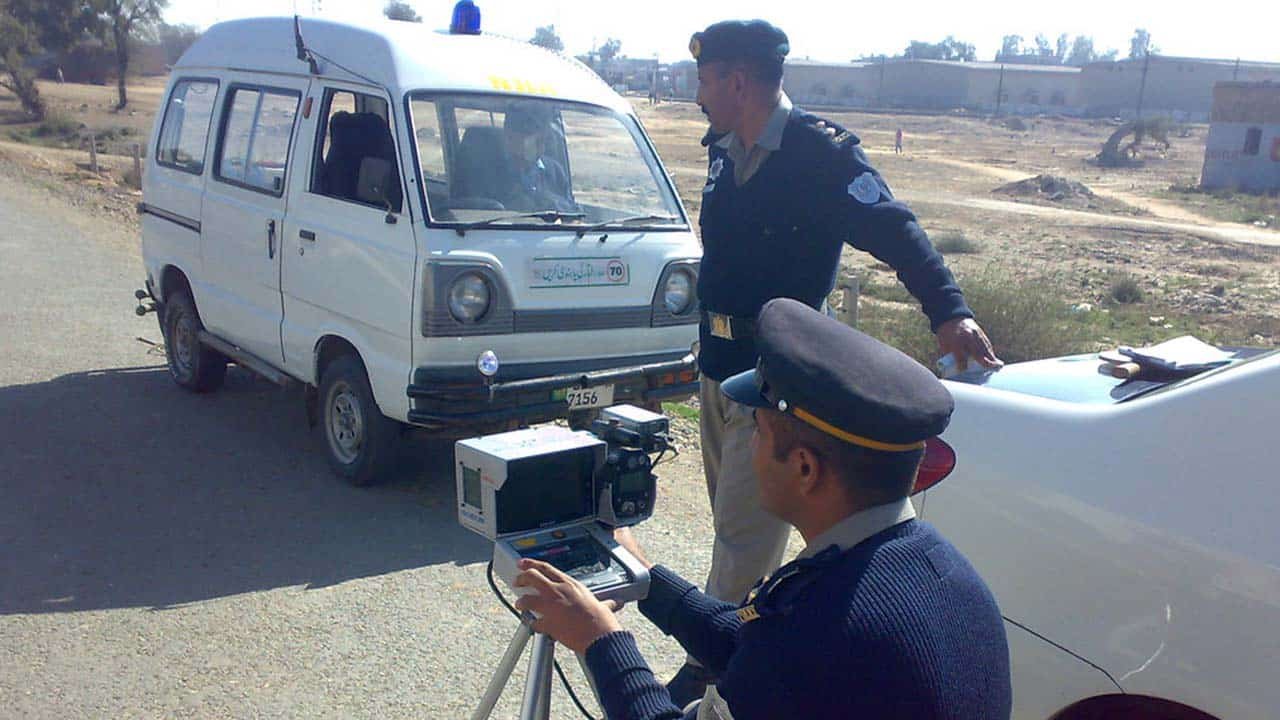
Drivers can be caught in perfect detail up to one kilometre away using the speed camera technology of today.
However, most of cameras employ road markings to calculate your speed and track the distance travelled over time. The average speed over a range of 75 metres to 20 kilometres can be determined by SPECS average speed cameras. They appear one after the other on highways spaced at least 200 metres apart.
Long Rangers are high-tech cameras that can record images and videos of vehicles up to one kilometre distant.
We all think that anyone exceeding the 120 km/h set speed limit for cars or light transport vehicles (LTV) on the highway will be issued an overspeeding challan. Motorway police won’t stop you if you are travelling at speeds of 120 to 130 km/h, or sometimes 131 km/h. However, if you are inside the range of a speed camera, you will be pulled over for overspeeding as soon as you reach 132 km/h.
Motorway speed guns can measure speed from a distance of 95 to 100 feet. But don’t assume you can dodge them just because you caught a distant view of the speed gun. Your speed is already on record. This reality is mostly due to the fact that speed traps are frequently placed on highways near sharp curves, leaving you with little time to take evasive action.
Near Teriyaki, Chakkri, and Salt Range are the three locations with the most speed cameras. The bulk of citations are given in the salt range for exceeding the 50 km/h speed limit.