Suzuki has been a trusted companion to Pakistanis with its affordability and durability for over four decades. Over the years, Suzuki has become an integral part of countless lives by providing reliable transportation to generations, thus creating a wealth of cherished memories.
To strengthen the bond with its customers, Pak Suzuki has launched My Suzuki My Story season four, where all Suzuki owners can celebrate and showcase their treasured moments with their Suzuki. Excitingly, this innovative digital initiative is offering exciting rewards for innovative content that evokes emotions and spark creativity.
My Suzuki My Story is a platform for expressing and sharing stories. It can happen through any artistic format (videos, short films, paintings, pictures, narrations, songs, etc) to relive their Suzuki adventures. It can be any exhilarating memory, like the first drive with a newly purchased Suzuki, a family road trip to scenic destinations, or the unwavering companionship of a Suzuki vehicle through challenging times. Each of these stories has the essence of Suzuki’s enduring presence in the lives of Pakistanis.
Participants have the opportunity to win attractive prizes, like a brand-new Suzuki Alto 660cc car, a Europe Trip, or a powerful GSX 125 motorcycle.
Visit the website https://www.mysuzukimystory.com.pk/ to share your Suzuki story on the theme “Stories & Memories with Suzuki” and be a part of something special.
The National Energy Efficiency and Conservation Authority (NEECA) is at the forefront of transforming the building sector in Pakistan by promoting energy-efficient practises. NEECA serves as the federal focal agency mandated for initiating, catalysing, and coordinating all energy conservation activities across all sectors of the economy. In this article, we will delve into NEECA’s initiatives and highlight how organisations can leverage energy efficiency to gain a competitive edge and boost the bottom line.
The Landscape: Rapid Urbanisation and Economic Growth
Pakistan is experiencing rapid urbanisation, leading to a surge in construction activities and a growing demand for energy. As the building sector expands, the need for energy efficiency becomes paramount. By embracing energy-efficient technologies and practises, organisations in the building industry can not only contribute to an energy-smart future but also tap into new economic opportunities.
NEECA’s Solutions: Capitalising on Energy Efficiency
NEECA is spearheading a range of initiatives to promote energy efficiency in the building sector. One significant intervention is the development and implementation of Energy Conservation Building Codes (ECBC-2023). These codes encompass energy efficiency standards for building envelopes, HVAC systems, lighting, and more. By complying with ECBC-2023, organisations can demonstrate their commitment to efficiency and unlock new business prospects.
NEECA is also driving the adoption of energy-efficient appliances through the introduction of Minimum Energy Performance Standards (MEPS) and Energy Labelling Regime. By complying with MEPS and labelling regimes, organisations can offer energy-efficient products to the market, meet customer demands, and enhance their brand reputation. Moreover, the growing market for energy-efficient appliances presents a lucrative opportunity for organisations to expand their product portfolios and increase profitability.
Impact: Efficiency Translated into Profitability
Embracing energy efficiency in the building industry brings forth a myriad of benefits. By implementing energy conservation practises and adopting energy-efficient technologies, organisations can significantly reduce energy consumption, optimise operational costs, and enhance overall profitability. Improved building performance, efficient appliances, and smart energy management systems create a competitive advantage, positioning organisations as leaders in the market.
Potential for Opportunities in the Building Sector:
As a leader in the building industry, it’s time to seize the opportunities presented by energy efficiency. Embrace NEECA’s initiatives by complying with Energy Conservation Building Codes, adopting energy-efficient appliances, and integrating smart energy management systems. Collaborate with NEECA to stay ahead of the competition, tap into emerging markets, and drive profitability through efficient practises. By capitalising on energy efficiency, you can unlock new avenues for growth, enhance their market position, and contribute to a more prosperous Pakistan. Let’s embrace energy efficiency as a catalyst for success and shape the building industry’s future.
McKinsey Global Institute has forecasted that demand for higher skills such as decision making, critical thinking, complex information process, and creativity will grow by 19% by 2030. If anything, this forecast translates into the fact that future careers will be way more challenging than the present ones. Why? Because the same will require cross-marketability skills and interdisciplinary knowledge. This is where STEP Schools steps in as it imparts 21st-century knowledge through the STEAM approach.
STEP Schools is part of the Punjab Group of Colleges, a name synonymous with educational excellence in Pakistan. The brains behind STEP Schools realized that the traditional methods of teaching relying on rote memorization and repetitive classroom lectures do not cater to the needs of an increasingly complex and tech-driven world. So, they designed a 21st-century curriculum driven by 4Cs (critical thinking, communication, collaboration, and creativity) and incorporated the STEAM approach into it.
STEAM
The 21st-century method deployed by STEP Schools opts for a multi-dimensional approach to the student’s learning experiences both in and out of the classrooms. STEP Schools’ 4C-driven curriculum shifts focus on developing and fostering analytical, decision-making, critical, and creativity skills in children from an early age. Likewise, project-based learning increases students’ engagement and offers special attention to each student in the class.
The core of 21st-century learning is the notion that learning is a lifelong process.
Broad & Flexible Teaching Strategies
At STEP Schools, our teachers deploy a wide array of broad and flexible strategies vis-a-vis the needs of the students and the context of the situation. These strategies champion interdisciplinary & hands-on learning and student engagement over conferring information. At STEP Schools, teaching methodologies and approaches are based on inquiry, focused on conceptual understanding, and developed in local and global contexts; likewise, the same is informed by assessments and is designed to remove barriers to learning.
In STEP Schools’ 21st-century classrooms, educators are not just teachers. They are relationship builders, innovators, leaders, storytellers, designers, and artists.
Project-based Learning
At STEP Schools, Project-Based Learning (PBL) forms the core of our philosophy that steers students’ learning in a meaningful manner that reflects their interests and the needs of modern times.
PBL nurtures and fosters thinking, research, social, self-management, and communication skills – a holistic development that is imperative for the 21st-century workforce. PBL aims to empower learners to see learning as a dynamic and active process.
21st-century Classrooms
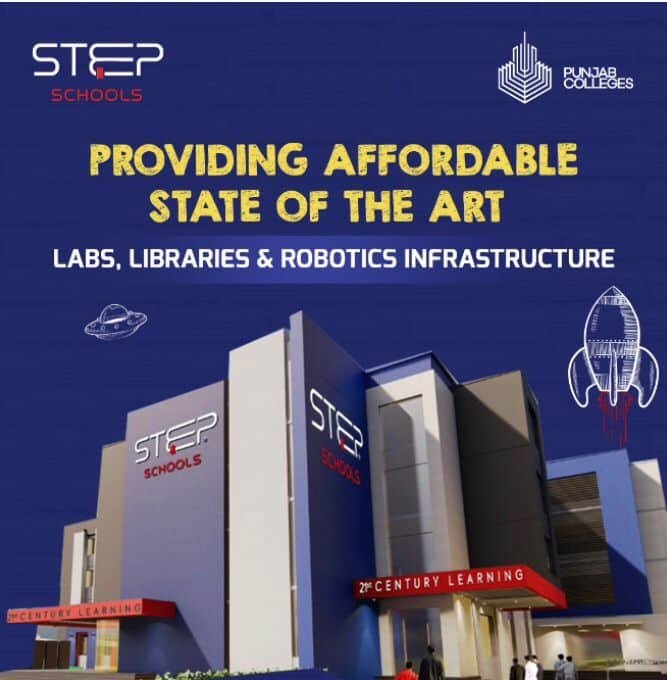
STEP Schools provide students with exposure to 21st-century classrooms. The classroom’s environment is designed to promote student-led and inquiry-based teaching and learning that ultimately leads to the wholesome development of students. Likewise, highly-experienced and qualified faculty creates an environment that sparks curiosity, encourages & empowers students’ communication, collaboration, and participation while supporting each student’s personal journey.
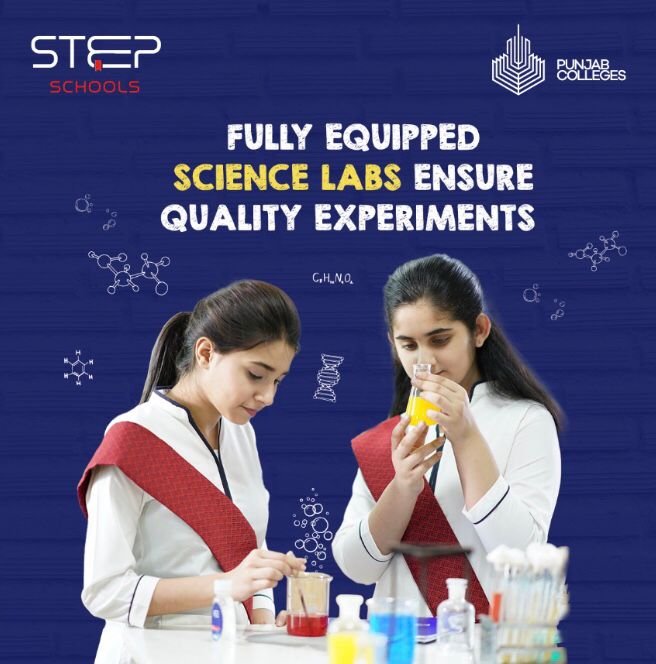
Likewise, each campus has a ‘Resource Room’ equipped with LEDs, multimedia, interactive whiteboards, sound systems, and other pieces of equipment. These resource rooms provide the most up-to-date education to children.
Technology-Enhanced Learning
STEP Schools employs technology-enhanced learning (TEL) to meet four main concepts: citizen science, mobile learning, openness, and learning at scale. TEL fosters students’ ability to engage with multiple texts in multiple modes of literacy; the same helps educators replace old teaching habits while sustaining the contemporary ones. It also helps both students and teachers to enhance. By incorporating technology in learning practices, it is ensured at STEP Schools that existing processes are carried out in a more time-effective and sustainable manner. It also improves outcomes of existing processes while introducing new practices at the same time.
Keeping aforesaid notions in mind, STEP Schools has developed platforms of:
STEP Portal
STEP E-learning program
STEP ICT curriculum
The purpose of educational technology at STEP Schools is to groom the students as creators and makers of tomorrow’s technology and innovation.
Admissions Open If you want to get your child exposure to 21st-century learning, register with our perspective school within your city to gain an advantage over your child’s future from an early age.
STEP Schools offer admissions to the junior school classes and middle classes as of now. But, the student already on enrolment will have an opportunity to complete the school education from Step 1 to Step 10.
STEP Schools offers:
21st Century learning with standardized curriculum and booklist
Scholarships, financial aid, and Indemnity (Educational insurance)
Sibling discount
Inter-school student transfer facility
Interactive learning environment along with smart education tools in classrooms
Emphasis on life skills
The continuous assessment process to evaluate the performance of each student.
Well optimized web portal to provide complete performance evaluation of students through dedicated portal IDs for the parents
Ease of access for parents to their child’s record through STEP Schools Mobile App
Regular intimation of attendance and other important notifications through SMS
Regular co-curricular activities such as arts & crafts, physical education, games, inter-school competitions, educational trips, and sports events
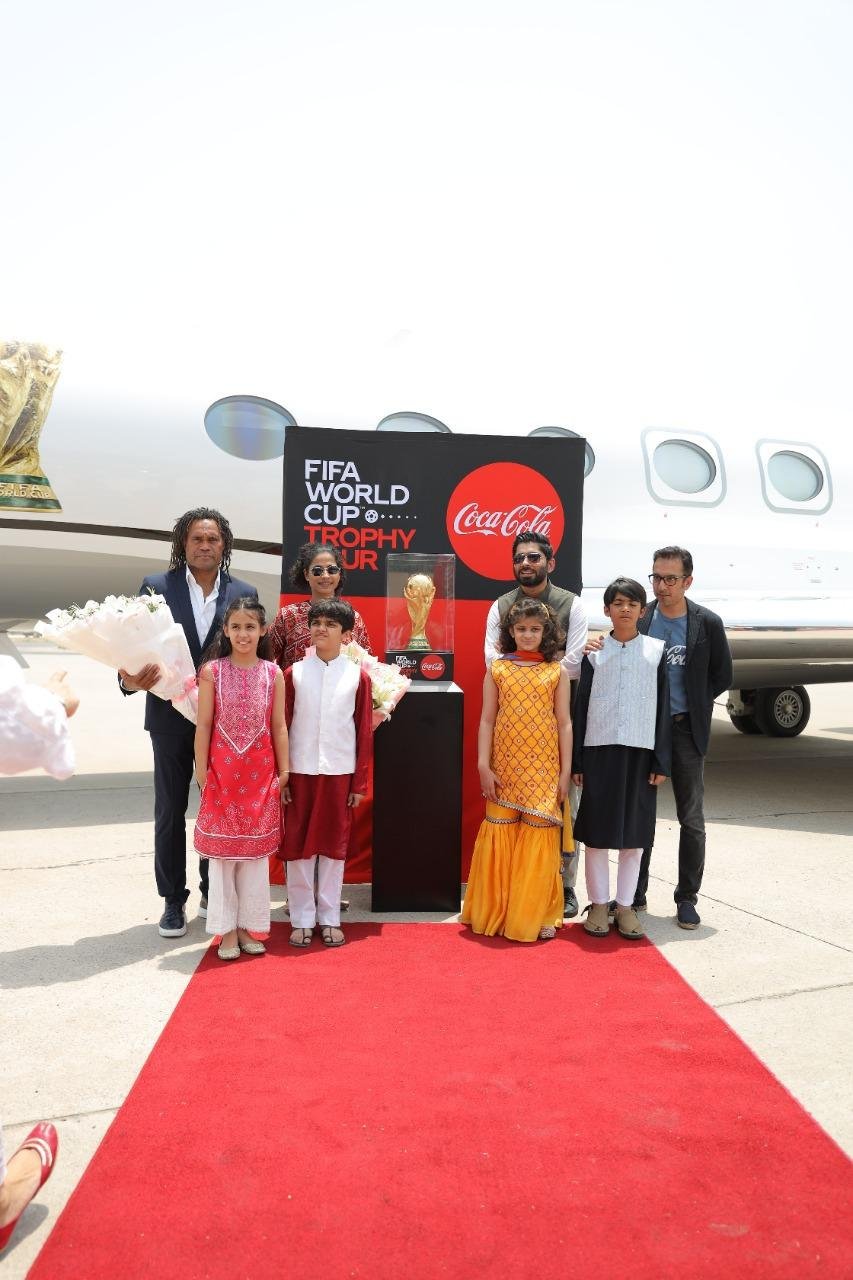
As part of the FIFA World Cup Trophy Tour™ by Coca-Cola, the official FIFA World Cup™ trophy touched down in Lahore accompanied by a delegation that included notable FIFA personnel as well as former FIFA World Cup™ winner and legendary footballer, Christian Karembeu. The initiative under the hashtag #BelievingIsMagic is aimed at promoting inclusivity and visibility of all FIFA partner nations ahead of the final games in Qatar.
Hajra Khan, Captain of Pakistan Women’s National Football Team, awaited alongside a panel of senior Coca-Cola leadership for the FIFA delegation to touch down at the airfield. After receiving a warm welcome to the country, the delegation was escorted to the trophy’s arrival event in Lahore, hosted by Hajra Khan and attended by several of Pakistan’s leading sportspersons, celebrities, dignitaries, ministers of state, and digital media opinion leaders in attendance.
The people of Pakistan have always enjoyed a rich sports culture, as well as a storied athletic history. The country is responsible for producing over 40 million footballs a year, and the manufacturing of sporting goods contributes significantly to Pakistan’s economy. A documentary highlighting football in Pakistan was screened during the event to shine a light on the country’s contributions to football.
Ahmad Hanif Orakzai, Vice President, Pakistan Sports Board, was the chief guest for the trophy arrival event. He spoke about the government’s ongoing and upcoming efforts to bring football to the mainstream. The Vice President went on to speak about transforming Pakistan into a country that celebrates and facilitates sports at all levels. He extended his heartfelt thanks to the FIFA delegation and presented them with a locally made football as a token of the country’s appreciation.
“The reason for our strong focus on sports infrastructure is because we know the best formula for our future is to empower the youth of Pakistan. Thanks to Coca-Cola, we now have a strong partner in turning this dream into a reality,” he said.
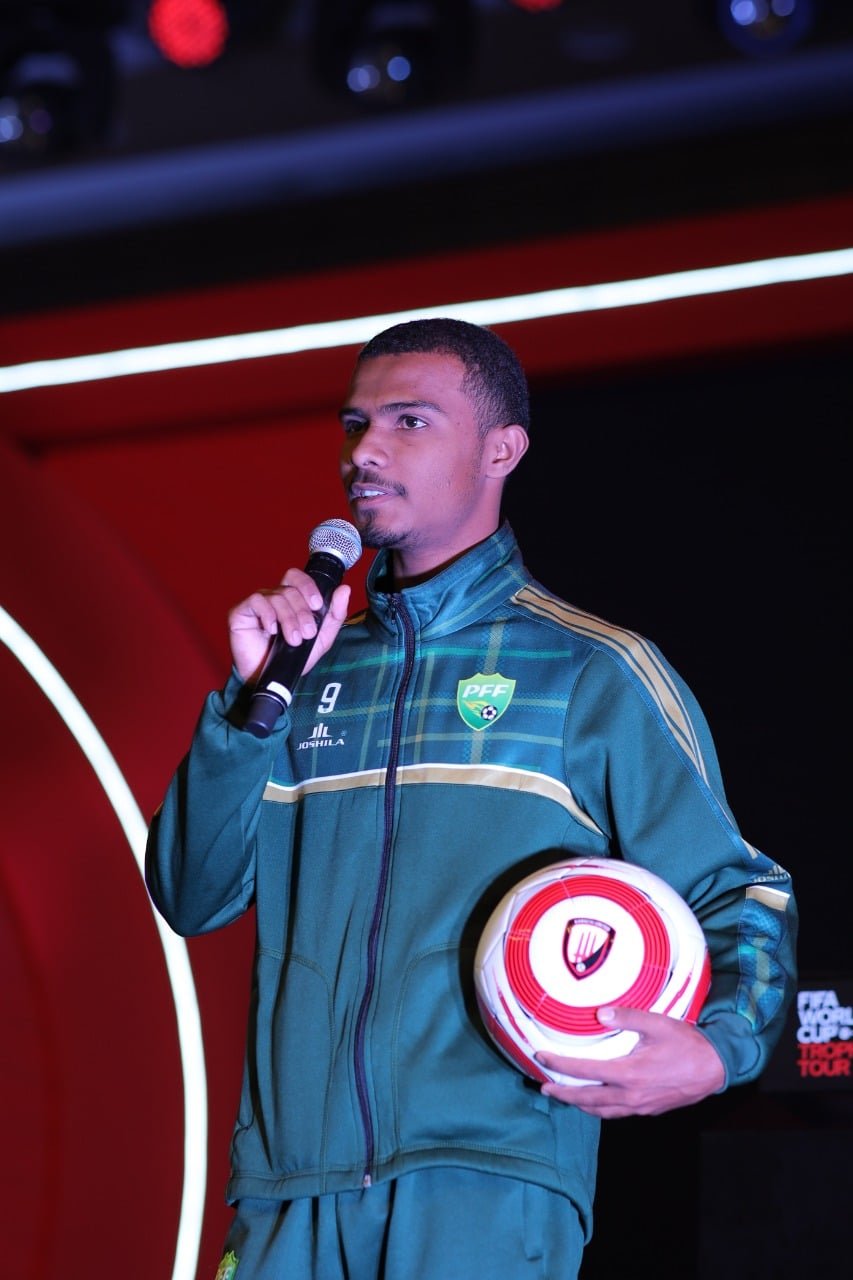
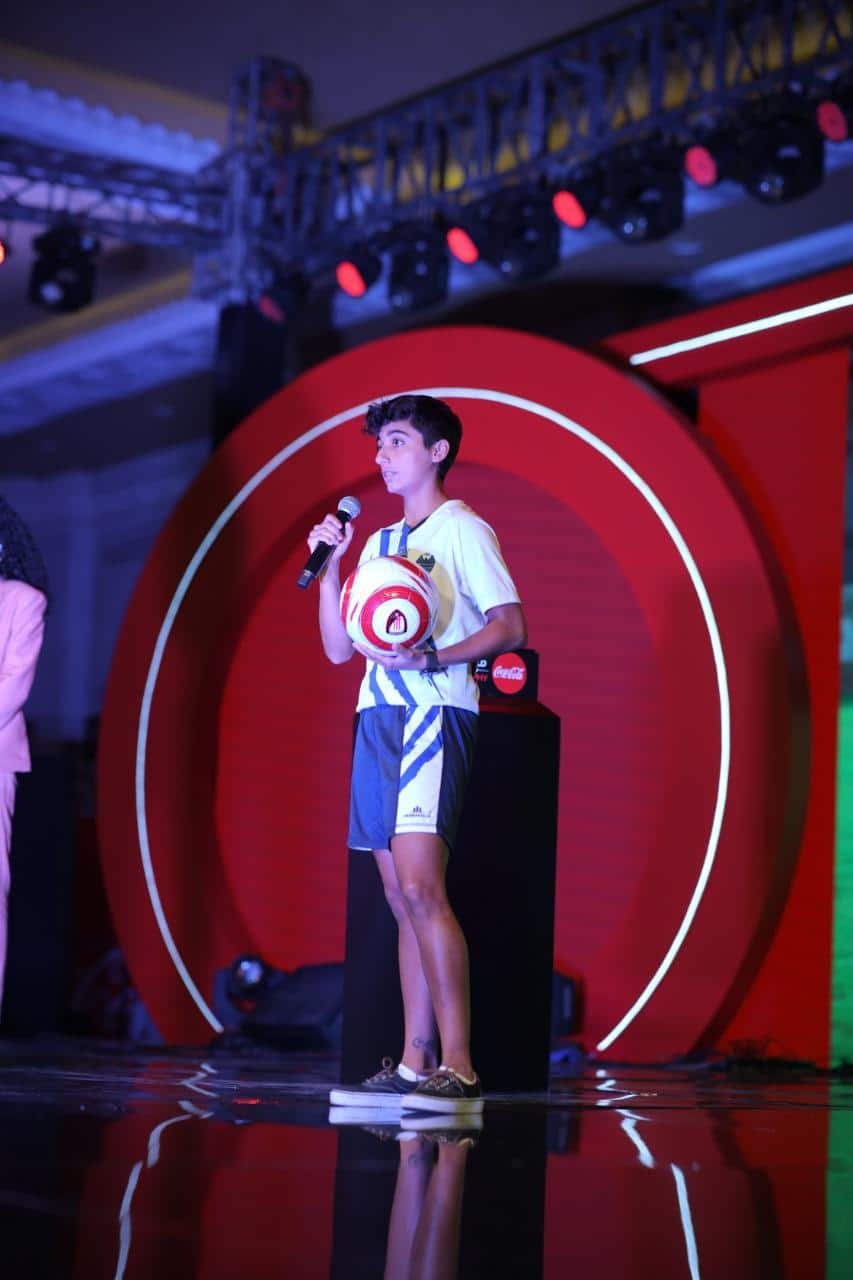
During the course of the event, Pakistan’s leading youth athletes were brought to attention and appreciated for their contributions to the country.
Former FIFA World Cup™ winner and legendary footballer, Christian Karembeu, was the star of the show in more ways than one. He stood next to the trophy, providing Pakistani fans an opportunity to see a legend of the game next to football’s most coveted prize. He expressed his gratitude at being given this amazing opportunity to be part of an initiative that aimed to inspire Pakistan’s youth.
“I am honestly amazed to see the enthusiasm of Pakistani football fans. It has been amazing to hear these stories from young footballers from all these diverse communities, and I love the fact that they all have positive outlooks on their respective journeys. The future of Pakistani sports is definitely bright,” said the legendary footballer.
“Sports brings communities and nations together and at Coca-Cola, we are delighted to champion this spirit of unity,” said Fahad Ashraf, Vice President, Coca-Cola Pakistan and Afghanistan Region, in his address to those gathered.
As the sun set on the day’s proceedings, attendees enjoyed musical performances in an event hosted by the renowned Anoushey Ashraf and Dino Ali. The concert was headlined by big-name performers like Talal Qureshi, Shae Gill, Hasan Raheem, and Abdullah Siddiqui.
Christian Karembeu was once again in the limelight at the grand finale as he unveiled the FIFA World Cup™ Trophy in spectacular fashion. And that’s how the night ended; the crowd cheering wildly for the trophy and the legendary footballer holding it, against a backdrop of colourful confetti and flashes of cold fire.
Pakistan is one of the 51 countries where this year’s tour is taking place, bringing Coca-Cola and FIFA one step closer to visiting all 211 Football Nations by 2030. #BelievingInMagic