Tag: staff-level agreement

  • Pakistani rupee falls to historic low of Rs288.43 against dollar

    Pakistani rupee falls to historic low of Rs288.43 against dollar

    On Wednesday, the Pakistani rupee (PKR) reached a new record low, falling to Rs288.43 against the US dollar in the interbank market.

    The State Bank of Pakistan (SBP) reported that the rupee slid by Rs1.34 against the greenback before closing at Rs288.43. Meanwhile, the Forex Association of Pakistan (FAP) has reported that the selling rate of the dollar in the open market was recorded at Rs295.

    This comes after the rupee had closed at Rs287.09 per US dollar the day before, with the greenback trading at over Rs291 in the open market. Additionally, on April 5, the rupee had closed at Rs287.85 per US dollar, while the greenback was trading at over Rs293 in the open market.

    Experts suggest that the drop in the rupee’s value can be attributed to various factors such as economic challenges, political uncertainty, and depleting foreign exchange reserves.

    It is worth noting that a staff-level agreement between the International Monetary Fund (IMF) and Pakistan was scheduled to take place on February 9.

  • Pakistan’s hopes for IMF agreement rise as Saudi Arabia confirms $2 billion in additional deposits

    Pakistan’s hopes for IMF agreement rise as Saudi Arabia confirms $2 billion in additional deposits

    The International Monetary Fund (IMF) has informed Pakistan that Saudi Arabia has confirmed $2 billion in additional deposits, which has rekindled hopes of an early agreement signing. Since January, Islamabad has been negotiating with the IMF for the release of $1.1 billion from a $6.5 billion bailout package that was agreed upon in 2019.

    To unlock the funding, the Pakistani government has cut back on subsidies, removed an artificial cap on the exchange rate, added taxes, and raised fuel prices. However, assurances from friendly nations for additional funds have delayed the agreement.

    The lender has informed Pakistani authorities of the development and the Fund staff is reportedly satisfied with the latest confirmation. The report states that the Saudi authorities are set to make a public announcement, possibly during the upcoming visit of Prime Minister Shehbaz Sharif to the kingdom.

    The Saudi envoy in Pakistan had also hinted in a recent interview that his country had always supported Pakistan in critical situations and that good news would be shared soon. The sources have stated that all eyes are focused on the UAE for getting confirmation on another $1 billion deposit from them, which may pave the way for striking the staff-level agreement (SLA) with the IMF.

    Finance Minister Ishaq Dar is expected to visit UAE on his way to the US where he will hold talks on the release of funds. However, there is still another stumbling block in the way of signing the SLA with the IMF. The Ministry of Petroleum, in consultation with the PM Office, had announced an unplanned cross-fuel subsidy for owners of motorcycles and cars up to 800cc, which needs to be scrapped at this stage.

    The government has not yet withdrawn the proposed cross-fuel subsidy, which cannot be implemented in a half-baked manner. Such schemes were considered in the past during the tenure of former finance minister Shaukat Tarin and even during the era of the PDM-led government when Miftah Ismail had the charge of the Ministry of Finance.

    Even Miftah Ismail had allocated Rs48 billion on the eve of the last budget in the name of Sasta Petrol, but it could not be implemented because such schemes could not be designed properly. The announcement of a half-baked cross-fuel subsidy had provided an excuse to the IMF for delaying the SLA signing, as they were still raising questions for getting more details to ascertain how the scheme was going to be implemented in a transparent manner.

  • Pakistan’s petrol relief proposal fails to convince IMF, causing further delays

    Pakistan’s petrol relief proposal fails to convince IMF, causing further delays

    The International Monetary Fund (IMF) has asked Pakistani authorities to provide additional information about a petrol relief package, which has caused further delays in the signing of a staff-level agreement.

    The petroleum ministry’s cross-fuel subsidy proposal was initially rejected by the Fund, which argued that more details are needed to verify its sustainability.

    The Ministry of Finance has distanced itself from the plan, which was announced without the IMF review mission’s knowledge, and has advised the Ministry of Petroleum to withdraw the proposal and work with the Ministry of Finance to iron out the policy details before approaching the IMF for the next review.

    According to The News, Minister of State for Finance, Dr Aisha Ghaus Pasha, has reportedly called the petrol subsidy plan “not workable” and clarified that there is no suggestion of subsidies on petroleum products. The Petroleum Division had suggested cross-subsidies on petroleum products, which is not feasible, she said.

    The talks with the IMF are ongoing, with the only remaining issue being the lender’s confirmation of external financing from bilateral countries, including Saudi Arabia and the UAE, which is currently underway.

    Pasha indicated that financial assistance is expected from bilateral friends soon, which will help finalize the staff-level agreement with the IMF.

  • Pakistan awaits financial support confirmation from Saudi Arabia and UAE to sign IMF agreement

    Pakistan awaits financial support confirmation from Saudi Arabia and UAE to sign IMF agreement

    The signing of the staff-level agreement (SLA) between Pakistan and the International Monetary Fund (IMF) is dependent on confirmation of financial support from the Kingdom of Saudi Arabia (KSA) and the United Arab Emirates (UAE). Once support confirmation is received from KSA and UAE, the SLA will be signed with the IMF.

    Finance Minister Ishaq Dar reportedly informed diplomats in Islamabad at an Iftar dinner on Sunday that the issues with the IMF will be settled soon. However, it has been 46 days since the IMF and Pakistan concluded review talks in Islamabad on February 9, and the staff-level agreement is yet to be secured.

    There have also been dissenting views within the Finance Ministry on the issue of cross-fuel subsidy. While some bureaucrats from the ministry have opposed the scheme, the government went public with it, which has caused concern.

    Officials who spoke on the condition of anonymity told The News, that such schemes would jeopardize the revival of the IMF program, and it remains to be seen how the ministry will satisfy the global lender on the subsidy. The status of the 10th and 11th reviews, which were due on February 3 and May 3, respectively, is also unknown at this time, even if the IMF program is revived.

    The situation highlights the importance of financial support from KSA and UAE to Pakistan, as well as the potential impact of domestic policy decisions on the country’s relationship with the IMF. Despite Finance Minister Dar’s assurances, it is unclear when the SLA will be signed, and how the subsidy issue will be resolved.

    As the reviews remain in question, the situation underscores the need for Pakistan to address economic challenges and seek support from its allies to maintain its financial stability.

  • China approves rollover of $2 billion SAFE deposits for Pakistan

    China approves rollover of $2 billion SAFE deposits for Pakistan

    China has given approval for the rollover of $2 billion State Administration of Foreign Exchange (SAFE) deposits for a year. Pakistan’s Finance Minister, Ishaq Dar, confirmed, stating that the rollover was a requirement of the International Monetary Fund (IMF).

    The IMF had requested the rollover of Chinese SAFE deposits to fulfill external financing needs and move towards a staff-level agreement. The agreement involves filling nine tables under the Memorandum of Economic and Financial Policies (MEFP), including a table related to the Net International Reserves (NIR) as an indicative target.

    This target cannot be met without incorporating the external financing needs of the program period until the end of June 2023. The IMF has asked Pakistan to bridge the gap of $6 billion to ensure its credibility and avoid default. This condition was put forth largely because representatives of Gulf countries on the Executive Board had made commitments before the approval of the seventh and eighth reviews for providing financial assistance to Islamabad in various forms.

    Now, the IMF is seeking the support of Saudi Arabia, the UAE, and Qatar to help Pakistan’s struggling economy. The Fund has warned Islamabad that its credibility would be at stake if the staff-level agreement is finalised, and Pakistan fails to materialize its commitment from the bilateral partners, which could lead to default.

    The IMF is investigating why Pakistan’s bilateral partners are not fulfilling their earlier commitments. China is the only country that has come forward to rescue Islamabad by fulfilling its commitments on the re-financing of its commercial loans as well as the rollover of its SAFE deposits.

  • Dar says assurance of funding from friendly countries is the final hurdle in securing IMF deal

    Dar says assurance of funding from friendly countries is the final hurdle in securing IMF deal

    On Thursday, Finance Minister Ishaq Dar announced that the assurance of funding from “friendly countries” was the final obstacle to securing an IMF deal that would provide critical support to Pakistan’s struggling economy and prevent an economic crisis.

    During a session of the country’s upper house of parliament, Dar revealed that several countries had previously made commitments to support Pakistan during IMF reviews, and the IMF was now requesting that these commitments be fulfilled.

    The delay in securing the deal, which involves a $1.1 billion bailout package from the IMF, has been ongoing since November due to issues surrounding fiscal policy adjustments. The package is part of a larger $6.5 billion bailout approved by the IMF in 2019, which is crucial for Pakistan to avoid defaulting on external payment obligations.

    The deal would also allow Pakistan to access other financing avenues to bolster its foreign exchange reserves, which currently only cover four weeks’ worth of imports.

    The IMF has asked Pakistan to secure assurance of up to $7 billion to cover this year’s balance of payments gap, while Dar believes that $5 billion would suffice.

    An IMF mission has been present in Islamabad since February to negotiate a set of policy measures for Pakistan’s struggling economy, ahead of the annual budget due in June.

    Prime Minister Shehbaz Sharif stated that all of the IMF’s conditions had been met, and expressed hope that a staff level agreement would be reached soon.

  • Pakistan reaches out to US for assistance in obtaining IMF deal

    Pakistan reaches out to US for assistance in obtaining IMF deal

    Pakistan has requested assistance from the United States to obtain “lenient treatment” from the International Monetary Fund (IMF) due to a delay in signing the staff-level agreement (SLA).

    The international lender has asked Pakistan to confirm external financing needs of $6 to $7 billion from Saudi Arabia, the United Arab Emirates, Qatar, and multilateral creditors until the end of June 2023.

    However, Pakistan has been unable to persuade the lender to sign the agreement and has requested assistance from Washington and its western allies.

    According to The News, Minister for Finance Ishaq Dar has contacted the US diplomatic corps based in Islamabad for help in ending the stalemate.

    The IMF considers that the loan facility’s “sustainability” could not be guaranteed without full assurance of external financing.

    Furthermore, the IMF has demanded a permanent abolition of power sector subsidies, which the government had only committed to until the end of the next financial year 2023-24.

    The IMF demanded changes in the wording of the Memorandum of Economic and Financial Policies (MEFP) during the last meeting held in the previous week.

    The IMF and Pakistani sides are yet to decide on further proceedings, with each side holding the other responsible for the delay in signing the SLA.

  • Pakistan ‘very close’ to signing staff-level agreement with IMF, says Finance Minister

    Pakistan ‘very close’ to signing staff-level agreement with IMF, says Finance Minister

    Finance Minister Ishaq Dar has reaffirmed his team’s commitment to completing Pakistan’s $7 billion Extended Fund Facility programme with the International Monetary Fund (IMF).

    Speaking at a seminar organised by the Finance Ministry in Islamabad, Dar acknowledged the need for swift implementation of measures to reach an agreement with the IMF as the country has reserves barely sufficient for three weeks of essential imports.

    He noted that the government had inherited an economy that was “in a shambles” and that it had decided to honour the commitments made by the previous administration, despite a serious trust deficit with the lender.

    According to Dawn, the minister also confirmed that Pakistan was “very close” to signing a staff-level agreement with the IMF, which would unlock inflows from friendly countries and lead to a disbursement of $1.2 billion. The prerequisites by the lender are aimed at ensuring Pakistan reduces its fiscal deficit before its annual budget around June. The country has already taken most of the other prior actions, including hikes in fuel and energy tariffs, the withdrawal of subsidies in export and power sectors, and generating more revenues through new taxation in a supplementary budget.

    Furthermore, Dar highlighted the need for all stakeholders to contribute to overcoming the challenges facing the country, including the implementation of austerity measures. These measures, which include cabinet members forgoing their salaries, paying their own bills, banning the purchase of luxury vehicles from 2024, and slashing current expenditure by 15 per cent, have already been implemented and notified to the Finance Ministry.

    Dar also noted that Pakistan’s economic difficulties were compounded by the devastating 2022 floods, which affected 33 billion people and caused physical and economic losses of nearly $30 billion.

    Despite fiscal constraints and limitations, Dar pledged that the federal and provincial governments had jointly allocated Rs452 billion for relief and rehabilitation work of flood affectees. International agencies have calculated that around $16 billion would be required for reconstruction and rehabilitation work in Pakistan in the next two years, half of which will be met by Pakistan from its own resources.

  • Another IMF condition met as Pakistan imposes 25% sales tax on luxury items

    On Tuesday, the federal cabinet led by Prime Minister Shehbaz Sharif approved the imposition of a 25 per cent sales tax on luxury items, fulfilling a condition set by the International Monetary Fund (IMF) for the revival of the $7 billion Extended Fund Facility (EFF) that had been stalled for months.

    The cabinet approved the 25 per cent general sales tax (GST) on luxury items through a circulation summary. The Federal Board of Revenue will issue a formal notification in the coming days, and the new rate will be applicable from March 1.

    The list of items subject to the 25 per cent GST includes aerated water and juices, imported cars, mobile phones, pet food, sanitary and bathroom wares, carpets (excluding Afghanistan), chandeliers and lighting devices or equipment, chocolates, cigarettes, confectionery items, corn flakes, cosmetics, shaving items, tissue papers, crockery, decorative devices, doors and window frames, fish, footwear, fruits and dry fruits, furniture, home appliances (CBU), luxury leather jackets and apparel, mattress and sleeping bags, frozen or processed meat, musical instruments, arms and ammunition, shampoos, sunglasses, tomato ketchup and sauces, and travel bags and suitcases.

    The federal government also imposed a 25 per cent GST rate on locally manufactured luxury vehicles of 1,400cc and above. The FBR has estimated that it will collect an additional Rs15 billion in taxes through the enhanced GST rate of 25 per cent in the four-month period.

    According to sources, Pakistan and IMF held virtual negotiations on Monday to revive the loan program that had been stalled for months. During the meeting, the lender expressed satisfaction with the country’s measures, while Pakistan insisted on early finalization of the staff-level agreement.

    The negotiations were moving positively as the Fund did not place any new demands during the virtual session. The State Bank of Pakistan (SBP) informed IMF representatives about the estimated collection of foreign exchange reserves of $10 billion until June, and sources claimed that Pakistan had achieved future targets before the staff-level agreement.

    It is worth mentioning that the government has expedited the implementation of IMF demands to unlock the loan tranche for the country’s economic recovery.
  • All economic indicators moving in right direction: Dar dismisses rumors of Pakistan’s default

    All economic indicators moving in right direction: Dar dismisses rumors of Pakistan’s default

    According to the announcement by Pakistan’s Federal Finance Minister Ishaq Dar, negotiations between Pakistan and the International Monetary Fund (IMF) are about to conclude, and a staff-level agreement is expected to be signed soon.

    The minister also dismissed rumours of Pakistan defaulting as completely false and stated that all economic indicators are moving in the right direction. He highlighted that the State Bank of Pakistan’s foreign exchange reserves have increased and that foreign commercial banks have started extending facilities to Pakistan.

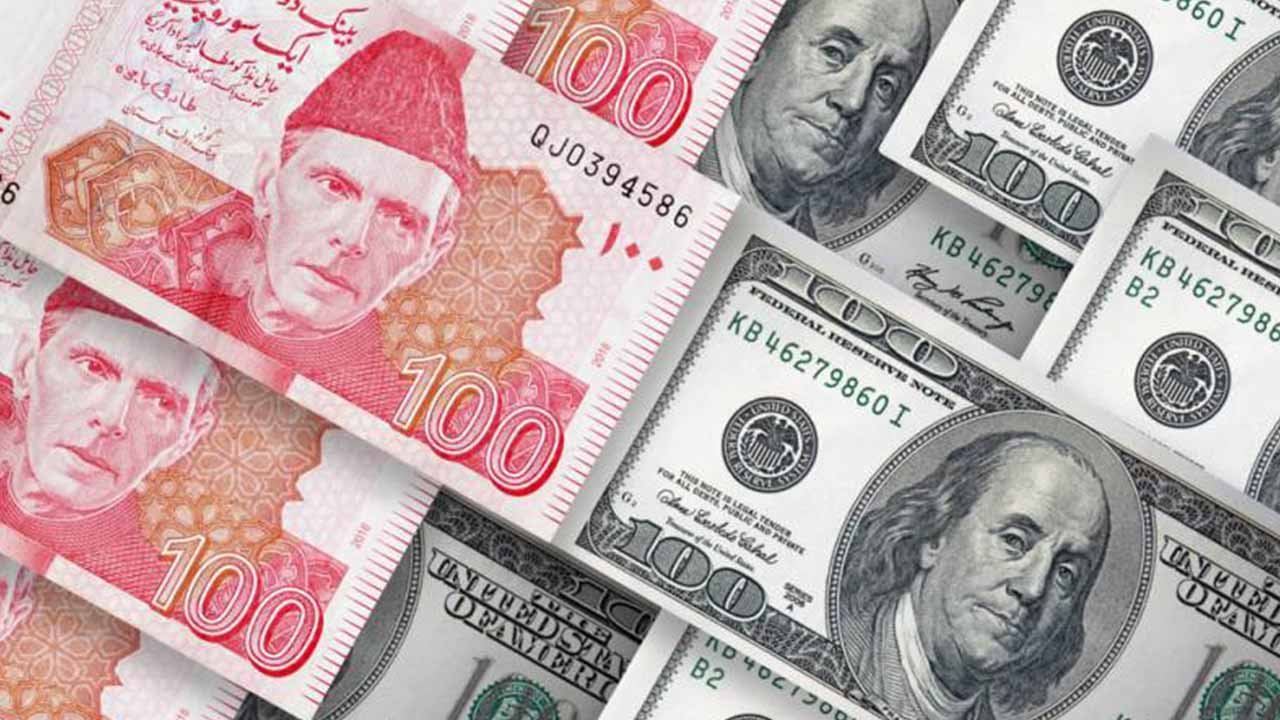
    However, the Pakistani rupee has plunged to a new all-time low of Rs290.18 against the US dollar in the interbank market, which is causing concern among importers who are panic buying dollars while exporters are reportedly withholding selling the greenback in anticipation of a higher exchange rate.

    It is reported that the IMF wants the value of the rupee in the interbank market to match its value in the black currency market.