Tag: staff-level agreement

  • Pakistan accepts IMF pre-condition to increase interest rate by 2%

    Pakistan accepts IMF pre-condition to increase interest rate by 2%

    Pakistan has agreed to increase its policy (interest) rate by two percent or 200 basis points, as a pre-condition for the release of $1.1 billion in critical funding from the International Monetary Fund (IMF). The funding is part of a $6.5 billion bailout package.

    The increase is based on rates set by the government in an auction to raise domestic debt and will push the interest rate to 19 per cent. This is just below the previous record of 19.5 per cent set in October 1996.

    Sources from the Ministry of Finance stated that there had been technical-level discussions between Islamabad and the IMF review mission and that it was expected that Islamabad would increase the interest rate by two percent. Most of the pre-conditions set by the IMF had been fulfilled, according to these sources.

    Sources also indicated that discussions on some issues related to the power sector were in the final stages, after which a staff-level agreement with the IMF would be reached. Additionally, Pakistan provided a detailed briefing to IMF officials on the sources of foreign exchange until June.

  • President Alvi approves mini-budget amidst concerns of pushing Pakistanis into deeper poverty

    President Alvi approves mini-budget amidst concerns of pushing Pakistanis into deeper poverty

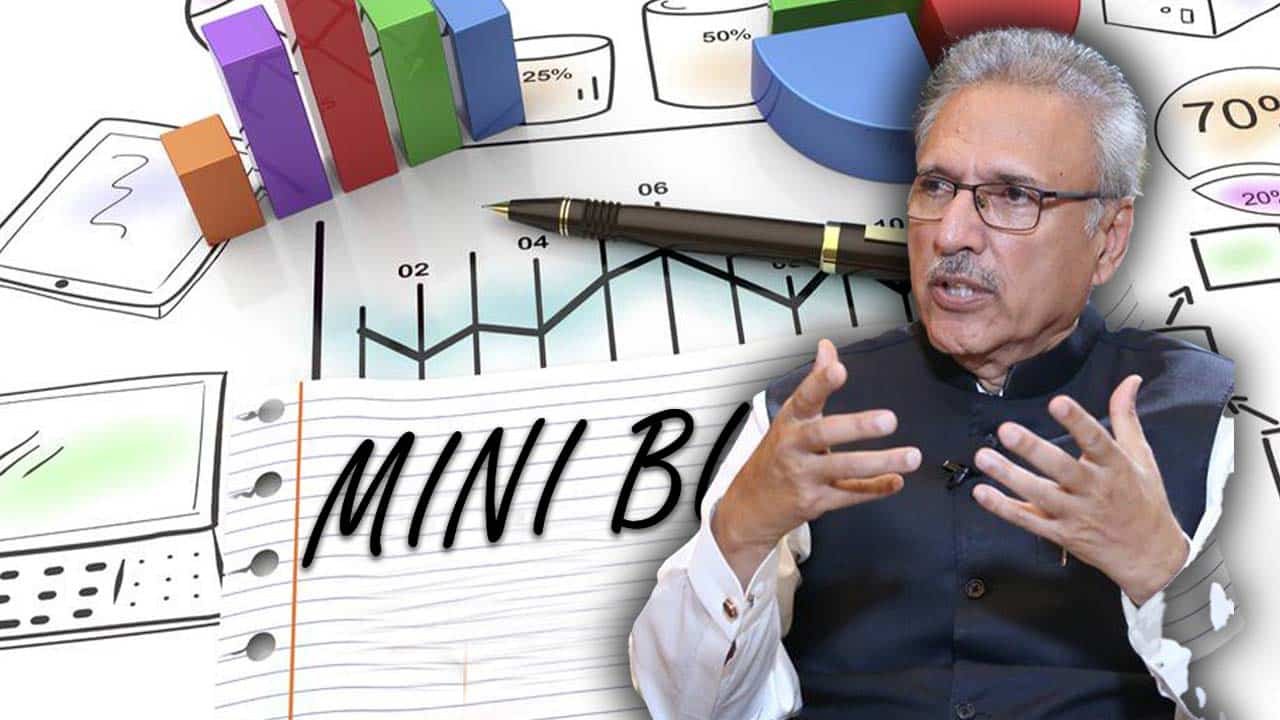
    President Dr Arif Alvi has given his approval for the Finance (Supplementary) Bill 2023, also known as the mini-budget, under Article 75 of the Constitution, which requires the president to assent to a bill presented to him within 10 days.

    National Assembly had passed the Rs170 billion mini-budget with some modifications, which will have an annual impact of about Rs550 billion.

    The budget’s approval has brought Pakistan closer to an agreement with the International Monetary Fund (IMF) but at the cost of pushing people deeper into the poverty trap.

    The majority of the taxation measures were implemented, although the president had not given his assent when the National Assembly passed the bill.

    Finance Minister Ishaq Dar admitted during his wind-up speech that inflation was unbearable for the people and blamed the maladministration of the previous government of former prime minister Imran Khan.

    Dar also admitted that the news stories about Rs675 billion to Rs700 billion taxes were not untrue and the IMF had demanded those measures, which the government did not accept. Dar added that almost all major issues with the IMF had been sorted out, and Pakistan is now very near to the staff-level agreement.

  • IMF likely to announce staff level agreement with Pakistan by this week

    IMF likely to announce staff level agreement with Pakistan by this week

    According to Syed Naveed Qamar, the Federal Minister for Commerce, Pakistan has taken all necessary measures to unfreeze a $6.5 billion credit line and is expected to reach a staff level agreement (SLA) on Extended Fund Facility (EFF) with the International Monetary Fund (IMF) this week.

    Dr Aisha Ghaus Pasha, the Minister of State for Finance, stated that Pakistan and the IMF are close to reaching an SLA, but that basic structural reforms are necessary regardless of whether they are part of the IMF program or not.

    After the formal announcement, Pakistan will receive a $1.2 billion tranche under the EFF. Qamar stated that the agreement would give investors and creditors confidence in Pakistan’s stabilising economy and that their money would remain protected.

    Qamar emphasized that the IMF program is the beginning of other funds flowing in and that increased imports would benefit exports.

    However, Pakistan is struggling to meet the tough conditions set by the IMF, such as increasing its low tax base, ending exemptions for the export sector, and raising artificially low energy prices. The country is in dire need of funds as the State Bank of Pakistan-held foreign exchange reserves only cover one month of imports.

    To meet IMF conditions, Pakistan has raised taxes, cut subsidies, and devalued its currency. Additionally, a supplementary finance bill was approved that increases sales tax from 17 per cent to 25 per cent on imports and raises general sales tax from 17 per cent to 18 per cent, increasing the burden on already inflation-stricken people.

  • National Assembly passes mini-budget to meet IMF targets

    National Assembly passes mini-budget to meet IMF targets

    The National Assembly of Pakistan passed the Finance (Supplementary) Bill, 2023, aimed at amending certain laws relating to taxes and duties. The bill is intended to generate an additional Rs170 billion within the next four and a half months, to fulfill the last prior actions agreed upon with the International Monetary Fund (IMF).

    Pakistan’s reserves have fallen to a critically low level of $2.9 billion, which experts believe is sufficient for only 16 to 17 days of imports. The completion of the ninth review of a $7 billion loan programme with the IMF would lead to a disbursement of $1.2 billion, as well as unlock inflows from friendly countries.

    The Finance Minister, Ishaq Dar, introduced the bill to the National Assembly on February 15, and the formal debate started on it after moving a motion by Commerce Minister Syed Naveed Qamar on February 17. In his concluding speech during the NA session, Dar said the new taxes proposed in the bill would not affect the poor segments of society, as most of the new taxes are being imposed on luxury items that they don’t use.

    The government has also proposed an increase of Rs40 billion in the budget of the Benazir Income Support Programme (BISP) to help the poor cope with rising inflation.

    The Finance Bill aims to increase the general sales tax (GST) rate from 17 per cent to 18 per cent, with an increase to 25 per cent on luxury items. The bill proposes to raise the federal excise duty (FED) on cigarettes, and aerated and sugary drinks. GST on 33 categories of goods covering 860 tariff lines, including high-end mobile phones, imported food, decoration items, and other luxury goods, will increase from 17 per cent to 25 per cent, however, the raise will be notified through another notification.

    The excise duty on cement has been raised from Rs1.5 to Rs2 per kilogram, a measure expected to generate an additional Rs6 billion. An excise tax of 10 per cent has been proposed on non-aerated drinks like juices, including mango and orange, to raise an additional tax of Rs4 billion.

    The finance bill also proposed a 10 per cent withholding tax on functions and gatherings held in marriage halls, marquees, hotels, restaurants, commercial lawns, clubs, community places, or other places, expected to raise Rs1 billion to Rs2 billion from this tax. The excise duty on carbonated or aerated drinks has been raised to 20 per cent from 13 per cent to generate an additional Rs10 billion for the government.

    The proposed increase in excise duty on business, first, and club-class air tickets will raise an additional Rs10 billion for the government, with a tax rate of 20 per cent (or Rs50,000, whichever is higher) proposed on the value of air tickets.
  • IMF expected to reach staff-level agreement with Pakistan soon

    IMF expected to reach staff-level agreement with Pakistan soon

    The country representative for the International Monetary Fund (IMF), Ester Perez, has called the conversations with the Pakistani government regarding the ninth review “productive.”

    “Discussions have enabled a revision to the macroeconomic outlook post floods as well as an in-depth evaluation of fiscal, monetary, exchange rate, and energy policies adopted since the completion of the combined seventh and eighth reviews,” said Perez.

    The chief of the IMF in Pakistan stated that the international lender is eager to continue discussions about policies that effectively address the requirements for assistance and recovery after the floods while also maintaining external and fiscal sustainability based on the available resources.

    Furthermore, a senior member of the Pakistani administration told The News that the IMF negotiations were doing well and that a staff-level agreement will likely be reached soon.

    The ninth review was scheduled for November 3, 2022, according to the IMF seventh and eighth review documents, which were published on the website at the end of September 2022.

    After discussions with Pakistani officials that ended on November 18, 2021, the executive board approved the sixth review on February 2, 2022. This delay was brought on by the inability to meet the ‘prior’ conditions.

    The proposed dates for the seventh and eighth reviews were set for March 4 and June 3, respectively, in the staff report that was made public following the approval of the sixth review. However, after talks that ended on May 25, 2022, the IMF executive board accepted the seventh and eighth reviews under the EFF on August 29. This delay was once again caused by the failure to meet the ‘prior’ standards.

  • Pakistan receives Letter of Intent from IMF, moving closer to $1.17 billion tranche

    Pakistan receives Letter of Intent from IMF, moving closer to $1.17 billion tranche

    The International Monetary Fund (IMF) has sent Pakistan the Letter of Intent (LoI), bringing the disbursement of the $1.17 tranche for the combined seventh and eighth review closer.

    Pakistan will approve the Lol and return it to the IMF. The Extended Fund Facility will now be revived right after IMF board’s approval.

    The IMF team and the Pakistani government came to a staff-level agreement (SLA) in July for the conclusion of the combined seventh and eighth tranche.

    The international lender estimates that after the Executive Board approves it, around $1,177 million will become accessible, bringing the program’s total payouts to almost $4.2 billion.

    But according to a report from last month, before the multilateral lender provides Pakistan with new funding, it was also looking to determine the level of commitment from other sources.

    The Washington-based lender wants to make sure that Pakistan won’t experience a funding shortfall following the IMF loan.

    For Pakistan, which is desperately seeking dollar inflows in the face of declining foreign exchange reserves, the IMF support is essential in addition to other forms of finance.

  • IMF, Pakistan reach staff-level agreement on policies and reforms

    IMF, Pakistan reach staff-level agreement on policies and reforms

    The International Monetary Fund (IMF) and Pakistan reached a staff-level agreement on policies and reforms needed to complete the sixth review under the $6 billion Extended Fund Facility (EFF), which has been ‘in recess’ since April, the Fund announced in a statement on Monday.

    The agreement is subject to approval by the Executive Board, following the implementation of prior actions, notably on fiscal and institutional reforms. The approval of the agreement will make available 750 million in Special Drawing Rights (SDR), equivalent to $1,059m, read the statement.

    The Fund acknowledged Pakistan’s progress in improving its anti-money laundering and combatting the financing of terrorism (AML/CFT) regime. However, additional time was needed to strengthen its effectiveness, according to the statement.

    “Available data suggest that a strong economic recovery has gained hold, benefiting from the authorities’ multifaceted policy response to the Covid-19 pandemic that has helped contain its human and macroeconomic ramifications,” the IMF said.

    “At the same time, external pressures have started to emerge: a widening of the current account deficit and depreciation pressures on the exchange rate — mainly reflecting the compound effects of the stronger economic activity, an expansionary macroeconomic policy mix, and higher international commodity prices.”

    The IMF emphasised that the monetary policy needs to remain focused on curbing inflation, preserving exchange rate flexibility, and strengthening international reserves.

    The introduction of the Finance Bill in the National Assembly to increase taxes and approval of the State Bank of Pakistan (SBP) Amendment Bill are pre-conditions for the revival of the IMF loan programme, Finance Adviser Shaukat Tarin said last week.

    The IMF said that despite a difficult environment, progress continues to be made in the implementation of the EFF-supported programme.

    “All quantitative performance criteria (PCs) for end-June were met with wide margins, except for that on the primary budget deficit”, said the IMF.