Tag: Stand-By Arrangement

  • Pakistan receives final installment of IMF’s $3 billion SBA

    Pakistan receives final installment of IMF’s $3 billion SBA

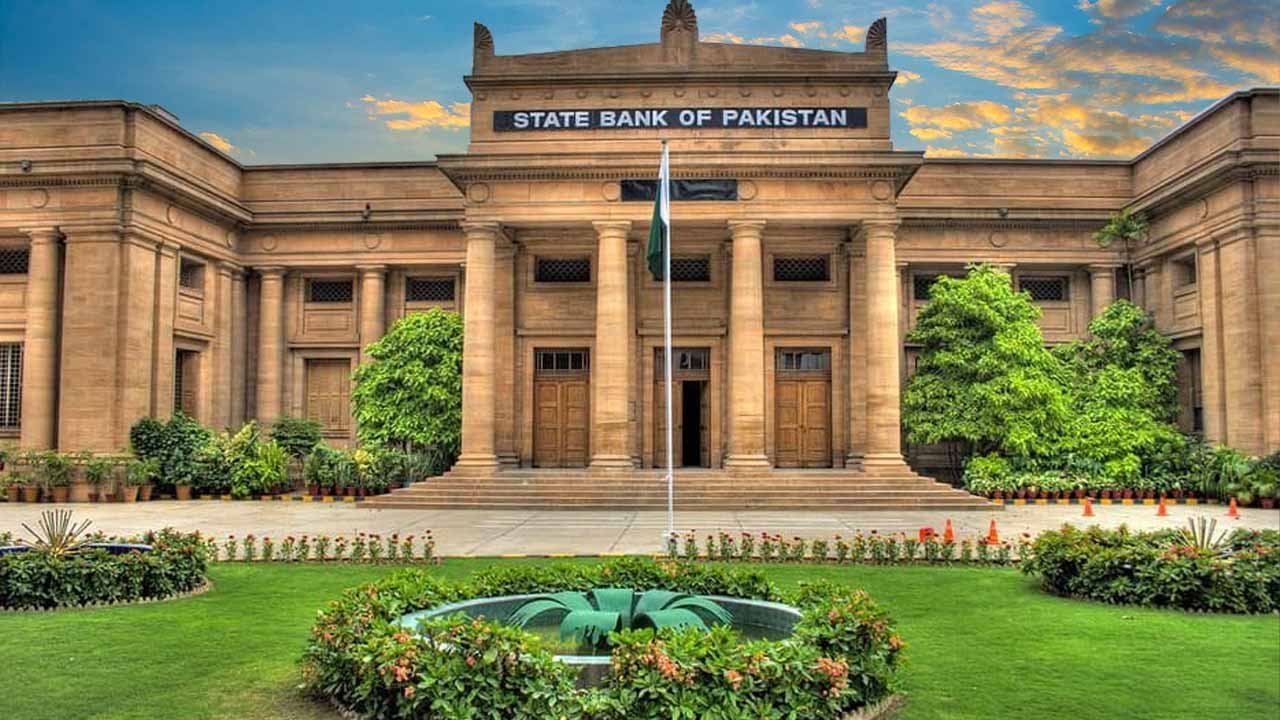
    Pakistan has received the final tranche of $1.1 billion from the International Monetary Fund (IMF) as part of its $3 billion Stand-By Arrangement (SBA), the State Bank of Pakistan (SBP) announced on Tuesday.

    The disbursement follows the IMF’s successful completion of its final review of Pakistan’s economic reform programme supported by the 9-month SBA.

    The SBP said in its statement that the Special Drawing Rights (SDR) of 828 million, equivalent to approximately $1.1 billion, had been received on April 29, 2024, and would be reflected in the central bank’s foreign exchange reserves for the week ending May 3, 2024.

    As of April 19, the central bank’s foreign exchange reserves stood at $7.981 billion.

    Prime Minister Shehbaz Sharif welcomed the latest disbursement, stating that it would contribute to greater economic stability in Pakistan.

    He highlighted that the SBA was critical in preventing the country from defaulting on its external liabilities. 

    Pakistan’s government is now focused on securing a larger and longer Extended Fund Facility (EFF) to achieve sustained macroeconomic stability.

    The prime minister has already signalled his intention to pursue another IMF programme to ensure the continuity of economic growth and fiscal discipline.

    On Sunday, Prime Minister Shehbaz Sharif met with IMF Managing Director Kristalina Georgieva on the sidelines of the World Economic Forum Special Meeting in Saudi Arabia.

    During the meeting, the prime minister reiterated his government’s commitment to implementing structural reforms, maintaining strict fiscal discipline, and following prudent policies that would support macroeconomic stability and sustainable economic growth.

    Pakistan is seeking additional support to maintain the economic gains made during the current SBA and to continue its positive economic growth trajectory.
  • Pakistan anticipates final IMF tranche approval in late April

    Pakistan anticipates final IMF tranche approval in late April

    The International Monetary Fund (IMF) announced that its Executive Board meeting, anticipated for late April, is crucial for approving Pakistan’s final tranche of approximately $1.1 billion (SDR 828 million). 

    This sum represents the last portion of the $3-billion Stand-By Arrangement (SBA) initiated in June of the previous year.

    Julie Kozack, IMF Communication Director, revealed this information during a media briefing, highlighting the significance of the staff-level agreement reached on March 19 between IMF staff and Pakistani authorities. 

    This agreement, subject to approval by the IMF’s Executive Board, acknowledges Pakistan’s strong program implementation by the State Bank of Pakistan (SBP) and the interim government, as well as the new government’s commitment to ongoing policy and reform endeavors aimed at transitioning Pakistan from stabilisation to robust, sustainable recovery.

    Kozack emphasised the improvement in Pakistan’s economic and financial position since the completion of the first review, with growth and confidence steadily rebounding. 

    Looking ahead, she mentioned the possibility of a successor IMF-supported program to address Pakistan’s fiscal and external stability challenges and foster inclusive growth, indicating the IMF’s readiness to engage in discussions with Pakistani authorities.

    Meanwhile, Pakistan’s foreign exchange reserves witnessed a modest increase, reaching $8.04 billion as of March 29, although still considered low for an import-dependent economy, raising concerns about potential future pressure. 

    Finance Minister Muhammad Aurganzeb has acknowledged the need for another IMF bailout, with discussions slated for the upcoming Spring meetings of the Board of Governors of the World Bank Group and IMF scheduled for April 15-20, 2024, in Washington DC, where Aurangzeb is expected to lead Pakistan’s delegation.

  • IMF urges Pakistan to expand capital gains tax scope to include cryptocurrencies

    IMF urges Pakistan to expand capital gains tax scope to include cryptocurrencies

    The International Monetary Fund (IMF) has advised the Federal Board of Revenue (FBR) to broaden the scope of capital gains tax (CGT) by incorporating cryptocurrencies into the tax regime.

    This recommendation arises amidst ongoing discussions between the Fund and Pakistani authorities regarding the $3 billion stand-by arrangement (SBA).

    The four-day review, which commenced on Thursday, aims to unlock the final tranche of approximately $1.1 billion secured by Islamabad under a last-minute rescue package last summer, thus averting a sovereign debt default.

    During these deliberations, the IMF proposed a reassessment of tax slabs for real estate and listed securities to ensure comprehensive taxation of all gains, irrespective of asset holding periods.

    Moreover, the IMF urged the FBR to mandate property developers to monitor and report all pre-completion property transfers, with penalties for non-compliance. This move aims to bring under the tax umbrella the prevalent practice of trading property plot files within housing schemes.

    These recommendations are anticipated to be incorporated into the forthcoming bailout package under the Extended Fund Facility (EFF), potentially becoming integral to the FY2024–25 budget through the finance bill.

    The IMF’s technical assistance report highlights the challenges faced by Pakistani authorities in assessing and collecting taxes on capital gains from real estate transactions, particularly those occurring before formal property registration.

    To address this issue, the IMF suggests obligating property developers to track and report all pre-completion property transfers, with penalties for non-compliance, thereby shifting tax liabilities to developers if they are not recoverable from the initial transferor.

    Furthermore, the IMF advocates for the expansion of assets subject to capital gains tax to include emerging investment avenues such as cryptocurrencies alongside real estate and listed securities. 

    It also proposes revising tax slabs to ensure equitable taxation of capital gains, irrespective of asset holding durations.

    Overall, these IMF recommendations seek to fortify the taxation framework, ensuring a more inclusive and equitable approach to capital gains taxation in Pakistan.

  • IMF mission holds crucial talks with FinMin Aurangzeb on $3 billion SBA

    IMF mission holds crucial talks with FinMin Aurangzeb on $3 billion SBA

    In a pivotal meeting held on Thursday, Pakistan’s Finance Minister, Muhammad Aurangzeb, engaged in discussions regarding structural reforms and the viability of the energy sector with the visiting International Monetary Fund (IMF) mission.

    The mission’s visit is part of the second review process of the $3 billion Stand-By Arrangement (SBA) established between Pakistan and the international lender.

    Key points of deliberation encompassed various facets of Pakistan’s macroeconomic landscape, including fiscal consolidation efforts by the government, structural reforms, energy sector sustainability, and governance of state-owned enterprises (SOEs).

    Expressing a warm reception, the finance minister underscored the government’s steadfast commitment to collaborating with the IMF to drive forward the reform agenda, aimed at fostering economic growth and bolstering stability across Pakistan.

    During the meeting, Nathan Porter, head of the IMF mission, extended congratulations to Muhammad Aurangzeb on his appointment as the finance minister.

    Anticipations are high that the IMF mission’s visit could culminate in a staff-level agreement regarding the second review of the SBA.

    Since its inception in July 2023, Pakistan has received $1.9 billion out of the allocated $3 billion under the nine-month programme.

    Aurangzeb, articulating the government’s stance, outlined intentions to explore the possibility of acquiring a more extensive and prolonged Extended Fund Facility (EFF) within the IMF framework, with the overarching objective of attaining macroeconomic stability.

    Officials from Pakistan, including Finance Minister Muhammad Aurangzeb and Energy Minister Musadik Malik, apprised the IMF team of the concerted efforts undertaken to implement the prescribed reforms, including the adjustment of energy tariffs.

    An official from the Finance Division, speaking on anonymity, disclosed the IMF’s acknowledgment of Pakistan’s strides in meeting quarterly programmeme targets under the SBA.

    Simultaneously, discussions are underway to chart the trajectory of the subsequent programmeme, with deliberations leaning towards a more extensive endeavour valued at approximately $8 billion.

    Minister Malik elaborated on the government’s energy reform agenda, highlighting recent adjustments in electricity and gas prices aligned with the stipulated schedule.

    The recent levy hike on petrol and diesel, coupled with the augmentation of gas tariffs for domestic consumers, underscores Pakistan’s commitment to fulfilling key conditions outlined in the IMF’s final review.

    Economic analysts anticipate a seamless final review process, citing Pakistan’s commendable adherence to the IMF’s performance targets as a harbinger of success.

  • SBP sees surge of over $17 million in forex reserves

    SBP sees surge of over $17 million in forex reserves

    The latest data released by the State Bank of Pakistan (SBP) revealed a notable rise in the country’s foreign exchange reserves. During the week ending March 8, 2024, SBP’s reserves increased by $17.2 million, marking a 0.22 per cent growth, reaching a total of $7.91 billion.

    Additionally, Pakistan’s overall reserves experienced a surge, ascending by $131.3 million, or 1.01 per cent, week-on-week (WoW), to a sum of $13.15 billion. This increase was further complemented by a rise in reserves held by commercial banks, which climbed by $114.1 million, or 2.23 per cent, to reach $5.24 billion.

    In a significant development, the second review of the stand-by arrangement (SBA) with the International Monetary Fund (IMF) is slated to take place from March 14 to 18, 2024. This review holds particular importance as it marks the final assessment under the SBA. Upon reaching a staff-level agreement, the final tranche of $1.1 billion will be disbursed, subject to approval by the Executive Board of the IMF.

    It is noteworthy that in the current fiscal year, Pakistan has witnessed a substantial increase in its total liquid foreign reserves, amounting to $3.99 billion, or 43.57 per cent. Similarly, the ongoing calendar year has seen a rise of $0.48 billion, or 3.77 per cent.

  • Pakistan clears hurdles for IMF review, final agreement expected

    Pakistan clears hurdles for IMF review, final agreement expected

    The newly elected government of Pakistan has indicated its intention to secure a new loan from the International Monetary Fund (IMF).

    In line with this, representatives from the IMF are scheduled to visit Pakistan for the second review of the ongoing Stand-By Arrangement (SBA). The review is set to take place from March 14 to 18 in Islamabad.

    According to a statement released by the finance ministry, Pakistan has successfully met all structural benchmarks, qualitative performance criteria, and indicative targets required for the IMF review.

    This upcoming review marks the final evaluation of the SBA, with a staff-level agreement anticipated upon its completion.

    Once this agreement is reached, the final tranche of $1.1 billion under the SBA will be disbursed, subject to approval from the IMF’s Executive Board.

    Last summer, Islamabad secured a vital rescue package from the IMF, preventing a potential sovereign debt default.

    The successful completion of the final review is expected to unlock approximately $1.1 billion.

    Prime Minister Shehbaz Sharif has instructed his finance team, led by newly appointed Finance Minister Muhammad Aurangzeb, to begin preparations for seeking an Extended Fund Facility (EFF) once the standby arrangement concludes on April 11.

    The IMF has expressed readiness to develop a medium-term programme if Pakistan submits an application for one.

    Notably, the government has not officially disclosed the amount of additional funding it intends to seek through a successor programme from the IMF.

  • Moody’s cautions on Pakistan’s fiscal challenges despite recent stability

    Moody’s cautions on Pakistan’s fiscal challenges despite recent stability

    Moody’s Investors Service, a global credit rating agency, stated on Tuesday that Pakistan’s credit rating could see an upgrade if the government successfully reduces liquidity and external vulnerability risks.

    Despite this potential, Moody’s maintained Pakistan’s credit rating at ‘Caa3’ for long-term issuer rating with a stable outlook in its periodic review.

    The credit profile of Pakistan reflects significant liquidity and external vulnerability risks, attributed to low foreign exchange reserves insufficient to meet high external financing needs in the near to medium term, according to Moody’s.

    The agency also highlighted the country’s very weak fiscal strength and elevated political risks as constraints on its credit profile.

    Moody’s expressed uncertainty regarding the new government’s ability to swiftly negotiate a new International Monetary Fund (IMF) programme after the ongoing programme concludes in April.

    While acknowledging Pakistan’s large economy and moderate growth potential, the agency emphasized the nation’s high liquidity and external vulnerability risks, despite economic stability maintained by the caretaker government and recent reforms.

    The agency recognised the government’s efforts to unlock financing from the IMF and other partners, resulting in a modest accumulation of foreign exchange reserves.

    However, it cautioned that, despite meeting external debt obligations for the fiscal year ending June 2024, there is limited visibility on sources of financing to address high external financing needs post-the current IMF stand-by arrangement.

    Moody’s rationale for the stable outlook at the Caa3 rating level is based on the assessment that pressures on Pakistan align with this rating, with broadly balanced risks.

    The agency suggested that continued IMF engagement beyond the current programme could attract additional financing from other partners, reducing default risk.

    Nonetheless, it emphasised the substantial external financing required and low reserve position, indicating potential default risks with funding delays.

    Moody’s indicated that an upgrade in Pakistan’s rating could occur with a substantial and sustained reduction in liquidity and external vulnerability risks, coupled with increased foreign exchange reserves and fiscal consolidation.

    Conversely, a downgrade might be likely if Pakistan defaults on debt obligations with significant losses to creditors.

    The agency expressed uncertainty regarding the new government’s ability to negotiate a new IMF programme swiftly after the ongoing one expires in April, citing high political risks following the controversial general elections held on February 8, 2024.

    Moody’s warned that without a new programme, Pakistan’s ability to secure loans from other partners would be severely constrained.

  • Pakistan informs IMF of preparedness to address near-term challenges

    Pakistan informs IMF of preparedness to address near-term challenges

    In a recent communication to the International Monetary Fund (IMF), the government has underscored its preparedness to address potential near-term challenges, signalling a commitment to maintaining economic stability.

    The disclosure comes as part of the IMF’s first review under the stand-by arrangement.

    The government, as revealed in the report, stands ready to respond decisively should near-term price pressures reemerge. This includes addressing stronger-than-expected second-round effects on core inflation and potential pressures on the exchange rate amid the normalisation of the current account.

    Amid signs of weaker demand, positive supply developments, and decreasing pressures on the exchange rate, the government anticipates a notable decline in inflation in the coming months.

    As a result, the policy rate was maintained at 22 per cent during the latest Monetary Policy Committee (MPC) meeting held on October 30. However, the government reiterated its readiness to respond promptly if there is a resurgence of near-term price pressures.

    The primary objective is to ensure a clear downward trajectory for inflation and inflation expectations. The pace of future adjustments will be contingent on various factors, including inflation data, exchange rate developments, external position strength, and the fiscal-monetary policy mix.

    The government aims to keep the real policy rate in positive territory on a forward-looking basis, signalling a commitment to bringing inflation within the target band by fiscal year 2026.

    To enhance monetary policy transmission, the interest rate on major refinancing schemes, specifically the EFS and LTFF, will continue to be linked to the policy rate, with a spread of no more than 3 per centage points, as per the announcement by Pakistani authorities.

    The report emphasised the importance of vigilance, highlighting that despite the return of the forward-looking real policy rate to positive territory, caution is necessary due to near-term risks.

    With inflation expectations not yet firmly anchored, the Monetary Policy Committee is urged to respond robustly and promptly should inflationary pressures resurface.

    Maintaining a positive real policy rate during a period of easing inflation and promptly addressing signs of new demand pressures or rising inflation expectations is seen as crucial.

    This strategy aims to re-anchor inflation expectations and guide down core inflation from the second half of fiscal year 2024 onwards, contingent on the absence of a resumption in administrative import compression.

    The report projects a significant decline in headline inflation through fiscal years 2025–26, aligning within the targeted 5–7 per cent range by fiscal year 2026. This outlook is supported by fiscal consolidation efforts and the normalization of global commodity prices.

    While the IMF staff views the current stance as broadly appropriate given weak domestic demand, the report suggests that the MPC should remain prepared to respond resolutely if near-term price pressures reemerge, including second-round effects.

  • Pakistan’s forex reserves witness a dip of $127 million

    Pakistan’s forex reserves witness a dip of $127 million

    In a recent report, it was revealed that the foreign exchange reserves held by the State Bank of Pakistan (SBP) experienced a decline of $127 million during the week ending January 12, settling at $8.03 billion.

    The country’s total liquid foreign reserves, including those held by commercial banks, amounted to $13.15 billion. Specifically, commercial banks held net foreign reserves of $5.12 billion.

    The SBP attributed the reduction in reserves to debt repayments, stating, “During the week ending on January 12, 2024, the SBP’s reserves decreased by US$ 127 million to US$ 8,027.4 million due to debt repayments.”

    Notably, the previous week had also seen a decrease in Pakistan’s central bank reserves, amounting to $66 million.

    In a significant development, Pakistan received a tranche of $705.6 million from the International Monetary Fund (IMF), as confirmed in a statement by the SBP on Wednesday.

    The central bank stated, “The SBP has received SDR 528 million (equivalent to $705.6 million) on January 16, 2024, from the IMF following the successful completion of the first review by the Executive Board of the IMF under Standby Arrangement (SBA).”

    The impact of this disbursement will be reflected in the central bank reserves for the week ending January 19.

  • SBP receives second IMF installment, total disbursements reach $1.9 billion

    SBP receives second IMF installment, total disbursements reach $1.9 billion

    The State Bank of Pakistan (SBP) announced today that it has successfully received the second installment of SDR 528 million, equivalent to $705.6 million, from the International Monetary Fund (IMF).

    This disbursement, slated to be reflected in SBP reserves for the week ending on January 19, 2024, marks a significant step in the ongoing financial collaboration between Pakistan and the IMF.

    The latest disbursement brings the total disbursements under the stand-by arrangement (SBA) to a substantial $1.9 billion.

    It is noteworthy that the remaining $1.1 billion is expected to be received after another comprehensive review scheduled for February 2024.

    As of January 5, 2024, the State Bank of Pakistan’s total reserves stand at $8.15 billion, showcasing the positive impact of the financial support received through the IMF programme.

    To recall, Pakistan secured a $3 billion SBA from the IMF towards the end of FY23, crucially preventing the nation from defaulting on its sovereign debt.

    The disbursement of the IMF funds has been phased out over two installments, subject to meticulous reviews.

    On January 11, 2024, Pakistan successfully completed the first review of the economic reform programme, a significant milestone in ensuring the country’s financial stability.

    Following the board’s approval, the IMF highlighted that economic activity has stabilised, though acknowledging that the outlook remains challenging and is contingent on the implementation of sound policies.

    Pakistan’s 9-month SBA aims to provide a robust policy anchor for addressing both domestic and external balances, serving as a framework for continued financial support from multilateral and bilateral partners.

    This financial collaboration with the IMF is instrumental in navigating Pakistan through economic challenges, providing a solid foundation for sustained growth and stability in the region.

    The country remains committed to implementing prudent economic policies as outlined in the reform programme, with the ongoing support of international partners.