Tag: Startup

  • Canada’s ‘Startup Visa Program’ with no education, experience, job requirement or age limit

    Canada’s ‘Startup Visa Program’ with no education, experience, job requirement or age limit

    Umair Saleemi, journalist for BBC Urdu, shed light on Canada’s ‘Startup Visa Program’ in his latest piece:

    Every year, thousands of people from India and Pakistan migrate to America, Canada and European countries for better opportunities and a brighter future.

    Therefore, any changes in immigration and work visa laws or the introduction of any new programs are closely monitored in these countries.

    As Canada has changed the work permit law this month, Canadian authorities extended work permits for 18 months due to increased demand in the labour market during the Covid era, which is being phased out from January next year.

    Since then, Canada has initiated a startup visa program has been hailed by some experts as a golden opportunity.

    The program is mainly for talented foreigners who want to establish their own small businesses or startups in Canada.

    Certain criteria have been set to assess the quality of a startup, including innovation, creation of new jobs for local people and ability to compete globally.

    Who can apply for a Canadian Startup Visa?

    To apply for a Canadian start-up visa, a candidate must have a valid business. It is important that the candidate owns the shares of the business. One must hold 10 per cent or more of the company’s shares and have voting power (at shareholders’ meetings).

    A maximum of five people can apply in this program. It is important that the startup is supported by a Canadian organisation or ‘designated body’ and a letter of support is issued.

    Your business must operate from Canada, have its main activities from Canada and be established in Canada.

    In addition to mastering the English language, knowledge of French can further help your startup succeed in Canada. Canadian visa rules require the applicants to be fluent in speaking, writing and understanding either English or French.

    The startup visa candidate also has to provide evidence to the Canadian government that they have the resources to support themselves and their dependents. Candidates cannot manage this money by borrowing money.

    Immigration expert Julie Desai told BBC Gujarati that a startup visa is quite different from a normal work permit visa. Its aim is only to attract businessmen and entrepreneurs to Canada.

    The most important requirement is that the candidate’s business must be innovative enough to create new jobs in Canada, Desai explains. This visa is not for general business people — such start-up plans are needed that they can compete in the world.

    Under this program, the financial resources required by a family can be determined by the number of its members. If only one person wants to go to Canada under this program, one will need 13757 Canadian dollars. This amount can increase if other family members also want to go along. It will also be important to see if the Canadian authorities revise this amount every year.

    Meanwhile the candidate needs a ‘Letter of Support’ for start-up from a recognized business group in Canada. For this the candidate approaches these organisations and assures them that their startup idea deserves support.

    Candidate has to contract with these institutions for a letter of support as this letter is proof that a Canadian investor, such as a venture capital fund, angel investor group or business incubator, supports the candidate’s idea.

    In addition, accredited organisations also issue Canadian Government ‘Certificates of Commitment’ to candidates. The government then verifies both the letters for the visa application.

    The Canadian government may ask for more information about your startup to review the information.

    The Canadian government may reject the application if the letter of support or other requirements are not met.

    Immigration lawyer Prashant Ajmera asserts that it is very important that the startup plan has the support of Canadian organisations, that the candidate has a detailed business plan, and to have knowledge of the Canadian market.
  • Pakistani e-motorbike startup raises $1.2 million to manufacture budget-friendly e-bikes

    Pakistani e-motorbike startup raises $1.2 million to manufacture budget-friendly e-bikes

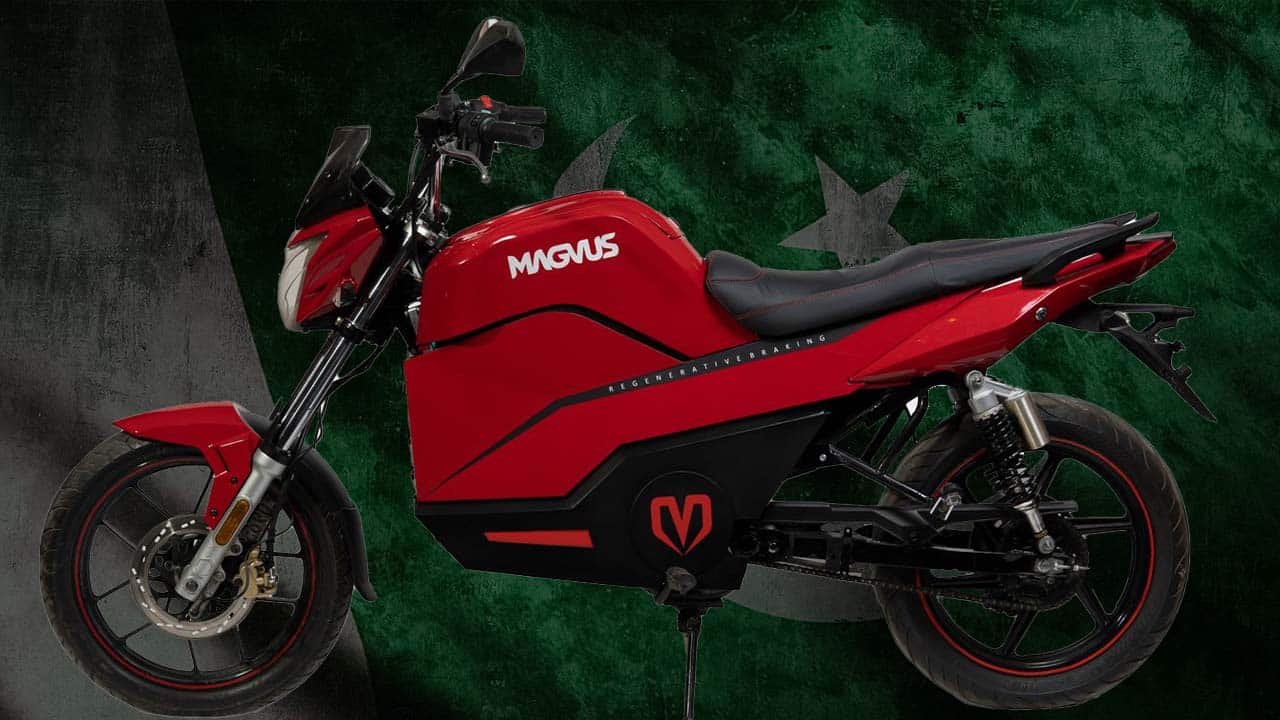
    Pakistani e-motorbike startup Zyp Technologies has raised $1.2 million in seed funding led by venture capital fund Indus Valley Capital.

    With this key investment, Zyp is driving mass-market adoption of electric mobility in Pakistan by addressing key hurdles to adoption including High upfront cost, Range anxiety, Long charging times.

    According to the official statement, the company aims to use this investment at its assembly line which is capable of manufacturing up to 8,000 e-motorbikes per year to meet demand. Depending on each variant in production, these bikes may cost in the region of Rs150,000-450,000.

    The startup also intends to build 4,000 charging stations across the country.

    Aatif Awan, founding partner at Indus Valley Capital, said, with its vision to electrify the 25 million motorbikes in Pakistan, Zyp is building one of the most important products Pakistan needs to help solve the trade imbalance and high inflation. 

    Zyp team has meticulously designed their electric motorbikes and battery swapping to perform well in the local environment, creating a remarkable indigenous solution we’re proud to back.

    Zyp founders joined forces with a mission to create Pakistan’s own homegrown automotive brand in the clean energy sector. 

    This dream team brings experience from Silicon Valley tech companies like Microsoft and Intel, as well as auto companies like Volvo and Land Rover, and startups like Retailo.

  • Karachi among South Asia’s top 10 start-up-friendly cities: Report

    Karachi among South Asia’s top 10 start-up-friendly cities: Report

    Karachi has been ranked in the top 10 start-up-friendly South Asian cities in Blink’s Startup Ecosystem Report 2022. Karachi has emerged as the highest-ranked city in Pakistan, taking the position away from Lahore.

    Karachi’s position has moved up in South Asia but globally it lost five spots to rank 291st. Lahore dropped a heartbreaking 48 positions to rank 305th whereas Islamabad dropped one position to 438th. This year has not been good for city rankings of smaller Pakistani cities – Faisalabad, Rawalpindi, Multan, and Jhelum are out of the global top 1,000, leaving Pakistan with only three ranked cities, versus seven in 2021.

    Pakistan has dropped one spot in 2022 to rank 76th globally and maintains its second rank in South Asia. Pakistan is ranked fourth in the CAREC (Central Asia Regional Economic Cooperation Program) business region.

    Pakistan’s overview:

    “With a population of over 220 million, Pakistan’s economy has massive potential to grow. For this to happen, digitalisation and successful startups will be a critical element. Amid the Covid-19 pandemic, digital entrepreneurship increased side by side with investment in local startups,” says the report.

    The report further states that digital infrastructure in Pakistan has seen improvement with the introduction of broadband internet coverage, including 4G. All this came together with new legal frameworks that regulate and promote digital payments, investment, and credit under the State Bank of Pakistan’s Digital Banking Policy.

    “In addition, the government set up Special Technology zones offering several tax exemptions and incentives. Pakistan has come a long way with its legal framework, but there are still some areas that require more clarity when it comes to taxation or incentives for domestic investments. The country’s turbulent political climate is not helping to create certainty and stable policies to boost the local startup ecosystem.”
    As per the report, “The spike in funding and startups needs to be fuelled by talent with experience in scaling startups. To sustain this need, the country needs to come up with ways of providing its startup ecosystems with qualified and trained personnel.”

    The global rating evaluates the state of the startup economy and describes the dynamics of their growth and the main trends. This year’s report evaluated startup ecosystems in 1,000 cities and 100 countries.

  • Pakistani startup Dastgyr raises $37 million in series A round

    Pakistani startup Dastgyr raises $37 million in series A round

    Dastgyr Technologies Pvt. has raised $37 million in Pakistan’s largest-ever Series A round. The company seeks to build an e-commerce platform for emerging economies comparable to Alibaba Group Holding Ltd.

    The funding was spearheaded by Veon Ltd.’s venture arm, which put up about 40 per cent of the money. Zinal Growth Fund, DEG, Khwarizmi Ventures, Oman Technology Fund, Cedar Mundi Ventures, Reflect Ventures, Century Oak Capital, Haitou Global, GoingVC, Astir Ventures, K3 Ventures, Chandaria Capital, SOSV, Edgebrook Partners, and EquiTie were among the others who contributed, according to Bloomberg.

    Veon’s evolution outside traditional telecom services continues with this round. In Pakistan, it has asked for a licence to operate as a digital bank.

    Pakistan’s economy is mostly centred on cash, but innovators are working to change that. Dastgyr is a one-stop platform that connects retailers like grocery stores with different suppliers including Nestle SA and Reckitt Benckiser Group Plc. Currently, most conventional retailers meet 100 vendors per week or physically peruse different markets to stock their shelves.

    Veon Ventures’ Chief Executive, Mohammad Khairil Abdullah, said, “As part of Veon’s transformation into a digital operator that delivers a growing range of services to our customers we are investing in leading digital companies like Dastgyr in the countries where we operate. These investments are the building blocks of the digital ecosystem that will enable us to deliver on our strategy”.

    “Pakistan’s start-up ecosystem is at a critical juncture and only startups focused on addressing key challenges and adopting localized solutions will survive and thrive,” added Aamir Ibrahim, CEO of Jazz.

    “This investment highlights VEON’s commitment to scaling up Pakistan’s digital economy and provides Dastgyr with a platform to build synergies with Jazz’s subscriber base of around 75 million and with JazzCash, further integrating the startup into Pakistan’s fintech ecosystem”.

    Zohaib Ali, a co-founder of Dastgyr, stated that the company is dedicated to “working persistently toward our ambition of developing an Alibaba for emerging countries worldwide.”

    Another co-founder, Muhammad Owais, stated that the company aspires to become a unicorn in the next years. He stated that the company is now growing into new business-to-business areas such as cement, steel, and other construction materials, as well as looking into the electronics, pharmaceutical, and other retail industries.

    Dastgyr, which has been in use for less than two years, is used by roughly 100,000 stores in five cities. It attempts to save money by connecting buyers and sellers through a digital platform instead of purchasing and storing everything in physical warehouses.

    Within this year, it plans to expand into 15 additional markets in Pakistan and expand internationally.

  • Coming budget 22-23 will improve Pakistan’s IT sector

    Coming budget 22-23 will improve Pakistan’s IT sector

    Prime Minister (PM) Shehbaz Sharif emphasised the importance of drafting an economic strategy during the day-long Pre-Budget Business Conference on Tuesday, stating that all stakeholders should work together to develop a framework for attaining economic growth.

    During his speech, the PM stressed the importance of financial management in order to boost exports and agricultural yields. The meeting was attended by senior economists, industrialists and was organised by the government to explore avenues of consensus-based economic initiatives, according to APP.

    “All of us will have to move collectively. The government will need guidance from stakeholders and experts. The government will form a taskforce on agriculture and exports for formulating comprehensive plans,” he said.

    PM Shehbaz stated that his government had about 15 months to implement short and medium-term economic initiatives.

    He was disappointed that Pakistan was lagging behind other countries, despite the fact that the rest of the world had excelled by following their development plans. He claimed that Pakistan was endowed with talented individuals capable of replicating India’s success in the IT sector.

    PM Shehbaz announced that he had assigned Minister of Information Technology Aminul Haque the objective of increasing IT exports to $15 billion in the next two years. “We cannot progress until we set ambitious targets,” he stressed.

    Syed Amin Ul Haque pledged on Tuesday to increase information technology exports to $5 billion by the end of 2023.

    For the coming fiscal year, several IT and telecommunications programmes have been proposed in this regard.

    According to sources, these projects include 31 existing and two new ones, for which the Pakistani government would give Rs4,438.696 million and foreign aid will provide Rs1,042 million.

    Budget allocation for IT sector

    Reportedly, an amount of Rs100 million is proposed for IT professional certification through the Pakistan Software Export Board, while Rs80 million is planned for Crime Analytics and Smart Policing. In Azad Jammu and Kashmir and Gilgit-Baltistan, Rs50 million has been suggested for demand-driven industry, while Rs179 million has been earmarked for the building of a data centre to provide cloud-based services.

    PM Shehbaz warned that development plans could not be implemented unless political stability was achieved. The premier also stressed the importance of concentrating on exports and developing the agricultural sector.

    He went on to claim that he was aiming to ‘fix’ friendly country relations that had deteriorated during the previous administration’s tenure. “I have invited China, Japan, Turkey, and other countries to invest in Pakistan,” he said. He invited the corporate community to join him in this endeavour.

    Meanwhile, Finance Minister Miftah Ismail stated that the government will require $41 billion in the next 12 months and that he is ‘confident’ that this can be achieved.

    The Shehbaz Sharif government, he added, has re-engaged with the International Monetary Fund (IMF). “We spoke with them and are extremely optimistic that we will reach an agreement with the IMF soon. That is something we are extremely certain about”.

    Moreover, he explained that the present coalition administration had made difficult measures to help the economy stabilise. “It is difficult for any prime minister to authorise a fuel price hike of twice the amount we have, but we were losing Rs84 per litre on diesel and Rs69 per litre on petrol”.

  • Additional tax to be levied on high-earning businesses

    Additional tax to be levied on high-earning businesses

    In the budget (2022-23), the government intends to impose a time-limited levy or additional income tax on the yearly income earned by the steel industry, pharmaceutical business, and other profit-generating segments, as well as increase the minimum tax from two to six percent on the import of edible oil

    According to reliable sources, the government has made the decision to increase the rate of least tax on the import of edible oil from two to six percent in the next fiscal budget to boost the occurrence of levy on this large profit-earning sector. The steel sector’s minimum tax rate will be raised in the new budget.

    It is worth noting that the fresh charge will only be levied on industries and sectors that make massive profits, and it would only be in place for a limited time.

    According to Brecorder, the steel sector’s profits have increased by 20-30 per cent, but they are not paying the requisite tax bills. As a consequence, an extra income tax or levy on the yearly earned income by the steel industry, pharmaceutical sector, and other sectors earning windfall profits has been proposed for 1-2 years.

    Added income taxor levy will be paid in conjunction with the filing of tax records. The levy would be time-limited and could be imposed for one or two years.

    The Federal Board of Revenue (FBR) levies a two per cent least tax on edible oil imports, which is decided to ascend to six per cent beginning with the next fiscal year. Earnings in the edible oil industry are very high, with massive profits, but tax payments are consistent or on the low side.

    The Federal Board of Revenue (FBR) is updating a list of high-profit industries based on tax financial records, annual financial statements, and third-party data.

    A new section in the Income Tax Ordinance 2001 would be introduced through the new Finance Bill 2022 for the imposition of the said levy on high profit earning sectors.

  • Nine Pakistani female entrepreneurs flying to US for mentoring, networking

    Nine Pakistani female entrepreneurs flying to US for mentoring, networking

    A programme financed by the United States (US) Embassy and introduced by the Indus Entrepreneurs (TIE) Islamabad, sent nine Pakistani women entrepreneurs to the US this week.

    The Accelerator Programme for Women Entrepreneurs is a one-of-a-kind training programme and competition that offers women-owned Pakistani start-ups exposure to American business tools, coaching, and mentorship.

    450 women-owned companies responded enthusiastically to the programme. The top 12 start-ups were chosen for a 15-week Founders Institute Acceleration Programme after a comprehensive round of mentoring sessions and pitching contests.

    Nine women entrepreneurs were chosen from among the 12 start-ups for an in-person acceleration exchange. Women entrepreneurs will have the opportunity to attend important conferences and visit the offices of big corporations like as Microsoft, Amazon, Facebook, Twitter, and PayPal during their tour.

    They’ll also stop by 9 Mile Labs, Kiwi Tech, Angel Pad, and Alchemist, all of which are situated in the United States. Throughout the eight-week programme, the participants will have many networking opportunities and will pitch to selected US-based investors on both the east and west coasts.

    Minister for Information Technology and Telecommunication Syed Amin-Ul-Haque said that this initiative offers Pakistani women entrepreneurs connectivity to global startups and foreign investors, speaking at a ceremony organised by the TIE Islamabad chapter before the departure of the Pakistani women entrepreneurs to the United States.