Tag: State Bank

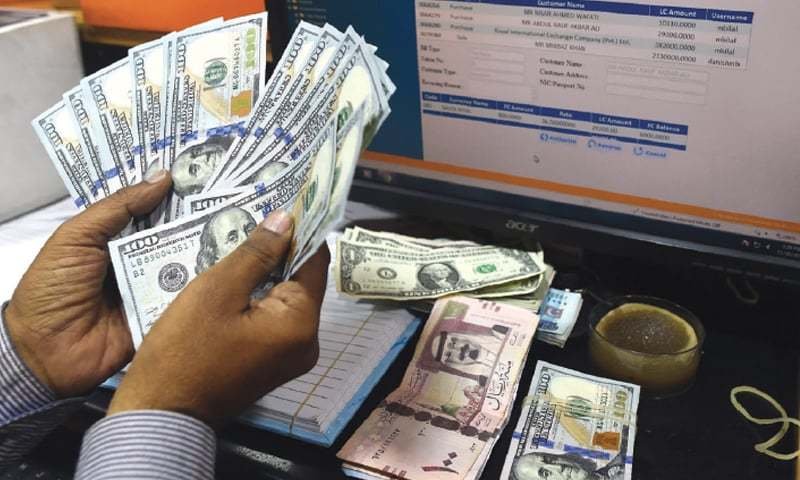
  • Bank deposits in Pakistan hit all-time high, showing 17.80% increase in a day 

    Bank deposits in Pakistan hit all-time high, showing 17.80% increase in a day 

    In a statement released on Friday, the State Bank of Pakistan (SBP) announced that the country’s bank deposits had reached an all-time high.  

    On October 23, there was a notable increase of 17.80 per cent, amounting to Rs3,986 billion, compared to the figures on October 22. 

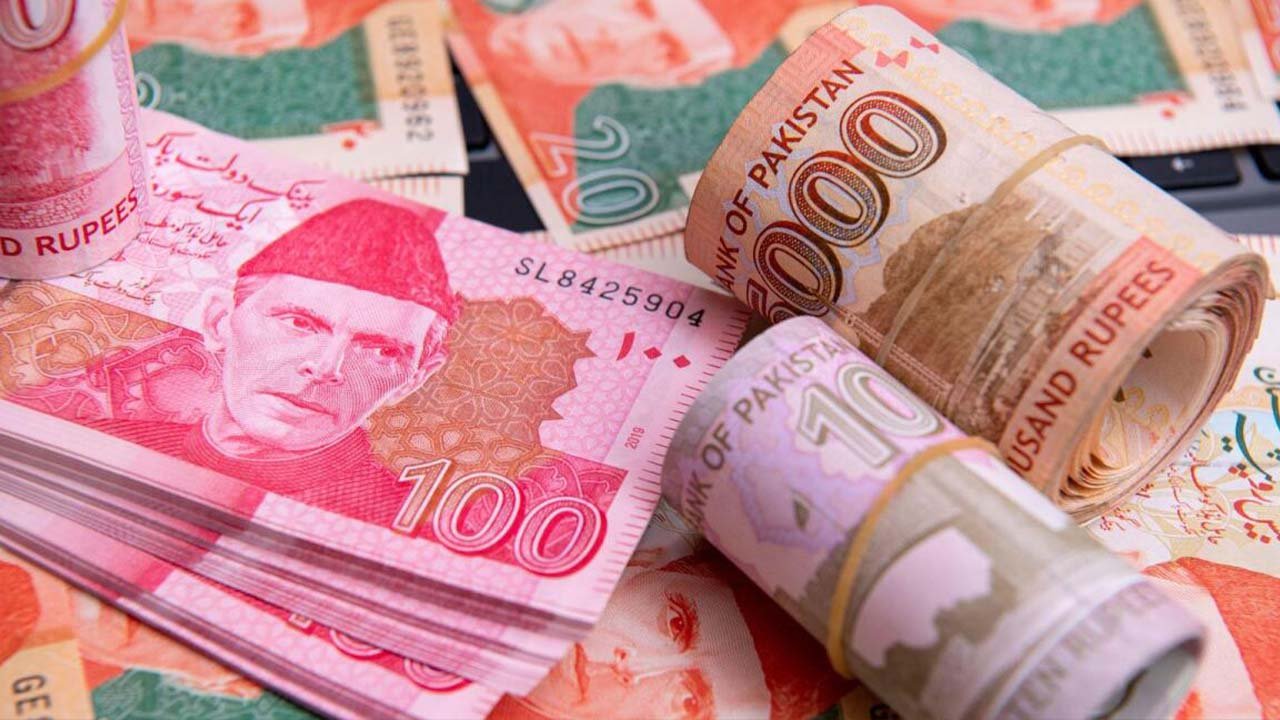
    According to the central bank, the total banking deposits for October 2023 reached a historic level of Rs26,000.398 billion. 

    Rupee expected to fall further 

    In other news, a Tresmark report suggests that the Pakistani rupee is anticipated to face pressure against the US dollar in the ongoing week until the completion of the International Monetary Fund’s (IMF) initial review of the country’s $3 billion loan programme.  

    The local currency experienced a depreciation of Rs2 or 0.60 per cent against the US dollar during the week, concluding at Rs287.03 on Friday.  

    It’s worth noting that the foreign exchange market was closed on Thursday due to a public holiday. 

    The IMF’s evaluation of Pakistan’s bailout package began on November 2, with expectations for the review to conclude by December 15. 
  • Crisis-hit Sri Lanka has enough petrol left for one day, PM warns

    Crisis-hit Sri Lanka has enough petrol left for one day, PM warns

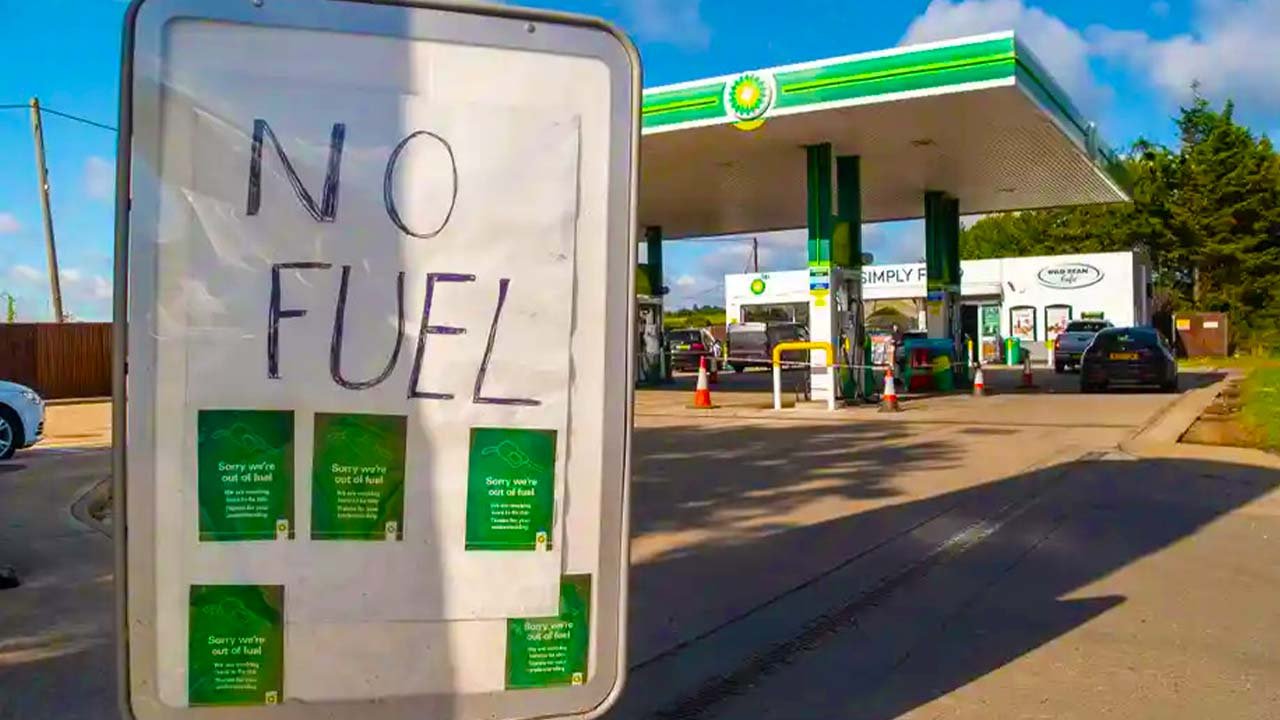
    As the country suffers its greatest economic crisis in more than 70 years, Sri Lanka’s new Prime Minister (PM) declared that the country is headed to its last day of petrol stock.

    PM Ranil Wickremesinghe said the country urgently needed $75 million in foreign currency to pay for crucial imports in a televised address. In order to pay government salaries, he claims the central bank will have to print money.

    Sri Lankan Airlines, which is owned by the government, may be privatised, according to PM Wickremesinghe.

    The pandemic, soaring energy prices, and populist tax cuts have all wreaked havoc on the island nation’s economy. Medicines, fuel, and other essentials were in low supply due to a chronic shortage of foreign cash and rising inflation.

    Auto rickshaws, the city’s most popular mode of transportation, and other vehicles have been queuing at gas stations in Colombo.

    The country has enough petrol for one day at the time. Mr Wickremesinghe, who was appointed Prime Minister last week, cautioned that the next few months will be the hardest of our lives.

    He noted that shipments of petrol and diesel using an Indian credit line could provide fuel supplies in the coming days.

    Mr Wickremesinghe stated that the nation’s central bank will have to print money to assist the government in meeting its salary bill and other obligations.

    The PM stated that he is forced to allow the printing of money against his will in order to pay state employees and purchase vital products and services. However, the nation must keep in mind that printing money causes the local currency to depreciate.

    Read more: CNG prices pushed to Rs140 per kg for sales tax collection

    As part of his efforts to stabilise the country’s finances, he advocated selling out Sri Lankan Airlines. In the fiscal year ended March 2021, the airline lost 45 billion rupees ($129.5 million; £105 million).

  • Pakistan receives $3 billion in remittances, highest in history

    Pakistan receives $3 billion in remittances, highest in history

    The State Bank of Pakistan (SBP) announced on Friday that remittances from Pakistani employees overseas have surpassed $3 billion for the first time, with Saudi Arabia and the United Arab Emirates contributing the most.

    Saudi Arabia ($707 million), the United Arab Emirates ($614 million), the United Kingdom ($484 million), and the United States of America ($346 million) were the largest sources of remittances in April 2022.

    “Remittances crossed the monthly mark of US $3 billion for the first time. Cumulatively, at $26.1 billion, remittances grew by 7.6 % in the ten months of FY22 compared to last year,” says a statement issued by the SBP.

    In terms of growth, remittances have been increased by 11.2 per cent on a month-on-month basis, and 11.9 per cent on a yearly basis

  • Pakistan’s forex reserves inch up to $17.05 billion

    Pakistan’s forex reserves inch up to $17.05 billion

    The State Bank of Pakistan’s (SBP) foreign reserves saw inflows of $36 million in the week ending April 16, 2022, representing a 0.3 per cent increase week over week.

    According to the SBP weekly update posted on Thursday, the country’s total liquid foreign exchange reserves increased by $16.9 million (+0.1 per cent) to $17.045 billion on April 16, 2022, up from $17.028 billion the previous week. SBP reserves rose by $36.1 million to $10.88 billion (+0.3 per cent), up from $10.85 billion the week before.

    Likewise, commercial banks’ net foreign reserves stood at $6.1 billion, down $19.3 million (-0.3 per cent) on a weekly basis.

    Read more: Pakistani rupee plunges by Rs1.05 against the US dollar

    In the interbank market on Thursday, however, the Pakistani Rupee (PKR) resumed its downward trend versus the US Dollar (USD). It fell by Rs1.04 to the dollar, Rs1.15 to the Australian Dollar (AUD), Rs2.04 to the Canadian Dollar (CAD), Rs2.42 to the Pound Sterling (GBP), and Rs2.96 to the Euro (EUR).

  • Nisab amount of zakat deduction set at Rs88,927 for 2022

    Nisab amount of zakat deduction set at Rs88,927 for 2022

    The nisab amount of zakat for the year 2022 is set at Rs88,927, according to a notification dated March 30, 2022, issued by the Poverty Alleviation & Social Safety Division, Cabinet Secretariat, Government of Pakistan.

    The account holders, maintaining a minimum of Rs88,927 balance on the first day of Ramzan would be liable to pay 2.5 per cent Zakat on the first day of the fasting month of Ramzan.

    If the amount standing to the credit of an account is less than the said amount, no Zakat deduction shall be made. While savings, profit-and-loss sharing, and other similar accounts are subject to nisab deductions. it is worth noting that the zakat deduction has surged by Rs7,994 as compared to last year, due to an increase in gold and silver prices.

    Read more: Banks to remain closed for public dealing on 4 April

    The amount for nisab in 2021 was set at Rs80,933 and Rs46,329 for 2020. In the majority of Islamic countries, It is adjusted at 2.5 per cent of one’s wealth above the nisab.

  • New pro-IMF State Bank law would leave country bankrupt, lead to Pakistan’s collapse: prominent economist

    Renowned economist Dr Kaiser Bengali has warned that the State Bank of Pakistan (SBP) Ordinance, which is likely to be introduced soon, is anti-national and could lead to no accountability of central bank officials besides ultimately resulting “in the collapse of the country”.

    Speaking to a private media outlet, he said that the law would leave the federal government and subsequently the state paralysed.

    “There would be no money to pay salaries because the top priority would be paying back loans for which new loans will be sought,” Dr Bengali said.

    To a query by host Asma Shirazi, he said the law had no parallel in the modern world, however, a similar one dating back to the Ottoman Era played a key role in the downfall of the House of Osman.

    “They didn’t have any money to fight wars or deal with the rebellion after handing control of all the money to the central bank.”

    “This would dissolve Pakistan because there won’t even be enough money to pay the police,” Dr Bengali maintained, adding that it was a bleak picture.

    “The opposition alliance should put its other demands on hold and work towards stopping this legislation,” he concluded. The same was stated by him in a tweet as well.

    Earlier, Pakistan Muslim League-N (PML-N) Secretary General Ahsan Iqbal also claimed the government was enacting such a law which would hand over the State Bank of Pakistan’s (SBP) control to the International Monetary Fund (IMF) and other international financial institutions.

    Addressing a press conference, he said that with the new legislation, the SBP would not be accountable to the parliament, the prime minister or any institution of the country and it would only be answerable to the international institutions.

    He said National Accountability Bureau (NAB), Federal Investigation Agency (FIA) or any other institution would not be able to ask the SBP governor and other officials for any corruption.

    “If the prime minister of Pakistan can appear before NAB, then why can’t the SBP governor?” Ahsan said adding it was only to mortgage Pakistan’s economy with the international institutions.