Tag: State Bank of Pakistan (SBP)

  • Interbank market: US dollar reaches all-time high against Pakistani rupee, surpassing Rs300 mark

    Interbank market: US dollar reaches all-time high against Pakistani rupee, surpassing Rs300 mark

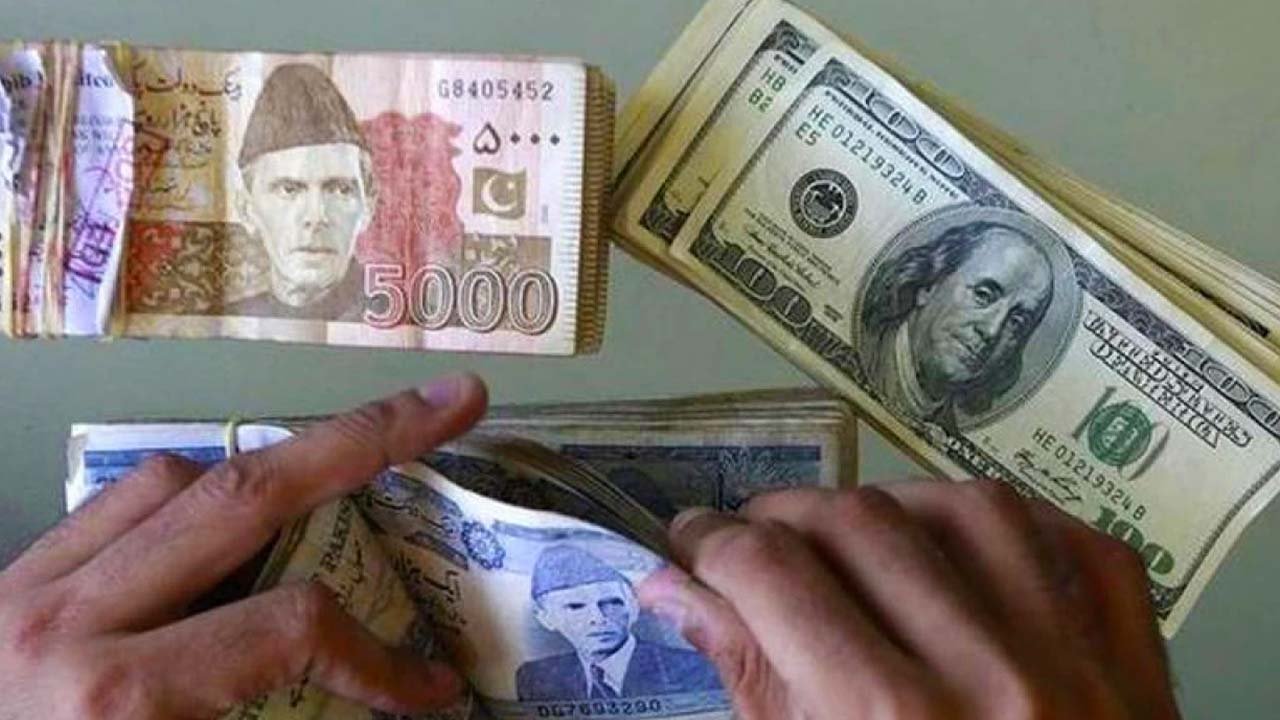
    The US dollar reached a new high against the Pakistani rupee, going past Rs300 in the interbank market on Thursday. At 11:15 am, it was at Rs300.4 as per the Forex Association of Pakistan. In the open market, it was valued at Rs314.

    The day before, the dollar ended at Rs299.64 and went up to Rs315 in the open market. The Exchange Companies Association of Pakistan (ECAP) reported buying and selling prices at Rs309 and Rs312.

    As the dollar keeps going up, experts are asking the government to do something about the black market. Saad bin Naseer from Mettis Global said that even though it’s hard to find dollars in the interbank market, they’re easily available in the open market at higher prices.

    Naseer didn’t like that the central bank kept the interest rate at 23 per cent because people prefer investing in foreign currencies over the local economy. Malik Bostan, who leads the Forex Association of Pakistan, warned against hoarding dollars, thinking their price will keep rising.

    Bostan noticed regular people buying dollars thinking they’ll become more valuable due to the increase in the interbank market. He also mentioned that removing import restrictions from the IMF made the rupee weaker.

    Zafar Paracha, from the Exchange Companies Association of Pakistan, blamed the rupee’s decline on more unnecessary imports. He agreed with Bostan and urged people not to buy more dollars during this uncertain time for the rupee.
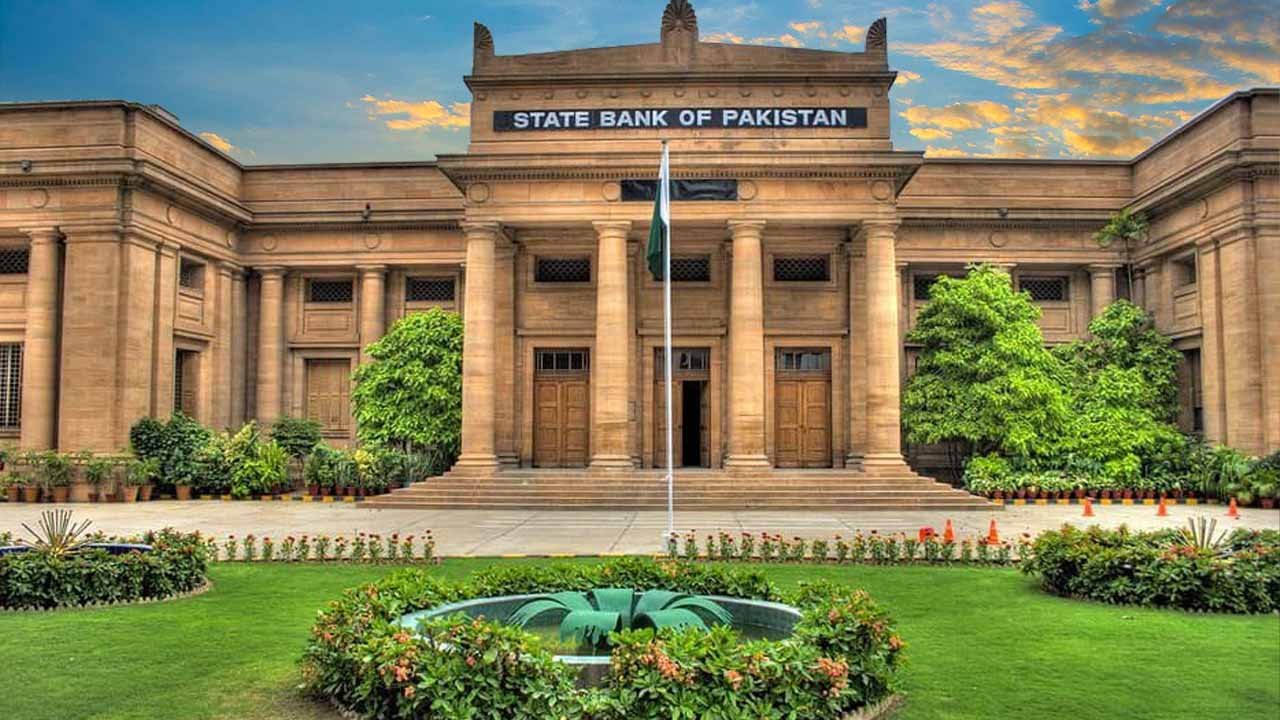

  • SBP hikes key interest rate by 100 bps to 17%

    SBP hikes key interest rate by 100 bps to 17%

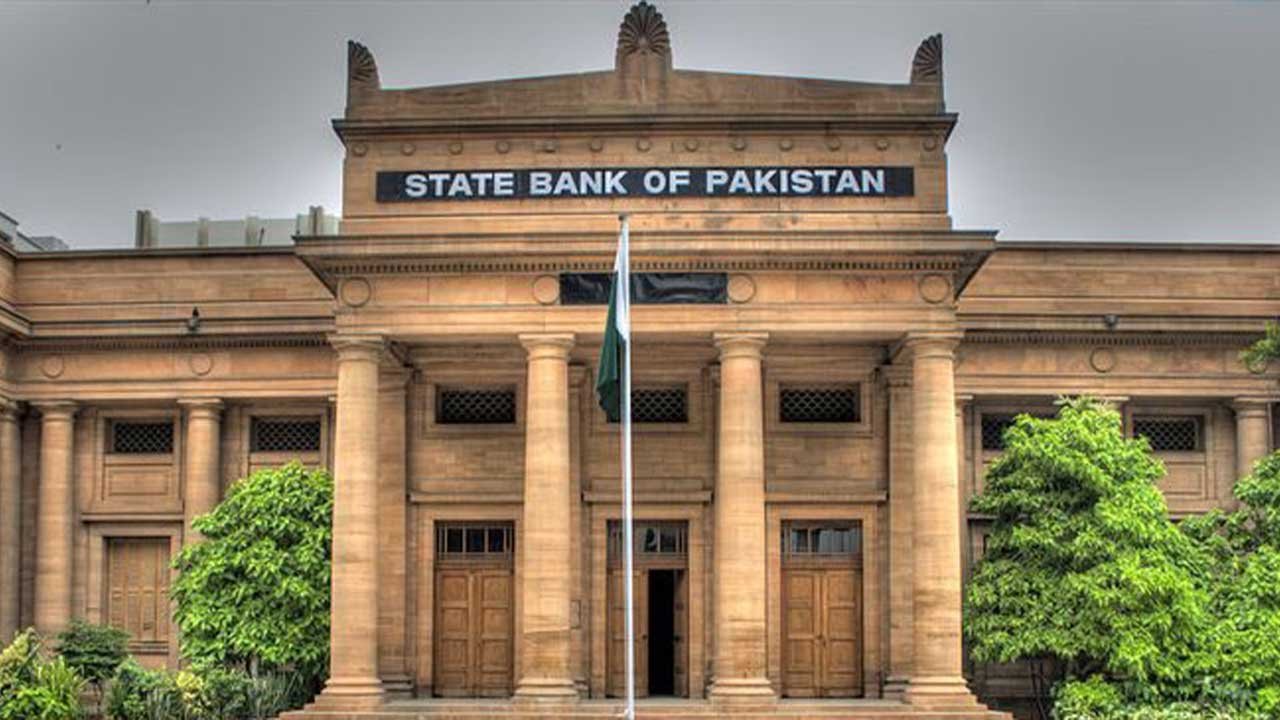
    The State Bank of Pakistan’s (SBP) Monetary Policy Committee (MPC) on Monday raised the policy rate by 100 basis points to 17 per cent, which is highest since October 1997.

    The MPC of the State Bank convened today with Governor SBP Jameel Ahmad in the chair to announce the first scheduled monetary policy for the calendar year 2023.

    The SBP governor said that the MPC also performed a detailed analysis of the country’s inflation. “The committee believed that a 1 per cent hike [in the interest rate] to anchor inflation was necessary.”

    In November 2022, the MPC raised the policy rate by 100 basis points to a two-decade high of 16 per cent.

    The committee, in its meeting, noted that inflationary pressure was persistent. “It noted that price stability was required to control inflation and maintain the growth rate,” Ahmad said.

    “Our short-term challenges, including current account deficit, remain. There is some delay in the inflows we were expecting due to which our reserves are under pressure.”

    Thirdly, the committee noted the global economic situation, including the International Monetary Fund and the World Bank’s downgrading of the global economic growth rate and the prevailing uncertainty. “It affects our market directly or indirectly. For example, our exports and remittances are impacted.”

    The Monetary Policy Committee took the decision to raise the policy rate after a detailed analysis of the country’s external and fiscal position, the SBP governor said.

  • Auto financing in Pakistan declines for fourth straight month due to high interest rates

    Auto financing in Pakistan declines for fourth straight month due to high interest rates

    The number of outstanding auto loans declined for the fourth consecutive month at the end of October, according to data issued by the State Bank of Pakistan (SBP).

    At the end of November, the total amount of outstanding vehicle loan was Rs345 billion, which is Rs0.1 billion less than the Rs346 billion number for October 2021. The most recent amount owed on auto loans is 1.4 percentage points less than it was in September 2022.

    Buyers have been compelled to put off making purchases due to a sharp rise in car prices, skyrocketing interest rates, different SBP efforts to slow down auto financing, factory closures of several assemblers in recent months due to import restrictions, and delays in the delivery of vehicles.

    However, a few new automakers have recently begun to provide immediate delivery of cars in exchange for full payment following the port clearance of their imported auto kits. However, their sales may still be hampered by high pricing and a sharp rise in the benchmark interest rate last month.

    The SBP is forecasting another 100 basis point increase in the key interest rate to 16 per cent, which will cause auto demand to remain subpar for at least the coming year.

    Consumers must now make larger monthly payments on auto loans because the benchmark interest rate has increased from 7.25 per cent to 16 per cent since September 2021.

    The average 40 per cent increase in car costs since September 2021 is one of the key causes of buyer concerns.

    For instance, the price of a Honda City manual is now Rs3.77 million as opposed to Rs2.59 million in September 2021.

    In order to prevent the sale of expensive vehicles, auto loans were limited to a maximum of Rs3 million, and the length of time it took to repay them was also shortened.

  • Pakistan will pay back $1 billion international bond 3 days before its due date: SBP governor

    Pakistan will pay back $1 billion international bond 3 days before its due date: SBP governor

    State Bank of Pakistan (SBP) Governor Jameel Ahmad said on Friday that Pakistan will pay back a $1 billion international Sukuk bond three days before its due date of December 5, 2022.

    Given that Pakistan is recovering from terrible floods that claimed more than 1,700 lives and experiencing an economic crisis, there has been rising concern about its capacity to satisfy its obligations for external finance.

    SBP Governor stated during a briefing that the bond repayment, which expires on December 5, totals $1.08 billion.

    In order to guarantee that the repayment would not have an impact on foreign exchange reserves, Jameel noted that finance had been arranged from both international and bilateral sources. Next week on Tuesday, the Asian Infrastructure Investment Bank was anticipated to make an immediate infusion of $500 million, he added.

    As of November 18, Pakistan’s reserves at the central bank were just $7.8 billion, which is not enough to pay for a month’s worth of imports.

    However, Jameel stressed that he was optimistic the reserve number will be “far higher” by the end of the financial year in June 2023. Reserve levels will rely on the continuous realisation of anticipated inflows and the rollover of loans from friendly nations.

    He stated at the briefing that he anticipates that the inflows from foreign lenders would allow him to meet his external finance needs on schedule. Despite payments of $1.8 billion in November, he emphasised that reserves were steady.

    The early completion of Pakistan’s flood recovery plan, according to the International Monetary Fund (IMF), is crucial for negotiations and ongoing financial assistance from multilateral and bilateral partners.

    Pakistan is now enrolled in an IMF bailout programme, which it joined in 2019. Despite the fact that Pakistan is fighting a full-blown economic crisis with decades-high inflation and limited reserves, a fixed date for the ninth review to release much-needed cash is still pending.

  • Pakistani rupee reverses losses against greenback

    Pakistani rupee reverses losses against greenback

    After strengthening against the US dollar on Monday, the Pakistani rupee started the new week positively.

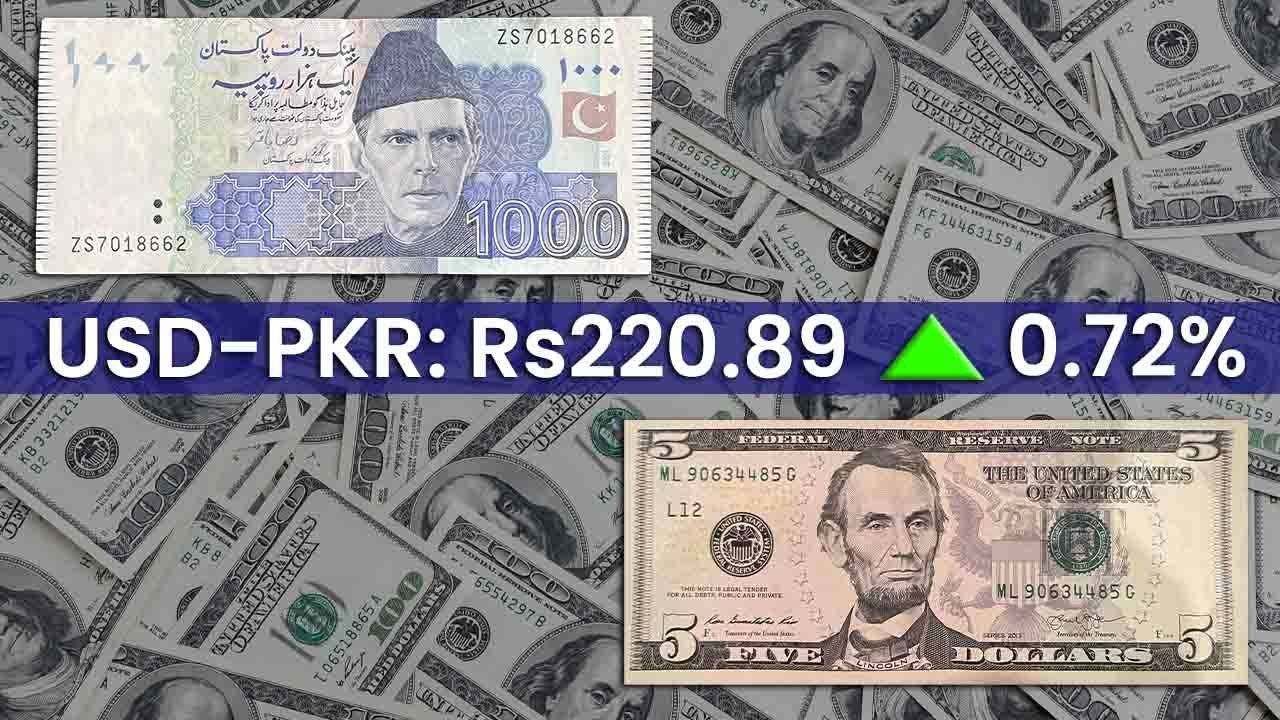
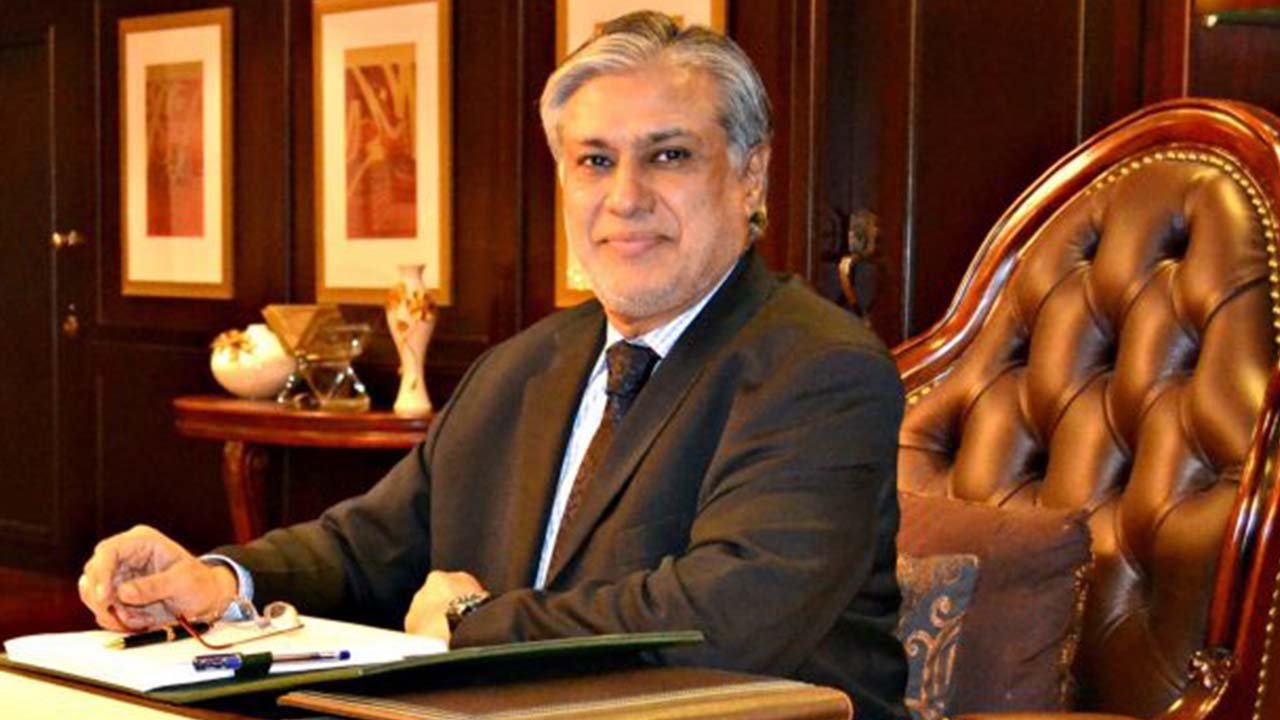
    Discussions between Finance Minister Ishaq Dar and State Bank of Pakistan (SBP) employees and currency traders had positive effects as the local currency increased by Rs1.59, or 0.72 per cent, versus the dollar.

    In the interbank market, the rupee was able to settle at Rs220.89, according to the SBP.

    The rupee last week dropped 0.93 per cent versus the dollar, trading at Rs222.47. Analysts predicted that this week will see range-bound trading in the local currency.

    Earlier, Ishaq Dar issued a warning last week saying that anyone detected manipulating the currency rate will face harsh punishment.

    Dar said that the rupee’s true worth in relation to the dollar is less than Rs200. He predicted that the rupee will soon strengthen against the dollar and gave a warning to those who were speculating in and hoarding foreign cash.

    Furthermore, the price of Brent oil fell by 0.65 per cent to $95.15 per barrel on Monday, while the price of US West Texas Intermediate (WTI) fell by 0.83 per cent to $87.17 per barrel. With advances of 7.7 per cent and 9.3 per cent so far in October, respectively, Brent and WTI are on course to post their first monthly gains since May.

    Europe, which is anticipated to experience a recession this winter, poses a threat to global oil consumption. The European Central Bank’s policymakers are also continuing with their plans to raise interest rates, despite the fact that doing so might plunge the region into recession and stoke political unrest.

  • PKR loses for 6th straight session due to declining reserves

    PKR loses for 6th straight session due to declining reserves

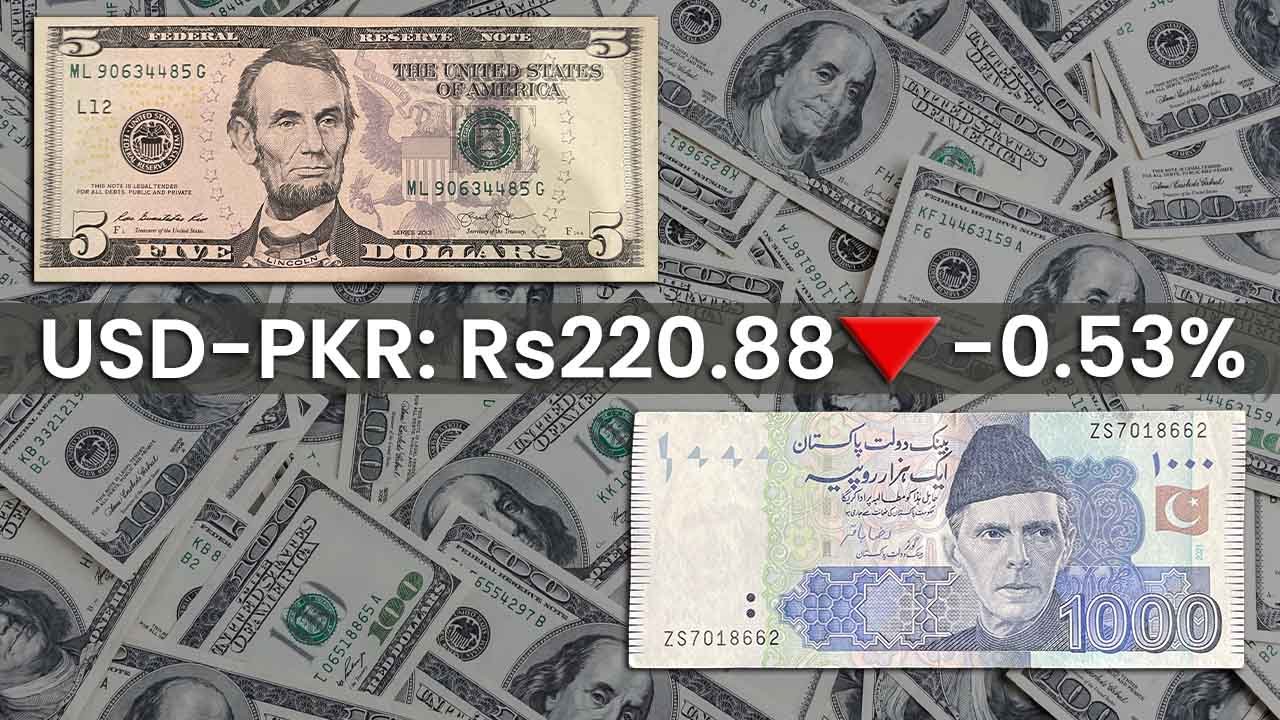
    The Pakistani rupee dropped against the US dollar for the sixth straight session on Wednesday, losing 0.53 per cent in the inter-bank market.

    According to the State Bank of Pakistan (SBP), the local currency dropped by Rs1.17, or 0.53 per cent, to close at Rs220.88. In the last six trading sessions, the rupee has lost Rs3.09, or 1.4 per cent, of its value overall.

    The rupee lost value against the US dollar on Tuesday for the fifth consecutive session, closing at Rs219.71 after losing Rs0.82 (0.37 per cent).

    According to market analysts, the local currency’s weakness is caused by declining reserves and a lack of evidence of foreign capital inflows.

    In an interview with Bloomberg, Finance Minister Ishaq Dar said that the rupee has been “heavily undervalued”.

    “It is due to speculation – and some players in the market have been responsible for that,” he added.

    Globally, the greenback hung close to a 32-year peak versus the yen on Wednesday while edging up from a two-week trough against a basket of major peers as traders weighed improved risk sentiment against the prospect of aggressive Federal Reserve rate hikes.

    The dollar index – which measures the currency against six peers including the yen, sterling and euro – edged up to Rs112.01, after dropping to the lowest since October 6 at Rs111.76 overnight.

    On Wednesday, oil prices increased marginally despite bearish factors like unclear Chinese demand growth and falling gas costs, which were offset by bullish factors like declining crude stocks and a generally undersupplied market.

  • Ishaq Dar leaves for US to attend annual IMF, World Bank meetings

    Ishaq Dar leaves for US to attend annual IMF, World Bank meetings

    The Federal Minister of Finance and Revenue Ishaq Dar would ask the World Bank (WB) for an early release of cash and the International Monetary Fund (IMF) to relax the program’s rules.

    Alongside the annual meeting, Ishaq Dar will meet representatives from the IMF and WB. He will also meet representatives of the global rating agency Moody’s and the IMF to examine the state of the economy and the loan programme.

    According to Dawn, the discussions will also include participation from the Finance Secretary and the Governor of the State Bank of Pakistan (SBP).

    At a press conference on Saturday, the minister firmly denied rumours that he will visit the Paris Club to reschedule loans from multilateral lenders and donor organisations.

    The minister added that they had complied with the report of the most recent Moody’s credit rating in a hurry and that the ministry had provided its response in a press release.

    The Prime Minister met with representatives from the World Bank and the International Monetary Fund last month on the UN sidelines to review the current flood situation and request relief in the programme terms, which they pledged to take favourably.

  • Pakistani rupee becomes best performing currency after recording impressive gains

    Pakistani rupee becomes best performing currency after recording impressive gains

    The unpredictable Pakistani rupee, which made the highest rise of 3.9 per cent over five working days to Rs219.92 against the dollar on anticipation of sizable inflows of foreign cash, was dubbed the “world’s best-performing currency” in the week that concluded on Friday.

    According to analysts monitoring currency movements, the rupee proved to be the best-performing currency throughout the week.

    Friday marked the rupee’s 11th straight successful working day since the current finance minister, Ishaq Dar, announced his return to Pakistan by ending a five-year self-exile last month, according to the Express Tribune.

    Clearly, Dar continued his previous strategy of defending the rupee from the assault of the US currency after assuming power. He thought the rupee was undervalued at its all-time low of roughly Rs240 to the dollar in July and suspected commercial banks of manipulating the rupee’s value to advance their own interests.

    In a swift move, Pakistani officials notified Moody’s that during recent meetings with multilateral creditors, the government had received an additional funding commitment of more than $2.5 billion from the Asian Development Bank.

    This was done while strongly responding to Moody’s downgrading Pakistan’s credit rating to Caa1. The World Bank has also committed to providing an additional $1.3 billion in finance for infrastructure improvement and other projects during the current fiscal year.

  • Rs75 commemorative banknote is now officially available

    Rs75 commemorative banknote is now officially available

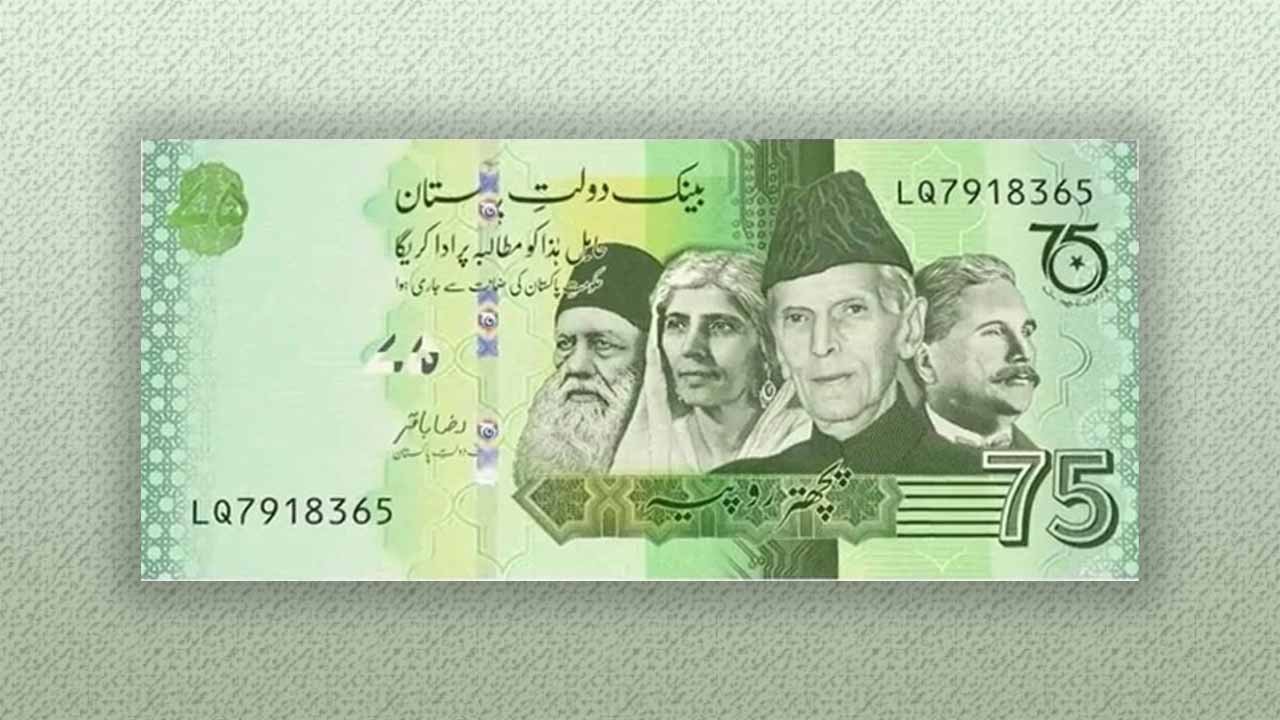
    The commemorative banknote of Rs75 is available for the general public from September 30 (today), which was released by the State Bank of Pakistan (SBP) on August 14th to mark Pakistan’s 75th Independence Day.

    At a ceremony held at the SBP offices in Karachi on August 14, 2022, the design of this commemorative banknote was presented.

    The SBP announced in a statement that starting on September 30, the general public can get the commemorative Rs75 banknote from SBP BSC offices and commercial banks’ branches.

    As a result, the Quaid-e-Azam Muhammad Ali Jinnah, Allama Sir Muhammad Iqbal, Mohtarma Fatima Jinnah, and Sir Syed Ahmed Khan are shown on the banknote’s obverse, according to the statement.

    According to SBP, the reverse of the banknote emphasises the nation’s commitment to combating climate change and its effects on Pakistan. This issue has become even more urgent in light of the unprecedented loss brought on by the recent torrential rains and flooding that affected large portions of Pakistan, according to SBP.

    The portraits of the national animals Markhor and Deodar on the reverse also draw attention to the threat of extinction and the necessity of protecting these species.

  • SBP’s foreign exchange reserves dropped to $7.83 billion

    SBP’s foreign exchange reserves dropped to $7.83 billion

    Owing to debt payments, the State Bank of Pakistan’s (SBP) foreign exchange reserves fell to $7.83 billion as of August 5 from $8.385 billion in the last week.

    It is worth noting that this is the lowest level in over three years, according to figures released by the SBP.

    Pakistan’s overall foreign exchange reserves were $27.067 billion as of August 2021 but fell to $13.561 billion as of August 5, 2022.

    The most recent figures on the country’s foreign exchange holdings came when the reserves were quickly running out due to a $6 billion IMF programme that was stalled and the country was experiencing a lack of external funding.

    Due to debt payments and a lack of external finance, the central bank’s foreign reserves decreased by $555 million or 6.6 per cent every week.

    To reach $13.561 billion, Pakistan’s total liquid foreign reserves decreased by $648 million, or 4.6 per cent, and its commercial banks’ holdings fell by $5.730 billion, or 1.6 per cent.

    The SBP’s reserves are sufficient to cover imports for just over a month, according to The News. The reverse decline was brought on by paying off foreign debt.

    According to the central bank, debt repayments may slow down over the following three weeks of this month.

    On the other hand, the Pakistani rupee continued its upward trend against the US dollar for the ninth day, adding Rs3.38 to trade at Rs215.50 in intraday trade on Friday. The KSE-100 index likewise witnessed an increase of 386 points.