Tag: State Bank of Pakistan (SBP)

  • Pakistan to overcome $4 billion external financing gap soon: SBP

    Pakistan to overcome $4 billion external financing gap soon: SBP

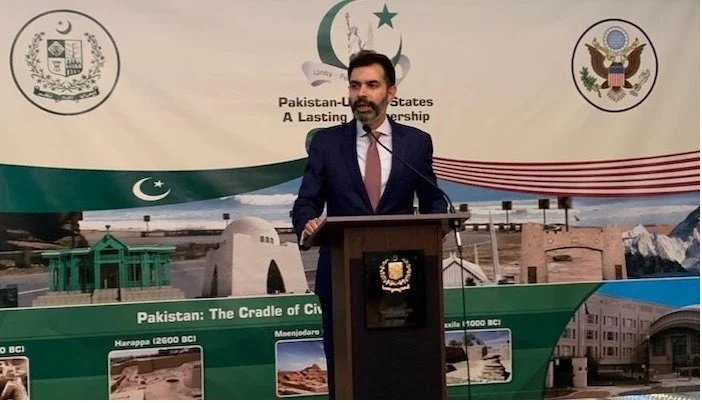
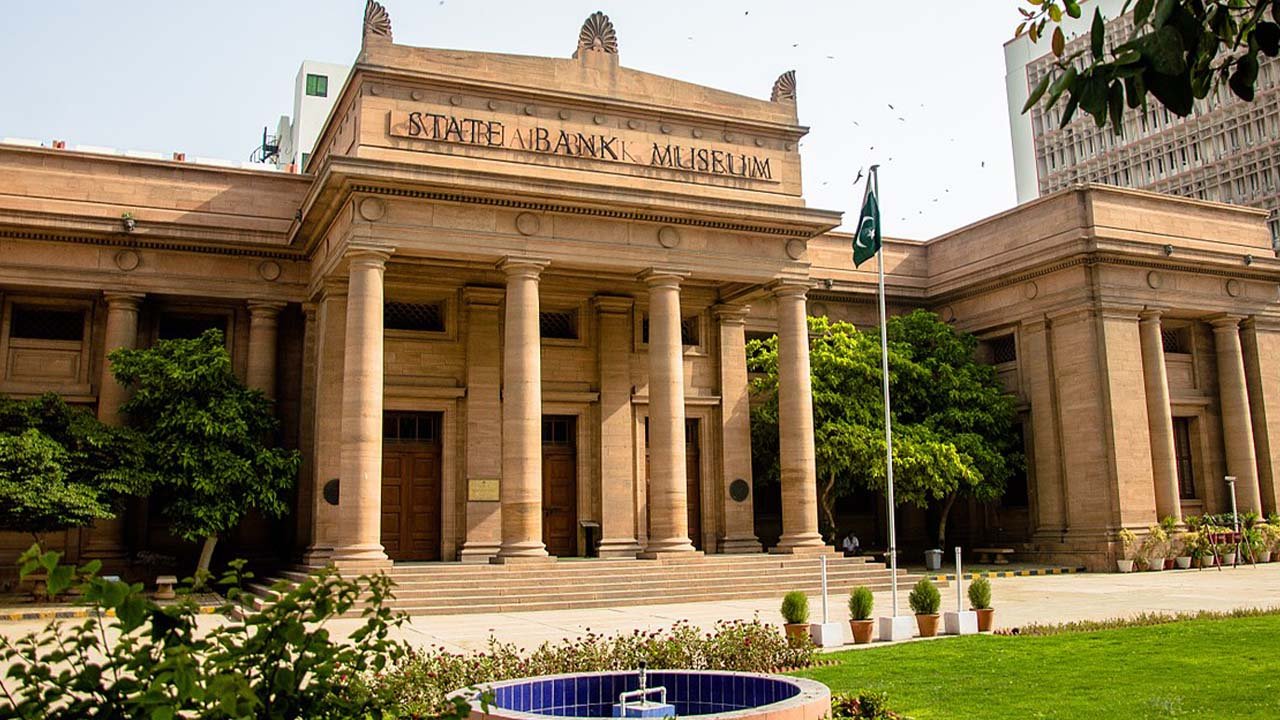
    In the midst of intense pressure on foreign currency reserves, Pakistan will soon close its $4 billion shortfall in external finance with the assistance of friendly nations under IMF conditions, according to Acting Governor of the State Bank of Pakistan (SBP) Dr Murtaza Syed.

    He also acknowledged that inflation will continue to be higher for the ensuing 11 to 12 months, which is why the central bank was aiming for an average inflation target of 18 to 20 per cent for the current fiscal year 2022–2023

    According to The News, acting SBP Governor Dr. Murtaza Syed stated that Pakistan has already met its gross external financing requirements of $34 to $35 billion.

    However, Islamabad is also attempting to secure confirmation of $4 billion in inflows from friendly nations like Saudi Arabia, the UAE, and Qatar. According to him, these extra dollar inflows will be used to boost foreign currency reserves and build a safety net in case of a crisis-like circumstance.

    He resisted providing a specific timeline but assured that the $4 billion finance deficit will be closed quickly. He argued that urgent attempts were being made by the government and IMF high-ups to secure confirmation from their respective nations.

    Denying that the scenario was similar to Sri Lanka, he praised Bangladesh and claimed that nation performed properly, chose to return to the IMF, and also increased utility costs while maintaining enough levels of foreign exchange reserves.

    Speaking of increasing inflation, he believed that supply interruptions abroad had set the way for a global super cycle of commodities, leaving Pakistan with no choice but to concentrate on agriculture productivity in order to secure food security.

    According to Murtaza Syed, people would have to deal with this challenging moment because there is no immediate magic wand to manage increased inflation. He said that while it is a challenging time, there is no alternative way to prevent the country from entering a more challenging situation if nothing was done.

    According to the official, the SBP has loosened the cash margin requirements for opening L/Cs for imports and offers incentives to individuals who do so. According to him, the IMF opposed trade restrictions and took action to prevent the depletion of foreign exchange reserves.

    The current pressure on foreign reserves is now anticipated to end within the next two months. He also promoted energy saving as a way to ease the burden of high import costs.

    The senior official believed that as long as the economy’s structural issues persisted, Pakistan will continue to see boom and bust cycles. He gave a recent example in which the nation’s GDP increased by 6 per cent, indicating that the overheating of the economy led to imbalances known as the budget deficit and current account deficit. Although a recession is not imminent, he continued, the economy must be managed carefully.
  • Rupee gains ground against dollar for second day, closes at Rs238

    Rupee gains ground against dollar for second day, closes at Rs238

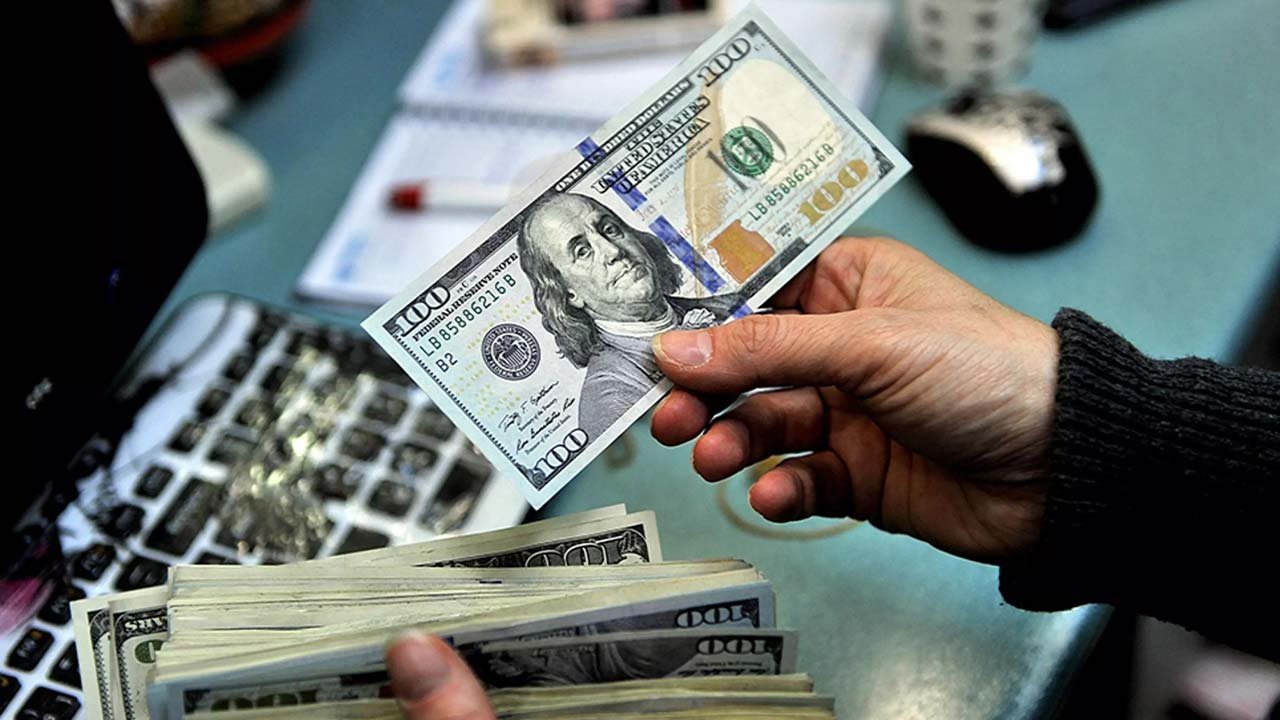
    Following days of increases in the interbank and open markets, the US dollar fell against the Pakistani rupee on Tuesday as a result of assurances from the government and State Bank of Pakistan (SBP) that the nation will have enough money for FY2022-23 after receiving IMF tranches.

    For the third straight session, the Pakistani rupee appreciated versus the US dollar in the interbank market on Tuesday. This occurred as a result of the market’s stability following the government’s assurance that it would successfully tackle the challenging economic situation.

    After the rupee dropped for 10 straight sessions in the final days of July and depreciated by about 5 per cent just last week, the dollar began to lose strength on Friday.

    Tuesday’s interbank trading ended with the rupee up a pitiful Rs0.46 or 0.19 per cent, reaching Rs238.38, from 238.84 in the previous trading session. In the meantime, the open market exchange rate remained constant at Rs241.

    Forex dealers report that the US dollar lost Rs0.94 in interbank trading and is now trading at Rs237.90. The banks are offering to sell dollars for Rs238.50.

    The US dollar dropped to Rs239 in the open market after crossing the Rs250 threshold.

  • Pakistani govt seeks help for balance of payments: IMF

    Pakistani govt seeks help for balance of payments: IMF

    The International Monetary Fund (IMF) has confirmed that the new government in Pakistan has reached out to it, seeking support for the country’s balance of payments. It said a delegation of the country would be in Washington this week for a follow-up meeting.

    “The IMF looks forward to continuing supporting Pakistan’s authorities on economic policies and reforms to ensure macroeconomic stability in the country amidst the current challenging global economic environment,” IMF’s Resident Representative in Islamabad Esther Perez Ruiz told Dawn News.

    She also confirmed that as part of the IMF’s “continued engagement with Pakistan” she last Friday met with finance minister-designate Miftah Ismail, ahead of the visit of Pakistan’s delegation to Washington during Spring Meetings.

    Top government sources confirmed that a delegation also comprising Secretary Hamed Yaqoob Shaikh and State Bank of Pakistan (SBP) Governor Dr Reza Baqir would be meeting the new IMF mission chief to Pakistan Nathan Porter on Monday evening, besides other fund officials.

    Pakistani delegation likely to meet fund officials this week

    Efforts were on to ensure that Mr Ismail also joins the Washington meetings physically and hopefully take this opportunity to call on IMF Managing Director Kristalina Georgieva and seek her support for the revival and completion of the stalled fund programme. These sources said former finance minister Shaukat Tarin had sought to arrange a meeting with Ms Georgieva during these meetings as negotiations with the fund staff had stalled following Feb 28 fuel subsidies and tax amnesty announced by former prime minister Imran Khan.

    The new finance minister would be more eager to seek blessings of the IMF’s top management at the outset for smooth engagements with the staff to put the programme back on track and ensure foreign inflows for the direly needed balance of payment support. There are, however, at least three issues that the authorities are trying to resolve as the spring meetings (April 18-24) are opening today.

  • SBP governor hopeful about IMF programme to resume

    SBP governor hopeful about IMF programme to resume

    Pakistan’s economic fundamentals have continued to remain strong and the unpopular decisions of the government to hike the energy prices in future is likely to get $6 billion International Monetary Fund (IMF) loan programme back on track.

    The engagement of the Ministry of Finance and the central bank with the International Monetary Fund (IMF) remains strong.

    “In the current political environment, it is no surprise that the unpopular decisions, such as increase in fuel and electricity prices, are proving difficult,” State Bank of Pakistan (SBP) Governor Reza Baqir said in an interview to Bloomberg TV on Monday.

    “We are confident that very soon, we will be able to put the delay (in resumption of IMF programme) behind us and announce the good news of attaining the next tranche from the IMF.”

    Pakistan has received half of the funding from IMF. It negotiated $6 billion loan package in June 2019 and it has received $3 billion so far. Another $3 billion is left to be received.

    “Our goal is to first complete the work which will bring in the remaining $3 billion and after that, if we need (more), we can negotiate it in future,” the SBP Governor said.

    IMF is important not just for money but also for the signal that it sends of good housekeeping on the economic policy that catalyses funding from other bilateral creditors as well as private capital markets.

    “We are hopeful that with that positive message coming out, we will be able to mobilise funding from other sources other than IMF,” he said.

    When domestic political uncertainty was taking toll on local financial markets in the recent past, the central bank considered 250 basis point hike in key policy rate “important to fix the bubble of economic uncertainty,” he said.

    It is important that economic policy making institutions act on a timely basis to ensure that the goal of financial stability remains.

    “Since the decision (of rate hike), the rupee has rallied nearly 2% and stock market rallied about 1.5% and yields on three and five-year bonds in Pakistan fell about 35 basis points.”

    Last year (fiscal year 2020-21), Pakistan’s economy grew by around 5.5%. “Our projection for growth this fiscal year is 4% even with multiple hikes in the interest rate.

    Pakistan’s central bank increased the key policy rate by a massive 250 basis points in an emergency meeting as it had “concerns related to price instability and foreign exchange market,”

    According to him, there were three main factors that forced the central bank to arrange an emergency monetary policy meeting.

    First, uptrend in oil prices has persisted since March and oil futures are about 10-12% higher for next fiscal year.

    Secondly, inflation in March for Pakistan was 50-100 basis points higher than the previous month. The headline inflation stood at around 12.7% and core inflation was 9%.

    Finally, rupee had lost significantly (over 5%) during the past few weeks owing to political uncertainty, Baqir recalled.

    “When we feel that our financial markets are threatened by political instability, we take important steps that are one of the key reasons behind the timing of our (emergency) monetary policy decision last week,” he said.